Showing posts with label Moon landing. Show all posts

Sunday, October 12, 2025

A Kite for Moon by Jane Yolen and Heidi Stemple illustrated by Matt Phelan


If you work in a library that is filled with book treasures, how can you showcase them to your borrowers? Little children especially, cannot read book spines or browse huge book collections. There are a few things you can do. Firstly, where possible use front facing display shelves. Secondly set books out on displays and change these regularly. 

I've been working in a school library recently and constantly changing, relevant book displays is one way the teacher-librarian ensures her massive, rich book collections are discovered and circulated. She has a few distinct display spaces. I asked to set out books about the Moon on one of these and as I checked the shelves, I discovered this book. Now I hope a young child might discover it too!

Why did it catch my eye? This goes back to something I talked about at a recent conference - field knowledge. Do you know Jane Yolen? You should. Have you read her books? You should. (Owl Moon is a favourite of mine). What about her daughter Heidi Stemple or the illustrator Matt Phelan? Yes, it is true I live in Australia and these creative book people are in the US but as I have said many times, we are so lucky to speak English and have access to the best books from USA, Canada, New Zealand and the UK.

If you work in a school or a preschool this book A Kite for Moon could be a great one to add to your read aloud pile - and you could then add in some other books about kites; the moon; and astronauts. There is also a theme here about following your dream. All of that in a picture book that probably has less than 100 words.

A young boy notices the moon looks sad. He has been flying his kite, so he grabs a pencil, writes a message on his kite and then sends it up, up, up to the moon. Over the coming days he sends many more kites up to the moon.


"Days went by, years.
Moon waxed and waned.
She counted shooting stars and meteors.
She worried about peace down on earth
and strange objects whizzing by.
She eclipsed."

The moon watched this boy grow up. He went to school and studied algebra, geometry and astronomy.

"Then one day when he had learned enough, he went up, up, up in a big rocket ship ... "

Make sure you check out the dedication "For Neil Armstrong who showed us the way." And read a post by Jane Yolen about the inspiration behind her book

If you are reading this post and it is still October 2025 I found one online seller with a copy of A Kite for Moon for a really great price

Publisher blurb: What would it be like if the moon was your friend Find out as you walk alongside a little boy who journeys through life to achieve his dream of becoming an astronaut. And then blast off with your little one as you zoom to the moon together! The story begins when a little boy, who is flying his kite, notices a sad Moon. He sends up kites to her, writing notes promising he will come see her someday. This promise propels him through years of studying, learning, and training to become an astronaut. Until … he finally goes up, up, up in a big rocket ship with a fiery tail.

A kite for Moon was the winner of the 2019 Northern Book Awards. The judges said:

From its breathtaking cover to the celestial canvases and poignant prose, this book is a true treasure. The fact that stars are used instead of periods makes it even more memorable.

And here is the judging criteria:

The Northern Lights Book Awards considers children’s books to be an art form and honors books that excel in aesthetic and literary qualities with an emphasis on permanency. We are seeking works that will leave a lasting impression, stories that will resonate with the reader not only now but in years to come. NLBA accepts traditionally published and self-published children’s books from around the world regardless of copyright year. Books must be printed in English.

Tuesday, May 27, 2025

Margot and the Moon Landing by AC Fitzpatrick illustrated by Erika Medina


Margot loves everything about space travel and the moon. She reads every book she can find on this topic and then she just has to SHARE everything she knows with EVERYONE. The problem is her mother has stopped listening and her teacher just seems to be quite frustrated and even angry with Margot.


Eventually, having no one listening to her, drives Margot herself crazy and she grabs her marker pens and writes furiously all over her bedroom walls. Sharing this book with your child this could be the page to stop. How will mum react? Turn the page and you will be surprised. Mum stops and takes the time to read what Margot has written. 

"Margot waited for something to happen but instead mum got very quiet. She read all the words and then read them again."

Margot tries to rub out the words, but mum stops her. She grabs a pot of paint and together they fill the wall with images of space travel and stars and then even better mum attaches two enormous sheets of paper to the walls and shows Margot that these are the places she can write anything she likes. 

Publisher blurb: Margot loves space. Astronauts, the stars, and especially the moon landing. So she can’t understand why all of her attempts to communicate her passion fall on disinterested ears. Her mom is patient but distracted; her classmates would rather play kickball; and her teacher just wants her to focus and pay attention in class. Even so, Margot wishes she never had to talk about anything but space ever again. When she wakes up one morning and discovers she can only recite Neil Armstrong’s famous speech from the moon landing, Margot realizes she has an even bigger problem. How can Margot get everyone to pay attention and—more importantly—to hear what she’s really trying to say? This powerful picture book debut plays with themes of listening and communication to highlight the importance of a space of one’s own, no matter what your passion may be. 

A charming picture book about both a child and her obsessions and frustration, anger, and repair. Kirkus

There are several valuable themes in this book, including listening, communication and forgiveness. The book’s contents cover Margot’s learning to express herself effectively and constructively, and there’s also the lesson for adults in children’s lives – to listen and allow kids to be heard and to meet where they’re at. Canadian Review of Materials (Read this review if you are concerned about the way Margot expresses her anger using strong language). 

You can probably guess why I bought this book. If you are talking about space or the moon landing or want to affirm those quirky kids in your class who obsess (in a good way) over a specific topic, then this book could be fun to share. It reminded me of the way the little girl in Agatha May and the Angler Fish by Nora Morrison knew everything about her own favourite fish. 

Here is the teacher's guide from Canadian publisher Annick Press. Erika Rodriguez Medina is originally from Mexico. She now lives in Canada. You can see some of her books here

If you have an older child aged 9+ who, like Margot, is fascinated by the Moon Landing they might enjoy this Australian middle grade novel. 


In the illustration I shared you can see Margot reading a book about Laika. Take a look at my blog post about this famous dog who was sent to space (warning very young children may be distressed to discover Laika did not make it back to earth). You should also visit or revisit this award-winning Picture book from Australia:


Wednesday, March 5, 2025

Moonboy by Anna Ciddor


“That’s one small step for man, one giant leap for mankind.”

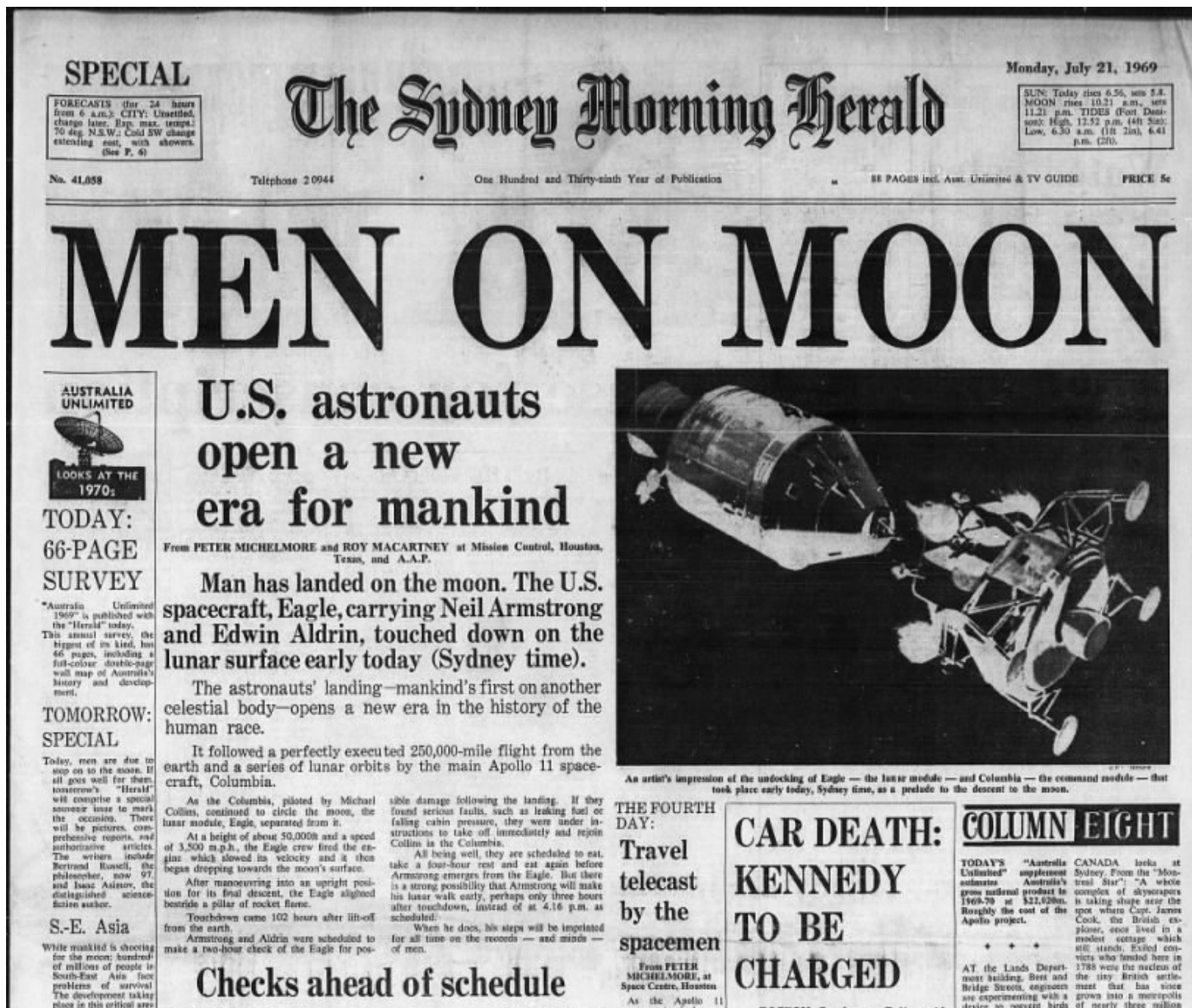
I was almost the same age as the boy in this story, Keith Arthur Watson, who is living in Australia in 1969. What happened in 1969? The moon landing. I well remember there were all sorts of newspaper booklets to collect and I also vividly remember sitting in a crowded classroom and peering at a small television screen to watch those steps on the moon.

Moonboy is a timeslip story. Charlotte is staying with her grandmother. Her dad tells her to look inside a box in her room. When she opens the box she finds newspaper clippings from 1969 all about the Apollo moon landing and also some other things that belonged to Keith, her grandfather, when he was a boy. A big of marbles, some footy swap cards and an old footy sweater. This sweater is very significant because it is the conduit that takes Charlotte from 2025 back to 1969 and straight into ten-year-old Keith's bedroom and life. 

Sadly, in 2025, Keith (Charlotte's grandfather) is suffering from dementia. He seems to be unable to speak or recognise his wife or granddaughter. But then Charlotte takes some of the newspaper clippings to his aged care home and for a moment or two he seems to 'come back to life'. 

This book covers time from about 9th July to 25th July 1969 and 2025. Keith and Charlotte will both have a birthday on 23rd July. Gran wants it to be special but she also wants to hold it in the Aged Care Home. At first Charlotte finds the state of many of the elderly people quite confronting and upsetting but over the two weeks of her daily visits she comes to see each person as an individual and so her eventual 'moon landing themed' birthday party in the lounge room of Diamond House is, to her surprise, a very happy event. 

Here is a video of the television broadcast watched by Keith in 1969 and again by Charlotte in the aged care home with her grandfather in 2025. 


My only tiny quibble with this story comes from the way Charlotte knows nothing about the moon landing - that's okay - but I kept wondering why she didn't try to research these events either in her school library or on Google. She is filled with worries about every tiny aspect of this momentous event - will they reach the moon; will the astronauts actually walk there; will they get home safely; and worst of all what if Keith's sister Gwen wrecks everything because she has gone to help her aunt at uncle at Honeysuckle Creek. This true aspect of the Australian connection to the moon landing is explained at the back of the book. It's quite a fascinating side story. I was also a little concerned with the way Charlotte was able to change history. She stops Keith setting off some dangerous fireworks and so his fingers are not damaged and yet the grandfather she has always known did have missing fingers and now his hands are fine.

I did enjoy Keith's colloquial sayings: crikey; how the blazes; are you a few crumbs short of a sandwich; strike a light; ridgy didge; holy moly; fair dinkum; and stone the crows.

When Charlotte travels back to Keith's Grade six classroom she writes a terrific poem about the moon landing. Sadly the teacher rejects it because it doesn't rhyme - even in 1969 I hope this would not be the reaction of a teacher. I really like her poem:

I can't believe it!
We've landed on the moon!
Through the window
I can see grey dust
And craters
I can't belive it!
My fee
Will be the first
To ever touch the moon!
Open the door,
I'm ready
Here I come!

This book could be a jumping off point for kids to research more about the moon landing and especially the involvement of Australia. Behind the News could be a good starting point. If you are using this book with a class you could investigate a KidsNews free subscription. The BBC also have some good resources. 

Sensitive readers may find Charlotte's reactions to the elderly people in the aged care home a little confronting. I related to this because my precious little Nan was in an aged care home when I was about the same age as Charlotte. More recently I watched young children visiting elderly relatives in a care home where my mother sadly spent her final years. I suggest you could look for Newpaper Hats which is a picture book by Phil Cummings as a way to talk about the effects of dementia and memory loss. 

Here is a video review from Kid Lit Joy. Anna Ciddor has some background photos that link with this story on her webpage. You could make use of these in a book talk with your library group. Read the blurb and review page from Lamont Books.

Anna Ciddor’s story explores history and family in delicate and emotional ways in this book, getting to the heart of Letty’s relationship with her grandfather, what he means to her and what knowing her in the past meant to him as well. The Book Muse

Thank you to Allen and Unwin for sending me a review copy. Moonboy was released yesterday. 

Companion book:


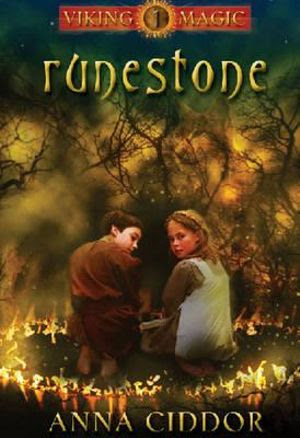
Here are some other books by Anna Ciddor. I especially loved one of her very early book - Runestone.


Tuesday, February 2, 2021

Footprints on the Moon by Lorraine Marwood


It is 1969. In this verse novel Lorraine Marwood revisits world events at this time - the Vietnam War and the imminent Moon Landing. She explores events here in Australia - conscription and it's effect on young men and their families. And gives her readers a personal perspective when she introduces us to the Burley family who experience dreadful loss during 1969 when their loved grandmother who has been showing signs of early dementia, suddenly dies.

Young Sharnie Burley has now moved to high school. She has to navigate old and new friendships, deal with the loss of her beautiful grandmother who was her closest friend and she also has to make sense of the conflicting views in her family. Her teenage sister Cas has met a young returned soldier and she now has strong views against Australia's involvement in Vietnam. Dad supports the war because he proud of the service by his own father during World War II. Sharnie's new friend Gail has an even closer connection to this conflict because her brother has recently been killed in Vietnam.

Footprints on the Moon will be published tomorrow! I was excited to discover that I had read this new Australian verse novel just one day before it will hit the bookshop shelves. I recommend this book for readers aged 10+ and junior high school students who are studying Australia's involvement in the Vietnam war. Here are a set of very detailed teachers notes to use with Footprints on the Moon.

The best verse novels contain emotional stories and this is certainly true of Footprints on the Moon. The relationship between Sharnie and her precious grandmother is beautifully described. You may want to make a tray of  Peanut Brittle (recipe is included), prepare a cup of tea and find an older family member who can share their own memories with you.  I could really identify with Sharnie and her classmates squashed into a small classroom to watch Neil Armstrong walking on the moon. I clearly remember this day when we all squashed into a double classroom in my Primary school peering at the distant and very small television screen:

On Friday 

the announcement 

crackled over 

the loudspeaker:

'Man on the moon, 

view and be part 

of history. 

Two TV sets 

will be available 

to watch 

in the home domestic rooms, 

the largest spaces in the school 

but if you can 

watch it at home, then do 

so, you have permission 

to go home at lunch break, 

just bring a note from your parents,' 

says Mr Grear.

I think of Grandma

how she would have loved

this moment, wondering

about those three astronauts

training, working, waiting ...

There have been a few nostalgic novels published recently which will appeal to thoughtful readers who have an interest in the past.


You might also look for this fabulous book which was recently awarded a Newbery Honour.