Showing posts with label Unicorns. Show all posts

Monday, January 12, 2026

A Unicorn, a Dinosaur, and a Shark Walk into a Book by Jonathan Fenske


I love that this is unknowable. Let me explain. I visited some grandparents today who have two young grandkids staying for a holiday. The grandfather described the kids' favourite book (as of today I am sure this changes all the time) as a book with a unicorn, dinosaur, shark and a kitten wearing a rainbow t-shirt. I was absolutely certain the grandfather was joking - pulling together all their favourite things and imagining they could all be in one book - in fact I almost suggest HE could write that book. Then the little girl passed me this book and asked me to read it!  Such fun. AND it breaks the fourth wall. 

I made one tiny mistake with my reading and was swiftly corrected which shows me this book has been read and re-read many many times - hooray! 

So, what in unknowable? Well, I am asking why is this particular book such a big hit with this four- or five-year-old? The illustrations are okay but lean more to a cartoon style. I know she loves unicorns but this unicorn is not especially appealing or traditional. Perhaps it is the way you just have to read this book aloud with voices. Or is it the offstage narrator (of course she doesn't know that is what that voice is called). Or is it the hilarious but also dangerous ending - Kitty looks like she is about to be devoured by the very hungry dinosaur who has complained through the whole book that he has only come along to be fed. It could also be that she loves the distinct voices or personalities of the three main characters. The unicorn is clearly quite vain, and the shark actually tries to eat the pages of the book. I love that all of this is unknowable and that this child at this point in time simply loves this one special book. Although I do need to say when I asked which book was a winner, she proudly showed me about fifteen more from their coffee table including one of my own favourites - Bye Bye Baby by Allan Ahlberg. 

Publisher blurb: While the narrator insists that the characters are in the best book ever, they are all less than impressed and won’t cooperate with the storyteller’s cues. Can the narrator find a way to convince them to stick around, or will the creatures choose to skedaddle off the page? 

Here is the Kirkus review. Here is a video of the whole book (not perfect but it will give you a sense of the story - but please find the book before you share the video).

It is also interesting to think about this image from very early in the story and the way it needs to be understood by a young child:


I have also discovered a sequel:


What are a unicorn, a dinosaur, and a shark to do when they just want to relax, but the narrator of the book keeps INSISTING that they're riding a bicycle? Who calls the shots in a story, anyway--
the narrator, or the characters?


Monday, August 25, 2025

If I had a Unicorn by Gabby Dawnay illustrated by Alex Barrow


Publisher blurb: Have you ever imagined what it would be like to have a unicorn for a pet? Besides being much less angry than a troll and far more conveniently sized than a giant, unicorns only ever eat ice-cream for breakfast AND… every time you get upset they feed you candyfloss! In this humorous, energetically rhyming tale, a little girl experiences exactly what life would be like with a magical creature for a pet – from sprinkling stardust on grumpy parents to sliding into football practice on a rainbow. This book celebrates the magic of unicorns in a way that will appeal to children who are allergic to pink.

At the start of Children's Book Week here in Australia I walked along the road to our local Street Library and I found some picture book treasures. Someone must have cleared out their bookshelves over the weekend - winner winner!

One of the books I picked up was If I had a Unicorn published by Thames and Hudson and it is in almost mint condition. 

Why do I like and recommend this book?

  • The end papers are based on the famous Unicorn Tapestries. 
  • The seven individual hangings known as "The Unicorn Tapestries," are among the most beautiful and complex works of art from the late Middle Ages that survive. Luxuriously woven in fine wool and silk with silver and gilded threads, the tapestries vividly depict scenes associated with a hunt for the elusive, magical unicorn.
  • This image is also referenced later in the story.
  • The opening pages of this book are written as a rebus - what a fabulous way to begin this story.

  • This book links perfectly with the CBCA (Children's Book Council of Australia) slogan 'Book an Adventure':  "My unicorn would check his hooves - we'd travel far and wide ... Each day a new adventure. Just imagine - what a ride!"
  • I love that this is a unicorn book that can be enjoyed by boys and girls. So many unicorn books are very pink and have more appeal to girl readers. 
  • Very young children will enjoy calling out the 'forbidden' word when that pile of rainbow *** appears.


Here is the website for Alex Barrow. 

Gabby Dawnay has several other books in this series. I also need to find her book The Library Book illustrated by Ian Morris and her series about the seasons called A Field Guide (Spring, Summer, Autumn and Winter):


Saturday, April 12, 2025

I Believe in Unicorns by Michael Morpurgo illustrated by Gary Blythe


"Unicorns weren't actually real, I knew that much. Of course I did. It was quite obvious to me now that this was in fact a wooden unicorn. He had been carved out of wood and painted. But even as I came closer he seemed so lifelike. He looked so much how a unicorn should be, so magical and mysterious, that if he'd got to his feet and trotted off I still wouldn't have been in the least surprised."

Tomas Porec lives in a small town with his parents. One day his mum insists he wait in the local library while she completes her shopping. Tomas is sure he is way to old for the library story time but, in spite of his reservations, he does listen in from behind some shelves.

The library lady tells the story of Noah's Ark and how the unicorns were left behind and after struggling to find land during and after the flood, they transformed into the creatures we call Narwhals. Tomas is totally swept up into the story as are all the children. 

"For some time after she finished speaking a word. It was as if we were all waking up from a dream none of us wanted to leave."

Over the coming weeks Tomas goes to the library nearly every day. 

"Every story she told us, even it was one we'd heard before, held us enthralled. It was the way she told them, I think, as if each of us was the only one she was talking to, and as if each story must be real and true, however unlikely, however fantastical. You could tell she believed absolutely in her stories as she told them."

At one story session the library lady brings out a book that she says is her most special one.

"She held it up so we could all see. It looked rather old and tatty. The spine of the book was heavily taped, and the cover so stained that I found it difficult to read the title. And it was blackened too, at the edges, I noticed, as if it might have been scorched a long time ago."

I gasped when I 'heard' the library lady (now known as the Unicorn Lady) say the title - The Little Match girl. I hoped someone reading the book had not experimented with matches and caused all this damage. No that was not the story she told the children. The Unicorn Lady was a child during the holocaust. The Nazi soldiers burnt all the books from her town and library but her father heroically saved this one. 

All of that was in the past but then the story shifts to the present and war has come again. Tomas sees a plane dropping bombs. His family rush to safety but the library, his precious place, is on fire. Once the planes fly away everyone rushes to help forming a human chain to save the books and last of all Tomas and his father and the Unicorn Lady are able to retrieve the library unicorn. 

This novella sure does 'pack a punch'. Sadly, though, it was published in 2005 and is now long out of print. I do hope you can find a copy in a library. You can read the first few pages here. If you can find a copy of I Believe in Unicorns it would be a fabulous book to read aloud in a family to your children aged 8+. 

Michael Morpurgo pulls on the heart strings in a short book into which he has packed a number of strands, richly woven together. Tomas lives for the outdoors: he hates books, reading and stories. But one day, his mother forces him into the library and everything changes. Tomas hears the magical story of the unicorn and is soon spell bound by its power. Soon, reading and the wonderful stories that unfold before him become central to his life. But things are changing around Tomas too as the distant rumble of war is suddenly brought close to home. When his village suffers a direct hit, he realises what really matters to him. Morpurgo keeps on the right side of sentimentality and creates a sensitive boy hero. Love Reading for Kids

Companion book:


A few days ago I talked about another book by Michael Morpurgo:  This Morning I met a Whale. My book today - I believe in Unicorns - has a similar format (not quite the same as the cover image at the top of this post) so I wondered if these two books might be part of a series. Alas I cannot find the name of the series I only know they were both published by Walker Books in the UK around 20 years ago. 

This Morning I met a Whale has illustrations by the wonderful Christian Birmingham. My book today is illustrated by the equally wonderful Gary Blythe. Here are three of his books:


Other editions of this book have the title Under the Moon


Monday, August 26, 2024

Where have the Unicorns Gone? by Jane Yolen illustrated by Ruth Sanderson


"In the moment that separates nighttime and dawn,
The instant of daydream that's here and then gone,
You might see the toss of a mane or a horn
And the wavery shape of escape unicorn
In that watery eden, the sea."


I picked up this book at a recent charity book sale. It was published in 2003 but when I checked an online bookseller it seems it might still be available. This is a book I would most certainly add to my Senior Picture book collection for readers aged 10+ mainly because this book is filled with the most sophisticated words:

haven; golding glades; routed by gouts of iron-red flames; gouged from hillsides; clacketing mills; catacombed hills; cataphonetics of city and town; noxious smog; wee wisplets of fog; and contrails of rockets.

This book is also begging to be read aloud. And think about that word cataphonetics! It would be fabulous to put this book into the hands of a talented and passionate teacher of Grade 6 or 7 or 8. 

The illustrations by Ruth Sanderson are so rich. They perfectly depict all the environments where unicorns once roamed freely. This book is a perfect example of the way words and illustrations should work together. Read more about Ruth Sanderson who was born in 1951 here. I found a 2016 interview with Ruth Sanderson where she talks about her art and processes. 


"Where have the unicorns gone?
They have scattered far from the noxious smog,
Wrapping themselves in wee wisplets of fog;
Leaving the iron-sharp city-straight scapes,
Fleeing in greying and tatter moon capes,
Away from the scenting of fire and fume."


Bookseller blurb: Long ago unicorns lived in a haven of sun-dappled glades and flower-filled dells. But as civilization spread over the ages -- with its fierce knights, its chugging trains, its thick smogs -- unicorns had to find a new sanctuary. But where? Jane Yolen finds a magical answer in the traditional unicorn myth. Her rhythmic, rhymed text is irresistible to read aloud. And Ruth Sanderson's brilliant artwork gives unicorns a bold reality in everything from ancient cave paintings to their secret, present-day home. After reading this tribute to the mystical, mysterious unicorn, children will enjoy looking for these elusive creatures in the world around them.

Jane Yolen talks about her book here on her web page. Click on the name Jane Yolen at the bottom of this post to see other books I have mentioned on this blog. 

If you are talking to your class about alliteration just look at these examples:

  • dimity bells
  • golding glades
  • shadows shift in silver shades
  • (the) perfect peace of ponds
  • (the) ribbon-rolled river
  • webbings of wires
  • silken and swift and silver and streak

"They have galloped away, never looking around,
To wade in the perfect peace of ponds."


Monday, April 8, 2024

The Teeny-Weeny Unicorn by Shawn Harris

Begin with this post by my friend from Kinderbookswitheverything - I confess I was one of her library customers who asked about this book not knowing it cost almost AUS$40 - which is way too high for any school library to consider.

In this video Colby Sharp talks enthusiastically about this book.

I think The Teeny-Weeny Unicorn could be fun to read aloud mainly because the words 'teeny-weeny' are such fun to say. This book does have a 'message' but the funny parts of the story and the soft-focus illustrations along with the delicious twist at the end mean the moral "we are all just the right size" does not feel too heavy handed. There is also a satisfying structure to the story when the galloping, cantering, trotting and walking page is repeated.

Teeny-Weeny is bullied by his huge siblings. I love their names and wonder in a different context if they themselves might be subject to some bullying! - Fancy Annie and Prince Butterscotch. They use him as a piece in their giant chess game and tease him about being too small to swim in the castle moat. The mother and father unicorns never intervene and so finally Teeny-Weeny runs away! He accidentally steps onto, and crushes, a car belonging to a gnome. She is not happy. Note the gnome is a girl or a lady! And suddenly Teeny-Weeny is BIG. 

"Oh,' said the teeny-weeny unicorn. 'I'm sorry.'
'Sorry doesn't feed the bullfrog,' she said, trying to catch her breath."

The gnome demands $250,000 as payment for her broken vehicle. Luckily the Unicorns live in a castle filled with gold left by the previous owner. (You could talk to your class about this reference - hint I am thinking of dragons).

I won't want to spoil the final twist, but I will say the gnome now needs transport for all this treasure and you will remember two very large unicorns live in the castle!

One more thing - the preamble to this story really sets up the fun:

"Once upon a time, in a land where horses were mythical beasts, found only in the pages of books for children, it was common to see a unicorn. But not one this size."

At last! A unicorn book as charming as the species it highlights. Kirkus Star review Facial expressions and visual gags complement the text perfectly, all thanks to Harris’ particular skill with chalk pastel.

The book’s ultimate thesis is made clear by the droll narrator’s conclusion - “We are all teenyweeny. We are all giant,”—and the relativity of both size and wealth is driven home with a particularly hilarious close-up of the gnome, sporting some cool shades and lounging among coins and dollar bills. Harris’ chalk art is smudgy and vibrant, playing, quite appropriately, with size and perspective as the teeny-weeny unicorn explores his world. Bulletin of the Center for Children's Books

Shawn Harris (click this link to see inside The Teeny-Weeny Unicorn and here is a video of Shawn) is an award-winning creator of books for kids. His authorial debut, Have You Ever Seen A Flower, was called a “stunning tour de force…” by The New York Times, and was the recipient of a Caldecott Honor. The National Museum of Wildlife Art awarded Shawn’s cut-paper art in A Polar Bear in the Snow (by Mac Barnett) the Bull-Bransom Award for excellence in the field of children’s book illustration with a focus on nature and wildlife. Harris has illustrated a number of other books, including Her Right Foot by Dave Eggers, and Everyone’s Awake by Colin Meloy. He also illustrated The eyes and the Impossible. 


The size and perception issue in this book reminded me of this wonderful older book which sadly is long out of print.


Wednesday, September 27, 2023

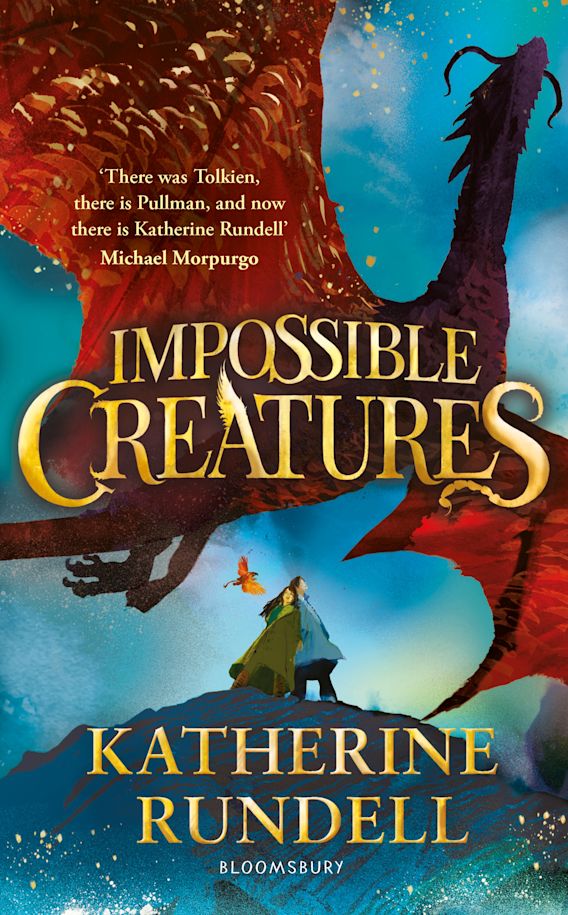
Impossible Creatures by Katherine Rundell


In this book you will meet - beautiful Al-mirajes; Dragons of every size; a Kanko; a vicious Karkadann; some little Lavellans; a huge Longma; a very special Ratatoska; a herd of Unicorns and many others.

Publisher blurb: Impossible Creatures tells the story of a boy called Christopher who is visiting his reclusive grandfather when he witnesses an avalanche of mythic creatures come tearing down the hill. This is how Christopher learns that his grandfather is the guardian of one of the ways between the non-magical world and a place called the Archipelago: a cluster of magical islands, where all the creatures we tell of in myth live and breed and thrive alongside humans. They have been protected for thousands of years from being discovered; now, terrifyingly, the protection has worn thin, and creatures are breaking through.  Then a girl, Mal, appears in Christopher’s world. She is in possession of a flying coat, is being pursued by a killer, and is herself in pursuit of a baby griffin. Mal, Christopher and the griffin embark on an urgent quest across the wild splendor of the Archipelago, where sphinxes hold secrets and centaurs do murder, to find the truth – with unimaginable consequences for both their worlds. Together the two must face the problem of power, and of knowledge, and of what love demands of us.

As I read this book I added about 40 post-it notes marking my favourite scenes and sentences.  Here are some of them:

"This world has always had magic in it, Christopher. Aren't you holding a griffin in your arms? The magic grew with the Earth's first tree, from the tree it flowed into the soil, into the air and the water. In the Archipelago, they call it the glimourie."

"Some sentences have the power to change everything. There are the usual suspects: I love you, .... But the words with the greatest power to create both havoc and marvels are these - I need your help."

"He knew that sometimes, if you are among the very lucky, a spark of understanding cuts like lightning across the space between two people. It's a defibrillator for the heart. And it toughens you. It nourishes you."

Thank you, Katherine Rundell for mentioning delicious and essential food - this is something I always look for in longer complex books like this one.

"She spent hours running through trees with Gelifen (a griffin), looking for unicorns and gorging on waterberries."

"There was a wall of blue glass jars, containing sweets from across the Archipelago. There were balls of soft gum, harvested from the sea by sylphs, which gave you brief bursts of great physical strength, but if you chewed too long gave you a rash of scales across your hands. There were ruinously expensive candies called voulay-drops, made my centaurs in the mountains of Edem. They tasted of that which craved most, but also, if you ate more than one, made you vomit something black for days afterwards."

"The table was laden with food. There was a beautiful moist nut cake, and fresh cinnamon twists, and a plate of biscuits still hot from the own.  Leonor was grey-haired, untalkative, unsmiling - but she showed her care in her cooking. She was the finest baker in the whole of Icthus: it was there that she put her patience, and her love."

"His grandfather had said that unicorns had a taste for mint. Quickly he tore open the pack and held them out in one hand. The unicorn dipped its mouth and sucked them from his palm, leaving it wet with unicorn spit. Then it touched its muzzle to his face, and breathed. Christopher felt the warmth on his skin and it smelt of mint and animal and something magnificently wild ..."

"There was a dark flat bread, which they ate dipped in olive oil. There was a slab of cream-coloured dried fish, delicious and so salty it was like eating the sea itself."

"He had been given a woven bag of apples, of plums and pears and apricot: dryad fruit, like nothing else on earth. They tasted still-living fruits with opinions and jokes and laughter in them."

Overtones of folklore; mythology; fairytales; and CS Lewis (the final scenes are sure to make you think of Aslan and Narnia):

"It had been years now since Mal had first learned to fly. a travelling seer had given her the flying coat soon after she was born. He had named her and laid the coat at her small feet." I thought of Sleeping Beauty.

Vocab: phalanx of swans; rhinocerosed; gainsay; scrofulous. And there are lots of invented words too. 

Names are important in this book too (think of A Wizard of Earthsea). Mal is short for Malum - and malum has a deep meaning - one that Mal herself has yet to discover. 

There is also a tiny thread of a love story in Impossible Creatures. I am not going to spoil this with any details, but adult readers might think of scenes from a favourite movie where the two main characters briefly glance at one another and then look away or brush hands and it's electric - these tiny moments were thrilling for a romantic reader like me. 

The Guardian's Bestiary at the start of this book has art by Tomislav Tomić. He is from Croatia. The cover is by Daniel Egnéus. (I have talked here about two of his books - Fox and Raven Child. In the UK the hardcover edition has phoenix sprayed on the page edges - it looks so magical.


Image source: Instagram

One of my favourite parts of writing Impossible Creatures was creating a bestiary to go in the front of the book: a collection of twenty-one of the creatures you might meet in the Archipelago. It’s illustrated by Tomislav Tomic, whose artwork is magnificent - 
kluddes and kankos and karkadanns, longmas and lavellans. 


I am not a big fan of endorsements, but this book has a huge list of celebrity praises - Michael Morpurgo; Catherine Doyle; Philip Pullman; Neil Gaiman; Jacqueline Wilson; and Kiran Millwood Hargrave. 

Everyone on social media is so excited about this new Katherine Rundell book - and justly so. I have seen bookshop window displays here in Australia (Three Sparrows) and in UK (my bookish friend has shared them) and the Australian children's book podcast Your Kids' Next Read included an interview with Katherine Rundell [begin at 16.45]- this is quite amazing because this group (Facebook and Podcasts) are usually, almost exclusively, focused on Australian books. I was also amazed that that interviewer had not previously read any of Katherine's books - how did she miss them and why didn't she prepare for the interview?  Anyway, if you listen you can hear Katherine Rundell's absolutely beautiful, lyrical speaking voice. 

I completely agree with these review comments by Just So Stories: I cannot tell you how much I love this (book), and that will be demonstrated by the fact that I will be keeping my copy and will re-read it, more than once I suspect. Though I read it immediately it was received, in swift binge fashion (and cried), it has taken me two weeks to compose this review – which I fear still does not do it justice.

I also agree this book is best for mature readers aged 11 or 12+. 

Here is Katherine Rundell on Instagram. Here is a one hour video where Katherine talks with Michael Morpurgo about her book. I do need to warn you, I just read on the UK publisher site (Bloomsbury) that Impossible Creatures is the first book in a trilogy. The good news is that at the end of the first book we are not left hanging. Yes, another book will be very welcome but enough is resolved at the end of the first installment thank goodness. Listen to this short introduction by Katherine Rundell. 

Writing fantasy has been a huge joy. Impossible Creatures has been a long time in the making – I pitched the idea more than five years ago, and I’ve found it a magnificent challenge. I loved fantasy as a child, and I love it now as a writer – for the freedom it gives to wholly unleash your imagination. Fantasy seems to me one of the most exciting ways to wield metaphor: so that, in writing about griffins and dragons and horned hares and immortality and flying coats, you might offer children (who have such allegiance with the fantastic, in every sense) a way to fathom their own world. Katherine Rundell

I have read and LOVED so many books by Katherine Rundell and the delicious thing about her writing is that it defies categorization. She covers so many genres and themes but the one thing that links these books is that they are all page turners and for me, they are all FIVE star titles.


I also loved these:


All through this book I kept thinking about this book illustrated by our Australian Hans Christian Andersen winner - Robert Ingpen and I have discovered he has a new book about mythical creatures too.


Companion reads:


Saturday, October 22, 2022

Margaret's Unicorn by Briony May Smith


Margaret and her parents move to a new home in the countryside. On the first afternoon Margaret sees some unicorns racing through the sky:

'They were leaping into the air, swept up by the wind. And then in the blink, they were gone."

All except one tiny baby unicorn. Margaret carries the precious baby home. Her grandmother explains unicorns only eat flowers. Since it is autumn there are not too many flowers around so they head to the town florist where they pick up beautiful bunches of flowers. 

Unicorns need to drink water that has been touched by moonlight so later that night Margaret and her dad head out with buckets to collect water where the moonlight has touched the stream. 

Have you noticed something truly wonderful here. All of the adults can see the baby unicorn and all of them believe they are real. This is such a point of difference from other books about unicorns.

Time passes and the unicorn grows bigger. In the Spring, the flying unicorns return and it is time for the baby to be reunited with her mother. So this is a book about new friends, care of others and about letting go.

Yes there’s magic in this lyrical tale but never of the sparkly sort; rather it has an earthiness fed by the landscapes and the seasonal changes all around, so beautifully captured in the illustrations, that and the love. Red Reading Hub

The illustrations in Margaret's Unicorn are very special - here is a example from Briony May Smith's Facebook page:


Take a look at other books by Briony May Smith. I love the way the illustration above shows shadows and light. 


Image from the title page -  source: Briony May Smith

When I was a very young child I read a book about a unicorn and I loved it. Fast forward to 2022 and the shops are filled with unicorn "stuff" and lots of fairly ghastly pink and sparkling picture books about unicorns. Thankfully Margaret's Unicorn is nothing like that. Unicorns are every where now. I do love the ones on the main post office building in our city of Sydney. My friend had a birthday party for her one year old grand daughter the other day and the theme and cake were all about unicorns. I did wonder how a one year old baby would even know about unicorns!  

I have a Pinterest collection of Picture Books that feature unicorns (of course there are many more that I could add). Here are some other unicorn books I have talked about on this blog:


Oh, and if you are wondering about the unicorn book I read back in the 1960s it was this one: The Little White Horse by Elizabeth Goudge. 


Saturday, February 12, 2022

Two books by Udo Weigelt illustrated by Julia Gukova and translated by J. Alison James


I discovered the Russian illustrator Julia (Yulia) Gukova when I was exploring illustrators nominated for the Hans Christian Andersen award for 2022.  My friend has two books illustrated by Julia in her library both by Udo Weigelt and both published by the wonderful North South ad yes they are both wonderful stories. 

Talking about these two books I would like to comment on the brilliant translation by J. Alison James. I do not read German (the original language of these two books) but both contain rich texts which are sure to impress you.

Here are the German titles: Ich wars nicht! and Das sagenhafte Einhorn.

It Wasn't Me is a story about misplaced blame and overcoming prejudice. Ferret is collecting raspberries. He makes a pile and then moves off to collect more. When he returns the pile of delicious red fruit is missing. Up in the tree he spies Raven. Once, long ago, Raven did steal something - he will be forever tarnished by this previous crime but he is not guilty this time.  How can he convince his friends when all of the evidence seems to point to him. The animals gather for a meeting and it is decided they should look for clues. This book was published in 2001 and is long out of print so I am going to (spoiler alert) explain just who took the berries - it was the ants. Now the animals need to apologise to Raven, and work out a way to share the berries with the ants so everyone can be happy. You can see art from this book here. 

Here are a couple of text quotes:

"Mouse told the whole story. The animals were very indignant."

"Carefully they tiptoed after the berries, which were snaking around a little hill and then vanishing."

In The Legendary Unicorn we meet the same forest animals. Little Hedgehog sees a unicorn drinking at the stream. He rushes off to tell all of his friends but of course no one believes him after all unicorns are not real - surely? Their level of disbelief has consequences. When the forest animals gather as usual to share stories they discover they have forgotten every single one. The next day the forest itself feels dim and dull. They realise the problem is the unicorn. The only solution is to try to tell a new story - beginning with : Once upon a time there was a unicorn who loved stories very much. This book was first published in 2004 and so it is also out of print. 

Here are three text quotes which show the beauty of this translation:

"Every evening, the animals met in a clearing in the forest to tell stories - fairy tales, myths and legends- fantasies filled with magic and wonder."

"Now I, too believe that the unicorn was in or woods. Or something very like it. It's possible that our doubt has caused this environmental disturbance."

"The unicorn lifted its head in the moonlight. It looked calm and at peace, as if it felt at home. Hedgehog welled with happiness at the sight."