Showing posts with label Racism. Show all posts

Tuesday, June 30, 2026

Joey and the Junjardy by Allison Rocca illustrated by Brenton E McKenna


"I'd been cursed by the Junjardy ever since I moved to Coolibah Creek. But I didn't have hard feelings about it. I was glad the Junjardy had latched onto me, saw something in me living on ancestral land, showed me how to find my place ... to Country."

Joey and his family - mum, dad and sister have moved back to live with their uncle at Collibah Creek. Near the creek Joey hears some noises and later he sees a small hairy creature. Now Joey himself is somewhat of a prankster, but he seems to have met his match with the Junjardy. The question is how much is too much and why are the pranks escalating - is the Junjardy upset?

"Two eyes appeared, peering out among the leaves. Bright, unblinking eyes. Too big for a lizard. Too small for a stray dog. My breath stuck in my throat. A cold, prickly feeling crawled over me, from top to toes, like I'd stepped into a giant spiderweb. The eyes glinted at me. .... I dunno what I was looking at. I just knew it wasn't good."

"Could it be that Coolibah Creek was not some old, boring place like I first thought?"

"I looked closer. I could make out a head, body, arms and legs. The face had ordinary human features, if you could call them that. Poking out from a mat of dark grass-like hair was a flat nose and a mouth with jagged teeth. Somehow it was a face that managed to look young and old at the same time, both a boy and a girl at one."

"Some mobs believe that it's a protector of the land. For fellas on their native land, it can be mischievous. Stealing from them, hiding things, making a mess. But ... fellas who are not on traditional land or who are trying to hurt the land ... it can act aggressively towards them."

Adults can't see the Junjardy and nor can some kids but later Joey learns his teacher and mother do know about it. 

I had one small quibble with this book. I read the bio of debut author Allison Rocca and discovered she is a primary school teacher, so I was very surprised by her portrayal and character name for the school Principal of Collibah Creek Primary School - Mr Plodd. She also makes a small throw-away comment about teachers when she says describes the scene 15 minutes after the end of the school day: "We were the last kids around. Teachers were leaving the car park in droves." I have worked in five schools and I never witnessed teachers leaving so quickly after the bell. It is an awful myth/generalisation that teachers only work between 9am and 3pm. Here is a link to the teachers notes where you can read why Allison wrote her book. 

Thanks to UQP for sending an advance copy of Joey and the Junjardy. This book will be included if your school purchases the Lamont Standing order. 

Publisher blurb: Joey Gibbs is always up for a laugh. What isn’t funny: the ‘Big Trouble’ he caused at his old school that meant his family had to move back home to Coolibah Creek. Joey’s going to keep his head down this time. New school, new mates, new start. But trouble seems to have a way of finding him.
When his sister and cousin start getting mysteriously pranked, Joey looks for answers from his Wakka Wakka culture. He discovers he’s caught the attention of the Junjardy, a hairy little trickster. Joey can’t resist making mischief again with his secret partner in crime. But as the jokes spiral out of control, he must work out what the Junjardy wants with him before disaster strikes.

Joey and the Junjardy’, by debut First Nations author Allison Rocca, is a funny middle-grade novel featuring characters from First Nations storytelling. This represents reading for pleasure - and has the power to raise really positive conversations about storytelling and culture. Paul Macdonald

Allison Rocca is a primary school teacher who has taught in classrooms from the ’burbs of Australia, to remote villages in Asia and castle-like academies in Oxford. She is a descendant of Wakka Wakka and Kaanju people and her upbringing was rich in storytelling. Allison likes to draw on the stories passed down by her highly respected Elder grandparents to write fiction for children and young adults. She lives and writes on Yuggera/Turrbal Country, Brisbane.

Brenton E McKenna is a Yawuru artist and writer from Broome who fell in love with comic books at a young age. He studied visual arts at Goulburn TAFE, and in 2011 became the first ever published Indigenous graphic novelist with the release of Ubby’s Underdogs: The Legend of the Phoenix Dragon. When he’s not drawing, Brenton dedicates his time to educating young people through creative storytelling workshops.

The scenes in this story where Joey is framed for taking Bruno's precious pencil set reminded me of these classic Australia books:


Here is another Australian book about pranking:


Sunday, June 15, 2025

Not Nothing Gayle Forman


Before I start, I want to make it clear. He did something bad. Truly bad. I don’t want you to think I’m sidestepping that, or excusing it, or even forgiving it; it’s not for me to forgive, anyhow. But I’m telling you the story so you understand how he got where he did and how I got where I did and how both of us learned to rise to the occasion of our lives.

Alex, aged 12, has done something truly awful. The judge is giving him one more chance or one more opportunity. Alex hates that word and it's one the adults seem to use way too often. Now he finds himself at the Shady Glen retirement home: The Shady Glen residents were the living waiting to die. Places like Shady Glen are antechambers of death, the last stop where you wait for the Last Stop.

Because, honestly, no one had asked him if he wanted to be here. No one had asked him if he wanted another stupid opportunity. But, remembering what the judge had said about him throwing away chances ...

Alex is assigned work in the care home. He finds the residents weird and scary but even worse there is a young girl named Maya Jade also aged 12 who is working there - not as a community service order but as a volunteer - and she is bossy and opinionated and very annoying. The facility goes into lock down and Alex is sent to deliver meals to the residents. He meets Joseph “Josey” Kravitz aged 107 AND we meet him too because this book uses that appealing plot style of alternating voices so we can hear what Alex thinks and hear Josey. This is lucky in two ways because Josey is nonverbal (at least at the beginning of the book) and Josey is able to share the things he really 'sees' about Alex. Josey also opens up to Alex and over the following months he shares his own story - a harrowing story of love, loss and the holocaust.

Alex is suffering at home. He has been sent to live with his aunt and uncle. They are cold, disinterested and show Alex no love or affection. So 'home' is a misery. 

He lived on a lumpy couch with an aunt and uncle who did not want him. He had a judge who had warned him of last chances. He might go to juvie. And his mom… He hadn’t seen her in almost a year. He didn’t know if or when he would ever see her again. How could it get more permanently bad than this?

And the new school is also terrible. 'They' decide Alex is failing and so he is given special tutoring in maths. Alex is good at maths but he has totally switched off because everything in his life is so broken. He is so angry about the tutoring and the tutor. 

This book was published in 2024 and so here in Australia the hardcover edition is priced way beyond a school library budget. I read my copy on a Kindle but hopefully a paperback will arrive eventually. Not Nothing has won a Banks Street Award - Josette Frank Award 2025The Josette Frank Award for a work of fiction of outstanding literary merit for young readers in which children or young people deal in a positive and realistic way with difficulties in their world and grow emotionally and morally.

There is a raw honesty in this story - both in the story from Josey and from Alex. I cannot tell you exactly what Alex did but even though it is dreadful Gayle Forman has crafted a story that builds our empathy. I highly recommend Not Nothing for readers aged 12+.

Best-selling award winner Forman interweaves the tales carefully, with striking language and depth of feeling, allowing readers to understand the characters’ changing perspectives as they learn more about themselves and open up to people around them, many of whom become advocates and friends. Powerful, heartbreaking, and hopeful. Kirkus Star review

Book seller blurb: Alex is twelve, and he did something very, very bad. A judge sentences him to spend his summer volunteering at a retirement home where he's bossed around by an annoying and self-important do-gooder named Maya-Jade. He hasn't seen his mom in a year, his aunt and uncle don't want him, and Shady Glen's geriatric residents seem like zombies to him. Josey is 107 and ready for his life to be over. He has evaded death many times, having survived ghettos, dragnets, and a concentration camp--all thanks to the heroism of a woman named Olka and his own ability to sew. But now he spends his days in room 206 at Shady Glen, refusing to speak and waiting (and waiting and waiting) to die. Until Alex knocks on Josey's door...and Josey begins to tell Alex his story. As Alex comes back again and again to hear more, an unlikely bond grows between them. Soon a new possibility opens up for Alex: Can he rise to the occasion of his life, even if it means confronting the worst thing that he's ever done?

Here are a few text quotes:

For three days the boy cleaned banisters, safety rails, doorknobs, coffee tables, more doorknobs, Rummikub sets, book spines, outdoor tables, indoor tables, outdoor chairs, indoor chairs. The bleach stung his eyes, scraped his throat, and stole his appetite. The baloney sandwich his aunt packed him went uneaten. He would’ve thrown it away except he couldn’t bring himself to throw away food.

But then, as the months dragged on, his mom started to go to one of her bad places. He could recognize the signs as easily as the freckles across the bridge of her nose. He’d wake up in the morning and find her in the same chair she’d been in when he’d gone to bed, the TV on the same channel, the dinner he’d left out for her cold on the table. She didn’t cook any meals or eat the ones he put together.

“You shouldn’t separate them, because they love each other,” he continued in a halting voice. ...  So many people in Shady Glen had lost the people they loved, because their spouses had died or their children had moved away. When the people you loved left, that love remained, floating around, desperate for a place to go. And if it didn’t find a place to go… bad things happened. Love turned into anger, fear, hate. This was something the boy at twelve knew all too well. How did the grown-ups not see this?

“I’ll tell you why!” The words felt like a rocket countdown. Ten, nine, eight… “Because everyone who has promised me an opportunity has just made things worse. When I told the people at my old school about me and my mom, they all congratulated me on doing the right thing. Because now they had an opportunity to get us some help. I thought they meant food.” His voice began to crack, but the rocket was lifting off now, and there was no turning back. “But you know what they did? They made me go live with strangers and dragged my mom to a hospital and told her she’d have to get better if she wanted to be my mom. But if you know my mom like I do, you know she can’t stand to be stuck in one place. It’s why she moved so much. It’s why during the lockdown she got so much worse.”

I have also read this story where an elderly character also shares their holocaust experience. This one is for a slightly young audience - 10+.


Thursday, May 22, 2025

Hester Hitchins and the Falling Stars by Catherine Norton


Hester's mum has died giving birth to her twin siblings. Dad is a sailor and they have received a message that he is missing presumed dead. The five children are sent to live with a tyrannical uncle. Hester holds onto the word 'presumed'.  Surely her clever father is not actually dead but in order to find him she needs to sail across the world and to do this she needs navigation skills. In a timely coincidence she sees a sign for the placement test to attend a naval navigation school, but it is for boys. Hester is a maths genius. She disguises herself and takes and test and gains the top place and a scholarship, but the school authorities think she is a boy. Her sister works out a way for her to travel to the remote school which is part of a large estate but when she arrives, she is forced to become a maid - a servant with the lowest ranking. You will grimace as she is forced to empty very full chamber pots and carry heavy buckets of coal up many flights of stairs. She does make friends with one of the maids named Mildred and as they clean Mildred sings so beautifully this makes the tasks slightly less awful. 

One of her duties is to clean up the mess in the tutor's bedroom. It is soon clear this school master, Captain Slingsby, is a fraud. Hester is not keen on blackmail or dishonesty, but she now has some important knowledge she can use to her advantage. Her dream of attending the school can come true but then she discovers the lessons are all nonsense. 

Meanwhile the owner of the school and estate Lord Addington is building the biggest telescope. His wife is grieving the death of their only son, and she is clinging on to the hope of seeing him again because a swindler named Mr Ittish has arrived. He claims the impending meteor shower is actually the souls of the dead he is also sure the earth is flat. Lady Addington falls for all of this nonsense. 

There are 41 short chapter in this book, and you can read the first five chapters on the publisher webpage. I do appreciate the book design for Hester Hitchings and the Falling Star. Both of Catherine Norton's books are presented in sturdy hardcover editions with textured covers. 

In this interview with Kids' Book Review Catherine Norton talks about her books. 

Curious readers will want to know more about how a lodestone works, and more about Janet Taylor who was a woman astronomer in 1835. Also, they are sure to want to discover more about steam powered cars and the Leonid meteor storm "which it is estimated that thousands of meteors fell every hour." For myself I need to discover more about these two things - an orrery and an azimuth.


This is an Ornery. An orrery is a mechanical model of the Solar System 
that illustrates or predicts the relative positions and motions of the planets and moons


Here is a detailed review from The Book Muse and also one from The Bottom Shelf

Blurb from the author webpage: Determined to find him, eleven-year-old Hester wins a place at Addington’s Nautical Navigation Academy, where she will learn to navigate by the stars. But the academy is just for boys, and what’s more, no one seems to be in charge. Bumbling schoolmaster Captain Slingsby doesn’t know anything about navigation. Lord Addington is obsessed with building the world’s biggest telescope and Lady Addington believes that falling stars are the souls of the dead. With the help of a lodestone, her new friends Pru and Nelson, and a dazzling meteor storm, can Hester set things right – and find her own place in the universe?

I saw an image of the cover of this book somewhere on the internet. I previously LOVED this book also by Catherine Norton but I wrongly listed it as a book the CBCA missed adding to the 2025 notables list. This first book by Catherine Norton - The Fortune Maker was published in 2023 this means it SHOULD have been a 2024 CBCA Notable!


Wednesday, July 12, 2023

Maizy Chen's Last Chance by Lisa Yee


Fortune Cookie wisdom  
Good friends are friends for life. 
Talk is overrated. True friendships are not.

Maizy and her mum have driven to Last Chance, Minnesota because Opa (Grandfather) is very unwell. Maizy has never visited her grand parents or seen their Chinese restaurant before. Mum and Oma (Grandma) are not on speaking terms. This is just one of the puzzles Maize has to unravel. She also needs to hear the story of her family going all the way back to the 1850s. Opa tells the story of Lucky - his great great grandfather all the while teaching Maizy how to play poker - the card game and the life game.

"In my family, some times what's not said takes up more space than what is."

"It's not just the cards you're dealt. It's what you do with them that matters most."

"You're not interested in stuff like sailing ships, outlaws and a gold mountain are you?"

"It's funny how one insult can ruin your day or how one compliment can make someone so happy."

Take a close look at the cover - the tiny details here are important to this story - fortune cookies; Grandma (Oma) and Grandpa (Opa); a large brown wooden bear; the Chinese restaurant; and even the LA T shirt worn by Maizy herself.  There are 81 chapters in this book - they are all so short the pages just fly by. This book truly is a page turner. I can understand why this was a 2023 Newbery Honour Book.

If you are sharing this book here in Australia I would use this quote as a way to start a discussion about the themes of racism which are explored in this story:

"Does this girl even know how beautiful she is? I wonder what it would be like to be blond and beautiful. Or just blond. Or just beautiful."

I was called for jury duty today and because this is a long process I took along my ipad which has a few Kindle middle grade books. At 9am I settled down to wait and I read over 60% of this book and then when I arrived home (everyone was dismissed - no one was needed for a jury today) I finished off Maizy Chen's Last Chance. Now I need to head out to my local Chinese restaurant and devour some delicious food - this book is filled with tantalising dishes. It was great to see so many people who were sitting in the court holding area today reading books and ebooks. 

Here is a video with Colby Sharp talking about this book. He mentions the minor characters and I totally agree. I loved the way Maizy needed to discover each of their back stories and motivations. Take a look at the author page about this book. Here is an in depth interview between Lisa Yee and Roger Sutton (Horn Book). Here is the Kirkus Star review.

This was a perfect balance between a fun setting and characters, and more serious issues and history. Ms Yingling (she also mentions The Parker Inheritance as a related text). Read her review for more plot details. 

Maize asks Principal Holmes if she can borrow books from his high school library over the summer months while they stay in Last Chance. Specifically she asks for this book which I have now added to my own enormous to read list:

Companion books to read after Maizy Chen's last chance:


Front Desk (this is the cover here in Australia)


Tiger Daughter (for readers aged 12+)


Wednesday, August 24, 2022

All Four Quarters of the Moon by Shirley Marr


Peijing and her little sister Biju have moved to Australia with their parents Ma Ma, Ba Ba and her grandmother Ah Ma. Everyone in the family has to make huge adjustments in order to cope with this new place. Peijing loves her Ah Ma but Ah Ma is beginning to act strangely as her memory deteriorates. None of the adults seem able to talk to Peijing about this. Back in Singapore Ma Ma was popular and confident but with little or no English here in Australia she has retreated into her home. It is so difficult to mesh traditional family customs and expectations with the new life Peijing is experiencing at her school. And also she has new levels of responsibility towards her sister and her mother. 

Peijing and Biju share a Little World. It is all made from paper and they love to add new creatures and invent stories as they play.

"Little World was something familiar. Something safe. Something to escape into. Where minutes could become hours and hours grow into days. Where in the blink of an eye, ecosystems could grow and flourish and collapse again back into the ocean, and large herds of beasts that only existed in your mind could cross from one continent to another. Where something you made yourself could be your home, even just for a while."

"There were zoos and farms and a network of underground burrows and branches of trees made of many pieces of paper sticky-taped together. There were oceans, rivers and lakes too but some of them were so big they stretched from one side of the room to the other."

In a moment that lingers with me, on the day the family leave for Australia, everything in their Little World box is gone. Peijing knows that her mother has done this. Biuj is distraught but the girls find one paper rabbit hidden under a flap in the box. Peijing tells Biuj to hide the rabbit so they can take him to Australia. There is such a raw honesty to this scene that it must be a memory from Shirley Marr's own childhood. In fact I wonder how much of this story is autobiographical such as the scene where Biju refuses to use chopsticks (chapter 10). I also adored the unfold friendship between Peijing and Joanna. Every story needs a special and kind friend like Joanna. 

"Peijing's heart was beating fast. She wanted to yell at the boy to take back what he said about Joanna. She wanted to punch him in the face for saying what he did about her. Then she wanted to run out of the school gates, run until she reached the ocean and, even though she could now swim, make it impossibly back home."

Interspersed between chapters are Biju’s own retellings of myths and fables, offering the sisters a chance to consider elements of Chinese culture as Peijing seeks to navigate between the values of her family and their teachings and what she learns in Australia. And we also witness a transformation of each family member - Ba Ba softens, cooks and forms a relationship with his daughters and Ma Ma finds a job at the Asian Mart. 

This is a read with tons of heart. Peijing, is a kind and family orientated girl, who tries her best to keep a positive outlook but often feels like she's sinking, instead. She struggles not only with the new environment and language but can't seem to find her place in school. Still, she does her best and keeps an inspiring and heart-warming attitude...even when it proves difficult, at times. Especially her relationship with her younger sister touches the heart (even when things aren't always smooth) and makes this a wonderful read about the sisterly bond. Book Worm for Kids

There are so many things to say about this book – it’s lyrical, magical, beautiful, and comforting – because it reassures all readers that we are not alone in feeling like we don’t fit in, and lets readers know that we can find a way to fit in and be ourselves. The Book Muse

As I write this it is Book Week here in Australia and one of the major things that happens this week is the announcement of our National children's book award winners by the Children's Book Council of Australia.  There are six categories of awards and one of these is for Younger Readers (in the US you might call this elementary school).  The winner for 2022 is by Shirley Marr - A Glasshouse of Stars.  


When you read both of these book I recommend you should then try to find books by Gabrielle Wang and Grace Lin (especially Where the Mountain meets the Moon). 

Sunday, January 2, 2022

The Lion above the Door by Onjali Q Rauf

"It was exactly my name! Not just the Leo part but all of it - Leo Kai Lim! But what was it doing inside a cathedral? On part of an old wall that remembered soldiers? And why did it have a golden lion above it, when none of the other names did? And what did DFC mean?"

Leo and his class go on a school excursion to Rochester Cathedral as a part of their class study of World War II. 

"The school library books about the war hardly mentioned any countries outside Europe and America. Even the ones that did only ever said things like "parts of the Commonwealth' or 'the Far East' or 'Africa' - as if those words were just a single thing and weren't made up of lots of huge countries with millions of people who might have been heroes too."

Leo's family come from Singapore and Sangeeta's family come from India. They also have a new friend Olivia who shares her (surprising) heritage. These three form a team to tell the real history of their connection to World War II. 

The joy and importance of family history are also recognised- gathering memories from those around you and exploring the lives of those who have gone before and acknowledging the contributions they have made.  North Sommerset Teachers' Book Award

Publisher blurb: Leo and his best friend Sangeeta are the odd ones out in their school. But as Leo's dad is always telling him, it's because they're special. Only thing is, if they're so special, how come they never see anyone who looks like them in their school history books?  Then, on a class trip to a nearby cathedral, Leo's attention is drawn to a large marble slab high above the doors of the hall. Right there, bang in the middle of a list of war heroes, Leo finds himself staring at something incredible: his own name. Desperate to know who this other Leo was, the two friends embark on a search. And together, they begin to uncover missing stories from the past, ones which they are determined to put back into their rightful place in the pages of history.

This book is has a slower pace than the previous books I enjoyed by Onjali Q Rauf but on page 251 the action really heats up. Readers aged 10+ with reading stamina, an interest in World War II, and those who enjoy stories about true heroes are sure to enjoy The Lion above the Door. Here are three other books by Onjali:


Wednesday, September 15, 2021

Bud, not Buddy by Christopher Paul Curtis


Bud not Buddy sat beside his precious mother and he watched her die. He now finds himself in an orphanage and as the story opens he is sent, yet again to a foster home. As in the past the foster parents are truly awful and the kid who already lives in the house, their son, is horrendous - cruel, mean and a liar.

After a nasty incident on the first day Bud runs away. He has a small suitcase containing a few possessions which were precious to his mother. He has no idea but the significance of most of suitcase contents but he is sure the concert flyers for a band featuring Herman C Calloway.  Bud is certain Herman must be his absent father. The brochures are his only clue but Bud sets out to travel from Flint Michigan to Grand Falls. Along the way Bud encounters great kindness and he meets an amazing group of musicians never suspecting the truth of his heritage until the final scene. 

You can read the full plot here.

.... the journey of Bud's hopeful heart that will stay with me for a very long time. Kids Book Review (Australia)

I actually thought I had already read this book and in a crazy moment of regret I also thought I had accidentally ordered the wrong book. Luckily both these premises are wrong. I have read The Watson's go to Birmingham also by Christopher Paul Curtis and we did have Bud not Buddy in my former school library but reading this book last week I am sure I had not previously read it so my purchase had a great purpose - allowing me to enjoy this very famous US book which won the Newbery Award and also a Coretta Scott King Award along with a host of state awards. Listen to a delicious audio book sound track here.

Here are some other covers. You probably already know I am bit obsessed with covers:


Wednesday, July 7, 2021

Hurricane Child by Kacen Callender


Caroline's mother gave birth to her daughter during a hurricane. " ... it's a curse being born during a hurricane. I won't have an inch of luck for the rest of my days, and sadness will follow me wherever I go."

There is a deep sadness in Caroline's life. "One morning my mom got up and went halfway across the world ... "  All she has now are occasional postcards sent from faraway places and now the postcards have stopped coming.

She also seems to be under a curse: "Seeing that I'm the littlest girl with the darkest skin and the thickest hair in the whole Catholic School, Missus Wilhelmina doesn't like me - no not at all. I get a smacking on my bum for everything: not looking her in the eye when spoken to, laughing too loud during playtime, and thinking I'm better than everyone else because I know the answers to her questions in class, for asking too many questions in class, for not crying after those bum smackings. I always refuse to cry after a bum smacking." The other girls taunt and tease her, no one is her friend. Every day Caroline makes the long journey by boat from her home on Water Island to Saint Thomas and everyday her experience at school is utterly dreadful. 

All of these things motivate Caroline. She is determined to find her mother. She needs answers to her desperate questions - Why did her mother leave? Does her mother love her? Was it Caroline's fault that she left? Will she please come back? 

Caroline mostly does not worry about being different but she is deeply lonely until a new girl arrives in the class. Kalinda is a special girl. She is not bullied by the other horrid girls, she is confident and wise. It seems impossible to Caroline that Kalinda could very be her friend but somehow this does happen and life feels better until the terrible day when Kalinda (and those other horrid girls) read the beautiful love letter Caroline has written to Kalinda. This love is more than the love of a friend. This is a deep first love. The Wikipedia entry for this book says: there is a "romantic relationship that is developed between two of the main adolescent characters."

This is another one of those books where I feel quite conflicted.  Many reviewers list this book for ages 9+ or even 8+.  When I finished reading Hurricane Child I declared it was a Young Adult title for 12 or perhaps 13+. If you look at my list of labels I have assigned to this post it is clear this book has mature themes.  

Here is a quote from the New York Times (part of their discussion of four recent books including Hurricane Child)

Reading a middle-grade novel can feel like opening Pandora’s box. Devastating storms. Racial injustice. Violence, divorce, bullying, class conflict, depression, displacement, illness, grief, homophobia, abandonment, isolation, money worries and suicide attempts.

I did enjoy so much about this book. The voice and honesty of Caroline, the descriptions of the Caribbean islands, and the unwavering determination of Caroline to find her mother.  The way Kacen Callender describes the Caribbean islands reminded of the way I felt reading Turtle in Paradise set in Key West Florida. Here are some maps to help orientate you to the setting of this book:


Here is a photo of the type of Taxi Caroline catches after her boat ride. 


Why do I think this book is for older readers: Caroline's mother has previously attempted suicide; every day Caroline is beaten by her Catholic school teacher; Caroline is making new discoveries about her own sexuality; and then there is the violence of the bullying inflicted on Caroline every day.

Each of these reviews has more plot details:

Kirkus Star review

Horn Book

Ms Yingling Reads

School Library Journal

You can see several awards on the front cover - Stonewall Award (Given for exceptional merit relating to the gay/lesbian/bisexual/transgender experience in English-language books published in the U.S.) and Lambada Literature Award (Created over 30 years ago to recognise the crucial role LGBTQ writers play in shaping the world). Here is a video review by Andrea Pinkney.

Companion reads:


Sunday, December 27, 2020

Prairie Lotus by Linda Sue Park


It is 1880, same time period as Little House on the Prairie. Hanna and her father are looking for somewhere to settle. They arrive in LaForge (Dakota) and begin to set up their shop which will sell Dress Goods but Hanna has a bigger dream. Her late mother has taught her well. Hanna knows she can be a dressmaker if only Papa will agree. In the meantime LaForge has a school and Hanna really wants to honour her mother's wishes and graduate. Hanna has never been to school but she does have a set of the school books and so she can read really well and, while it is not easy, she can do Grade Five mathematics. 

Settling into this new town should be easy but some people in LaForge are suspicious of strangers and to them Hannah seems strange. 

"Standing behind Hanna at the mirror, Mama moved the braid to rest on Hanna's shoulder. Hanna saw the red silk cord against her black hair, both of them smooth and shining. From that moment on, Hana never again wished for blond curls."

"Hanna didn't know a singe person beside herself who was half-Chinese and half-white. Mama always said it made her special. (but) Most of the time ... (it meant) special in a hurtful way."

"The world was so often unfair, and she couldn't do a single thing about most of that unfairness. But she had learned from Mama to fight it where she could, and that meant right here in LaForge."

Running alongside Hanna's struggle for acceptance and friendship is the story of the equal and far more devastating struggles of the Native American people. A great deal of criticism has been levelled at Laura Ingalls Wilder books which you can explore for yourself. A thoughtful Australian child reader might be curious to know more about this. Linda Sue Park gives a detailed explanation around this topic in her Authors Note. While the issues about Laura Ingalls Wilder are serious they should not impact your reading of this splendid book. They could even be a motivation to meet Hanna as a way to understand the history of racial discrimination in US History. But putting all of this aside please read this book just to meet Hanna - a little girl you will want to know and a little girl you will never forget.

This book is utterly splendid; important; insightful; honest; and beautifully crafted.  If I still worked in  school library this is a book I would love to put into the hands of all avid readers aged 10+. 

Back in April Colby Sharp talked about Prairie Lotus by Linda Sue Park. I immediately added it to my shopping list knowing I would have to wait because here in Australia hardcover middle grade novels are very expensive and often take a long while to appear on bookseller lists. Finally in late November I decided I just could not wait any longer and so I ordered the hardcover ($30.00). It arrived yesterday just in time for Christmas - I've decided this can be my Christmas present to myself. Of course I just couldn't wait and so I began to read straight away. Then, because the story is just so wonderful, I simply did not want this book to end. As you have guessed I read the whole book in just a few hours today (Christmas Eve). Linda Sue Park is the author of so many of my most favourite books - A Single Shard; A long walk to Water; See Saw Girl; and The Kite Fighters. I met Linda Sue Park at the Seattle USBBY Conference and I was able to (in a stumbling way) thank her so much for her wonderful books.

When I was in Grade 6 my favourite books were the Little House on the Prairie series (Linda Sue Park talks about reading them too) and Children of the Oregon Trail by Anna Rutgers van der Loeff.  It seems odd because I was living in and growing up in suburban Sydney, Australia but I found these stories of US settlement and travel across the prairie utterly engrossing. As an adult I continue to enjoy and seek out books with this frontier setting such as The Ballad of Lucy Whipple by Karen Cushman; Sarah Plain and Tall by Patricia McLachlan; and Black-eyed Susan by Jennifer Armstrong.

Listen to this audio sample from page one to page four. Prairie Lotus was the 2020 global read-aloud choice. Here are a set of teaching ideas from the US publisher HMH. Here is a podcast (one hour) where Linda Sue Park talks about her book. Here is an interview with Publisher's Weekly.

Look closely at the cover of Prairie Lotus. You can see the family standing near a pond of lotus flowers. Hanna embroiders a tiny lotus flower on her work as another way to honour her mother. 

Touching the fabric, choosing the thread, working with her hands — Park drew on her childhood memories of sewing to convey a sense of Hanna’s process and pride. The Washington Post

The cover art of Prairie Lotus is by Dion MBD from New York.  I do like his cover of A Single Shard.

Just look at all of these honours showered on Prairie Lotus:

Honors for Prairie Lotus:

  • Amazon.com Best Children’s Books of 2020: Ages 9-12
  • Chicago Public Library Best Fiction for Older Readers 2020
  • Kirkus Reviews Best Middle Grade Historical Fiction of 2020
  • New York Public Library’s Best Books for Kids 2020
  • NPR’s Best Books of 2020
  • Parents Magazine Best Children’s Books of 2020
  • Shelf Awareness Best Children’s & Teen Books of 2020
  • Washington Post Best Children’s Books of 2020

Remarkable. Kirkus Star Review

... this is a must-read for middle grades and beyond. School Library Journal

Prairie Lotus is full of immersive everyday details. When I read about the precision of dressmaking (with a particularly vivid look at buttons), I could almost see the buttons clinking in my own hand. In the paragraph or two on sieving flour, I could taste the food being made. Pippa Park

"The writing is distinguished, magical, you can tell Linda Sue Park put so much time and and effort into getting this accurate and so much time and effort and her her heart into making this story and making it accessible for kids."  "This is a great story. Kids are going to be brought in and kids are going to think. ... long after they turn the final page." "I feel happy this book is in the world." Colby Sharp

One more thing to mention.  I am excited to announce Linda Sue Park has been nominated by USBBY for the Hans Christian Andersen Medal along with Kadir Nelson for illustration. Our Australian nominees are Margaret Wild and Tohby Riddle.

Friday, July 24, 2020

Christophe's Story by Nicki Cornwell


Christophe is only eight but in his short life he has experienced distressing and utterly terrible things, things a child his age should never have to see or feel. Living in Rwanda he watched as the streets filled with soldiers and guns, he sees his father taken into custody and later, as the family flee, Christophe himself is shot. The bullet grazes his skin and injures him but, even more distressing, another bullet kills his baby brother. After a long and terrible journey the family finally arrive in England. Christophe has limited English and he has missed two years of school.

Adding to his struggles Christophe has been told about the importance of stories by his grandfather:

"A story should be kept in the head and told from the mouth! That's what Babi says. and he knows about stories. He's a storyteller ... This is how you tell a story like this! You have the story in your head, and when you tell it, you use a big voice or a little voice. And you tell it with your hands, like this! And when you finish, the story flies back into your head. Like a bird going back to its nest!"

When the teacher tries to read stories to Christophe, when she asks Christophe to read stories, and when she tries to get him to write stories, Christophe is filled with fear, grief and confusion. School is torture for Christophe and it is made worse by the class bully. In one scene this boy, called Jeremy, drops a live worm into Christophe's plate of lunch spaghetti. The whole scene made me shudder.

Luckily Christophe has a kind teacher. She gives Christophe time and space to tell his story and gradually she shows him that nothing is lost if a story is indeed written down and in fact this is an important way to share his story with children Christophe himself might never actually meet.

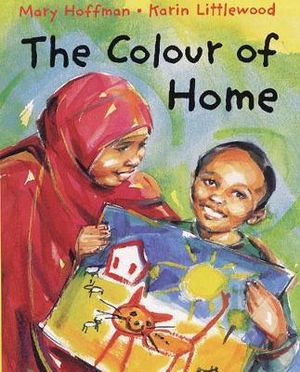
Nicki Cornwell has some teacher notes on her web site. Have you read The Colour of Home. If not find it NOW and read it before you pick up Christophe's story.


Christophe's story was first published in 2006. I have read reviews which question the suitability of this book for children but I think over the last 14 years our exposure to the plight of refugees has greatly increased and in Australia and other countries there are huge numbers of picture books and Primary level novels for young readers which explore all aspects of the refugee experience. Some reviewers list this book for children aged 8-14 but I would suggest it is better suited to older students 10+.

"In writing stories about asylum-seekers and refugees, I hope to find a wide audience for their voices. I try to depict the heroic courage with which they face events over which they have little control. I try to show their moral strength, their courage and their heroism. They are individuals caught up in a web of other people's attitudes and the choices that governments make. We cannot change what has happened to make them flee from their countries, but we can try not to add to their problems by stigmatizing them for seeking asylum." Nicki Cornwell


There is a second book which continues the story of Christophe (I have added it to my to read list but sadly it is out of print.)


For older students I would suggest another book about the power of storytelling:


Books do not need to be long to be "good".  I love the fact that this powerful and emotional story is told in just 72 pages.  Here are some other short books for senior primary readers: