Showing posts with label Woodwork. Show all posts

Thursday, May 28, 2026

Woodlore by Cameron Miller illustrated by Dominique Falla

I picked this book up in a library a couple of weeks ago from their discard pile. You will want to linger over the endpapers - they are so detailed. The illustrations for this book were done on plywood primed with Gesso, using water soluble pencils and each illustration is framed with actual wood which is described in the text and other timbers are used for inlay work and decoration.


"Yew trees, grown throughout the ages, have the wood the bowyer favours."

I do remember when this book was on the CBCA shortlist back in 1995 and at that time many of us decided not to purchase it because the topic was quite niche and the book was very expensive at the time. I see from this library copy it cost AUS$20 which seems okay now. The bowyer, from the quote above, is a man making a longbow.

Here are some other text quotes:

"Maple and Spruce are always kings for the makers of lutes and violins. ... Alder wood is cut into logs, seasoned, taped, and carved into clogs. ... Blackwood and Box are hard and dense to make sweet woodwind instruments."

My favourite illustrations are of the rocking horse and the draft horse pulling the cart loaded with barrels made by the cooper. And the back notes are very detailed and add a good layer of richness to the text. The woods yew, maple, spruce, beech, alder, mahogany, blackwood, box, ash, walnut, cherry, teak, yellow pine, oak, camphorwood and willow. And there are new words to learn such as wane, spindles, cabinetmakers, lathe, felloes (curved parts of a wheel), trenails (used in shipbuilding), and bodgers (they made legs and spindles for Windsor chairs). Do you remember sharing this book with groups of students in your library?

In 1995 Kirkus said: An elegant and informative book about the art of woodworking, the varieties of wood, and their traditional uses. Falla's detailed, historically accurate illustrations show busy woodworkers in various settings—in interiors and exteriors, from the 14th to the 19th centuries, from Europe to China and the U.S.—in scenes of the finished products in use. Each of these is tastefully framed with the type of wood depicted in it. The entire assemblage— picture and ornate frame—is photographed; the result is a series of icon-like compositions, each one devoted to a particular type of wood and its function. The rhymes about each type of wood—yew for longbows, maple and spruce for lutes and violins, beach for chairs, teak for decks of ship—that are printed beneath each frame are rather mediocre, but the detailed explanatory notes at the end of the book are a pleasure to read. These are full of historical information and descriptions of how the objects in the pictures are made. An original conception, masterfully realized.

And The School Library Journal said this, which might explain why I didn't buy this book for my school library:

Yew trees,/grown throughout the ages,/have the wood/the bowyer favors." In 13 double-page spreads of such rhymed couplets and an additional three pages of text at the end, this unusual book provides historical perspectives and description of the special qualities and uses of 16 particular woods. Resembling stained-glass windows with wood grain, Falla's luminous illustrations are done on plywood primed with Gesso, using aquarelles (water-soluble pencils). Miller framed each picture with the wood described in the text and "used a variety of other timbers for the inlay work and decorations." Turning each page, one expects to feel wood, not paper. Parchmentlike endpapers feature sketches of the trees, woodworking tools, and products shown throughout. Vocabulary such as "bodgers" (itinerant wood-turners) and "falloes" (curved section of a wheel rim) are used in the couplets and explained in the textual notes at the end. The volume is slim, beautiful, and represents untold hours of exceptional craftsmanship. Unfortunately, its primary appeal may be to an adult woodworker, especially one with an interest in history. While this title could possibly be used to support an interdisciplinary approach integrating subjects such as industrial technology, social studies, art, and English, it seems more likely to languish on the shelves of an elementary school library.

Tuesday, March 18, 2025

Little House by Katya Balen


Juno's dad works for an aid organisation in a faraway place. Juno is used to her dad's absence but now her mum is going away too. Juno will stay with her grandfather for a few weeks. She does know him, but she has not stayed at his house, and she is desperately missing her mum. On her first day, though, Juno discovers a water damaged doll house in the attic. Perhaps she is too old to play with this but somehow the little, fragile dolls seem to be asking for her care. Her grandfather is a woodworker and so together they build a new house for the four little dolls and then Juno uses her art skills to fill the interiors with rugs, paintings and wallpaper.

This is a book for readers aged 8+ who enjoy quiet stories about relationships. Katya Balen creates a beautiful grandfather character. He does not ask to many questions; he is a fabulous cook, and he is happy to let Juno take her time with talking about her worries.

This is a book for thoughtful readers and is to be recommended. Books for Keeps

Heart-warming without being sentimental ... Just Imagine

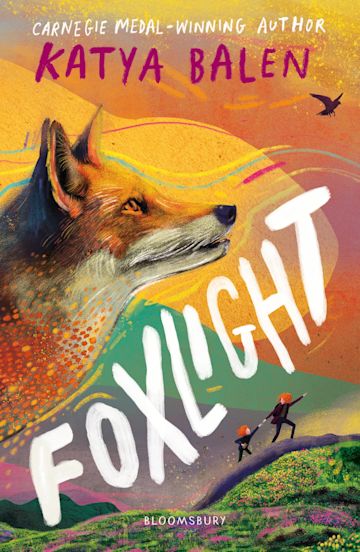
I previously read and enjoyed three books by Katya Balen - covers below (Birdsong is also a Barrington Stoke title). I am collecting books for a presentation to my local Teacher-Librarians and I wanted to include a few titles from Barrington Stoke. You can see their whole catalogue here

Key Features of this series:


October October Winner of the Carnegie Medal


Birdsong (Barrington Stoke)


Monday, September 23, 2024

Bird to Bird by Claire Saxby illustrated by Wayne Harris


Begin with the cover - notice the bird flying in the air and the other bird, possibly made from wood, held in a hand above the ocean.


These things come together in this book but you need to read the text to make all the connections. A bird drops a seed, it grows into a tree, the wood from the tree is used to make bunk beds on a ship, this is a ship filled with convicts heading to Australia. The ship falls into disrepair and so the wood from the bunk beds is now used to make a weaving loom because clothes are desperately needed in the new colony. Wool is woven into fabric and then the fabric is made into suits. Eventually the loom is no longer in use and so this wood is now used as part of a kitchen roof. Over time the old home crumbles but a crafter finds the wood and carves a small bird. I just sighed over this perfect ending. 

Here is a set of teachers notes.

There's also a gently delivered message about treating our world with respect and being responsible with its resources. The story's words are used sparingly, which when combined with a series of beautifully painted images, evoke a sense of looking down on places and events as time passes. Bird to Bird is a book that packs a powerful punch. Kids' Book Review

I recently spent a few spare hours in a local library and I took the time to make notes about several picture books which I am now sharing here months later. I had not seen Bird to Bird even though it was published in 2018 but by then I had left my former school library. This book would be SO perfect to share with a Grade Three or Four class as a part of their topic on Australian history especially alongside another book by Claire Saxby My name is Lizzie Flynn. Take a look at the NCACL annotation

Other books by Claire Saxby:


Other books illustrated by Wayne Harris:


Wednesday, September 7, 2016

The twenty-elephant restaurant by Russell Hoban illustrated by Quentin Blake


This gem of a book was first published in 1978.  I remember having a tiny copy from the Pocket Puffin series in my first school library.  I am glad to say this new copy, recently republished, is  much larger and so will be easier to read with a group.

Have you ever been sitting at a restaurant and noticed you table had a wobble. This book offers a solution.  Make a new table.  Make a table  that is "really strong. It's steady as a rock. No matchbooks under that table. Elephants could dance on that table."

Elephants.  More than one.  More tables are needed and elephants!  The solution - advertise.

This book is perfect to read aloud and the riotous scenes are bought to life by the perfect illustrations from Quentin Blake.


Saturday, March 26, 2011

Eleven by Patricia Reilly Giff


Why does skipping to the end of a book just to see what happens always feel like cheating? I was so worried for Sam this book called Eleven by Patricia Reilly Giff that after only two chapters I just had to skip straight to the end. In one way this was a comfort but in another way I think it might have slightly spoilt the suspense as Sam struggles to make sense of his own identity through fragmented memories of the past.

Sam is about to turn eleven and he is taking every opportunity to find is hidden birthday presents. Sam lives with his grandfather Mack who owns a woodworking shop, Onji who runs a deli and Anima the owner of an Indian Restaurant. Home for Sam is above these shops and at the top of his home is an attic. The story opens with Sam stealthily climbing up to the attic using pipes outside the building that he has reached from his bedroom window. He is looking for his Birthday present.

Up in the attic Sam finds an old, locked, metal box with a “newspaper clipping sticking out of the edge … He crouched down: large black letters on top, a picture of a boy underneath. The bubbly sweater with the zipper down the front looked familiar. He caught his breath. He was the boy, but so much younger.”

This clipping puts Sam into a spin. Perhaps Mack is not really his grandfather, has be been kidnapped? There are answers but to find them Sam needs to be able to read. Knowing this he enlists the help of a new girl in his class called Caroline. Caroline is reluctant to make friends because she keeps changing schools and right from the start she tells Sam she is not here to stay but somehow these two muddle through and the strongest bonds are friendship are formed.

Eleven is a slim novel with a very powerful and emotional story. If you enjoyed 35 Kilos of Hope look for Eleven in your library. The cover makes this book look like a thriller but really it is more about friendship and family mysteries. You might also like to look for other books by this talented writer.