Showing posts with label African American citizens. Show all posts

Monday, July 28, 2025

Paperboy by Vince Vawter


Have you ever read a book where you kept anticipating dreadful events, you gasped, turned the page and then that event didn't happen but instead a few pages later the author slammed you up against a wall with something even worse? I started Paperboy late in the afternoon and read a few chapters, then read a few more at midnight and then woke up at 3am and read this book right through to the end. All the while I was holding my breath because I was so worried about 'Little Man'.

It seems amazing when I think about it but in over 32 years as a Teacher-Librarian I never had a student who stuttered but I did work with one teacher (in hindsight I think about his bravery to be a teacher and face a group of ten year olds every day) and knew a young boy when I was a teenager. As humans there are some hard things in life that we have to navigate. Sensory impairment such as hearing loss, vision loss, epilepsy, and other disabilities that can make life so complex. I found it heartbreaking to read how much 'Little Man' struggled with his stuttering. In fact the reason we don't know his actual name until the final pages of this book is because his own name is almost impossible to pronounce - it contains the most tricky sounds. 'Little Man' is a highly intelligent young boy and this book and we get to know his story because we can hear his thoughts and read his typewritten words.

His best friend has gone away for a month over summer. 'Little Man' takes over the newspaper delivery job from Art or Rat as he is known. Over the following weeks 'Little Man' meets a variety of characters. My favourite was Mr Spiro who, in contrast with his newspaper delivery boy, uses long complex sentences and shares deep philosophical ideas that come from his extensive reading and huge personal library. He shows a beautiful level of kindness and intelligent interactions with the young boy. On the other hand, the town 'junk man' is a violent individual who you will desperately want 'Little Man' to avoid. When he risks his life twice and has to confront this disgusting man I wanted to shout at 'Little Boy' to run away because I knew he was in enormous danger. You can tell I became very involved in this story.

Adding to the power of this story at the end we discover this book is based on the life of the author. Read this detailed interview. Here are some quotes from the interview:

" ... everything in the book which had to do with stuttering, was factual. I had trouble saying my name, and on more than one occasion, I would pass out because I held my breath too long trying to say my name. If you remember the scene where the boy is in the restaurant with some of his parents’ friends, and he gets embarrassed, and it all just starts coming onto him and he loses his spaghetti all over the table and everybody? That actually happened to me."

"In the past few years, I've been reading an awful lot about the covert stutterer. I should have been the poster boy for covert stuttering. I tried to hide my stutter in every way I could. I would lie about it, I would skip class, I would do anything. I would pretend I was sick; I would do anything not to have to speak in class, or in some social situation. What that did is it held me back from starting on my journey of finding my voice."

"Saying my name was my albatross. At the start of school each year, I would start going into sweats, about the middle of August. School would start the first of September, I'd start worrying about it in August because I knew the teachers would say, "Okay, everybody stand-up, tell us your name. Tell us your brother and sister’s names. What your pet is, and what you did this summer." I'd have rather been whipped 40 lashes than do that."

In terms of an Australian young adult reader this book does contain aspects of US History from the 1960s especially racial discrimination and also a few references to baseball and famous baseball players but these references did not mean anything to me, but my ignorance did not affect the way this story totally engrossed me. Listen to an audio sample of chapter one - Mam is not his mother - she is the hired help - a brave African American lady who I would love to thank for the way she loves and protects 'Little Man'. 

Blurb: Little Man throws the meanest fastball in town. But talking is a whole different ball game. He can barely say a word without stuttering—not even his own name. So when he takes over his best friend’s paper route for the month of July, he’s not exactly looking forward to interacting with the customers. But it’s the neighborhood junkman, a bully and thief, who stirs up real trouble in Little Man’s life.

Awards for Paperboy:

  • A Newbery Honor Award Winner
  • An ALA-ALSC Notable Children’s Book
  • An IRA Children’s and Young Adults’ Choice
  • An IRA Teachers’ Choice
  • A Bank Street College of Education Best Book of the Year
  • A National Parenting Publications Award Honor Book
  • A BookPage Best Children’s Book
  • An ABC New Voices Pick
  • A Junior Library Guild Selection
  • An ALA-ALSC Notable Children’s Recording
  • An ALA-YALSA Amazing Audiobook
  • A Mississippi Magnolia State Award List Selection

On another level this book is also about racial discrimination. Think of Rosa Parks and Martin Luther King Jr and also the movie The Help. There are two further books in this series (both are Young Adult or adult titles) and the final one deals with the five days in April 1968 that changed the world - the assassination of Martin Luther King Jr. Read more here


I am working my way through some Newbery winners and honor books from the last 25 years. I was so lucky to spy Paperboy at a recent charity book sale and it only cost AUS$2.

Companion books:


I also found a list of Middle Grade books that feature stuttering: Say It Out Loud by Allison Varnes; The Shape of Thunder by Jasmine Warga; and Wild oak by C.C. Harrington.

Tuesday, May 20, 2025

Martin and Anne by Nancy Churnin illustrated by Yevgenia Nayberg


Subtitle - The Kindred Spirits of Dr Martin Luther King, Jr. and Anne Frank


Martin and Anne shows the links between these two lives. Both were born in 1929. Both experienced discrimination and unkindness and dreadful hatred in their lives. Both left us an important legacy of their words about peace and generosity and equality.

Compare their lives:

Martin has to go to a different school from his friend.
Anne's family flee Germany and move to Holland. After the Nazi's invade, Anne's school is closed.

Martin's community is filled with signs that say 'Whites only'.
Anne has to wear a yellow star and she cannot buy an ice cream or see a movie.

Martin, even as a young boy, is good at making speeches.
Anne has plenty to say and she does this in her diary because her family have had to go into hiding.

"Martin decided to become a minister who would lead his people to stand for justice."
"Even with all the hate around her, Anne believed that people were really good at heart."

Martin won the Nobel Peace Prize when he was 35. He was killed when he was just 39.
Anne died aged 15 but her diary became a worldwide best seller.

A surprisingly successful and enlightening combination strengthened by striking artwork. Kirkus

Yevgenia Nayberg is an award-winning author/illustrator, painter, and stage designer. Her debut author/illustrator picture book, Anya's Secret Society, received a Junior Library Guild Gold Selection Award. She’s an author/illustrator of Typewriter and Mona Lisa In New York.  Her latest book, I Hate Borsch!, is the Gold Winner of the 2022 Foreword Indies Book of the Year Awards. Born and raised in Kyiv, Ukraine, she now lives in New York City.

Nancy Churnin is a children’s book author who writes about people that have made the world better and inspire kids to be heroes and heroines, too. Additional honors include the 2021 National Jewish Book Award; 2022 Sydney Taylor Honor and Sydney Taylor Notables in 2022 and 2019; four Social Studies Notable Trade Books for Young People; the 2018 South Asia Book Award; two Children and Teen’s Choice Book Awards finalists; two Junior Library Guild selections; starred reviews from School Library Journal; Kirkus Reviews and Publishers Weekly; and multiple state book lists. She lives in Texas.

I first spied this book, Anne and Frank, in 2021 (it was published in 2019) and so I have had it on my 'wish list' for five years. Every so often I check the price which unfortunately never seems to come down.  I am collecting and purchasing books for a presentation at a forthcoming Teacher-Librarian conference. Yes, I have probably spent way too much of my own money (over AUS$300+ so far). Martin and Anne is set at AUS$35 which is over my usual price limit but I was sure this book would be splendid, and I was right. Here are some teachers notes for Martin and Anne. In this video you can see the author Nancy Churnin. Read a Nerdy Book Club interview.

In my former school library I read other books about Anne Frank in Term Four to Grade 6 such as these:


And about Martin Luther King Jr and events around his life I would read these to my Grade 6 groups:


It would be fantastic to share this book Martin and Anne with a group of students in your library - they could be quite young aged 7+ or up to high school level. With the youngest children I would begin by sharing these two books:


Little Martin grew up in a family of preachers: his dad was a preacher, his uncle was a preacher, his grandfather was a preacher…so maybe he’d become a great preacher too. One day, a friend invited him to play at his house. Martin was shocked when his mother wouldn’t let him in because he was black. That day he realized there was something terribly unfair going on. Martin believed that no one should remain silent and accept something if it's wrong. And he promised himself that—when he grew up—he’d fight injustice with the most powerful weapon of all: words.


Anne Frank was born in Germany to a loving family. But when World War II broke out, Anne and her family had to hide in a secret annex in Amsterdam. Here, Anne wrote her famous diary, describing her belief in people's goodness and her hopes for peace. After the war, her diary captured the hearts of the public and she became one of the most important diarists of the 20th century. (Teacher's Guide)


It would be a brilliant lesson if your students selected two other books from the Little People Big Dreams series and, using Martin and Anne as a model, they then created their own joined story. For example Neil Armstrong and Katherine Johnson OR David Attenborough and Jane Goodall.

I previously talked about this book by Nancy Churnin:


Monday, September 30, 2024

Freewater by Amina Luqman-Dawson


Reading this book had a huge impact on me - I read it some months ago but I just needed to wait to talk about it. I am now penning this post as I am about to travel to the IBBY Congress in Trieste and I have run out of time to do a detailed post so I will just use some review comments as a way to share this book. This is a book to linger over - take your time it has 398 pages - and it is a completely engrossing story. The discovery that this is all based on real events serves to make it even more powerful.

Freewater blurb: Under the cover of night, twelve-year-old Homer flees Southerland Plantation with his little sister Ada, unwillingly leaving their beloved mother behind. Much as he adores her and fears for her life, Homer knows there’s no turning back, not with the overseer on their trail. Through tangled vines, secret doorways, and over a sky bridge, the two find a secret community called Freewater, deep in the swamp. In this society created by formerly enslaved people and some freeborn children, Homer finds new friends, almost forgetting where he came from. But when he learns of a threat that could destroy Freewater, he crafts a plan to find his mother and help his new home. Deeply inspiring and loosely based on the history of maroon communities in the South, this is a striking tale of survival, adventure, friendship, and courage. 

Use this review comment to read more plot details:

The page-turning action will engage readers as the story reaches a satisfying conclusion. Kirkus Star

Wikipedia entry

Here is a School Library Journal interview with Amina Luqman-Dawson.

Awards:

  • John Newbery Medal Winner!
  • Coretta Scott King Award Winner!
  • New York Times Bestseller List!
  • Indie Bestseller List!

Companion books:


Wednesday, December 27, 2023

Tru and Nelle by G Neri


About Tru:

  • Truman Capote was born on 30 September 1924 in New Orleans, Louisiana, originally named Truman Streckfus Persons. He changed his name to Truman Garcia Capote in 1935 – from his stepfather, Joseph Capote, a Cuban-born New York businessman.
  • Capote’s parents divorced when he was very young, and he was subsequently primarily raised by his mother’s relatives in Monroeville, Alabama. He formed a special bond with his distant relative, Nanny Rumbley Faulk – ‘Sook’.
  • Truman Capote’s best friend in Monroeville was the girl-next-door, Nelle Harper Lee, who later based the precocious character of Dill Harris on Capote in her famous novel, To Kill a Mockingbird. Similarly, Capote also used Harper Lee as an inspiration for the character Idabel Tompkins in his debut novel, Other Voices, Other Rooms.
  • Truman was classified as a “lonely child,” and before he even entered formal schooling, he used that loneliness (along with his obvious smarts) to teach himself how to read and write. By 11, he was already writing his first short stories.

About Nelle:

  • Harper Lee was born Nelle Harper Lee. Her first name is a backwards spelling of her grandmother’s name—Ellen. When pursuing her writing career, Lee dropped her first name because she didn’t want people misprinting or mispronouncing it as “Nellie.”
  • She did not seem to have many companions during her childhood except her neighbor and friend Truman Capote. 
  • Lee met Truman Capote when they were both around five years old, and she was his protector from neighborhood bullies for much of their early years.
  • Lee’s mother probably had some psychological ailments and this left a profound impact on her. Truman also faced domestic problems and the two found an outlet in each other to pour out these grievances which later came out through their writings.
  • The plot and characters of To Kill a Mockingbird are loosely based on Lee's observations of her family and neighbors in Monroeville, Alabama, as well as a childhood event that occurred near her hometown in 1936. The novel deals with racist attitudes, the irrationality of adult attitudes towards race and class in the Deep South of the 1930s, as depicted through the eyes of two children.
  • Her father was a former newspaper editor, businessman, and lawyer, who also served in the Alabama State Legislature from 1926 to 1938. ... Before A.C. Lee became a title lawyer, he once defended two black men accused of murdering a white storekeeper. Both clients, a father and son, were hanged.

G. Neri skillfully weaves all of these facts into a brilliant story for readers aged 11+. I do need to give a warning - there are two very confronting scenes from Chapter 24 through to Chapter 26 - one involving the Klu Klux Clan and the suggestion of a lynching and the other is a dreadful staged fight between two enormous snakes where men bet on the outcome. Read this sentence - king = snake, moccasin = snake, green backs = money, hood = the Clan.

"Meet me this afternoon at the snake pit ... Indian Joe done got a king and a moccasin goin'. We gonna make enough green backs to cover my hooch costs. And bring my hood, boy. We got fireworks tonight."

Listen to an audio sample and here is the publisher blurb: Long before they became famous writers, Truman Capote (In Cold Blood) and Harper Lee (To Kill a Mockingbird) were childhood friends in Monroeville, Alabama. This fictionalized account of their time together opens at the beginning of the Great Depression, when Tru is seven and Nelle is six. They love playing pirates, but they like playing Sherlock and Watson-style detectives even more. It’s their pursuit of a case of drugstore theft that lands the daring duo in real trouble. Humor and heartache intermingle in this lively look at two budding writers in the 1930s South.

Every time I go to our local charity Lifeline Book fair I seem to pick up a truly surprising book. How did this book published in the US in 2016 end up in a book fair in Sydney, Australia? There is a clue on the back cover. This book was purchased from an Australian independent book seller (now closed) for $25. It was added to their shop shelves in November 2016. Who purchased this book? There is a clue inside the front cover. Very very childish writing says "This book belongs to Leda". If the writing matches the age of this child then I am certain Leda did not read this book - so of course it is in mint condition with the dust jacket intact. On the final day of the fair every book is half price if you spend over $30 so I picked up this book for $1.50 - amazing. You can read more plot details here.

Betsy Bird shares two videos made by G (Greg) Neri about Monroeville and his book. These will give you a fabulous insight into the background to this book. 

Here are a couple of text quotes to give the flavour of the writing:

"They decided to pay a social call on Mr Yarborough (owner of the drugstore) to straighten out the facts. The plan was to just sit there and chat away, enjoying an ice cold Catawba Flip or a fluffy Cherry Dope at the soda fountain. Then using their wiles and charms, they'd get Mr Yarborough to reveal some crucial bits of information which would solve the case."

"Because it was Halloween, the Boular house reminded Nelle even more of an old graveyard. Surrounded by spooky trees and a rusty bent fence, the house was built of dark wood and was rumored to be haunted. It was foreboding and sagged in the middle like it was on its last legs. The yard was an overgrown tangle of scuppernong arbors and wild pecan trees. If you hit a ball into ol' man Boular's yard and he was home, you could consider that ball lost forever."

The charming and elegantly written novel doesn’t shy away from issues of mental illness, child abandonment, and racism, but they are woven neatly into the fabric of the characters’ lives in the tiny Southern town. Kirkus star review

Many readers are given To Kill a Mockingbird as a High School text. Tru and Nelle could be an interesting way to explore the background to that famous book. Take a look at this page on the author website. Here is the sequel to Tru and Nelle which I plan to read as a ebook:


Companion reads:


Saturday, February 5, 2022

Meet the illustrator Kadir Nelson from USA


"With each story, I've made it a point to the strength, love and light that dwells within every character and indeed every human being with the hopes of appealing to what 
Abraham Lincoln described as our better angels."
Volume 59, Number 4, 2021 p. 64


Nelson’s primarily figurative paintings and sculptures focus on historical narratives and heroic subjects in American culture and are often informed by the Old Masters like Ingres, Michelangelo, Hopper, and Tanner. His sumptuous settings and characters, rich palette, and realistic, yet painterly technique speaks to both modern urban realism and masterly works of turn-of-the century American painters

Kadir Nelson was born in 1974 in Washington D.C., he grew up in Atlantic City, NJ and San Diego, CA. He has illustrated nearly 35 books for children, including several he has authored. He uses a variety of media from watercolour and collage, but is best known for his dramatic oil paintings. While the subjects of his illustrations have ranged from young animals to imaginary giants to majestic scenery, his primary focus has been on Africans and African Americans, as a way for children of colour to see themselves represented in books, as well as for all children to acknowledge the diversity of their world.

Kadir Nelson’s art also appears on U.S. postage stamps, magazine covers and album covers. Here are some New Yorker covers. 


His five selected books are “Mama Miti” (written by Donna Jo Napoli and published by Simon & Schuster), “Heart and Soul: The Story of American and African Americans” (published by Balzer + Bray), “The Undefeated” (written by Kwame Alexander and published by HMH), “When Harriet Tubman Led Her People to Freedom” (published by Little, Brown and Cie) and “Nelson Mandela” (published by Katherine Tegen Books. 


Here is an interview with NPR when Kadir talks about this book


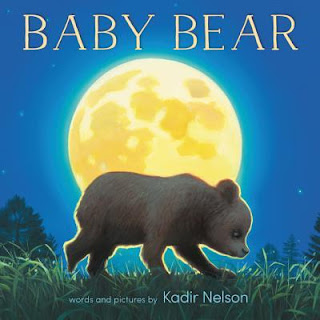
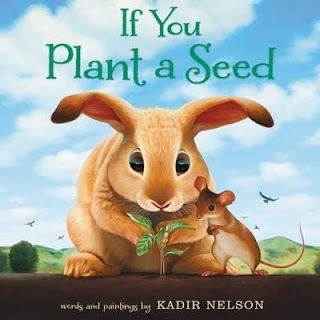
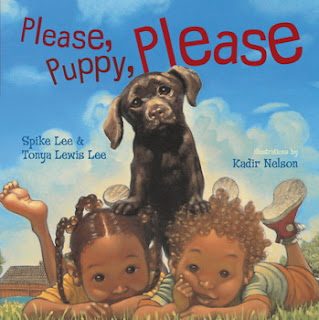
Kadir Nelson has illustrated several books for younger children such as - Please, Puppy, Please; Baby Bear; and If you plant a seed


Sunday, October 14, 2018

Walking with Miss Millie by Tamara Bundy

"Out the window I saw a beat-up sign that once said, WELCOME TO RAINBOW, but now with most of the letters faded, it only read, COME RAIN, and that made more sense in this dried-up little town. I remembered Daddy saying that the only good day in Rainbow, Georgia, is the day you leave."


It is 1968 and discrimination against African American citizens is still prevalent especially in the small towns in the south. Miss Millie is a African American lady. She has lived through some really tough times but through the pain of her past she is now able to offer a quiet wisdom to her new neighbour Alice.

Alice, her mum and brother have moved to Rainbow, Georgia. Alice's grandmother has Alzheimer's and she needs help with her daily life. Millie does not want to live in Rainbow. She is desperate to get back to Columbus Ohio. She is also desperate to see her dad. He has left, again. This time he has been gone for six months. Alice 'accidentally' hears a telephone conversation between Miss Millie and another lady from the town. As a penance her mother sends her to visit Miss Millie. A bargain is made. Alice will walk Miss Millie's dog Clarence but Clarence has other ideas. He is suspicious of strangers and so a daily pattern emerges. Alice goes next door each day and sets off with Miss Millie AND Clarence on walks through the town.

As they walk, they talk. Alice hears about Miss Millie's family, the joys and the tragedies. At the end of each walk Miss Millie gives Alice a small treasure. Each item serves as a reminder of a past event. Alice also finds a box of love poems written by her father to her mother when they both grew up in Rainbow. Alice decides to find the setting of each poem and collect treasures for her father ready for his return.

Here is some of the quiet wisdom in this book:

"Alice-girl,' Miss Millie shook her head. 'The world is fulla mean people. But it is also fulla nice people, too. That's the important thing."

"Ah Alice-girl, truth be told, you're never too old to be hurt just a little. But if you're lucky, one day you'll be smart enough to quit putting yourself in situations that hurt ya."

"I learned it's okay to get sad, but after all that gettin' mad and sad, ya gotta get smart. Ya gotta take a step back, away from all your hurtin', and figure out what ya can change and what ya can't."

When Miss Millie talks to Jake about his family she says "it takes a strong plant to come up out of hardened group, 'specially when it ain't given much sunshine.' Jake looked right back into her eyes and smiled a smile that said he knew she wasn't really talking about growing plants."

I would follow Walking with Miss Millie with Kizzy Ann Stamps, Walking to the bus-rider blues, The Crazy Man and, for an older audience, The Watson's go to Birmingham, 1963.

Take a look at the author web site where you can see some of awards given to this book. Tamara explains the background to her story. Small warning you will probably cry at the end of this book - I did.


The summer of 1968 brings huge changes to the lives of a young white girl and an elderly black woman—and cements a beautiful friendship. Kirkus

Tamara Bundy’s beautifully written debut celebrates the wonder and power of friendship: how it can be found when we least expect it and make any place a home. Kids Reads