Showing posts with label Girls. Show all posts

Friday, July 22, 2022

One Half from the East by Nadia Hashimi


Obayda's family, who live in Afghanistan, have fallen on hard times. Obayda's father has been badly maimed in a car bomb explosion and he has lost his leg, his job and his will to live.

The family are forced to move from Kabul to a small village. It is decided that one way to change their family fortune or luck will be through the birth of a son. There is a belief that having a "boy" in the family will make this happen to Obayda, a young girl aged 9, becomes Obayd. Her hair is cut, her clothes are changed and she experiences freedom for the first time.

As Obayd she can run, go outside, play wild games, climb trees, shout, avoid all family chores, eat better food than her sisters and more. But what will happen when all of this is over and she has to become a girl again?

Read an extract here.

Well-told through appealing characters, this tale sheds light from a unique cultural perspective on the link between vastly different, rigidly enforced roles for boys and girls and gender-identity issues. Kirkus

This is an excellent title that will offer students a window into life in Afghanistan and open interesting, age-appropriate conversations about gender expectations and roles in different countries. School Library Journal

Read about the author Nadia Hashimi. Here is an audio sample from pages 3-7 and set of discussion questions to use with a book group.  I held my breath right through 256 pages of this book which I read in one sitting. I was so worried this book might repeat the horrible (but important) scenes of another book I have read also set in Afghanistan which involves a girl pretending to be a boy - Parvana by Deborah Ellis which also has the title The Breadwinner.


One Half from the East is aimed at a younger audience and so the are no hints of the scenes with the Taliban or the dreadful fear Parvana has of discovery especially when she has to perform important bathing rituals in front of men and boys. Those are the scenes from Parvana that linger with me years later. 

Read more about bacha posh:

NBC News; Jan 16 2022

University of Melbourne

Thursday, April 21, 2022

Dear Girl by Amy Krouse Rosenthal and Paris Rosenthal illustrated by Holly Hatam


"Keep that arm raised! You have smart things to say!"

"Dear Girl, Write down your thoughts once in a while even if it's just to enjoy the way your pen feels against the paper."

"Dear Girl, Listen to your brave side."

"Dear Girl, A tree trunk is the perfect place for quiet thoughts to be thunk."


If you are looking for a beautiful gift for a new baby girl then look no further than this glorious book. Or you could gift this to your own daughter or niece. Or perhaps just buy this book for yourself as a reminder that you are special and important and unique. 

Here are other books in the series by Amy Krouse Rosenthal's daughter Paris:


Here is the web site for the illustrator Holly Hatam where you can see the book trailer. Here are some activities you could explore.  If you have time take a look at this TED Talk by Amy Krouse Rosenthal and also read more about the Amy Krouse Rosenthal Foundation. 

Sadly Amy Krouse Rosenthal died in 2017.  Kirkus said: The pages may be tinged with sadness now that Amy Krouse Rosenthal has passed, but the message of tender protection is strong and clear.

As the book proceeds, the reader feels in the presence of sophisticated thinking aimed at the loftiest of questions: How to be a person, a full person, above and beyond what the world’s real or imagined expectations may be of any of us. The advice will strike children, and parents, with a real sense of authenticity and urgency, and conversations will grow from repeated readings. The Children's Book Review

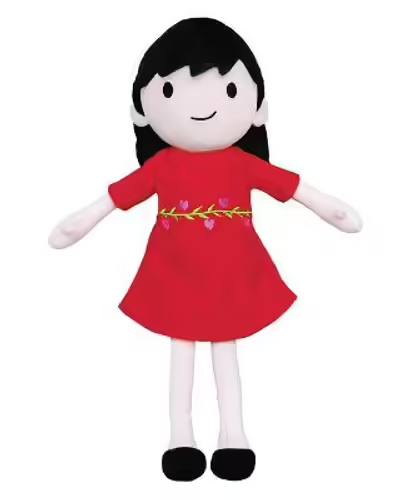
I am not sure you would need or want this but there is a doll of the girl in this book:


Here is a fairly new Australian picture book you could read alongside Dear Girl:


Tuesday, March 22, 2022

A Thousand Glass Flowers by Evan Turk

A Thousand Glass Flowers - Marietta Barovier and the invention of the Rosetta Bead.


"Her father ... as a true maestro, a master of the glass. He performed miracles with it, turning the molten sand into elegant forms as clear as water, as white as milk, or as richly coloured as precious stones."

A Thousand Glass Flowers is a perfect book to share with your library groups this year - The International Year of Glass.


Publisher blurb: Marietta and her family lived on the island of Murano, near Venice, as all glassmakers did in the early Renaissance. Her father, Angelo Barovier, was a true maestro, a master of glass. Marietta longed to create gorgeous glass too, but glass was men’s work. One day her father showed her how to shape the scalding-hot material into a work of art, and Marietta was mesmerized. Her skills grew and grew. Marietta worked until she created her own unique glass bead: the rosetta. Small but precious, the beautiful beads grew popular around the world and became as valuable as gold. The young girl who was once told she could not create art was now the woman who would leave her mark on glasswork for centuries to come.

You can see some pages inside this book at Seven Impossible Things before Breakfast. And here is a wonderful, generous and detailed interview with Evan Turk by Elizabeth Bird at the School Library Journal. 

In this book you will read about glass making in 1496 alongside the expectations levelled at girls and women. Marietta is such a wonderful role model for young girls who want to pursue their own passion. There is an extensive author's note at the back of this book where you can read more about glass making, Marietta, her family and the rosetta beads. These are also called millefiori which means 'a thousand flowers'.  The beads are made from segments cut from long ropes of layered glass. This technique was first used in Egypt thousands of years ago. 

"Marietta Barovier grew up in a world that did not typically allow women to own businesses, or reward women who worked instead of married." 


Clearly a labour of love, this ethereal and striking selection incorporates imagination, art, creativity, and women’s history in a story that emphasises dedication, resilience, and innovation.  An enchanting tale of a 15th-century artist that emphasises attributes and skills we need today. Kirkus Star review

A Thousand Glass Flowers is an intimate and beautiful story of an artist’s relationship with her father and what blossoms when she’s given the ability to grow into her talent. I’m happy that Marietta Barovier’s story fell into the talented hands of Evan Turk. I’m also very grateful to know Barovier's name, work, and legacy — and I hope that children will enjoy her story as much as I did. Horn Book

Monday, August 24, 2020

The Ricker Racker Club by Patrick Guest illustrated by Nathaniel Eckstrom


Rules of the Ricker Racker Club

  1. Be a boy
  2. Girls can join but only on Tuesdays
  3. Do something incredibly brave or kind at least once a week

Brothers Max and Ollie invent their club, the rules, the secret handshake, password and mascot - a turtle named Albert. 

Poppy, their sister, would like to join this club. She is a smart smart smart girl! She is just like the suffragettes of history with their slogan "Deeds not Words". Poppy watches more and more boys join the club. Each day she quietly follows rule number three. She gives her two brothers

  • two scoops of her jelly and ice cream
  • cleans their bedroom
  • promises to eat their vegetables for a month
  • and she gives them her tooth fairy money

In the fifth week Albert, the turtle mascot, wanders into danger. The five boys try to save him but it is clever Poppy who knows just what to do. Poppy does something incredibly brave. At last the boys can see Poppy should join their club - they even make her their Queen.

I don't know how I missed this Australian children's picture book in 2016. Sadly this book is now out of print but I am sure it will be found in many Australian primary school libraries. I wonder why it was not included in the CBCA Notables of 2017 and from there the short list? Yes it is that good.

I love that this tale has an olden-day feel to it--of outdoor adventure and acts of bravery and excitement … Kids Book Review

So much to like in this book; the rhythm of the text, the bountiful illustrations, the well defined characters and the strong messages of acceptance and empathy. Reading Time

Lamont have written a set of teachers notes. If you have a Story Box library subscription you can view the whole book. You can see other books illustrated by Nathaniel Eckstrom here.

Tuesday, May 12, 2020

There's a lion in the library by Dave Skinner illustrated by Aurelie Guillerey


Little Lucy Lupin - such a sweet little girl with her "darling dimples", "charming freckles", "adorable button nose". But looks can be deceiving. Lucy is NOT nice or lovely she tells lies.

"There's a lion in the library I saw him in the history section ... "

The librarian panics and shouts out an order for everyone to evacuate the library AT ONCE! The fire brigade, police and vets arrive but no lion can be found. Lucy thinks this is all such fun.

The next day she pulls the same trick on the caretaker. Surely this pretty little girl is telling the truth. He presses the alarm and once again everyone rushes outside.

On the third day she tells the coffee shop manager "there's a lion in the library." So for the third time police, firemen and vets arrive.

What Lucy has not bargained for is that these adults are actually clever. They hold a meeting, share their experiences and realise this little girl is not as innocent or truthful as she might seem. Her pretty looks are very deceiving.

Lucy heads back to the library a few days later. I imagine you have guessed - YES there is a real lion in the library - with sharp white teeth. No one believes Lucy. She may not be nice or sweet or lovely but she was delicious!

The illustrations in this book by Aurelie Guillerey have a retro look which reminded me of Roger Duvoisin. The paperback edition of this book will be available in June 2020.


Before you read There's a lion in the library I suggest you revisit The Boy who cried Wolf. Perhaps you can find a few examples and a parody or two.


I would follow this book with Whatever by William Bee (2005).  This book is hilarious. I am so puzzled as to why it was culled from my former library. If you can find this book grab it with both hands - it is truly a treasure and it is sure to become a firm favourite with your young reading companion.


You could also pick up some other funny books about the world of the library:


Wednesday, April 29, 2020

A house without walls by Elizabeth Laird illustrated by Lucy Eldridge


Safiya is a young girl living in Syria. Her family are forced to flee to Jordan. Safiya has a complex past. Her mother died when she was a baby. Safiya is a twin but her twin sister Saba was taken away when the babies were just a few weeks old. Safiya has never seen Saba who is supposed to be living with relatives in America but in Jordan, Safiya discovers Saba. Uncle Hassan and Aunt Israa have moved back to Jordan and are living in a nearby city.

Safiya is a very resourceful girl. She knows the name of the company where her uncle works. She has been extraordinarily lucky to get some work in a Beauty Salon helping with paper work and answering the telephone. This gives her access to a computer and a telephone, Safiya cleverly phones up the company where her uncle works and spins a tale about a delivery of flowers for Saba. The unwitting receptionist at Askil International supplies an address so now she can surely find her long lost twin sister. 

This fragment of information is vital but Safiya is living in a tent. She is a girl in a Muslim community so she is expected to cook and clean and keep silent. Basic care of herself, her father and brother is very difficult.  They have hardly any money. She is not allowed to travel alone and while her Baba (father) does love her he cannot talk to Safiya about the death of her mother or the loss of her twin sister.  She really has no one to turn to for advice. Safiya is sure her twin will recognise her and that they will immediately become firm friends. This is an important dream which keeps Safiya buoyant with hope but sadly this is really only a dream and the reality is far harsher than she could ever have anticipated.

The strength of this book comes from Safiya herself and from the vivid descriptions of her struggles living in the tent.

"The only thing I knew how to make was pasta with tomato sauce, but it was going to be horribly difficult doing it on a little gas burner outside by the water tank where I'd made a sort of kitchen space. I had to squat on the ground because we didn't have a table, and cut up the onions on a plate with a blunt knife."

"Sweeping out the tent was the next job, and the one I hated most. Masses of dirt crept into the tent every day and grit got caught in the woven matting, even though we always took off our shoes when we came in and left them by the open flap. It took forever to clean up."

There are some extraordinary moments of kindness in this book. The grocery man across the street gives Safiya "stale" cakes and he orgainses a monthly charity food box. The owner of the beauty salon gives Safiya a prettier hijab printed with pale blue flowers. Her uncle Malik joins the family. He is skilled with his hands and repairs and builds things for their tent helping Safiya to make their small space so much more comfortable.

The illustrations in this book by Lucy Eldridge are perfect.


Here are some background notes about this book. I have always loved the storytelling of Elizabeth Laird in books such as Secret Friends and The Lost Riders. I also highly recommend you search out Oranges in No Man's Land.


I would pair a House without walls with No Ballet shoes in Syria and The Night Diary.


Saturday, February 8, 2020

Beautiful by Stacy McAnulty illustrated by Joanne Lew-Vriethoff


I like to think about the processes between the words of an author and the creativity of an illustrator.  The words in this book say one thing and the pictures show something quite different - making this a powerful story about image, stereotypes, perception, individuality and girl power.

Here is some of the text:

Beautiful girls ...
... have the perfect look.
Beautiful girls move gracefully,
And light up every room.
Beautiful girls know all about makeup,
And have a smart style.

Let's look at this last line.  On this page you will see one girl exploring nature. She has dirt on her face and knees and is keenly observing and recording bugs. Another girl is working on an engineering project. She is welding a circuit board. The final pair of girls are surrounded by test tubes and chemicals. Yes, they are all very smart!


Here are some other books illustrated by Joanne Lew-Vriethoff. Stacy McAnulty explains the importance of her book and provides links for further discussion.

With a text that sounds like it could have been directly lifted from a charm school handbook, McAnulty and Lew-Vriethoff upend the norm. Each phrase is paired with illustrations that show an alternative meaning.  Kirkus

Monday, February 3, 2020

Two Sides by Polly Ho-Yen illustrated by Binny Talib


"... sometimes people say that we're like chalk and cheese. Or pens and peanuts. Or penguins and pencils. Or any two things that are quite different from each other."

This is a story about two friends. Lula and Lenka. They are best friends but they are also very different from one another.

Think about your own close friend. Now think about these pairs:

  • Loud or quiet
  • Extroverted or shy
  • Always running late or punctual
  • Dog or Cat
  • Disorganised or organised
  • Summer or Winter
  • Messy or tidy

Yes these girls are different but they are also best friends until The Day That Everything Goes Wrong. Can Lula and Lenka find the key to their friendship again?

Make sure you linger over the end papers in this small volume. They are a perfect way to show how Lula and Lenka are different.

How can an author show two voices? In this book Polly Ho-Yen uses a combination of font and bold type. Lenka speaks quietly so her font is a pale. Lenka is bold and loud and so is her font.

This little book is part of the Stripes series published by the Little Tiger Group.  The publisher says:

Each story has a unique voice, and encourages children to think and see the world differently, helping to develop empathy, tolerance and understanding.  They celebrate difference, collaboration, exploration, extraordinary acts of kindness, unlikely unions and loving relationships, challenging stereotypes and empowering children with the tools they need to make sense of the world and see it through different eyes.

Here is another book illustrated by Binny which I mentioned in 2018.


Saturday, January 11, 2020

Amal Unbound by Aisha Saeed


There were several moments in this book when I simply gasped. The cruelty, the betrayal, the way Amal's dreams are completely crushed.

"My mother's voice told me to let this go. Something was off with this man. Let him have the fruit and walk away. But all I could see was the red pomegranate and how he grasped it in his palm as though it was already his.

I thought of my father, who had no time for my dreams. My little sisters and their endless demands. Suddenly I felt was tired. Tired of feeling powerless. Tired of denying my own needs because someone else needed something more. Including this man. This stranger."

These quotes are a good way to explore Amal Unbound. Amal goes to the market and buys the last pomegranate.  Her family are very poor. Amal has three sisters and a new baby is due to arrive soon. Everyone is hoping for a boy but Amal could never have anticipated the enormous disappointment for her mother and father when the new baby arrives - a girl. Amal loves school and she excels at her lessons. She has the dream of becoming a teacher herself one day. In the small village where Amal lives everyone is afraid of the Khan family, nearly everyone is in debit to them and they are especially frightened of Jawad Sahib. He is the man who nearly ran Amal over in his large car. He is the man holding her pomegranate. He is the man with the power to completely overturn Amal's life and dreams.

A few days after the incident with the pomegranate, Jawad Sahib arrives and to take Amal. She will be taken to his house to work as a slave. Amal's father has no money and he is in debt to this powerful and cruel man and his father Khan Sahib.

In the house Amal finds a friend and a serious enemy. Luckily she is ordered to work for Khan Sahib's wife Nasreen Baji but this means Nabila, another servant, has been displaced. Her cruel tricks, which have terrible consequences for Amal, will linger with me for a long time.

The wonderful ending will make you cheer not just because justice is served but because this outcome is the direct result of the education that Amal has had. Because she can read she can make sense of the injustices of the Khan family and she can also identify their crime.

Here are a set of teachers notes from the publisher - they are excellent. You can also read the first 20+ pages of Amal Unbound. Listen to an audio sample here. Here are a set of discussion points. I highly recommend this book for mature readers aged 11+.


I would follow Amal Unboud with Ibqal and any books you can find (and there are plenty to choose from) about Malala Yousafzai.


If you are visiting a library you could also look for Sold by Patricia McCormick and Hidden Girl by Shyima Hall.

Tuesday, May 30, 2017

Tilt by Mary Hoffman

Why did I pick up this book on a recent shopping expedition?

  • Firstly the cover - Tilt - great title for a book about the Leaning Tower of Pisa.
  • Secondly the author - I do love the writing of Mary Hoffman (I met her in London in 2012).  I always to read her book The Colour of Home to our senior classes.

The suggested reading/interest age for Tilt is 12+ but there is no reason why a senior Primary student should not read this book.

Netta (Simonetta) watches her father working on the tower at Pisa.  It is leaning but this is not the fault of her father. He is the head mason of the city but there have been other masons before him.

"Oh I know girls aren't supposed to be interested in the structure of buildings or in stone carving. But all my life I had seen my father come home from his work covered in marble dust or seen him drawing his designs for statues ... His work fascinated me, spoke to my every instinct, and I couldn't pretend to be keen on learning how to cook or clean and sew, as real daughters were supposed to."

So this book embraces themes of women's rights, science and technology, STEM subjects along with a fascinating historical setting of Pisa in 1298 all in just 92 pages.

Here are five questions with Mary Hoffman about Tilt.  Tilt is designed for readers with dyslexia. You can read more here.  You might like to read this detailed review.

Monday, May 22, 2017

The evolution of Calpurnia Tate by Jacqueline Kelly

"It turned out to be not a book at all but a wooden box trickily carved and painted to look like a calf-bound volume. Strange, I fiddled with it and found the catch and the box opened. Inside was a waxed paper parcel containing a thick roast beef sandwich. ... Ahhh. Bed, book, kitten, sandwich. All one needed in life really."


This is a description of a gift to Callie (Calpurnia Virginia Tate) by her Grandaddy.  None of her six brothers have even dared to talk to him but over the summer of 1899-1900 Callie ventures into his world - his workshop, his scientific endeavours and discovers her own passions and curiosity.  She reads the work of Darwin and her grand father shows her how to record her observations in her notebook - how to observe the world.

In 1899, though, a young lady is expected to learn sewing, knitting, cooking and housekeeping. Callie is eleven, almost twelve, and she has no interest in these things.

"My biscuits were like stone, my samplers askew, my seams like rickrack. ... My mother's life was a never-ending round of maintenance. Not one single thing she did ever achieve but that it had to be done all over again, one day, one week or one season later. Oh the monotony."

Callie does her best to rage against her mother's expectations so she can follow her desire to study plants and animals.  She has a warm relationship with her brothers but they do not share her interest. The title is simply perfect as we watch Callie evolve into a different girl aided by the gentle and wise encouragement of her precious grandfather.  Each chapter also begins with a quote from Darwin's famous book The Origin of the Species.

You can see this book is a Newbery honor book. I read all 338 pages in one day - yes it is that good!

Here is an excellent and very detailed review in the School Library Journal.  Read about Jacqueline Kelly and the sequel to The evolution of Calpurnia Tate.  Take a look at the Kirkus star review.  here is an interview with Jacqueline Kelly well worth reading.  Listen to this audio sample taken from page 14.

As an added bonus there are some wonderful words in this book :

quadroon
pestiferous
chivvied
repose
citadel
tenuous
perspicacious

I would follow this book with Chains and of course the sequel - The Curious World of Calpurnia Tate.

Sunday, May 21, 2017

Ruby's Wish by Shirin Yim Bridges illustrated by Sophie Blackall

I mentioned in a previous post that we have been exploring picture books with an Asian focus with our senior classes.  One of the first books we looked at was Ruby's Wish and it certainly generated some deep discussions.


Ruby is living in China in the early nineteenth century.  Her grandfather has made his fortune on the Gold Fields or "Gold Mountain.   That was what the Chinese called California when many men left to join the Gold Rush there."  As was the custom of the time, Grandfather has many wives and many sons who also have many wives and they all live together in a magnificent home.  "So at one time, the house was filled with the shrieks and laughter of over one hundred children."

Life is good for Ruby. She like to wear red but this is traditionally meant for celebrations.  This does not deter Ruby who adds a red ribbon to her jet black hair when her mother insists she must wear somber colours.  Grandfather is generous and so all the children are provided with lessons.  In spite of this, though, things are not always equal for boys and girls.  Ruby observes that girls are expected to learn cooking, keeping house and embroidery while the boys are free to play after class.

Ruby is careful with her calligraphy and is noticed by her grandfather.  One day she uses her calligraphy skills to write a heart-felt poem.

Alas bad luck to be born a girl; and worse lucky to be born 
into this house where only boys are cared for.

Her grandfather is given the poem and Ruby is summoned to his office. This is where the real skills of Ruby shine.  Her grandfather asks for examples of this inequality.  Her first example is small and unimportant. The boys get better cakes, Her second is also fairly minor. The boys have splendid lanterns in the shape of goldfish and dragons while the girl's are plain. Finally she makes her most important point :

"the boys will get to go to university, but the girls will be married."

How will her grandfather react?

Here are a set of teaching notes, Kirkus review and illustrator web site.  A note at the end of the book explains that this story was inspired by the author's mother - the real Ruby who did indeed attend university as one of the first female students.  You can see the whole book here.

Monday, April 10, 2017

Sparrow girl by Sara Pennypacker illustrated by Yoko Tanaka


In our library sessions last term my senior classes explored a number of picture books with an Asian setting.  With each book we looked in detail at the author's inspiration, other works by the author and illustrator, background information about the story (many of which were based around real events and people) and took time to talk about cover images and book design.


One of the books that elicited the most discussion was Sparrow Girl.  Just like my students, I had no idea Mao declared war on sparrows along with rats, flies and mosquitoes.  This time was called the four pests campaign.  It is easy to understand the science of why this had such terrible effect. Killing 30 billion sparrows led to a catastrophic famine leaving 30-40 million people dead.  Here are a set of lesson notes for this book.  For more information about this book read this review.

Before reading this book we talked briefly about Mao and his ideas and then watched this short. but disturbing film from Germany where you can see people beating drums and killing the sparrows.

"They're like teardrops. The sky is crying birds." - Ming-Li

The hero of this fictional account by Sara Penny Packer is little Ming-Li.  She cannot understand why the sparrows are considered bad.  With her brother's help she rescues just seven precious birds.  The crops fail.  Ming-Li tells her father her secret.  She has saved a handful of sparrows.

"Your daughter brings us a miracle!' ... From this day, sparrows will be safe in our village. And we will tell everyone we meet from other villages about the wisdom of the Sparrow Girl."

Sara Pennypacker is the author of the terrific junior series Clementine and also the books about Stuart along with the wonderful senior novel Pax.  Yoko Tanaka has done many books but one we are reading at the moment is The Magician's Elephant as we prepare for the visit by Kate DiCamillo to our city next month.

Over the next few days I will talk about some of the other books we explored this term.


Tuesday, April 12, 2016

Raymie Nightingale by Kate Di Camillo


I have been hearing about Raymie Nightingale for many months.  I was so excited when our copy arrived at school.  I knew it would be fabulous because, like so many children's literature people, I adore the writing of Kate DiCamillo.  Raymie Nightingale is actually such a brilliant book I just don't know how to tell you about it but I will try because I want to encourage you to run into your local library and grab this book.  This is absolutely a ten out of ten book!

Raymie Clarke has a plan.  She needs to convince her dad to return to his family.  Two days ago he ran off with a dental hygienist. The plan means winning the Little Miss Central Florida Tire (in Australia we spell this tyre) competition. Raymie is sure this will make him come home. She knows she can win if she can learn baton twirling.  Raymie meets two girls at her baton twirling class.  Louisiana Elefante who also desperately needs to win this competition.

"I'm going to win that one thousand nine hundred and seventy-five dollars and save myself from the county home and get Archie back from the Very Friendly Animal Centre and never be terrified again."

Beverley Tapinski, the other girl Raymie meets at baton twirling, does not need to win this competition.  In fact she has a plan to sabotage the event.

This is a story of healing.  All three girls have complex lives.  It is Louisiana who realises, early on, that the three girls need to work together.

"We're the Three Rancheros!  We're bound to each other through thick and thin ...We'll rescue each other."

Different adventures bring the girls together.  Raymie tries to complete a good deed by visiting an elderly resident in a local nursing home.  She drops her precious library book when a different resident frightens her.  The book is important because it is a library book and so it must be returned.  The book is called A bright and shining path : The life of Florence Nightingale.

I love this description of Mr Option the librarian :

"Mr Option looked too young and uncertain to be a librarian.  Also, his ties were too wide, and they were all painted with strange and lonely pictures of deserted beaches, haunted-looking forests or UFOs."

In their first adventure the girls band together to retrieve the precious book.  Then Louisiana needs help to retrieve her precious cat from the animal centre and this involves a visit in the middle of the night.  Beverley needs help to resolve her anger and perhaps find friendship and compassion.

Our Magpies Magazine featured Raymie Nightingale in their latest issue March, 2016.  The reviewer, Helen Purdie, opens her review with these words - I heartily agree :

"Every once in a while a lucky reader will discover a story that is so entertaining, magical and poignant that closing the book at the end produces a genuine feeling of loss."

Mr Schu talks to Kate and you can also watch some video interviews.  Here is a beautiful review. Here is another interview which gives excellent insights into Kate and how her own experiences link with Raymie. Listen to a story extract.

School Library Journal
Her story unfolds in uncomplicated prose, even as the themes explored are complex.

Kirkus
Once again, DiCamillo demonstrates the power of simple words in a beautiful and wise tale.

Waking Brain Cells
The language pulls you in, embraces you and you happily immerse yourself in the world that a master storyteller has built for you. It’s a world filled with three girls who are vibrantly human and each completely distinct from one another


Wednesday, January 7, 2015

Snap by Alison McGhee

Before I begin to tell you about this book (which I read in one sitting this morning) I have to say sadly this book Snap is long out of print.

As we were working through our stocktake or inventory I picked up books I had read and enjoyed with copies that were looking tired and worn.  Four of these books are long out of print so I thought, before I start to investigate second hand copies, I should re-read them just to see if my memory is accurate and books like Snap are worth replacing.

My verdict is YES - Snap is terrific.  This is a short book at 135 pages and it has large print which is always welcome.  The main characters in this book are eleven and so this book is perfect for middle and senior primary readers (probably of more appeal to girls).

Eddie (Edwina Stiles Beckey) is the narrator and she introduces us to her best friend Sally (Sally Wilmarth Hobart) and her beautiful grandmother Willie (Wihelmina).  Willie reminded me of Nell from the Silk family books.

Are you a list person?  I certainly am.  I write lists all the time.  I adore crossing things off my lists.  I even have a special stash of paper squares in my kitchen that I use for my list writing.  Eddie also loves lists.  Eddie is a thoughtful girl, she asks lots of questions and thinks deeply about the people in her life.  She thinks a lot about her friend Sally.  They met in Grade Two and even though they are different in so many ways (Sally for example has no patience with lists and Sally has perfect hair) they have a wonderful close friendship.  Sally lives with her grandmother because her mum Jill was only 15 when Sally was born.  Jill works in a local supermarket but she seems unable to speak and communicates using smiles and head movements. 

Every Sunday the girls eat doughnuts with Willie.  Here is the first hint that something might be wrong with Willie :

"As long as I can remember, Willie has gotten up early on Sunday morning and walked into Sterns.  She brings back chocolate covered sprinkle doughnuts ... and Willie watches us. ... This has been our routine for years.  'Don't you want a doughnut?' I asked once, way in the beginning before I knew how she felt about sugar.  'Thank you, Eddie ... I'm not much of  a sugar person ... I do love a good doughnut hole, though. She reached over to my doughnut and pretended to pluck out the hole ... And she ate it.  I watched her as she rolled her eyes and smiled and pretended to chew."

Life is a journey and Willie is nearing the end of hers.  This book shows how love, insight and determination means Eddie can help Sally cope with this very difficult period of change.

Here is the author web site.  We have her funny picture book Countdown to Kindergarten in our school library.  Here is the Kirkus review.  You might also enjoy Missing May.  I am also excited to see my friend Mr K has a review of Snap.

Sunday, November 16, 2014

Turtle in Paradise by Jennifer L Holm

I am putting a little image here of Babymouse because I can hardly believe this but Turtle in Paradise is by Jennifer Holm who also wrote the Babymouse series.

Turtle in Paradise feels like a book from a completely different author. The setting here, for this middle to upper primary novel, is Key West in Florida.  The date is June 1935 and America is in the grip of the depression.  Poverty and hardship pervade life of the characters in this book and it is precisely because of this poverty that Turtle finds herself living away from her mother with her harassed and overworked aunt and boisterous collection of boy cousins.  "Truth is the place looks like a broken chair that's been left out in the sun to rot."

Key West is a tiny community where everyone knows everyone else and nearly everyone is related. Within hours of her arrival everyone knows about Turtle and they know her mum is far away working as a maid.  Aunt Minnie has no time for the new arrival.  "This is just like Sadiebelle.  She never thinks.  As if I don't have enough already with three kids and a husband who's never home ... And you bought a cat?"

The three kids are named Kermit, Beans and Buddy.  Along with their friend Pork Chop these boys are The Diaper Gang - they mind crying babies and change diapers in exchange for candy.  Turtle is not allowed to join this gang because girls are not allowed but she tags along.  What these boys don't know yet is that Turtle is a strong willed and very capable.  She has no interest in Shirley Temple but she does have a huge dream of a special house to share with her mum.  Along with her aunt and cousins, two other important people live at Key West - Turtle's angry grandmother Nana Philly and an old fisherman called Slow Poke.  Within weeks of her arrival Turtle has a job and she has begun to forge a relationship with her cantankerous grandmother.

Here is a flavour of the story - a description of a cut up :

"After we finish swimming, we have a cut-up.  A cut-up is something these Conch kids do every chance they get. Each kid brings whatever they can find lying around or hanging on a tree - sugar apple, banana, mango, pineapple, alligator pear (avocado), guava, cooked potatoes and even raw onions.  They take a big bowl, cut it all up, and season it with Old Sour, which is made form key lime juice, salt and hot peppers.  Then they pass it around with a fork and everyone takes a bite.  It's the strangest fruit salad I've ever had, but it's tasty."

There are only 177 pages in this book but it contains so many fabulous twists and turns you will find yourself spinning and smiling and definitely cheering for our special heroine Turtle.

My only real disappointment with this book comes from never really discovering why Turtle is called Turtle although I think I can make an educated guess.  Here is a good review and if I haven't convinced you that this is a terrific book here is another very detailed review from Jen Robinson.

You might also enjoy Waiting for Normal.

Turtle in Paradise won a Newbery honor (2010) so there are lots of book trailers - here is one that I like.  Here is a set of questions and a vocabulary list. One of the interesting ways I have already used this book was at a parent talk last week.  I think I convinced some of my audience that I had actually been to Florida - I love this aspect of reading when you feel as though you have really been a participant in a book long after you have finished reading.