Showing posts with label Promises. Show all posts

Sunday, June 14, 2026

The Pied Piper of Hamelin


Image source: Bedtime stories

Thinking about music in stories and the 2026 CBCA (Children's Book Council of Australia) slogan which is Symphony of Stories led me to think about this classic story The Pied Piper of Hamelin.

The Legend in Brief: According to the legend, Hamelin was plagued by rats and hired a travelling piper to rid the town of the infestation. Playing a strange, compelling tune, he drew the rats from houses and streets and led them out of the town, where they were drowned in the river. When the work was done, the piper returned to claim his payment. The town refused. Whether from greed, distrust, or disbelief in the power of his music, the agreed reward was withheld. In response, the piper played again—this time a different melody. Children followed him as the rats had done before, leaving the town in a silent procession. They were never seen again.

The tale has been retold by Johann Wolfgang von Goethe, the Brothers Grimm, and Robert Browning. Hamelin is a real town in Germany and visitors there can find all sorts of things relating to this story including street performers dressed as the piper and even a bakery with 'rat' cookies. Background reading for teachers - StorytellingDB.

Here is an extract from the Robert Browning poem:

Once more he stept into the street;
   And to his lips again
Laid his long pipe of smooth straight cane;
   And ere he blew three notes (such sweet
Soft notes as yet musician's cunning
   Never gave th'enraptured air)
There was a rustling, that seem'd like a bustling
Of merry crowds justling at pitching and hustling,
Small feet were pattering, wooden shoes clattering,
Little hands clapping, and little tongues chattering,
And, like fowls in a farm-yard when barley is scattering,
Out came the children running.
All the little boys and girls,
With rosy cheeks and flaxen curls,
And sparkling eyes and teeth like pearls,
Tripping and skipping, ran merrily after
The wonderful music with shouting and laughter.

Take a look at this post from Kinderbookswitheverything. In my search for versions of The Pied Piper I was surprised to discover how many 'reading schemes' used this story to create a simple easy 'reader' for young children - this is surprising because this famous story has such a sad, perhaps even disturbing and certainly unresolved ending. 

Your library is sure to have one or two versions of this famous story that you could share:


This version has 112 pages


Meanwhile this version has 32 pages


This Australian picture book has minimal text and haunting illustrations


This one has fabulous illustrations by Jane Ray - 
A wordless version from a reading program.


Illustration by Jane Ray


This is a simple version for young children with only 24 pages
Lift-the-flap from Child's Play


The author says: My revision replaces the original’s cruelty and revenge with respect, 
friendship, and equality.


This book is from 1994 and is an illustrated version of the Robert Browning poem


Frequently Asked questions (from History Medieval):

1) What is the Pied Piper of Hamelin?
It’s a medieval legend from Hamelin (Hameln), Lower Saxony, about a pipe-playing stranger who leads away the town’s children after a dispute over payment (rats are a later add-on in many versions).

2) What is the earliest historical record of the story?
The earliest mentions are associated with local memory (often linked to a now-lost stained-glass window in Hamelin’s church, described in later accounts), while the earliest commonly cited written record is a Hamelin town entry dated 1384 noting that “it is 100 years since our children left.”

3) Did the Black Death cause the Pied Piper story?
It’s a popular modern interpretation (rats → plague symbolism), but it’s historically shaky because the Black Death’s major wave reached Europe in the mid-14th century, well after the legend’s anchor date of 1284.

4) Where did the children supposedly go?
Later tellings vary: some say they vanished into a hillside or cave; others suggest they were led away “east”. Modern historical theories have proposed organised migration/colonisation, accident, conflict, or other local catastrophe—but none is proven.

5) Is it true that music and dancing are banned on Bungelosenstrasse?
Bungelosenstrasse is widely described as the “street without drums”, traditionally linked to where the children were last seen, and many modern accounts repeat that music/dancing are avoided there.

6) When did the story become famous outside Germany?
It spread widely through later literary retellings—most famously Robert Browning’s poem “The Pied Piper of Hamelin”, first published in 1842, which helped fix the story in the English-speaking imagination.


Thursday, April 16, 2026

Rumpelstiltskin by Mac Barnett illustrated by Carson Ellis


Hopefully you do know the Grimm Brothers fairy tale Rumpelstiltskin but if you don't you could read this version

The best picture books are a partnership between author and illustrator. Carson Ellis has so carefully crafted amazing illustrations for this book and Mac Barnett adds a delicious layer of humour. 

"Her father, a poor miller, was a nice enough guy but he had a big mouth."
"My daughter ... She's really great' (It's true. She was.) ... And ... 'she can spin straw into gold.' (Of course, she couldn't.)
"And soon the queen had a child, a boy she named Tom. (A pretty nice thing to do all things considered.)

The list of names are sure to have your students or young reading companion in fits of laughter - Baxter, Thaxter, Cuthbert ... and Mac! to name just a few. 

Vocabulary: bragged, retinue, sauntered, and chalice. 

Publisher blurb: Once upon a time there was a clever girl with a not-so-clever father. When her father claims she can spin straw into gold, the king forces the girl to perform this impossible task. She has no other choice than to accept a strange deal from a mysterious little man. But when he arrives and attempts to collect the debt, the fiendish trickster Rumpelstiltskin discovers that he is the one who has been tricked! 

This is the second in the groundbreaking new collection of masterfully retold fairy tales crafted by one of today's most celebrated and esteemed authors, Mac Barnett, paired with the stunning illustrations of the acclaimed and award-winning creator, Carson Ellis. With Barnett's signature pacing and wit, his subversive storytelling style and narrative voice, and Ellis's stunning folk-art style, this retelling of Rumpelstiltskin will introduce this classic story to a new generation of readers!


Think about the language used on this page: The little man swept into the room. 'And if I do it once more,' said the man, 'what will you give me?' The girl shook her head. 'I have nothing left. I gave you my necklace. My ring. I am bereft.' And she paused to consider her fate. But the little man smiled. 'I'll make you a deal. If you become queen, give your first child to me.' Well, who knew if that would ever happen. So the girl said, 'Deal.' And the man spun the straw into gold."

After you read and re-read Rumpelstiltskin you should take a look at this interview with Mac Barnett and Carson Ellis and have the book beside you so you can see the images and decisions they are discussing. And then take this deep dive into the illustrations. In this video Mac and Carson talk about their book. Sadly our Australian copy of this book has no dust jacket but if you live in the US be sure to look for the case reveal. 

A great new Rumpelstiltskin version for every library. Waking Brain Cells

Carson Ellis’s painterly gouache illustrations, inspired by 18th century fairy tale art and portraiture of the Renaissance era are a great complement to the telling, while the black and white illustrations resemble wood-block prints. Red Reading Hub

It would be good to share this book with a high school group. For example you could talk about the way this image is reminiscent of well-known paintings of the Madonna and child. Take a look here.


I highly recommend you share this picture book by Mac Barnett and Carson Ellis with the students in your library (ages 9+). Hopefully you will have time to read the book, then go back and look at each page and talk about the decisions made by Carson Ellis and also it would be fantastic to then read a couple of other illustrated versions of this fairy tale (see below). Here is a very useful set of teaching ideas from the publisher Scholastic. See lots more Mac Barnett books here. I especially recommend one of his older titles - Billy Twitters and his Blue whale problem. Here is my Meet Mac Barnett post. 

I was slightly shocked when Colby Sharp talked about reading Rumpelstiltskin to his Grade Five class only to discover many/most of the group were not familiar with this fairy tale - I do hope he has now shared other versions with his class and perhaps gone even further and delved into other 'important' fairy tales that readers need to know. There are so many references to fairy tales in literature, in advertising and in cartoons. We do kids a disservice if we don't build up their field knowledge of this important cannon. By coincidence I have just read Once Upon Tomorrow which is a book for readers aged 16+ and which interweaves the story of the miller's daughter and the character of Rumpelstiltskin. This brand-new dystopian verse novel is by Australian author Karen Comer. 


See inside this version here


Look for this fairy tale version of The Three Billy Goats Gruff also by Mac Barnett with his friend Jon Klassen:


Here are two books illustrated by Carson Ellis:


Thursday, October 30, 2025

The Enchantment of Golden Eagle by Margaret Wild illustrated by Stephen Michael King


Margaret Wild: ‘I hope readers will understand that people can say something in anger (in this case, the curse put on the bird). And that those words can be regretted and forgiven. It would be good if this story can open up discussions about consequences, atonement and, especially forgiveness, because if we can forgive, there is the possibility that things can change for the better.’  Interview with Dr Robyn Sheahan-Bright (see the Teachers Notes)

After reading The Enchantment of Eagle here are some questions that occurred to me:

  • Can you ever really 'own' a wild creature? 
  • Did the eagle owe an extra loyalty to the family because they saved him when he was just a fledgling?
  • Do you understand why the eagle needed to fly away?
  • What is a curse?
  • Should you always keep your promises? 
  • What is guilt? 
  • How do you repair a relationship when words are spoken in anger? 
  • Why is it important to say sorry and how to you express this from your heart?
  • Why are wolves always representative of danger?
  • Think about feeling safe and unsafe and how this is explored in this book

Think about the title - enchantment - that is such a powerful word. It implies magic and has overtones of the fairy tale genre. And Margaret Wild writes of Golden Eagle not 'the' golden eagle. Is this a unique creature with magical qualities? Then we have the word golden. This implies precious and wise and important.

Symbolism of the golden eagle: The golden eagle is a powerful symbol that encompasses a wide range of meanings, including strength, freedom, ... and resilience. Its significance varies across cultures, but it consistently represents the ideals of power, guidance, and the ability to rise above challenges. Whether viewed as a divine messenger or a symbol of personal growth, the golden eagle holds a revered place in the spiritual and cultural narratives of many societies. Source

You will find some beautiful vocabulary when you share this book with your library group or young reading companion - fledgling; venture; gazed; summoned; exhilarating; "he batted about'; enfold; curse; pitiless; hollowed-out; tattered; rejoicing; and larking about.

Publisher blurb: One day, Ella and her little brother Leif found a fledgling with a broken wing. They took him home, wrapped and fed him, and watched over him for seven days and seven nights. In time Golden Eagle was well enough to fly away, but he loved the children, so he promised to stay with them at the edge of the dark forest. Until one day, the wind whispered and the breeze caressed his feathers, and Golden Eagle forgot his promise ...

The publisher links the themes in The Enchantment of Golden Eagle with another award-winning book by Margaret Wild - Fox - illustrated by Ron Brooks. With a group of older students, it would be good to compare these two books - read them side by side - and then talk about themes such as guilt; fear; promises; betrayal; and forgiveness. The Enchantment of Golden Eagle is one of those multilayered stories that you could share with your younger students and then also discuss with an older group. I would then pick up Robber Girl by Margaret Wild as another example of a text which showcases Margaret Wild's skill with writing.


The publisher page has a link to some detailed teachers notes

A new book by Margaret Wild is certainly something to celebrate. She has written well over 70 books and even at age 76 does not seem set to stop. I expect to see The Enchantment of Golden Eagle listed by the CBCA as a 2026 notable title. 

Read some reviews:

The publisher marks this as suitable for readers 7 to 12, older than the typical picture book market, and online Teaching Notes offer suggestions up to Year 6. This is valuable recognition of the potential of picture books to inspire rich learning well beyond the formative literacy stage. Story Links

Interview with Paperbark Word (Joy Lawn) I love the word “enchantment”. As you say, it is so evocative.  With its associations of spells, magic and mystery, I hope it will spark a reader’s curiosity to open the book and read on.

Highly recommended for all! Kids' Book Review

This is a compelling story that will have the reader turning the pages to the end so they can discover whether the eagle, seen by many cultures as a symbol of strength and freedom, survives the curse, whether it returns and what happens next. The Bottom Shelf

This is a gentle book that reminds us about forgiveness and letting go and loving what you have in life. The Book Muse

From Stephen Michael King: Golden Eagle is my seventh book with Margaret Wild. You might remember the piglet series: Piglet and Mama, Piglet and Papa – then there’s the pocket dogs (everyone’s favourite books). Margaret Wild was instrumental in turning me into a published author/illustrator (with my first book, “The Man Who Loved Boxes”), so it’s always a giant privilege to work with her. 35 plus years ago – when I was working as a General Library assistant, I created a display of her and Julie Vivas’s book “The Very Best of Friends”. I’ve loved Margaret Wild’s work from that very first visual.

Other books by Margaret Wild with art by Stephen Michael King:


And two sequels


Thursday, January 2, 2025

Bob by Wendy Mass and Rebecca Stead illustrated by Nicholas Gannon


When she was just five years old, Livy visited and stayed with her Grandmother in a small town in Victoria, Australia about two hours drive from Melbourne. Livy's mum is from Australia but the family now live in Massachusetts. Livy is now ten and she and her mum have come back to show off the newest member of the family - baby Beth Ann. Strangely Livy has no memories from their previous visit but something niggles at the back of her mind. Then she discovers a surprise in her wardrobe - it is Bob!

But who is Bob? Where did he come from? Why has he been in this wardrobe for five years? How come he can talk? Why is he dressed up like a chicken? How does he know so much about Livvy? Why can't Livy remember her promise to Bob? And why does he love licorice so much?

All of these questions and deeper ones about the devasting drought that is causing great hardship in this country town form the basis of this totally engrossing story which is told by the two alternating voices of Livy and Bob. (Try to find Runt if you want to read another book about this impact of droughts here in Australia). 

Inside the wardrobe Bob has some Lego to play with, comics to read, and a huge dictionary. Some of his favourite words are listed at the back of the book - brunch, eternity, library, solo and serendipity. His definitions are sure to make you smile.

I have resisted reading Bob for nearly six years! I read that it was set in Australia but knowing Wendy Mass and Rebecca Stead live in America I feared it would be filled with Aussie cliches - think of Crocodile Dundee which is a movie that makes me cringe. This is absolutely not the case. Rebecca wrote her first part of the story on the plane home from Australia then she and Wendy Mass spent the next seven years creating their story.

The book is imaginative, intriguing and endearing. It is charming and funny in equal measure. It is sweet, in a myriad delightful ways. It truly touches at the same time as it entertains and surprises. It is a story that so beautifully captures aspects of both five and ten-year-old childhood that it chimes with much that is universal too. Magicfictionsincepotter

Mass and Stead’s brilliant collaboration has produced a beautiful tale of friendship, love, and the magic of childhood. Livy and Bob’s points of view alternate chapters, and each character’s personality is wonderfully realized with subtle nuances of emotion and humor. School Library Journal

Watch this video with Colby Sharp (6 minutes) where he shares his delight over reading this terrific book. Here are some teachers notes from the US Publisher Macmillan.

Anyway, I was TOTALLY TOTALLY wrong! Bob is a fabulous book with terrific illustrations and an imaginary friend who you definitely need to meet. Nicholas Gannon also illustrated The Doldrums.

Author blurb: It’s been five years since Livy and her family have visited Livy’s grandmother in Australia. Now that she’s back, Livy has the feeling she’s forgotten something really, really important about Gran’s house. It turns out she’s right. Bob, a short, greenish creature dressed in a chicken suit, didn’t forget Livy, or her promise. He’s been waiting five years for her to come back, hiding in a closet like she told him to. He can’t remember who—or what—he is, where he came from, or if he even has a family. But five years ago Livy promised she would help him find his way back home. Now it’s time to keep that promise. Clue by clue, Livy and Bob will unravel the mystery of where Bob comes from, and discover the kind of magic that lasts forever.

Awards:

  • Michigan Great Lakes Great Books Award
  • Mythopoeic Society Book Award
  • Golden Cowbell Book Award, Switzerland
  • The Cartwheel Book Award for Best Non-human Character
  • The Nerdy Bookclub award

If you have read any of my past posts you might know I am a little bit crazy about imaginary friends.  Here are some of my favourite books:


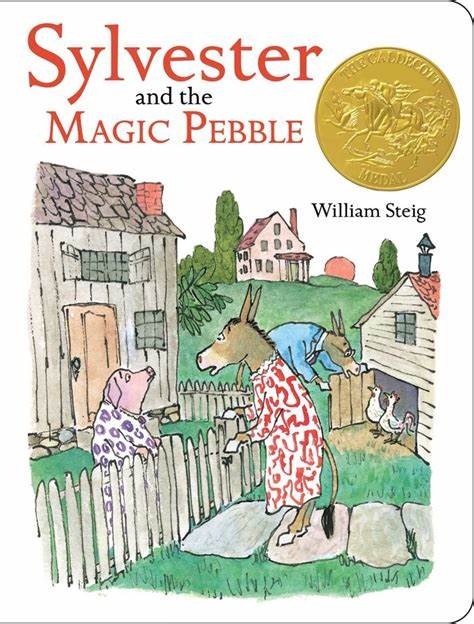
You also need to hunt out a copy of Sylvester and the Magic Pebble - I won't say why just believe me it is important.


I gave five stars to a previous collaborate between Wendy Mass and Rebecca Stead:

Sunday, December 13, 2020

The Last Paper Crane by Kerry Drewery illustrated by Natsko Seki


Here is the blurb: "Mizuki is worried about her grandfather. He is clearly troubled by something, something that is draining life and laughter from him. Gently Mizuki encourages him to reveal a secret that he has kept to himself for many years, of a promise that he made and he was never able to keep. Might Mizuki be able to help, even after all this time?"

On the morning the atom bomb is dropped on Hiroshima seventeen year old Ichiro is at home with his friend Hiro. The young boys are having a day off from the factory where they are working making aeroplane parts. Hiro has just walked his little sister Keiko to kindergarten. Ichiro is reading a huge book - The Tale of Genji - which his father has gifted before going to war. 

The bomb is dropped. The city is instantly destroyed. Hiro and Ichiro crawl out from the rubble and head through the horror determined to find little Keiko and to then get to the hospital. On the way Hiro dies. Ichiro does reach Keiko but he is unable to keep carrying her because he is so badly injured, so he tells her to wait near a building. He can see the hospital in the distance. He plans to get help and return. 

"I peel the wet pages apart and carefully tear out the first page. ... 'My father ... told me there is magic in books.' I close the book, place the loose page on top and, with shaking hands, start to fold. ... When I am finished, I place the paper bird on her lap. 'A crane,' I say.' ... 'I will be back as soon as I can."

Ichiro has no idea this is a promise he can never fulfil. And as for the book, when Ichiro finally returns to the city, as a young man, he keeps folding the pages into nearly 1000 paper cranes leaving them all over the city in the hope Keiko is still alive.

Now jump forward to 2018 and Mizuki. Ichiro is her grandfather. She sits quietly while he tells this dreadful story of incomprehensible events and of his broken promise and broken heart. But she knows it is not true that there is nothing they can do. Mizuki can help her grandfather to heal. There is a place for that final paper crane to land seventy three years later.

I picked up this book and flicked through the pages. When I saw part of the story was written as a verse novel I knew this reading experience would be powerful - and I was right! This is a perfect book to share with a High School Class alongside the two picture books above along with The Miracle Tree by Chrisobel Mattingley.


Listen to an audio sample from page four on wards (told in verse). In this video Kerry Drewery reads a text extract from her book published in 2020.

This is an extraordinary book telling a terrible story beautifully and sensitively, and with hope and kindness. More About Books

Sunday, July 12, 2020

The Snowman's wish by Sophie Masson illustrated by Ronak Taher


Please begin with my post about Sonam and the Silence. I really want Sonam and the Silence (2019) book to be shared with ALL children. I was desperately upset when it was not selected by our CBCA as a Notable or short listed book. It is a truly special book and the reason I mention it here is that it is also illustrated by Ronak Taher.  She is a talented illustrator who was born in Iran and now lives in Melbourne.


Now we can turn our attention to The Snowman's Wish. Sophie Masson explores the seasons and senses in her lyrical text.

The story begins in Winter: "he loved what he saw"
Winter continues:  and he "loved what he heard"
Spring starts: and he "loved what he felt"
Early summer: and flowers burst forth and he "loved what he smelled"

"How I wish I could stay"

But this is a snowman, made from snow, and so eventually he melts away. This is sad of course but the snowman leaves a beautiful memory gift for the children just as he promised.

As a teacher using this book with a class here are some things to notice and discuss:

End papers - they are brilliant. Winter at the beginning with ice covered leaves and Summer at the end where we see the page filled with bright orange and red flowers.

Title - Notice the font, the use of capital letters, the apostrophe, the children using a ladder to 'dress' the huge snowman.

Snowman - where might the story be set? Have you built a snowman? Can you describe the process? What are some problems with building a snowman? Is this a Christmas book? Why or why not? Did you notice the words "sleigh bells"?

Northern hemisphere - look for the animal and plant references in the illustrations. Think about the colour palette. Sophie Masson is an Australian author. You could write some questions to ask her about the setting for The Snowman's Wish.

Themes - seasons, nature, outdoor play, snow, loss, hope, gifts, promises.  Sophie Masson also says her book explores "the notion of death". Do you agree? Would the words 'circle of life' be a better description? 

Here is an in-depth and highly thoughtful review recorded by Ursula Dubosarsky.

Now go back and explore the lyrical text:
"White ground with black shadows under a silky starry sky."
"days lengthened, shadows slipped away."
"earth waking to warmth"

Take a look here - Ronak shares some of the collage illustrations from her book.


You could pair this book with these:


If you want to explore collage and snowmen try to find this beautiful book:


Sunday, May 7, 2017

Firegirl by Tony Abbott

"It wasn't much, really, the whole Jessica Feeney thing. If you look at it nothing much happened. She was a girl who came into my class after the beginning of the year and was only there for a couple of weeks or so."

"As horrible as a I thought the girl would look, when I imagined what burned people looked like, it was nothing compared to what stepped into the room.  ... Was she in pain right now? It seemed like she must be. As if being in that skin would make you want to scream and scream and scream until you died"


As you can see from these quotes Firegirl is a confronting story.  It is the story of a boy called Tom and his class in Year Seven.  Through Tom's eyes, the reader pieces together the story of Jessica - the new girl.  She has been badly burned in a accidental fire and the family have relocated to be near the hospital where she is undergoing regular and painful treatments.  Tom is horrified by Jessica's appearance but his humanity and kindness take over and gradually he comes to see Jessica as a real person and not just a damaged face.  In contrast Tom's friend Jeff is simply brutal.  He will not hold Jessica's hand for the class prayer time, he makes harsh comments about her and about Tom's relationship with Jessica.

Listen to an audio sample.

Tony Abbott is the author of Secrets of Droon - a fantasy series for younger readers.  Oddly we now have two books in our library called fire girl.  The other is a fantasy book which I do highly recommend.  We purchased Firegirl by Tony Abbott for a class who are planning to study Wonder. Firegirl would make a good comparison novel for a very senior class.  The themes are reactions of the class are too confronting for middle primary readers.  Another book you could use with Firegirl is the verse novel Motormouth. Firegirl is a previous winner (2007) of the Golden Kite Award.

Jessica Feeney joins their class. She’s a burn survivor who’s in town for treatment. The students don’t know how to act around her.  Kirkus

This powerful, emotional novel told in first person will touch readers' hearts. Some situations come only once in a person's lifetime, but they are enough to change that individual forever. Don't miss the opportunity to be moved by FIREGIRL.  KidsReads

Though fleeting and fragile, Tom's connection to Jessica changes his perspective on himself, his peers and friendship, and underscores the reward of reaching out to another—of getting "out there." Publisher's Weekly


Sunday, February 22, 2015

Withering-by-sea : A Stella Montgomery Intrigue by Judith Rossell

There are so many things that I adored about Withering-by-sea.  Here is a list :


  1. The texture of the cover - such a pity we have to put on a plastic cover.
  2. The colours used on the cover illustrations and the little illustrations scattered throughout the story
  3. The printing is dark blue and the book has a ribbon book mark - quite charming
  4. The title which reminded me of seaside towns in England
  5. My email last night to the author asking for details about the next in this series and the immediate answer from Judith Rossell.  She is working on the next installment right now and we might see it in 2016.
  6. The thought that this terrific action packed story might be short-listed for our CBCA Awards (fingers crossed)
  7. Inside this book you will find the most delightful words such as : antimacassar, quadrupeds, tendrils, perambulator, and so many more.  You know how much I appreciate books with a rich vocabulary.
  8. There is also a murder, a magic show, some very special friends and a group of talented cats.


Stella is an orphan who lives in a seaside town in the Hotel Majestic.  The time is Victorian when young girls should be seen and not heard and a truly accomplished young woman has excellent deportment and embroidery skills.  Stella's aunts - the aptly named Aunt Deliverance, Aunt Condolence and Aunt Temperance -  live at the hotel so they can partake of the waters.  They have carved out a life of comfort and routine and they are determined to mold Stella into an appropriate young lady.

Stella takes refuge in an atlas which is a book that allows her to visit, vicariously, all the exotic regions of the world.  One morning while she is absorbed in her atlas and hiding in the hotel conservatory, she sees a hotel guest - Mr Filbert furtively place something in Chinese urn holding a potted plant..  Later Mr Filbert is murdered and his dying words to Stella are "Hide it. Keep it safe."

"The little bottle was corked and sealed with red wax.  It was heavier than it looked and as smooth as glass. ... (Stella) shook it and heard a whispering noise, as if something were slithering over shingle. ... A sinuous shape seemed to move inside the bottle ... It was beautiful but it made her skin prickle."

There is so much action in this book.  In just 250 pages you will find your self cheering for the good guy and hissing at the baddies somewhat like a Victorian melodrama.  You might anticipate the action but I am sure you will be wrong.  The twists and turns made me dizzy.  Here are some excellent teaching notes.  Here is a detailed review and the author web site.

If you enjoy Withering by Sea (and I am sure you will) you might also like to look for The Book without Words, Tensy Farlow and the home for mislaid children,  Three times lucky, The truth about Verity Sparks, and The remarkable secret of Aurelie Bonhoffen.

Friday, November 9, 2012

Pied Piper of Hamelin retold by Michael Morpurgo illustrated by Emma Chichester Clark


Instead of rubbish tips I want to see parks where all the children can play, and schools where all the children can learn. I want to see fairness and kindness. I want to see the happiness that only fairness and kindness can bring. Only when I know that Hamelin is a fit place for children to grow up, can the children go home again.

Do you recognise this from The Pied Piper of Hamlin?  As an added bonus this retelling is by master story teller Michael Morpurgo with joyous illustrations by Emma Chichester Clark.  I have adored Emma Chichester Clark ever since I met her work in the Blue Kangaroo series so when I spied this new book at the IBBY Congress I knew it had to join my growing pile of purchases.

To quote from one reviewer :
(This versions is) a nuanced and substantial retelling of the well-known morality tale; young readers can identify with the resourceful narrator, and adults may find relevance, given current economic woes. 

If you are new to this timeless story or if you just need to update your own worn copy this new version would be the perfect choice.  We have a number of interesting versions of the Pied Piper in our school library including  a simple reader style retelling from the Leapfrog series, a fun version by Tony Ross, a spoof called The fried Piper of Hamstring and as a contrast a version illustrated by Drahos Zak.

I had forgotten the ending which is so satisfying.  Stories like this are an important part of our western culture.  Look for this version in your library.