Showing posts with label Loyalty. Show all posts

Saturday, May 16, 2026

The Girl who Raced the World by Nat Harrison


Maggie is an orphan. All Maggie Appleton has is a letter written by her mother that she must deliver to a stranger but on the way the letter is taken by a policeman/detective. Maggie is distraught but she continues her journey through London having just escaped from the workhouse only to make the surprising discovery that the man who was supposed to get this letter now works as a valet for the famous explorer Phileas Fogg. I need to tell you that all of this action takes place over the first 25 pages. 

Maggie is swept up into the famous journey around the world and, as you are sure to have already guessed, and time is ticking because this unlikely crew have to be back in London in just 80 days. Maggie also needs to get her important letter back from , but she needs to keep Mr Fogg away from the Detective Fix because she knows it is not true that Phileas Fogg stole thousands of pounds from the bank. Has he been framed?

If you love trains, ships, catastrophes, wild story twists, and heroes you will devour this debut book by Nat Harrison. I read the whole book of over 300 pages in one day - yes, it is that good. This book could also be a terrific family read aloud. Oh, and I love the gold embossed cover. There are world maps scattered through this book but I would also suggest you might grab a real, old-fashioned, atlas so you can follow the around the world journey in more detail. Your young reading companion is sure, also, to ask questions about the way time works in the world and how you can jump days when you travel from west to east.

Book seller blurb: It is 1872 and, when Maggie Appleton's beloved mother dies, she is left with nothing but a letter for a mysterious stranger called Passepartout. With nowhere else to turn, Maggie seeks out Passepartout and, in doing so, is drawn into an adventure beyond her wildest dreams. Together with Passepartout's employer, the enigmatic Mr Phileas Fogg, Maggie journeys to Italy, India, Hong Kong, Japan and America, in a daring race against time to win the wager Mr Fogg has accepted. But with a bank robber on the loose, an angry Inspector on their tail and unread secrets in her mother's letter, Maggie soon discovers that there is much more at stake than keeping on schedule to win the bet. Who can she really trust - and will she ever find out where she truly belongs?


Like other readers who pick up this book I have not read the Jules Verne classic - Round the World in 80 days - so my knowledge of the plot was somewhat limited. I am telling you this because your young reader aged 10+ can easily read this new book The Girl who Raced the World with absolutely no idea about the original story. They are sure to enjoy this action-packed adventure. Some readers though might, after reading this book, which is based on the famous 1872 book, want to hunt out the Jules Verne story or perhaps read an abridged version or listen to it as an audio book. Huge thanks to Gleebooks Kids for sharing this new book with me. The Girl who Raced the World is available in paperback but if you find the hardcover edition you must lift the dust jacket - there is a terrific surprise under the cover. 

Here it is (from Instagram)


I now discover I have read several books with covers designed by Tom Clohosy Cole. (Cobweb; An Elephant in the Garden; Clifftoppers).  Here are some teaching ideas to use with The Girl who Raced the World. 


The sequel to The Girl who Raced the World is due later this year:


Companion books:


The Ship of Doom


Thursday, October 30, 2025

The Enchantment of Golden Eagle by Margaret Wild illustrated by Stephen Michael King


Margaret Wild: ‘I hope readers will understand that people can say something in anger (in this case, the curse put on the bird). And that those words can be regretted and forgiven. It would be good if this story can open up discussions about consequences, atonement and, especially forgiveness, because if we can forgive, there is the possibility that things can change for the better.’  Interview with Dr Robyn Sheahan-Bright (see the Teachers Notes)

After reading The Enchantment of Eagle here are some questions that occurred to me:

  • Can you ever really 'own' a wild creature? 
  • Did the eagle owe an extra loyalty to the family because they saved him when he was just a fledgling?
  • Do you understand why the eagle needed to fly away?
  • What is a curse?
  • Should you always keep your promises? 
  • What is guilt? 
  • How do you repair a relationship when words are spoken in anger? 
  • Why is it important to say sorry and how to you express this from your heart?
  • Why are wolves always representative of danger?
  • Think about feeling safe and unsafe and how this is explored in this book

Think about the title - enchantment - that is such a powerful word. It implies magic and has overtones of the fairy tale genre. And Margaret Wild writes of Golden Eagle not 'the' golden eagle. Is this a unique creature with magical qualities? Then we have the word golden. This implies precious and wise and important.

Symbolism of the golden eagle: The golden eagle is a powerful symbol that encompasses a wide range of meanings, including strength, freedom, ... and resilience. Its significance varies across cultures, but it consistently represents the ideals of power, guidance, and the ability to rise above challenges. Whether viewed as a divine messenger or a symbol of personal growth, the golden eagle holds a revered place in the spiritual and cultural narratives of many societies. Source

You will find some beautiful vocabulary when you share this book with your library group or young reading companion - fledgling; venture; gazed; summoned; exhilarating; "he batted about'; enfold; curse; pitiless; hollowed-out; tattered; rejoicing; and larking about.

Publisher blurb: One day, Ella and her little brother Leif found a fledgling with a broken wing. They took him home, wrapped and fed him, and watched over him for seven days and seven nights. In time Golden Eagle was well enough to fly away, but he loved the children, so he promised to stay with them at the edge of the dark forest. Until one day, the wind whispered and the breeze caressed his feathers, and Golden Eagle forgot his promise ...

The publisher links the themes in The Enchantment of Golden Eagle with another award-winning book by Margaret Wild - Fox - illustrated by Ron Brooks. With a group of older students, it would be good to compare these two books - read them side by side - and then talk about themes such as guilt; fear; promises; betrayal; and forgiveness. The Enchantment of Golden Eagle is one of those multilayered stories that you could share with your younger students and then also discuss with an older group. I would then pick up Robber Girl by Margaret Wild as another example of a text which showcases Margaret Wild's skill with writing.


The publisher page has a link to some detailed teachers notes. 

A new book by Margaret Wild is certainly something to celebrate. She has written well over 70 books and even at age 76 does not seem set to stop. I expect to see The Enchantment of Golden Eagle listed by the CBCA as a 2026 notable title. 

Read some reviews:

The publisher marks this as suitable for readers 7 to 12, older than the typical picture book market, and online Teaching Notes offer suggestions up to Year 6. This is valuable recognition of the potential of picture books to inspire rich learning well beyond the formative literacy stage. Story Links

Interview with Paperbark Word (Joy Lawn) I love the word “enchantment”. As you say, it is so evocative.  With its associations of spells, magic and mystery, I hope it will spark a reader’s curiosity to open the book and read on.

Highly recommended for all! Kids' Book Review

This is a compelling story that will have the reader turning the pages to the end so they can discover whether the eagle, seen by many cultures as a symbol of strength and freedom, survives the curse, whether it returns and what happens next. The Bottom Shelf

This is a gentle book that reminds us about forgiveness and letting go and loving what you have in life. The Book Muse

From Stephen Michael King: Golden Eagle is my seventh book with Margaret Wild. You might remember the piglet series: Piglet and Mama, Piglet and Papa – then there’s the pocket dogs (everyone’s favourite books). Margaret Wild was instrumental in turning me into a published author/illustrator (with my first book, “The Man Who Loved Boxes”), so it’s always a giant privilege to work with her. 35 plus years ago – when I was working as a General Library assistant, I created a display of her and Julie Vivas’s book “The Very Best of Friends”. I’ve loved Margaret Wild’s work from that very first visual.

Other books by Margaret Wild with art by Stephen Michael King:


And two sequels


Tuesday, May 6, 2025

Birdie by JP Rose


"Slowly she opened one eye. She peered in the flickering light and gasped. Then she rubbed her eyes as quickly as she could with her sleeve, in case she was seeing imaginary things. She blinked and blinked again, but this time there was no mistaking it. There, right in front of her was a pony. A pony, just standing there!"

Birdie is an orphan living in an orphanage. She was left on the doorstep of a church with a note containing her name - Birdie Bagshaw and a bunch of turnips. Unlike nearly every other orphanage story I have ever read Birdie is happy and she is given care and love and even good food keeping in mind that it is just after the war and so food is scarce.

Then a distant relative locates her, and she is sent away from the orphanage in Leeds to a small mining village to live with her great aunt and uncle - people she has never met.

Right from the beginning Birdie is taunted and treated cruelly for being different. You may have guessed why if you look closely at the cover of this book. She runs away from school on the first day and finds herself under the ground in a coal mine that is due to be closed down. That is where she finds the pony. Her uncle later explains:

"I wanted to explain to't lass how brave they are. They're unsung heroes. Folk forget that without them, coal industry would have come to a standstill. And them horse and ponies gave their all. Many a man I've known has been saved by a pony."

Birdie is so worried about the pony. 

"She'd wondered what he was doing: was he sleeping, eating? Was he just wandering around in the dark tunnels. Or worse still, was he lonely like she was? Was he dreaming of faraway fields, of the sweetness of cherry blossoms, of wildflowers up to his knees, moving in the wind. Because there'd be no sunshine for him, no crisp air. Down in the mine, down in the centre of the earth, there was no day or night, only an everlasting darkness."

I almost read this book in one sitting. It is a measure of how much the story absorbed me that I rushed home from a morning appointment in order to keep reading. There are some wonderful moments in the final pages of this book and the ending will melt your heart. This story is a personal one for the author who was also a 'child of colour' living in Manchester in the 1970s. Like Birdie she was put into foster care and like Birdie she lived in a small mining village. There are also back notes about pit ponies, the history of coal mining in the UK and the special children's homes that took in children like Birdie:

"During World War Two, there were around two thousand babies born to white British women and African American soldiers, who'd been stationed in the UK ... Many of them were rejected by their families and society, not only for having a child 'out of wedlock', but for having a relationship with a person of colour."

Birdie will tug at the heart strings Books for Keeps

A superb historical adventure with a delightful heroine. ... Despite it’s often bleak setting, reading Birdie is like being wrapped in a warm blanket – warm, cost and entirely satisfying. Love Reading for Kids

Bookseller blurb: When Birdie is sent to live with her great-aunt in 1950s Yorkshire, she befriends the village's last remaining pit pony. A story of hope and courage, exploring themes of family, racism and identity. Birdie Bagshaw has never known her parents. Having grown up in a children's home for mixed race children in 1950s Leeds, now she has come to live with her great-aunt in the Yorkshire Dales. From her arrival, Birdie is treated like an outsider by the local children. When their bullying drives Birdie to hide in the nearby coal mine, she finds an unexpected rescuer in the form of Mr Duke, the last remaining pit pony in the village. As the weeks pass, Birdie forms a special bond with the spirited little pony. But his future is in danger, and Birdie comes up with a daring plan to save his life in return.

This BookTrust review has more plot details.

J.P. Rose was born in Manchester but was raised in Yorkshire after her adoption. Growing up she suffered extreme racism, though she continued to be proud of her diverse and rich Jamaican, Nigerian and Anglo-Irish heritage. She trained as an actress but eventually moved into writing, and she is now the author of numerous novels for adults. 

Thursday, August 1, 2024

The Silver Sword by Ian Serraillier


Publisher blurb: Although the silver sword was only a paper knife, it became the symbol of hope and courage which kept the Balicki children and their orphan friend Jan alive through the four years of occupation when they had to fend for themselves. And afterwards it inspired them to keep going on the exhausting and dangerous journey from war-torn Poland to Switzerland, where they hoped to find their parents.

If you are not familiar with this famous book you can read a full plot summary here. 

This is another title in my series where I am reading and re-reading classic children's books.  I really thought I had read The Silver Sword first published in 1956 but reading it this week none of the plot resonated with me. In my memory this was a solo journey by the boy with the tiny paper knife sword but in fact it is a journey of four children and the determination and kindness of young Ruth is so beautifully explained I am sure I would have remembered her from this book. 

Here are a few of text quotes:

"There was no time for Ruth to dress properly. She put a coat over her nightdress and would a woollen scarf round Bronia ... (Edek) picked up the sobbing Bronia and led the way upstairs. He was wearing his father's thick overcoat over his pyjamas, a pair of stout boots on his bare feet and his rifle slung over his back."

"They must have gone fully a hundred yards when the first explosion shook the air. A sheet of fire leapt up from their home into the frosty night sky. They fell flat in the snow and lay there. The roof shook, the whole city seemed to tremble. Another explosion. Smoke and flames poured from the windows. Sparks showered into the darkness."

"Edek had been their life-line. Food, clothes, money - they depended on his for all these. In the city he had made a home out of a ruin. In the woods no tree gave better shelter than the oak he had chosen. And after dark, when the wind blew cold and the damp oozed out of the ground, none knew better than he how to keep the fire in untended till dawn, so that the glow from the embers should warm them all night as they slept."

From Penguin: Ian Serraillier (September 24, 1912 - November 28, 1994), was a British novelist and poet. Serraillier was best known for his children's books, especially the Silver Sword (Novel) (1956), a wartime adventure story which was adapted for television by the BBC in 1957 and again in 1971. ...  He became an English teacher, first at World War II. It was during this period that his first published work appeared, in the form of poetry for both adults and children. In 1946 his first children's novel was published. It was followed by several more adventure stories of treasure and spies. His best known work, The Silver Sword, was published in 1956 and has become a classic, bringing to life the story of four refugee children and their search for their parents in the chaos of Europe immediately after World War II. As well as children's novels and poetry, Serrailler produced his own retellings of classic tales, in prose and verse, including Beowulf, Chaucer and Greek myth. Together with his wife Anne he founded the New Windmill Series in 1948, published by Heinemann Educational Books, which set out to provide inexpensive editions of good stories. 

If you read this book with a group of students (as many schools still do) it would be good to use one of these as a comparison text:


Tuesday, June 4, 2024

Stitch by Padraig Kenny


Stitch and his friend Henry are creations of an old Professor. Stitch is indeed stitched together from various human body parts presumably retrieved from graves. You are right to think of Frankenstein. Please don't be concerned though, because Stitch is such an endearing and kind character, and his naive view of the world is sure to charm you. I think children reading this book are sure to emphasise with the way Stitch has difficulty making sense of the world and of big topics like life and death and betrayal and the human desire for immortality.

Early in the story we are told Stitch has been ordered not to disturb the old Professor. Each day Stitch has his routine. He counts the days he has been 'alive' so we learn the story opens on day five hundred and eighty-five (you will immediately work out that this is not much longer than a year). I did wonder just how long Stitch has tiptoed past the professor's door and then just a few days later two visitors arrive at his castle home. The man is the old Professor's nephew - Professor Hardacre and his 'assistant' Alice. Very quickly Professor Hardacre realises something is wrong. He opens the forbidden door and discovers the old Professor has died. Death is a mysterious concept that Stitch just cannot grasp. Down in the basement of the castle, Henry, another of the late Professors creations is held in a cage. Stitch knows Henry has done something 'wrong' and so the cage is for his protection. Every day, as part of his routine, Stitch feeds his pet named Brown Mouse and he thinks about his other friend, White Rabbit, who is no longer there. Then he visits Henry for a chat. His routine is thrown into disarray with the arrival of these two strangers. There is something slightly disturbing about Professor Hardacre. Alice on the other hand is so kind and speaks gently to Stitch trying to explain the ways humans behave especially in relation to creatures and people perceived as different. She has first-hand experience of this because she has a hump on her back (you might think of another famous story about human reactions to difference The Hunchback of Notre-Dame).

Professor Hardacre has obsessive reasons for want to experiment with Henry. He sets up his equipment and waits for a night of thunder and lightning, but Stitch can feel this is all wrong and he is sure his best friend Henry is in danger. 

Here are some text quotes to give you a flavour of this story. You are sure to enjoy Henry's quirky invented words:

"As if to prove his point to himself, Stitch holds his hands up. One is very definitely smaller than the other. This is his left hand. It has long slim fingers. The other is large, almost bloated in comparison. Its fingers are stubby and fat. Both hands are grey in colour because all of Stitch's skin is grey ... "

"But if you are a monster, Alice, then that should mean you are horrible and cruel, and I haven't known you for very long, but I know for a fact that you are not horrible and cruel. Far from it. To me you seem to be a very nice individual, wise and generous in your insights and behaviour."

"Dead,' says Henry. 'I believe I have heard the word, although I confess I do not fully understand it. This is quite surprising because I have picked up a lot of knowledge in my own studies and assessments of the world."

"Hodgepodge Henry Oaf. A mixture of bits and pieces of different people, which goes some way to explaining some of my more inexplicabubble bouts of mischief."

In her review for Magpies Magazine (Vol 39, issue 2, May 2024) Dr Robin Morrow said:

"This book succeeds as a gripping adventure story, while provoking thought and discussion about topics such as the humanness of these beings, friendship, difference, and responsibility."

Reading Zone: The overriding message is that it does not matter what you may look like. What is important is being a good person, doing the right thing, and standing up for your friends. As Stitch says, "Everybody is different, and this is what makes the world such a curious and interesting place". Padraig Kenny has managed to wrap up a vitally important message in a thrilling adventure story. I believe that this is an important book which will be read and enjoyed - on many different levels - by children and adults alike. Highly recommended.

Moving and powerful, yet delicate, this story celebrates the uniqueness of every individual. It would be a great one for classroom discussion. Books for Keeps

Thanks to Walker Books Australia - I won my copy of Stitch. You can see Padraig Kenny talking about and reading an extract of his book here. This link also includes an interview with Padraig. And here is a teaching guide. 

Your local or school library might have a version of Frankenstein abridged for children such as this one from Usborne books.

I previously talked about this book by Padraig Kenny. When you read Tin I am sure you will see some ways the story has links with Stitch.


I would follow Stitch with Cogheart which also explores the idea of immortality.


Saturday, February 3, 2024

Princess of Dawn by Megan Gilbert


"I hope to be the queen you always wanted me to be."

Bookseller blurb: Galdinia Elderwin, the nineteen-year-old Princess of Crysterra, has lived in the safety of her father’s shadow her whole life. When the king unexpectedly dies, Galdinia is left with the task of becoming queen, but she is missing the key to her ascension to the throne: her gift of elemental power from the Gods. After the king’s death, the capital of Crysterra observes the Week of Mourning, which is full of ceremonies and celebrations in honour of the late king, and on the Seventh Day of Mourning, Princess Galdinia is set to be coronated as queen. In the span of one week, Galdinia must navigate the throes of training for a gift she has not yet been given, gain the respect of the capital’s Syndicate—who still view her as a child—and overcome the heartache of past forbidden love as she is presented with five powerful and charming suitors who could help legitimise her claim to the throne. All the while, she is wary of her enemies on the horizon—her loathsome uncle and aunt, and the exiled Valah Pyrin—who all believe they have a claim to the throne and would do anything to take it from the young princess. Galdinia struggles to deal with the rising pressure and anxieties of becoming queen on her own merit, doing right by the citizens of Crysterra, and having faith in the Gods, and more importantly, herself.

Let's begin with the dedication:

To every woman that has ever been told she isn't enough. You are more than enough. Don't let a broken system stop you from wearing your crown; use you crown to fix the system.

Here are the parts of this story that I enjoyed/appreciated:

  • the story pace - this is helped by the story structure where we follow the seven days of events following the death of the King Bartemus.
  • the small reveals that made me very suspicious of Bentley such as when he gives her the hair clip and it feels cold and also the scene at the ball when we learn his parents have not attended and Draec Wrynn (father of suitor Evarius) questions Bentley's credentials. (page 197) - from this scene onward I became very suspicious of this smooth operator.
  • the hints of political intrigue between the different parts of the realm and even in her own staff.
  • does the monarch really hold power or will he/she in fact be a puppet of the Syndicate?
  • the strong character descriptions of the contenders for the crown.
  • the inclusion of a map.
  • the story tension as I desperately waited for Galdinia to be granted her gift - water weaver, fire flourisher or wind wielder. 
  • the heroism of the final battle scenes - a princess not afraid to really fight (like a phoenix).
  • descriptions of the table setting on day six and the food prepared by Miss Giles.
  • I like the inventive names of the five suitors - Kaedric Novus; Lord Evarius Wrynn; Dillian Othid; Kell Ly; and Lord Bentley.
  • I also liked the descriptions of the three objects (page 116) during her training sessions.
  • Galdinia grows in confidence - especially when she finally confronts Valah.

Questions for Megan

  • Did you consider including the royal crest - the Elderwin crest on your book cover?
  • Why is this book called Princess of Dawn?
  • Page 101 you use the word 'okay' - did you consider any other word choices - this word startled me. And the word 'marsupial' on page 341 also surprised me.

This book has terrific character descriptions - the bold words imply so much:

Draven (brother of the King); "He looked much like his brother - olive skin, dark hair and eyes - but his features were far harsher. As the years of animosity wore on him, his face became somehow sharper."

Edana (wife of Draven): "Locks of her dark brown hair had fallen from her usually pristine bun; she was too distracted to notice her hair's disobedience."

Drystan Allard (first love of Galdinia): "The front pieces of his otherwise neatly tamed mop of chestnut brown hair fell in his eyes as he came to a halt before his friends. The sunlight radiated off his onyx armour, somehow making him glow more brilliantly than he already did in Galdinia's eyes ... At the sight of his kind eyes and gentle smile, Galdinia could feel the warmth of summer ... "

Valah (banished daughter of the former ruler and contender for the crown): "Valah had silently approached Galdinia from behind before speaking, her voice hissing her final word."

I really appreciated the way Megan Gilbert tried to break the usual princess/fairy tale tropes. I love that the Princess is a very skilled archer. You need to know the quote below will be overturned - thank goodness.

"And now at nineteen, Galdinia was slapped in the face with the rude awakening that queen could have their husbands chosen for them. And what was worse: she might not be able to be queen without a king."

"Although Galdinia didn't revel in violence, she was fascinated by the strategy of armies ..."

I have been following Megan Gilbert and her progress with her debut book for a year. I am in awe of her energy and promotion (Facebook; Instagram). She also ran a preorder campaign on Pozible! Scroll down to see her supporter offers and also her book publishing budget. Megan has thanked her supporters at the back of the book.  Her book is self-published and print on demand and is also available from Amazon as an e-book. I actually read the e-book and the print book. With an e-book I like to mark passages I want to re-visit or quote on my blog and Megan had a special price offer for her e-book for less than $4. This book is also available from some local Australian booksellers. Megan also made some merchandise to go with her book - a banner for bookfairs and bookmarks with a QR code.

In the interests of disclosure, I need to say the author of this book is the daughter of a friend and she kindly gifted this book for me last Christmas. The story really held my attention and I read it over the course of one day (343 pages). 

I work in the library at Westmead Children's Hospital and I did wonder about adding this book to our collection. The recommended age for this book is 15+ but I think it might better suit a slightly older reader. The main character is aged 19. For myself I did find the references to heavy drinking a little confronting (I was reading as a reviewer of Middle Grade and some YA titles) and there is an indirect and very minor reference to suicide (page 277). The official content warnings are: anxiety and panic attacks, battles and hand-to-hand combat, blood, death, including that of family members, misogyny, and murder.

Megan Gilbert offers her readers lots of extras on her beautifully designed web page - pronunciation guide, playlist, and a media package. She has held a few in-person events with book readings and interviews, and she even offered an annotated version of her book as part of a competition. This book is the first in a planned trilogy but I am happy to say enough is resolved at the end of the first installment so readers can rest easy and wait until later in the year for Book two. Fingers crossed her true love is rescued and by book three I'm sure there will be that all important 'they all lived happily ever after.'

Thursday, January 4, 2024

Hat Cat by Troy Wilson illustrated by Eve Coy


An old man lives alone. His only companions are the local squirrels. Each day he puts peanuts on his hat and then he sits still on his back verandah waiting for the squirrels to come. One day, as he lifts up his hat, he finds a young cat. He names the cat Hat, and he takes the cat inside his house. Hat becomes a new member of the family. He is fed and cuddled but he is never allowed outside because the old man is concerned that Hat might eat the squirrels. Then one day the man disappears. Some other people eventually arrive and they feed Hat but he is still trapped inside until the day when the youngest child leaves the door open.

This is a gentle story based on the author's own Grandfather and the way he fed the local squirrels after his retirement. It is also a slightly puzzling story which might lead to an interesting discussion with your young reading companion (aged 6+). Why did the old man leave? What did you think might happen when the door was left open? Can you explain the dilemma Hat faces when he does manage to go outside? How and why does the point of view change on the second last page? Who are the people who come to feed Hat?

Here is an interview with the illustrator Eve Coy. She says: I love adding in the background story through the pictures. For example the empty second chair in the sitting room shows the old man didn’t always live alone and it gently hints at an accepted loneliness without being too upsetting.

A sweet peek at the bond between a man and his cat. Kirkus

Wilson doesn’t need many words to tell the story, not only because he cleverly says a lot by saying a little, but mainly because the illustrations by Eve Coy express so much. The illustrator’s beautiful watercolour images give off a sense of tranquility all while bringing to life the love between and old man and his animal friends—this tale of patience, family, and kindness is the perfect bedtime story... DC Canada Education

This book reminded me of these:


Troy Wilson says he was inspired by this book - Waiting for the Whales.


Monday, October 25, 2021

Medusa by Jessie Burton illustrated by Olivia Lomenech Gill


"My name was Medusa and I was a girl. Perseus had made me sound like a mythical beast. 
I didn't want to be a myth. I wanted to be me. ... I thought I was safe, 
because Perseus still didn't know about my snakes"


Publisher Blurb Bloomsbury: A dazzling, feminist retelling of Greek myth from the internationally bestselling author of The Miniaturist, stunningly illustrated by Olivia Lomenech Gill. Exiled to a far-flung island by the whims of the gods, Medusa has little company except the snakes that adorn her head instead of hair. But when a charmed, beautiful boy called Perseus arrives on the island, her lonely existence is disrupted with the force of a supernova, unleashing desire, love and betrayal… 

Reading this version of the Medusa became by obsession last week. I will confess that in some books I do skip to the end either to check everyone lives happily ever after or just because I am impatient to find out how everything turns out but in Medusa I did not let myself "cheat".

Of course I should already know the Greek mythology of Medusa but apart from the snakes on her head and the curse of turning people to stone I really did not have a good grasp of the story. Since reading this retelling of the Medusa story I have now read several versions closer to the original story, I can see Jessie Burton has altered the plot quite drastically but really I do not think this matters at all. I am not going to elaborate on this because it will spoil your enjoyment of this book. I will say I loved the way Jessie Burton crafted the relationship between Perseus and Medusa. If you are not familiar with Medusa you could read this book and then read this entry from the World History Encyclopedia. High School students might use this book to discuss the 'Me Too' movement alongside the important message that 'no means no'. 

Medusa is due for publication November 2021. Older teens, who were perhaps fans of Percy Jackson in their Primary years, will enjoy this Medusa story.  The art you will see in this book by Olivia Lomenech Gill  is wonderful. 


This is most certainly a Young Adult title - I would suggest readers aged 16+. While the sexual assault is not described explicitly there are mature themes in this book.

The writing - cleverly, and compellingly - feels both timeless and modern. Medusa’s narrative, and the dialogue, is laced with wit, and infused with tremendous detail. LoveReading4Kids

Read this review for more plot details and some deeper criticism:

Burton's story is a very feminist retelling. She has written the story in a way that makes it very related to the world we live in today; a world of impossible beauty standards, where a lot of a woman's worth is dependent on how attractive she is, a world where being too beautiful can lead to jealousy and abuse. It also shines a light on rape culture and victim blaming. Once Upon a Bookcase

Friday, October 8, 2021

Pony by RJ Palacio


 Begin with the book trailer from Random House Kids - it's exquisite. 

Silas Bird and his father Martin Bird, or Pa as Silas calls him, live in a remote part of Ohio. Martin Bird is a highly intelligent man who has tried and succeeded at various occupations including boot making. His latest enterprise is photography which, up until now, has consisted of daguerreotypes but Martin has developed a new form using paper soaked in a solution of iron and salt. This process is called the collodion process. The author notes at the back of Pony give more details about the various forms of photography which were used during the 1800s. 

Late one night three armed men arrive and demand Pa and Silas ride with them to meet Roscoe Ollerenshaw. They claim he has a lucrative business proposition. Later we discover this involves counterfeiting. The men have two extra horses with them one of which is a small pony. This is clearly a very dangerous situation and at first Pa refuses to go but as things escalate he agrees to set off with the men but he refuses to take his son. 

Silas is left alone in this remote place. Well actually he is not entirely alone because he has his friend Mittenwood. Who is Mittenwood? 

The next day the pony appears in the yard.

"He was not as small in the daylight as he had seemed in the dark. Maybe the other horses around him had been especially big. I don't know. But now, grazing by the charred oak, the pony seemed of average height for a horse. His coat gleamed black in the sunlight, and his neck was arched and muscular, topped by that bright white head, which made for a most peculiar spectacle."

Silas knows his father has ordered him to stay home assuring him he will return in seven days but to Silas the arrival of the pony is a sign. Mittenwood (I am not going to tell you about him here) cautions against setting off but Silas knows his father is in danger and so their long and dangerous journey begins. 

Colby Sharp loved Pony which is why I put it on my shopping list. I am guessing he loved the survival aspect because he always says his own number one book (from when he was young) is Hatchet by Gary Paulsen. Colby also likens the writing in Pony to Holes by Louis Sachar. Oddly, it is the aspect of survival that concerned me the most in Pony but there are lots of tiny threads in this story which RJ Palacio neatly sews into a perfect pattern which feels very satisfying when you reach the final page.


Colby Sharp - "It's mind blowing ... when you read it the second time you see all of these clues that the author leaves for readers ... It's just a masterpiece ... It is really amazing. 

The journey undertaken by Silas is very long but he seems to go for days with no food and no water and even worse, while he clearly loves Pony, we never read about him taking the horse to a river or lake to drink nor does he complete the basic horse care I have read about in other books such as rubbing Pony down, giving him enough rest, and making sure Pony has food each day. Kirkus agree: "Among other horse-related slip-ups, novice rider Silas manages a 12-hour day without either himself or the pony dropping from exhaustion."  This will go part of the way to explaining why I gave Pony four stars. I truly enjoyed this book (as evidenced by the way I read 272 pages of very small print in one day) but I kept wanting someone to offer food to Silas and I did worry about Pony. Luckily at the end, Silas does find a new family and there is a brief mention (page 243) of eating pudding and smelling freshly baked bread but I was hanging out for a feast of delicious treats. 

This book is sure to appeal to readers aged 11+. The final gun fight scenes are utterly gripping and I mentioned tiny threads. One of these is the violin Silas takes on his journey. You are sure to wonder about this. Another is the mysterious Mac Boat and of course Marshal Farmer who guides Silas through the so many dangerous landscapes. Colby Sharp is writing teaching notes to go with Pony - they don't seem to have been published yet but I add the link here when they appear. 

The Wall Street Journal begins their review with the word 'perfection' going on to say "Ms. Palacio interleaves her chapters with antique daguerreotypes, and she evokes the journeys of Odysseus and Telemachus, as well as other classical tales, to create a brilliant story of love and courage."

R. J. Palacio spins a harrowing yet distinctly beautiful coming-of-age story about the power of love and the ties that bind us across distance and time. With the poignant depth of War Horse and the singular voice of True Grit, this is one of those rare books poised to become an instant classic for readers of all ages. Penguin Random House

In this beautifully crafted story, we meet strangers, loved ones, those dedicated to the law, and those dedicated to honor, integrity, loyalty, friendship, and above all, love.  Some of them you want to see in jail and others you wish you could make a part of your own life because the power of the connections is so amazingly wonderful and that is what really matters after all. A Book and a Hug

Here are some more review comments.

You will know RJ Palacio from her previous books including Wonder. As I read Pony I kept thinking about a book I read a long time ago - Jim Ugly by Sid Fleischman. My memory is that it had similar themes of a boy alone, travelling vast distances to find his father and the promise of lost millions.


Thursday, September 30, 2021

Rabbit, Soldier, Angel, Thief by Katrina Nannestad


The title of this book is so important. Little Sasha is living through WWII. He is a very young boy and his mother calls him Little Rabbit.  Sasha lives in a small village in Russia. When the German soldiers march in they brutally destroy his beautiful village. This very young boy is possibly the only survivor because he has been able to run away from, as he describes them, the 'handsome monster princes'. Sasha finds himself lost in the forest but he eventually stumbles on a camp of Red Army soldiers. This group, led by Major Fyodor Gagarin, are on the move desperate to rid their beloved homeland of the scourge of the German army. Sasha is welcomed into the group, given a tiny uniform and some important, non combative duties. And so Little Rabbit begins his march across the land to Stalingrad.

So now you have some idea about the title words Rabbit and Soldier. You will need to read this gripping account to understand Angel and Thief.  

Sasha tells his story, from his hospital bed, as a series of recounted incidents. We are left in suspense as to how he arrived in the hospital and how he survived the horrors of the war. Using objects he 'collects' from his hospital ward, Sasha gradually shares the memories of his journey over the previous three years and, even more importantly, we meet the men and women who kept him safe. Katrina Nannestad has created such real people in her characters. especially Major Fyodor Gagarin who Sasha fondly calls Papa Scruff. 

There is a very appealing structure to this book which has the dual effect of making it easy to read; helping to move the story forward; and working as a device that creates anticipation for the reader as we wait to find out why each object is so important as a memory trigger for Sasha.

One of the aspects of the writing in this book that I really appreciated was the way Katrina Nannestad creates powerful contrasts. For example in the early scenes we read about all the pretty flowers in the village - sunflowers, sun kissed strawberries, larkspur, daffodils and cherry trees covered in blossoms. Then we read about the arrival of the German soldiers and there are words such as hard boots, kicking doors, and stomp, stomp stomp. Then, later, near the end of the book we read about tanks rolling into the city with flowers in their cannons. Such a joyous scene. Another truly special aspect of this book is comes from the way Katrina Nannestad imbues Sasha with deep tenderness and an emotional intelligence well beyond his tender years. I have to say his tiny heart certainly touched mine. 

Katrina explains in her author notes that this while this book is entirely fiction is was inspired by a real boy called Sergi Aleshkov who joined the Red Army when he was between six and eight years of age.

This book will hit the shelves of your favourite bookstore on the 27th October.  I strongly suggest you order your copy now so you can get your hands on this book the day it arrives. If you subscribe to a standing order service this book is sure to be in your October selection for the school library. Huge thanks goes to Beachside Books for my advance copy of Rabbit, Solider, Angel, Thief.

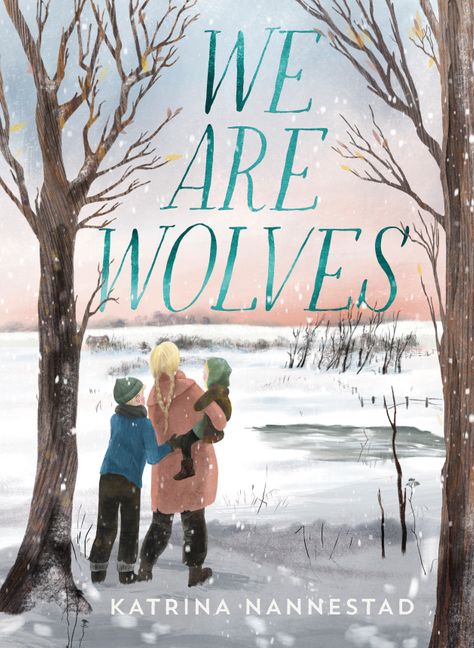
You know I am slightly obsessed with covers - how perfect is this one.  Congratulations to Martina Heiduczek on her beautiful design. Martina also did the cover for We are Wolves which means these two books will look splendid when placed together on your shelves and the published edition will be in hardcover for a really great price. 

Naturally you will want to read We are Wolves by Katrina Nannestad which also explores the experiences of children during a war. I am going to predict we will see Rabbit, Soldier, Angel, Thief short listed for many Australian book awards. Here are some other Katrina Nannestad books I have also read and enjoyed: