Showing posts with label Exploration. Show all posts

Sunday, March 16, 2025

Searching for Treasure by Johanna Bell illustrated by Emma Long


I have read hundreds or even thousands of books, especially picture books, but every now and then a new book comes along that surprises and completely delights me. The first double spread took my breath away. 

Image source: Larrikin House

Think about all the conversations you could have over this one page - where are they going? who can you see? how do they feel? how do you know this? what do you know about the weather and the season? can you see some things on the edge of the sand near the water? what might they find?

When you walk along a beach you do have to look closely to see all the treasures. This book shows you the treasures in real life sizes, but you are invited to look really closely to discover an interesting science fact about each of these wondrous things. I am so excited to see fingernail shells - I well remember finding these on a beach when I was a very young child. 

So, this could just be a science book about the seashore - but it is so much more. I am not going to spoil the final fold out page but it is sure to delight your young reader and perhaps entice you to take a walk along a nearby beach.

Bookseller blurb: Searching for treasure on the high tide line. One step, two steps, what can you find? A walk on the beach becomes a joyous, creative adventure. What has the sea washed up? Can you find its hidden treasures? Find sea urchins and shark's eggs, ghost crabs and cuttlefish, limpets and barnacles and so much more.

There is an important note on the imprint page - "With thanks to Dr Catherine Cavallo for her marine species expertise." So, you can be assured of the authority of the science facts.

You can share this book with a very young child because the text contains a repeated pattern but an older child is sure to be fascinated by all the tiny details written in tiny italic text beside each treasure.

One step, two steps, what can you find? Searching for treasure on the high tide line. Three steps, four steps, what can you find?

Here are a few 'fun facts':

  • The best time to look for shells is after a storm
  • Baby sharks are called pups!
  • Sponges are animals not plants
  • Periwinkles can't swim

Huge congratulations to Allen and Unwin on the book design used for Searching for Treasure. This book has a fold out which I already mentioned but there are also sculptured half pages somewhat like a lift-the-flap. The tide is out on the front end paper and the tide is coming back in on the back end paper. This has huge implications for the final image - oh no!

It is a long way off, but I am going to predict Searching for Treasure will be a CBCA 2026 Notable. Here are some teachers notes. 

I loved that Searching for Treasure has two ways it can be read; large simple text is a prompt to look at the picture and point things out, plus there is small text between the treasures, educational facts winding between the illustrations. These were like hidden treasures in themselves. Little Squirrel's Bookshelf (click this link to see more illustrations inside this book)

The final gatefold is masterful!  The Bottom Shelf

Johanna Bell lives in Tasmania where she writes fiction and runs a community arts business called StoryProjects. Johanna is the author of The Colour Catchers, illustrated by Laura Stitzel and Hope is the Thing, illustrated by Erica Wagner.  


Emma Long is an accomplished artist, exhibiting regularly in group and solo exhibitions across the Northern Territory. Emma lives in Darwin with their husband and four children and continues to work as an illustrator and an art educator. Other books they have illustrated include Diane Lucas and Ben Tyler's Walking in Gagudju Country and Walking the Rock Country in Kakadu.


Wednesday, April 17, 2024

The Last Mapmaker by Christina Soontornvat


Exploits on the high seas and complex characters combine in a tale full of both excitement and heart. An engrossing adventure with the feeling of a whole world to be explored. Kirkus Star Review

Sai (full name Sodsai Arawan) is a girl living in a highly stratified society. She is on the bottom rung. Her father is a petty criminal and they live in squalid conditions. Sai, though, has worked hard and found herself a good job with the esteemed map maker. She has managed to find some clothes suitable for an apprentice and each day she travels into the city to work with Paiyoon. She has a firm goal to better herself and to do this she needs the all important status symbol of a lineal or chain. The more of these a citizen displays the higher their social standing. Sai is twelve. Lineals are given to children when they turn thirteen. They show your heritage.

The Kingdom of Mangkon is huge but the Queen wants more. She sets a challenge to the navy to sail to all corners of the globe to claim new lands in her name. 

Of course, these ships will need a map maker and Paiyoon is famous, but he is old now and unwell and his hands keep shaking. He does secure a place on a ship, but he will need Sai to travel with him to assist with the map making. Sai is very skilled with copying documents and maps. She is thrilled she can go on the voyage. Partly because this is a way to get away from her father and partly because there is a reward at the end of the voyage, and this will mean she can obtain a lineal and a better future.

On board the ship there is the crew of course, and one of them is very suspicious of Sai, but there is also the Captain who is the Queen's great niece, Mr Lark a naturalist, Dr Pinching the ship surgeon, Miss Rian Prasomsap - a former soldier, and Bo a stowaway with an interesting back story. The real dilemma for you as a reader comes when you try to work out who to trust. I was suspicious but also very wrong with my predictions. 

The voyage is long and filled with danger but the really interesting part of this book comes when we discover why the Queen wants to know about these distant lands and what she might do there. She has already almost destroyed some of the places they visit on the voyage and that is why I have added the label colonization to this post. 

"I had expected Falhin to be a green vibrant place like Pitaya Island but it couldn't have been more different. From what I could see, Fahlin was made of mud. The streets near the habour were slick and greasy, and the water was stained brown." Keep reading pages 180-181 to hear what Paiyoon thinks about the Queen and her desire to claim new territory.

Horn Book expand this idea: Class structure, imperial greed, and environmental ravages underpin the narrative arc of this fantastical adventure story, resonating with our own contemporary issues. At the same time, Soontornvat’s Thai-inspired culture and geography provide a vivid backdrop. With emphasis on an intricate plot and quick, accessible prose, Soontornvat provides plenty of excitement while bringing questions of expansionism and de-colonization to young readers.

Publisher blurb: As assistant to Mangkon’s most celebrated mapmaker, twelve-year-old Sai plays the part of a well-bred young lady with a glittering future. In reality, her father is a conman—and in a kingdom where the status of one’s ancestors dictates their social position, the truth could ruin her. Sai seizes the chance to join an expedition to chart the southern seas, but she isn’t the only one aboard with secrets. When Sai learns that the ship might be heading for the fabled Sunderlands—a land of dragons, dangers, and riches beyond imagining—she must weigh the cost of her dreams. Vivid, suspenseful, and thought-provoking, this tale of identity and integrity is as beautiful and intricate as the maps of old.

Watch the trailer from Candlewick. 

Reading it, it doesn’t feel like any other book out there. It grips you from the first page. You believe in these characters, in their wants and dreams and fears. You never doubt for a second their motivations, even when they surprise you with their choices. This may even be the kind of book that kids that usually eschew fantasy would actually like quite a lot. Though fantastical elements exist, there’s a strange reality to them. Consider this the kind of book that kids and their adult gatekeepers will love equally. In other words? Rare rare treasure. Betsy Bird SLJ

I have had this book on my list for a while. It was published in 2023. I saw the hardcover on sale in a bookstore but hesitated to buy it which was silly but anyway I now own the paperback.

Awards for The Last Mapmaker:

  • 2023 Newbery Honor Book
  • New York Times Best Children’s Book of the Year 
  • New York Public Library Best Book of the Year
  • Kirkus Best Book of the Year
  • Walter Dean Myers Honor Book for Young Readers
  • Texas Bluebonnet Master List Selection 
  • A Junior Library Guild Selection 
  • A Common Sense Media Selection 
  • Audiofile Best Audiobook of the Year
  • Chicago Public Library Best Book of the Year
  • YALSA Best Fiction for Young Adults
  • ALSC Notable Children’s Book 2023

I previously talked about this book (five stars) by Christina Soontornvat.


Companion books:


Saturday, November 6, 2021

The Little Black Fish by Samad Behrangi illustrated by Farshid Mesghali translator Azita Rassi


ماهی سیاه کوچولو

"There was something wrong with Little Black Fish. He ached with longing to go beyond the stream, and to discover for himself what might be there. ... 'I must swim beyond the stream. I want to see if the stream goes on and on, or whether it comes to an end."

Everyone in this part of the stream warns Little Black Fish against the ridiculous, dangerous and unnecessary idea of leaving.  Little Black Fish tells his mother: "Perhaps there is more to life, and perhaps the world is more than our stream.' (No) 'Our stream is the world!' said his mother." Finally Little Black fish takes the plunge and and he slides down the waterfall. His journey has begun and, yes, the is a world beyond his home. He meets other creatures such as tadpoles, a frog, a crab and a shepherd boy with his sheep. A lizard warns him about the dangers that will be ahead - especially the danger of pelicans and later the danger of seabirds.


The lizard kindly gives Little Black Fish a small knife which he explains can be used to cut his way out of the pelican's pouch. 

"The more that Little Black Fish found out about the world, the more he realised that it was a dangerous as well as a beautiful place."

I am not going to share the ending because it is sure to shock you and lead to some very interesting discussions with your reading companion or senior Primary class. 

Publisher blurb Tiny Owl: Little Black Fish may be small, but he has big questions and a determination to find answers to them. While his fellow fish are too scared to do anything different from their set routine, Little Black Fish swims over the edge of the pool, into the stream and river which will show him much more of the world. He meets wonders and adventures, dangers and beauty. He makes it all the way to the sea, and finds his answers.

In 2012 I attended the IBBY Congress in London.  In one of the concurrent sessions the presenter Rosana Faría from Venezuela (illustrator of The Black Book of Colours) talked about her book Jacaraca, Perereca och Tiririca which she described as: An examination of the process of illustrating a story by Brazilian author Ana Maria Machado which resonated with the situation in Venezuela, a country which received immigrants in the 19th & 20th centuries and is now experiencing emigration. The story shows that strength is in unity and perseverance.  This session has lingered with me all these years later because Rosana astonished me when she explained how this book was actually a way to share a very powerful political message and how proud she was that the government authorities had not detected this. Her book could so easily have been banned but it was dismissed as a simple children's book - and therefore harmless!


When I ordered and received The Little Black Fish I thought again about Rosana's book.  The Little Black Fish could also be viewed as a simple fable for children but in this case Samad Behrangi's book written in 1968, did come to the attention of the authorities in Iran and it was banned but today it is one of their most famous children's books. I know the banning of books is a shocking thing but in this instance I am cheering because it shows this is not just a children's book - it can a powerful device with an important and a message!

Here is a quote from the final pages of The Little Black Fish: 

" First published in 1968, The Little Black Fish was written and read as a allegory for a nation in which is was dangerous to dare to be politically different. The book was banned in pre-revolutionary Iran. The simplicity of a 'children's story' about a fish daring to mix with other kids of creatures and other ways of life, offers a useful case for discussion by all ages about the big questions at the heart of political debate. Meanwhile, younger children will engage with the more individual experience of Little Black Fish. Would they dare go against what their protective mothers tell them? Can that ever be a good idea? The dangers are clear in this story, but so too are the rewards. Can they imagine what it was like for Little Black Fish, seeing new creatures and places for the first time? Being attacked and making new friends?"

You can see more art from this book here on Seven Impossible Things before Breakfast. And take a look at the book trailer from Tiny Owl. 

About the author and illustrator: Samad Behrangi was an Azeri teacher born in Tabriz. He collected folk tales and wrote tales for children in Azeri, Turkish and Persian. He was one of Iran's most influential authors and teachers. His tragically early death, rumoured to have been ordered by the Iranian government, has given him a legendary status. Farshid Mesghali is an Iranian animator, graphic designer, illustrator, animator and writer. In 1974, he received the international Hans Christian Andersen Medal for his "lasting contribution" as a children's illustrator.

At long last, books beloved by Iranian children can be enjoyed by children. ... It’s a book is about freedom, confinement, human possibility.  Like all the best picture books, it is both simple and profound. David Almond

Here is the cover from Iran:


Tuesday, August 11, 2020

Animal explorers: Lola the plant hunter by Sharon Rentta

Lola, the polar bear, longs for adventure. She has heard stories from her Grandpa Reggie about the exotic flowers of the world that he found on his adventures as a plant hunter. He tells Lola about one very special plant that he longed to find. The elusive 'Singing Orchid'.  It is only found deep in the Amazon jungle. This is the perfect adventure for young Lola. She has inherited her grandfather's passion for adventure. Packing is a fun challenge, though. Her trusty friend, a white hare called O'Hare, tries to help. She certainly does not need to pack ice cubes!

After her long journey to the bottom of the world, Lola reaches the Amazon. She makes botanical drawings of all the wondrous plants but none of them can sing. She continues her search and keeps careful notes in her diary but one morning a monkey yells out a warning - a huge storm is coming. The group of animals are washed away and find themselves washed up against a huge tree. The storm dies down and Lola hears a magical sound. With the help of her new friends, she climbs up into the branches of the tree:

"... there they were!  Dozens of Singing Orchids. Lola couldn't believe her eyes or her ears. They were so beautiful. And they really were singing."

Post edit - I did share a link to the singing orchid but a careful and kind reader pointed out that this was an April Fools 'joke', so I have deleted this reference and I have apologized for the misleading information and distress caused to the child who was disappointed to discover this is not a real plant. I guess the people at Cool Earth thought this was funny when they posted it on 1st April, 2015. 

The next page, though, is the best one in this book because it gives the reader a profile of three real life plant explorers - women of past centuries - Jeanne Baret (1740-1807); Ynes Mexia (1870-1938); and Marianne North (1830-1890). 

Here is a painting by Marianne North:

Yes this is a book for a younger reader aged 4+ but it also a book an older reader will enjoy. It certainly made me curious to discover more about these famous plant explorers.

Sharon Rentta has several books in her series Animal but I think The Plant Hunter is the only title with this additional information.

Sunday, August 2, 2020

Camilla, Cartographer by Julie Dillemuth illustrated by Laura Wood


Camilla loves maps and she has aspirations to be a cartographer BUT it seems all the maps have already been made until the day snow covers everything and her neighbor Parsley cannot find her way to the creek. This calls for a new map. Camilla is a cartographer - she can make a new map. Look at this fabulous alliteration:

"They scrabbled, scraped and stomped."
"They pushed, packed, and pelted."
"Mulled, measured and marked."

When the map is finished the pair of friends celebrate by making 'snow angels' and a snowman.

What a terrific book!  I love maps in stories and using them in real life - way better than those maps that are used on phones. 

You can see the whole book here read by the author.

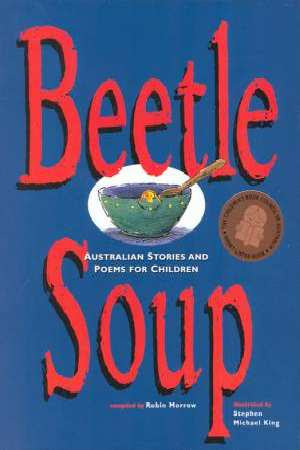
I would you pair this book book with a short story from the Anthology - Beetle Soup (alternate title And the Roo jumped over the Moon) entitled "Up the Creek" by Penny Matthews illustrated by Stephen Michael King. I would love to see this story re imagined as a picture book.


Here are some other terrific books about map making:


Thursday, July 18, 2019

Moon Landing 1969 Part 2


Before sending humans into space many countries sent animals as a way to check survival. Some of these stories are very sad but there are a number of children's books on this topic and these animals are truly heroes because without their 'work' we may not have been able to send men and women into space.

Many years ago we purchased a interesting little book series for our school library called Animal Heroes from the Orchard Crunchies range. All of these are now long out of print (published from 1997-1999) but I cannot think of any other books that meet the demand I had from young readers for a simple chapter book about animals that were based on real events. The titles included Pig Detective, Horse of the Year, Donkey leads the way, Dolphin SOS and Dog in Danger.  There was also a book about the monkey that was sent into space and, of the whole collection, this was one of the most popular.


I was listening to a radio program today about animals used to test space endurance prior to manned missions. In the Soviet Union dogs were sent into space. You may have heard of Laika. Sadly she did not return to earth but in 1960 two other dogs Belka and Strelka were the first animals to orbit earth and return.  The Soviet Union sent 57 dogs into space during the 1950s and 1960s. I have not seen these two books but they look like a perfect way to explore this topic further with Junior primary readers.


Meanwhile America used monkeys and chimps because their physiology more closely matched humans. You can read more about the huge variety of animals sent into space here.

On the radio program they mention that France sent a cat into space. I had no idea about this.  Here are two stamps commemorating Felicette. I wonder if any one has written a picture book about her. There are plans to erect a statue of Felicette in Paris.


My friend at Kinderbookswitheverything has a fabulous range of other titles on her Pinterest collection of true animal stories. Here is a site where you can do some background reading on the topic of animals in space.

Here are some more stamps celebrating animal space heroes.


Monday, April 16, 2018

Andrew Henry's Meadow by Doris Burn

Just as relevant today as it was in 1965, this is a heart-warming story about children who want to feel special and appreciated for who they are.  Book Depository


This is a very old book but luckily it is a classic and so it is still in print.  Andrew Henry's Meadow was first published in 1965 and so it seems odd that I had not heard about this book nor had I encountered Doris Burn who is such a skilled illustrator.

Andrew Henry lives in the town of Stubbsville. Andrew Henry is an inventor. He makes the most wonderful devices - a helicopter in the kitchen, an eagle's cage in the living room, a merry-go-round for his sisters Marian and Martha and a "system of  pulleys" for his brothers Robert and Ronald. Sadly his family do not appreciate his creativity so he packs his tools and sets off to build a house for himself. Sam, his dog, is left at home. Andrew Henry finds the perfect location and he builds a splendid house using clay, rocks and poles. Andrew Henry enjoys his solitude but he is not alone for long. Alice Burdock arrives and she asks Andrew Henry build her a tree house. As the days go by George Turner wants a bridge house and Joe Polasky wants a dugout house. Jane O'Malley and Margot LePorte request a castle and a tee pee.  Meanwhile all the parents are frantically searching for their missing children. It's time for Sam to save the day!


When Andrew Henry comes home things change. He is given space for building and he makes something for every member of his family.

"He built a roller coaster for Robert and Ronald's toy cars. By using a bucket and parts of an electric fan, he made a hair dryer for Marian and Martha. The coffee mug he made for his father worked the same way as a bird feeder does. And he was especially proud of the automatic table setter he made for his mother."

You can see more of the illustrations here and here. You can see a video reading of the whole book.

I would pair Andrew Henry's House with Building our House, The Junkyard Wonders, Iggy Peck, Architect by Andrea Beaty and Whatcha building by Andrew Daddo.  If you have a child who loves to draw grab this book because the pencil sketches are sure to inspire them. Also why not take this book outside to read and then make a construction, invention or house yourself. The fun you and your children will have might amaze you.


Wednesday, December 6, 2017

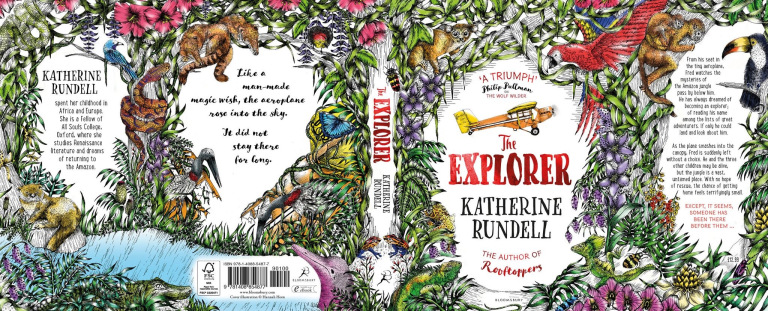
The Explorer by Katherine Rundell illustrated by Hannah Horn


"They had become a pack.  Or, an expedition, 
he corrected himself. That was what you call a group of explorers."

"Every human on this earth is an explorer. Exploring is 
nothing more than paying attention, writ large. Attention."


Why did I pick up this book?  The author is a favourite of mine.  The cover looked very appealing.  The Amazon setting sounded intriguing especially since Journey to the River Sea is a book I totally adored, and it is set in the same location.

Four children (two girls and two boys) are travelling in a small plane across the Amazon jungle.  For different reasons the children are going to Manaus in Northern Brazil. They don't know each other.  Fred is excited to be flying but he notices the pilot is struggling:

"The pilot grasped Fred's wrist hard for a single moment, then his head slumped against the dashboard. And the sky, which had second before seemed so reliable, gave way."

With the pilot now dead, and the plane a burnt out wreck, the four children must now find a way to survive in a jungle that seems to be filled with so many dangers.  Fred, Constantia (Con), Lila and her five-year-old brother Max really have no idea about how to find food, shelter and water.  Fred has done a little reading about explorers, and he is a resourceful boy but really it is just good luck that they stumble on an old unused shelter.  Over the coming days they experiment with things to eat and because it is the jungle they do eventually find bananas and pineapples. In the shelter they find some flint stones and using Fred's broken watch they manage to make a fire.

It is little Max who seems to observe the world in a different way.  He sees some monkey's gathering honey from a beehive.

"The monkey's washed their hands in the ants and then they fought the bees."  The children watch the monkeys and then gather the ants and rub them all over their skin. The smell is like ammonia. Fred and Con climb the tree and, even though it is utterly terrifying, they gather some honey and, in the process, find a pouch containing a map.  It is at this point their adventure takes a sharp turn.  Clearly someone has been there. Fred has already made a raft so now the group know they need to move on, follow the river and the map and find the city of Manaus and perhaps even find the map maker.

I like the way Katherine Rundell gives small but very meaningful insights into the back story and personality of each child.

Fred - "Inside Fred was hunger, hope and wire... Fred's mind was quick with sharp edges. He wanted more from the world than it had yet given."

Con - "She moved stiffly, as if unaccustomed to using her own body. Her clothes seemed to sit on her like a bear trap."

Lila - "She was small and moved on the edge of her muscles, like an animal - a deer or a lemur - as if she heard things other people did not."

Teachers could make good use of the descriptions in The Explorer such as this one:

"His shoes were made from what looked like alligator skin, with very thin vines for shoelaces. A jacket sewn nearly from black furs, hung over his shoulders. The buttons were caiman teeth."

It is easy to see Katherine Rundell did a lot of research for this book. Apart from an actual trip to the Amazon she includes interesting, and at times, gruesome details about eating tarantulas, catching fish even piranhas, stripping vines to make rope and the dangers of bullet ants.

There is a link between the title - The Explorer - and finding of the map because the children do find a man.  He won't give his name. He is an explorer, or at least he seems to be, he is living in the jungle and has the knowledge the children need to survive their journey back to civilization but the man demands a promise from the children. He needs them to understand why this environment is precious and why it needs protection from the outside world.

The Explorer would link well with Journey to the River Sea, Hatchet and The Island trilogy by Gordon Korman beginning with Shipwreck. In this video Katherine Rundell explains the thinking behind her novel and in this one Katherine reads the first chapters of her book.  It is interesting to read this interview with Katherine by Kirkus.

I did enjoy The Explorer but I would like to know a little more about why these four children were travelling alone across Brazil. Also, in the final scenes (can't tell you too much) when Fred becomes the hero, I wanted Con and Lila to shine a little more.  My favourite character is Max - he is funny, honest and very grubby.

Rundell’s rich, descriptive prose will transport her young readers to a mesmerising world where they can swim with river dolphins, eat a tarantula and discover a ruined city. The mystery deepens when the discovery of a map suggests they are not the first humans to find this place.  The Guardian


Sunday, May 21, 2017

Diva and Flea by Mo Willems and Tony DiTerlizzi


The cover of this book says
Diva and Flea a Parisian Tale
As told and shown by Mo Willems and Tony DiTerlizzi

On the last page it says (this made me laugh)
"Some names and places in this story have been altered to protect the privacy of the animals involved."

These two tiny details really set the tone for this a terrific book :

  • You will not predict the plot
  • You will not predict the relationship between Diva (dog) and Flea (cat)
  • You will enjoy the setting right beside the Eiffel Tower
  • You will learn new words such as 'flaneur'
  • You might marvel that Mo truly did meet little Diva in Paris


Diva lives in a Paris apartment.  "Diva took her job very seriously...   And if anything ever happened, no matter how big or small, Diva would yelp and run away. Diva was very good at her job."


Flea is a large cat.  "Flea did not have a fixes occupation ... he was a flaneur. A flaneur is someone (or somecat) who wanders the streets and bridges and alleys of the city just to see what there is to see. A great flaneur has seen everything but still looks for more, because there is always more to discover."

Flea and Diva will of course meet in this story but how their relationship unfolds will astonish you. When Flea first sees Diva she yelps and runs away.  This amuses and intrigues Flea and so for several days he plays the game.  He walks past the courtyard of 11 avenue Le Play and Diva yelps and runs away. Then one day Diva stops and asks "are you trying to hurt my feelings?" The next day Flea leaves Diva a dead mouse as a peace offering. Diva would prefer a ribbon and so the two share their first laugh.

I love their developing relationship.  Diva has things to learn from Flea about being brave and stepping outside and also about the wonders of the city of Paris.  Flea has things to learn from Diva about patience and friendship and life in a human home.

Look closely and you will see a picture of Mo Willems himself by Tony DiTerrlizzi near the end of the story and make sure you read the final pages about their inspiration for this warm story.

Here is the cover in French.  Read this review for more details.  Now take nine minutes out of your busy day and watch this video where Tony and Mo discuss their collaboration.