Showing posts with label Life and death. Show all posts

Friday, July 17, 2026

All from a Walnut by Ammi-Joan Paquette illustrated by Felicia Sala


This is a book about grief, change and patience. Grandpa tells Emilia a story of the walnut he carried on his journey across the ocean to find a new home. His parents told him he could only take a small bag but he also had a walnut in his pocket. The reasons his family left their homeland are not explained in the text but the illustration shows people in sepia tones carrying bags and children and disembarking a large ship. 


Image source: Felicita Sala

Years after their arrival Grandpa is able to finally plant his seed in a garden and now, years later, Grandpa is able to show his huge tree to Emilia and how to plant the new walnut seed.

"As time passed, Grandpa moved more and more slowly. He stayed in his armchair most of the day and sometimes he fell asleep tight in the middle of a story. ... the days grew very cold and very dark, Emilia held her grandfather close for as long as she could. Then she said goodbye."


This book caught my eye at a recent charity book sale because firstly my friend and I adore the work of illustrator Felicita Sala (we claim her as Australian even though she lives in Rome) and then I saw the dust jacket - I adore dust jackets. We rarely see them here in Australia. Then bonus this dust jacket has a fabulous case reveal - meaning there is a surprise image under the jacket. My copy is in mint condition. I wonder how it came to be donated to the fair - it has perhaps lingered on a home bookshelf since it was first published in 2022.

The warmhearted watercolor, gouache, and colored-pencil illustrations are the true highlight of the book, offering lovingly rendered images of Sala’s native Italy and a poignant view of Grandpa’s aging and eventual passing. A gentle tale about maintaining a sense of continuity and rootedness in the face of life’s upheavals, this book is a worthy addition to any personal or library collection. Kirkus

“The relatively simple text includes many layers—in addition to being an immigration story, it is a family history tale and a story about the passing of a beloved grandparent and the carrying on of that person’s legacy. Paquette’s emotive writing is strong and clear.” –Hornbook

See art from this book here.  Here is the web page for the author Ammi-Joan Paquette.

Companion books:


Wednesday, March 18, 2026

The Forest of a Thousand Eyes by Frances Hardinge illustrated by Emily Gravett


"The Wall had once been built to hold back the strange, voracious encroachment of the Forest, and protect the towns and cities of the plains. It had done so for a while, but eventually it had failed. The green had found weak points in the Wall and torn its way through them. Now on all sides there was Forest, 
and the only place people could live was the Wall."


Feather has taken something that was so precious to her community. She is one of the older children who leave the safety of their community each day to forage in the Forest but this is no ordinary forest - it is a dangerous entity and we read about this danger very early in the story:

"Of necessity, all the rooms within the stronghold of the Wall were long and narrow, with stone floors and ceilings. The only windows were round, palm-sized panes of clouded rock crystal, currently letting in the early morning light. Already those on broom duty were sweeping the floors in case tiny seeds had been brought in by accident."

Think about the story fragments in these three sentences. The word 'wall' has a capital letter - Wall - and it is stronghold. The way the windows are described reinforce this feeling of living in a fortress. Then we read the strangest idea which is implied by the sweeping - that seeds could be dangerous.

The Bulletin of the Center for Children's Books describes the forest as "vaguely sentient with a deep sense of malice toward the humans that exploited it."

This idea is reinforced by the word placement in this sentence: "she could already smell the heady, insidious green scents of the Forest, like the breath of some great beast."

The inhabitants of this place have developed ways to collect dew in funnels, tend to beehives, create bird traps, and even use metal. The community are sure they are the only ones left living in the Wall, but Feather discovers this is not true when she encounters a stranger.

On this day Feather prepares to go outside. Her clothes give further hints about possible danger - "her outdoor clothes coloured stone-grey and pale lichen-yellow for camouflage. She pulled on her tough gloves, the feather cap which stopped her scalp getting sunburnt and her squirrel-leather boots with cleft toes for climbing. ... fastening her tool-belt and hanging her gather- bag and climbing gear over one shoulder." (The audio sample includes this quote).

Feather takes her pet ferret Sleek with her. He is wild animal but he does have some loyalty to Feather and more than once on her journey he is able to alert her to danger. Feather does not go foraging, she goes back to meet the stranger who is called Merildun. He has promised to show her how to make maps but instead he does the most unthinkable and dreadful thing:

"She was opening her mouth to ask a question when a violent shove in the back knocked the breath out of her. She pitched forward into nothingness, and fell."

Feather survives but now she has to track this man. He has stolen something very precious. Feather steps into the unknown and follows the Wall making the most amazing discoveries along the way but also experiencing huge dangers. 

At the beginning of this book you will have NO IDEA what is going on - and I love that. Frances Hardinge is making you, the reader, work hard to join together fragments of this story. Who are these people? Why do they fear the forest?  Are their strange names significant - Feather, Ember and Cherry. Feather is the main character and she is leaving the safety of her home on the Wall. Why do they live inside the top of a very high wall? Everything feels so dangerous right from the beginning. In one scene Feather sleeps inside the empty carapace of a huge beetle - so along with the Forest itself there are also dangerous animals, reptiles and insects to contend with. 

"The human mind is a very strange thing, it can get used to anything, even continual moral peril."

If you love reading children's books as much as I do, then you really should believe me and RUSH out and grab this book - it blew me away. If you teach a Grade Four or Five class this could be a splendid read aloud - not to study, not to dissect, just to share and enjoy. I love the words used by The Horn Book that this is a quasi-post-apocalyptic story. I feel deeply privileged to be able to read and experience a book like The Forest of a Thousand Eyes.

Publisher blurb: The hungry Forest is moving forward like an army, a green and constant threat to the humans living in and on an increasingly crumbling Wall. Feather, accompanied only by her scaled ferret, Sleek, must avoid the Forest's tentacles, and the many dangerous creatures it shelters, to return the community's precious spyglass to its rightful place. Along the way, she develops her resilience, and meets other people living on the Wall, whose stories and experiences open her mind, and those of her community, to new horizons.

In a scant 128 pages, Hardinge immerses readers in a world of dangers and wonders, where nature isn’t neutral but actively hostile, waging an eternal war against the few remaining humans. ... Sumptuous worldbuilding and deft plotting make for a harrowing dystopian story that nevertheless thrums with hope. Kirkus Star review

The message about caring for others and building community is well-crafted, and the quick pace of the adventure along with the evocative illustrations will make readers want to devour this book in one sitting. The Story Sanctuary

(An) atmospheric tale told through Hardinge’s skillful fairy-tale prose and Gravett’s art, which intertwines, illuminates, and sometimes takes over pages altogether. ... Softly shaded illustrations emphasize the natural world’s overwhelming magnitude to Feather, sometimes in close-up views of insects and birds; sometimes opening out to expansive vistas; sometimes dissolving into impressionistic flecks of light and greenery. Horn Book

Read some more review quotes here

Here is the US cover:


I am now very keen to read this book by Frances Hardinge also illustrated by Emily Gravett:


Frances Hardinge spent a large part of her childhood in a huge old house that inspired her to write strange stories from an early age. She read English at Oxford University, then got a job at a software company. However, a few years later a persistent friend finally managed to bully Frances into sending a few chapters of Fly By Night, her first children's novel, to a publisher. Macmillan made her an immediate offer. The book went on to publish to huge critical acclaim and win the Branford Boase First Novel Award. She has since written many highly acclaimed children's novels including, Fly By Night's sequel, Twilight Robbery, as well as the Carnegie shortlisted Cuckoo Song and the Costa Book of the Year winner, The Lie Tree.

Fly by Night was published in 2006 and I know we had a copy in my former school library and I am fairly sure I did read it but I had not started this blog back then and so I don't have a written record of my thoughts or the plot. 

Emily Gravett has a rare talent for creating exceptional books for children. The winner of two CILIP Kate Greenaway Medals, her skill and wit are second to none. Emily first sprang into the limelight with the ground-breaking Wolves, which has been followed by such modern classics as Meerkat Mail, Little Mouse's Big Book of Fears, Monkey and Me and Again! and the fabulous Bear and Hare series for younger readers, as well as the beautiful Tidy, Old Hat, Cyril and Pat and Meerkat Christmas. Each book is unique and different from the last – and each features endearing, beautifully drawn characters that touch the heart and tickle the funny bone. Emily lives in Brighton with her family.

Saturday, March 14, 2026

Gone by Michel Streich


It happened
on a quiet morning
in autumn.

I woke early and saw that my bird had died during the night.

My own bird died just like this one and, like this child, we discovered him in the morning. My mother and I buried my little yellow budgie in our garden under some trees and beside a small rock shelf. I often think about that spot in the garden and wish we had put some sort of marker. It makes me a little sad to think I am the only person now who has a memory of this - I think I was in about Grade 4 or 5 and it was one of the first sad events in my life. 

The child in this book also carries his little friend out to the garden - think about the words in this sentence:

"I gently carried the body into the garden and dig a little hole and there I buried my bird."

Now think about the depth of this sentence:

"I thought about how life ticks away. One minute, one hour, one day at a time."

And what happens when we die? Michel Streich does not shy away from this either - instead each family member contributes their own wisdom. 


Image Source: Michel Streich

You can see the interesting page design used in this book. The text is placed at angles and two of the double spreads ask the reader to turn the book sideways. 

This is a gentle, soft-touch exploration of life cycles and life spans and the emotions that are evoked, made more sensitive by the creator choosing autumn to be the time when the bird passes so the illustrations are naturally those warm colours of red, orange and yellow. Read Plus Barbara Braxton

About Michel Streich: I was born in the Westphalia region of Germany, where I grew up and studied visual communication and graphic design, specializing in illustration. After graduating, I moved to London and started my career as a freelance illustrator. Three years later, in 2000, I relocated to Australia. After living in Sydney for a decade, I am now based in the Blue Mountains West of Sydney.

I am so pleased the CBCA judges did not shy away from selecting Gone which deals with the big topics of death and grief. Last year we had the wonderful book A Leaf called Greaf. It might be good to revisit that book when you share Gone with your library groups from Grade 2 up. 

There are some terrific titles this year in the CBCA Picture Book Notables list - I have picked out four that I am hopeful will make the short list of six - maybe Gone will be one of them. 

I was interested to read the CBCA Judges notes. They mention Old Pig; The Tenth Good think about Barney; When Violet Died (which is a book I have never seen published in 1973) and another book with the one-word title 'Heaven'. I wonder if this might be the book by Nicholas Allen?  My choices for companion books are:


When I saw Michel Streich had a 2026 CBCA Notable title I knew I wanted to read it. I adored this previous book:


Writing about Scary Bird in 2021 when it didn't make the CBCA Notables etc. I said: "I am certain this will WIN other awards. I really thought this would be the 2021 Picture Book of the Year winner. Message to the publisher (Scholastic) - please send this book far and wide. Perhaps it might win a future Kate Greenaway Medal as Bob Graham did in 2002 for Jethro Bird Fairy Child or a Caldecott prize as we saw with Hello Lighthouse in 2019. Nop (Caroline Magerl) is on the 2021 Greenaway Medal Long List. I adore Scary Bird so much I plan to add a copy to my own picture book collection."

Here are some other books by Michel Streich:


Wednesday, March 11, 2026

Is it Asleep? Olivier Tallec


Squirrel and his friend Pock (a mushroom) set out on a walk through the forest to the meadow. They love listening to the birds, especially the song of the blackbird but there is no song. Then they see the blackbird:

"It's lying there completely still. We've never seen a bird so close-up. It must definitely be asleep. So we keep very quiet and wait for it to wake."

The bird does not wake up even after they move in for a close look at the beautiful feathers, even after they whisper to the bird 'Are you asleep?', and then they clap their hands but nothing happens. Three heads are better than two so they fetch their friend Gunther. Guther says they should lift the bird to help it fly but they discover blackbird is too heavy and that's when we read something you and your young reading companion probably suspected:

"That's when Pock says maybe the blackbird is dead."

Here is an interview with Olivier Tallec and Gecko Press.

I seem to be sharing a few books lately about deep sadness, grief and death. Take a look at this video where the presenter talks about when and why to share picture books about these topics. Yes, It is Asleep? is desperately sad but it is also a gentle story about friendship and caring and memories. There is so little text in this book - it demands to be read very quietly and slowly. You should add this book to your library and don't be afraid to pop it on your regular picture book shelves - no need to hide it away in a parent or teacher reference collection. It is also a NSW Premier's Reading Challenge title (K-2). [1367138]

Children read a book about death like they read a story on a completely different subject. They don’t identify with it in the same way as adults. Children are not apprehensive about entering this story. And I believe we shouldn’t be afraid to read them these books. Death is part of life. Olivier Tallec

A laudably candid yet child-friendly examination of life and death. Kirkus


Olivier Tallec’s work has been called “sensitive”, “stunning”, “breathtaking”, and “beautiful.” Tallec was born in Brittany, France, in 1970. After graduating from the École Supérieure D’arts Graphiques in Paris, he worked in advertising as a graphic designer, after which he devoted himself to illustration. Since then he has illustrated more than sixty books.

We have already met Pock and Squirrel and Gunther the mouse in this previous book:


Here are a few other books to explore on the topics of grief, loss and death:


Thursday, February 12, 2026

The Memory Tree by Britta Teckentrup


"Fox had lived a long and happy life, but now he was tired. Very slowly, Fox made his way to his favourite spot in the clearing ... Fox closed his eyes, took a deep breath and fell asleep forever."

His animal friends gather to remember the life of their friend Fox. While they are gathered talking, sharing and listening a small orange plant emerges from the snow and as each story is told it grows bigger.


"The animals talked about Fox all through the night. And, in the morning, the little plant had grown into a small tree. The animals saw the tree and knew that Fox was still part of them."

Take a look at the labels I have assigned - grief, loss, death to this post. Now please take a few minutes to read this previous post about books that deal with these subjects.

As usual, Britta Teckentrup’s illustrations are gorgeous. The wintry scenes are atmospheric and steeped in symbolism. She has also cleverly captured the changing seasons in a lovely page that has been split three ways. Her forest animals are charming and their eyes are wonderfully expressive. This picture of Fox and Mouse enjoying the sunset is my favourite illustration – just look at those colours and the comfortable companionship! Get kids into books

Blurb: Fox has lived a long and happy life in the forest. One day, he lies down in his favourite clearing, takes a deep breath, and falls asleep forever. Before long, Fox's friends begin to gather in the clearing.
One by one, they tell stories of the special moments that they shared with Fox. And, as they share their memories, a tree begins to grow, becoming bigger and stronger, sheltering and protecting all the animals in the forest, just as Fox did when he was alive. This gentle and comforting tale celebrates life and the memories that are left behind when a loved one dies.

Yes, this book deals with a very difficult subject but using animals makes it a gentler reading experience for young children. Your school library needs all kinds of books - happy, sad, funny, frivolous, serious, mysterious, complex and even books like this that deal with this big topic - the death of a loved one. 

Companion books:


Wednesday, August 6, 2025

The Undead Fox of Deadwood Forest by Aubrey Hartman illustrated by Marcin Minor


When winds blow
Through Deadwood east
The undead monster waits to feast
On little bones
And braids
And toes
But don't you scream
Or its hunger grows!

While I did read this book fairly quickly, over a couple of days, it took me a little while to get used to the use of a girl's name - Clare for a male character - the undead fox.

What does undead mean? Well, when a creature dies it usually just heads off to the afterlife but there are some creatures that need help to find the right door or realm. This guiding or, as it is called here, the Ushering, is the job of the undead - in this case Clare the fox but there have been many others before him - Brickbane a fox; Eddifoot a racoon; Po an elk and Felix a moth. There are four destinations:

"Travel north from here and you'll find the realm of Peace ... for those who found joy in rest. Head east and you encounter the realm of Pleasure ... best suited to those who sought fun about all else. Directly west is Progress ... for those who loved work, service and effort. And finally travel south ... and one enters the realm of Pain."

Clare has been sending the souls who arrive at his cottage in Deadwood Forest to the 'right' door for over four years. He enjoys his work and loves tending to his extensive mushroom garden but deep in his heart he is lonely and also frightened because Brickbane told him, on the night of his death, that he was destined for Pain. And not only that a prophecy song is circulating:

"On All Hallows Eve, Deadwood will bring mayhem to Fernlight. And before the moon sets, one in Deadwood will vanish forever."

Then there is new arrival. It is a badger named Gingersnipes. Astute readers will realise something is wrong. Gingersnipes does not arrive in the usual way by knocking on Clare's door. When Clare sends Gingersnipes away to his assigned realm "he did not wait for the crackling sound of her departure".  This is a big mistake.

Hopefully now you have lots of unanswered questions. How did Clare die? Why did Gingersnipes arrive at this time? What does do the songs of All Hallows Eve mean? Who is the little girl with the red shoes? Can the message and advice from Hesterfowl be trusted? And most important of all what on earth is a braid?  (Of course, dear reader you know the answer to this final question but it is a mystery to Clare).

There is one very violent scene near the end of this book so I am going to say this is a book for mature readers aged 10+. 

All of this plot sounds every 'heavy' but there are some sweet touches of humour in this story and you are sure to enjoy meeting the rats at the dump named Nine and Two. The names of the mushrooms that Clare collects from the forest are also delightful. And I loved the way Clare always said 'travel true' as he sent lost souls off to their assigned realm. 

Here is a description of Clare's cottage:

"Clare, for example, had strung the ceiling with rows and rows of twine. The walls were lined with shelves crammed with jars of all shapes and colours, gathered from Deadwood Dump and filled with dried fungi. In the firelight the vessels glinted and glowed, splashing the hollow in jewelled hues."

Here is a line that made me smile - it is Gingersnipes speaking:

"I have a moose-sized bone to pick with you. Four times you sent me into that forest. And four times the coloured lights led me back here. Is this some sort of game? A test? Because I'm tired of it, fox!"

And later Gingersnipes says: "You're a tough nut to crack, Clare, and frankly I am not a squirrel!"

There is an interesting theme in this book about thirst - this is something I need to think a little more about. Being undead Clare does not need food or drink, but he makes special tea for all his visitors and so it seems important and very strange that once Gingersnipes arrives, and Clare's world shifts, he seems to be desperately thirsty all the time. 

Here is a description of Hesterfowl the grouse - "She wore a cloak of moss. A collar of bones encircled her short neck, some poor dead animal's rib cage fanning up and around her head. The feathers surrounding her eyes were smeared with berry pulp and groomed into sharp points." (I need to make special mention of the amazing illustrations in this book AND question why his name is not on the cover or title page. You can see his art here on Instagram). Marcin Minor lives in Poland.


Image source Instagram

I think it was the cover that first caught my attention. Checking some details I see the hardcover of this book arrived here in Australia in late February 2025 then, as I already mentioned I was given a generous book voucher for one of book chain stores here in Sydney - so when I saw they had the paperback which was released in April this book was an obvious first purchase.

SPOILER ALERT - Bookseller blurb: Clare is the undead fox of Deadwood Forest. Here, leaves grow in a perpetual state of fall: not quite dead, but not quite alive...just like Clare. Long ago, he was struck by a car, and, hovering between life and death, he was given the choice to either cross into the Afterlife or become an Usher of wandering souls. Clare chose the latter: stepping into a solitary life of helping souls meet their destiny. Clare's quiet and predictable days are met with upheaval when a badger soul named Gingersnipes (arrives). Despite Clare's efforts to usher her into the Afterlife, the badger is unable to find her way out of Deadwood. This is unprecedented. Baffling. A disturbing mystery which threatens the delicate balance of the living and the dead. Clare seeks the help of Hesterfowl--the visionary grouse who recently foretold of turmoil in Deadwood. But Hesterfowl divulges a shocking revelation about the badger that leaves Clare devastated, outraged, and determined to do anything to change their fate.

Read some young reader reviews - very insightful.

Heartbreaking, marvelously funny, and generously redemptive. Kirkus Star review

"I really love Gingersnaps" "A timeless book". Colby Sharp Newbery prediction.

US author Aubrey Hartman has written two books. Check out her webpage.  

Companion books:


Saturday, August 2, 2025

When you Trap a Tiger by Tae Keller


I used to be able to talk to her. I used to tell her everything. If this had happened a few years ago, 
I would have said, I JUST SAW A TIGER IN THE MIDDLE OF THE ROAD. 
I would’ve shouted it right into her ear because I couldn’t hold it in.

Mum and her two daughters - Lilly and Sam - are moving back to live with their grandmother or halmoni (grandmother in Korean). Very gradually we are given some brief details that dad has died in a car accident. This move will be a new start for the family but more importantly it is clear Halmoni is unwell. 

Halmoni buys rice and pine nuts and herbs to cast magic, she feeds spirits, she believes in all the things you cannot see. She lives in a house at the top of a hill, a house covered in vines, with windows that watch like unblinking eyes. She is a witch, looming over the town, like something out of a fairy tale. She’s not normal. I’m not normal.

On their journey Lilly sees some thing very frightening. She knows her grandmother has told the girls stories about tigers. And now she has seen one.

I gaze out the windshield. The landscape that slips by is peaceful. Gray stone houses, green grass, gray restaurants, green forest. The colors of Sunbeam blur together: gray, green, gray, green—and then orange, black. I sit up, trying to make sense of the new colors. There’s a creature lying on the road ahead. It’s a giant cat, with its head resting on its paws. No. Not just a giant cat. A tiger.

When they arrive at the house Lilly encounters the tiger again. She makes a bargain with Lilly. If Lilly returns the stars that were trapped in jars by Halmoni then the tiger will restore Halmoni to good health. Halmoni has told Lilly the story of the Tiger and the stars. 

“I am the littlest girl in the littlest village, and I am sneaky. I hide outside the caves and wait until the tigers fall asleep, until their snores echo through the land. And then I get to work, grabbing the stars—the bad stories—in my fists, stuffing them into jars.”

“I seal jars up. Then I tiptoe away from cave, so soft, hush-hush. Before I leave, I think, I be extra safe. I make sure they don’t follow. So I take rocks from the forest, one by one, and stack them at the mouth of the cave, until they make a wall. Big, heavy wall. Until the tigers trapped inside.”

“Nothing last forever, Lily. Tigers break free. The tigers very angry. Now they coming for me. ... “They hunting me now. They don’t stop hunting.”

Lilly finds the important jars but then she has to work out how to trap the tiger in the basement. The family now live across the road from the library, so Lilly decides to go there to find out how to trap a tiger. In the library she meets a boy named Ricky. He will prove to be a new friend and a boy who can help Lilly navigate this complex time, but will she be able to trap the tiger in time? There are three jars and three stories the Tiger could tell Lilly. Sam calls her sister a QAG - quiet Asian girl - but Lilly has to find a way to break away from this label or stereotype because she is sure she is the only one who will be about to save her halmoni. And of course time is running out.

Blurb from the author page: Would you make a deal with a tiger? When Lily and her family move in with her sick grandmother, a magical tiger straight out of her halmoni’s Korean folktales arrives, prompting Lily to unravel a secret family history.   Long, long ago, Halmoni stole something from the tigers. Now, the tigers want it back. And when one of those tigers approaches Lily with a deal—return what Halmoni stole in exchange for Halmoni's health—Lily is tempted to accept. But deals with tigers are never what they seem! With the help of her sister and her new friend Ricky, Lily must find her voice… and the courage to face a tiger.

Opening sentences:

I can turn invisible. It’s a superpower, or at least a secret power. But it’s not like in the movies, and I’m not a superhero, so don’t start thinking that. Heroes are the stars who save the day. I just—disappear. See, I didn’t know, at first, that I had this magic. I just knew that teachers forgot my name, and kids didn’t ask me to play, and one time, at the end of fourth grade, a boy in my class frowned at me and said, Where did you come from? I don’t think I’ve ever seen you before. I used to hate being invisible. But now I understand: it’s because I’m magic.


There is one sentence that made me gasp in this story. Over five days eleven years ago this week I sat with my mother as she was dying. Someone told me the last sense to go is hearing and so I said the same words that Lilly said to her halmoni reassuring my little mum that I too would be okay:

“It’s okay,” I whisper, leaning so close to Halmoni that my lips brush her ear. I close my eyes and breathe. Sometimes, the bravest thing is to stop running. “It’s okay if you go. We will be all right.”

I gave When you trap a Tiger four stars - I think this is because I just read a similar book or at least one with a similar plot involving a young child and their grandmother - Children of the Quicksands by Efua Traore. This meant I wasn't quite in the mood for another book of magical realism and cultural folktales even though When you Trap a Tiger is Korean and Children of the Quicksands is set in Nigeria. I did enjoy, in this latest book, the way Lilly grew in strength and also her determination in the face of terrible fear that she could and must help her grandmother. The final scene I described above also deeply moved me. I think this book is for readers aged 10+ with good reading stamina and for readers who have experienced books like this one previously. Ricky is also an interesting character. At first I thought he might have ADHD or be on the autism spectrum but then later in the story we discover he has lots of friends at school. I did find the early scene in the supermarket where his father berates him unresolved and therefore a little confusing. This may be because I read those parts a little too quickly.

When you trap a tiger won the Newbery Medal. You can see other books by Tae Keller here. If you enjoy books with folk tales woven into the narrative you might also look for these:


Thursday, July 3, 2025

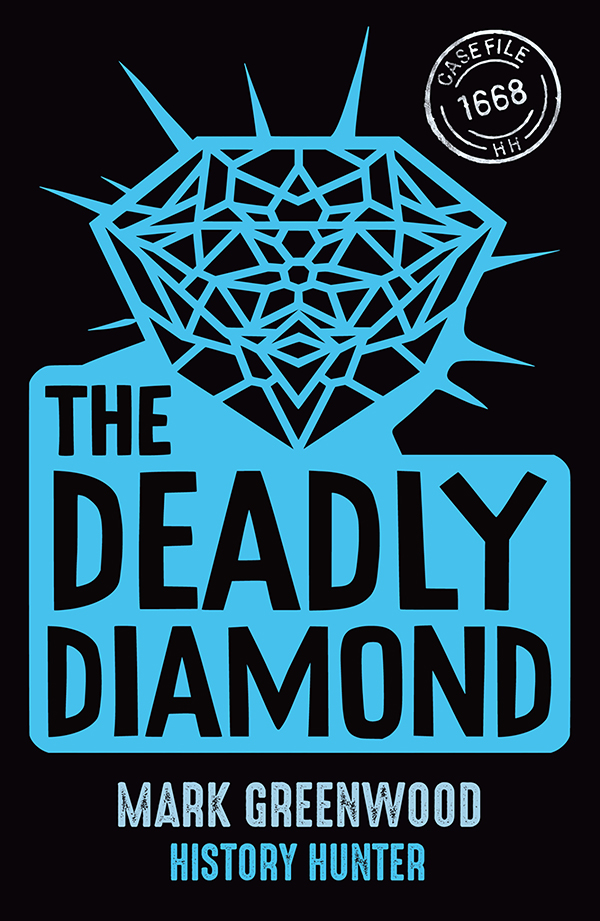
The Deadly Diamond by Mark Greenwood


"To this day the deadly diamond retains a spooky reputation as a stone with an ominous sparkle and the power to bring tragedy to anyone who touches it. But does its ownership bring death, dishonour, disgrace or financial ruin? Can the curse of the most famous jewel in the world be reconciled with reality when many of its owners have lived long and generally prosperous lives?"


Our story of this famous diamond - variously named the Blue Diamond, the French Blue, and the Hope Diamond - begins in India at a diamond mine in 1642. We are not told in detail, but it is very clear that conditions at this mine must have been utterly terrible. Mark Greenwood does mention snakes and overseers and the use of children in the mine. No one is exactly sure, but this diamond was part of a temple idol before it was stolen and then passed through the hands of thieves, con men, nobility, an extremely rich socialite, a famous jeweler and finally presented to the Smithsonian Museum of Natural History which is where you can see it today and from that link you can see many of the aspects and short videos of this story that are mentioned by The Deadly Diamond including the regular postal envelope that was used to send it to the museum - an amazing story. Take a look at these images

This is a slim book but such a page turner and readers are also supplied with a timeline, glossary and extra reading list so curious minds can explore this topic further. If I was sharing this book with a group of students (Grade 5 or 6) I think I would begin by showing the tiny diamond in a ring I wear every day using this as a way to talk about diamonds and their value and origins. You could share this ABC television series "Stuff the British stole" with a High school group. There is an episode about a diamond from South Africa and also one about the Koh I Noor diamond. Both are rated PG. I highly recommend The Deadly Diamond as a perfect addition to your school library or pop this title on your Christmas present list - it would be an especially great gift for a boy aged 10+. This book has big print and white pages and a few actual photographs/portraits of the famous people who were involved or who owned this diamond. 

Further reading:

Many of my reviewing colleagues receive advance copies of new Australian titles but up until this week I only received books from one Australian publisher. Now I can add two more to that list including the publisher of this book - Fremantle Press. I recently talked about their new verse novel Trapped by Julia Lawrinson.

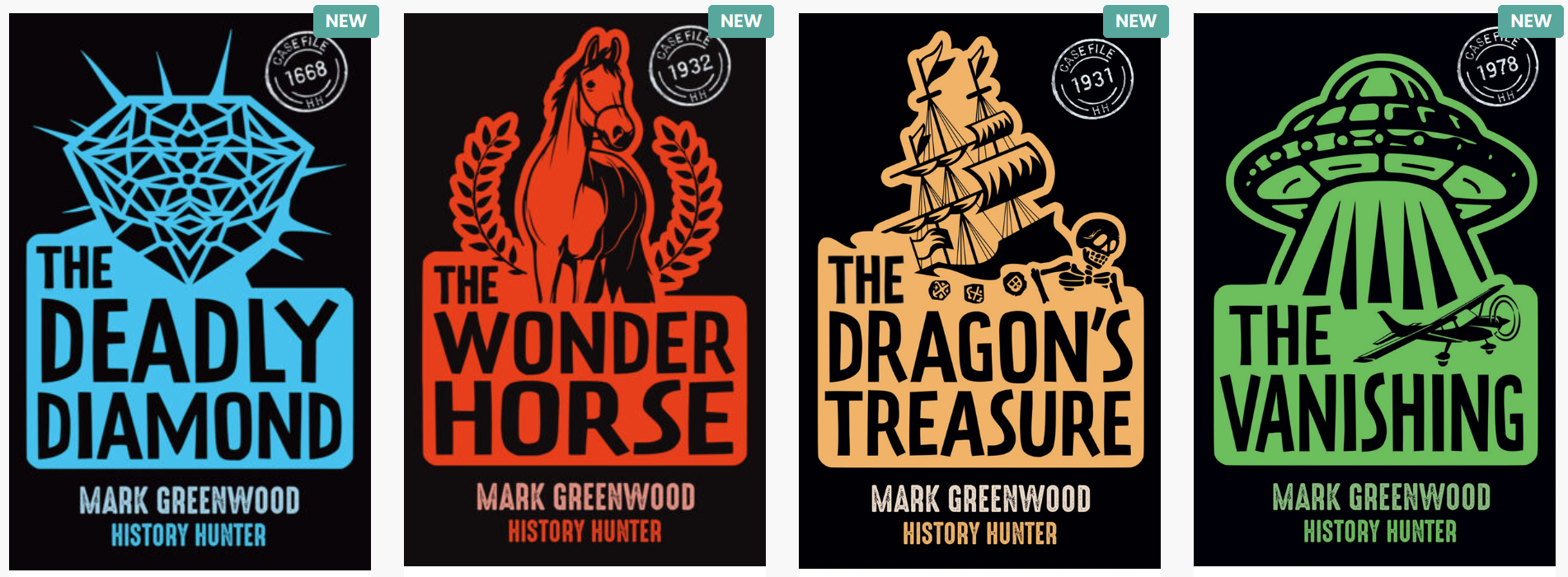
Mark Greenwood has done an enormous amount of research for this book The Deadly Diamond. I simply gobbled up the whole book in one sitting - readers aged 10+ are going to love this book and I am sure the rest of the series are fabulous too. I have another one - The Wooden Horse - ready to read next. Here is the full series called History Hunter:

On the publisher page you can read an extract from The Deadly Diamond and find very detailed and useful teachers notes. There is one word missing from the glossary which your students may need to check - loupe.

I was so interested to read all the ways this stone was cut and changed and reduced in size. I also had no idea about the colours of diamonds - white, yellow, red, dark grey, orange, red, apple green, pink and most desirable of all, the blue.

"The diamonds that came from the fabled mines of Golconda were highly valued. Local rulers jealously guarded the source and kept the largest diamonds for themselves. The radiance of these diamonds was legendary. Many believed they contained a supernatural force. Prized for colour, clarity, size and beauty some were as pure as a drop of dew."

Try to find these two books as companion reads:


This is not about diamonds, but it has the same narrative nonfiction style 
and the same assortment of 'shady' characters.  Highly recommended. 

This form of narrative non fiction is not new but I have not seen any other books in this form for many years. In my previous school library I had other books like this on a range of topics but they are all now long out of print. One series were called True stories published by Allen and Unwin: Stoked! Real Life, Real Surf; Bog Bodies: Mummies and Curious Corpses; Wrecked: Mysteries and Disasters at Sea; Kimberley Warrior: The Story Of Jandamarra; and Soccer: Great Moments, Great Players in World Football. And we also had the It's True series.


Your students who enjoy books that use this form of narrative to tell a true story might find the "I Survived" series in a school or local library. I also had a series called Mega Bites published by Dorling Kindersley in my previous school.