Showing posts with label Multicultural communities. Show all posts

Tuesday, November 11, 2025

Seedfolks by Paul Fleischman


AMIR: The garden’s green was as soothing to the eye as the deep blue of that rug. I’m aware of color—I manage a fabric store. But the garden’s greatest benefit, I feel, 
was not relief to the eyes, but to make the eyes see our neighbors.

This book is such an interesting discovery. It is a book for Young Adult readers but I am sure adults will enjoy the way this book is written as a jigsaw puzzle where we meet a diversity of characters all linked through their connection with a community garden. (In the UK this might be called an allotment). Seedfolks was published in 1997 - I read an ebook version. The good news is the paperback [9780064472074] from 1999 seems to be available to order from your favourite independent book seller.

Publisher blurb: A Vietnamese girl plants six lima beans in a Cleveland vacant lot. Looking down on the immigrant-filled neighborhood, a Romanian woman watches suspiciously. A school janitor gets involved, then a Guatemalan family. Then muscle-bound Curtis, trying to win back Lateesha. Pregnant Maricela. Amir from India. A sense of community sprouts and spreads. 

Characters
  • Kim: A Vietnamese girl mourning her father, who plants beans to connect with him.
  • Ana: An elderly Romanian woman who initially distrusts Kim but later helps tend the garden.
  • Wendell: A school janitor who supports Kim and contributes to the garden.
  • Gonzalo: A young Guatemalan boy who feels responsible for his uncle and finds purpose in gardening.
  • Curtis: A muscle-bound man trying to win back his ex-girlfriend through gardening.
  • Leona: A passionate woman who fights to clean the lot and grows goldenrod, believing it has healing properties.
  • Maricela: A pregnant teen who learns to care for plants and finds hope for her future.
  • Amir: An Indian immigrant who grows eggplant, sharing his heritage with others in the community.
  • Tío Juan: Gonzalo’s uncle, a farmer who finds joy in sharing his knowledge with children.
  • Sae Young: A Korean woman who finds solace among neighbors as she tends to the garden.

Here is the Kirkus review. There is a link to book club questions on the publisher web page. Wikipedia have more plot details. 

Listen to a discussion about his book with All Things Considered.

Quick facts (Source Audible blog)

  • Seedfolks features 13 distinct narrators, each telling their own chapter of the story.
  • Despite its large and diverse cast of characters, the book is only 80 pages long.
  • The story is set in Cleveland, Ohio, and spans one year, from the planting of the first seeds to the following spring.
  • Seedfolks was named an ALA Best Book for Young Adults in 1998 and won the Buckeye Children's Book Award for ages six to eight in 1999.
  • Seedfolks has been adapted into a play and performed on Broadway.
  • The audiobook version features 13 different voice actors to represent each character.
Here are a few text quotes:

KIM: All his life in Vietnam my father had been a farmer. Here our apartment house had no yard. But in that vacant lot he would see me. He would watch my beans break ground and spread, and would notice with pleasure their pods growing plump. He would see my patience and my hard work. I would show him that I could raise plants, as he had. I would show him that I was his daughter.

WENDELL: There’s plenty about my life I can’t change. Can’t bring the dead back to life on this earth. Can’t make the world loving and kind. Can’t change myself into a millionaire. But a patch of ground in this trashy lot—I can change that. Can change it big. Better to put my time into that than moaning about the other all day. That little grammar-school girl showed me that.

LEONA: There were probably lots of folks who’d want to grow something, just like me. Then I studied all the trash on the ground. Don’t know why anyone called that lot “vacant.” The garbage was piled high as your waist, some of it from the neighborhood and some dropped off by outside people. The ones who don’t want to pay at the dump, or got dangerous chemicals, or think we’re such slobs down here we won’t mind another load of junk. ...  The gardeners had made some trails through it. But I knew precious few would join ’em until that mess was hauled away.

NORA: That small circle of earth became a second home to both of us. Gardening boring? Never! It has suspense, tragedy, startling developments—a soap opera growing out of the ground. I’d forgotten that tremolo of expectation produced by a tiny forest of sprouts. What a marvelous sight it was to behold Mr. Myles’ furrowed black face inspecting his smooth-skinned young, just arrived in the world he’d shortly leave. His eyes gained back some of their life. He weeded and watered with great concentration.

Paul Fleischman grew up in Santa Monica, California. The son of well-known children's novelist Sid Fleischman, Paul was in the unique position of having his famous father's books read out loud to him by the author as they were being written. This experience continued throughout his childhood. Paul followed in his father's footsteps as an author of books for young readers, and in 1982 he released the book "Graven Images", which was awarded a Newbery Honor citation. In 1988, Paul Fleischman came out with "Joyful Noise: Poems for Two Voices", an unusually unique collection of poetry from the perspective of insects. This book was awarded the 1989 John Newbery Medal. Factoring in Sid Fleischman's win of the John Newbery Medal in 1987 for his book "The Whipping Boy", Paul and Sid Fleischman became to this day the only father and son authors to both win the John Newbery Medal.


Sunday, November 15, 2020

The day Saida arrived by Susana Gomez Redondo illustrated by Sonja Wimmer translated by Lawrence Schimel


Blurb: "The new girl, from Morocco, doesn't speak. She doesn't speak English, that is. But when her classmate welcomes the girl the share her native Arabic, the two forge a forever friendship while learning about the vast wonders in the world around them."

The narrator of this gentle story is determined to help her new friend Saida find her words and in turn the young English speaking girl will learn new words too such as these:

Blue 'azraq  أزرق

Butterfly farasha  فراشة 

Pelican baje  بجع 

Rainbow qus almatar   قوس المطر

Saedia (Saida) which means Happy  سعيدة

This is a book I would share with children aged 7+ but you could also use it with an older group. This text quote would make a terrific starting point for a discussion about words and communication and the power of language:

"And we knew that in all languages, there are words as warm as breath and others cold as metal. Words that bring us together, and words that separate. Words that cause hurt, words that awaken laughter. Words that tickle when they're spoken, and others that, when we hear them, feel like a hug."

Read some reviews of this book:

A joyous, lyrical text—including English translations and pronunciations and the complete Arabic alphabet—offers an accessible, fresh approach to talking about immigration.  The Ladybug Reads

A lyrical, playful book about immigration, respect, learning, and friendship across cultures. Kirkus

Drenched in emotion, Wimmer conjures up the emotions felt by Saida when she is unable to express herself. The illustrations are fantastical: the friends climb onto a hippopotamus, walk a clothesline as a high wire, and sail away on a hot air balloon. Butler's Pantry

Who are Blue Dot? "Blue Dot Kids Press inspires curiosity with beautifully crafted stories that connect us to each other and the planet we share. Written and illustrated by impassioned storytellers and artists from around the world, our books engage young readers’ innate sense of wonder and empathy, connecting them to our global community and the pale blue dot we call home."

Here is a video of Lawrence Schimel reading an extract from this book.


I would pair this book with Phileas's Fortune.


Thursday, October 17, 2019

A bus called Heaven by Bob Graham


"Abandoned. The bus appeared one morning from a sea of traffic - right outside Stella's house, where no bus should be. Tired, old and sick, it had a hand-painted sign on it, held down with packing tape. The sign said, 'Heaven'."

An old bus is left in the street. The authorities arrive and place a large "abandoned" sticker across the windscreen. The bus is in Stella's street. This tiny girl has big ideas. She tells everyone this bus is 'ours!' Everyone joins together and they push the bus off the road and onto Stella's front garden. Dad can see the problem.  "There are regulations." But Stella has her own regulations. The bus settles into its new environment. Weeds grow around the wheels, snails make trails and a pair of sparrows make their nest in the old engine.

While the children play, the adults get to work, cleaning up the old bus. During the night the Ratz arrive. They plaster the bus with graffiti. This could be a problem, but mum has the solution. She invites the boys back to paint the whole bus. Stella draws the design with a sun on the roof. This is the image on the front cover.

The neighbours fill the bus with all sorts of treasures. A goldfish in a tank, a set of comics, a football table game and cake.

"And Lucy lent her dog, Bear - for anyone who needed to just sit and pat something."

The inside of the bus becomes a wonderful, multicultural community space for young and old until on Saturday a tow truck arrives.  Those regulations dad warned them about have caught up with this venture.  Everyone watches in despair as their wonderful bus is towed away to the most horrible place - The Boneyard.

Once again it is Stella who saves the day. She invites the tow truck boss to challenge her in a game of table football. "If I win, we'll keep the bus."

Stella does win, they do keep the bus, it is towed to a vacant block of land behind Stella's house and the eggs laid by the pair of sparrows have now hatched - there are three new chicks - new life. Heaven is a bus. People of all faiths can share this space. It truly is heaven here on earth.

A bus called Heaven won the CBCA Picture Book of the Year award here in Australia in 2012. Here are set of detailed teaching notes. Watch a short sample from the Storybox Library.

It's in the hope, the togetherness, the warmth, the fun, the relaxed way Graham brings a multicultural melting pot of people together - an image that typifies Australia - and makes it all work so well. So touchingly. Kids Book Review

Here, when a priest, a rabbi, and an imam step onto a bus called Heaven, it’s not a joke. It’s simply the way life should be. Horn Book

Aiding the mood of merriment are Graham’s illustrations, with their sinewy black line work, delicate, peaches-and-cream colors and loving depiction of all kinds of people. Kirkus star review

Thursday, September 19, 2019

Sarah's Two Nativities by Janine M Fraser and Helene Magisson


Sarah has two nativities because she has two grandmothers. One tells her the story about Jesus from the Koran and the other tells her the Bible story.  Janine Fraser introduces Sarah's multicultural family. She is the daughter of Sadek and Anna. Her grandparents are Ali and Azar and Maria and Paul. With Grandmother Azar, Sarah makes Kofte. We see the two sets of grandparents arriving at Sarah's house. Azar is carrying a tagine and Maria has a casserole.


With Grandmother Maria Sarah makes cupcakes.


"In Sarah's house, the Bible and the Koran sit together on a shelf - two books bursting with stories."

Sarah listens to her Grandmothers tell their Christmas stories about the birth of Jesus.

"I like these stories. They are the same in some ways but different in others. So how can they both be true?"

Her Grandmother Azar replies: "Some say only the story in the Koran is true, and some say only the story in the Bible is true. But how can we say one is truer than the other, when both tell of the mystery of God?"  I like the open ended nature of this answer. There is such a beautiful tone of cultural acceptance in this story.

On the last pages this blended family sit down together and share a meal - a meal of peace and family and love.  Take a close look at the final double spread.  Ali and Azar are sitting beside the cupcakes and Maria and Paul are looking at the dish of kofte.

If you are using this book with an older class and you wanted to explore the idea of a multicultural family sharing a meal take a look at this old television advertisement. It has lots of layers - the family, their clothing, the music track and all touch with a light touch of good humour.  I have had long discussions with groups of Grade 6 students using this ad in the past. We used to watch it two or three times as a way to "unpackage" all the ideas.

Thinking about the concept of belief, there are lots of Christmas books which highlight different cultural traditions at Christmas but this is the first book I have seen which compares important stories such as the ones in the Bible and the Koran.  Added to this, I appreciate the way Janine M Fraser has aimed her book at a younger audience. Take a look at this interview with the illustrator Helene Magisson. Even though it is not a Christmas book I would pair Sarah's Two Nativities with Same Same but Different.


I have been thinking about the 2020 CBCA awards this week and then this book popped up.  Surely this beautiful, important and timely book will reach the Picture Book of the Year short list next year.

Janine M Fraser is the author of a junior book series that I enjoyed many years ago - Sarindi and the Little bird illustrated by Kim Gamble.


Sunday, July 21, 2019

A Handful of Stars by Cynthia Lord

"The only reason I ever spoke to Salma Santiago was 
because my dog ate her lunch."


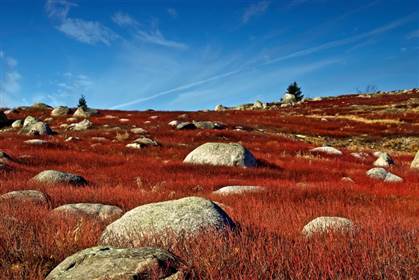
The setting for this book is Maine. Lily's dog is blind. Lily lives near some areas where blueberries grow. Each summer itinerant workers arrive to pick the blueberries. People in the town do not interact with the workers and so Lily (full name Tigerlily) knows very little of their lives or working conditions. Here she describes Salma:

"She was probably from one of the migrant families that drive here for a few weeks every summer. They come in trucks, campers, and cars from Mexico and Florida and other far off places to rake the blueberries that grow wild in the barrens. I don't usually talk to those kids and they don't usually talk to me. They don't stay here long enough for us to be friends."

Lily's dog runs off and Lily is terrified Lucky will be hit by a car. Salma holds out a piece of her peanut butter sandwich. Lucky smells the treat and stops to meet Salma. Lucky is safe but Lily only gives a cursory thank you.  When she gets home Lily describes how Lucky was nearly killed.  Lily lives with her grandparents, her mum has died.  Pepere and Memere tell Lily she must say thank you to the girl who saved her dog and take some food to the family who live in a workers cabin. From this meeting a special friendship begins.

During the summer Lily works in her grandparent's store painting bee boxes.

"When most people think of bees, they think of honeybees that live in hives, but mason bees don't live that way. Mason bees are little, native bees ... they're blue. Tiny blue bees that just fly about ... pollinating the blueberry barrens."

Salma joins Lily in her project. Lily needs to raise quite a lot of money so Lucky can have an eye operation. Lucky is Lily's main connection with her mother and the love of her dog adds a layer of poignancy to this story. Salma suggests they work together and paint lots of bee houses to sell at the annual Blueberry Festival which happens each year after the harvest.

Then Salma decides to enter the Blueberry Queen pageant which is part of this festival. Salma is not from the town, she is not white and blonde, she is an outsider. I desperately wanted Salma to win this contest but I knew she probably couldn't or the ending would be too contrived. Cynthia Lord sets up some wonderful tension in this story. Hannah, Lily's oldest friend, was the last Pageant Queen. She offers Salma her old dress and gives some valuable hints about the three part contest. I held my breath expecting Hannah to betray Salma and Lily - expecting things to turn nasty.

"I felt like when you're swimming and a big wave comes and just carries you along in a direction you don't want to go. A girl didn't just come into town and win the pagaent. Downeast Blueberry Queen was for than having your hair done and wearing a blue dress."

I adored this book. For me this is a five star book. I have enjoyed several other books by Cynthia Lord - Half a Chance and Rules. All three books tackle big issues but in a gentle and very personal way. Here is an interview with Cynthia Lord. Listen to an audio sample here. Read this review from Ms Yingling for more plot details.


When you read this book try to have a copy of Blueberries for Sal handy. There is a beautiful moment in this book when Lily describes little Sal and little Bear and the way they meet while picking blueberries.


I also learnt so much about blueberries - take a look at this film where Martha Stewart explains the process and the short season. In the story the contest girls have to answer questions about blueberries such as:

  • Why do we employ blueberry rakers - why isn't the whole industry mechanized? (Rocks)
  • Maine harvests what percentage of wild blueberries in the USA?  (98%)
  • What is Maine's state dessert? (Blueberry pie)
  • How are blueberry bushes pruned? (burning)
  • What is the top of a blueberry called? (the calyx)
  • When was the first blueberry rake invented? (1910)


Here is a photo of the blueberry barrens in Maine.


This sensitive coming-of-age tale compassionately explores prejudice and multiculturalism. Kirkus 

The novel includes a satisfying story arc, as Salma and Lily's friendship grows over the summer and culminates at the annual blueberry festival and pageant. And Lord recognizes and validates the complexity of her characters' situations, refusing to offer an artificially and unrealistically happy ending in favor of one that is both satisfying and bittersweet. KidsReads

Wednesday, January 9, 2013

Shooting Kabul by N.H. Senzai

When I read a book I usually trust the author - he or she will make everything all right in the end but with this book I was so devastated by the opening scene I just had to skip to the last page to make sure.

The title of this book Shooting Kabul has two meanings. If you look very carefully you can see a piece of film surrounding the title.  Fadi has a precious camera and if he can shoot a winning picture he might get back to Kabul.

Fadi, his mother Zafoona, his father Habib, older sister Noor and baby sister Mariam need to flee from Afghanistan after Habib is asked to work for the Taliban against the Americans.  The family had been living in the US but returned to Afghanistan hoping to assist their people but instead the regime has become completely repressive - no books, music, movies, photography or even kite flying.  Girls cannot go to school and life is extremely dangerous.

As the family reach their transport - provided by a people smuggler who has demanded a high price for his services - Fadi loses his grip on Mariam's hand and the family drive away without her. At this point I could hardly keep reading.  I was so worried about this little six year old girl.  The family arrive in America but poor Fadi is so riddled with guilt.  Everything reminds him of his precious sister.  Weeks go by and still she is not found even though everyone is looking.  Fadi starts school and encounters some truly horrible bullies.  This was another scene in Shooting Kabul that I almost could not read. I knew those bullies would beat Fadi and worse they might discover the box of treasures he has carried for Mariam.  Then Fadi hears about a photographic competition.  The prize is a plane ticket to India.  Fadi knows if he can get to India he can then set off over the border to look for his sister.

Here is an interview with the author. You can read more details of the plot here.  Here is an interesting way to present this book - a glog.

I highly recommend Shooting Kabul.  It is a heart-wrenching story told with compassion and insight. I read the whole book in one sitting and for me that is a sure fire way to know I enjoyed a book.

After reading this book (which I highly recommend you do) you might look for Soraya the storyteller by Rosanne Hawke, Boy overboard by Morris Gleitzman, Oranges in no mans land by Elizabeth Laird, Extra Credit by Andrew Clements and The colour of Home by Mary Hoffman.

One more thing all through this book Fadi makes links to a book he is reading - From the Mixed up files of Mrs Basil E Frankweiler so you might like to check that one out too.