Showing posts with label Oceans. Show all posts

Sunday, April 26, 2026

I See the Sea by Julia Groves

This book is "a work of art that we can all own" Seven Stories Newcastle, UK.

You might walk past this book if you see it in a bookstore or a library but that would be a huge mistake - please find this book and OPEN IT.  The illustrations are brilliant and the expressive language in the text will give you and your young reading companion a truly rich experience.

The paperback edition of I see the sea was published in 2022 but the good news is - yes - it is still available. In fact Seven Stories, as you saw above, mentioned it on Facebook this morning.


Can you see the die hole on this page - it grows bigger with each page turn.

Here are some text quotes:

"I see a dark shape gliding, majestic and serene." - whale

"I see the knowing grasp, slow and swirling." - octopus

"I see shimmers and flutters clasping tight for safety." - seahorse

"I see bold pigments masking toxic skin." - mandarinfish


There is a very detailed fact page at the back of the book along with all the practical ways we can help protect our endangered oceans. The ocean covers 70.9% of our planet's surface. It is one continuous body of water divided into five main regions - Pacific, Atlantic, Indian, Arctic, and Southern.

"Today the ocean and the creatures that live there face many big challenges: climate change caused by human activity; pollution from plastic waste, noise and chemicals; habitat destruction; overfishing and acidification."
There is so much to see and enjoy in Julia’s illustrations for this ocean foray that truly captures its awesomeness and majesty while her lyrical narrative beginning ‘I SEE’ on each spread evokes the wonders of the diverse marine life and flows beautifully from one spread to the next throughout. Red Reading Hub

Julia Groves shares her book on a video here. You could view this with your library group without the sound. The publisher Child's Play have some teaching ideas for using this book.

Here are some other books by Julia Groves:


Wednesday, April 22, 2026

In the Kelp Forest by Aunty Patsy Cameron and Reena Balding illustrated by Belinda Casey


Kelp are large brown seaweeds, a type of algae that are distinctive because they form forests. Common kelps in Australian waters include bull kelp, golden kelp, crayweed and giant kelp. Just like forests on land, a kelp forest shelters and feeds other plant life and animals.

Publisher blurb: A stunning picture book that explores the beauty and strength of Country beneath the waves and celebrates the living kelp forests, their creatures, and deep Cultural knowledge of Tasmania’s First Nations people. Kelp forests have intricate lives and play a key role in the balance of our oceans and seas. Myerlee, the giant kelp, sways beneath the waves, her forests alive with creatures that make her their home. Myerlee lives with the elements, shelters life, provides sustenance to those on the land and in the ocean and whispers her secrets to those who will listen.

Huge thanks to Magabala Books for sharing Into the Kelp Forest with me (Published April 7th, 2026).

IBBY and UNESCO are currently compiling a list of books that honour and celebrate indigenous languages from around the world. IBBY Australia will send a list of potential titles and I expect to see a display of these books at the IBBY Congress in Ottawa this year. In the Kelp Forest is a perfect example of a text with integrated Indigenous words and beautiful art and it will be eligible for submission with the next (second) selection round. Along the way you readin this book and your library group or young reading companion are sure to learn so much more about kelp and in this book you will also discover indigenous words for sea snails, sea urchins, crayfish, mussels, abalone and the sea horse (patterleenner in Coastal plans language). In the Kelp Forest is a book you should add to your library and then share it with your teachers so the class can discover more about this amazing underwater environment. 

As a way to find more books on this topic and for background reading take a look at these two posts from my friend at Kinderbookswitheverything:

4th June 2025 Seaweed Day

1st March 2025 World Seagrass Day

The crew of Backroads (ABC Television) visit the kelp forests of Tasmania (4 minutes). And Nature Conservancy have some further information and photos.


You can see nine pages from this book here.


Kelp is used as food for animals and humans, for products such as toothpaste, ice cream and shampoo but climate change, global warming and pollution mean that huge areas of kelp forest have disappeared. Kep also provides shelter for animals such as trumpeter fish, crayfish and seahorses. 

Aunty Patsy Cameron grew up on Flinders Island and can trace her Aboriginal heritage through her mother’s line to four Ancestral grandmothers ... Patsy has a Master of Arts in Tasmanian Aboriginal History and an Honorary Doctor of Letters from the University of Tasmania. She was inducted onto the Tasmanian Women’s Honour roll in 2006 and was invested with an Officer of the Order of Australia (AO) in 2017 for distinguished service to Indigenous communities in Tasmania. Her first picture book, with Lisa Kennedy, was Sea Country, also published by Magabala Books.


Belinda Casey is a proud great granddaughter of legendary Tasmanian Aboriginal woman, Fanny Smith, whose traditional homeland is Tebrakunna Country in North Eastern Trouwerner/Tasmania. Belinda graduated with a Bachelor of Fine Arts with Honours from the School of Creative Arts, University of Tasmania in 2018 and was a finalist in both the 2025 John Glover Art Prize and the 2022 Hadley’s Art Prize. Belinda’s art practice honours the legacy of her ancestral grandmother and the strength and resilience of the Tasmanian Aboriginal people, their culture and connection to Country.

Friday, February 27, 2026

The Argonaut Queen by LP Hansen illustrated by Marlo Garnsworthy


The subject of this book is a totally new discovery for me. I had no idea about this amazing creature.

This creature is sometimes called a ‘paper nautilus’ isn’t actually a nautilus. Also known as argonauts, these creatures derive their name from the paper-thin, spiralled shell that females produce to shield their eggs.  Argonauts are a type of octopus, while the nautilus is, well, a nautilus. Both species are cephalopods, the taxonomic class comprising all octopuses, cuttlefish, squid, and nautiluses. Argonauts happen to be the world’s only pelagic octopuses. Instead of living near a structure on the seafloor, like a rocky shoreline or coral reef, like most octopus species, argonauts spend their lives floating near the surface of the open ocean. The genus Argonauta derives its name from Greek mythology. The Argonauts were the famed sailors of the ship Argo, who helped Jason on his quest to recover the Golden Fleece. Early naturalists thought that argonauts ‘sailed’ around the ocean using two of their tentacles, hence the name… and a lot of weird anatomical postures in early drawings of argonauts. (In reality, argonauts scoot about by expelling water through their funnels.) Source

The Argonaut Queen opens with six huge shells on the end papers - these are the six species of Argonauts. 

"She's a Queen of the Ocean, bold and beautiful, around the size of a human hand. She travels the seas, carrying her shell like a Greek goddess's helmet. She's a pink coloured octopus called an argonaut and she makes this shell herself."

I laughed when I read that the male argonaut is the size of a peanut! The Queen starts making her shell when she is just twelve days old and when it is large enough it can hold up to 250,000 eggs at a time. When the babies are born they are smaller than a rice grain. If I was sharing this book with a group of students I would bring along a container of rice and hold up one grain. I was also fascinated to read that the argonaut can repair her own shell. 

How do we know anything about the argonaut? The first research was done by a French woman named Jeanne Villepreux-Power. She was a marine biologist and she worked out a way to study the argonaut in the ocean using her invention of an aquarium. Sadly, though, her large collection of shells, reports and drawings were lost when the cargo ship carrying them sank. Also, as with many women scientists of her time it took years for her research to be taken seriously. 

I found two more books about this remarkable woman who was born in 1794.


This book is why I visit school libraries, it's why I read kid's books, and it's why I wish I was back in my former school library. I would love to add this book to my library collection and then put it into the hands of readers and teachers. The Teacher-Librarian in the school where I work as a volunteer has such a good eye for book treasures. She found this one in a local bookstore.

Publisher blurb: Dive into the oceans — and into the depths of history — with the Argonaut Queen, an expertly-told story that weaves together the marine science of these fascinating creatures and the woman who we have to thank for it, Jeanne Villepreux-Power, one of the earliest studiers of this subspecies of octopus and the many features that make it so unique. Though Villepreux-Power’s scientific illustrations were lost to the seas in a shipwreck, this book pays homage to them through exquisitely-rendered, real-to-life drawings of the creature she dedicated her life to.

LP (Linda) Hansen is a New Zealand based author. Marlo Garnsworthy is an author, illustrator, editor, and Antarctic science communicator. When she’s not making books, you’ll find her paddling her kayak, hiking a trail, having adventures in far-flung places, or dreaming of Antarctica. She lives in a National Park on Cape Cod, Massachusetts, USA. Read more about Starfishbay Publishing here. There is a link from their page to a pdf of the Teachers Notes.

Further Reading:
Your school or local library are sure to have lots of books about the Octopus but not all will have information about the argonaut. I did discover this book which I am sure will be in the library:


Sunday, February 15, 2026

Beyond the Shore by Kirli Saunders illustrated by Mark Chester Harding


This book has a gentle and lyrical text exploring the experience of young child standing at the seashore and watching the ocean.

Here are a few lines of the text:

"It is safer on the edge 
where toes bob 
plip plick splish
where sand swirls and sways
encouraging me away
from the yolk-stained shore"

The little girl images the underwater world and the songs of the whales and this made me think of this book:


Bookseller blurb: It's safer on the edge, where we can walk with our feet on the floor ... but beyond the shore is a world that inspires awe. Will you dive in? Written by award-winning Gunai author Kirli Saunders (OAM), with art by debut picture book illustrator Mark Chester Harding, Beyond the Shore gently encourages young ones to step beyond fear into curiosity.

I am not usually a fan of digital art but it is very appealing in this book. I expect to see Beyond the Shore listed as a CBCA Early Childhood notable for 2026. 


Here are some teachers notes from the publisher Scholastic Australia

Mark Chester Harding is a freelance illustrator and musician based in Sydney. He is one half of the band Cooee with Kirli Saunders. Their debut album ‘Messengers’ will be released in February 2026. ‘Beyond the Shore’ written by Kirli Saunders OAM is his debut picture book. 

You could pair this book with the Bluey where she follows her mother along the seashore.  (The Beach Season One episode 26).


Companion book:


Sunday, August 31, 2025

Red Clover Book Award Vermont US


The Red Clover Book Award is presented to the book selected by children in kindergarten through fourth grade. Each year thousands of Vermont school children read the 10 nominated picture books and cast their votes for their favorite in the spring. The award has been presented annually since 1997.


I have a children's book-loving friend in Vermont. She sent me a message that one of our Australian authors was a winner of their local children's choice award the Red Clover Award. I immediately thought Anna McGregor (Spiro) had flown to the US but then another friend corrected and reminded me that this was more likely to be a Zoom event - and she was right!


Author page blurb: Fergus lives down in the deepest, darkest depths of the sea and is scared of just one thing … the light! Who’s Afraid of the Light? is a fresh and funny new narrative nonfiction picture book from the award-winning creator Anna McGregor. Come on a trip to the deepest, darkest depths of the ocean. There are many fascinating creatures that call it home. There’s nothing to be afraid or … is there?


This fiction/non-fiction mash-up from McGregor contains a factual guide to some of the creatures of the deep ocean at the end, and some fantastic illustration of some fascinating and mysterious fish. There’s an enjoyable anarchic feel here which will appeal to lots of children, and a big surprise reveal too. Great fun. Book Trust

I am so curious about how this Australian book reached the US market. The publisher in Australian and the US is Scribe.

The US bookshop Barnes and Noble said:

This book is ideal for:
  • Educators and librarians looking for humorous stories to use as a launching pad for further non-fiction investigation into the ocean environment;
  • Parents and carers looking to combine narrative and non-fiction to entertain and educate their children simultaneously;
  • Kids who just want funny books!

Awards for Who's Afraid of the Light?

🌟 Yellowhammer Book Awards Picture Book of the Year (Alabama, USA)
🌟 Red Clover Book Award (Vermont, USA)
🌟 dPictus 100 outstanding picture books (Globally) 2024 selection
🌟 WIA World Illustration Awards 2024 Children’s Book Shortlist
🌟 Winner ABDA Book of the Year
🌟 Winner ABDA Best Designed Children’s Book
🌟 Winner of Best Children’s Reader in the Whitley Book Awards
🌟 Shortlisted ABIA Best Children’s Book (Small Publisher)
🌟 Shortlisted Victorian Premier’s Literary Awards 2024 Children’s Literature 2024
🌟 The Guardian: The best Australian children’s books of 2023

Who's afraid of the Light was also a 2024 White Raven selection.

Other books by Anna McGregor


Here is the 2024-2025 nominee page:


I have previously talked about Ancestory


Other winners of the Red Clover Book Award:


I was interested to see the 2022-23 nominees included Watercress by Andrea Wang. This book won the Caldecott medal BUT it has never arrived here in Australia.

Monday, December 2, 2024

Life after Whale by Lynn Brunelle illustrated by Jason Chin


This book opens with a graceful Blue Whale making a journey from the southern oceans to the warmer waters of the tropics ...

"but today something is different. Her heart is slowing down. It is wearing out. It is pumping less and less oxygen to her lungs, brain, and other internal organs. This year she will not make it to the feeding waters in the north. Her vision blurs and darkens. Her breathing slows. Her awareness fades. Her heart quiets and finally stops. This year, this day, this moment, after ninety years of life, as all her living things must do at some point ... she dies."

This is not the end though. Her death creates a whole new ecosystem.

"Her body will provide shelter and food for millions of creatures for more than a hundred years. A whole new world will arise. Scientists call this whale fall."

Go back and think about the title - yes there is life after the death of the whale.

Talking about the life cycle of living things is always a topic in a Primary School or Elementary School syllabus. Life after Whale is a perfect book for this topic. I am going to say that again - Life after Whale is a perfect book and it is one that you really do need in your school library.

Here are some of my reading discoveries from this splendid book:

  • The layers of wax in the ear canal of the whale can show her life journey.
  • Her body will take over one month to sink to the bottom of the ocean.
  • She lands on 'marine snow' which is microscopic bits of dead animals and plants.
  • There are four phases of a whale fall ecosystem - different animals feed on different parts of the whale and the cycle is completed when the krill we meet at the beginning of the book is part of the cycle again at the end.
  • Even after 150 years the bones are still providing food for marine creatures.
Here are some activity pages from the US Publisher Holiday House. This video explains a whale fall. 


We have a new Science and Technology Syllabus K-6 coming out next year. Here are a few quotes from that document:

Stage 2 (Grades 3 and 4) Students compare living things and identify the life cycles which support the survival of plant and animal species. 

Stage 2 (Grades 3 and 4) What are the similarities and differences between the life cycles of living things?

Life cycles of living things

Inquiry question: What are the similarities and differences between the life cycles of living things?

Students:

identify that living things have life cycles 

conduct an investigation into the life cycle of plants and/or animals 

Content Strand Summaries: Living World: The Living World strand explores living things and their needs. The key concepts developed within this strand are: living things have similar characteristics; are interdependent and interact with each other and their environment; living things and their features are related to the environments in which they live. Through this strand, students explore life cycles, structural adaptations and behaviours of living things. These developmental features and characteristics aid survival in particular environments.

It is the end of the school year here in Australia but if you can add this book to your library wish list or better if you can purchase it for your collection I suggest acting quickly. This book retails for AUS$35 but I found one online seller with copies for just AUS$28.

Jason Chin is the illustrator of Watercress which won the Caldecott Medal. I was lucky to read this book in a library last year and ever since I have hunted high and low so I could read it again - I was way too rushed last year. Alas this book is very expensive here in Australia and it is only available in a limited number of local and tertiary libraries.


Tuesday, November 12, 2024

I will swim next time by Emily Joof illustrated by Matilda Ruta


"But when we went to the beach my tummy felt tight. I really wanted to try, but it still felt wrong inside. Definitely, possibly, perhaps I'd swim - next time."

So many of us here in Australia live near the coast. Other kids, who live further inland, are sure to have a beach holiday some time in their childhood, and rural kids often have access to rivers and lakes and of course their local town pool. This book is a beautiful and quiet exploration of the courage it takes to step into the water and swim for the first time. 

Here is a video of the author talking about her book. Emily Joof is from Gambia but she lived for a time in Sweden. Watch the trailer. This book is also an Empathy Lab title for 2024. 


I will swim next time was first published in Swedish with the title Det djupa blå.

The story offers a model for parents looking to quell children’s fears, support their dreams, and allow them room to grow. Given that many swimming pools have historically excluded African American communities and that Black children face an elevated risk of drowning, a narrative that spotlights a Black family reveling in the water is especially welcome. ... Gentle, inspiring, and important  Kirkus

This adorable, sweet book is all about reassuring little ones that they can take their time with things they feel nervous about, and that there’s no rush to get to grips with new experiences like swimming. Everyone will come to it in their own time, and Mum is happy to be patient and supportive. Book Trust

Here is a new Australian picture book which is the perfect companion read (I expect to see this one listed as a 2025 CBCA Early Childhood notable title). Read more here from Pip Harry


I'm jumping waves at the beach with Dad.
If they're small I can leap over their frothy peaks.
Easy!
But further out, when they're big, you have to duck dive under.

Maisie is learning about ocean swimming at the beach. The small waves are easy, but how will she know when to dive under the bigger ones? And will she be brave enough to try? Lucky Dad is there to help her.

Here are some very useful teacher resources for Over and Under by Dr Robyn Sheahan-Bright. There is a very comprehensive book list at the end of these notes with so many more books to explore on the topics of the beach and learning to swim including a favourite of mine Bear and Chook by the sea.


Thursday, August 3, 2023

A Friend for George by Gabriel Evans


"Because that's what friends do."

George lives alone in a small blue hut beside the sea. He does have a happy life but deep in his heart he knows something is missing - he would love to have a friend. Near the shore he sees a rock pool and inside he finds a small fish with "golden scales and bright green fins." 

George chats with the little fish even though he does know the fish cannot answer or join the conversation. George shares his best jokes and he decides to call the fish Claude. It is a day of pure happiness:

"George slid and skipped and jumped over the rocks back to his home. That night, George couldn't stop smiling. He'd finally found a friend."

George cannot wait to catch up with his friend the next day but even the youngest children who live near the sea will predict the scene in the morning. The tide has risen and the rock pool is gone. Claude is now out in the ocean. But George wants his new friend. He needs his new friend. So he rushes home and grabs his row boat, oars and one more thing - a large glass fish bowl. George does find the little fish but when he scoops him into the fish bowl it very quickly becomes clear that this is not the right place for Claude. Can these two still be friends? Is there a lesson (albeit a gentle one) that George needs to learn about being a true friend. 

Here is a video where Gabriel talks about his book. You can see inside this book and read some review comments here

A Friend for George is a perfect book to read aloud with young children learning to navigate the world. Its message is gently delivered in a package that will be enjoyed by everyone. Kids' Book Review

Blue skies, sandy shores, breaking waves, and the rolling ocean are all brought to life in layered watercolour/gouache illustrations. Reading Time

It opens up the opportunities for discussions about what it is friends do – a phrase repeated often throughout the story – and how we need to learn to be unselfish and put the needs of others before ourselves.  The Bottom Shelf

This story theme reminded me of all those picture books about children who take stars from the sky and then they discover they do need to let them go. Take a look at this previous post where I list some books about children and stars. The idea of a fish in a fish bowl also made me think of this book:


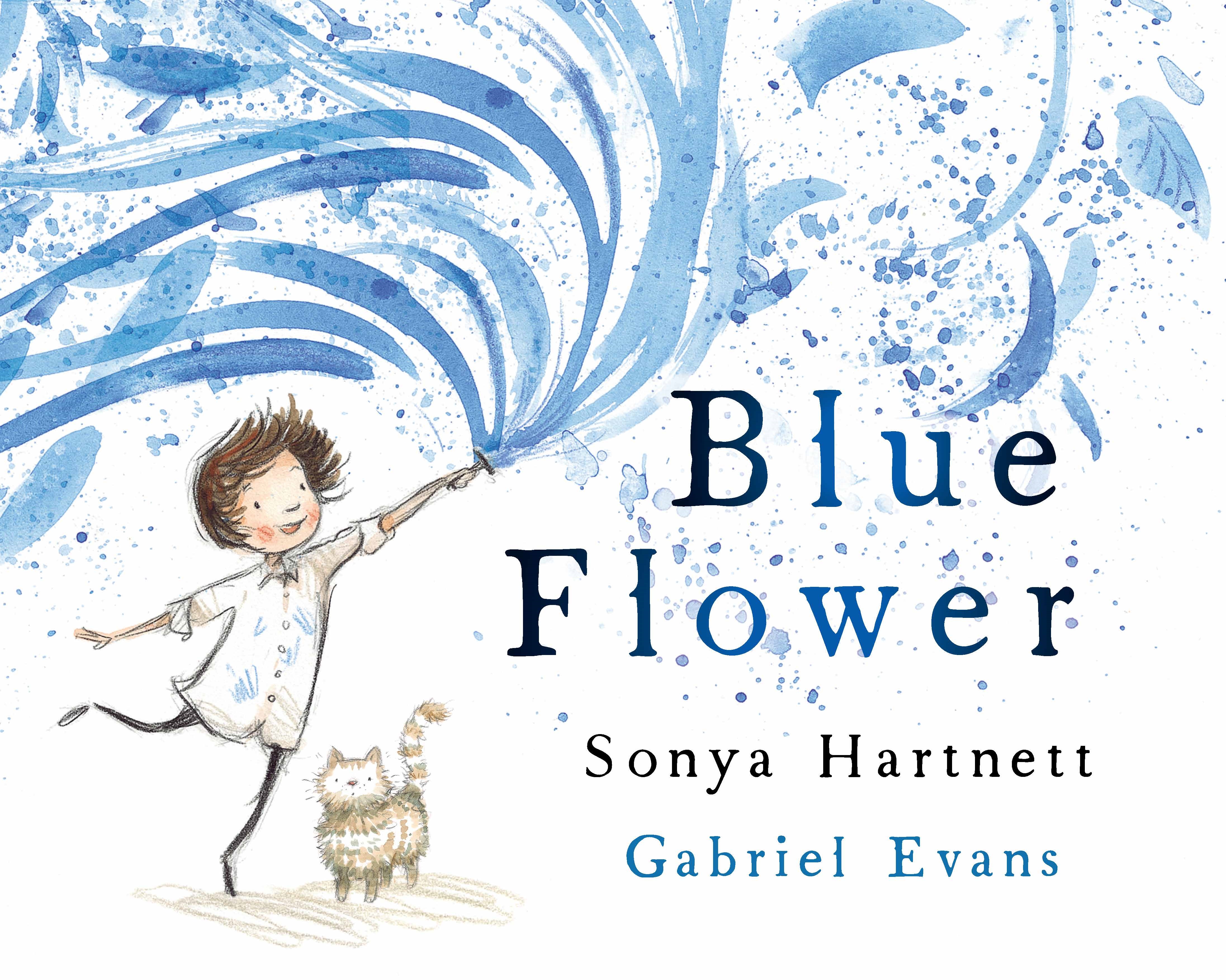
Gabriel Evans often draws his characters - dog and human - with thin bendy legs and jaunty striped jumpers. To my eye this makes them endearing and vulnerable. Take a look at these book covers:


If you look at my sidebar I have talked about SO many books with a friendship theme. As I write this post there are over 560 books with this label. A Friend for George is a wonderful addition to this topic and it is a story that could generate some very meaningful discussions with your own reading companion or with a group of young children. When I was a very young child my most precious and most re-read book was this book. It could be an interesting comparison text:


Sunday, June 11, 2023

Wanderer by Victor Kelleher


"Remember Dane, ... You're more than a wanderer now. You've become a keeper of the old knowledge. A Book Holder. It's who you are, who you're meant to be ... 
one of the precious few ..."

In the Golden Years people had books and libraries and perhaps life was easier? But they must have some terrible things because the world is now so damaged. The Clans hold power using terror and violence against people who are barely surviving in small settlements. These fierce warriors are ruthless and extremely dangerous but animals are dangerous too. What did the people from the past do to the wild creatures of the earth?

"It could have affected the animals too ... Is that maybe why they hate us so much?' ... 'Think about it Put yourself in their place ... You're a dolphin, say or an orca, or a big cat in the forest, and people do cruel things to you. They take away your food, you hunting grounds, your freedom."

Dane has seen the death of his parents and he has become a wanderer. His grief is deep so it feels as though he is actually running away. He has a few essential tools such as a flint and knife along with his precious kayak. As this story opens Dane sees some smoke on an island. He decides to investigate and he meets a wise woman who has survived several attacks by the Clan. 

Megan offers him food and advice. Dane's kayak is in need of repairs. Megan tells Dane about a skilled craftsman named Garth and so after spending a short time with Megan, Dane sets off to find Garth little knowing this will be the beginning of a long and perilous journey. He also has no idea he is about to meet his travelling companion  - a girl named Lana. Lana has an amazing skill. When she sings, she is able to calm wild animals on land and in the sea. Lana can also sense danger well before it arrives in fact all of her sense are very finely tuned and this is because she is blind but there is no way this is an obstacle for Lana. She is a fearless and loyal companion and she and Dane make a wonderful team out in the wild ocean. Their purpose it to reach Elysia where there is supposed to be a library. Dane has one book (books are rare and precious objects in this future world and nearly all have been destroyed by the Clan). He also has a book from Megan and later a small collection of ten titles rescued when the clan attack Garth's hideaway. 

The writing in this book is powerful. You will feel the danger, the cold, the hunger and the pain from horrible wounds inflicted on Dane by Kurt, leader of the Clan. Kurt has his own motivation for chasing Lana and the longer his hunt goes on the more a madness overtakes him making a very dangerous combination of rage, deadly weapons and insanity. 

Along the way Lana and Dane meet other wise people one of whom is a woman named the Sealer. She tells them to avoid two dangerous islands as they travel south to Elysia - when I read this part of the story I desperately hoped Dane and Lana would heed her warning but alas they do not. The scenes on Skull Island and later Barter Island are filled with dreadful violence which is why I am listing Wanderer as a Young Adult book for ages 13+. These places reminded me of Where the world ends by Geraldine McCaughrean. Elysium is from Homer's Odyssey and means a place or state of ideal happiness - a paradise.  

Here are a few descriptions to give you a flavour of this story:

The clan: "Even at this distance Dane could make out their fur tunics, their heavily tatooed arms and face, their hair tied into upright tufts. ... Like Danes own weapons, clipped to the side of the kayak, they were fashioned mainly from the debris of another age - one long-since passed - a fabled time known widely as the Golden Years."

"Karl had bought just ten warriors with him. They entered the square in a single phalanx, each of them dressed resplendently in feathered cloaks and painted leather tunics and leggings. Colour ochres had been smeared across their tattooed faces giving them a fierce animal appearance ..."

I do need to also mention there are some interesting book references scattered through out the story many of which  are shared in the evenings by Lana and others they meet. Stories such as Shakespeare, Hans Christian Andersen fairy tales, Hansel and Gretel, The Hobbit,The Piped Piper, Moby Dick, and Charles Dickens. It was interesting to hear Karl quote Tamburlaine because I recently read this book - Tamburlaine's Elephants. The story is also book ended with two lines from an poem by Arthur Hugh Clough (1855). You can hear the whole poem here

"Say not the struggle nought availeth, the labour and the wounds are vain."

You can read the blurb for Wanderer here.

Wanderer is also a homage to the power of books and stories, in the hope that if they keep the books safe they can help rebuild their world. Lamont

The novel explores themes of courage and tenacity, resilience and ingenuity, loyalty and friendship, survival and hope. And it is a celebration and testament to the power of story and books, and the wealth and comfort these provide to us mere mortals. Kids' Book Review

Wanderer was short listed for the NSW Premier's literary award - Patricia Wrightson Award. Here is what the judges said:

With danger at every turn and constant action that grinds to a dramatic climax, Wanderer by Victor Kelleher grips the reader from the start, never letting up on the drama, tension, and conflict. This novel stood out for its strong narrative voice and for its child protagonists who remain in control of their own destinies throughout. Theirs is a high-stakes, life-and-death struggle against the decaying, lawless world around them as they must battle and attempt to outwit adults, wild animals, and nature itself. 

This middle-grade novel is set in a dystopian future where ocean levels have risen and society has crumbled. Young Dane and his new friend, Lana, must complete a perilous quest that focuses on special treasures: precious, rare books. And, yet, Wanderer is also much more than this. It’s a tale of friendship, courage, endurance, and a warning of what the future may hold for humanity. Eagle Books an imprint of Christmas Press

This is the first book written by Victor Kelleher in many years. I loved his previous books - The Forbidden Paths of Thual (1979); The Hunting of Shadroth (1981) and Taronga (1986). I did enjoy this newest book especially the cliff hanger scene just twenty pages from the end. Victor Kelleher is a highly awarded Australian author so I was a little puzzled that this newest book did not have a list of all his past titles. This is a book feature I use check off other books I have read.

I have a funny anecdote about this author. I worked in five schools as a Teacher-Librarian.  In 1996 I visited my former/final school for the first time. This appointment was a transfer not a merit position but the Principal decided to interview me. She asked a senior primary teacher from her staff to attend this "interview". The Principal considered this teacher to be well read and so between them they had set up a "trick question". The teacher asked do you have a favourite book by Victor Kelleher.  Looking back this seems so funny. I wonder why they picked him.  I answered with the three books I listed here - I think this means I passed the "test". 


Companion books - Wanderer made me think of books about Vikings and other people from ancient times rather than dystopian worlds: