Showing posts with label Fish. Show all posts

Sunday, April 26, 2026

I See the Sea by Julia Groves

This book is "a work of art that we can all own" Seven Stories Newcastle, UK.

You might walk past this book if you see it in a bookstore or a library but that would be a huge mistake - please find this book and OPEN IT.  The illustrations are brilliant and the expressive language in the text will give you and your young reading companion a truly rich experience.

The paperback edition of I see the sea was published in 2022 but the good news is - yes - it is still available. In fact Seven Stories, as you saw above, mentioned it on Facebook this morning.


Can you see the die hole on this page - it grows bigger with each page turn.

Here are some text quotes:

"I see a dark shape gliding, majestic and serene." - whale

"I see the knowing grasp, slow and swirling." - octopus

"I see shimmers and flutters clasping tight for safety." - seahorse

"I see bold pigments masking toxic skin." - mandarinfish


There is a very detailed fact page at the back of the book along with all the practical ways we can help protect our endangered oceans. The ocean covers 70.9% of our planet's surface. It is one continuous body of water divided into five main regions - Pacific, Atlantic, Indian, Arctic, and Southern.

"Today the ocean and the creatures that live there face many big challenges: climate change caused by human activity; pollution from plastic waste, noise and chemicals; habitat destruction; overfishing and acidification."

There is so much to see and enjoy in Julia’s illustrations for this ocean foray that truly captures its awesomeness and majesty while her lyrical narrative beginning ‘I SEE’ on each spread evokes the wonders of the diverse marine life and flows beautifully from one spread to the next throughout. Red Reading Hub

Julia Groves shares her book on a video here. You could view this with your library group without the sound. The publisher Child's Play have some teaching ideas for using this book.

Here are some other books by Julia Groves:


Monday, April 6, 2026

My Pet Goldfish by Catherine Rayner


"When I was four, I got my first ever pet: a fish no bigger than my hand, with red and orange scales. My very own goldfish! He didn't have a name yet so I got to choose one - and I called him 'Richard'".

Richard is not alone - he lives in a fish tank with her sister's fish. The young girl loves spending time with Richard - telling him about her day. Sandy, the boy next door also has some goldfish but this live in pond in his garden. When you turn to the page filled with the fish in Sandy's pond you will gasp at all the colours.


There are facts on each page of this book: did you know there are over two hundred different kinds of goldfish with names like comets, bubble eyes and pompoms. And did you know that a group of goldfish is called a “troubling” or that the oldest ever goldfish was 43 years old?

Eventually Richard grows too big for the fish tank and so the girl takes him over to Sandy's to live in his pond. 

Because this book is a combination of narrative and nonfiction it contains an index, further reading list, and a page of author notes. 

My Pet Goldfish was published in 2021 - I am not sure how I missed it. AND it is illustrated (and written) by Catherine Rayner which is another reason I should have been aware of this book. Here is a video of Catherine reading her book. 

In the library where I spend a joyous day as a volunteer the Teacher-Librarian has gathered together all of her books from the Nature Storybook (or previously Read and Wonder) series from Walker books. I think she might have nearly every one of these splendid nonfiction titles. Recently she set up a display of books about goldfish and it proved very popular with the children and now this topic links perfectly with one of the CBCA 2026 Early Childhood shortlisted titles - Derek.


Saturday, January 17, 2026

Spud and Snowball and the Fancy Fish by Judith Rossell


Spud and Snowball are two cats living a comfortable life at home. They enjoy watching television - cartoons or cooking shows and it is fun to hiss at programs that feature dogs. One day they see a television advertisement for a new cat food called Fancy Fish. As with all good adverts this one is very persuasive, and Spud and Snowball are now certain that this food will taste delicious - way better than the Kitty-Bix they currently eat. Spud is a cat of action. She will not wait for someone to supply Fancy Fish - she jumps onto the computer and orders a big box.

Well yes, a big box does arrive and yes inside is a fancy fish but not the expected food - an actual fancy fish in a fish tank and boy oh boy he is bossy and loud. In fact, he in an opera singer named Sir Mimsy Woffle-Poffle-Foffington. I imagine Judith Rossell had so much fun dreaming up that name.

Have you noticed there is a cheeky nod to conventions or rather breaking conventions in this book - Snowball is a boy, Spud is a girl and the opera singing fish is a male/man/tenor or bass singer. I can't think of any other book for kids with an opera singer who isn't a woman. Might be time to introduce Plácido Domingo, Luciano Pavarotti, Andrea Bocelli or Enrico Caruso to your library group or young reading companion.

So now we have a problem for Spud and Snowball. This bossy cat tells the pair they must work as his butlers and supply him with a tasty snack and then he tells them he needs scenery for his performance and ponies to pull his carriage. This is all too much. Surely it is time for the cats to eat this fish - but fishing for a fish in a fish tank is very difficult especially when neither cat wants to get wet. Luckily they still have that computer - perhaps they can return this unwanted parcel.

Publisher blurb: Meet two cheeky cats in this brand-new illustrated fiction for emerging readers from the bestselling, award-winning creator Judith Rossell. Every day, Spud and Snowball lie on the couch and watch TV. When they see an ad for Fancy Fish, the two cats work out a way to have this new food delivered to their doorstep. But what arrives is totally unexpected… Can Spud and Snowball outwit this loud, bossy and very fancy intruder?

I am sure this book will be a 2026 CBCA Younger Readers Notable title - how terrific to have a book you can share with the youngest children in your school library and with the promise of a sequel. As a bonus mum and dad will enjoy reading this book too. 


Three reasons to read Spud and Snowball:
 
1. Rossell makes books that kids love to read and read again. She’s won big awards for her stories, which are always funny, clever and full of imagination. She also draws the pictures herself, bringing every silly moment and cheeky character to life! Spud and Snowball and the Fancy Fish continues her brilliant work, with hilarious artwork and cheeky characters that leap off the page.
2. This illustrated junior fiction is designed especially for emerging readers aged 6 and up. With short chapters, lively illustrations, and clear, engaging language, it’s the perfect bridge from picture books to longer stories.
3. Spud and Snowball and the Fancy Fish is the first book in a brand-new series featuring Spud and Snowball, setting the stage for more quirky, laugh-out-loud adventures. It’s a fantastic way to get kids excited about reading, and eager for the next instalment.

Companion books:


Other books by Judith Rossell for older readers:


Book One in the Stella Montgomery series


Sunday, August 31, 2025

Red Clover Book Award Vermont US


The Red Clover Book Award is presented to the book selected by children in kindergarten through fourth grade. Each year thousands of Vermont school children read the 10 nominated picture books and cast their votes for their favorite in the spring. The award has been presented annually since 1997.


I have a children's book-loving friend in Vermont. She sent me a message that one of our Australian authors was a winner of their local children's choice award the Red Clover Award. I immediately thought Anna McGregor (Spiro) had flown to the US but then another friend corrected and reminded me that this was more likely to be a Zoom event - and she was right!


Author page blurb: Fergus lives down in the deepest, darkest depths of the sea and is scared of just one thing … the light! Who’s Afraid of the Light? is a fresh and funny new narrative nonfiction picture book from the award-winning creator Anna McGregor. Come on a trip to the deepest, darkest depths of the ocean. There are many fascinating creatures that call it home. There’s nothing to be afraid or … is there?


This fiction/non-fiction mash-up from McGregor contains a factual guide to some of the creatures of the deep ocean at the end, and some fantastic illustration of some fascinating and mysterious fish. There’s an enjoyable anarchic feel here which will appeal to lots of children, and a big surprise reveal too. Great fun. Book Trust

I am so curious about how this Australian book reached the US market. The publisher in Australian and the US is Scribe.

The US bookshop Barnes and Noble said:

This book is ideal for:
  • Educators and librarians looking for humorous stories to use as a launching pad for further non-fiction investigation into the ocean environment;
  • Parents and carers looking to combine narrative and non-fiction to entertain and educate their children simultaneously;
  • Kids who just want funny books!

Awards for Who's Afraid of the Light?

🌟 Yellowhammer Book Awards Picture Book of the Year (Alabama, USA)
🌟 Red Clover Book Award (Vermont, USA)
🌟 dPictus 100 outstanding picture books (Globally) 2024 selection
🌟 WIA World Illustration Awards 2024 Children’s Book Shortlist
🌟 Winner ABDA Book of the Year
🌟 Winner ABDA Best Designed Children’s Book
🌟 Winner of Best Children’s Reader in the Whitley Book Awards
🌟 Shortlisted ABIA Best Children’s Book (Small Publisher)
🌟 Shortlisted Victorian Premier’s Literary Awards 2024 Children’s Literature 2024
🌟 The Guardian: The best Australian children’s books of 2023

Who's afraid of the Light was also a 2024 White Raven selection.

Other books by Anna McGregor


Here is the 2024-2025 nominee page:


I have previously talked about Ancestory


Other winners of the Red Clover Book Award:


I was interested to see the 2022-23 nominees included Watercress by Andrea Wang. This book won the Caldecott medal BUT it has never arrived here in Australia.

Tuesday, June 17, 2025

Don't Trust Fish by Neil Sharpson illustrated by Dan Santat


Why, dear reader, must you NEVER EVER trust fish?

1. They spend all their time in the water where we can’t see them.
2. Some are as big as a bus—that is not okay.
3. We don't know what they're teaching in their "schools."
4. They are likely plotting our doom.


This book starts out looking quite scientific. There is a description of the cow beside the formal illustration which leads to the conclusion that a cow is a mammal. Although, if you take a closer look at the eye of this cow he does seem to have some thing more to say perhaps. Then we read a description of a snake and conclude this is a reptile and likewise we see a small yellow bird and we know it's a bird because birds have feathers. BUT fish - no you cannot generalise about fish and so they are not to be trusted. I love the way this text persuades the reader that fish are a group of animals with lots of tricks and anomalies - gills or lungs; salt water or fresh; eggs or not; vegetarian or cannibal. There are even fish who have their own lanterns about what about seahorses - did you know they are fish too. But then we meet a little fish we can trust! or do we?

When you read this book a second or third time you might notice the huge fish trying to eat an innocent little crab - wait a minute should you wonder about the narrator of this book? 


The real slammer is the final page - please give your library group or young reading companion time to THINK about this page.

To write a successful funny picture book, you have two audiences you have to appease. You’ve got your adult gatekeepers, the ones who have the dollars in their pockets, and then you have the actual intended audience in the first place: children. Both children and adults, and I mean this truly, are terrible judges of what is funny. This is because kids and parents are not all that different. They both are easily led astray. There are many different ways to appeal to someone, and a book can certainly be funny the first time you read it… and then less and less funny after that. What keeps a book funny after multiple, maybe even hundreds, of reads? Comic timing. The art of the page turn. And the ability to make a book fun to read aloud over and over and over again. SLJ Betsy Bird (read her whole review)

A ribald and uproarious warning to those unschooled in fishy goings-on. Kirkus Star review

Here is a video of the author reading his book. Neil Sharpson comes from Ireland. Read this terrific review from Reading bookshop in Melbourne. 

There are so many ways you could use this book with your class

  • Just read it for fun - nothing more - and YES that's okay
  • Read it after a unit of work on Animal classification with a younger group
  • With a group of older students (Grade 4+) read it before a unit of work on Animal classification
  • Use this book with primary grades to talk about persuasion
  • Use this book with your Grade 5 or 6 students to talk about point of view and also the authority/reliability/trustworthiness of texts we use for research - who wrote this book? Why? Do they have an agenda? How can we check the facts presented here?

One more thing: I am SO puzzled. This is an American book - that's okay they make terrific books - but here in Australia this book in hardcover only costs AUS$20 and even less from chain stores - again that's terrific BUT if this book can be made available for such a great price WHY oh WHY do I investigate so many other US Picture books and then despair when I see them listed for AUS$35-AUS$55!

Companion books:


Except Antarctica

Other books illustrated by Dan Santat:


Monday, December 2, 2024

Life after Whale by Lynn Brunelle illustrated by Jason Chin


This book opens with a graceful Blue Whale making a journey from the southern oceans to the warmer waters of the tropics ...

"but today something is different. Her heart is slowing down. It is wearing out. It is pumping less and less oxygen to her lungs, brain, and other internal organs. This year she will not make it to the feeding waters in the north. Her vision blurs and darkens. Her breathing slows. Her awareness fades. Her heart quiets and finally stops. This year, this day, this moment, after ninety years of life, as all her living things must do at some point ... she dies."

This is not the end though. Her death creates a whole new ecosystem.

"Her body will provide shelter and food for millions of creatures for more than a hundred years. A whole new world will arise. Scientists call this whale fall."

Go back and think about the title - yes there is life after the death of the whale.

Talking about the life cycle of living things is always a topic in a Primary School or Elementary School syllabus. Life after Whale is a perfect book for this topic. I am going to say that again - Life after Whale is a perfect book and it is one that you really do need in your school library.

Here are some of my reading discoveries from this splendid book:

  • The layers of wax in the ear canal of the whale can show her life journey.
  • Her body will take over one month to sink to the bottom of the ocean.
  • She lands on 'marine snow' which is microscopic bits of dead animals and plants.
  • There are four phases of a whale fall ecosystem - different animals feed on different parts of the whale and the cycle is completed when the krill we meet at the beginning of the book is part of the cycle again at the end.
  • Even after 150 years the bones are still providing food for marine creatures.
Here are some activity pages from the US Publisher Holiday House. This video explains a whale fall. 


We have a new Science and Technology Syllabus K-6 coming out next year. Here are a few quotes from that document:

Stage 2 (Grades 3 and 4) Students compare living things and identify the life cycles which support the survival of plant and animal species. 

Stage 2 (Grades 3 and 4) What are the similarities and differences between the life cycles of living things?

Life cycles of living things

Inquiry question: What are the similarities and differences between the life cycles of living things?

Students:

identify that living things have life cycles 

conduct an investigation into the life cycle of plants and/or animals 

Content Strand Summaries: Living World: The Living World strand explores living things and their needs. The key concepts developed within this strand are: living things have similar characteristics; are interdependent and interact with each other and their environment; living things and their features are related to the environments in which they live. Through this strand, students explore life cycles, structural adaptations and behaviours of living things. These developmental features and characteristics aid survival in particular environments.

It is the end of the school year here in Australia but if you can add this book to your library wish list or better if you can purchase it for your collection I suggest acting quickly. This book retails for AUS$35 but I found one online seller with copies for just AUS$28.

Jason Chin is the illustrator of Watercress which won the Caldecott Medal. I was lucky to read this book in a library last year and ever since I have hunted high and low so I could read it again - I was way too rushed last year. Alas this book is very expensive here in Australia and it is only available in a limited number of local and tertiary libraries.


Friday, May 10, 2024

Fish and Sun by Sergio Ruzzier

Young Fish is cold and bored living under the sea. He tells his mum won't bother with breakfast - he is going to find a different place where it is warmer and more interesting. Up near the surface Fish sees Sun. Sun is warm and best of all Sun is fun! They play hide and seek, and Fish demonstrates his ability to spit out water but then something terrible happens. Sun sinks down and the sky turns red. 

"Sun are you okay? You seem a bit red."

"I know, I'm setting."

Fish returns home to his mum feeling very sad. He has lost his new friend. But wait - tomorrow Fish swims near the surface again. It is a cloudy day and at first he cannot see his new friend. Then the clouds part and yay - Sun is back!

This book has just over 160 words! And it is an example of a very simple graphic novel or as my friend calls them - Toon. The whole plot is told through a simple dialogue and using speech bubbles. AND this book is cheap here in Australia at only AUS$13. Oh, and this book has a satisfying story so it is a book you can read to a child, re-read to a child, and then later they will read it to you! (You cannot say that about silly school reader books or the new phonics books called decodables). Perhaps you could even take turns with your child and read it with two different voices.

The book nearly sparkles with color: The sun-dappled palette is one of warm, eye-catching, and elegant pastel shades. The book’s dialogue is set in bold black text in clean, white speech balloons.  Kirkus Star review

This beginning comic reader is an ideal introduction to the sequential art format, and the guided reading series provides a short tutorial for budding comic fans. Ruzzier presents a delicately designed story of friendship full of intimacy and emotion. His textured watercolors mirror the environment as well as the shifting moods of the lonely Fish. School Library Journal

If you are unfamiliar with this style of book there is a handy guide to reading the speech bubbles on the first page. Kirkus explain thisLike many titles in the series, this one includes a page at the beginning that demonstrates the fundamentals of reading comics, including the order in which panels should be read and the differences between various types of word balloons. Each spread consists of a single panel, with thoughtful separation between the left and right sides.

Fish and Wave from the same series won a Theodore Geisel Honour in 2023

The Theodor Seuss Geisel Award is given annually to the author(s) and illustrator(s) of the most distinguished American book for beginning readers published in English in the United States during the preceding year.   The winner(s), recognized for their literary and artistic achievements that demonstrate creativity and imagination to engage children in reading, receives a bronze medal.

There are three more books in this series:


Due out June 11th, 2024

I previously talked about Sergio Ruzzier and his book A letter for Leo (not a Toon or graphic novel). Try to find A letter for Leo it is such a sweet story about friendship and letter writing.


Sergio Ruzzier is a picture book author and illustrator. He was born in Milan, Italy, in 1966, and began his career as an illustrator in 1986. Sergio has written and illustrated many picture books, including Fox and Chick: The Party, a 2019 Geisel Honor Book; Fish and Wave, a 2023 Geisel Honor book; Two Mice; and more. ... His work has won many awards, including the Parents’ Choice Gold Medal for The Room of Wonders and This Is Not a Picture Book!. After many years in Brooklyn, NY, he now lives in a very old house in the Apennine Mountains in northern Italy. 


Thursday, March 21, 2024

Agatha May and the Angler Fish by Nora Morrison and Jessie Ann Foley illustrated by Mika Song


"Each of you scholars will research a creature that lives in the ocean. 
You'll learn all its features."

"Pick any sea-dweller from under the sun, but no two children 
may choose the same one!"


There is SO much to enjoy about this book. Agatha May is a clever child, but she is bouncing along to her own beat - I love her nonconformity. I also love her passion which in this case is for Anglerfish. Agatha waits in the line for her turn to select a fish to research:

"As Agatha listened, the tears gathered fast. She had no merit points! Her turn would be last! She was tardy and dreamy, her interests were odd, her fingers were charcoaled, her breath smelt like cod!"

I have listed this book as a picture book (fiction) but really it is both fiction and nonfiction. Agatha talks with so much authority about this fish and at the back of the book there are two pages of facts and further read. 

One of the brightest students I was ever lucky enough to work with in my Primary school was a little like young Agatha. Her schoolwork and desk were always completely messy (seemingly disorganised) but young Blair knew where everything was. I am sad to say her messy habits did infuriate her class teacher just as we see in this book with Mrs Marino. I wish I could wind back time and share this book with that teacher from my school. Blair was one of our school leaders and I know by the end of the year the teacher did come to appreciate her outstanding intelligence, but it did take a long while for him to understand this Grade Six girl. (She is now a senior associate in a legal firm).

Read more about the Anglerfish here. You might find a book in your school library about Anglerfish or a general fish book might have a chapter with details of this curious creature.


The satisfaction of seeing Agatha May rewarded for her fixation is rivaled only by Song’s marvelous watercolor embodiment of Agatha May’s untidy, obsessive self. Kirkus

Thursday, August 3, 2023

A Friend for George by Gabriel Evans


"Because that's what friends do."

George lives alone in a small blue hut beside the sea. He does have a happy life but deep in his heart he knows something is missing - he would love to have a friend. Near the shore he sees a rock pool and inside he finds a small fish with "golden scales and bright green fins." 

George chats with the little fish even though he does know the fish cannot answer or join the conversation. George shares his best jokes and he decides to call the fish Claude. It is a day of pure happiness:

"George slid and skipped and jumped over the rocks back to his home. That night, George couldn't stop smiling. He'd finally found a friend."

George cannot wait to catch up with his friend the next day but even the youngest children who live near the sea will predict the scene in the morning. The tide has risen and the rock pool is gone. Claude is now out in the ocean. But George wants his new friend. He needs his new friend. So he rushes home and grabs his row boat, oars and one more thing - a large glass fish bowl. George does find the little fish but when he scoops him into the fish bowl it very quickly becomes clear that this is not the right place for Claude. Can these two still be friends? Is there a lesson (albeit a gentle one) that George needs to learn about being a true friend. 

Here is a video where Gabriel talks about his book. You can see inside this book and read some review comments here

A Friend for George is a perfect book to read aloud with young children learning to navigate the world. Its message is gently delivered in a package that will be enjoyed by everyone. Kids' Book Review

Blue skies, sandy shores, breaking waves, and the rolling ocean are all brought to life in layered watercolour/gouache illustrations. Reading Time

It opens up the opportunities for discussions about what it is friends do – a phrase repeated often throughout the story – and how we need to learn to be unselfish and put the needs of others before ourselves.  The Bottom Shelf

This story theme reminded me of all those picture books about children who take stars from the sky and then they discover they do need to let them go. Take a look at this previous post where I list some books about children and stars. The idea of a fish in a fish bowl also made me think of this book:


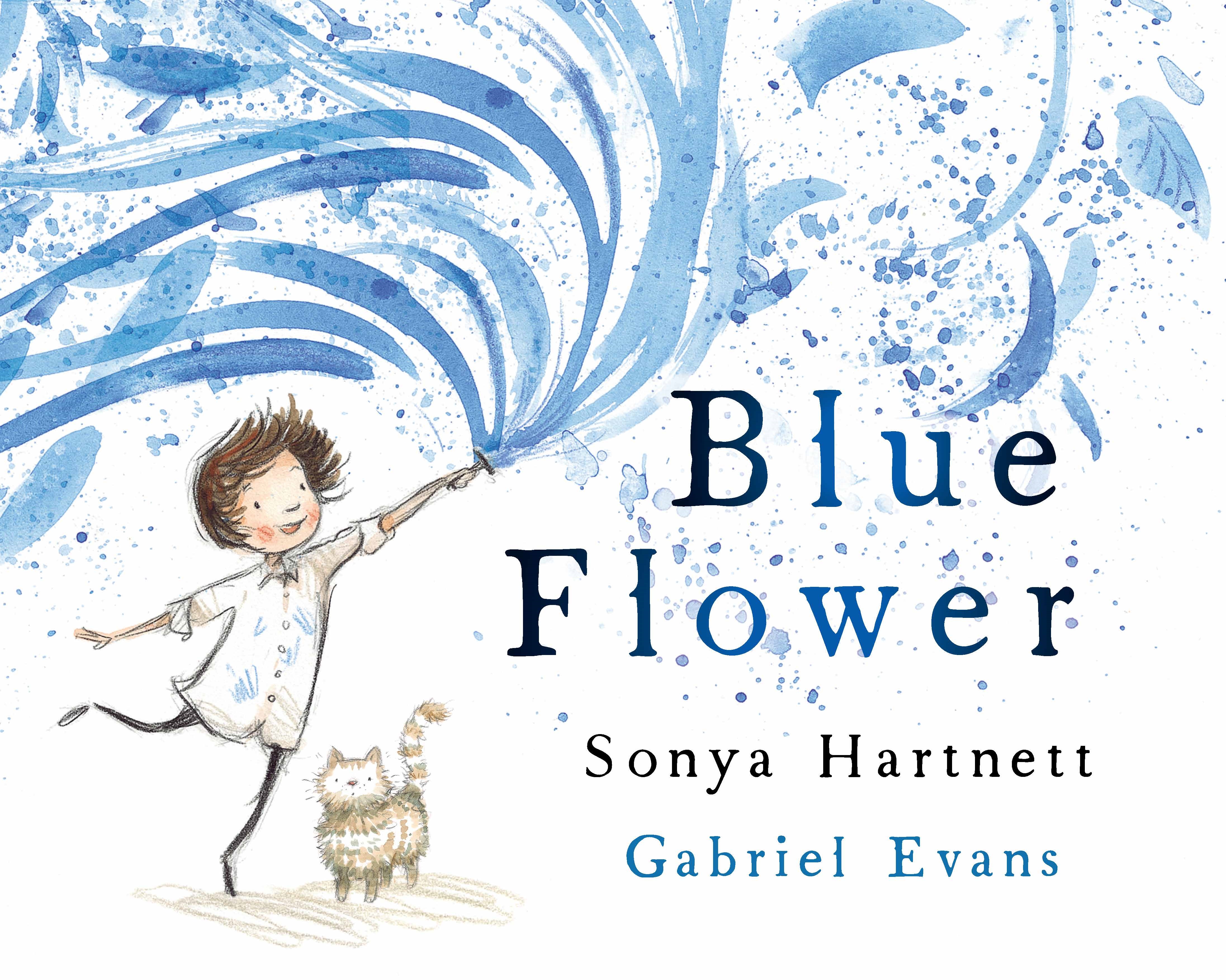
Gabriel Evans often draws his characters - dog and human - with thin bendy legs and jaunty striped jumpers. To my eye this makes them endearing and vulnerable. Take a look at these book covers:


If you look at my sidebar I have talked about SO many books with a friendship theme. As I write this post there are over 560 books with this label. A Friend for George is a wonderful addition to this topic and it is a story that could generate some very meaningful discussions with your own reading companion or with a group of young children. When I was a very young child my most precious and most re-read book was this book. It could be an interesting comparison text: