Showing posts with label Overcoming fear. Show all posts

Saturday, October 3, 2026

Eighty-nine questions for after by Ashleigh Barton


"Every moment matters"


Ester is a tidy girl who carefully regulates her life. She is also a girl with so many fears that she seems to be way too cautious. Everything is sanitised and all dangers are avoided if possible. Her mind is filled with questions which she notes down in her book - one on each page - mostly about unsolved mysteries. She is sure these questions will be answered in the afterlife. Once her life was actually carefree, then her Dad and Grandma Maggie died and so now all she can see is danger everywhere. She even avoids a flowering bush in their garden in case there are bees which could sting her.

"She hopped in on Mum's side of the car and climbed across the console to get into her seat, just in case the hot pink flowers were full of bees. Not that Ester had anything against bees in general, but she had never been stung before and didn't want to take the chance that she was allergic. She wasn't willing to risk having an anaphylactic reaction and ending up in a real hospital with actual sick people. Or worse."

Ester is terrified of getting sick so when mum tells her that after school she will need to wait at the hospice where she works, Ester is certain this will be the worst place ever. Luckily, she is able to sit in the almost empty sitting room with a lovely view of the garden and there she meets a boy named Peter who, unlike others in her life, IS interested in her big book of questions. They sit together each afternoon doing homework and talking about the questions. 

Ester does not want to meet any residents but her mum introduces her to Joan and it is Joan who sets Ester on a course to solve a mystery and along the way to gain courage and make two friends. I am mentioning two friends because aside from Peter a new family have moved in next door and they have four kids including a girl named Mackenzie (Mack). Mackenzie has an ambition to become a Private Eye Detective.

What is the mystery? Joan lost her sister 62 years ago. They were circus performers. All she has is a faded photograph and a flyer from the circus. Can these fragments give Ester and Mack enough clues to solve this mystery and reunite the sisters? They will need to hurry because after all Joan is now living in the hospice and so clearly her life is nearing its end. 

(Did you ever read a book called Boss of the Pool by Robin Klein? The scenes in Eight-Nine questions for after where Ester tries to avoid meeting the people who live in Sunflower Cottage reminded me of that book.)

Publisher blurb: Ester Star is a germophobe and hypochondriac and she's convinced she's going to die. To prepare for her imminent and inevitable demise, Ester keeps a list of all the questions she hopes to have answered in the afterlife - things she knows she'll never have the answers to during her lifetime. What really happened to the dinosaurs? Just how big is the universe? Are ghosts real? She's up to eighty-nine questions and counting. When Ester's usual after-school sitters announce they are moving away, her mum comes up with an alternative arrangement that turns her world upside down. 

Every day after school, Ester is to spend her afternoons with Mum at work. At a hospice. Terrified of all the things she might catch at a hospice; Ester is anxious every second she's there. But soon she meets Joan, an elderly lady who used to be in the circus. Joan tells Ester she doesn't believe in the afterlife, but she does have one question she'll regret never having answered while she's alive. Why did her sister disappear all those years ago, after they had been so close growing up in the circus together? With the help of Peter, another kid who spends his afternoons at the hospice, and her new next-door neighbour, a tech whizz named Mackenzie, Ester sets out to have Joan's question answered. Will Ester realise there's more to life than worrying about dying?

Ester is the main character in this story but it is Mack (Mackenzie) who I really wanted to meet and hug. She is so wonderful in the way she seems to understand Ester and all her fears and phobias but at the same time she is always ready to push Ester to try new, and sometimes, very daring things.

"That's the trick about fear,' Mackenzie said. 'If you act like you're not scared, you'll trick your brain into believing that you're not. That's my theory anyway. It's not always possible, but it usually works for me."

If you grew up in Sydney in the 1960s or 1970s you may well remember the African Safari park - it terrified me. The scene from page 162 onwards would be a perfect way to introduce this book to your library group.

You can hear Asheigh Barton reading the opening chapters of her book here (start at 2.38). In this post for Paperbark Words Ashleigh talks about the inspiration for her book and the research she completed. The publisher Hachette have made a set of book club discussion questions to use with Eighty-nine questions for after. 

Both of these reviews have lots of plot details:

This is a tender book, which is equally heartbreaking and joyous, filled with adventure and experiences, and learning to live. Learning to see life as more than dying and asking the big questions. It is also about friendship and acceptance. Peter and Mackenzie accept Ester for who she is. They don’t judge, and they seem to understand she is the way she is, which I thought was beautiful. She was allowed to have her fears and worries, and allowed to grow throughout the novel. The Book Muse

Those important themes of loss, grief, anxiety, mortality are deftly handled and paired with hope, joy, empathy and kindness. Ester’s character arc is handled with such skill as we see her gentle but sure transformation. There is never a second that this becomes trite or mawkish, it is always essentially authentic and the reader cannot help becoming fully immersed in the plot and, most definitely, liking these characters – even the irascible ones. Just So Stories

I've been a bit of a reading slump for a couple of weeks - until today! I don't know why but I was sure Eight-nine questions for after would be a good book - and now it discover it is so much more - it is a fabulous book and an absolute page turner. I read the whole 271 pages in one sitting. This book will be a CBCA 2026 Younger Readers Notable and hopefully also on the shortlist. I love the way this book has Australian place names but the story still feels as though it will easily translate to an audience in the US or UK. 

Eight-nine Questions for After is a book with a big heart. It is story that I am sure will linger with me for a long time. 

Companion books:


Snap (this is a very old book and long out of print)


If you want to build on the idea of asking questions - Ester has a book with 89 questions and luckily they are all listed in the back of the book. Ester's questions are used as Chapter titles - I really liked this structure. Here are some other excellent books filled with questions:


Ashleigh Barton goes from strength to strength with her writing. Here is her web page.  Check out my previous posts:


Saturday, September 26, 2026

Who Knows the Way to Mr Grimly's Classroom? by Chris Priestley illustrated by Mariachiara Di Giorgio


Publisher blurb: When Miss Flytrap asks if anyone knows the way to Mr. Grimly’s classroom, Grace’s hand flies up—she can’t help herself, even though she’s a new kid in school and has no idea where to go. Nonetheless, with a book to deliver proudly in hand, Grace sets off on a long, strange journey through a very odd place, full of twists, turns, and creepy characters who give puzzling directions. Climbing dark, cobwebby staircases, feeling her way through a fogged-up playground, careening by zipline from the top of a treacherous tower right into a kitchen window—will she ever find Mr. Grimly’s classroom? With equal parts suspense and humor, author Chris Priestley leads an unsettling school tour for the ages, while Mariachiara Di Giorgio’s atmospheric, immersive illustrations beckon readers on with mesmerizing visual riddles.


Walker books caption for this illustration from Instagram:

When Grace's teacher, Miss Flytrap, asks her class, "Who knows the way to Mr Grimly’s classroom?" Grace puts her hand up straight away. "Me, Miss. I know the way, Miss!" But Grace is new to the school and she doesn't, in fact, know the way. Not one bit. She doesn't even know who Mr Grimly is. Undeterred, she sets off. But she could never have imagined just how treacherous, wild and epic the journey to his classroom would be, with twists and turns waiting around every dark and gloomy corner...   Will Grace ever find Mr Grimly's classroom?

The librarian in this story is named Miss Endpaper!


If you are looking for a Halloween book to share in your library this new book could be a winner with readers in Grades 3 and 4. Candlewick have made a 'tip card' for this book - that's a new term I had not heard of. 

Di Giorgio fills this school with an overwhelming sense of wonder, tiny details snuggled into the margins for sharp-eyed spotters to find. The trials of a small child wandering the halls of a new school are broadened to their logical extreme as Grace traverses mysterious classrooms with their even more mysterious faculty, with names like Miss Flytrap, Miss Endpaper, and Mrs. Nightshade. Grace traipses through fog and steam, past a performance of A Midsummer’s Night’s Dream, and, at last, into Grimly’s classroom, where she’s met with a surprise. Kirkus Star review

I understand that it’s a great big metaphor for when kids get lost in spaces that should be familiar to them and suddenly aren’t, but there’s such a sense of fun and play on these pages. And so evocative too! I love the mist, the shadows, and the use of light. I could see a kid poring over these pictures for hours. Betsy Bird

The little girl in this story reminded me of this book. Here are two versions:


Apart from the enticing title I was drawn to this book because I have previously read these books illustrated by Mariachiara Di Giorgio.


(Highly recommended)


I am really keen to see other books illustrated by Mariachiara:


This is a wordless book based on Hansel and Gretel


Tuesday, July 14, 2026

This Way Little Badger by Phil McMylor illustrated by Cliff Wright


"As the sun goes down and night draw in, Little Badger goes out into the wood for the very first time."

He is not alone. His big sister Belle is with him but somehow they get separated and now Little Badger is lost. He keeps hearing voices calling - 'Hurry home, Little Badger!'. But he has no idea which way to go. He meets an owl, a rabbit, a magpie, and a mouse. Then he finds himself trapped in a deep hole. Luckily he remembers something important his sister told him:

"A badger's claws are made for digging."

I know we don't have badgers here in Australia but I do enjoy books about forest animals and the illustrations in this heartwarming book are fabulous. 

About Cliff Wright:

In 1989 he published his first work in the UK and USA, a children's book called When the World Sleeps, written and illustrated by himself and which was runner-up in the Mother Goose Award for best debut.  Between 1990 to 2008 he produced a further nine titles, including the drawing manual, The Magic of Drawing and the Little Bear series of children’s books. As an illustrator, he has worked on volumes by authors such as Kenneth Grahame for Ladybird's edition of The Wind in the Willows and Gerald Durrell. In the two-year period 1998-1999 he designed the covers of the original British editions of Harry Potter and the Chamber of Secrets and Harry Potter and the Prisoner of Azkaban, published by Bloomsbury.


This book was published in 1997 but I found an almost mint condition copy at a recent charity book sale. This would be a terrific book to share with a very young child along side one of my all time favourite books about fear of the dark:


Sunday, March 30, 2025

A Horse Called Now by Ruth Doyle illustrated by Alexandra Finkeldey


The horse is named Now and she is very wise. When the farm animals rush up to her full of worries she gently questions their fears. The Rabbits are sure a Fox chasing them but Now suggests they stop and look around. Can they see the Fox? No. Perhaps they should just enjoy some dandelions. Hen is sure the Magpie is after her chicks. But Now suggests she should look up. Can Hen see a swooping bird. No. 

"At this moment all is well. Why don't you search for some juicy grubs?

The Sheep is also very afraid but Now reassures her she is quite safe. Then a thunderstorm arrives - nothing to worry about - Now leads them all safely into the barn. Oh no - there are animals in the barn - are they scary? No. It's an old Fox, Magpie and a small puppy. 

"Now told the others. 'There's nothing to fear. Fox is looking somewhere warm to rest, Magpie only wants to collect shiny things and the Farmer's new dog is just a puppy, scared of the storm."

Anxiety is often about the 'what if' scenario. The animals express this as 'might'.

"... it might be his scarlet coat .... it might be his huge tail that trails fire ... he might sneak up ..."

"Magpie might have a beak as sharp as a famer's knife ... she might have wings that wrap and trap us"

This book could be quite didactic, but it is not. You could use this book to talk to young children about fear, anxiety, perception of danger, and point of view. I recommend you add this book to your school library. Nosy Crow consistently produce terrific books. 

The illustrations are also beautiful. A Horse Called Now was published in 2024 and it is available in paperback for a very good price.


Most mindfulness primers are a list of directives; this tale has the slow-moving grace of a fable. Kirkus

Doyle’s prose is beautiful and descriptive, introducing young readers to a lovely and sophisticated use of language through onomatopoeia, similes, and a rich vocabulary. Finkeldey’s expansive illustrations lend a vintage charm ...  School Library Journal

A Horse Called Now beautifully encapsulates the journey of overcoming worries and embracing the present moment. ‘When I’m afraid, I breathe in and out and let the feelings come . . . and then go. Nothing lasts forever.’ In today’s world, mental health awareness is paramount, especially for young children. The story instils the notion that it’s perfectly alright not to feel okay at times, and that seeking help is a commendable action. Through its narrative, A Horse Called Now emphasises the significance of friendship and support networks. Just Imagine

Here are two other books by Ruth Doyle:


Alexandra Finkeldey is a freelance artist based in Kingston, Canada. Her book titles include:  On a Mushroom Day by Chris Baker (Tundra Books, 2024), Saving the Spotted Owl by Nicola Jones (Kids Can Press, 2023), The Boy, the Cloud and the Very Tall Tale by Heather Smith (Orca Books, 2023), When the Storks Came Home by Isabella Tree (Ivy Kids, 2022) True Stories of Animal Heroes: Talala by Vita Murrow (Frances Lincoln, 2021). 


Wednesday, February 12, 2025

The Doll Box by Deborah Kelly illustrated by Joanna Bartel


Young Isla is afraid of the climbing frame at the park. 

"Her legs were too shaky. Her arms were too achy. She would never make it to the top."

Isla takes comfort at home by playing with an old small blue tin. Inside there are three dolls. Isla has played with them many times but today is the day her mother tells her the story of each one. Grand Great Grandma Sarah was so brave. She couldn't swim and had no idea what lay ahead but she got on a ship and sailed to a new country and a new life. Great Grandma Phyllis worked so hard during the war when all the men had gone away. She ran a farm and grew vegetables for the soldiers. And then there is her grandmother - Gaga. When she was a young woman girls did not go to university but she was so clever so after she finished school she did study engineering even though she was the only girl in the class.

Hearing these family stories gives Isla the courage to conquer the climbing frame and perhaps, I would like to think, knowing, albeit very briefly, these stories will also give the courage to try other difficult or scary things in the future. 

I wish this book had a timeline at the back or perhaps an expansion of the family tree that we anticipate from the cover. I do like the way the pages showing the grandmothers as younger women are presented in a sepia style. The end papers are filled with a sweet nostalgic pattern rather like old wall paper. 


If I was sharing this book with a group of young children I would bring along some of my own old dolls and use them to talk about my grandmother who raised four children on her own while living in the CBD of Sydney in Pitt Street as a building superintendent. I don't have any of her dolls and my own mum only had one doll which she had to share with her sister but I do have my doll and her beautiful set of hand stitched clothes made by my grandmother and I have the doll someone important and rich gave my mum when I was born - she is a walking doll called Rosemary. This is not her photo but she is similar:


You might be thinking this is a book that will appeal more to girls. Again if I was sharing this book with a group of children in my library I would also take along my antique toy fire engine - it belonged to a relative of my father, then my father, then my older cousin (a boy) and then finally it came to me! Talking about this toy links perfectly with a discussion about the 1930s depression here in Australia. 


Image source: Buddy L museum

There are also lots of picture books which use quilts as a way to talk about family history. 

Publisher blurb: Whenever Isla’s mother brings out her small blue doll box, Isla knows she will hear the stories of the women in her family’s past. Their incredible tales of immigration, war, and fighting for their rights show Isla the strength she has in herself and lead her on a journey of self-discovery. Inspired by the author’s own family, The Doll Box is a testament to the power of our personal histories, and the spirit of the many women who had to overcome incredible odds to achieve their dreams.

The Doll Box might be a 2025 CBCA Early Childhood notable title although this category is for readers aged 0-6. It was better when the CBCA set up this category for ages 3-8.

The Doll Box looks at who we are, how we came to be the way we are, and to understand courage, sometimes we must search for answers in the lives of the those who have gone before us. Kids' Book Review

There is so much we can learn by handing down stories, by listening to the stories of our grandparents, by asking questions, finding connections, discovering things about our predecessors, the grandparents who came before us, inside ourselves. NZ Poetry Box


Companion books:


Other books by Deborah Kelly:


Other books illustrated by Joanna Bartel:


Saturday, November 2, 2024

The Wise Doll by Hiawyn Oram illustrated by Ruth Brown


In this story there are three sisters. Two are horrid and very horrid and the third is named "Too Nice". Little Too-Nice is lonely, but her horrible sisters reject her and then, to get rid of her, they set a challenge that she must visit Baba Yaga and bring back a Toad in a jewelled jacket with a diamond collar. Too-Nice has a little doll that her mother gave her before she died. She asks the little doll for advice.

"put me in your pocket, listen to my advice whenever I have any and let's set out."

Too-Nice knocks on the door of Baba Yaga. The witch invites her in and tells her to wash the mountain of dishes by morning. If she fails, she will be cooked in the cauldron. Too-Nice works hard but there is no way she can complete all of this by morning. Her Doll tells her to rest and magically in the morning all the dishes are clean and stacked in neat piles. 

BUT as you would expect with any traditional tale there are more tasks ahead - three in total. Next the witch tells Too-Nice to sift through the dirt in the garden to find all the poppy seeds. This is another impossible task which her Doll is able to complete. The third challenge is to lay out the food and answer the important question.

"Now answer me correctly, or you will be my first course. What was it you came here for?"

How should she answer this question and will her answer mean she can take that toad home to her awful sisters and if she does give them the toad what on earth might happen next? Is there a way for this story to have that all important happy ending?

I read a few things about Baba Yaga:

  • Baba Yaga is a witch or ogress from Slavic folklore who lives in a magical hut in the forest and either helps, imprisons, or eats people (usually children).
  • Although she is usually the villain of any piece she appears in, she can also offer assistance and is understood as more of a trickster character who encourages transformation than the stock figure of an evil witch.
  • Baba Yaga is probably best known from the story Vasilissa the Beautiful in which she inadvertently frees the heroine from the tyranny of her stepmother and stepsisters
  • Baba Yaga is depicted as an enormous, ugly old woman who lives in a hut built on four tall chicken legs that can turn about or relocate on command. She is often seen draped over her stove or reclining in the hut across the entire expanse, with her large nose touching the ceiling. 
  • There are a number of tales in which she acts as an agent of transformation, helping the heroine or hero toward self-actualization and the completion of a quest.

And a few things about Vasilissa the Beautiful:

  • Vasilissa lives happily with her mother and father until she is eight years old when her mother falls ill and calls her to her deathbed, giving her a magical doll to help her through life. 
  • She must always keep the doll with her, a secret from everyone else, and offer it food and drink whenever she faces some challenge in order to receive help.
  • After her mother’s death, her father marries a woman with two daughters who is envious of Vasilissa’s beauty and abuses her, giving her harsh tasks, which her father can do nothing about since he is away on business trips. Vasilissa is only able to accomplish these tasks through the help of her doll.
  • In hopes of getting rid of Vasilissa, her stepmother keeps sending her into the woods on errands: finally, Vasilissa is sent directly to Baba Yaga’s hut to ask for fire.
  • Baba Yaga demands to know why the girl is there and agrees to give her fire in return for work. She assigns Vasilissa impossible tasks, which she is able to accomplish with her doll’s help.
  • Baba Yaga sends her home with a skull containing the fire she was sent to fetch, and once it is brought into the house, it burns the evil stepmother and stepsisters to ashes.
  • Baba Yaga acts as the catalyst for transformation. The doll performs all the impossible tasks given to Vasilissa, but it is Baba Yaga who assigns them, who warns the girl against asking too many questions (and so saves her from probing too far into dangerous territory), and who provides her with the skull that sets her free from her stepmother’s cruel tyranny.
Nearly all of these plot points are included in The Wise Doll. I am also sure you can easily make connections between this story and fairy tales like Cinderella. 

Good Reads blurb: A memorable Russian fairy tale to entrance and enchant. Ruth Brown's stunning illustrations accompany an extraordinary fairy tale about a little girl who, with the advice of her wise doll, escapes a truly terrifying witch and her slimy, child-gobbling toads. When Too Nice's evil sisters, Horrid and Very Horrid, force her to kidnap the witch Baba Yaga's jeweled toad, Baba Yaga devises a series of impossible tests for the little girl. If Too Nice passes them, she gets the toad, but if she doesn't -- the toad gets her Too Nice's only companion through the ordeal is the wise doll in her pocket, a gift from her mother, whose help leads to the miraculous completion of the tasks.

Superb artwork enhances this offbeat, minimalist retelling of the old Russian folktale in which Baba Yaga the witch is outwitted by an innocent little girl, with the help of a magic doll bequeathed to her by her now-dead mother. ... excellent witchy stuff. Kirkus

My friend from Kinderbookswitheverything asked me to read The Wise Doll. She had it on her Halloween book display for over 3 weeks but sadly no child selected it for borrowing - should she keep this book in her library? Her copy is the first cover shown above.

Case for YES

  • This is such a satisfying story which shows the rewards of hard work, bravery and trust.
  • I love books about dolls and the idea that this doll has magical power bestowed by her late mother adds a beautiful emotional layer.
  • The ending and final words are perfect.
  • This book has the most OUTSTANDING illustrations. I cannot think of a book with a better or more scary witch illustration. 
  • I think the first cover above is appealing - much better than the second cover from a more recent (out of print) edition. 


Here is a review: ‘Oram has a gift for pithy turns of phrase, compressing description into action and dialogue.  She has retold this story in eminently oral language. ... this is folklore justice as its finest.  Looking for stories with strong female protagonists?  Tell this one.’ Janice del Negro, editor The Bulletin for the Center of Children’s Books USA.

The Wise Doll reminded me of this book (which is one I adore to read aloud):


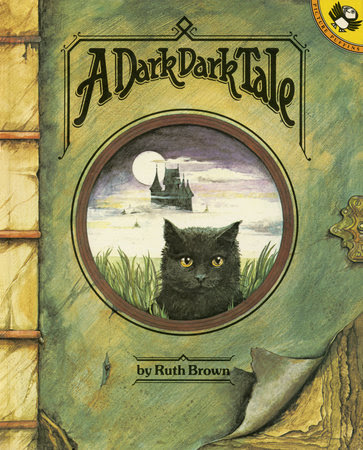
I have been a huge fan of Ruth Brown's illustrations from the time I discovered A Dark Dark Tale (1981) which I read to hundreds of young children in my school library (1984-2017). 


And I also love so many books by Hiawyn Oram especially In the Attic illustrated by Satoshi Kitamura. I also highly recommend her little junior book series 'Animal heroes' also sadly long out of print.