Showing posts with label Predators. Show all posts

Saturday, November 8, 2025

Look, See, Find me by Sandra Severgnini


"Animals use camouflage to change their appearance, helping them to survive, find food and avoid being eaten. Camouflage can also help attract a mate, protect eggs or young, 
or communicate as a warning when danger is nearby."

Notice the magnifying glass on the cover of this new book. When you turn inside the front end papers contain lots more magnifying glasses - all empty - then on the back end papers you can spy a close up of all the hidden creatures. The end notes give further details about each of the 25 camouflage experts hidden on the pages of this book. I am sure your school library already has a good collection of titles about this fascinating topic and popular. This one will be a very welcome addition because it contains insects, fish, birds and reptiles and scrumptious rich illustrations. I think my own favourite is the Goldenrod crab spider which as the name suggests looks like part of a flower but when an unsuspecting insect lands on the yellow petals expecting to find some pollen instead they become a tasty snack!

This is a new title from CSIRO Publishing released this week. The rhyming text makes this book perfect to share with your youngest students or preschool group. As a bonus this book contains some rich vocabulary - textured; ornate; knobbly; blend in; and there is a useful glossary.  The publisher page has a link to some useful teachers notes.

Here is the publisher blurb: Explore the world of animal camouflage and find the camouflaged animals hiding on each page! Take a journey into the world of animal camouflage and uncover what may be right under your nose! Discover frogs that look like leaves, spiders disguised as flowers, crabs concealed as sponges and seahorses hidden in coral. See if you can spot the species hidden among stunning illustrations, and learn about these elusive animals in Look, See, Find Me.


Hidden in dead leaves on the ground,
can you see us hopping around?

Hidden on the page above and the one beside it there is a black spotted sticky frog and a Malayan horned frog. These are both found in South-East Asia.

Sandra Severgnini is an author and illustrator of numerous award-winning books. She has a background in botanical illustration, but her passion now is with picture books, especially those featuring environmental and nature subjects. Sandra’s fascination for the amazing world around her inspires her words and brings sensitivity and humour to her illustrations. She is also the author and illustrator of Dung Beetle on a Roll and these:


Monday, March 13, 2023

Birdsong by Katya Balen


Annie has been in a very serious car accident and while she and her mother have survived, Annie has been badly hurt and now she can no longer play her precious flute. Music is her comfort and her identity. She is talented, a composer and did plan to attend a prestigious music school - but now it seems her dreams cannot come true.

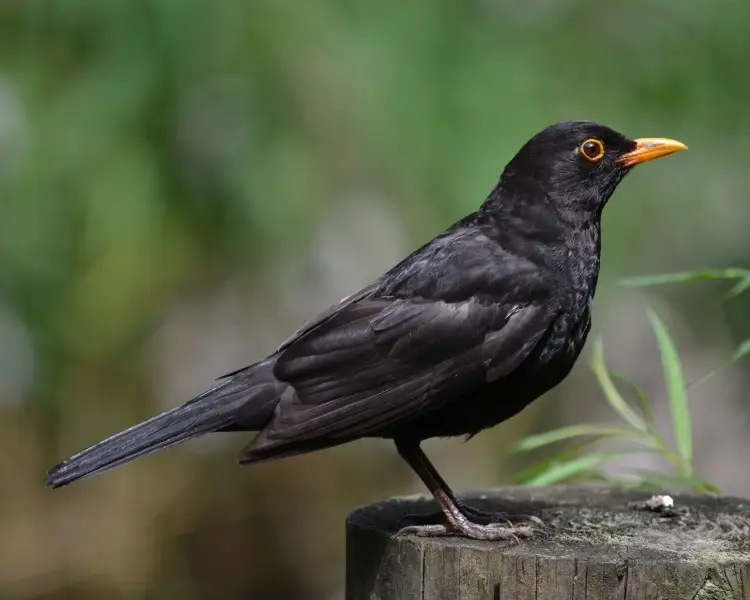
Annie and her mother move to a smaller apartment because mum has lost her job - mainly because she had to spend so much time caring for Annie after the accident. Annie feels alone and displaced but one day she spies a young boy in the bushes below her building. When she investigates she discovers he is caring for a pair of blackbirds who have built a nest ready for a new clutch of eggs. The blackbirds are also rehearsing their own symphony.  Noah discovers Annie's dream and he encourages her to try her music again. 

The blurb hints at a tragedy and yes this does happen but that only adds that all important delicious layer of tension to the story and of course keeps readers turning the pages.

This book is a delightful discovery.  It is a perfect story for a reader aged 9+ and especially for young readers who do not yet have very much reading stamina.  In some ways this reads like a short story but in a single volume. It is only 97 pages with a few interspersed illustrations. It is also a book for readers who are interested and, as I am, also fascinated by birds. This is a very emotional story. I read the whole book in one short sitting.

Some books are enjoyed, some are learned from, and the best find a little crack in your mind and live there longer than you think. Birdsong is such a book. Days after reading it, I kept coming back to the themes and prose. Katya Balen is a master craftsperson when it comes to scribing stories. The Great British Bookworm


I did enjoy an earlier book by Katya Balen - October October.

Thursday, September 8, 2022

Nesting by Henry Cole


Blurb: "In the spring, a robin sings to find another robin. Together, they build a nest with twigs and grass. The mother robin lays the beautiful blue eggs. She will keep the eggs warm in the nest until they hatch into baby robins. The father robin protects the babies until they can fly on their own. The perils the babies encounter are many, including snakes and storms. The nest is always their safe place."

Uncomplicated language describes the nesting process, while illustrations both mirror and extend the text. Horn Book

Robins are red but every illustration in this book is black and white with a touch of aqua blue. The pencil illustrations in this book are so very very appealing. 

Children will learn about robins (and never once are the birds anthropomorphised). But they can also be reminded of the lengths parents go to in order to take care of their young (whether feathered or not). Seven impossible Things before Breakfast (click this to see inside Nesting).

Here is the second book by Henry Cole that follows from Nesting and yes it features beavers!


I found this wonderful video of Henry Cole "reading" his wordless book Unspoken. Sadly it is out of print but watching the video you will see this is a very special book which has been crafted with so much care.


In this interview with Roger Sutton at The Horn Book Magazine, Henry Cole talks about his book One Little Bag: An amazing Journey. My first discovery of Henry Cole was through the art in the book A Nest for Celeste. 


Wednesday, March 30, 2022

The Go-Away Bird by Julia Donaldson illustrated by Catherine Rayner


The Go-Away bird rejects every offer of friendship from her rain forest companions. 

"I am the Chit-Chit bird. Will you chat with me? We can talk of the weather and other things like the colour of eggs, the the ache in our wings."

"I'm the Peck-Peck bird. Will you eat with me? There are juicy berries on every twig. We can peck, peck til we both grow big."

The four potential friends are each rejected and then along comes a huge brown bird - the Get-You Bird. This huge bird will not go away simply because the Go-Away bird demands this. Luckily the rejected friends see the danger. They form a team and save the day. But what of the Go-Away bird? Her life has been saved - how will she react? How should she react? I love stories that contain a life lesson but not in a didactic way. With an older group you should take a look at Shelter which is a perfect book if you want to talk about rejection and forgiveness. 


Everything about this book is of the highest quality as you would expect from the team of Julia Donaldson and Catherine Rayner. Too many authors attempt rhyme and it just fails but rhyme in the hands of a master like Julia Donaldson can sing. In fact in this book the words do feel like a song. The rhyme is not used for every line and the repetition of "go away" is simply a perfect way to engage young children.  This is a book that should be added to preschool read aloud program.

Make sure you take time to notice the fern leaf pattern on the end papers which is repeated on the title page and then used in various ways throughout the book. 

This is a delightful story about the value of friends especially in times of need. Kids' Book Review

A lovely tale about needing time to oneself, but also the value of friendship and teamwork. Lovely. Rogan's Books

This is a stellar author/artist partnership. Julia’s witty, bouncy rhyming text is pure pleasure to read aloud and highly join-in-able; and Catherine’s art is simply awesome – richly coloured and textured, superbly expressive: every spread is a joy to linger over – after you’ve read the story aloud once first. Red Reading Hub

Companion reads:


Saturday, April 11, 2020

A mouse called Julian by Joe Todd-Stanton

The fox realised it was much nicer to eat dinner with Julian than to eat Julian for dinner.
And Julian realised that having a guest wasn't so terrible.


Let's begin our exploration of this book by zooming in on the cover. Did you love The Borrowers as a child?  I certainly did. The little home of Julian is just like that space. If you look closely you can see a safety pin, his bed is a slipper, Julian is using an old tobacco pipe for storage and his bath is a pretty tea cup. In later pictures you will see a spool of thread, a thimble for a pot plant and some very sharp pencil stubs. Luckily he also has a spoon.

Now turn to the end papers. You can see the world of Julian. All of his animal neighbors live in little tunnels under the farm. If you look closely Julian's little burrow is far from everyone else and there are no connecting tunnels to the others.  Above ground a fox waits behind some trees and, because it is day time, an owl sleeps nearby. The farmer and her dog are out walking and the dog has seen a cat.

"Julian had lived on his own for as long as he could remember, and that was the way he liked it."

We don't need to feel sorry for Julian. He enjoys his solitary life and has in fact worked out all sorts of ways to avoid interactions with others either for his own safety so he doesn't get eaten or because other animals who live under the ground annoy him.

BUT the fox has been watching Julian. One evening the fox smashes into Julian's home. Julian has made his home under a large tree and while it is close to the surface it is also enclosed in strong tree roots and so the fox becomes stuck. This is a classic reversal of the predator and prey scenario.  The fox cannot get in and he cannot get out. He needs to ask Julian to help him. Julian does not want to help the fox but he also does not want a fox inside his house so he tries to help but the fox is wedged in and cannot be moved.

"When if got to dinner time, Julian couldn't bear to watch the fox's sad hungry eyes. So he shared what he had and they talked and ate long into the night."

Julian is a problem solver. The next day he tries a different plan - using his spoon! The fox is freed and Julian can resume his daily routine.

Just as in the fable of the lion and the mouse - one good turn deserves another. When Julian is almost eaten by the owl it is the fox who comes to his rescue. Life goes on for the mouse and the fox and yes they are friends now but they are also content to continue their lives meeting up for a shared meal occasionally.


Read more about Joe Todd-Stanton on the Flying Eye Books web site. Here is a video of Joe reading his book.

I highly recommend A mouse called Julian.  It should be in every school and public library collection so heaps of children can meet Julian and enjoy exploring his world.

Vocabulary - you could use this list to act out the action words:
dodge
hide
leap
smashed
bared
pulled
pushed
wiggled
shared

Zoom your eyes in again to the pictures of Julian's little home. Count the matches. On the first page there are five. Then Julian sets off to gather food taking a match as a light. The next time we see Julian at home he has four matches. By the final page he is down to two.  What a wonderful conversation you could have with a young child.  What happened to the third match? How will Julian get more matches? Could the fox help him with his borrowing from the farm house?

A Mouse Called Julia is heart-warming tale that is so well-crafted that it will be enjoyed by children for many years to come. The Great British Bookworm


Thursday, September 5, 2019

A Wolf called Wander by Rosanne Parry illustrated by Monica Armino


"I begin in darkness and my nose tells me everything I know. 
I have a brother Sharp. Bigger than me, and all growl. I have sisters. Pounce, who loves to wrestle, and Wag, who talks with her tail. And best of all my brother Warm, who likes to curl up under my chin, the only pup small than me."

This is a quote from the beginning of A Wolf called Wander and I think it gives you an idea about the tone and style of this writing.

Over the course of the story we follow Swift as he wanders alone after his pack are attacked by a larger and more ferocious enemy wolf pack. He travels a huge distance through forests and plains searching all the time for a companion. Every day is about survival - food, water and a safe place to sleep. Luckily Swift does have one unlikely helper/companion - a raven. "Ravens do things for a reason. She is talking to me. She knows where to find meat. But for all their savvy, ravens have the wrong beak for opening a hide. They need someone with teeth to get at the meat." Swift also has to navigate past humans with their guns and their black rivers (roads) which seem impossible to pass safely.

I have a fascination with books about wolves and books written from their point of view. Perhaps this goes back to my reading of White Fang by Jack London when I was in Grade Six.  A Wolf called Wander is not for the feint hearted. As a part of his survival Swift (his name is changed to Wander at the end of the book) must kill and dismember animals such as elk. These scenes may distress a young reader.

The best scenes are when Swift is reunited with Warm, when he witnesses the birth of a wild horse foal and the final scenes when he meets his mate called Night and their pups are born. Reading this book you will feel as though you are inside the true thoughts of a wolf - his instinct and emotions. Rosanne Parry often says Swift has to "sit on his wag" when he is excited about something. I just love those words.

Listen to this audio sample from page 3. A Wolf Called wonder is an illustrated novel. The line drawings by Monica Armino are fabulous.


The book is from Swift’s perspective but I should be clear that this is not an attempt to anthropomorphise wolves – their behaviour and communication is in keeping with the animal. It’s almost like Parry has translated the behaviour for our benefit and understanding. Roachie's Review

Other books I have read and enjoyed about wolves include The Wolf Wilder; First Born and Wolf Brother by Michelle Paver.