Wednesday, March 5, 2025

Paws, Claws, Tails and Roars illustrated by Brian Wildsmith


Brian Wildsmith's breathtaking animal paintings are accompanied by new lyrical text, inviting readers to pause a while and linger over the glorious wild animals, birds, and fishes within. Whether already a fan of Brian Wildsmith, or discovering his work for the first time, readers will cherish this book for a lifetime.

I previously talked about the wonderful Brian Wildsmith exhibition in Barnsley, UK. The featured book at the exhibition was Paws, Claws, Tails and Roars but over 90 pages and in hardcover this book was way too heavy for my luggage. Now my copy has arrived.

The art in this book comes from works by Brian Wildsmith Wild Animals (1967); Birds (1967); and Fishes (1968).


If you are looking for a very special gift for a child perhaps when they are born or for a christening gift Paws, Claws, Tails and Roars [9780192784216] would be perfect. It is a large format book to treasure and revisit.

In his introduction Michael Rosen talks about his first experience of art by Brian Wildsmith in the Oxford Book of Children's Poetry: "Again and again, either the subject or the background flooded out from the book: the pictures didn't obey the margins. They weren't contained by convention. It was as if the luxuriousness of the colours was too rich to be confined by something as mundane as a page."

"The pictures tell us that the Earth and its creatures are precious. ... I'm as delighted as his jolly hedgehog ... I hope you enjoy (this book) and that you and the children in your life snuffle through these pages with the many feelings this vibrant art conjures up."

The other wonderful thing that your child will experience reading this book is the encounter with familiar and unfamiliar animals. I well remember my childhood alphabet book contained a Yak - a creature that fascinated me. In this book there are less well known animals (especially to children here in Australia) - raccoon; badger; hedgehog; pheasant; jay; heron; snipe; woodcock; minnow; stickleback and porcupine fish. My favourite illustrations are the tiger; the hedgehog; the robin and the kingfisher.

Children will also discover the intriguing names we use as collective nouns: a cete of badgers; a round of robins; a walk of snipe; a party of rainbow fish; and a corps of giraffes. 

You can see all books by Brian Wildsmith here. And if you are unfamiliar with his work take a look at this blog post. 


There is quiet knowledge in the design of each spread. The colours are vivid or subtle in accord with the animals’ own colours and the worlds they inhabit and the brush strokes splash, smear and wash the settings for each animal, evoking swirling waters bursting with flying fish, iridescent bubbles reflecting the many colours of the angelfish, the mottled camouflage of the woodcock. Paws, Claws, Tails and Roars: Brian Wildsmith’s Animal Kingdom is a book to be shared over and over again, joyfully, with readers of any age. Just Imagine

What I love about his work is that behind all the wondrous colour, pattern and texture there always lies the fundamental essence of whatever he’s depicting. Words and Pics

"This is a book I'd like to see in every classroom from the foundation stage upwards as well as on family bookshelves. And, what a wonderful present it would make." - Jill Bennett, Red Reading Hub

Tuesday, March 4, 2025

2025 Klaus Flugge Prize Long List


This is the tenth year of the Klaus Flugge Prize, which was set up in 2016, in honour of esteemed publisher Klaus Flugge, a hugely influential figure in picture books and founder of publishing house Andersen Press. The prize is awarded annually to the most promising and exciting newcomer to children’s book illustration; the winning illustrator receives a cheque for £5,000. The Klaus Flugge Prize is the only prize specifically to recognise a published picture book by a debut illustrator and over the last ten years, has won recognition as one of the most significant children’s book awards.


Adnan illustrated by Diala Brisley
Written by Mark Arrigo and Steven Chatterton, editor by Claire Grace & Hattie Grylls, design by Myrto Dimitrakoulia & Belinda Webster (Quarto)

Serena and the Little Blue Dog illustrated and written by Rosemary Clunie
Editor Fiona Kennedy, design by Jessie Price (Zephyr)

The Great Highland Games Chase illustrated by Laura Darling
Written by Kate Abernethy, editor Jennie Skinner, design by Richard Wainman (Floris Books)

My Hair is as Long as a River illustrated by Emma Farrarons
Written by Charlie Castle, editor Grace Gleave, design Lorna Scobie (Macmillan Children’s Books)

Slug Life illustrated and written by Moesha Kellaway
Editor Libby Hamilton, design Camille Pichon (Rocket Bird Books)

The Cat who Couldn't Be Bothered illustrated and written by Jack Kurland
Editor Lotte Dobson, design by Karissa Santos (Frances Lincoln Children’s Books)

Have You Seen Mikki Olsen? Illustrated and written by Alex Macdonald
Editor Peter Marley, design Karissa Santos (Frances Lincoln Children’s Books)

Grandpa Kuma illustrated and written by Michelle Maiden
Editor Louise Jordan, design by David Rose (Wacky Bee Books)

Paul the Peacock illustrated and written by Tilly Matthews
Editor Carly Madden, designer Sarah Chapman-Suire (Happy Yak)

The Café at the Edge of the Woods illustrated and written by Mikey Please
Editor Alice Blacker, design Val Brathwaite (HarperCollin’s Children’s Books)

The Dolls' House illustrated by Claudia Ravalli
Written by Tanya Rosie, editor Emma Drage, designer Kate Penrose (Oxford Children’s Books)

Grandma's Locs illustrated by Camilla Ru
Written by Karen Arthur, editor Cherise Lopes-Baker, design by Roanne Marner (Tate)

The Christmas Tree Mouse illustrated by Farah Shah
Written by Joseph Coelho, editor Andrea MacDonald, design by Lucy Wiseman (Puffin)

Grandad's Star illustrated by Rhian Stone
Written by Frances Tosdevin, editor Libby Hamilton, design by Ness Wood (Rocket Bird Books)

Wilhelmina Barns-Graham An Introduction illustrated by Annabel Wright
Written by Kate Temple, editor Rob Airey, design by Leda Bartolucci (Wilhelmina Barns-Graham Trust)


Julia Eccleshare says, “It’s always exciting to reveal the longlist for the Klaus Flugge Prize, and particularly so in its tenth year. Once again, the books demonstrate the abundance of new talent in picture book illustration. Our longlisted illustrators use a huge variety of technique, and their subjects range from grandads to slugs, topics including family love, managing emotions, and the refugee experience, so that this list demonstrates the extraordinary vitality and plurality of contemporary picture books. We look forward to celebrating the work of these illustrators and more throughout 2025 and, as ever, we say a huge thank you to Klaus Flugge whose generosity makes the prize possible and whose contribution to picture book publishing is unparalleled.” 

The shortlist will be announced on 15 May 2025 and the winner will be announced at an award ceremony on 10 September 2025.

Monday, March 3, 2025

Elizabeth Mrazik-Cleaver Canadian Picture Book Award


Read the biographical details of these books here

Every year, IBBY Canada presents the Elizabeth Mrazik-Cleaver Canadian Picture Book Award to a Canadian illustrator in recognition of outstanding artistic talent in a Canadian picture book.

They have selected from 131 books submitted by 36 publishers, the illustrators of the 10 finalist books depict stories that add to our understanding of the world around us. Whether through nature, culture or imagination. The illustrations range from whimsical and delicate to rich brushwork to bold graphic elements and are sure to engage and inspire their readers.

The Elizabeth Mrazik-Cleaver Canadian Picture Book Award is administered by a committee of three members of the Canadian section of the International Board on Books for Young People so I expect the 2026 finalists and perhaps previous winners will be on display at the 2026 IBBY Congress in Ottawa.

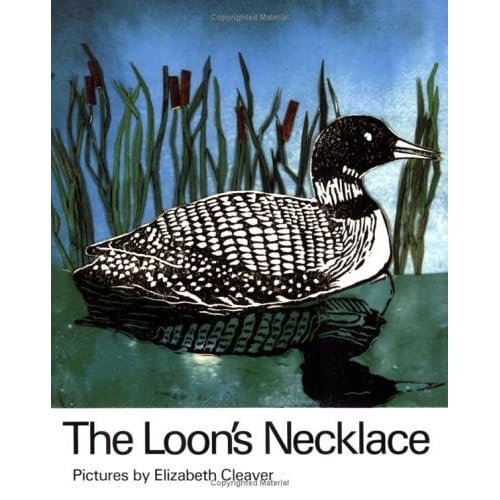
The award is named after Elizabeth Mrazik-Cleaver. She bequeathed a $10,000 legacy as a basis for an award to be given to an outstanding illustrator of a picture book. The recipient receives $1000 and a certificate. Elizabeth Mrazik-Cleaver, Born 7 February 1939 in Montréal; died 27 July 1985 in Montréal, was a prominent writer and illustrator of children’s books. She is probably best known for the Enchanted Caribou and for illustrating The Loon’s Necklace.


Published in 1977: According to Canadian Indian legend, when an old man's sight was restored 
by Loon he gave the bird his precious shell necklace as a reward. 
That is why the loon has a white collar and speckles on its back.


Past Winners of the Elizabeth Mrazik-Cleaver Canadian Picture Book Award

2023 – Todd Stewart, Skating Wild On An Inland Sea 
2022 – Dena Seiferling, Night Lunch 
2021 – Gérard DuBois, À qui appartiennent les nuages?
2020 – Marie-Louise Gay, The Three Brothers
2019 – Rachel Wada, The Phone Booth in Mr. Hirota’s Garden
2018 – Julie Morstad, Bloom 
2017 – Julie Kraulis, A Pattern for Pepper
2016 – Isabelle Arsenault, Louis parmi les spectres
2015 – Sydney Smith, Sidewalk Flowers 
2014 – Pierre Pratt, Stop, Thief! 
2013 – Julie Morstad, How To
2012 – Isabelle Arsenault, Virginia Wolf
2011 – Cybèle Young, A Few Blocks
2010 – Julie Flett Owls See Clearly at Night: A Michif Alphabet
2009 – Oleg Lipchenko, Alice’s Adventures in Wonderland
2008 – Christine Delezenne, La Clé
2007 – Stéphane Jorisch, The Owl and the Pussycat
2006 – Kady MacDonald Denton, Snow
2005 – Geneviève Côté, The Lady of Shalott
2004 – Stéphane Poulin, Un chant de Noël
2003 – Pierre Pratt, Where’s Pup?
2002 – Janie Jaehyun Park, The Tiger and the Dried Persimmon
2001 – Marie-Louise Gay, Stella, Queen of the Snow
2000 – Michèle Lemieux, Stormy Night
1999 – Kady MacDonald Denton, A Child’s Treasury of Nursery Rhymes
1998 – Pascal Mileli, Rainbow Bay
1997 – Harvey Chan, Ghost Train
1996 – Janet Wilson, Selina and the Bear Paw Quilt
1995 – Murray Kimber, Josepha: A Prairie Boy’s Story
1994 – Leo Yerxa, Last Leaf First Snowflake to Fall
1993 – Barbara Reid, Two by Two
1992 – Ron Lightburn, Waiting for the Whales
1991 – Paul Morin, The Orphan Boy
1990 – Ian Wallace, The Name of the Tree
1989 – Eric Beddows, Night Cars
1988 – Stéphane Poulin, Can You Catch Josephine?
1987 – Barbara Reid, Have You Seen Birds?
1986 – Ann Blades, By the Sea: An Alphabet Book


Sunday, March 2, 2025

Laughter is the Best Ending by Maryam Master illustrated by Astred Hicks


"They had sent me to a kids' camp so that I would find kid friends but I came out the other side, proudly announcing that I was now besties with an 80-year-old potential villain who was about to kick the bucket." 

Zee, short for Ziba, has a worried mother. Mum thinks Zee has no friends (this could be true) so she decides Zee needs to go to a holiday camp. This is a camp called Youth Fusion and their brochure promises the kids who attend will make new friends.

On the first night of the camp the kids are told they will play a game of 'Murder in the Dark'. They are told to form themselves into teams of four. Zee has been sitting beside a girl called Tifanee (with two ees). She is a bold confident and funny character and Zee is sure it would be good to link up with her over the five days of this camp. (By the way Zee absolutely does not want to be here). On the other side of the camp fire the girls see a couple of boys - perhaps they will join their team of four.

Then the camp authorities announce one of the kids has gone missing and so the focus shifts and Zee, Tifanee, along with twins Moses and Jonah, decide they need to find this kid. That involves searching an old run-down mansion that is rumored to house a woman who murders children and perhaps even eats them! (Yes I agree this plot line sounds okay for Primary school readers but I will explain my thoughts in a moment). 

Here are some teachers notes from the publisher. Listen to a sample of the audio.

You might like to read a few reviews:

I will begin with the things I liked about this book. The cover is terrific. Use of Fluro orange is very eye catching and the title written on a pile of books links well with some aspects of this story especially the ending. The title is also perfect and enticing. And it is true Zee does laugh at the funeral (but to find out why you have to read the whole book). If you flip inside this book you can see the book design is quirky, interesting and appealing, with changes of font and you will see the way conversations are presented as play scripts. Zee makes lots of lists which appear in frames and at times these are very funny.

Now for the aspects of this story that I liked but which I think make it a better fit for a reader aged 12+.

Zee is crazy about Oscar Wilde (I am fairly sure no Primary school aged reader will have read or have any interest in him). In fact the title of this book is adaptation of a quote from The Picture of Dorian Gray "Laughter is not at all a bad beginning for a friendship and it is the best ending for one."

Zee talks about liking old language such as the writing of Jane Austen. And she recognises the camp chaos is closely like the plot from Lord of the Flies (not a book I would share in a Primary school library - I am still traumatised). 

Zee goes to high school and much of commentary about peer group relationships relates to her experiences there: "School is a cesspool of people checking each other out. Judging each other. Rating each other. And it's 99 percent based on looks .... I hate a lot of things about it, but the grotesque catwalk of who's hot and who's not bothers me most."

I really liked Zee but her tone is totally teenage: "whenever I'm dreading something, like really, truly, genuinely dreading something, whether it be the first day at a new school for zombies or root canal with a demon dentist, I get super sleepy."

Here's an example from Tifanee "I'm Tifanee by the way. Spelt with two ee's cause my parents are idiots. Any idea how we can break free from this touchy-feely hellhole?" Tifanee is an Instagram influencer.

Zee mentions her favourite poets - Kahil Gilbran; Rumi; and Maya Angelou. 

Zee and Dame Viv (she's the 80-year-old I mentioned in my opening quote) visit a state library to view a rare folio of Shakespeare's work and then they watch the Alfred Hitchcock movie The Birds. 

Companion books:


Laughter is the Best Ending has been listed as a 2025 CBCA Notable title BUT in my view it is in the wrong category - it is listed as a Younger Readers title but all of the content I have explained above surely shows this is a Young Adult title and it should perhaps have been entered and judged as an Older Readers book. I really did enjoy Laughter is the Best Ending but it think it better suits a High School library and High School readers. Here are the criteria for you to compare.

From the CBCA awards:

8.1 Judging criteria for CBCA Book of the Year: Older Readers 

Entries in this category are books for young people aged between 13 and 18 years (secondary school 
level). Readers require a degree of maturity to appreciate the themes and scope of emotional 
involvement. Books in this category may be fiction, drama, illustrated text, poetry or graphic novels. 

Age appropriateness: The story is written in a way that would engage 13–18-year-olds (or a sub-age group within). Mature topics are explored and give the readers the opportunity to be challenged with alternative points of view or perspectives. The writing extends the reader’s experience and may help the reader understand more about themselves and the world. 


8.2 Judging criteria for CBCA Book of the Year: Younger Readers 

Entries in this category are books published for children in the age range from 7 to 12 years (lower to 
upper primary school level). Books in the category may be fiction, drama, graphic novels, illustrated 
text or poetry. 

Age appropriateness: The story is written in a way that would engage 7–12-year-olds. (or a sub-age group within) Light introduction of mature topics might be explored and may give the readers the opportunity to be challenged. The writing is engaging, stimulating and extends the reader’s 
experience and/or imagination. It also may help the reader understand more about themselves and the world. 

I previously read and enjoyed these books by Maryam Master:


(I also list this as a YA title)


One more thing to think about. I recently talked about endorsements on books (these are not blurbs). On the back cover of Laughter is the Best Ending it has this praise by Anna Fienberg - no problem she is a fantastic writer - but why say she is the author of the Tashi series - those books are for very young readers and have no relationship with this book by Maryam Master. I'm puzzled. 

'I found it so energising! Zee plays with words like a gymnast. We click with her from the very start - she's funny, frank, fair and feisty! This story will be a hit with young readers.' Anna Fienberg, author of the Tashi series

Violet and Jobie in the Wild by Lynne Rae Perkins


Violet and Jobie are enjoying a good life as house mice. They are not pets. They live in a human home and enjoy delicious food treats and television viewing from their bookshelf seat. They especially love to watch nature programs. One day they see some delicious cheese and peanut butter, a double treat, has been left in a box. There is something holding the cheese and the peanut butter. Violet and Jobie use this to play a game - the snapping game. Using a pole (you can see in the illustration that this is a pencil) they jump on their pole and snap! Now they can feast on the treats, but little do they know the humans are about to find them. Yes, this is a mouse trap. The humans are surprised to find the mice are alive in the box. Luckily for Violet and Jobie the mother and son decide to take this pair back to the wild. Violet and Jobie know nothing about living in the wild. It is fairly easy to find food but what about all the danger - predators seem to be everywhere. Oh, and they will need somewhere safe to live.

This is a perfect story for readers aged 8+. It contains small black and white illustrations and has 33 short chapters with a large print size. My paperback copy cost AUS$20. One very interesting part of this story comes right at the end. Yes, it is a happy ending, but it is a very different one as Violet and Jobie will now move on and live separate lives.  Here are some brief discussion ideas if you read this book to a class.

The fast-paced plot keeps this gentle survival story moving. Horn Book

Populated with enough mice to give most grownups nightmares, Violet and Jobie in the Wild is a sweet and engaging coming-of-age tale for middle graders. I love how Jobie observes and appreciates the character of Iris, a kind and patient girl mouse he happens to meet, making him want to connect with her. Through Violet, the reader experiences the way that a trusted mentor can open up new joys and share wisdom. A Book and a Hug

When I saw the name Lynne Rae Perkins, I immediately thought of this book which I previously read and loved:


Companion book:


Saturday, March 1, 2025

Stickboy by Rebecca Young illustrated by Matt Ottley


"Stickboy lived in wind and dust, where ancient rock loomed like waves waiting to break. Dust storms raged, pummeling the earth and stone while warm bodies huddled under cover willing the roar to fade."

This is one of those books where I would be tempted to share the spare text with no reference to the illustrations on a first reading with a group in a library. Then I would just let the children sit quietly giving them time to let their imaginations fly. Finally, I would share the book with the illustrations by Matt Ottley. This is one of those picture books (we do them very well here in Australia) that will work best with older students aged 10+. And do take time to linger over the end papers - different front and back. 

Stickboy has been selected as a 2025 CBCA Picture Book Notable title. I imagine it has a good chance to make the final short list of six titles announced at the end of March. 

Here are two Teacher-Librarians discussing how this book might fit into the curriculum (12 minutes). Here are the Scholastic Teachers Notes (shared by Pegi Williams). 

... the potential for exploring parts of storytelling like visual features, figurative language, perspective and allegory is immense. On each page amidst the dry rock formations, for example, there is a nod to water elements – clouds like seafoam, a rock face like the bow of a ship. There is a discussion to be had about listening to the Earth and who might be positioned as a truth teller when it comes to environmental awareness. Story Links

The last spreads are wordless and say so much more than any words ever could. They are hauntingly beautiful. The colour palette reflects the bare and barren place perfectly. The reader’s eye is immediately drawn to certain images on each spread that enhance the storytelling. For example, Sometimes the earth creaked and shifted... and swallowed memories, whole. On the double spread Ottley has a huge metal ship that sits on a dry parched land and Stickboy and a wolf are small. The text gives Ottley room to shine his masterful visual storytelling. The images are allowed to speak and are not crowded by text. This picture book allows both the words and images to speak on so many levels to the reader as they seamlessly work together. Ottley’s use of light and shade dramatizes the story and the moments that are poignant. Buzz Words

Matt Ottley is a multi-modal artist working across visual arts, music and literature. He is an award-winning picture book writer and illustrator with over 25 picture books published.  Ottley has written music for this book that will be recorded in Prague and this work will become the eleventh in his Sound of Picture series. It will be performed in Australia in 2025.Matt Ottley was our IBBY Australia Hans Christian Andersen Award Nominee illustrator for 2024. You should also share this book alongside other books illustrated by Matt Ottley:


You can see other books by Rebecca Young here. 

Companion book:


Apart, Together by Linda Booth Sweeney and Ariel Rutland

The subtitle of this book is "A book about transformations".

The cover of this book really caught my eye but then I turned to the end papers and WOW! On the front end paper there are balls of wool and a set of knitting needles. Think about the title - apart then together. YES the back end paper shows the almost completed scarf. I love the complex pattern of checks in shades of pink and yellow and two shades of blue. I almost wish the author or illustrator had included the knitting pattern at the back of the book!

The title page has some additional information: "This book also introduces the concept of emergence, a scientific concept described by the adage - 'The whole is greater than the sum of its parts'."

So what do you see inside this book. 

Apart, blue is blue and yellow is yellow, but ... 
TOGETHER, they make green!

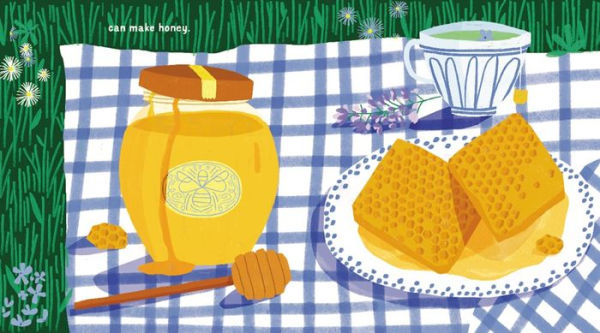
We seem to be off to a good start. Next a little girl plants some seeds, and she adds water and sunshine. Together they make ... beans. Moving deeper into the garden bees and flowers make ... honey. This illustration is scrumptious - a plate filled with honey crumpets or perhaps it is honeycomb. And there is a sprig of lavender on the page too. 


You can easily guess the things that go together to make a cake but what about a rocket like the one on the cover. Look closely - it is made from Lego. 

Notes from the author webpage: Apart, Together is a rhyming concept book (ages 2-6) about the magic that happens when 1 +1 doesn’t equal 2, but something entirely new! Parents, teachers and librarians will delight in how this book uses familiar object to support abstract thinking in 2-6 year olds (and older). Bold and playful, Apart/Together introduces important concepts such as cause-and-effect, prediction and transformation. Throughout, preschoolers are encouraged to imagine the interconnections that produce change, a building block of early childhood development as well as systems thinking.

Someone recently asked, on a Facebook forum, for suggestions of preschool non fiction books - this one is perfect!

Apart, Together (published 2024) is a debut book for illustrator Ariel Utland. Linda Booth Sweeney is a US author. She has written nine books including The Noisy Puddle: A Vernal Pool Through the Seasons which is a Finalist for the 2024 Elizabeth Mrazik-Cleaver Canadian Picture Book Award.

Here is an interview with Linda Booth Sweeney and Ariel Rutland where they discuss creating Apart, Together. Linda says of Ariel's art: She’s like a jazz musician except she’s riffing on the color wheel. Her drawings, her fabric, her art is clean, graphic, child-friendly, whimsical, and in many cases, inspired by nature.

A sweet read-aloud for younger readers to help them learn how the individual is part of a greater community; a standout for conveying complex concepts in an accessible format. School Library Journal

Companion book: