Showing posts with label Dementia. Show all posts

Tuesday, December 23, 2025

The Keeper of the Octopus by Neridah McMullin


"Every child in the village grew up hearing the tale. It was folklore. A long time ago a shark attacked a Portablow fishing boat as a it sailed up the river with its catch. A giant octopus who lived at the river mouth fought with the shark, saving the fisherfolk and their livelihood. And from then on, an octopus had always lived at the river mouth to protect the fisherfolk from sharks. At least that was the story."

Pippy lives with her elderly great uncle. She desperately misses her mother who has died recently and also longs to talk to her father, but he has headed away to sea and has been gone for nine months. It is clear Uncle Isaac who is caring for her now, is suffering from memory loss. It has begun to feel dangerous to sail with him, but Pippy needs to do this because Uncle Isaac, like all the people in this village, rely on fishing for their income.

The village is near a cove and decades ago there was a problem with shark attacks. Pippy is sure this is not the fault of the sharks but rather a symptom of things being out of balance. There has always been the story about an octopus but surely this is just a folktale. Young Pippy discovers it is her own mother who has been the Keeper of the Octopus but now that her mother is gone destiny determines Pippy herself must now feed, care for, and learn to communicate with Octavia. Uncle Isaac gives Pippy a special talisman, a stone that she wears around her neck. It glows and helps her know when Octavia is near. She also has the diary written by generations of her ancestors which tells her how to care for and recognise the moods of the octopus. 

Then three brothers arrive in the village. They appear at first to be fishermen but then they bring back an enormous catch with all sorts of precious sea creatures - way more than the town could ever need. Pippy knows this is a wrong and dangerous practice and then she hears one of the men talking about Octavia and so she knows this will be a race against time to keep Octavia safe and to convince the town authorities that the Calamary brothers are dangerous. 

As with all great stories there were moments in this book when I gasped, when I cheered, and when I sighed. One special character, apart from young Pippy who is wise beyond her years, is her friend Wally.

"Wally had been born with a deformed foot, a foot that turned inwards and downwards, worsening as he grew older, which meant he couldn't walk very fast nor go very far. Teased at school because of his limp, Wally stuttered a little when he spoke. He never said much. But he was a child who noticed things, small things."

And there is an element of magical realism because Pippy and her uncle live with a family brownie named Ferg. He tends to the house and the cooking. I loved his way of talking he always addresses her by saying - Pippy Cocklebiddy, daughter of Claudine and he uses words like bairn, Mither, orright, and nowt. He reminded me a little of Dobbie from the Harry Potter series. 

Here are a couple of text quotes:

"There were masses of bluefin tuna, black bream, tommy ruff and kingfish; hundreds of snapper, flathead, silver perch, and graylings; and many smaller good eating fish such as garfish, whiting, salmon and trevally. There were even parrot fish, which Pippy thought was odd because everyone knew they were inedible. Portablow fishers always tossed them back into the sea. The brother hauled even more baskets onto the wharf, tipping out dozens of sharks, Bronze whalers, and even a huge basking shark ... It was beautiful but its bright blue eyes quickly faded to a dull grey, dead colour."

"Pippy felt heavy with sadness. Uncle Isaac's memory was getting worse. He'd just put both their lives in terrible danger. It was as if his brain was erasing everything he'd ever known, including her, and that was what hurt the most. She had to do more to help him, more to look after him, but she wasn't sure how much more she could do unless she was with him for every minute of every day."

This book is certain to be a 2026 CBCA Notable title in the Younger Readers category. Here is the web page for Neridah McMullin. Here is a link to some detailed Teachers Notes.  I have previously talked about Eat my Dust; Drover; Tearaway coach; Fabish the horse that braved a Bushfire; and Evie and Rhino

Publisher blurb for The Keeper of the Octopus: Since her father sailed away, Uncle Isaac is the only family Pippy has left. Together they spend their days fishing off the coast, until one day Pippy is knocked into the sea and rescued by a gentle, giant creature … Uncle Isaac knows it’s time to tell Pippy the truth. Pippy is the descendent of a long line of Keepers – the Keeper of the Octopus, responsible for the giant octopus who protects the fisherfolk of the village. At first, Pippy is hesitant to meet Octavia, but soon the octopus is sharing her dreams with Pippy and they recognise each other as kindred spirits. But when the Calamary Brothers come to Portablow, she learns of their search for a particular giant octopus. It's up to Pippy - and her rag-tag crew of a cat, a dog, a hobgoblin called Ferg and an albatross – to rescue Octavia from the Calamary’s clutches.

I was enthralled by this book, because it captured a timeless world with a touch of magic, coupled with a commentary on some of the issues we face today: grief, environmental issues, bullying and disability. Wally was such a cool character too, and I loved his friendship with Pippy, and that he believed her without question. This is the mark of a true friendship. It was one that I loved, and one that I think kids need to see more of in the books they read. And it’s another reason I love reading kids’ books, because they feel less judgmental and more accepting. The Book Muse

Companion books:


Friday, June 13, 2025

Tree Table Book by Lois Lowry


"I'm going to tell you three words. I'm choosing them at random. Listen carefully. This will be important.
House.
Umbrella.
Apple.
Remember those. I'll explain later."

Sophia (known as Sophie) is aged eleven and her best friend is Sophie Gershowitz. Sophie is eighty-eight years old and she lives next door to Sophia. Sophia wants to tell us the story of Sophie. Sophia once received some advice about writing: "Begin on the day that is different."

Ralph is a kid in her neighborhood. Ralph's dad is a pediatrician and so he owns a copy of The Merck Manual which is a reference book for doctors. And there is Oliver who is seven and on the autism spectrum. So, Sophia has three friends - Sophie her Friend of the Heart; Ralphie her same age friend; and Oliver.

Sophia loves check the Merck. Sophia needs the Merck because she has overheard a conversation about her best friend Sophie's health. Sophia is also a medical hypochondriac and her medical dilemmas are sure to make you laugh.

"There is something about a book; the feel of it, the weight of it in your hands, the way the pages turn (pages in the Merck are very thin and extremely serious-seeming, the cover is leather, and there are built-in index tabs."

Aaron, Sophie's son, is coming from Akron. Sophia's parents tell her Sophie will take a test to check her memory or we would say cognition. This gives Sophia  a brilliant idea. She can help Sophie pass this test - all it will take is some training. Sophia is sure Sophie has good eyesight and good hearing but sometimes she seems to miss smells and often Sophie finds very stinky things in her fridge. She also sometimes forgets to turn off her kettle. 

If you have an elderly parent or grandparent you might be familiar with the tests for dementia - one of the questions involves remembering three objects - hence the title of this book - the short-term memory test. Over several days, as Sophia asks the test questions, we gain an insight into Sophie and her life in Poland, her husband, and the holocaust. Sophia uses the three-word test as a way for Sophie to recall her childhood and Sophie tells three stories - the tree with the berries picked too soon by the children; the table at the baker shop that Sophie was not allowed to visit; and the book of fairy tales that her mother returned to the rich owner - the house where Sophie was hidden over the war years.

Lowry is famous for dealing with difficult subjects in her work, which has occasionally been banned, and as young Sophie encourages older Sophie to delve into her long-term memories, it becomes clear that this is also a novel about surviving the Holocaust. Three brilliantly told stories from Sophie’s Polish childhood form the climax of the novel, contrasting very effectively with young Sophie’s charming, insouciant 21st-century kid voice (captured to perfection by the 87-year-old Lowry). The Historical novel society

When the test prep unlocks memories of Sophie G.’s childhood in Poland during World War II, Lowry conveys with sensitivity and realism Sophie W.’s sorrow upon realizing that things she’s only learned about in school have had a painful, lifelong impact on her beloved friend. Book Page

Read more plot details here.

Readers aged 10+ who enjoy personal stories and stories about kindness are sure to enjoy Tree Table Book. Sophia has such a determined attitude and voice. You should also look for these in your local or school library:


Friday, May 16, 2025

A Lemon for Safiya by Jemima Shafei-Ongu illustrated by Nisaluk Chantanakom


"It was Safiya who first spotted the old woman, sitting on the edge of the footpath, sock-sandalled feet in the gutter, busy cars speeding past."

The woman is sitting alone. She is holding a 'bright yellow lemon' in the palm of her hand. When the family ask where she lives it is clear the lady is describing somewhere from her past. The woman talks about her daughter who is named Hanna - this means happiness in Arabic. Luckily the old lady is wearing a bracelet with her name - Maryam. It is such a sweet moment when the child reaches across the car seat to hold the old lady's hand and that is when she sees the bracelet. 

Bookseller blurb: They reached a giant lemon tree. The old woman sat up, tapping an urgent finger against the window. 'Hay! Hay! Hanna zarr'et ha. Hay!' 'She's saying that Hanna planted this tree,' Mama said as Dad pulled over. 'It's a beautiful tree, shajrah hhelweh,' Mama said to the old woman.

 When a little girl, Safiya, and her family help Maryam, a lost and confused stranger by the side of the road, to find her way home, they begin to understand who she is and the rich and remarkable life she has lived. Through kind-natured Safiya, we come to see Maryam, a woman who had been made invisible by society because of her ethnicity, race, religion, language, age and now dementia. With Arabic text interspersed throughout, A Lemon for Safiya is a wonderful exploration of language, diversity and culture.

Listening to an author, or in this case illustrator, talk about the inspiration for their book can make a big difference to how you perceive a text.  This book will be published in early June 2025 but yesterday I attended a conference at our New South Wales State Library and for one of the sessions four authors were invited to speak for five minutes about their new or first book. 

Nisaluk Chantanakom has added delicate art to this story and the memories of the old lady appear in sepia behind each illustration so that even if you don't speak Arabic it is easy to anticipate what the lady is saying. The words are translated too and there is a full glossary at the back of the book. Nisaluk is originally from Thailand but now lives in Sydney.  She was shortlisted for the CBCA New Illustrator with her book A Teaspoon of Light.

About this book she says: I tried to imagine Maryam standing beneath a lemon tree, her mind filled with vivid memories she can’t forget, while she struggles to recall the reality of the present. During this time, an elderly Greek woman with dementia often wandered into our backyard and asked for lemons. She seemed to remember we had a lemon tree, but not that the lemons weren’t yet ripe. I drew inspiration from her postures, expressions and manner for my illustrations of Maryam. Seeing my neighbour’s confusion helped me in my approach to illustrating Maryam’s memories. I chose to depict them as fragmented, using sketchy, childlike crayon marks. Some of these marks are tiny scribbles that I then scanned and enlarged, adding to their raw quality. I felt it was important to have different styles for the present and Maryam’s past. The present is depicted with a full colour palette and a very detailed style. For Maryam’s memories, I combined fine pencil work with scribbled crayon textures and rough 

Jemima Shafei-Ongu is the author of three books. Jemima said (also in the teachers notes): 

A Lemon for Safiya was inspired by true events that happened when my family and I were living in Melbourne around 2006. We found a lost and confused old woman by the side of the road, with not too dissimilar circumstances to Maryam in this story. I have also worked with many children in schools who felt sad and confused when someone they loved, like a grandparent, became impacted by dementia. I also love lemons, and along with olives, they play a special role in my culture (I am of the Levant), and they have a special place in my heart. Nature has a way to teach us about life, about patience, about respect for life and about trust in its process. Lemons, like much of nature, have a life cycle that we can be trustees of and agents to.

The publisher and my conference companion suggest this book could be read alongside Wilfrid Gordon McDonald Partridge. I am not entirely convinced about this but that famous book is a good one to use if you are talking about memories or in fact it is just a very special book to read at any time. 

A better companion book might be this one:


And if you are talking about cultural identity and memory you might look for this one:


Wednesday, March 5, 2025

Moonboy by Anna Ciddor


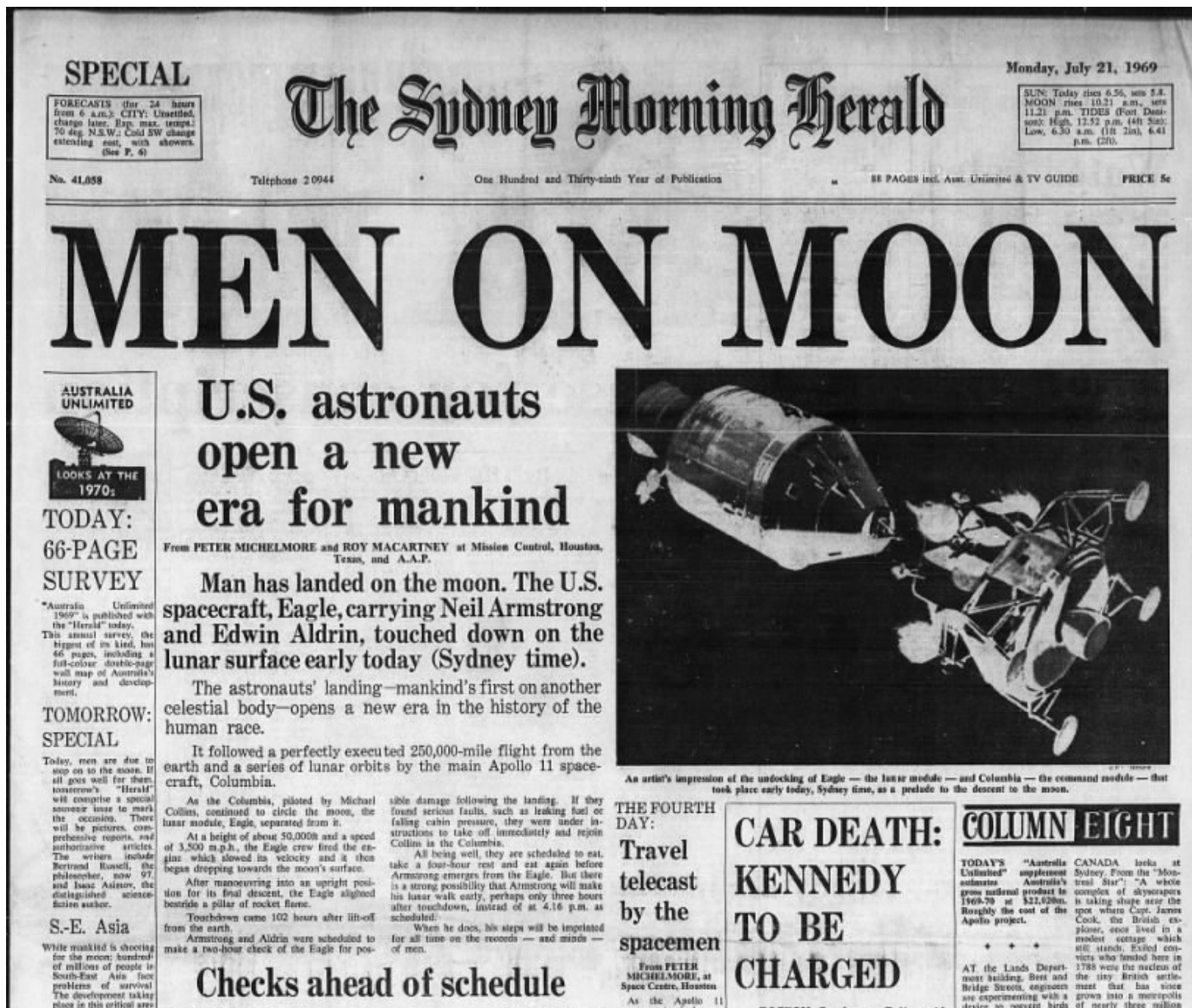
“That’s one small step for man, one giant leap for mankind.”

I was almost the same age as the boy in this story, Keith Arthur Watson, who is living in Australia in 1969. What happened in 1969? The moon landing. I well remember there were all sorts of newspaper booklets to collect and I also vividly remember sitting in a crowded classroom and peering at a small television screen to watch those steps on the moon.

Moonboy is a timeslip story. Charlotte is staying with her grandmother. Her dad tells her to look inside a box in her room. When she opens the box she finds newspaper clippings from 1969 all about the Apollo moon landing and also some other things that belonged to Keith, her grandfather, when he was a boy. A big of marbles, some footy swap cards and an old footy sweater. This sweater is very significant because it is the conduit that takes Charlotte from 2025 back to 1969 and straight into ten-year-old Keith's bedroom and life. 

Sadly, in 2025, Keith (Charlotte's grandfather) is suffering from dementia. He seems to be unable to speak or recognise his wife or granddaughter. But then Charlotte takes some of the newspaper clippings to his aged care home and for a moment or two he seems to 'come back to life'. 

This book covers time from about 9th July to 25th July 1969 and 2025. Keith and Charlotte will both have a birthday on 23rd July. Gran wants it to be special but she also wants to hold it in the Aged Care Home. At first Charlotte finds the state of many of the elderly people quite confronting and upsetting but over the two weeks of her daily visits she comes to see each person as an individual and so her eventual 'moon landing themed' birthday party in the lounge room of Diamond House is, to her surprise, a very happy event. 

Here is a video of the television broadcast watched by Keith in 1969 and again by Charlotte in the aged care home with her grandfather in 2025. 


My only tiny quibble with this story comes from the way Charlotte knows nothing about the moon landing - that's okay - but I kept wondering why she didn't try to research these events either in her school library or on Google. She is filled with worries about every tiny aspect of this momentous event - will they reach the moon; will the astronauts actually walk there; will they get home safely; and worst of all what if Keith's sister Gwen wrecks everything because she has gone to help her aunt at uncle at Honeysuckle Creek. This true aspect of the Australian connection to the moon landing is explained at the back of the book. It's quite a fascinating side story. I was also a little concerned with the way Charlotte was able to change history. She stops Keith setting off some dangerous fireworks and so his fingers are not damaged and yet the grandfather she has always known did have missing fingers and now his hands are fine.

I did enjoy Keith's colloquial sayings: crikey; how the blazes; are you a few crumbs short of a sandwich; strike a light; ridgy didge; holy moly; fair dinkum; and stone the crows.

When Charlotte travels back to Keith's Grade six classroom she writes a terrific poem about the moon landing. Sadly the teacher rejects it because it doesn't rhyme - even in 1969 I hope this would not be the reaction of a teacher. I really like her poem:

I can't believe it!
We've landed on the moon!
Through the window
I can see grey dust
And craters
I can't belive it!
My fee
Will be the first
To ever touch the moon!
Open the door,
I'm ready
Here I come!

This book could be a jumping off point for kids to research more about the moon landing and especially the involvement of Australia. Behind the News could be a good starting point. If you are using this book with a class you could investigate a KidsNews free subscription. The BBC also have some good resources. 

Sensitive readers may find Charlotte's reactions to the elderly people in the aged care home a little confronting. I related to this because my precious little Nan was in an aged care home when I was about the same age as Charlotte. More recently I watched young children visiting elderly relatives in a care home where my mother sadly spent her final years. I suggest you could look for Newpaper Hats which is a picture book by Phil Cummings as a way to talk about the effects of dementia and memory loss. 

Here is a video review from Kid Lit Joy. Anna Ciddor has some background photos that link with this story on her webpage. You could make use of these in a book talk with your library group. Read the blurb and review page from Lamont Books.

Anna Ciddor’s story explores history and family in delicate and emotional ways in this book, getting to the heart of Letty’s relationship with her grandfather, what he means to her and what knowing her in the past meant to him as well. The Book Muse

Thank you to Allen and Unwin for sending me a review copy. Moonboy was released yesterday. 

Companion book:


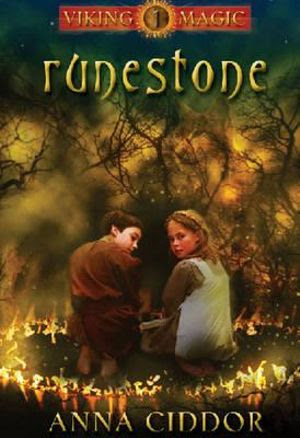
Here are some other books by Anna Ciddor. I especially loved one of her very early book - Runestone.


Monday, April 29, 2024

Mr Mornington's Favourite things by Karen George


Mr Mornington lives next door. Our narrator, a young girl, visits him through a gap in their hedge fence. She knows Mr Mornington likes gardening, cherry cake, his woolly hat and playing his saxophone. The friends share a love of music and when he plays his sweet tunes the little girl thinks of all her own favourite things - her cat, her mum, her friends, special shoes and socks and cherry cupcakes. 

Over time, though, it is clear Mr Mornington is beginning to forget things. He offers to teach the little girl so she can become the second-best saxophone player in the world but then he forgets, and he doesn't even tell them he is leaving. Sadly Mr Mornington has now moved into an aged care home.

Our little girl is not deterred however. She is given a small saxophone and she works hard and practices and when she and her mum go to visit they take cherry cake and music. Mr Mornington is sometimes sad but sometimes, there are glorious days, when he does remember some of the things that make him happy - his wife, his dog, music, cups of tea, his garden and cherry cupcakes. You can see these things and more on the book cover. And the cherry cake recipe is in the back of the book.

Karen George uses colour and white space to express emotion: when everything is great fun there’s not much space on the pages and she uses bright primary colours; when Mr Mornington has left, rather like the use of white space in John Burningham’s ‘Granpa’, the page is almost blank, the plants have shrivelled from lack of care and an empty cup lies upturned on the floor. But when Mr Mornington does occasionally remember his favourite things, there is a riot of flowers, slippers, gardening tools, the dog, his woolly hat, cherry cakes, the radio, a car and, of course, his saxophone. And the colour remains as the girl grows older and remembers her friend when she plays their favourite song for others. Just Imagine

I would pair this with Grace and Mr Milligan. You might also think of Wilfrid Gordon McDonald Partridge


I also thought of sharing The Sound of Music song - My favourite things. 

Raindrops on roses and whiskers on kittens
Bright copper kettles and warm woolen mittens
Brown paper packages tied up with strings
These are a few of my favorite things

Cream-colored ponies and crisp apple strudels
Doorbells and sleigh bells, and schnitzel with noodles
Wild geese that fly with the moon on their wings
These are a few of my favorite things

Girls in white dresses with blue satin sashes
Snowflakes that stay on my nose and eyelashes
Silver-white winters that melt into springs
These are a few of my favorite things

When the dog bites
When the bee stings
When I'm feeling sad
I simply remember my favorite things
And then I don't feel so bad

Raindrops on roses and whiskers on kittens
Bright copper kettles and warm woolen mittens
Brown paper packages tied up with strings
These are a few of my favorite things

Cream-colored ponies and crisp apple strudels
Doorbells and sleigh bells, and schnitzel with noodles
Wild geese that fly with the moon on their wings
These are a few of my favorite things

Girls in white dresses with blue satin sashes
Snowflakes that stay on my nose and eyelashes
Silver-white winters that melt into springs
These are a few of my favorite things

When the dog bites
When the bee stings
When I'm feeling sad
I simply remember my favorite things
And then I don't feel so bad

Thursday, October 26, 2023

Phyllis and Grace by Nigel Gray illustrated by Bethan Welby


"Grace's mum baked a cake. She asked Grace to take a slice to Phyllis. Phyllis lived next door."

Love Reading4Kids: Grace is a little girl; Phyllis is the old lady next door. Phyllis lives alone and her memory is fading, but that doesn't stop Grace from liking her. They find that, despite the gap in their ages, they have much in common and a moving and enduring friendship is born. This is a deeply touching story for all the family of how a little girl befriends her elderly neighbour who has dementia ...


Nigel Gray gives readers heartbreaking insights into Phyllis and her memory loss/dementia:

"Phyllis poured milk from a carton into the kettle. The milk smelt sour. Phyllis came and sat down at the table again without switching on the kettle."

"Finally, she found the slice of cake that Grace's mother had made. It was furry with mould."

"She rolled up the painting and put it in the fridge."

Strengths of this story:

  • Nigel Gray does not shy away from a focus on a complex issue - dementia and also neglect (do her family ever visit - we know the house needs repairs)
  • Grace is a beautiful child who is so very, very patient with Phyllis
  • The story is an important portrait of kindness in action
  • Gentle appealing illustrations
  • A sweet ending but not one that unnecessarily tries to solve the main issue of memory loss and dementia

Things that could cause concern:

  • Grace's parents do not seem to notice that Phyllis needs more help not just an occasional piece of cake or a small container of food
  • Do the parents ask Grace about her visit to Phyllis - surely this young child is puzzled by the questions Phyllis asks over and over again especially about her children, husband and even her own name?
  • Grace's dad comes over and repairs the broken electrical fuse but the page turn is a little abrupt - clearly Phyllis is so confused about this strange man in her house
  • What does Phyllis eat? Is someone actually caring for her on a regular basis? 
  • Is this story too distressing for a very young child? Or am I just adding a layer of my own adult sensibilities. We watch Phyllis decline even further over the course of the story but I guess it is good that mostly her mood is portrayed as fairly happy. 
  • Reading this book could lead to difficult questions - I know these are important but that is why you need to consider the age of the child - where is her husband? Where are the children? Are they really upstairs? Why is Phyllis doing all these strange things?

This is a book you could share with one child (not a class). It does have a lot of text but more importantly you need to leave lots of room for questions. I would say this book is suitable for ages 7+ but most reviewers seem to say 3 or 4+.


I mentioned Phyllis and Grace when I talked about the 2023 White Ravens titles

Companion books:


The author Nigel Gray is interesting - he was born in the UK and now lives in Western Australia but taking a look at his book list so many of his titles have UK illustrators and UK publishers. Here is an audio interview with Living Arts Canberra. Here is a sixteen minute video of the author reading his book. 

I arrived in Western Australia in 1988 (more than twenty-five years later than I’d intended) having migrated with my wife and my sons Sam and Jo, under the special category of artists and sports people of international reputation, and we have been Australian citizens since 1990.

When my friend from Kinderbookswitheverything asked if we were sent any books by Nigel Gray for CBCA (Children's Book Council of Australia) judging I was puzzled because I didn't think he was Australian.

Look at this list of illustrators:

  • Jane Ray
  • Philippe Dupasquier
  • Michael Foreman
  • Helen Craig


Bethan Welby who illustrated Phyllis and Grace lives in Devon, UK.

But then we have BIG Australian names such as:
  • Bob Graham
  • Elise Hurst
  • Craig Smith
  • Gregory Rogers
  • Andrew McLean
  • Anna Pignatoro


Wednesday, August 24, 2022

All Four Quarters of the Moon by Shirley Marr


Peijing and her little sister Biju have moved to Australia with their parents Ma Ma, Ba Ba and her grandmother Ah Ma. Everyone in the family has to make huge adjustments in order to cope with this new place. Peijing loves her Ah Ma but Ah Ma is beginning to act strangely as her memory deteriorates. None of the adults seem able to talk to Peijing about this. Back in Singapore Ma Ma was popular and confident but with little or no English here in Australia she has retreated into her home. It is so difficult to mesh traditional family customs and expectations with the new life Peijing is experiencing at her school. And also she has new levels of responsibility towards her sister and her mother. 

Peijing and Biju share a Little World. It is all made from paper and they love to add new creatures and invent stories as they play.

"Little World was something familiar. Something safe. Something to escape into. Where minutes could become hours and hours grow into days. Where in the blink of an eye, ecosystems could grow and flourish and collapse again back into the ocean, and large herds of beasts that only existed in your mind could cross from one continent to another. Where something you made yourself could be your home, even just for a while."

"There were zoos and farms and a network of underground burrows and branches of trees made of many pieces of paper sticky-taped together. There were oceans, rivers and lakes too but some of them were so big they stretched from one side of the room to the other."

In a moment that lingers with me, on the day the family leave for Australia, everything in their Little World box is gone. Peijing knows that her mother has done this. Biuj is distraught but the girls find one paper rabbit hidden under a flap in the box. Peijing tells Biuj to hide the rabbit so they can take him to Australia. There is such a raw honesty to this scene that it must be a memory from Shirley Marr's own childhood. In fact I wonder how much of this story is autobiographical such as the scene where Biju refuses to use chopsticks (chapter 10). I also adored the unfold friendship between Peijing and Joanna. Every story needs a special and kind friend like Joanna. 

"Peijing's heart was beating fast. She wanted to yell at the boy to take back what he said about Joanna. She wanted to punch him in the face for saying what he did about her. Then she wanted to run out of the school gates, run until she reached the ocean and, even though she could now swim, make it impossibly back home."

Interspersed between chapters are Biju’s own retellings of myths and fables, offering the sisters a chance to consider elements of Chinese culture as Peijing seeks to navigate between the values of her family and their teachings and what she learns in Australia. And we also witness a transformation of each family member - Ba Ba softens, cooks and forms a relationship with his daughters and Ma Ma finds a job at the Asian Mart. 

This is a read with tons of heart. Peijing, is a kind and family orientated girl, who tries her best to keep a positive outlook but often feels like she's sinking, instead. She struggles not only with the new environment and language but can't seem to find her place in school. Still, she does her best and keeps an inspiring and heart-warming attitude...even when it proves difficult, at times. Especially her relationship with her younger sister touches the heart (even when things aren't always smooth) and makes this a wonderful read about the sisterly bond. Book Worm for Kids

There are so many things to say about this book – it’s lyrical, magical, beautiful, and comforting – because it reassures all readers that we are not alone in feeling like we don’t fit in, and lets readers know that we can find a way to fit in and be ourselves. The Book Muse

As I write this it is Book Week here in Australia and one of the major things that happens this week is the announcement of our National children's book award winners by the Children's Book Council of Australia.  There are six categories of awards and one of these is for Younger Readers (in the US you might call this elementary school).  The winner for 2022 is by Shirley Marr - A Glasshouse of Stars.  


When you read both of these book I recommend you should then try to find books by Gabrielle Wang and Grace Lin (especially Where the Mountain meets the Moon). 

Saturday, July 23, 2022

Counting on Grace by Elizabeth Winthrop


Publisher blurb: 1910. Pownal, Vermont. At 12, Grace and her best friend Arthur must leave school and go to work as a “doffers” on their mothers’ looms in the mill. Grace’s mother is the best worker, fast and powerful, and Grace desperately wants to help her. But she’s left handed and doffing is a right-handed job. Grace’s every mistake costs her mother, and the family. She only feels capable on Sundays, when she and Arthur receive special lessons from their teacher. Together they write a secret letter to the Child Labor Board about underage children working in Pownal. A few weeks later a man with a camera shows up. It is the famous reformer Lewis Hine, undercover, collecting evidence for the Child Labor Board. Grace’s brief acquaintance with Hine and the photos he takes of her are a gift that changes her sense of herself, her future, and her family’s future.

Here are a few text quotes to give you a flavour of this writing by Elizabeth Winthrop:

"Arthur Trottier is my best student. He could be a teacher or a manager or even a lawyer someday. As long as you leave him be. Because we both know the only way he will ever come back to this school is when your machine spits him out."

"The mill owners own everything in town - the store, the school and our houses."

"The river doesn't seem to mind. Borrow my water it says. Long as you give it back. Trouble is when the mill spits the water back out, it comes out all dirty and it smells queer."

"Every girl in the mill has to have her hair bound up so it don't get caught in the machines."

"But now I'm here to work, not play. The air in the mill is stuffy and linty and sweaty at the same time 'cause all day long water sprays down on the frames from little hoses in the ceiling... you don't breathe too deep for fear of what you might be sucking down your throat."

"You've got to pay attention in the mill or else those big old bad machines, they'll snatch up any loose piece hanging off a person and gobble it up."

"Maybe the screaming is coming from me and maybe it's coming from Arthur, but all I know is he's gone and put his fingers in that place between the sprockets and they're chewing his hand all to bits. ... I'm the only one who knows Arthur was fixing to do whatever he to so's he could get out of the mill."

Read more plot details here. Sadly Counting on Grace is now out of print (first published in 2006) but I was able to read a ebook version. Listen to the story of the photo on the cover of this book. And read more hereAudio sample

Addie never knew that her face ended up in a Reebok advertisement or on a postage stamp issued 100 years after her birth, or that Hine's glass plate negative resides in the Library of Congress. Addie Card LaVigne never knew that she had become a symbol.


Solid research and lively writing make this a fine historical novel Kirkus

Imaginative, plucky, and both smart and smart-mouthed, Grace is a heroine who leaves the reader confident that she will fulfill Miss Lesley’s hopes for her – and ours. Hisorical Novel Society

I have read and really enjoyed other books with a mill and factory worker setting such as Lyddie by Katherine Paterson and later her book Bread and Roses too. Then I watched the television adaption of North and South by Elizabeth Gaskell.


Tuesday, June 7, 2022

The Forgettery by Rachel Ip illustrated by Laura Hughes


"Granny's Forgettery was huge because she was very forgetful. She smiled as her memories washed around her. Moments of delight, lost and forgotten, fluttering in the room like butterflies. Paper thin and delicate."

I love the affirmation in this book that everyone forgets things, that everyone can have difficulty remembering - not just older people. In this story, though, memories are not lost. They are safely kept in the Forgettery. 

After Granny and Amelia discover the delights of the Forgettery, Amelia has a splendid idea. She will make a memory book filled with photos, drawings, and one more essential ingredient - love.

When you pick up this book take some time to explore the title page where you can see Granny has been sticking up post-it notes to help with her memory loss. This page almost made me cry and the story hadn't even begun. 

It is a picture book about life and love and the relationship each and every one of us has with our memories. We all forget things, from being a baby to where we put our keys or the time – the list could go on! Picture Book Perfect 123

The Forgettery won the 2022 English 4-11 Picture Book Award. You can see other books illustrated by Laura Hughes on her web site. Here is an interview with Rachel about her book. 


You will want to pair this book with:


If all the World were AND Dance like a Leaf


Friday, January 21, 2022

The Long Way Home by Corrinne Averiss and Kristyna Litten


This is one of the saddest little junior books I have ever read BUT I am certain a child reading this sweet story will not have these feelings.  As adults we are now so aware of the ravages of dementia. Or course this book is about an elderly elephant grandmother who has some memory loss - it is not meant to be a deep book about dementia but my adult reaction was coloured by my experiences with this horrid disease. 

Otto and Nanu love to take adventures together. Little Nanu has been to Red Rock Cave and Blue Pool but today he is so excited because they will visit Lion Mountain. Nanu, his grandmother will lead the way. 

Publisher blurb Little Tiger: Nanu and Otto are off on a climbing adventure – to the top of Lion Mountain! Otto is a born explorer, just like his grandma, who is brave and bold and can’t resist the urge for adventure. But Nanu is having a forgetting day. She forgets her backpack and the name of the mountain … and then she forgets the way home and leads them deep into the forest. Can Otto remember all the things Nanu taught him about being a great elephant explorer and guide the expedition home?

This book comes from a series of simple chapter books published by Little Tiger. It has 85 pages, with an easy to read font and vibrant colour illustrations on every page. These little books are simply perfect and I highly recommend them for all Primary school libraries. Listen to an audio sample from page 16

I have previously talked about:


And here are some others from Little Tiger that I am keen to read:


Companion read after you read The Long Way Home:


I talked about Corrinne Averiss in a previous post - My Pet Star. You can see some more art by Kristyna Litten here


I have previously talked about these two books illustrated by Kristyna Litten: