Showing posts with label Jewish children. Show all posts

Saturday, March 7, 2026

The Year we Escaped by Suzanne Leal


I picked up this book (purchased from Gleebooks Kids) to read yesterday and finished it this morning. The Year we Escaped is one of the 2026 CBCA Younger Readers Notable titles.

This story explores a different aspect of the Holocaust and World War II where over six thousand five hundred Jewish people from the German regions of Baden and Saapflaz were transported to the Gurs Internment Camp in the Free Zone of France.

The author of this book Suzanne Leal heard about a small French village called Le Chambon-sur-Ligon. During the war some communities like these gave refuge to Jewish children. Suzanne stayed "at a guesthouse called Chez Tante Soly, where twenty-two Jewish children had been hosted and protected throughout the Second World War. ... What a story, I thought as my mind kept turning to the lives of these children caught up in that dangerous time. Where had they come from, I wondered, and how had they found their way to this remote village?"

This is the basis of The Year we Escaped which covers the period November 1938 to September 1941. We meet children from two different families. Klara lives in Germany and you will watch with horror as she experiences first hand the persecution of the Jews - smashing of her parents shop windows (Kristallnacht), horrible treatment by people in her town and then her dismay as she has to change schools. Her experiences reminded me of Dancing on the Bridge of Avignon by Ida Vos. Klara's mother decides they urgently need to leave but mother and daughter do not reach safety, instead they are taken to the Gurs Internment Camp. It is an utterly horrible place. The descriptions of the latrines will 'turn your stomach'. (There are extensive notes at the back of the book about Gurs and other aspects of WWII).

Meanwhile Lucien and his brother Paul live in Paris. Their father is a doctor but he is left behind when they are also forced to leave with their mother. By chance there are now four kids - Klara, her friend Rachel, Lucien and his younger brother Paul - in this camp. They quickly become friends. Klara works out a way to leave the camp and she and Lucien enjoy picking the blackberries (they are on the back cover of the book) but the kids don't appear to think about escape. Then suddenly Klara and Rachel are 'rescued' and taken by train to Le Chambon-sur-Ligon. Lucien and Paul's mother decides her boys need to find a way to get there too but for the boys it means sneaking out of the camp and embarking on a 750km train journey. This journey takes up the second half of the book - Suzanne Leal creates some terrific tension on their train journey and at every turn I kept anticipating that terrible things would happen to the young brothers. 

Leal blends fact, fiction and feeling so beautifully, crafting a story that’s deeply emotional and brilliantly paced. It’s historical fiction done right: full of heart, action and unforgettable characters. Readings Melbourne

Suzanne builds her story gradually detailing the changes brought about by a war that affects everybody’s life. She has obviously thoroughly researched Kurs as it is brought vividly to life. Klara and Lucien are passionate relatable characters, perfect advocates for peace, tolerance and acceptance, the dominant themes in this carefully structured novel. Story Links

You can read a chapter sample and find teachers notes on the publisher web page.

Awards: Winner 2025 ARA Historical Novel Prize – Children & Young Adult Category

As an adult reader you know that the people left behind in the Gurs camp will be taken to places like Auschwitz but younger readers aged 10+ are sure to feel great relief knowing (spoiler alert) the four children will be safe right through the war years.  

Here is an interview with Suzanne Leal and Joy Lawn at Paperbark Words. 

Things are very hard for everyone in the Gurs camp but I kept expecting harsher descriptions of the starvation and inhumane conditions. Parts of the story were filled with tension for example when Klara is used to demonstrate the awful Nazi doctrine in class and when everyone is forced to leave their suitcases on the station platform but if you have a sensitive reader this book is nowhere near as harsh or confronting as other holocaust middle grade novels. Older students could compare the conditions in the Gurs camp with those described in Let the Celebrations Begin.


Companion books:


Wednesday, August 20, 2025

The Night War by Kimberly Brubaker Bradley


Miri is Jewish. She has been living in Germany with her mother and father but then Kristallnacht happens in 1938 and so the family flee to Paris. Sadly, if you know your history, the Nazis arrive in Paris and so the terror continues. The soldiers arrive to take Miri and her family away but her father has already gone into hiding and Miris cannot find her mother. Their neighbour Madame Rosenbaum takes her hand and they leave together with young baby Nora. Madame Rosenbaum knows all their lives are in danger so as they are being unloaded from the bus she tells Miri to hide and run and take her baby Nora to keep her safe. Madame Rosenbaum tells Miri they will be reunited in Switzerland. Miri has taken off the yellow star and when some soldiers march towards her a young nun takes her hand and explains she belongs in the local orphanage. Miri has been rescued but only for now.

It is not safe for Miri to stay with the nuns and so she and Nora are loaded onto a truck and driven far away to a small town. Miri is exhausted from days of hiding and so she falls asleep and cannot stop the drivers who pass young Nora onto a local family. Miri is taken to another Convent School run by different nuns. Her name is changed and she has to hide her faith but she is desperate to find little Nora. There are two other older girls living in the convent over the summer - but can Miri trust these girls with the truth about her life in Paris and her faith?

There is a castle in this town which has been taken over by the soldiers. It has beautiful but badly neglected gardens - for vegetables and for flowers. Miri, now called Marie, befriends an elderly lady who asks her to tend the flower garden - actually she is very demanding - but is she a real person? Her clothes seem outdated and strange and it feels as though no one else can see her. 

Meanwhile several of the nuns are working for the resistance and smuggling Jewish people and wounded enemy soldiers over to the free side of France - the Vichy. One of the nuns is hurt and so it is Miri who takes over the nighttime task of guiding people through the castle grounds and over the bridge to safety. These scenes are so tense you will be on the edge of your seat. 

This was bound to happen - I wonder why it took so long. I began this blog in 2008 and every month I read so many books. I picked up The Night War in a school library last week and by the end of the first page I knew I had read this book already BUT when I checked my blog I had not talked about it - I wonder why. So, this morning when my city visit plans were cancelled, I sat down and re-read the whole book 273 pages - in one sitting and as you can see I gave this book five stars - yes it is that good. In fact it is an utterly engrossing story with some deliciously tense scenes. This book is perfect for readers aged 10+.

Publisher blurb: It’s 1942. German Nazis occupy much of France. And twelve-year-old Miriam, who is Jewish, is not safe. With help and quick thinking, Miri is saved from the roundup that takes her entire Jewish neighborhood. She escapes Paris, landing in a small French village, where the spires of the famous Chateau de Chenonceau rise high into the sky, its bridge across the River Cher like a promise, a fairy tale.  But Miri’s life is no fairy tale. Her parents are gone—maybe alive, maybe not. Taken in at the boarding school near the chateau, pretending to be Catholic to escape Nazi capture, Miri is called upon one night to undertake a deadly task, one that spans the castle grounds, its bridge, and the very border to freedom. Here is her chance to escape—hopefully to find her parents. But will she take it? One thing is certain: The person Miri meets that night will save her life. And the person Miri becomes that night could save the lives of many more.

Each of these reviews has more plot details:


I adored two previous books by Kimberly Brubaker Bradley:


Friday, June 20, 2025

Faceless by Kathryn Lasky


"She realised she had entered the twilight world of evil, and at its very center was the dark heart of hatred. A hatred that was seeping through everything good, everything honorable. This was to be her mission now. Her war. To find out the secrets of this evil Nazi regime and report them to His Majesty's secret service."

Blurb: Over the centuries, a small clan of spies called the Tabula Rasa has worked ceaselessly to fight oppression. They can pass unseen through enemy lines and “become” other people without being recognized. They are, essentially, faceless.  Alice and Louise Winfield are sisters and spies in the Tabula Rasa. They’re growing up in wartime England, where the threat of Nazi occupation is ever near. But Louise wants to live an ordinary life and leaves the agency. Now, as Alice faces her most dangerous assignment yet, she fears discovery, but, most of all, she fears losing her own sister.

There are moments reading this book that I am sure, like me, you will begin to think perhaps all of this is real - perhaps this is the way spies work - perhaps the Tabula Rosa was a real resistance organisation in World War II. Of course, there is no way children were used like this for espionage let alone as part of the plan to assassinate Hitler, but other parts of this story are linked with just enough history of this period and so it will appeal to Young Adult fans of historical fiction.

The story begins in London early in 1944 and the final scenes come with the news in 1945 that Hitler is dead. Alice and her mother and father travel to Berlin. Her father gains a job as a motor mechanic working on cars for high-ranking Nazi officers. Alice goes to school with the idea of becoming a perfect student so that she too can get close to the German authorities. She has to learn the culture, the language, and above all she has to be completely 'forgettable'. She also has to know every part of Wagner's Ring Cycle - a favourite of Hitler. Later she even has to perform parts of this for Hitler himself. 

Here is the full review/plot summary from Publisher's Weekly (quoted by Kathryn Lasky on her blog):

Set during WWII, Newbery Honoree Lasky’s intense historical drama follows a white family of spies whose tradition of serving Great Britain dates back to Henry VIII. Thirteen-year-old Alice Winfield has for years trained for her first A-level mission, and her celebrated older sister, Louise, once promised to be her guide. But when Louise opts out of the family business, only Alice and her mother join the teens’ undercover father on a secret mission in Berlin: taking down Hitler. Upon arrival, Alice becomes Ute, a German girl “certified to be... Aryan, with no contamination of foreign blood.” As Alice works to achieve high marks in school and remain as unnoticeable and unmemorable as the “tabula rasas” from which she is descended, she finds herself dangerously drawn to an unhoused boy. With a well-detailed historical backdrop and a puzzling familial mystery, this novel delivers intrigue via tense scenes involving Hitler himself. Albeit fictional, this up-close glimpse at the historical figure’s inner circle and last days centers an unnervingly calm protagonist maintaining an elaborate ruse while navigating the increasingly dangerous streets of Berlin, where knowing who is friend and foe determines survival.

Fascinating and riveting, especially for history buffs and spy aficionados. Kirkus

Take a look at this review from the Jewish Book Council and this one from the Historical Novel Society.

I did enjoy Faceless but it is a long book with nearly 300 pages of very small print. I think it will best suit readers aged 12+. Parts of the plot from Faceless do overlap with the two books I have put as companion titles - All the Beautiful Things and Max in the House of Spies (or more specifically the sequel Max in the Land of Lies). 

Kathryn Lasky comes from a Jewish family. Here are three other Young Adult books she has written about World War II and which can be linked with Faceless.


Companion books:


Kathryn Lasky has a huge and impressive body of work - over 100 books. I think the first book I read by Kathryn Lasky was Night Journey. In 1985 in one of my first school libraries the Principal (without reference to the Teacher-Librarian) ordered nearly every book from the Puffin Books catalogue. The Night Journey was published in 1981 so it was among the books that arrived from a distant bookshop. In some ways having him order all of these books was very frustrating but now I realise it gave me the opportunity to read so many fabulous 1980s children's books such as The Night Journey which is where I read about the samovar for the first time.  I also had her Show and Tell Bunnies picture book series in my two of my previous school libraries and all of the Guardians of Ga'Hoole books. On this blog I recently talked about the first book from the Glendunny series. 


Wednesday, June 4, 2025

Max in the House of Spies by Adam Gidwitz


Max is an only child living in Berlin with his parents - his father is a watchmaker and his mother takes in clothes that need alterations and repairs. They are not wealthy but they are happy.  But this is a Jewish family, the year is 1939 and it is clear they are all in danger then comes the dreadful night - the event named Kristallnacht. His mother and father have been negotiating to send Max away and now this is urgent. Max absolutely does not want to leave his parents but they take him to the train and he sets off to England. He is taken in by a wealthy Jewish family, the Montagus, so culturally things feel slightly 'normal' but all Max wants to do is to find a way back home.

Max is a child genius. He can solve complex problems and he is an expert with radios. At school he has a problem with horrid bullies - he solves this using his brain. Also at school he is expected to take part in a brutal rugby game - again he solves this using his brain - I adored what he did to avoid this match. Over time his actions come to the attention of the uncle in his adopted family. Uncle Ewan is actually a Lieutenant Commander who works for British Naval Intelligence. He is the person who takes Max to a set of houses and a mansion owned by the wealth Rothschild family and this is the place where his training begins. Max is being trained to be a spy - to go back to Berlin and potentially do something involving radios - we don't know much about this in the first installment. For now, Max just has to pass this training in fact he has to be extraordinary.

Spoiler alert- I devoured this book in just one day BUT I have to give a huge warning. The final page is a total cliff hanger - Max arrives outside Berlin after being dropped from a plane on a parachute but his guide is lying dead on the ground. Luckily there are only two books in this series so I anticipate things will be resolved in the next installment and hopefully Max will be safe and (do I dare to hope for a fairy tale ending) reunited with his Mama and Papa. While we are in a spoiler paragraph here, I should also mention Max does meet Winston Churchill - this is another scene that is so well written. 

The suggested age range for Max and the House of Spies is 8-14 - that in my opinion is ridiculous. I highly recommend Max and the House of Spies for mature readers aged 11+. Notice the label 'Magical Realism'. Max has two little characters on his shoulders - you can see them on the cover. The reviewer at the School Library Journal explains them this way: Berg is a kobold (from Merriam-Webster: an often mischievous domestic spirit of German folklore) and Stein is a dybbuk (from the Jewish Virtual Library: an evil spirit which enters into a living person, cleaves to his soul, causes mental illness, talks through his mouth, and represents a separate and alien personality).To me they represented optimism and pessimism, and also at times they feel like a way to hear Max's own thoughts. Whatever their role I loved the way they added humour to some incredibly tense and dangerous situations. 

Australian children will enjoy the inclusion of a kangaroo (yes this will be a surprise) but we would want her to eat vegemite not marmite but I guess there would not be any vegemite in the UK in 1940.

This book is a hilarious page-turner that successfully raises, but does not solve, the problem of evil. It’s also a well-researched historical novel that eventually sends Max to British spy school. He’s trained for undercover work in Nazi Germany, smuggled back to Berlin… and then something truly awful happens, leaving the reader hanging. Historical Novel Society

Fun, fact-filled, exciting, and unafraid to ask the tough questions, dip deep into this one when you can. Then get ready to want to read the next one immediately. Fuse 8 Betsy Bird - read this whole review Betsy gives some really great insights into this book. 

True to its title, this is a book about spy craft and espionage during World War II. But it's also a book about figuring out who you are and about being true to that person once you do. This is a book about history, antisemitism, bullying and the dangers of group think. It's about friendship and families: those you are born into and those you choose. But most of all, Max In The House of Spies is a book about love. Library Girl

Check out my very recent post about the Kindertransport

Here is the sequel to Max in the House of Spies - and YES I will begin reading it tonight because I just cannot leave Max stranded in that field near Berlin.


Saturday, May 17, 2025

Stars of the Night by Caren Stelson illustrated by Selina Alko


Save one life, save the world

This book begins in Czechoslovakia 1938. The children are enjoying life in their city of Prague - skating and drinking hot cocoa with whipped cream. 

"All through the year, we played with our friends, went to school with them, laughed and told our secrets to them. We were Jewish. They were often not. It didn't matter to us."

But in November of 1938 life changed. In Germany dreadful things were happening to Jewish citizens and so many refugees arrived in Prague. The children in Prague, kids who had lived there their whole lives were subjected to name calling and bullying. The parents had to make the heart wrenching decision to send their children away to England. 

"There will be times when you'll feel lonely and homesick. Let the stars of the night and the sun of the day be the messenger of our thoughts and love."

These children were rescued by Nicholas Winton. He saved 669 children but he never talked about this until decades after the war his wife found a suitcase filled with documents about these children. In 1988 Nicholas Winton was invited to appear on a television show. If you watch this you will see all adults in the audience - these are the children he saved. 

Stars of the Night has extensive back notes, a timeline, source list, bibliography, author and illustrator notes and a list of books for further reading.

Walker Books blurb: The incredible true story of the rescue of 669 children from Czechoslovakia on the eve of World War II.

"When we were seven or eight or nine or ten, our home was the old city of Prague."

So begins this powerful story of the children who were rescued from Czechoslovakia on the eve of World War II as Hitler's campaign of hatred toward Jews and political dissidents took hold. Told from the collective perspective of the children, the narrative starts in 1938 and follows them as they journey to foster families in England for the duration of the war, return to Prague afterward in an unsuccessful search for their parents, and eventually connect with Nicholas Winton, a British former stockbroker who was instrumental in bringing them to safety.


A not-to-be-missed, inspirational book about courage, heart, and the necessity of caring for others. Kirkus Star review

This searing account is all the more heart-rending because it is collectively narrated by the young people saved by Winton, delivered in the innocent, matter-of-fact voice of a child. Kirkus Star review

A necessary and inspirational book about a little-known light amid a dark period of history, this book should find a home in all libraries. School Library Journal

For younger readers ... I hope they realize, besides their parents, there are good people in the world who, even as strangers, will take care of children as if they were their own — particularly under difficult circumstances. There are people in the world like Nicholas Winton who see the necessity to act to help children, even in the face of danger. The Dalai Lama said of Nicholas Winton, “We must carry [Nicholas Winton’s] spirit from generation to generation … Then humanity’s future will be brighter.” Bookology Magazine

Here are some very detailed teachers notes with excellent background reading ideas. 

This video will give you a look at the illustrations in this book. 

Awards for Stars of the Night:

  • ALA Notable Children’s Book
  • Bank Street College Best Children’s Books of the Year, Outstanding Merit
  • ILA Honor Award for Social Justice
  • National Jewish Book Award Finalist
  • New York Public Library Best Books for Kids
  • Notable Books for a Global Society List Selection
  • Orbis Pictus Recommended Book
  • School Library Journal Best Book
  • Texas Bluebonnet Master list


Photo of Nicholas Winton who died in 2015


Kindertransport Memorial at Liverpool Street Station, London

Here is a fascinating interview of the author and illustrator with Roger Sutton at The Horn Book. And another with The Lerner Blog. And on the author webpage

Check out my two previous books which explore the topic of the Kindertransport:


Companion book:


And just today I picked up this book - the cover looked interesting then I read the blurb - and saw the word Kindertransport. 


Thursday, May 8, 2025

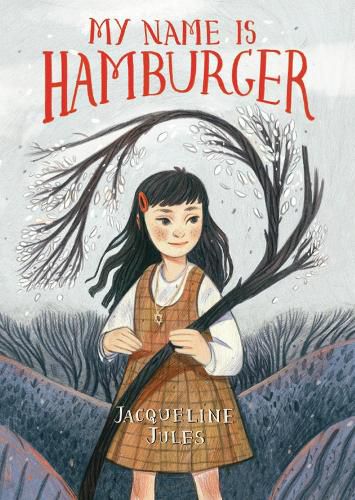
My Name is Hamburger by Jacqueline Jules


My Name is Hamburger is a verse novel. Jacqueline Jules packs a lot into this short book - Jewish culture, discrimination, hopes and wishes, friendship complications, bullies, belonging, making new friends, Holocaust survivors, school life and family life.

The year is 1962 and Trudie's parents are holocaust survivors and Jewish. Her father owns a printing business and her mother stays home to look after her new prematurely born baby brother. 

I like how my family sit at our round table
just eating a tasty food, not a last name
I wish didn't go with my first.

Trudie has a very special friend who lives nearby named Lila. They have been friends since they were babies. Trudie excels at spelling and so as this story opens she is competing in her school level competition. Trudie is in grade four. She and her dad have been studying hard for this. She spells homogenous and makes it to the final round of two contestants but then the judge gives her a word with a silent letter - rhythm.

Like a gherkin.
That little green pickle
Kids like to crunch

This gives rise to more dreadful teasing by one horrid boy in her class - Daniel Reynolds. Trudie is so disappointed about the spelling bee but there is the hope she can compete again next year - she did make it through five rounds. I loved the way her teacher celebrates her achievement. 

School should be a happy place for Trudie but every week there is the problem of the music class. Trudi cannot sing the Christian songs and so she spends her time in the library. She loves being with the librarian Mrs Nolan, doing tasks like shelving books from A to Z. It is lucky because Trudi loves to read and she is getting close to the target on fifty books on the class reading chart. She didn't win the spelling bee perhaps she can win the reading trophy. Then a new boy arrives. He is also subjected to racial taunts because he is thought to be 'Chinese'. In fact he was born in the US.

Meanwhile Lila seems to have found a new friend. A pretty and popular girl named Sue Ellen. Young modern readers might be shocked when they read that Trudie cannot be invited to Sue Ellen's birthday party because as a Jewish child and so she is not allowed into the Colburn Country Club. The new boy, Jerry Braswell, who lives next door also used to be her friend but then he joined up with Daniel Reynolds. They taunt the girls and one day they throw water bombs at them on their way home:

Only red balloons, scattered
in little pieces all over the street
along with my trust
in mothers who understand

Trudie loves doing things with her father. Her mother is always distracted by the baby. They decide to plant a cherry tree in their garden but then Trudie comes home one day and the little plant has been destroyed. Not long after this her father has a dreadful accident and he can no longer work.

Her father does not tell Trudie much about the holocaust but he does offer some wisdom:

"He says 'hate' starts with separation and grows bigger, until it turns to stones angry people throw through windows. ... Daddy doesn't like the way I say that word 'different'. Doesn't like when it pulls people apart, puts some on a pedestal and others in the dirt."

"In my life ... I've seen people turn their backs when others suffer. But today ... true neighbours show me the best of what people can be."

I read My Name is Hamburger on a Kindle but this 2022 book is still available in paperback. Here is an interview with Jacqueline Jules. And here is a review from the Jewish Book Council.

Bookseller blurb: Trudie Hamburger is the only Jewish kid living in the small southern town of Colburn in 1962. Nobody else at her school has a father who speaks with a German accent or a last name that means chopped meat. Trudie doesn't want to be the girl who cries when Daniel Reynolds teases her. Or the girl who hides in the library to avoid singing Christian songs in music class. She doesn't want to be different. But over the course of a few pivotal months, as Trudie confronts her fears and embraces what she loves--including things that make her different from her classmates--she finally finds a way to say her name with pride.

Friday, December 20, 2024

All the Beautiful Things by Katrina Nannestad illustrated by Martina Heiduczek


"It feels like all the beautiful things have to be hidden away ... "

"The world is a jigsaw puzzle, every person a unique piece. There's a space for each one, but it must be the space made just for them. And if we leave one piece out, no matter how small, plain, insignificant or odd it may seem, the jigsaw puzzled remains incomplete. 
The picture looks ugly because there is a gap."

In the world of Germany in 1939 to 1945 every child has to be perfect. Anna is perfect - the perfect German girl. She is athletic, clever and has that perfect blonde hair and bright blue eyes. Her sister however is not perfect. She has a disability and Mutti and Anna know if little Eva is found she will be taken away. 

"Eva was born with a disability that weakens her body and makes it hard for her to learn new things. Eva didn't walk for a long time and she's still a bit wobbly. Words came much later .... It's unlikely she'll ever learn to read. And she's so very small and thin, more like a toddler than a seven-year-old."

Eva takes delight in making paper dolls. The family have to keep her hidden, but Anna is able to collect tiny treasures - a piece of lace, a ribbon, a small piece of coloured paper - and Anna weaves a magical story for Eva as they work together to create new outfits for dolly. 

"Eva fetches her square biscuit tin and returns to the kitchen table. She opens the lid and gasps with delight even though she knows exactly what's inside - Dolly, a flat cardboard doll with woollen hair and tissue paper underwear, and eight flat dresses. They're all made from scrap paper and other treasures Mutti and I have scrounged from floors, streets, bins, barns. ... Every piece of the dress needs a story."

Anna and her friend Udo work hard to keep Eva a secret but there is danger everywhere. A boy in their neighborhood - Manfred is especially dangerous. "He is fourteen, tall, strong and handsome. He is in the special patrol group, Hitler Youth's very own police." 

Woven into All the Beautiful things we meet Eva Braun, visit the countryside home of Hitler, and in some awful scenes witness the indoctrination of the children in class against anyone who is not perfect - people with disabilities, people who are different and of course Jewish people. In one scene we see brave Anna quietly taking Nazi propaganda posters from her school and at home she burns them.

Luckily Anna and Udo do find friends in their town and one of these is seamstress Fraulein Linz. Little do they know that this lovely woman will be the one to hide little Eva when it becomes too hard to keep her at home and keep her safe. Fraulein Linz is living a double life. The Nazi wives visit to have her make their beautiful clothes and she even appears to be friendly with Eva Braun but this is all just a ruse. 

"How do we tell the monsters and the angels apart?"

This book has 327 pages, and I read it all in one sitting - YES, it is that good. In fact, this book is wonderful! I actually read this book about 3 weeks ago but I just wanted to sit and think and let it settle before penning something here on my blog. I actually feel I am quite inadequate as a blogger and lover of middle grade children's books to even begin to talk about this amazing book. One of the most precious parts of this story is the emotional intelligence of young Eva. 

There are some quite terrifying scenes in this book which I think demonstrates the power of this writing. One that has lingered with me is when Anna is stopped and told to empty her pockets by a member of the Gestapo. They have been watching Udo. He is part of the resistance and their communication is via train tickets. Udo has slipped it into Anna's pocket and now Anna needs to take it to Pastor Almendinger.

"The railway station's a perfect exchange for messages. Always busy. ... I'm there all the time, looking for discarded tickets for Dolly's dresses. In fact, there are four in my pockets right now. ... 'I'd like to see what's in your pockets.' ... I stick my hands into my pockets, grab the lining at the bottoms and turn them inside out. Everything that was inside spills. The tiny folding scissors, bottle tops, acorns and buttons fall into the snow, but the wind grabs the rest and sends it fluttering along the street. Including the very important train ticket for Pastor Almendinger."  

All the Gestapo see is a collection of rubbish.  

Here are a couple of text quotes:

"We're crying for Eva, who is safe, but whose life has grown smaller yet again. How many times must her world darken and shrink? How long can she live this way without the light in her eyes fading, before hugs in her arms slacken?"

"And then I shudder. Not because of Manfred's fanaticism. That's old news. It's just I've never been called a traitor before. I realise that a person can be both a hero and a traitor. It depends on your point of view. To Eva and Mutti, I'm a hero. To Hitler and Manfred, I'm a traitor." 

All the Beautiful Things is certain to be a CBCA Younger Readers Notable, and I am also sure it will be shortlisted. Here are a set of teachers notes from the publisher. I highly recommend All the Beautiful Things for readers aged 11+. 

This is a great read, suffused with love and humour. As usual Nannestad has got the balance just right, presenting the reader with thought provoking situations while keeping them enthralled with suspense, some mystery, and lots of giggles. A must for every school  and home library. Storylinks

All the Beautiful Things is as much a story of resistance as it is about loyalty and family, but also, finding out what it means when the rules you think exist start to crumble, and your world changes in so many ways. It is a book that will make you question prejudices and what we assume disabled people are like, and ponder how we can help people who need it. And I think makes us ask ourselves what we would do if we ever found ourselves in a similar situation. Another wonderful novel from Katrina Nannestad. The Book Muse

History can be tough to understand, especially when it comes to things like war and prejudice. But Nannestad takes the real stories of the past and wraps them up in a way that is both accessible and heartwarming for kids. You’ll not only get to see the struggles of people who lived through WWII, but you’ll also learn about what it was like to be different in a world where difference meant danger. Better Reading

Some things to think about:

  • It is interesting that Katrina named Anna's little sister Eva and Anna also meets and 'befriends' the famous Eva Braun. 
  • When you read a book like this as a reader you put your trust in the author that there will be a 'happy ending' and that characters you love will be kept safe. What happens if this 'rule' is broken?


In November I attended a terrific 'fireside' chat at Gleebooks Kids with Katrina Nannestad.  Here are some things I discovered:

  • Katrina will appear at our Sydney Writer's Festival in May 2025
  • Her favourite character from her books so far is Udo (from All the Beautiful Things) and also Sasha from Rabbit Angel Soldier Thief
  • Silver Linings is her personal family story and a sequel is planned
  • Katrina reads and researches history through personal accounts. She likes to find lesser-known stories of World War II
  • She plots her stories and has a clear plan of the way the plot will be structured
  • When Katrina is writing one of her novels, she writes every day of the week and often becomes totally absorbed in the journey of her characters. Each book from this series takes 8-9 months to write.
  • Her new books - another Lottie Perkins title and a new series about a character named Frances Bloom.
In November Katrina Nannestad ran a competition where people sent in their own paper doll creations. Take a look here.

After reading All the Beautiful Things you will want to read every book by Katrina Nannestad especially her stories set during World War II -   


Here are some other companion books:


I am reading this one at the moment so I will talk further about it here in the coming weeks. 

Wednesday, June 12, 2024

I'll Keep you Close by Jeska Verstegen translated by Bill Nagelkerke


"I'm sick of the silence. ... Even when you don't speak, you're still saying something."

I picked up this book in a Melbourne bookshop. Why? I liked the cover (first impressions do count). The cover of the English version of this book is by David Weisner (you may know his fabulous books such as his wordless book Tuesday). Then I read that it was originally published in Dutch (translating books costs a lot of money so usually these books are well worth reading). Finally, I read the blurb and I was intrigued. 

Listen to an audio sample (5 minutes) from the beginning of the book. Here is a video video introduction from the publisher. Here is the review from Lamont Books (this book was included with their Lower Secondary standing order).  I have listed this book as Young Adult. Some booksellers suggest age nine but I think this book is more suited to mature readers aged 11+. 

Publisher blurb: Jeska doesn’t know why her mother keeps the curtains drawn so tightly every day. And what exactly is she trying to drown out when she floods the house with Mozart? What are they hiding from?  When Jeska’s grandmother accidentally calls her by a stranger’s name, she seizes her first clue to uncovering her family’s past, and hopefully to all that’s gone unsaid. With the help of an old family photo album, her father’s encyclopedia collection, and the unquestioning friendship of a stray cat, the silence begins to melt into frightening clarity: Jeska’s family survived a terror that they’ve worked hard to keep secret all her life. And somehow, it has both nothing and everything to do with her, all at once. A true story of navigating generational trauma as a child, I’ll Keep You Close is about what comes after disaster: how survivors move forward, what they bring with them when they do, and the promise of beginning again while always keeping the past close.

Jeska's class are studying World War II and in particular the impact of these events on The Netherlands. At home no one will answer her questions, so she starts a list with the words - who, what, where, how, why and when and every time she hears or learns even the tiniest fragment of information, she adds it to her notebook. Her teacher has talked about the terrible treatment of the Jewish people. He is planning to read a book to the class - Winter in Wartime - but when her mother discovers this, she tells the school Jeska cannot attend this class and instead must sit in a different part of the school each afternoon. Jeska has no idea why. Also no one will talk about Hesje - the name her grandmother used when she was confused during one of their visits to the nursing home. Bomma has a photo album but who are these people and what happened to them?

Going back to what I said about this book being a translation, I did marvel at the poetic language and phrases - here are a few examples:

"A school is a king of monster with a belly full of children. In the morning it gobbles children up, and in the afternoon, it spits them all out again. Me included."

"I step onto the red gravel of our driveway. When you walk on it, it sounds like you're crunching on a biscuit."

"Mr Schouderland is going bald. His hairline is shaped like a small harbour where two boats could anchor."

"I watch my mirror image brush away the tears. I trace the outline of my face in the mirror. My light-coloured eyes stare back at me, a little sad perhaps, but still sparkling. A small face, pale skin, dark hair. Ordinary. A forehead, a jaw, a nose. Nothing special. Except it's my face. Hidden behind it are my thoughts and stories, including today's. Is it a Jewish face that looks back at me? It doesn't feel Jewish. But how does that actually feel? I have no idea."

Here is an interview with Jeska about her book.

Jeska Verstegen is an author and illustrator living in Amsterdam. She is a descendant of Emanuel Querido, the revolutionary Jewish-Dutch publisher who was captured and killed by the Nazis in World War II. Jeska began her career in 1990 as an illustrator for magazines and children's books. I’ll Keep You Close is her debut novel, based on the true story of her own family history.

Debut author Vestergen tells this true story of her family’s previously unrevealed identity and history. ... Setting this book apart from other Holocaust survivor stories are the language and imagery, a family story that focuses on very young children, the Dutch setting, and the attempts of a sensitive young person to understand mystifying adult behavior and PTSD—in its specificity, it finds the universalKirkus Star review

Here is the Dutch cover of I'll Keep you Close.


Read about the translator Bill Nagelkerke here. He translated has some books I have read and enjoyed: Eep! by Joke van Leeuwen; The Day My Father Became a Bush by Joke Van Leeuwan; and Wolf and Dog by Sylvia Vanden Heede.

Wednesday, February 28, 2024

Safiyyah's War by Hiba Noor Khan


Take a look at the labels I have assigned to this post - curiosity, friendship and fear.

Safiyyah lives in the mosque in Paris. The German army have marched into the city. Luckily, they are not persecuting the Muslim residents of Paris and people are still able to attend the mosque. Safiyyah's father works at the mosque and her family live in one of the apartments. Everyone is living in fear. Safiyyah has two dreadful encounters with soldiers on her way to school and on her way to deliver medicine to an elderly Jewish man. 

Safiyyah's parents, especially her father, are smuggling Jewish people out of the city. Safiyyah becomes a messenger, so she has even more reason to be dreadfully afraid. Luckily, she is an intelligent girl and also luckily, she is incredibly curious. This means she finds out many more details about the rescue of Jewish people who are using the mosque so they can then escape to safety. She knows many more details than her father would have ever planned to tell her. Near the end of the book this information becomes vital as the men including her father are detained in the main prayer room and it is now up to Safiyyah to help over fifty people urgently escape. The tension in this book is so real and certainly keeps you turning the pages.

As with all the best books for Middle Grade and Upper Primary readers about the events of World War II, this book is told as a first-hand account from the point of view of a young child. I have added a few others at the bottom of this post including some special picture books that I used to share with my Grade Six students.

'Safiyyah's War has the soul of a classic & the urgency of a story for our times. A tale of tolerance, unthinkable bravery, and heart-in-mouth true events. I loved this book' - Kiran Millwood Hargrave

'All at once, Safiyyah's War broke my heart and filled me with immense hope. With its unforgettable characters and exquisite storytelling, this really is an extraordinary book' - A F Steadman

'Safiyyah is a protagonist I was rooting for all throughout; a lovely, kind-hearted girl whose story filled me in turns with despair and joy. This book shines through with kindness and empathy at its very heart' - Nizrana Farook

This is a high-octane venture suffused with sheer terror that Safiyyah’s family’s activities will be discovered by the wrong people. There are two important relationships which stand out, particularly the evolution of Safiyyah’s interactions with her father and of her growing respect for him and his work. The other one is with her beloved grandmother, Setti, who exerts a calming and wise presence and has some of the most profound ideas of the novel. Historical Novel Society

This is both a gripping and moving novel. Hiba Noor Khan brings her detailed research to life and introduces us to many less familiar aspects of occupied Paris. The plot is full of suspense and builds to a thrilling climax. Safiyyah is a courageous and compassionate heroine who reminds us that anybody can make a difference. Just Imagine (read this review for more plot details)

Listen to an audio sample from chapter one page 3.

Companion book:


You could type any of these titles into my search bar - all of these would be fabulous to share with a reader aged 10+ who has read Safiyyah's War or who has an interest in the events of  World War II.