Showing posts with label Parent talk. Show all posts

Sunday, December 10, 2023

Read aloud to your child every day!


Seven very important words - Read aloud to your child every day!

#readaloudtoyourchildeveryday 

Yesterday I went to a baby shower, and I was thrilled to see that the new mum-to-be was gifted several children's books (a big pile from me too, of course) including Mem Fox Time for Bed; books from the That's not my series; and Magic Beach by Alison Lester. The sister of the mum-to-be organised a Nursery Rhyme quiz but only the older family members and friends had any idea about these famous rhymes. I was pleased that I also gifted the new baby a large Nursery Rhyme book, but I do hope the young friends also discover these and read them aloud when they start their own family. 


Last week I read about this wonderful promotion by the CBCA in Tasmania. I am in awe of this idea and huge initiative. I am sure the CBCA in Tasmania are just a small organisation but they have created an eye-catching banner (and added my logo WOW). They are aiming to raise awareness far and wide about the vital importance of reading to children every day. I hope other branches of the CBCA take up this idea too!

Years ago, when I spoke to groups of new parents in my school I always shared a tiny book by Rosemary Wells and now I quote part of her text on every baby card.


Read to your bunny often,
It's twenty minutes of fun. 
It's twenty minutes of moonlight, 
And twenty minutes of sun. 
Twenty old-favorite minutes, 
Twenty minutes brand-new, 
Read to your bunny often, 
And . . . 
Your bunny will read to you.


"The Tasmanian Branch, Children’s Book Council of Australia, partnering with Toast for Kids Charity Inc., are proud to launch the national campaign “Read Aloud to Your Child Every Day”, a simple message encouraging parents, grandparents, siblings and carers to read to their children for their literary growth and education; investing in their future.

Recently released NAPLAN data (see ABC News report) showed that one in three school students throughout Australia are not meeting minimum numeracy and literacy expectations, and one in ten are so far behind they need additional support. Furthermore, over decades Tasmania continues to suffer from an illiteracy rate of 50%. Informed by these facts, we are championing our cause to develop a culture of “Read Aloud to Your Child Every Day”, locally, state-wide and nationally.

We are commencing a national campaign, reaching out to institutes, governments, schools, parent groups, agencies, not for profits, speech pathologists, writers’ groups, book and reading advocates, presenting the opportunity to partner with the effort, adopting and promoting the one message: 

“Read Aloud to Your Child Every Day”."


I have talked about this issue of reading to children in previous posts:

Can you see the ducks Mummy?

In that post I said: I dream of creating an advertising campaign where I share the importance of reading to and with children and the importance of talking to children and the importance of putting that phone away so parents, and other adults can pay attention to their child. I deeply worry about the generation of children who have been ignored while their parents give all of their focus to small screens. 

Reading to Preschoolers - five blog posts:

Part One

Part Two

Part Three

Part Four

Part Five


Take a look at the ten read aloud commandments from Mem Fox (author of Possum Magic and Koala Lou and heaps of other wonderful books). 


Here is my former library slogan (I saw it in a Canadian elementary school in 1994):


Now for some books for parents. Many of the really good ones are sadly long out of print - Babies need books by Dorothy Butler; and Reading Magic by Mem Fox. These three are worth finding:


Read my blog post about Raising Readers

I am including this even though I have not read it myself but the authors are very well respected. 


Monday, March 27, 2023

Reading to Preschoolers parent talk Part Five


I am penning this post to draw together my four previous posts on the topic of reading to and with preschool aged children. I am so lucky to be able to talk with a group of parents in a preschool tonight.

Here are my previous posts:

Part One some book ideas

Part Two books to good to miss and books with a repeated refrain

Part Three older book treasures to find in a library and parent reference books

Part Four asking questions/talk handout

Here are some resources to explore:

Book Trust "The Benefits of Reading"

Reading to Children: Why It’s So Important and How to Start

READING WITH PRESCHOOLERS

10 ways to encourage your preschooler - on the road to reading

Momo Pinterest collections


Here is the script of my talk for tonight:

Preschoolers know a lot of things they didn't know as babies. They don't yet read independently and no one expects this, but IF they've been read to a lot, they know a thing or two about reading:

·       They know books are read from front to back.
·       Pictures should be right-side up
·       Reading is done from left to right
·       The language of books is different from spoken language
·       Words have different sounds in them
·       There are familiar and unfamiliar words


Choosing lots of different books to read aloud will build your preschooler's vocabulary, and help your child learn about different topics and understand how stories are structured and what characters do in them.

AND they will associate this activity with fun and pleasure

AND your child will begin to develop a longer attention span which will help later when we talk about reading stamina

BUT it is not your role to teach your child to read – reading aloud every day is a vital stepping stone to later reading achievement and success. It also helps develop listening skills!

The issues of phones and distractions are real! Plan to turn off or put your phone away – your child needs your undivided attention – they need to hear you read and share books and they need to have conversations.

If you want to have a discussion (hold off until your second reading and don't ask all of these just one or maybe two):

For example:

• What do you see on this page?

• How do you think the characters feel?

• What do you think is going to happen next?


When you have finished, talk about how your child feels about the book (don't ask all of these just one or two):

• What did they like?

• What didn’t they like?

• What can they remember about what happened?

 • Who was their favourite character? Why?

• Link the story to the children’s experiences. Can they remember when they did something similar? Make connections.

Most importantly, have fun!


Fill spaces with books so it all seems natural when you reach for a book to share – books in their room and books on the coffee table

Let your child see YOU reading (including dad)


It’s okay to abandon a book

Some popular series do not always make good read aloud books but you can use these in other ways to talk about the pictures if the text is too tedious

Choices in a library – you choose 5 I’ll choose 5 – negotiate this

You will develop your own taste and your child will develop taste through exposure to the best books and exposure to fine art through illustrations – a picture book can be a child’s first introduction to art!


Here are 7 great reasons reading aloud to children:

1. Children learn a great deal about reading when being read to. By reading the books together children learn to recognise words and how they are used. Children who are read to regularly in their preschool days perform better once they get to school.

2. Reading a book with a child is a really rewarding and special way to spend time together. Seize the moment, foster curiosity. Plan to read and re-read. “Read it again” is a huge compliment from a child.

3. It's a fun time often full of laughter, especially when special voices are used for different characters and emphasising adventurous events. Laughing with a child is one of the best things in life.

4. Children respond so well to routines, to consistency and having a regular routine of reading together and helps creates feelings of safety and security. Before you begin, look at the cover and talk about it, notice the end papers, say the title, author and illustrator names.

5. Having the focus and attention of an adult makes children feel valued and improves their self-esteem. It also gives a great opportunity to have open conversations about what's happening with their life - vital for keeping the lines of communication open and giving the opportunity to know about any potential problems or risks.

6. Reading aloud and sharing stories with children helps them fall in love with reading and books. Associating positive feelings like happiness, warmth and safety with reading helps children. ENTHUSIASM!! Follow their interests eg Diggers child. Find poetry books, read nursery rhymes, match fiction and nonfiction. Ask for help in the library!

7. You don't have to be a great reader yourself for a child to enjoy you reading to them - they love you, they will love the story, time and attention you are giving them. Reading regularly to a child will help you gain confidence. It will become easier the more you do it.


Every day, make a quiet, restful place for ten, fifteen or even twenty minutes. Put your child in your lap and read a book aloud. This should feel like a beautiful break during or at the end of your busy day.


Finding books

We speak English and so we can access books from UK, USA, NZ, Canada and Australia!

Visit your local library. There are hundreds of book ideas out on the internet but don’t be afraid to just pick up a huge selection from your local public library. Talk to their staff and use their catalogue!

Blogs:

The Bottom Shelf

Kids' Book Review

Book fairs such as Lifeline are terrific

When you visit your local school ask to see the library – if your older child is at school ask to borrow books – the Teacher-Librarian will welcome you.

Give books as gifts


Sunday, February 9, 2020

Dear Parents by Gabbie Stroud


"I can't be your child's teacher and their wellness coach/personal assistant/property manager/solicitor/dietitian/spiritual guru/psychologist/doctor/personal police officer/disputes-resolution representative/personal interest advocate/friendship coordinator."

"I want parents to work in partnership with me and the school to educate and develop the whole child. I want you to feel welcome to come in and discuss problems and issues and concerns. I just want to share the load with you because I can't carry it all myself." (page 27)

I started to read Dear Parents on the bus home on Friday but quickly realised I was probably going to be laughing out loud, quite loudly and that might not be so good on a crowded bus. So when I came home I began to read. Dear Parents has 350 pages. I read the whole book in two sittings. Huge sections of this book made me cheer.  Other parts made me nod in recognition while other parts made me sad.  Sad because Gabbie is a good teacher and, as I have seen myself and with my colleagues, - good teachers really want to teach, they want to prepare meaningful learning experiences for their class and they want time to quietly nurture each precious child BUT so many 'other things' are getting in the way of this.

"I spend less time now preparing my lessons than ever before. It's lucky I'm an experienced teacher and can glance at a program, see the words, add mixed numerals with same denominator, and make something up from there. I do a lot of chalk and talk out the front explaining things, but I'm never as prepared as I'd like to be with resources and materials and open ended questions. Soon my time for lesson planning will be non-existent. ... Lesson preparation should be the core work of teachers. If they're not teaching they should be preparing to teach by devising lessons, preparing aids to help the learners... " (page 260)

Instead Gabbie (and all teachers) spend their time gathering data, providing evidence, filling out forms about everything, sharing their class with parents via programs like SeeSaw. (Gabbie calls this Swing-Set). I had a talk with a colleague about the issue of electronic sharing just last week. My friend, a very experienced teacher, sees other staff using SeeSaw and she wondered if/why she should add this to her already overloaded week.  I said no - don't do it.  Here is what Gabbie says:

"You know what Swing-Set is? It's education's social media; it's an edited version of classroom life, cropped and filtered to show our best side. Why do we do it? Because the technology exists. Because parents will probably like it. Because the school down the road does it. None of these reasons are good enough for me. Just because we can, doesn't mean we should."  (page 261)

Why not?  Because programs like SeeSaw take away your time. Time a teacher should be giving to their class and to individual children. Time so that the day contains magic moments.

The magic of learning. The magic moment. "It's organic, it takes time, and it's different for every Teacher and for every Learner. Many things impact upon this phenomenal exchange, but fundamental to it all is the relationship between the Learner and the Teacher. There needs to be trust, support, encouragement and space to fail. There needs to be room for feedback and practice. There needs to be praise and direction. Most importantly there needs to be time." (page 78)

TIME  TIME  TIME
Time is the motivation behind my blog.  Giving kids (and yourself) time to read.  Gabbie talks about putting away those devices and simply sitting with your child or children and reading a book together. It's not rocket science. It should be easy. It should be fun. It should seem like a natural thing to do EVERY DAY.

Gabbie includes a list of things (page 99) that influence learning. Here are a few:


  • The number of books in a student's home
  • Being read to as a child
  • If their father reads
  • Number of words spoken in the home


Here is another quote to reinforce this important message:

"Reading with your kids, having books in your home (lots and lots of books) and having your children see you as a reader (a reader of books ... ) have a massive impact on your child's literacy skills and development. ... please consider increasing the rime spent reading in your home. (and) ... make that reading fun. Get cosy on the lounge and make it something you look forward to."

On the issue of time Gabbie also talks about all the extra things we do.  There is a list on page 234-5.

"Our school calendar is literally bursting with events, presentations and fundraisers. Every week there's 'something extra': mad hair day, sock day, nude food, the recycle challenge, mufti day, book reading challenge, public speaking, foot clinic, water safety ... Each lesson feels like I'm saying to my students, 'Here's the tip of an iceberg, but we don't have time for you to know anything of its true weight or size."  (page 235)

When I read Teacher by Gabbie Stroud I thought all parents should read it and now reading Dear Parents I want all teachers to read this second volume.


The only part of this book that made me personally very sad, very upset, very concerned was the description of the school Teacher-Librarian. It seems such a shame that Gabbie made the person in this role her 'bad guy'.  I did, however, resoundingly agree with Gabbie that Book Week parades have NOTHING to do with reading and a love of literature. This is an issue which I have very strong feelings about. She also, briefly explores the important issue that teachers (and teacher-librarians) are human and that big things outside of school may be going on in our lives. (page 334).  Of course Teacher Librarians are not the main focus of this book. The main issues are parental responsibilities, the extra work expected of teachers and NAPLAN but I do wish the Teacher Librarian (Mrs Jethro) had not been given such a bad role.

Dear Parents uses a whole year of 'pretend' emails from Gabbie to the parents in her class. It is a book that is easy to read but also filled with wisdom and very important ideas that deserve your deep thought. As I said a large part of the book involves a discussion about NAPLAN. I agree with EVERYTHING Gabbie says on this topic so I won't go into any details here. I have been against this test in all its forms from the very beginning. (Read my post about Teacher).

Gabbie also talks about the issue of school principals.  If you don't work in education make sure you read page 232 so you can, at least in part, understand the system.

"To become a principal, you need to work through levels of accreditation and standardisation (which translates to layers and layers of paperwork) in order to demonstrate your ability and competence. The trouble is being good at paperwork doesn't necessarily make you a good principal. ... the best school leaders are the ones who are great classroom teachers, who are passionate about learning and who know how to manage student behaviour.  ... The best leaders I've worked for never lost sight of the fact that they were also teachers."

Other topics - things to think about:

Sticker charts (page 197)
School reports (page 195)
Mobile Phones on excursions (page 166)
Assemblies (page 118-131)
"I'm not against assemblies. I see their value. I just dream of a time where they become something more organic, a genuine learning experience, a true showcase of something great. my class want to share because they want to share it ... not because it's Week 6 and our name is next on the list."

Listen to this recent podcast where Gabbie talks about her new book - Dear Parents. I highly recommend this book for parents but also and perhaps more importantly, for teachers too.

On a light note one part of this narrative that I identified with and that made me laugh is all about a thread of carpet and kids continually pulling and pulling at it. I had exactly the same thing with my library furniture - kids making holes in the corners of the vinyl seats and over time watching those holes just get bigger and bigger. Of course there was no money for recovering chairs!

Thursday, November 21, 2019

Reading to Preschoolers - parent talk Part Four


Read stories to build empathy and make a better world.”  Emily Gravett (Author)
Even more important than teaching our kids the actual skills of reading is to cultivate a deep love of stories.” Sarah Mackenzie blog
A picture book is a piece of art created to be cherished and applauded. …  I give you permission to simply READ ALOUD – no questions, no stopping, no after-reading conversations.” Maria Walther

Here are the contents of the handout I used at my Preschool night which was sponsored by Puffin/Penguin and Beachside Books.


Read every day, read slowly, and hold the book so the children can see the illustrations

Read with joy and passion – this should not be a chore – vary your tone (soft and loud)

Practice:  the task is more than speaking print. Knowing when to turn the page of a picture book in order to build suspense or keep pace with the flow of the text can make an enormous difference.”

Use voices, movement and songs.  Find books with a repeated refrain, encourage the children to join in. Children love to fill in missing rhyming words.

Why not make a display of the book covers you share, don’t confuse quality with quantity.

Choosing lots of different books to read aloud will build your preschooler's vocabulary, and help your children learn about different topics and understand how stories are structured and what characters do in them. Find poetry books, read nursery rhymes, match fiction and nonfiction.

Finding books - use your public library, visit book shops, charity book sales, fill your space with books.  

Before you begin, look at the cover, end papers, title page and say the title, author and illustrator names. Make this part of your routine every time you read a book to your group.

Don’t spend too long “explaining things”. You can always go back later and explore the words and ideas a little more once you’ve allowed the children to ask questions.  

Seize the moment, foster curiosity. Plan to read and re-read. “Read it again” is a huge compliment from a child.


If you want to have a discussion 

(hold off until your second reading):


Ask questions when you are reading together. For example:

• What do you see on this page?
• How do you think the characters feel?
• What do you think is going to happen next?

When you have finished, talk about how your child feels about the book:

• What did they like?
• What didn’t they like?
• What can they remember about what happened?
• Who was their favourite character? Why?
• Link the story to the children’s experiences. Can they remember when they did something similar?


Some things to think about:

·        Don’t read stories you don’t enjoy yourself. Your dislike will show up in your reading and that defeats your purpose.

·    Don’t keep reading a book once it is obvious it was a poor choice. Admit the mistake and choose another. Make sure, however, that you give the book a fair chance to get rolling. There are some books that just start off slow and get better but you can avoid this all together by reading the book yourself before reading it to your children.

·    Don’t feel like you have to tie every book you read to class work.

·    Don’t overwhelm the listener. Make sure the book you read is appropriate for the intellectual, social, and emotional level of the children you are reading to.

·    Don’t impose your interpretation of a reading onto your children. A story can be just plain enjoyable, no reasons necessary and still give you plenty to talk about.

Don’t use the book as a threat (to get the child(ren) to do or not to do something). As soon as your child or classes see that you have turned the book into a weapon, they will change their attitudes about books from positive to negative.


Wednesday, November 20, 2019

Reading to Preschoolers - parent talk Part Two


My picture book showcase evening with preschool teachers and family day care providers is an initiative of Beachside Bookshop in conjunction with Penguin Random House.  Here are some of the Puffin Picture books you can share with Preschool children.

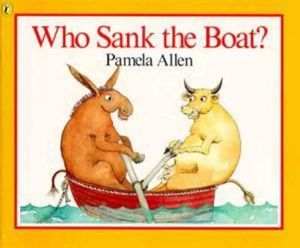
Kids can join in with the repeated refrain:


It is always good to read familiar books. The children may these at home. Young children find it amazing that a most loved book can be found in other places.


These are "old" books but they have stood the test of time and will be enjoyed just as much now as they were perhaps decades ago.


If you and the children enjoy a book - look for more titles by the same author.


Here are some new books recently published by Puffin - Penguin Random House:


We make the time to find the stories that will light up a new understanding. That will entrance. That will captivate. That will spark, even if only for a moment.


Read aloud with animation. Listen to your own voice and don’t be dull, or flat, or boring. Hang loose and be loud, have fun and laugh a lot. Mem Fox