Showing posts with label Reading to children. Show all posts

Friday, July 25, 2025

Does it matter if this is from AI?


I remember when my classroom was a little haven.


“Today, a 7-year-old told me I was useless.”
That’s how my last day as a public school teacher began.
No smirk. No attitude. Just a plain, indifferent voice—like he was commenting on the weather.
“You don’t know how to do TikTok. My mom says old people like you should retire.”
I smiled. I’ve learned not to take it personally.
But still... I felt something crack a little deeper inside.

My name is Mrs. Carter.
I’ve been teaching first grade in a small town outside Columbus, Ohio, for 36 years.
Today, I packed up my classroom for the last time.
When I started in the late ‘80s, teaching felt like a calling. A sacred bond.
We were trusted. Even admired.
We weren’t paid much, but there was respect—and that made up for a lot.
Parents brought brownies on conference nights.
Kids drew me birthday cards with misspelled words and crooked hearts.
And when little ones finally read their first sentence out loud?
There was a kind of joy no paycheck could ever match.
But something’s changed.
Slowly. Quietly. Year by year.
Until one day, I looked around my classroom and didn’t recognize the job anymore.
It’s not just the iPads and smartboards—though they’ve taken over, too.
It’s the exhaustion.
The disrespect.
The loneliness.

I used to spend evenings cutting out paper apples for bulletin boards.
Now I spend them documenting every incident on a student behavior app, just in case a parent threatens to sue.
I've been screamed at in front of my class.
Not by students—by parents.
One told me, “You clearly don't know how to handle children. I watched a video of you on my son's phone.”
He was filming me while I tried to calm another child having a meltdown.
No one asked how I was doing.
No one cared that I was holding it together with gum, caffeine, and sheer will.

Kids are different now, too.
And it’s not their fault.
They’re growing up in a world that's too fast, too loud, too disconnected.
They come to school sleep-deprived, overstimulated, addicted to screens.
Some are angry. Some are scared.
Some don't know how to hold a pencil, how to wait their turn, or how to say “please.”
And we’re expected to fix it all.
In 6 hours. With no aides. With 28 students. And a budget that wouldn't buy snacks for a birthday party.

I remember when my classroom was a little haven.
We had a reading nook with bean bags.
We sang songs every morning.
We learned to be kind before we learned to multiply.
Now?
Now, I’m told to focus on “learning targets,” “data points,” and “measurable outcomes.”
My value is based on how well a 6-year-old fills in bubbles on a test in March.

I once had a principal pull me aside and say, “You’re too warm and fuzzy. This district wants results.”
As if human connection was a liability.
I kept going, though.
Because there were always moments. Small, sacred ones.
A child who whispered, “You’re like my grandma. I wish I could live with you.”
Another who left a note on my desk: “I feel safe here.”
Or the quiet boy who finally looked me in the eye and said, “I read it all by myself.”
I held onto those moments like life rafts.
Because they reminded me I was still doing something that mattered—even when the world insisted I wasn’t.

But this past year broke something in me.
Violence increased.
One child threw a chair across the room. Another threatened to “bring something from home” after being told to sit down.
My classroom phone became a hotline for behavior crises.
The guidance counselor quit in October. The substitute list was empty by November.
The burnout was so thick you could feel it in the air—like a fog of quiet despair.
And me?
I started to feel invisible. Replaceable.
Like an outdated tool in a digital world that no longer sees the need for human touch.

So today, I packed up my classroom.
I peeled faded art projects off the wall—some going back decades.
I found a box of thank-you cards from a class in 1995.
One said, “Thank you for loving me even when I was bad.”
I cried when I read that.
Because back then, being a teacher meant something.
Now, it feels like a job you’re supposed to apologize for.
There was no party. No speech.
Just a firm handshake from the new principal, who called me “Ma’am” and looked at his phone halfway through our goodbye.
I left behind my sticker box. My rocking chair. My patience.

But I took the memory of every child who ever looked at me with wonder, trust, or relief.
That’s mine. They can’t take that away.
I don’t know what’s next.
Maybe I’ll volunteer at the library. Maybe I’ll learn to bake bread from scratch.
Maybe I’ll just sit on my back porch, sipping tea, remembering a world that used to feel softer.
Because I miss it.

I miss a time when teachers were seen as partners, not punching bags.
When parents and schools worked together.
When education meant growth, not just grades.
If you’ve ever been a teacher, you know.
We didn’t do it for the summers off.
We did it for the kid who finally learned to tie his shoe.
For the one who smiled after weeks of silence.
For the ones who needed us in ways no test could measure.
We did it for love. For hope. For belief in something better.
So if you see a teacher—past or present—thank them.
Not with a mug or an apple.
With your voice. Your eyes. Your respect.
Because in a world that moves too fast, they stayed.
In a system that crumbled, they stood.
And in a society that forgot them, they remembered every child.

Let the teachers of the past know they’re not forgotten.
Let the teachers of today know they’re not alone.

This came from a 'recent' Facebook post. It generated heaps of comments (8,700). I had no idea it might be from AI but to me that is irrelevant because this piece contains some raw and real responses to the situation teachers are encountering today. And like this 'teacher' I miss it too. 

I miss putting books into the hands of eager and no so eager readers. I miss thinking about which child (or teacher) would enjoy a book I have just read. I miss thinking about ways to 'hook' kids into learning and how to resource teachers with a huge variety of resources so they can do this too. I miss the book shopping for my library when I focused on my students and their interests. I even miss the parent talks where I had the opportunity to explain about reading and books and libraries and my passion. I miss one special event we held each year for our grade 6 boys and their dads - sadly the 'new' teacher in charge saw no value in this program and yet again this week I am reading about lower reading rates and skills and interest among our boys and men. This program was a tiny one, but it was important. I miss setting out books on front facing shelves and displays in the hope that a child will find that 'just right' book. 

I am lucky I left before kids had phones and parents had 'groups' and access to teacher emails. And thank goodness I left before prescriptive English texts were enforced - this is surely a killer of Reading for Pleasure.

Here are two photos from my former school library.


The full slogan is Read only on the Days you eat


Occasionally I do meet a former student or teacher, and this reminds me I did 'make a small difference' in the life of a child - at least I hope I did. 

Thursday, July 24, 2025

How to get Children Reading Again Financial Review 18th July 2025


“Reading holds the keys to so much of children’s education.”

Reading with children also helps cultivate good (reading) habits.

You might like to begin with this blog post from my friend at Kinderbookswitheverything - she alerted me to this article in the Financial Review.

Here are some quotes from the piece that resonated with me:

Nicki Duckett, the teacher who oversees reading at the school (Silverdale Primary Academy UK) ... has an ambition to marry the “skill” and the “will” to read. In the 20 years she has worked in education, she has observed how the proliferation of gaming and smartphones, a busy school day, plus extracurricular clubs and activities create “more demands on children’s time”.

Without adult reading role models in homes, schools and wider society, it is likely children will find it harder to develop the reading habit.”

Immersion in new worlds, the delight in good writing and the discovery of information are goals in themselves. But the decline in reading has broader implications for employability, participation in democracy, and literacy, including critical thinking, particularly important in the age of digital misinformation.

Another study found “significant evidence that reading is linked to important developmental factors in children, improving their cognition, mental health, and brain structure, which are cornerstones for future learning and wellbeing”.

Tech is also a problem for parents, says Douglas. “They are not modelling great reading habits because they’re always on their phones. They are also more likely to put kids on a device. There is a decline in parents reading to children.”

Check out my recent post which explores many of these important issues

This article also touches other issues such as giving readers choice to select the books they want to read; the availability of books in libraries and shops and classrooms; books for boys aged 11 and 12; and the pesky issue of celebrity authors (I call these Fairy Floss books). 


The statistics in the Financial Review piece are from the UK. Here is a snap shot of the situation in Australia:

Anna Burkey Reading Australia - ABC News 14th July

"We're not just seeing people not reading for themselves … we're seeing people not reading to their children as much and that they are less likely to read to boys than to girls," she said. 

Ms Burkey said she would like to see more dads reading to their children to set a positive example.

"Reading for pleasure as a child is one of the biggest indicators of future success as an adult, and spending time reading increases empathy, while helping us feel less anxious,"

"Reading brings down your blood pressure, it slows your heart rate, it calms you down and it allows focus and concentration in a world where our attention spans are getting ever more fragmented.

"Reading allows us to have more focus and concentration and, if you read regularly, you're more likely to sleep better at night."

"[Not reading] means that we don't see the patterns in things, we don't see the human behaviours that keep repeating in politics and public life because we're not doing the deep, slow thinking and books are vital to the deep, slow thinking."

"Reading is proven to help you understand your place in the world, 
to walk in other people's shoes," she said. 


Saturday, July 12, 2025

The Superpower that Might Matter Most by Richard Glover SMH Spectrum

Reading books to children is good for everyone involved.

I'm giving them a gift.

Later they will also read to themselves, way past bedtime, pretending to be asleep before slipping the light back on and feasting on one, or five, more chapters.


Thank you, Richard Glover, for sharing the joy and importance of reading aloud to your precious grandchildren. This piece, by Richard Glover in the Sydney Morning Herald today (12th July 2025 Subscriber link), is a perfect follow on from another that appeared last Saturday "Is it goodnight for the bedtime story?" by Lauren Ironmonger. (SMH Subscriber link) and from my blog post where I responded to another SMH piece entitled "The Final Chapter"

If I could make one change to the heading of this SMH Spectrum piece, I would delete the word MIGHT because this does matter and it matters SO much. Sorry for all the shouting.

So, thinking about this topic first off, I am going to share a couple of personal examples from just this week. 

Example one: Lifeline run bookfairs in my area four times each year and I try to attend all of them. I especially love going through all the endless boxes of children's books because I find treasures but even more, I love doing this when I have a purpose. This week my friend needed books for her grandkid's preschool which is in a small, remote, northern NSW town. Easy! I found 35 fantastic picture books for just AUS$1 each. I know lots of these will now be read aloud to kids in the preschool and hopefully, if they have a home lending program, which you find in some preschools, a few of these books might even feature as nighttime read alouds - well that's my dream. It was also wonderful to see so many people at the fair and especially young mothers with tiny children filling up bags and strollers with piles of books.

Second example: Another friend of mine spends one day a week with her great nephew. He recently turned one. When my friend was a child, her dad read aloud every night so it is very natural for the aunt to read to this little fellow AND their house is filled with books AND even better this young fellow has learned one very important word - BOOK. He is so happy when his mum or dad or my friend sit with him on the lounge to read and reread his own favourite books. 

Third example: Another grandmother friend of mine asked her now 21-year-old granddaughter if there was a book she would like. This grandmother is a former bookseller and is a book reviewer and also a children's literature academic. Her house is filled to the brim with books. Her granddaughter asked for a specific book but she didn't remember the title - just the essence of the story - luckily this fragment was enough for her grandmother. The book was located and special memories of reading this book over a decade ago were shared. (If you are curious I have put the cover of this book at the bottom of this post).

Parents - can I just say you are truly missing out on something so easy to do with your child and if you borrow books from a library this a FREE activity and it is something you can do over and over again and you will build a beautiful relationship with your young reading companion and WOW isn't this so much better than screen time. AND this is the kind of activity, reading aloud to your child every day, that can easily fit into your daily routine - surely you have ten minutes to read a picture book. I am going to say that again - surely you have ten minutes to read a book to your child AND this is an activity that can become addictive in absolutely the best sense of that word. 

One of the biggest things I miss from working in my former school library, now that I have retired, is reading aloud to the children (of all ages from 5-12). Just like Richard, I used to love using all the voices in books. This week I talked about or revisited some old books that I read hundreds of times: The Pumpkin Man and the Crafty Creeper (Margaret Mahy); Jandy Malone and the Nine O'Clock Tiger (Barbara Bolton); O'Diddy (Joceyln Stevenson); Jeremiah in the Dark Woods (Alan Ahlberg); and of course, my all-time best ever read aloud Chilly Billy (Peter Mayle) and many many more.

I always gift books to new families in the hope that, in these families, reading a book will become a natural part of every day. This week I also talked about the revised book from Megan Daley - Raising Readers - a must read book for all parents.

Here are a few quotes from Richard Glover:

  • "Oh my god, I love reading aloud."
  • "Who doesn't like reading books to kids?"
  • "Fun for me is precisely the phrase I'd use, whether it's the memories of reading to my own children decades ago or reading to those children's children. Often the same books, the pages all torn and tatty."
  • (I need to say it is a wonderful thing to see a book all torn and tatty because this is a book that has 'lived' and not lingered on a shelf).
  • "What's so good about reading aloud? The child ... is sitting still ... sitting calmy, head leaning on your shoulder, entranced. What's not to love?"
  • "Books give you a shortcut into understanding the personality of the child."
  • "One of the defining divisions of the future, some say, will be between those who have the concentration span to read a book (and therefore complete other life tasks) and those who need fresh stimulation every few minutes."
  • "Together with their parents, I may be helping develop the one superpower that will matter."

I do wish, in a way, that Richard had not cited Toby by Margaret Wild as an example - although of course his piece is personal. I love that he shared an authentic reading experience but this is a book that, as a parent, you do need to read it first just to check that it is okay for your child. I worked with a colleague years ago who lost a family dog who looked just like Toby. She couldn't even pick up this book or put it back on a shelf. 

Richard also mentions (in case you are compiling a list) The Gruffalo (Julia Donaldson); Big Ted (a book based on the television program Play School); and Where the wild things are (Maurice Sendak)

I have been 'banging on" about this topic for years. My blog is called Momotimetoread because I had way too many kindy kids returning books to my school library only to tell me 'mummy or daddy or whoever didn't have time to read it!'  That is heart wrenching and I am going to say something even stronger - not reading to your child is a form of terrible neglect.

POST UPDATE - check out the blog post from my friend at Kinderbookswitheverything. Her response reflects her deep thinking and experience with this important topic of reading aloud to children (of all ages). 

Reading with children is precious time, time that you will not get back!

Here are a few recent posts about the importance of reading to children:


Read more about Little Blue here

If you find Little Blue why not grab a willow pattern plate to show your child and this book:


Saturday, July 5, 2025

The Final Chapter SMH Good Weekend Magazine opinion piece by Greg Callaghan


Sydney Morning Herald 

"By far the most troubling thing I learnt while researching this story is the decline of school libraries in public schools, both in their number and standard of facilities. ... 
The decline of school libraries sends a huge message to kids that reading isn't valued ... Yet time and time again school libraries have been shown to play an important role in notching up literacy. If we care about literacy and student wellbeing, a simple first step is to ensure that every child, no matter their postcode, 
has access to a well-resourced school library."

I sincerely wish I could print this quote as a huge banner and post it to so many school Principals who, in recent times, have completely downgraded their school library, the library budget, staffing and position of the Teacher-Librarian.

My friend from Kinderbookswitheverything has made some very thoughtful and important comments after reading this article from our Sydney Morning Herald Newspaper today (5th July 2025) but I felt moved to comment too.

The article was entitled The Final Chapter? and is written by Greg Callaghan a senior writer and the Acting editor with Good Weekend. His heading is 

"Stubbornly low literacy. A steep fall in recreational reading. A rise in numbers of students unable to finish whole texts. ... The decline in reading poses a risk to us all."

Here are some parts of the newspaper article that resonated with me:

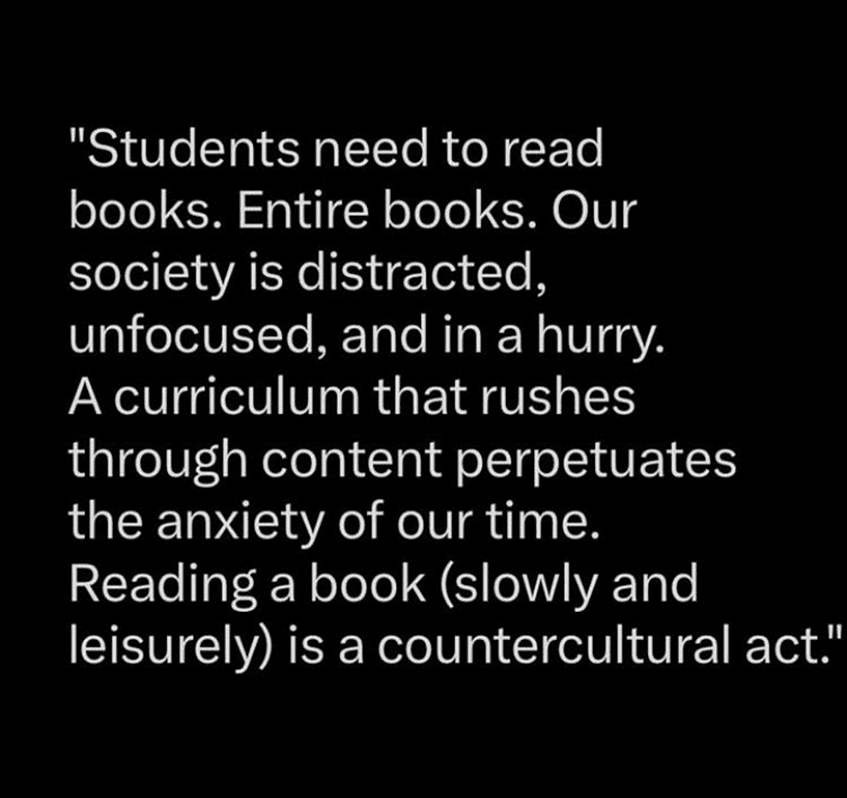
I love the use of the term 'longform reading'. This goes back to one of my constant topics - TIME. Kids can only build their reading stamina to tackle longer books when they practice, and practice takes time! Reading for Pleasure is a new buzz term but really that should have always been our goal in schools. We teach children to read but they also need to discover that this activity is wonderful and magical and joyful and insightful and filled with riches. 


Greg also mentions 'the quality of our reading habits' and this echoes another topic I have talked about previously. Hundreds of books are now published every year (for adults and for children). Our children deserve the BEST books we can offer them. The person who can source these books and gather them all together in one place for very easy access by all readers is the Teacher-Librarian. By the best books I once again want to rage against 'celebrity authors'.  As an aside I was utterly dismayed this week to see a ridiculous 'celebrity' title has been short listed for the Speech Pathology awards here in Australia. Take a look at my second post about this. 


I spoke recently at a conference and my topic was 'Building field knowledge'. My aim was to inspire the group of Teacher-Librarians to build and expand their own field knowledge. We are so lucky here in Australia to have access to the best books not just our Australian titles but the best of the UK, US, Canada and New Zealand. The person best placed to put wonderful books into the hands of students and teachers and parents too, is the Teacher-Librarian.


Another quote from Greg Callaghan: "Compounding the malaise has been a decline in recreational reading across all ages. ... This is of special concern because of the example it sets for kids."  Years ago my school library had an event for our Grade 6 boys and their dads. One purpose of this was to encourage the dads to read with their son and also to be seen reading. Role models are powerful. Your child probably follows your football team or enjoys the sports you once played - that is because you are their role model. This also harks back to another 'hobby horse' of mine - READ TO YOUR BABY (sorry to shout).


And this leads me to another quote from this article: 

"Reading early as a child is a key predictor of success as an adult and both teachers and parents play a role in this. ... Parents exert the single most powerful influence on their kids' reading habits ... if children see adults around them reading for their own enjoyment, they'll learn that reading is valued" 

and I would add your child will see reading as a fun activity and  also more importantly just a natural part of life not some extra separate thing that is only for school. I penned a series of posts about this topic here


Thanks to Greg Callaghan for his interesting opinion piece. I do hope it is read widely and I desperately hope he is wrong to say this is the final chapter - thank goodness for his question mark - so no it is not the final chapter but there is no need for more debating about this topic it is time to act for our children and as Greg suggests also for our world. 

Sunday, December 10, 2023

Read aloud to your child every day!


Seven very important words - Read aloud to your child every day!

#readaloudtoyourchildeveryday 

Yesterday I went to a baby shower, and I was thrilled to see that the new mum-to-be was gifted several children's books (a big pile from me too, of course) including Mem Fox Time for Bed; books from the That's not my series; and Magic Beach by Alison Lester. The sister of the mum-to-be organised a Nursery Rhyme quiz but only the older family members and friends had any idea about these famous rhymes. I was pleased that I also gifted the new baby a large Nursery Rhyme book, but I do hope the young friends also discover these and read them aloud when they start their own family. 


Last week I read about this wonderful promotion by the CBCA in Tasmania. I am in awe of this idea and huge initiative. I am sure the CBCA in Tasmania are just a small organisation but they have created an eye-catching banner (and added my logo WOW). They are aiming to raise awareness far and wide about the vital importance of reading to children every day. I hope other branches of the CBCA take up this idea too!

Years ago, when I spoke to groups of new parents in my school I always shared a tiny book by Rosemary Wells and now I quote part of her text on every baby card.


Read to your bunny often,
It's twenty minutes of fun. 
It's twenty minutes of moonlight, 
And twenty minutes of sun. 
Twenty old-favorite minutes, 
Twenty minutes brand-new, 
Read to your bunny often, 
And . . . 
Your bunny will read to you.


"The Tasmanian Branch, Children’s Book Council of Australia, partnering with Toast for Kids Charity Inc., are proud to launch the national campaign “Read Aloud to Your Child Every Day”, a simple message encouraging parents, grandparents, siblings and carers to read to their children for their literary growth and education; investing in their future.

Recently released NAPLAN data (see ABC News report) showed that one in three school students throughout Australia are not meeting minimum numeracy and literacy expectations, and one in ten are so far behind they need additional support. Furthermore, over decades Tasmania continues to suffer from an illiteracy rate of 50%. Informed by these facts, we are championing our cause to develop a culture of “Read Aloud to Your Child Every Day”, locally, state-wide and nationally.

We are commencing a national campaign, reaching out to institutes, governments, schools, parent groups, agencies, not for profits, speech pathologists, writers’ groups, book and reading advocates, presenting the opportunity to partner with the effort, adopting and promoting the one message: 

“Read Aloud to Your Child Every Day”."


I have talked about this issue of reading to children in previous posts:

Can you see the ducks Mummy?

In that post I said: I dream of creating an advertising campaign where I share the importance of reading to and with children and the importance of talking to children and the importance of putting that phone away so parents, and other adults can pay attention to their child. I deeply worry about the generation of children who have been ignored while their parents give all of their focus to small screens. 

Reading to Preschoolers - five blog posts:

Part One

Part Two

Part Three

Part Four

Part Five


Take a look at the ten read aloud commandments from Mem Fox (author of Possum Magic and Koala Lou and heaps of other wonderful books). 


Here is my former library slogan (I saw it in a Canadian elementary school in 1994):


Now for some books for parents. Many of the really good ones are sadly long out of print - Babies need books by Dorothy Butler; and Reading Magic by Mem Fox. These three are worth finding:


Read my blog post about Raising Readers

I am including this even though I have not read it myself but the authors are very well respected. 


Friday, May 20, 2022

Bedtime Story by Chloe Hooper


"If I squint, I can almost see it, this perfect children's picture book of death ... "
"Can practising pain on the page circumvent it in real life?"

"Sometimes we sneak a look at the last page of a book to see if it's safe to read on. 
We want to find out if the protagonist survives"

In the city today I walked past a very eye-catching display window of a large city bookstore. The featured book was Bedtime Story and while I had not heard of the author (because I mostly read children's books) the illustrator and title caught my eye. 

Inside the store I picked up the book (which was strategically placed right beside the door) and I read the glowing endorsements - one by a children's author:

'Deeply engrossing and honest, human, full of love and tenderness, with moments of sparkling humour in the struggle. I loved everything about Bedtime Story. I loved particularly what it taught me about authors who write for children, the ways that writing and reading provides compensation, balancing the scales between loss and love.’ Sophie Laguna

So yes I purchased Bedtime Story (oddly I had decided not to buy any books today in the city!).

You do need to know this is an adult book. YES I actually read an adult book (my second one this year) and I read the whole book in just over two hours in one sitting. 

Here is the publisher blurb (Simon and Schuster): When Chloe Hooper’s partner is diagnosed with a rare and aggressive illness, she has to find a way to tell their two young sons. By instinct, she turns to the bookshelf. Can the news be broken as a bedtime tale? Is there a perfect book to prepare children for loss? Hooper embarks on a quest to find what practical lessons children’s literature—with its innocent orphans and evil adults, magic, monsters and anthropomorphic animals—can teach about grief and resilience in real life. From the Brothers Grimm to Frances Hodgson Burnett and Tolkien and Dahl—all of whom suffered childhood bereavements—she follows the breadcrumbs of the world’s favourite authors, searching for the deep wisdom in their books and lives. Both memoir and manual, Bedtime Story is stunningly illustrated by the New York Times award-winning Anna Walker. In an age of worldwide uncertainty, here is a profound and moving exploration of the dark and light of storytelling.

Read more about this book:

The Conversation May 5th, 2022

Sydney Morning Herald 28th April, 2022

Readings (Melbourne)

This book is illustrated by Anna Walker. Here is a video where you can see Anna creating illustrations for this book.


So what do I think? Clearly Chloe Hooper has done a huge amount of research both in her search for picture books to read to her two young sons and later about the lives and young grief of many classic children's authors. These include CS Lewis; Eric Carle; JM Barrie; Kenneth Grahame; JK Rowling; and JRR Tolkein. I certainly discovered some interesting things about the childhood experiences of these authors and the way their personal grief influenced their writing. There are also lots of fairy tale references in this book (some I will need to investigate further). I enjoyed the 'academic' aspects of this book and also the very personal journey she describes as the family navigate their cancer journey. 

What I wanted from this book? The first half of this book is about the search for a picture book to read to her sons. I wanted to know which books she found and which books she thought might be useful and of course which books she really did not like. 

"I began to imagine a book that I will find to read to you. It will be written simply, clearly; gently levering open a crushing conversation, with each illustration capturing some essential poetry. Perhaps these images are black and white, before colour rushes in towards the end, with golden, hope-flecked fireworks blooming on the last page. A finale signalling that this will one day be bearable, there will be grace. And meanwhile, the text won't have said too much or too little providing us, wonderfully, with a map of how to survive."

Chloe Hooper dismisses books which feature the death of a pet or an elderly grandparent but I do think reading some of these may have been very worthwhile. Chloe says she did not want books as described here:

"Sure, a child's pet cat dies. Or an anthropomorphised pig grandmother is carefully phased out."

I disagree. Take a look at my post about The Last Goodbye and in particular watch this video by a grief therapist. 

By the way I guess her pig reference might be this book (which I adore).


I said in my post: Old Pig is a very beautiful story about our life journey and the way that journey might end. Old Pig is preparing to die. Ron Brooks has created very gentle illustrations. This is a book to read slowly and it is also a book that, if read at the right time, may help a child make sense of the journey we all travel in our lives.

Chloe Hooper does mention a few children's picture books: Leaf Litter by Rachel Tonkin; Duck, Death and the Tulip by Wolf Erlbruch (Kirkus review); Michael Rosen's Sad book; and The Memory Tree by Britta Teckentrup (here is a review by Little Parachutes). 

"But the truth is, half of this collection is still in my study and I haven't actually read them to you or your brother. Often a book will seem too hot or too cold, too hard or too soft. That or there's a threshold I can't cross."

My wise friend from Kinderbookswitheverything has an extensive Pinterest collection of books on the topic of death and grief.  We both firmly believe it is not appropriate to share these books over the days close to the death of a family member but rather to read some just naturally as a part of your regular book sharing routine. Here are a few books I would like to share with Chloe as an adult reader but not necessarily books to share with her two precious children because some of these are not the right books for these circumstances:


Two questions: On page 55 Chloe Hooper mentions a Grade One read her son bought home about Hercules - I would love to have seen the bibliographic details listed at the back of the book.

At the start of chapter 7 Chloe Hooper says her son's Kindy teacher read the class an alphabet book which listed I is for Iliad.  I recently completed a talk for IBBY Australia about Alphabet books so I am very curious about the title of this one. 

"A group of six-year-olds ... heard about the Trojans surging up the beach to set the Greek ships alight. Bloody battles every day, gore strewn on the sand."  

I am amazed the Kindy teacher shared this book with her class.

One final review quote about Bedtime Story:

"Chloe Hooper has a formidable talent to take complex stories and ideas and truths, and to distil them into a language of direct and powerful beauty. This is a story of grief and of patience, of hope and acceptance. It is also a reminder of the solace that books give us, and of how the imaginary worlds we dive into as children remain with is for all our lives, of how they guide us into adulthood and maturity. There is a quiet courage and strength in this book. It is both gentle and uncompromising, a love letter to family and to literature that is bracingly unsentimental. I was profoundly moved, and profoundly grateful.’" Christos Tsiolkas

Post script to this post - tonight I found an article in The Guardian where Chloe Hooper talks further about the books she purchased for her children and some well informed bookseller recommendations. AND Chloe has discovered my purpose for this post - to read these books as a part of a mix of picture books we share with children and not as a panacea following the sadness of an actual event. 

Near our house there’s a children’s bookshop. The bookseller gently directed me to the best books to navigate rugged terrain. It turns out children are natural philosophers who are intrigued by life’s biggest mystery: death. Who knew the right book on this subject can be informative and comforting? I guess the bookseller did. But I’d now encourage adults to add this topic into children’s literary diet early, to not wait until your family is forced to confront this conversation in extremes. Giving children a framework to think about death provides them ballast when the inevitable hard time comes. The Guardian

Thursday, November 21, 2019

Reading to Preschoolers - parent talk Part Four


Read stories to build empathy and make a better world.”  Emily Gravett (Author)
Even more important than teaching our kids the actual skills of reading is to cultivate a deep love of stories.” Sarah Mackenzie blog
A picture book is a piece of art created to be cherished and applauded. …  I give you permission to simply READ ALOUD – no questions, no stopping, no after-reading conversations.” Maria Walther

Here are the contents of the handout I used at my Preschool night which was sponsored by Puffin/Penguin and Beachside Books.


Read every day, read slowly, and hold the book so the children can see the illustrations

Read with joy and passion – this should not be a chore – vary your tone (soft and loud)

Practice:  the task is more than speaking print. Knowing when to turn the page of a picture book in order to build suspense or keep pace with the flow of the text can make an enormous difference.”

Use voices, movement and songs.  Find books with a repeated refrain, encourage the children to join in. Children love to fill in missing rhyming words.

Why not make a display of the book covers you share, don’t confuse quality with quantity.

Choosing lots of different books to read aloud will build your preschooler's vocabulary, and help your children learn about different topics and understand how stories are structured and what characters do in them. Find poetry books, read nursery rhymes, match fiction and nonfiction.

Finding books - use your public library, visit book shops, charity book sales, fill your space with books.  

Before you begin, look at the cover, end papers, title page and say the title, author and illustrator names. Make this part of your routine every time you read a book to your group.

Don’t spend too long “explaining things”. You can always go back later and explore the words and ideas a little more once you’ve allowed the children to ask questions.  

Seize the moment, foster curiosity. Plan to read and re-read. “Read it again” is a huge compliment from a child.


If you want to have a discussion 

(hold off until your second reading):


Ask questions when you are reading together. For example:

• What do you see on this page?
• How do you think the characters feel?
• What do you think is going to happen next?

When you have finished, talk about how your child feels about the book:

• What did they like?
• What didn’t they like?
• What can they remember about what happened?
• Who was their favourite character? Why?
• Link the story to the children’s experiences. Can they remember when they did something similar?


Some things to think about:

·        Don’t read stories you don’t enjoy yourself. Your dislike will show up in your reading and that defeats your purpose.

·    Don’t keep reading a book once it is obvious it was a poor choice. Admit the mistake and choose another. Make sure, however, that you give the book a fair chance to get rolling. There are some books that just start off slow and get better but you can avoid this all together by reading the book yourself before reading it to your children.

·    Don’t feel like you have to tie every book you read to class work.

·    Don’t overwhelm the listener. Make sure the book you read is appropriate for the intellectual, social, and emotional level of the children you are reading to.

·    Don’t impose your interpretation of a reading onto your children. A story can be just plain enjoyable, no reasons necessary and still give you plenty to talk about.

Don’t use the book as a threat (to get the child(ren) to do or not to do something). As soon as your child or classes see that you have turned the book into a weapon, they will change their attitudes about books from positive to negative.