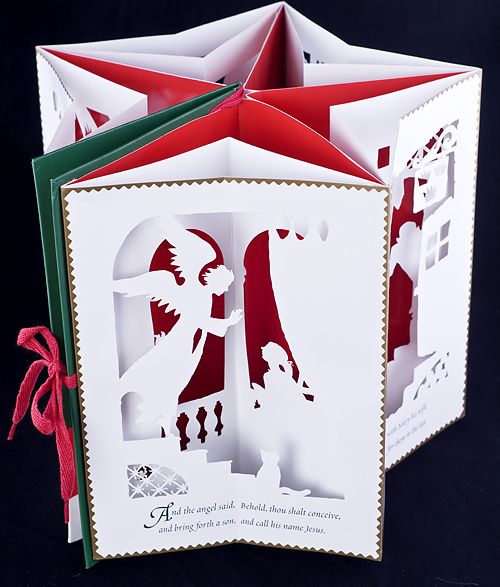
This week I have been so privileged to read the Master's Thesis of a friend entitled "Shapes and forms: Some recent uses of techniques in picture books". This thesis was written in 1990 but it is thrilling to see how many of her selected titles have really stood the test of time and I hope that nearly all of them are still available in your school library. The thesis explores twenty forms - I won't list all of her choices here, but I have added a couple more of my own so I have a total of fourteen forms you could explore. The more I dip into this topic the more possibilities I have found such as stamping or using stamps (Jarrett and Jarome Pumphrey); dual functioning books (such as The Ribbon Le Ruban a book I long to own); clay sculpture illustrations such as Barbara Reid; photographic illustrations; narrative and illustrated nonfiction; and diorama constructions - try to find books illustrated by Soyeon Kim to see this form.

I have listed the thesis picture book example first and then examples of my own. This thesis was originally given the title 'innovations in the picture book' but many of the forms/shapes listed are actually very old for example the popup book and the leporello. The book at the top of this post is a leporello! I do love that word (and form). So the thesis author changed her heading to Shapes and Forms.
I also need to think about where to place one of my most shared and most treasured but very obscure books:

1. Wordless
Up and Up by Shirley Hughes
Check out my Pinterest of Wordless Books (IBBY call them Silent books)
I have tons of favourites but I first thought of one special favourite, because it was the first wordless book I ever read, Sunshine by Jan Omerod. Thinking about more recent ones I would list Stormy by GuoJing and The Midnight Fair by Gideon Sterer illustrated by Mariachiara Di Giorgio. If you haven't discovered Peter Collington try to find his books in a library. My own favourite is The Tooth Fairy.

2. Paper engineering (pop up and die-cut or laser cut)
Haunted House Jan Pienkowski
The die cutting process is a way to create unique shapes in material. It’s often used artistically on covers to cut windows into a book or on interior pages to create flaps, pop-up structures or interesting shapes.
The master of the popup is Robert Sabuda. His paper engineering will amaze you. An older book I marvel over with amazing die cut pages is The Story of Snowflake and Raindrop. This book also fits into the category of a flip over book. More recent examples of die cut pages are found in books by Britta Teckentrup for example her book A Happy Place. You might also look for books by Aaron Becker and Su Blackwell. I recently spied this edition based on Mary Poppins with die cut or laser cut illustrations.

3. Lift the flap
Where's Spot? by Eric Hill
I stumbled on Mouse's Wood by Alice Melvin a couple of years ago and now I see there are sequels. I also love the bird books by Bridget Farmer which have the sturdiest flaps and incredible art. Searching for Treasure by Johanna Bell illustrated by Emma Long made me gasp and you do need to add Who Lives here by Julia Donaldson illustrated by Rebecca Cobb to your collection. All of these books show that flaps are not just for our tiny reading companions but of course every little child does need to see and touch lots of books about Spot.

4. Flip over book (reversable)
Round Trip by Ann Jonas
I cannot cite many examples of these but I do love them. I always think of an old book - And then it Rained by Crescent Dragonwagon. Another example could be Mirror by Jeannie Baker. You don't flip this one over but readers see the action side by side in two different locations simultaneously. An Australian example is Room on our Rock by Kate and Jol Temple.

5. Stitching (using textiles)
The Shoemaker and the Elves stitching by C & W Birrer
I find books with illustrations made from embroidery or stitching or fabric patchwork very appealing. One UK illustrator to look for is Rachel Griffin. You could also look for The Whispering Cloth: a refugee's story by Pegi Deitz Shea and illustrated by Anita Riggio. I love the work by US textile artist Salley Mavor. I would love to own her book called My Bed.

6. Letters in envelopes
The Jolly Postman by Allan Ahlberg (and sequels)
I have so many book forms that I adore but I think the value-added of real letters inside envelopes is one I find the most delightful. AND I thank publishers who are willing to invest money into the production of these. Santa Post by Emma Yarlett; Maisy's Christmas Letters by Lucy Cousins; Letters from Felix: A Little Rabbit on a World Tour by Annette Langen; Meerkat Mail Emily Gravett; and of course The Jolly Christmas postman by Allan Ahlberg.

7. Collage
Where the forest meets the sea by Jeannie Baker
This is an enormous topic. My friend has a terrific Pinterest on this topic and I have one too of illustrators who use collage. Apart from our wonderful Australian illustrator Jeannie Baker,I love the work of Eric Carle; Ed Young; Robin Page; David Wisniewski and Susan L Roth. You may already have a new Australian picture book called Hope is the Thing. And there are so many other names such as Rachel Isadora; Melissa Sweet; Leo Lionni; Ezra Jack Keats; Lois Ehlert; Ellen Stoll Walsh. Another favourite Australian illustrator of mine is Patricia Mullins. I was also delighted to discover this book made with illustrations made from pebbles:

8. Reality (illustrations) versus fantasy (text) or illustrations show a fantasy which contrasts with reality.
Drac and the Gremlin by Allan Baillie illustrated by Jane Tanner
Another older example is Kirsty Knows Best illustrated by Anthony Browne. I also thought of Magic Beach by Alison Lester; A House for Wombats by Jane Burrell; Suri's wall by Lucy Estela illustrated by Matt Ottley and When You're Older by Sofie Laguna illustrated by Judy Watson. I recently discovered this old book: Two Little Trains by Margaret Wise Brown illustrated by Leo and Diane Dillon. There are sure to be lots more for this category.

9. Page turner (anticipation and a guessing game)
I went walking by Sue Machin illustrated by Julie Vivas
Eyes in the Dark by Kim Dale; An animal guessing game by Steve Jenkins and Robin Page; Who's Next? Guess Who! by Anton Poitier illustrated by Sophia Touliatou; Animalphabet by Julia Donaldson illustrated by Sharon King-Chai; and for older readers a title from many years ago - Guess What? by Mem Fox illustrated by Vivienne Goodman. I also need to mention What's Inside: The alphabet book by Satoshi Kitamura and Brown Bear Brown bear by Bill Martin Jr illustrated by Eric Carle.

10. Participatory story
We're going on a bear hunt by Michael Rosen illustrated by Helen Oxenbury
Participation was always the focus of my early weeks with a new Kindergarten group. We read lots of books with a repeated refrain including We're going on a bear hunt; My Brown Bear Barney by Dorothy Butler illustrated by Elizabeth Fuller; There's a Hippopotamus on our Roof eating cake by Hazel Edwards illustrated by Deborah Niland; Caps for Sale by Esphyr Slobodkina; Peace at last by Jill Murphy; Owl Babies by Martin Waddell illustrated by Patrick Benson; and The Elephant and the bad baby by Elfrida Vipont illustrated by Raymond Briggs.

11. Leporello
I added this one to the list but I know the author of the thesis enjoys discovering these. You could add tunnel book to this category too. There is one of these inside The Jolly Christmas Postman by Allan Ahlberg. I also have a book based on Can't you sleep little bear by Martin Waddell which you fold out and join into a circle or a carousel.
Books that have accordion-style, or zig-zagged, pages are called leporellos (or concertinas). These books can be experienced in a few ways: readers can keep the book folded and turn the "pages," flipping the book at the end to experience the other side of the book; or they can completely unfold and expand the book to create one giant, linear narrative. Some leporellos are printed on the front and back, while others are one-sided. Let's Talk about Picture books (you can see examples)

12. Breaking the fourth wall and the off-stage narrator
This one is also my headings and I talk about this with lots of examples here. Look for Hide me, Kipper! by Mick Inkpen; Let’s Play! by Hervé Tullet; A Squiggly Line by Robert Vescio illustrated by Kathy Creamer; Fish and Crab by Marianna Coppo; Bear Hunt by Anthony Browne; The Dictionary Story by Oliver Jeffers and Sam Winston; Press Here Herve Tullet; and Escargot by Dashka Slater illustrated by Sydney Hanson. Another very curious example is Zoom by Istvan Banyai.

13. A catalogue book
Imagine by Alison Lester
I love this term catalogue book as used by the writer of this thesis. It is a perfect label for so many picture books that have no narrative but are filled with things to talk about. The big question by Leen van den Berg and illustrated by Kaatje Vermeire; Things to Look Forward to by Sophie Blackall; What to say when you don't know what to say by Davina Bell illustrated by Hilary Jean Tapper (and sequels); The Important Book by Margaret Wise Brown; Pablo Neruda Book of Questions illustrated by Paloma Valdivia translated by Sara Lissa Paulson; If I had a little dream by Nina Laden illustrated by Melissa Castrillon; and the most obvious example The Baby's Catalogue by Allan Ahlberg.

I need to mention two more titles for this catalogue book category:


14. Poetry with pictures