Showing posts with label Rewards. Show all posts

Thursday, November 27, 2025

The Moon Dragons by Dyan Sheldon illustrated by Gary Blythe


This book has languished on library shelves for ten years and so the Teacher-Librarian is considering 'weeding' it or removing it from her huge book collection. There is a fantastic story hiding inside this book with themes of greed, girl power, bravery and the moral dilemma of truth verses keeping an important secret. I wonder why it has not been borrowed - my guess is the (sorry Gary Blythe) the unappealing cover. 

This is a 'what would you do' story. I will explain this in a minute.

The King declares there are no dragons but then a traveller reveals there are a few left at the top of the mountain. The king now wants a dragon and so he sends his hunters.

"The royal huntsmen went up the mountain. But its slopes were steep and treacherous, its woods filled with frightening beasts. When they returned all they had was a goat."

This enrages the king. He offers a huge reward to anyone who can bring him a dragon. Hunters, trappers, woodsmen, herders and mountaineers all set off but none can find a dragon. Then a young village girl named Alina declares she will try. Everyone scoffs. How can a mere girl, a child, ever succeed? 

Spoiler alert (this book is from 2014 so it is long out of print): Alina finds the dragons but when she returns to the village she tells everyone there were no dragons. I cheered!

I love this final sentence:

"But as she walked along. Alina took a silver scale from her pocket and smiled. A flight of dragons was worth far more than a room full of gold."


"And there, in the dale below, was a dance of dragons, shining pearl and silver in the soft lunar light ... First one, then anther rose into the air, graceful as clouds, 
their voices joined in song. 
Alina stood on the hill top as if in a dream. 
Her heart beat with the singing of the dragons, 
her breath flowed with the rhythm of their wings."

Bookseller blurb: When a king discovers that there are still singing moon dragons high up on the mountainside, he offers a room full of gold to anyone who can bring one to him. The beautiful dancing dragons only reveal themselves to Alina, a young peasant girl, but she preserves the secret of their whereabouts, knowing that there are some things far more precious than a room full of gold.

Blythe’s soft edge, dramatic, yet realistically-seen paintings are peopled with utterly individual characters, while his clever use of scale and cut-off points roots the story in fantasy. Coupled with Sheldon’s lyrical telling of a good story, they together create something magical. Books for Keeps

Take a look at art by Gary Blythe. You should try to find these two books also illustrated by Gary Blythe:


In the US this book is called Under the Moon


You can see other books by Dyan Sheldon here. 

Saturday, November 2, 2024

The Wise Doll by Hiawyn Oram illustrated by Ruth Brown


In this story there are three sisters. Two are horrid and very horrid and the third is named "Too Nice". Little Too-Nice is lonely, but her horrible sisters reject her and then, to get rid of her, they set a challenge that she must visit Baba Yaga and bring back a Toad in a jewelled jacket with a diamond collar. Too-Nice has a little doll that her mother gave her before she died. She asks the little doll for advice.

"put me in your pocket, listen to my advice whenever I have any and let's set out."

Too-Nice knocks on the door of Baba Yaga. The witch invites her in and tells her to wash the mountain of dishes by morning. If she fails, she will be cooked in the cauldron. Too-Nice works hard but there is no way she can complete all of this by morning. Her Doll tells her to rest and magically in the morning all the dishes are clean and stacked in neat piles. 

BUT as you would expect with any traditional tale there are more tasks ahead - three in total. Next the witch tells Too-Nice to sift through the dirt in the garden to find all the poppy seeds. This is another impossible task which her Doll is able to complete. The third challenge is to lay out the food and answer the important question.

"Now answer me correctly, or you will be my first course. What was it you came here for?"

How should she answer this question and will her answer mean she can take that toad home to her awful sisters and if she does give them the toad what on earth might happen next? Is there a way for this story to have that all important happy ending?

I read a few things about Baba Yaga:

  • Baba Yaga is a witch or ogress from Slavic folklore who lives in a magical hut in the forest and either helps, imprisons, or eats people (usually children).
  • Although she is usually the villain of any piece she appears in, she can also offer assistance and is understood as more of a trickster character who encourages transformation than the stock figure of an evil witch.
  • Baba Yaga is probably best known from the story Vasilissa the Beautiful in which she inadvertently frees the heroine from the tyranny of her stepmother and stepsisters
  • Baba Yaga is depicted as an enormous, ugly old woman who lives in a hut built on four tall chicken legs that can turn about or relocate on command. She is often seen draped over her stove or reclining in the hut across the entire expanse, with her large nose touching the ceiling. 
  • There are a number of tales in which she acts as an agent of transformation, helping the heroine or hero toward self-actualization and the completion of a quest.

And a few things about Vasilissa the Beautiful:

  • Vasilissa lives happily with her mother and father until she is eight years old when her mother falls ill and calls her to her deathbed, giving her a magical doll to help her through life. 
  • She must always keep the doll with her, a secret from everyone else, and offer it food and drink whenever she faces some challenge in order to receive help.
  • After her mother’s death, her father marries a woman with two daughters who is envious of Vasilissa’s beauty and abuses her, giving her harsh tasks, which her father can do nothing about since he is away on business trips. Vasilissa is only able to accomplish these tasks through the help of her doll.
  • In hopes of getting rid of Vasilissa, her stepmother keeps sending her into the woods on errands: finally, Vasilissa is sent directly to Baba Yaga’s hut to ask for fire.
  • Baba Yaga demands to know why the girl is there and agrees to give her fire in return for work. She assigns Vasilissa impossible tasks, which she is able to accomplish with her doll’s help.
  • Baba Yaga sends her home with a skull containing the fire she was sent to fetch, and once it is brought into the house, it burns the evil stepmother and stepsisters to ashes.
  • Baba Yaga acts as the catalyst for transformation. The doll performs all the impossible tasks given to Vasilissa, but it is Baba Yaga who assigns them, who warns the girl against asking too many questions (and so saves her from probing too far into dangerous territory), and who provides her with the skull that sets her free from her stepmother’s cruel tyranny.
Nearly all of these plot points are included in The Wise Doll. I am also sure you can easily make connections between this story and fairy tales like Cinderella. 

Good Reads blurb: A memorable Russian fairy tale to entrance and enchant. Ruth Brown's stunning illustrations accompany an extraordinary fairy tale about a little girl who, with the advice of her wise doll, escapes a truly terrifying witch and her slimy, child-gobbling toads. When Too Nice's evil sisters, Horrid and Very Horrid, force her to kidnap the witch Baba Yaga's jeweled toad, Baba Yaga devises a series of impossible tests for the little girl. If Too Nice passes them, she gets the toad, but if she doesn't -- the toad gets her Too Nice's only companion through the ordeal is the wise doll in her pocket, a gift from her mother, whose help leads to the miraculous completion of the tasks.

Superb artwork enhances this offbeat, minimalist retelling of the old Russian folktale in which Baba Yaga the witch is outwitted by an innocent little girl, with the help of a magic doll bequeathed to her by her now-dead mother. ... excellent witchy stuff. Kirkus

My friend from Kinderbookswitheverything asked me to read The Wise Doll. She had it on her Halloween book display for over 3 weeks but sadly no child selected it for borrowing - should she keep this book in her library? Her copy is the first cover shown above.

Case for YES

  • This is such a satisfying story which shows the rewards of hard work, bravery and trust.
  • I love books about dolls and the idea that this doll has magical power bestowed by her late mother adds a beautiful emotional layer.
  • The ending and final words are perfect.
  • This book has the most OUTSTANDING illustrations. I cannot think of a book with a better or more scary witch illustration. 
  • I think the first cover above is appealing - much better than the second cover from a more recent (out of print) edition. 


Here is a review: ‘Oram has a gift for pithy turns of phrase, compressing description into action and dialogue.  She has retold this story in eminently oral language. ... this is folklore justice as its finest.  Looking for stories with strong female protagonists?  Tell this one.’ Janice del Negro, editor The Bulletin for the Center of Children’s Books USA.

The Wise Doll reminded me of this book (which is one I adore to read aloud):


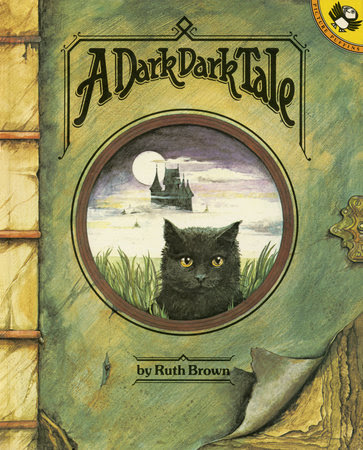
I have been a huge fan of Ruth Brown's illustrations from the time I discovered A Dark Dark Tale (1981) which I read to hundreds of young children in my school library (1984-2017). 


And I also love so many books by Hiawyn Oram especially In the Attic illustrated by Satoshi Kitamura. I also highly recommend her little junior book series 'Animal heroes' also sadly long out of print. 


Tuesday, June 30, 2020

The Prince's Bedtime by Joanne Oppenheim illustrated by Miriam Latimer


Five years ago I talked about The Prince's Breakfast. The Prince's Bedtime is actually the first installment.


Books that use rhyme often don't work or as my friend, who is far more expert than me would say, they don't scan well. I am happy to say this one does work. The rhyme is fun and the beat is not lost when you read the text aloud. My copy of this book (borrowed from a school library) was published in 2006 but there is a new edition of The Prince's Bedtime published in 2019 with an audio narrated by Hugh Bonneville.

Check out the rhyme:

"The first to arrive was a bearded physician
Who promised his medicine would cure the condition."

"But the Prince was so tickled he giggled all night
He laughed and he laughed at the ludicrous sight."

So how will they get this crazy Prince to sleep.  If you look at my post label - books and reading - you will have the answer.

Here is the website for Joanne Oppenheim and also for Miriam Latimer.

Here are some other books for older children about gathering help from across the kingdom to solve an issue:


The Minstrel and the Dragon Pup


You could pair The Prince's bedtime with these:


Tuesday, June 16, 2020

The Seeing Stick by Jane Yolen illustrated by Daniela Jaglenka Terrazzini


Tuesday Treasure


Hwei - the lightless moon on the last day of the month
Ming - becoming luminous

Hwei Ming is blind. Her father the emperor offers a reward to anyone who can help her to see. Visitors come from all over the kingdom with prayers, potions, pins, incantations and spells. Nothing works. One day an old man hears about the blind princess.  He sets off on a long journey carrying a walking stick made from "a single piece of golden wood."

On arrival at the city gates the guards refuse him entry. He looks so ragged and poor. The old man reaches out to touch the faces of guards and then he sits down with his stick and his whittling knife. He shows the guards his carving of the journey he has made to Peking from his home to these city gates. The guards are entranced. His storytelling and carving are wonderful. They take the old man inside the city to show the guards at the gates to the inner city and from there he is taken to the door of the Imperial Palace.

The guards tell the emperor about the wonderful pictures carved onto the golden stick. Hwei Ming is sitting beside her father and she hears the story. She asks to see the stick.

"The old man leaned forward and petted Hwei Ming's head and caressed her cheek. For though she was a princess, she was still a child."  Placing his fingers on hers he helps her trace the stick and "see" the story. "And the princess' slim fingers felt the carved stick. Then he put her fingers onto his face and traced the same lines there. It was the first time the princess had touched another person's face since she was a very small girl."

This is a pivotal moment. Hwei Ming asks to feel the faces of those around her - the guards who are waiting close by and then her father, the emperor.

"She reached out and her fingers ran eagerly through his hair and down his nose and cheek, and rested curiously on a tear they found there. And that was strange, indeed, for had not the emperor given up crying over such things when he ascended the throne?"

You have probably guessed the rest of the story. The emperor gives the reward to the old man, the old man can now live in the Innermost City but he gives away the fortune in jewels. Have you guessed the most important thing about the old man himself?

Jane Yolen is the author of over 300 books. On her web page she talks about writing or retelling this Chinese fairy tale.

The illustrations in this book by Daniela Jaglenka Terrazzini are exquisite. They begin in black, white and grey but move to full colour as the old man shares his stories. Some of the richest pages are laminated giving them a beautiful texture reminiscent of cloisonne.

Image Source Books4yourkids

If you have been following my blog you will know my Tuesday Treasures are usually books that are now out of print. This edition of The Seeing Stick was first published 2009 and so it is out of print as is the earlier edition from 1977 which had illustrations by Remy Charlip and Demetra Maraslis.

I would pair The Seeing Stick with these:


Sunday, August 18, 2019

The Girl with a Brave Heart by Rita Jahanforuz and Vali Mintzi


The Girl with a Brave Heart is a tale from Tehran. I love universal stories like this one - folktales and fairytales.  In a few days I will be visiting a small school south of my city. Their theme this year is our connection to the world. I plan to read this book to their senior primary class. I am focusing on books which:


  • are translated from other languages into English
  • show children from other cultures
  • present a different illustration style
  • are based on universal themes such as kindness
  • might be a book that is new to this group of children


The opening scenes echo Cinderella. Shiraz finds herself living with her stepmother and her stepmothers daughter, Monir, after the death of her beloved father. Shiraz is expected to do all the work- cooking, cleaning, washing and ironing. Shiraz has one precious ball of wool that belonged to her mother. She begins to knit herself a sweater when the wool rolls of her lap and off the balcony.


Shiraz needs to be brave and visit the house next door.

"Shiraz shivered - and not just because she was cold."  "The door creaked open, and an old lady with wild and dirty long hair appeared. She hadn't washed her face, her dress was filthy and her nails were long and curved."

Shiraz asks for her wool but the woman demands Shiraz complete three tasks. 
1.  The kitchen is a mess.  "I want you to smash all the dishes, and the draining board and the sink. Smash everything." 
Shiraz quietly sets to work and cleans up - washing the dishes, mopping the floor and preparing some soup.

2. The garden is a wild tangle with weeds and brambles.
"I want you to cut down all the flowers and pull out their roots.  Cut down the bushes too. Destroy everything."
Shriaz once again sets to work - pulling out the weeds and trimming the plants. She finds a spring and gives the whole garden a long over due drink of water.

3. The old woman herself is next.
"Take these scissors and cut my hair. I don't need this long hair anymore."
Shiraz gently washes the long hair, she brushes and braids it.

"Now the house was calm and clean, and the old lady 
looked much happier."

The old lady instructs Shiraz to visit two pools in the garden - one with clear water and the other dark. Shiraz has to enter the clear pool first diving in three times and then go into the dark pool three times.

When she gets home her step mother does not recognize her. Shriaz is now beautiful.  The step mother asks lots of questions and then she sends her own daughter Monir to visit the old lady. Monir does not clean the kitchen, she smashes everything. She does not clear the garden - she cuts down all the plants. She does not help the old lady with her hair she simply takes some scissors and cuts it. Monir is impatient to dive into those pools. Monir returns home transformed - she is hideous.

"Both the dark pool and the clear pool have the same water. They don't change the people who dip into them. They just make them look the way they feel on the inside."

This book has strong links with The Talking Eggs by Robert D. San Souci.  The Talking eggs is a Creole folktale. How wonderful to see a similar story from a different part of the world.


This story also feels like Cinderella and another Grimm tale called Mother Hulda. Read more about the background to the writing and publishing of this story here. Jump into a Book gives you some ideas for extending this book.

The Girl with a Brave Heart was originally published in Hebrew. Here are some other books illustrated by Vali Mintzi.