Showing posts with label Ancient China. Show all posts

Friday, July 18, 2025

Dragonkeeper by Carole Wilkinson


A young, unnamed slave works for a tyrannical man who purports to be a dragonkeeper. At the time of this story in ancient China the current emperor as no interest in dragons. Now there are only two left, and it is up to the young slave girl to keep them alive in their dungeon home. One morning she discovers one of the dragons has died. Now the adventures begin. 

The dragon named Danzi tells the girl her name is Ping. He explains they need to travel to the ocean, and she needs to carry his dragon stone and keep it safe at all times. Ping only has one friend in the whole world - a rat named Hua. Ping only agrees to go on this journey if Hua can come too. And what a journey it turns out to be. Ping has never been anywhere since she was taken as a slave. They walk through the most amazing countryside and encounter some kindness but also lots of danger because there is a dragon hunter who wants to capture and eventually kill Danzi and for reasons Ping cannot understand he and others also want the dragon stone.

The scene when Ping sees the ocean for the first time (only a few pages from the end of the book) reminded me of the words from the Margaret Mahy Picture book - The man whose Mother was a pirate:

He hadn’t dreamed of the BIGNESS of the sea. He hadn’t dreamed of the blueness of it. He hadn’t thought it would roll like kettledrums, and swish itself on to the beach. He opened his mouth and the drift and the dream of it, the weave and the wave of it, the fume and foam of it never left him again. At his feet the sea stroked the sand with soft little paws. Farther out, the great, graceful breakers moved like kings into court, trailing the peacock-patterned sea behind them.”

You could compare these lines with the wonder of Ping:

"Something on the horizon reflected sunlight like a band of silver. As they drew closer the band became wider. ... The hill gave way to flat land. The silver strip became wider and wider and turned blue as they got closer to it. It wasn't solid, its dimpled surface was dipping and rising. ... Where the blue met the earth there were tiny rolls of white. Ping realised what she was looking at was water. It stretched as far as she could see to the north, to the south and east until it merged with the sky. Its size terrified. her."

I recently talked about reading stamina and long form reading. Dragonkeeper is 343 pages of fairly small print so a reader aged 10+ will need stamina and perseverance but the rewards are great. Luckily things are fairly well resolved at the end of this book but IF you want to re-enter the world of Ping there are several more installments. I took quite a few days to read Dragonkeeper and now I need to consider if I want to see the movie - I think it might disappoint me because there is no way the sweeping story and epic nature of this book could be effectively distilled into a 98-minute movie surely? If you are looking for a class read aloud this could be a good book to consider - but do read it for yourself first - read alouds only work if the teacher loves the book first! Do not kill the book but the teachers notes I have linked to below are excellent and have ideas you could pick and choose from. I won my copy of Dragonkeeper as part of a promotion of the movie - I am glad I set aside the time to read this sweeping adventure story. 

There are more plot details in this review.

Carol Wilkinson waves her pencil like a magic wand and creates a fantasy world set in 141 B.C. China that’s as real as your morning cup of coffee.  ... Ping and Danzi need all the goodness they can muster, because their journey and their lives are challenged by drunks, robbers, corrupt politicians and wizards of the underworld. Ping’s believability grows on you because she, like the nine- to twelve-year-old readers for whom the book is written, has flaws, limitations and self-doubts. In fact, Wilkinson gives us a character with which readers of all ages can identify. Historical Novel Society

I put three covers at the top of this post but you can see even more on Carole Wilkinson's web page. 

My favourite parts of this book were when Danzi the dragon offered words of wisdom to Ping. I am so happy to see the author of the teacher's notes took the trouble to collect these:

The teachers notes say: Danzi is constantly making intriguing statements that Ping doesn’t quite understand, for example: 
  • “All answers lie beyond the gate of experience,” 
  • “Composure is the master of haste,”
  • “The journey of a thousand li begins with a single step,” 
  • “The way of Heaven is to diminish excess.” 
  • “It is because of its emptiness that the cup is useful.” 
  • “Recognising one’s limitations is knowledge,” 
  • “Sharp weapons are not the tools of the sage,” 
  • “The skillful traveller leaves no trace,”
  • “The straight path must sometimes be crooked,” 
  • “Sometimes advancing seems like going backwards,” 
  • “Nothing under Heaven is softer than water,” “Yet it can overcome the hard and the strong.”
  • “The sapling is small, but none can defeat it,” 
  • “Net of Heaven is cast wide. Though its mesh is not fine, nothing slips through.”
  • “He who tries to take carpenter’s place, always cuts his hands,” 
  • “The path is easy if you avoid turning off it.” 

Blurb from the author webpage: Ancient China, Han Dynasty. A slave girl saves the life of an ageing dragon and escapes her brutal master. Pursued by a ruthless dragon hunter, the girl and the dragon make an epic journey across China carrying a mysterious stone that must be protected. This is the story of a young slave girl who believes she is not worthy of a name but finds within herself the strength and courage to make this perilous journey — and do what must be done.


Awards:
  • Winner 2018 Silver Award (Children's Book), Illustrators Australia Awards
  • Winner 2014 Graham Davey Citation, Young Australian Best Book Award (YABBA) 
  • Winner 2013 Gold Award – Book Series, Illustrators Australia 
  • Shortlisted 2006 COOL (Canberra’s Own Outstanding List) Award
  • Winner 2006 Older Readers, Kids Own Australian Literary Awards (KOALA)
  • Winner 2006 Kalbacher Klapperschlange Award (Germany)
  • Special mention 2004 International Youth Library’s White Ravens List
  • Shortlisted 2004 NSW Premier’s Literary Awards
  • Winner 2004 Best Children’s Book, Queensland Premier’s Literary Award
  • Winner 2004 Book of the Year (Younger Readers), Children’s Book Council of Australia Awards
  • Winner 2003 Best Young Adult Book, Aurealis Awards

Check out my two previous posts:


Thursday, February 1, 2024

The Dinner that Cooked itself by JC Hsyu illustrated by Kenard Pak


The Chinese zodiac, known as Sheng Xiao or Shu Xiang, features 12 animal signs in this order: Rat, Ox, Tiger, Rabbit, Dragon, Snake, Horse, Sheep, Monkey, Rooster, Dog and Pig. Originated from ancient zoolatry and boasting a history of more than 2,000 years, it plays an essential role in Chinese culture. The 12 Chinese zodiac animals in a cycle are not only used to represent years in China, but also believed to influence people’s personalities, career, compatibility, marriage, and fortune. 

Five Elements: Ancient Chinese believed that all things in the world, including the zodiac animals, belonged to five categories – Metal (Monkey, Rooster), Wood (Tiger, Rabbit), Water (Rat, Pig), Fire (Snake, Horse), and Earth (Ox, Dragon, Sheep, Dog).

2024 is the Year of the Dragon. In this book the idea of marriage compatibility is explored with references to the Tiger, Dog, and Rabbit and the meaning of these signs - Wood, Earth and Fire. In the western world we might think of star signs in a similar way.

"Long ago in ancient China there lives an honest, respectful and hard-working man named Tuan."

"When Tuan was old enough to live by himself he moved into a small house with a small field but he was lonely and longed for a wife. And so Old Lin and Madame Lin hired a matchmaker."

Tuan was born in the Year of the Dog and so with a girl born in the Year of the Tiger there would never be peace. Then the matchmaker suggested the silk weavers daughter but her name contained the character for Wood and Tuan's name contained the character for Earth. 

"With Wood and Earth fighting for room under such a small roof there would never be growth."

One night Tuan found a snail in his garden. He took the snail inside and fed it cabbage leaves. Over the next nights, when Tuan returns from his work, there is always a delicious hot dinner waiting on his table. If you have read any folktales or fairy tales you might have guessed about this food. The snail contains a beautiful woman called White Wave - a fairy sent by The Lord of Heaven. 

No she is not destined to be a wife for Tuan but she leaves him her shell with the promise that it will always be filled with rice for his dinner. Over time Tuan does find a wife and the final words of this book will make you smile:

"They loved each other very much and lived happily together."

This would be an interesting book to share with a group of older students when you talk about Chinese New Year and the associated symbolism. The illustrations by Kenard Pak are wonderful. Hopefully you can find this book in a library because sadly it is now out of print. I have talked about other books illustrated by Kenard Pak - click on the label on this post to see more. 

Publisher blurb: Long, long ago, in a small town in ancient China, there lived an honest and respectful man called Tuan. Tuan was lonely and looked hard for a wife, but even the matchmaker couldn’t help him. One night, however, Tuan’s luck changed. And so begins the story of Tuan, White Wave, and the Dinner that Cooked Itself. This beautiful and enchanting Chinese fairytale will captivate the imagination with the perfect blend of magic and realism!


Video source: Skwigly

A breath of fresh air in its beauty and simplicity. Kirkus

This book feeds the mind and the senses as it is so atmospheric and the story really draws you in. Drawn in an amazing Chinese watercolour style, the book also shows you some simple Chinese symbols for some of the elements featured in the story so children can practice their Chinese calligraphy skills. It's a beautiful book indeed and such a satisfying story! Read it Daddy

The aesthetic of Pak’s work relies heaving on shape making, pattern and texture to encapsulate that traditional vibe of the tale. The muted palette and attention to detail all work together to make this book visually engaging and utterly beautiful. Particularly effective is the use of these techniques when creating images of food and landscape. Skwigly (you can see inside this book on this site)

You could compare this book with The Paper Crane.

Monday, September 20, 2021

The Empty Pot by Demi


Publisher blurb: A long time ago in China there was a boy named Ping who loved flowers. Anything he planted burst into bloom. The Emperor loved flowers too. When it was time to choose an heir, he gave a flower seed to each child in the kingdom. "Whoever can show me their best in a year's time," he proclaimed, "shall succeed me to the throne!" Ping plants his seed and tends it every day. But month after month passes, and nothing grows. When spring comes, Ping must go to the Emperor with nothing but an empty pot.  Demi's exquisite art and beautifully simple text show how Ping's embarrassing failure is turned triumphant in this satisfying tale of honesty rewarded.

Ping has an empty pot but others bring pots filled with glorious bright flowers.


"I admire Ping's great courage to appear before me with the empty truth, and now I reward him with my entire kingdom and make him Emperor of all the land."

A lovely story, well told and most attractively presented. Kirkus Star Review

A couple of days ago I mentioned The Empty Pot by Demi and I realised I had not shared this splendid book with you here. In fact I also need to talk in general about the US author and illustrator Demi.


Who is Demi? Demi is is the author and illustrator of more than one hundred books for children. Her works have received numerous awards and accolades, among them ALA Notable Children’s Books, The New York Times Best Illustrated Books, Notable Books for a Global Society, American Bookseller Pick of the Lists, the Middle East Book Award, and the Christopher Award, which recognises individuals whose work makes a positive difference in the world. Demi has travelled extensively and studied art in Mexico, India and China.  She lives with her husband in Washington.

Her Chinese husband, Tze-si “Jesse” Huang, told Demi the story of The Empty Pot and The Magic Pillow. He remembered these tales from his childhood in China where his grandmother used to tell him ancient stories. Her original name was Charlotte Dumaresq Hunt.


This is a painting by William Morris Hunt the great grandfather of Demi:


Image source: Wikipedia Commons

Here are just a few of the books by Demi. They are expensive here in Australia and some are out of print but I suggest you look for books by Demi in your local or school library. If you work in a Primary school library I recommend you add The Empty Pot and The Magic Pillow to your library and if you work in a High School library I am certain your art teachers will love the colours, book design, and use of circle frames. Demi's book are wonderful to share with students. 


Here is a list of some titles by Demi:

Marie Curie
Florence Nightingale
St. Francis of Assisi
Tutankhamun
Genghis Khan
The Girl Who Drew a Phoenix
Marco Polo
The Magic Pillow
The Boy Who Painted Dragons
Mother Theresa
The Legend of St Nicholas
King Midas: The Golden Touch
The Dalai Lama: Foreword by his Holiness The Dalai Lama
One Grain of Rice: A Mathematical Folk Tale
Buddha


Friday, July 30, 2021

A Prince and his Porcelain Cup illustrated by Li Jian Translated by Yijin Wert


"The little prince was very lonely without any friends in the palace. He looked at all the porcelain pieces in the palace and loved them. Every day he carefully wiped his mother's favourite porcelain cup."  The cup he loves is called The Chicken Cup. In a fit of rage the little boy breaks this precious cup.


Image Source: Commons Wikimedia


The Prince takes the cup to a porcelain craftsman and over time the wise old man shows the boy how his cup was made from clay on the potters wheel, the care that need to be taken with painting on the design, and finally the placement in the very hot kiln. The little prince comes to realise this is a complex process and his broken cup cannot be repaired. In later years when he became the Emperor, the little prince is still thinking about his mother's cup. He summons the best craftsmen and finally "The Emperor's wish can true. It was like his mother's favourite cup had returned to him."

You can see some art from this book here.

The chicken cup is from the Ming Dynasty. The word chicken in Chinese is similar to the word luck and so chickens symbolise fortune and happiness. Read more here.

About Li Jian: Li Jian graduated from Hebei Normal University in 2001, majoring in Chinese Painting. Formerly a middle school art teacher, children's book editor and a partner in an illustration studio, Li now owns his own illustration studio focusing on illustrations for children's fairy tales. He has many bilingual books about Chinese culture and stories, such as his Chinese Zodiac Series and the stories of Mulan and Zheng He. Source - Shiny Lantern

A Prince and his Porcelain Cup is a dual language text in English and Chinese. Here are some other books illustrated by Li Jian. He has an excellent series which feature the animals of the Chinese zodiac. Tiger Brother will be published in 2022 (The Year of the Tiger). 


I suggest you also look for A Single Shard by Linda Sue Park as a companion text to share with an older reader. This is a story set in Korea which also focuses on the skills involved with pottery.

Friday, December 11, 2020

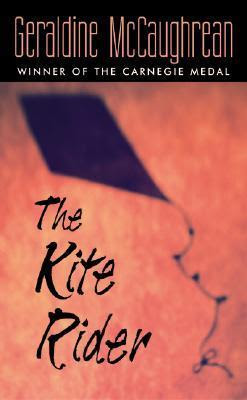
The Kite Rider by Geraldine McCaughrean


Friday Old Favourite


In ancient China superstitions are part of every day life. The gods might be watching you and so it is important to be careful. For example Haoyou wears a "brass collar his mother had put round his neck (it) was supposed to fool the gods into thinking he was a dog not worth picking on."

Haoyou lives on the coast. Traders fill their ships with goods to sell across the sea. It is important to know a voyage will go well so they use kites to test the wind but these are not ordinary kites. Haoyou sees his own father tethered to the kite.

"With a noisy rattle, the wind-tester shed gravity and rose into the air on a gust of wind, tautening the rope. ... his father plunged towards him face-first, eyeballs straining their lids, arms spread wide, head and shoulders buckled outwards from the hurdle."  "Somewhere during the flight, his heart, over crammed with fear, had burst like a sack of grain and his spirit had been spilled into the path of the prevailing easterly winds."

Why has this happened? The evil Di Chou wants to marry Haoyou's beloved and beautiful mother. Di Chou truly is the murderer but no one will believe a young boy such as Haoyou. He is determined to keep his mother safe and his cousin, the wise Mipeng, agrees to help. What follows is a wild romp involving a kidnapping, a circus, a meeting with the great Kublai Khan and numerous thrilling, dangerous and heart-stopping flights for Haoyou himself.

Fast-paced and densely plotted, absorbing, and at times even hilarious. Kirkus Star review

I first read The Kite Rider in 2001 and the images in this story lingered with me so strongly that I longed to read it again. I even purchased a brand new copy because I wanted to add this book to my own ever expanding shelves. Listen to an audio sample here from Chapter One. Take a look here to see the vast number of children's books by Geraldine McCaughrean. I have a plan to re-read another of her past titles - Pack of Lies.

Here are some past cover designs.  If you used this book with a senior primary class it would be great to talk about the power of covers, to discuss the decisions made by book designers, and to think about how much to reveal through a cover. I do like the newest cover above designed by Melissa Castrillion. You can see some of her work in the book Kind. She also did the cover for A pinch of Magic.


You might like to follow this book with these:


Tuesday, September 8, 2020

Ling Li's Lantern by Steve Heron illustrated by Benjamin Johnston


“Darkness cannot drive out darkness, only light can do that.” 

Martin Luther King Jr quoted by Steve Heron interview with Just Kid Lit

The wise man of the village has three children. He wants them to be good, kind and honest "but above all he wanted them to obtain wisdom."  Da Zhi sets his children a challenge. He takes them to the three pagodas and gives them each a small sum of money:

"With these coins, your task is to fill the emptiness of one of these pagodas with anything. You only have one day. Spend wisely."

The first son, Jingming, invests in huge quantities of bamboo. He pays workers to fill the pagoda right to the top with sticks and leaves. His father is pleased declaring this is a sound investment. The second son, Miao, buys feathers and down from a village duck farm. He fills the pagoda with sacks of feathers. His father is pleased with Miao's hard work.

The third child is Ling Li. She walks into the village where she sees a young boy sobbing because the eggs he was taking home have been dropped and all of them are broken. Ling Li takes his hand and back in the market she buys another basket of eggs for the boy. She continues to wander through the market where she sees a little girl who is lost and hungry. Ling Li buys the little girl some bamboo rice and then helps the child to find her mother. Next Ling Li sees a magician performing for the crowd. No one gives him any money - his bowl is empty so Ling Li gives him a few coins to thank him for his entertainment. Then Ling Li sees an old lady selling necklaces. After talking Ling Li with her discovers the lady has not sold any of her work today. 

"Ling Li placed a coin in her hand. ... Ling Li had bought a smile to everyone she met that day."

But what of the task set by her father? Ling Li only has two coins left and night is falling. She sees a lantern seller. Since it is the end of the day he agrees to sell her a lantern for her last two coins. She arrives home feeling that she has disappointed her father:

"Without a word, Da Zhi put his arm around Ling Li and led her inside. As they walked into the pagoda, Da Zhi held up the lantern. ... 'Not only have you filled the pagoda with the light from the lantern, you have also filled the village with the light from your heart. This is special wisdom."

When I start a post about a book I like to research the author and illustrator. I had not heard of Steve Heron or Benjamin Johnston but here are some things I discovered:

Steve Heron

  • lives in Western Australia
  • awarded an OAM for his contribution to the social and emotion well being of children
  • he has published a middle grade novel in 2018 called Maximus

Benjamin Johnston

  • is the illustrator of My Grandad marches on ANZAC Day
  • he lives in Melbourne
  • he is an architect

Take a look here to see some of the illustrations from Ling Li's Lantern. Look for a link to an extensive and thoughtful set of teaching notes for Ling Li's Lantern and a book trailer. I highly recommend Ling Li's Lantern as an essential purchase for a school library. I predict Ling Li's Lantern will be included in the CBCA 2021 Notable titles.

While the theme of this story may be familiar, it’s refreshing to read this modern interpretation which demonstrates that some values are timeless and universal. The Bottom Shelf

This beautiful story, reading like a fable telling us of the true nature of wisdom, the things learnt from the tale reflect Ling Li's traits; compassion, sharing, empathy, and these outshine those of her brothers only interested in making a sound investment. Read Plus

Like many of the best picture books, this is a deceptively simple tale, with a timely message of kindness. Charming Language

I found this extensive list of Chinese folktales many of which you are sure to find in a library. I would link Ling Li's Lantern with these books:


Tuesday, June 16, 2020

The Seeing Stick by Jane Yolen illustrated by Daniela Jaglenka Terrazzini


Tuesday Treasure


Hwei - the lightless moon on the last day of the month
Ming - becoming luminous

Hwei Ming is blind. Her father the emperor offers a reward to anyone who can help her to see. Visitors come from all over the kingdom with prayers, potions, pins, incantations and spells. Nothing works. One day an old man hears about the blind princess.  He sets off on a long journey carrying a walking stick made from "a single piece of golden wood."

On arrival at the city gates the guards refuse him entry. He looks so ragged and poor. The old man reaches out to touch the faces of guards and then he sits down with his stick and his whittling knife. He shows the guards his carving of the journey he has made to Peking from his home to these city gates. The guards are entranced. His storytelling and carving are wonderful. They take the old man inside the city to show the guards at the gates to the inner city and from there he is taken to the door of the Imperial Palace.

The guards tell the emperor about the wonderful pictures carved onto the golden stick. Hwei Ming is sitting beside her father and she hears the story. She asks to see the stick.

"The old man leaned forward and petted Hwei Ming's head and caressed her cheek. For though she was a princess, she was still a child."  Placing his fingers on hers he helps her trace the stick and "see" the story. "And the princess' slim fingers felt the carved stick. Then he put her fingers onto his face and traced the same lines there. It was the first time the princess had touched another person's face since she was a very small girl."

This is a pivotal moment. Hwei Ming asks to feel the faces of those around her - the guards who are waiting close by and then her father, the emperor.

"She reached out and her fingers ran eagerly through his hair and down his nose and cheek, and rested curiously on a tear they found there. And that was strange, indeed, for had not the emperor given up crying over such things when he ascended the throne?"

You have probably guessed the rest of the story. The emperor gives the reward to the old man, the old man can now live in the Innermost City but he gives away the fortune in jewels. Have you guessed the most important thing about the old man himself?

Jane Yolen is the author of over 300 books. On her web page she talks about writing or retelling this Chinese fairy tale.

The illustrations in this book by Daniela Jaglenka Terrazzini are exquisite. They begin in black, white and grey but move to full colour as the old man shares his stories. Some of the richest pages are laminated giving them a beautiful texture reminiscent of cloisonne.

Image Source Books4yourkids

If you have been following my blog you will know my Tuesday Treasures are usually books that are now out of print. This edition of The Seeing Stick was first published 2009 and so it is out of print as is the earlier edition from 1977 which had illustrations by Remy Charlip and Demetra Maraslis.

I would pair The Seeing Stick with these:


Sunday, July 8, 2018

Children of the Dragon Book One The Relic of the Blue Dragon by Rebecca Lim

"This was not a movie. There was no conveniently placed garbage skip down below filled with large pieces of soft foam to land on. It was an empty alley lined with cobblestones, broken glass and old spew. That was it."


Harley Spark's dad Ray is a "major (unconfirmed) underworld crime figure." Harley and his mum, Delia, live away from Ray but Harley still sees him each month. Harley, until now, has been an law abiding boy but when he sees an interesting large Chinese vase outside an antique shop he decides to snatch it. Is this a case of like father like son?

"The vase wasn't very big or very heavy; it was maybe thirty centimetres high with one very long azure-coloured Chinese dragon looped and coiled around and around the body and new of the vase. ... (it had) two golden, stag-like horns and two burning gold eyes with black centres ringed in a thin line of blue ... the painted dragon seemed almost alive."

Harley grabs this precious object and hides it in his school and rushes home. The vase seems to take hold of him and later when his mum comes into his room he begs her to smash it. Just like the genii in the bottle doing this sets free a girl. She is clearly from a different time.

"She had a triangular face with high, pronounced cheekbones ... the tunic she wore, plain black but crawling with the looping body of six coiled dragons."

Even her slippers are embroidered with gold and azure dragons. She takes up a defensive stance similar to ones Harley knows from his Tae Kwon Do lessons. Who is this girl? Where did she come from? Delia and Harley are buzzing with questions. Luckily Delia knows a few words in Chinese but real communication does not begin until this mysterious girl breaks into the State Library where she rapidly reads a series of ancient books and somehow learns English in just one night. I know all of this sounds utterly fanciful but it actually makes sense in this fast-paced plot and the rush through the night time streets of Melbourne make for a thrilling series of scenes.

The crux of the story relates to an ancient Chinese legend of five dragons. All were daughters of the First Dragon. Their names match their colours - Vermilion, Yellow, Azure, White and Black.  The Second Dragon had nine sons. He considered himself greater than the First Dragon so he had his five nieces abducted and a magician cast each into a plain porcelain prison. Harley and his mum have accidentally set the Azure daughter free and now the race is on to reunite these girls.

Harley asks his father for help. Ray has powerful connections in the underworld. Harley is whisked off in a plane to a museum which holds a precious ancient Chinese vase but no one seems to check and this might be the wrong vase.

You will need to wait to read The Relic of the Blue Dragon from the new series Children of the Dragon by Rebecca Lim because it is not due for publication until August 2018 but do pop it on your to read list because this is a terrific story which middle primary students are sure to enjoy. This might seem strange but I was so pleased this book only had 171 pages. This meant I could read it all in one sitting. This made it easier to keep track of the rapid fire twists and turns that make this an enjoyable story. The plot has the feel of a highly charged action movie - one you don't want to end.

Take a look at this ABC Splash interview with Rebecca Lim and this detailed review. Rebecca Lim is new to me but we do have four books from her series Whiffy Newton in our school library. She is also an acclaimed Young Adult author and she received an impressive STAR review with Kirkus for the YA title The Astrologer's daughter.

If you enjoy action and crime thrillers I would follow this book with Loot by Jude Watson.