Showing posts with label Single parent families. Show all posts

Friday, March 27, 2026

The Prime Minister Problem by Brenton Cullen


Wren doesn't have friends at school and in fact he is badly bullied, but he does have a truly special relationship with his grandmother. Sadly, she has a stroke, and his mum has to make the heartbreaking decision to place her in an aged care home which is 300km away. Wren is a worrier. He worries his grandmother will be lonely, he worries that they won't be able to visit very often, he worries that she might even forget him. Wren pleads with his mum to let Gran stay in their town of Fairley but there are no facilities in this small town. 

At school his grade five class are studying Australian government, and the teacher sets several assignments including writing a letter to the Prime Minister. At first, Wren decides to ask the PM to help animals that are hurt in our frequent bushfires, but when then the crisis with his grandmother takes over his family life, he starts a series of letters and emails begging the Prime Minster, whose name is Elsie Jones, to help by building a care facility in his town and he also suggests she should consider offering financial support to families caring for their elderly relatives. He does not get a reply even though he writes several times and even tries to phone the PM, but Wren is a problem solver. He cannot prevent his own grandmother from going into care but he can perhaps do something for other elderly and lonely people in his town and even better he finds a way to persuade other kids at school  to help too. Wren has found his voice!

The first half of this book is very sad - especially the parts where we read about how Wren badly is treated at school. The second half of the story, though, is emotional and uplifting. I did shed a tear or two even though the final scene felt a little 'too good to be true'. 

It is easy to identify many of the influences on Brenton in this book. One that came to my mind early in The Prime Minister Problem is the book Two Weeks with the Queen by Morris Gleitzman. In fact, in his acknowledgement, he specifically thanks a whole bunch of authors including Gleitzman so I am sure he must have read Two Weeks with the Queen. Not related, but I noted that Wren also read Ranger's Apprentice by John Flanagan (2004) which I think would have appeared in Brenton's school library when he was in Grade 3 or 4. In more recent years Brenton has connected with many of his favourite Australian authors - especially those he loved as a child. You can read their endorsements of The Prime Minster Problem on Brenton Cullen's Instagram page. 

Peter Carnavas said: The Prime Minster Problem "has so much heart, really beautiful writing and some of my favourite themes: grandparent-grandchild relationships, kindness, birds, dogs, quiet kids. It’s an incredible debut from Brenton and I can sense in his writing the enormous amount of children’s literature he’s absorbed over the years."

I thought The Prime Minister Problem felt autobiographical as I was reading. Then I read this interview with Sally Odgers where he says "it isn't autobiographical - none of the things in the book actually happened to me! But the feelings and emotion and inner dialogue of my main character Wren is definitely very similar to what I felt and thought as a ten-year-old. Like Wren, I have always been a big reader; Like Wren, I hold a lot of worries and curiosities about the world. And like Wren, my grandmother was a very special influence on my love of stories." 

Here are the links I made between Brenton and his character Wren:

  • Brenton also grew up in a small town in Queensland - Kingaroy population around 10,000 - so it makes sense that his first book, is also set in a small town. And being in a small town is the crux of Wren's problem because when his grandmother needs care there are no aged care facilities.
  • Wren is a lonely boy who finds school very hard - sadly he is bullied by his classmates. With his love of reading and different outlook on life I expect Brenton had some similar experiences perhaps feeling like an outsider.
  • On his webpage FAQ Brenton lists the Fairy Wren (bird) as one of his own favourite animals. Fairy Wrens appear in this book - you can see them on the book cover. I did wonder though, why it took Wren until age ten to ask about why his mother gave him this name - a name which has not been an easy one for a boy to navigate with his peers and I imagine also with other adults.
  • I did laugh when his main character, Wren, picked up his favourite book which was Thunderwith (1999) by Libby Hathorn because Brenton lists this as one his own favourite childhood books.

It is interesting that Brenton Cullen includes a female Australian Prime Minster in his book. We have only had one woman PM - Julia Gillard was our Prime Minster from 2010 to 2013 - Brenton would have been aged around 17 and just coming of age to vote when she was in office. I think this inclusion might also relate to the way Brenton often talks on social media about the influence of three women in his life - his mother and two grandmothers and in fact their names are included in his dedication for this, his first book.

One of the most powerful scenes in this book that resonated with me was when Wren and his mother visit his Gran in the aged care home. I have talked before about visiting my own little grandmother in a nursing home when I was very young and then, very sadly, when my own mother moved to an aged care (not that there was much care) hostel. In chapter 23 Wren visits his grandmother who has had two strokes and is now in a nursing home 300km from their town.

"The lady in the bed is skinny and lost. Her eyes are blank. There's no colour in her cheeks. She lies flat, her mouth open, a spool of dribble on her chin. ... Wren's eyes move across to the milky cup of tea beside her. Grandma doesn't have milk in her tea. Beside it sites a wilting piece of toast, absolutely smothered in vegemite. She only likes a thin layer."

I am not sure that I would use The Prime Minister Problem as a whole class text but here is a link to the teachers notes. Thanks to Riveted Press for sending a review copy of The Prime Minister Problem. It will be published in late April 2026. 

This book has gentle messages about family relationships, kindness, community and the importance of knowing one person can make a difference - it just takes one step of bravery and a belief in your ideas. 

Brenton has achieved a really fine balance with his characterisations here. While characters have flaws as real people do, they are neatly balanced with their strengths and the voice is very authentic. I have no doubt that middle-grade readers will respond and connect to both the plot and the people very positively. With strong themes of empathy, friendship, loneliness, creative thinking and rising above difficulties it offers many beneficial talking points. It is a superb choice for a shared read especially if you are undertaking units around community, governance and taking action. Just so Stories

Publisher blurb: When a lonely boy’s mission to save his grandmother goes viral, it sparks a movement that reshapes his country town — and everyone in it. Ten-year-old Wren has always felt invisible. Mum is busy working two jobs, his brother has his own life, and at school, Wren hides in the library with the books his grandmother taught him to love. Grandma is the only person who truly sees him — until she has a stroke and is forced to move away to a nursing home in the city. Lonelier than ever, Wren writes to the Prime Minister for help. When no reply comes, his small act of hope takes on a life of its own — and Wren discovers he isn’t the only one who feels forgotten. As his town rallies around him, Wren learns that real solutions don’t come from politicians, but from the people who call the town home. A moving story about isolation, connection, and how one quiet voice can make a difference

Companion books:


I think the class teacher in this story - Miss Peg might benefit from reading these books and then using them with her students. At times her class assignments seemed to need some serious scaffolding. I read the poster scene early in the story and was slightly horrified at the work produced by the class.


Saturday, June 7, 2025

Music Camp by Penny Tangey


This is a brand-new Australian book - published this week. The best part of the story happens very close to the end of the book so readers will need to 'stick with' this book so they can enjoy the emotional scenes of the final chapters.

I learnt recorder as a child and then after I retired I joined an adult class and ensemble group, so I do not need to be convinced that the recorder is a worthy musical instrument. I also attended music camps (playing the viola), and I was in several orchestras as a child and teenager so there were a few parts of this book that did resonate with me. 

This book is told from two perspectives. Miley plays the recorder and Juliet plays the flute. Both of them have complex family issues. Miley wants other people to see value in the recorder and Juliet loudly proclaims the recorder does not belong in an orchestra and even more a recorder player should not be selected to perform a solo at the end of camp concert. Juliet is certain she will be the one who wins the audition for concert soloists. Ollie, who plays the cello - it is almost as big as his ego - is also sure he will be the main star at the concert.

Meanwhile there have been terrible floods in this area and now Miley and her mum live in a caravan having lost everything. Miley's mum cannot pay for this music camp, but Miley is awarded a scholarship. Miley hopes the camp will give her another chance to prove the worth of her tenor recorder:

"I mean I get it. They hear a class of kids playing Pachelbel's Canon on plastic descant recorders and it sounds like ferrets flighting in a cave, so they assume it's the recorder's fault. But really the problem is forcing kids with no musical training to play high-pitched instruments. If the government spent more money on music education and equipment then recorder ensembles would sound better. Recorders can sound as good as any other instrument. And way better than the flute."

There are a lot of issues in this book and at times they were a little overwhelming - climate change is one example. The recent floods are most certainly a result of climate change. The camp is also flooded out sorry for the spoiler. The company that sponsors the camp and the scholarships is also contributing to climate change. This creates an interesting tension between the camp leaders. Juliet has her own issues coping with the death of her father who was also a musician and also trying to navigate her mother's own deep grief. And we meet Renee. She is clearly neurodivergent, but this is not directly stated. It is a real strength of this book that readers just need to gradually understand Renee experiences the world in a different way. There are hints in the food she eats, the clothes she wears and the way she needs to keep her hands clean. I really wanted to know more about Renee - she was the character I liked the best. 

If you are book talking Music Camp with a group of Grade Six readers I would begin by playing something 'cool' that shows how terrific a recorder ensemble can sound. Maybe just share the sound not the video of this one. Ask about the instruments and ask if the students enjoy this sound. Or let them hear some tenor recorders

Music Camp is a gorgeous story about friendship, music, and finding your voice. Finding a way to fit in when you feel like you don’t, because you’re into something that others might not see as cool. Any interest is cool, because it can connect us with friends and passion to bring out the best in us. It’s a delightful novel, filled with great friendships and the power to encourage people to follow their dreams. The Book Muse

Thank you to UQP (University of Queensland Press) for the advance reader copy. Here is the author webpage. Here are some very detailed teachers notes and questions (I would not use all of these with a class but you could select some to use with a small book discussion group). I think mature readers aged 10+ especially those navigating complex friendships which often happen at the end of Primary school but I do wonder if the cover will appeal to the intended demographic. As an adult reader I am sorry to say it really does not appeal to me perhaps because of the choice of disparate colours. Here are the notes from Lamont Standing orders

It would be good to explore the concert program at the back of the book with a music class if you have one in your school. We had an amazing music teacher in a primary school where I worked previously. Read more here. Turn the sound up loud (don't show the video) and listen to this glorious piece from the concert. 

Publisher blurb: Miley and Juliet have nothing in common, apart from a love of music. Miley can’t afford the five-day Music Camp because she lost her home in a flood, but she’s won a scholarship to attend. This is her chance to prove to everyone that the recorder is a serious instrument. Flautist Juliet comes from classical music royalty. Her late father was an esteemed clarinet player and she wants to honour his legacy. She’s also keen to make friends with people who don’t know about her tragic past – though perhaps not with that girl who thinks the recorder is a serious instrument. Over the week, Miley and Juliet don’t always see eye to eye, especially when they both audition for the only woodwind solo at the final night’s concert. But with torrential rain threatening to flood the camp, their dreams might get washed away. How can they put their differences aside and face the music together?

Friday, January 19, 2024

Bird and Sugar Boy by Sofie Laguna


"AP Davies was going to get a big surprise when Bird turned up at his place. I'd knock on the door and when he answered, I'd say 'Hello, AP Davies. My name's Bird - it really is!' Then I'd show him my drawing book and maybe we'd start making plans for the sanctuary as soon as I arrived."

James Burdell lives with his car mechanic dad. They have a good relationship but as you read this book you will wish James could talk more with his dad - he desperately needs to understand why his mother left when he was very small. James has a very active mind. He remembers overheard conversations and fragments of phrases uttered by the adults in his life, but he constantly misinterprets these. James lives in a small town called Denham - I think it might be in Victoria. He and his best friend Sugar Boy spend their time after school and on weekends mucking around on their bikes, chasing trains and fishing. At school James is always getting into trouble - he is either daydreaming about birds or causing trouble to get a laugh out of his classmates. The teachers know he is a bright boy but they are running out of patience with his bad behaviour. 

Birds are an obsession for James. Several years ago when he was with his dad in an op shop, he spied a book - Birds: A Field Guide. This book becomes his comfort. He almost memorizes the whole thing and when he is upset or confused or in trouble, he takes out his drawing book and sketches the birds from his book. In his mind the author is a hero and so James hatches a plan to meet AP Davies. The back cover says the author lives in The Blue Mountains. James has no idea where that is but when he is told his very best friend Sugar Boy is moving to Broome in Western Australia, James decides he needs to find AP Davies. He is sure leaving will make things easier for his dad who struggles to 'make ends meet.'

"I did know I was having big dreams, and big dreams aren't the way things actually are - but why was it better to stick with the way things actually are when big dreams felt so much better? Look what AP Davies did - he lived in mountains that glowed blue and spent all his time doing bird study."

Helping in a school library at the end of last year I spied Bird and Sugar Boy by Sofie Laguna. Parts of this story have lingered with me since I first read it in 2006. When I read My Brother Ben and also The Someday Birds I struggled to think of the title of Bird and Sugar Boy but I was certain it also contained a story about a boy who loved birds and who owned a precious bird guidebook.


But the blurb did not help me: Sugar boy gave me the name Bird, otherwise I'm James Burdell. I live with my dad who has a big tattoo that says Live to Ride. He is so strong he can lift up a car, but he can't tell me what he's thinking. Maybe he's thinking about my mother who shot through. Sugar Boy is my best friend. We hang around down at the river, in the bush tunnel, or beside the railway tracks riding our bikes fast enough to beat the train. There's only two of us, but we're the whole team. I don't know what would happen if I didn't have Sugar Boy.

This afternoon I re-read Bird and Sugar Boy from cover to cover. It is long out of print, but it might still be in a school library.  I was surprised by the scenes I had forgotten and delighted to find scenes I had remembered especially the ones near the end of the story when James (Bird) finds himself in the city at night with no money, no food and desperate to find the right train to the elusive "Blue Mountains." I was also surprised by the fairly strong language used in this story - I think perhaps I read with a different eye now. This book is almost a Young Adult title and so I would say 11+. I wish I had kept my old copies of Magpies magazine because this book was featured on the cover of May vol. 21 no. 2 2006; page 16 with a review by Agnes Nieuwenhuizen. Oh, and yes this was the book I struggled to think of featuring a bird guidebook and a journey of discovery by a young boy. 

Bird and Sugar Boy was a CBCA (Children's Book Council of Australia) Younger Readers Honour book in 2007.  Here are the comments by the judges:

When his best friend Sugar Boy moves interstate with his family, Bird is devastated. The consequent feeling of rejection causes him to revisit the pain of his mother’s departure earlier in his life. The resulting intensity and struggle of his father’s devotion becomes apparent when he takes off to the Blue Mountains and is located by the network of biker friends. Bird’s obsession with Davis’s Field Guide to Birds of Australia, along with his skill in drawing and the positive support from his science teacher, offer great hope for him. Realistic depiction of male characters who are friends rather than mates is sympathetically done by this author.

The winner in 2007 was Being Bee by Catherine Bateson.  Just for interest the Picture Book winner that year was The Arrival by Shaun Tan. 

Here are some other books by Sofie Laguna:


Friday, January 12, 2024

Queenie in Seven Moves by Zanni Louise


Let's begin with the title of this book. I thought it would be a book about chess. Yes, that famous game is mentioned, but Queenie is actually the name of the main character and seven moves refers to the way Queenie and her mum keep having to move either to a new house, or a share house and even a run-down caravan.

Homelessness is a VERY serious topic. When we meet Queenie Jean Anderson and her mum we discover they have to leave the home they have rented for many years. Queenie has named this house Peachy but the owner, who is also their neighbour and a friend, has decided to sell it and move on. Mum works in an aged care village and luckily one of the small homes in the village, named Diamonds, will be empty for the next couple of weeks so they can move in there even though this cannot become their home for very long. Once the new owner arrives in the village the mother and daughter move again into a share house with the Elliots.

"The truth is, the Elliots aren't Sarah's friends as such. Sarah's friend's neighbour's cat heard there was a family looking to share for a bit because the dad lost his job during COVID. When I quizzed mum more, she didn't know anything about the Elliots, which seems like a very dicey living arrangement." page 70

The cat heard? I am a bit confused. Also, it turns out the son of the Elliot family is a boy in Queenie's class - why didn't she recognise the surname? It is the end of Year Six so I would expect her to know the names of every student in her class. Queenie is aged eleven or twelve and so is Dory so, sorry to be negative, but I did wonder why her mum would have no concerns about a boy and girl sharing a room? 

"So, I am going from never talking to a guy-who-is- vaguely-good-looking in my life to sharing a bedroom with him."

This arrangement comes to an end quickly when the adults see Dory and Queenie kissing! Next stop - an old run-down caravan.

"Mum jostles the door of Terry's caravan. It takes a few goes, but eventually comes unstuck. True to the description, the caravan is leaky. A stream of water trickles down one wall. A line of mould decorates one of the other walls. The kitchen bench is saggy with moisture ... the place smells of mould and rotting leaf litter."

Remember my comment homelessness is a very serious topic - well I was quite dismayed by the way mum just seemed to accept living in this dreadful caravan. I expected to get some sense of her despair. Especially when all of their possessions are destroyed after the caravan collapses in the wild weather. 

There are a couple more moves after the caravan is wrecked and then finally, we reach the happy ending. I won't spoil this except to say Queenie and her mum do find a proper place to live. Can you count seven moves? Diamonds; Elliots; Caravan; Ruthie's house (the owner of the Caravan); and Dimitri's place equals five. Briefly they move to a tent so Queenie can enter a singing contest - that is move six. Then the happy ending is move seven.

I had a small problem with the Christmas scene in this book. Queenie and her mum head to a market on Christmas Day and there are lots of other people there. Here in Australia Christmas is in the Summer so a market at the beach makes sense but I am fairly sure there are no towns where a market would be held on the 25th December. Yes, there are plenty of Christmas markets, but these happen over the days leading up to big day. I guess you just need to go with the flow - the market does sound like fun with food and rides and Santa. 

"The beachside Christmas market is every year on Christmas Day. It's like an orphans' Christmas, for people who don't have big families to spend Christmas with. There are lots of tourists and young people."

I am not sure I entirely agree with these four reviewers, but I suspect this book might be a CBCA (Children's Book Council of Australia) 2024 Younger Readers Notable title and so to balance my review comments I am sharing these links. I read Queenie in Seven Moves quite quickly and it did hold my attention, but I cannot give it five or even four stars.

Mother and daughter are enriched by the diversity of the characters they encounter with each of their moves. Their homelessness exposes them to the many definitions of homelessness. Both reassess their understanding of friendship. Queenie in Seven Moves is a compassionate tale filled with images of human kindness, and the acceptance and change that seems to surface frequently in times of crisis. Beautifully written. A great read! Kids' Book Review

Queenie in Seven Moves is such a gorgeous story and twelve-year-old Queenie is a treat with her moods and possessiveness of her mother. It's all so relatable! Little Squirrels Bookshelf

This is a book about resilience, family, friendships and self-belief. Readers will enjoy this modern-day tale of urban adventure and quiet heroism. Georgina Gye

This is a well-paced, engaging and emotionally satisfying book, that hits all the right notes (excuse the pun). But if Zanni ever gets bored with writing books, she could easily move on to song writing. The song lyrics included in the book are a clever reflection of Queenie’s experiences and emotions and add to the tenor of the story (sorry, another pun). Storylinks

Here are some other books that explore this complex topic of homelessness. You can pop each title into my side bar to read more or click this link to a post which refers to nearly all of these:


Here are some picture books about homelessness - I highly recommend you share some of these with your students:

If you are in Australia you are sure to know some of these picture books by Zanni Louise. 

And here is her new junior book series:

I read her website and a few interviews with this author and I had one question - is this her real name?  I now discover her first name is Suzannah but is Louise really her surname?  Here are some interviews with Zanni Louise - I was surprised no one asked her about the name Zanni?

Reading With a Chance of Tacos

Your Kid's Next Read episode 81

Australian Writers Centre episode 169

Positive Parenting

Monday, May 29, 2023

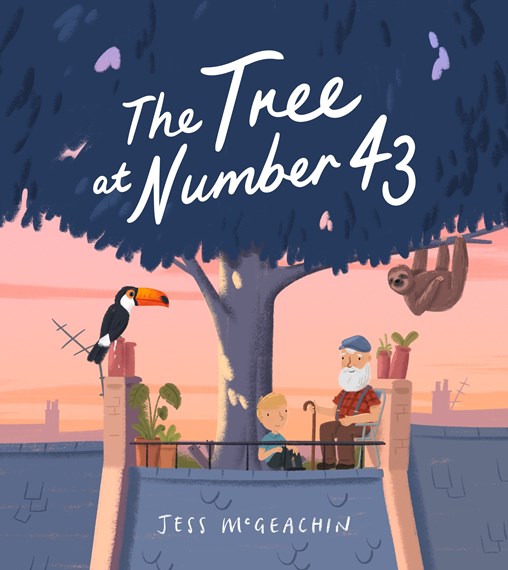
The Tree at Number 43 by Jess McGeachin


Sam lives with his mum and grandpa in a busy city. It is noisy in the street but Sam and his grandpa have a special spot on the roof of their building where they can sit together and Sam can hear all about grandpa's life adventures. Sam especially loves to hear about the jungle with trees so tall they seem to touch the sky. From his travels grandpa has collected seeds. Sam decides to try a little gardening - all he needs is soil, water and sunlight and a lot of patience.

"Sam waited so long that he missed dinner and then dessert. He waited until the moon was high and his eyelids grew heavy and then ..."


There are no words on this page as you can see but something magical is happening and when Sam wakes up he finds himself lying under a huge tree. It has grown from the ground floor right up through the roof of their three storey building. So now on the roof grandpa and Sam have an even better spot to talk, and read and play card games with friends. The tree even provides delicious fruit which his mum makes into a strudel. Life at Number 43 is good UNTIL a letter arrives. Yes you knew there had to be a complication.

The letter looked "very official with curly writing and suspicious stamps." There have been complaints about leaves and wild creatures. Sam knows this letter needs a reply so he writes back explaining about leaves, and toucans and sloths and the friendly tiger not to mention the yummy fruit. The format of his letter is very special. But the authorities won't listen and a team of men arrive to cut down the beautiful tree. This is another wordless double page in the same form we saw previously at night with a silhouette of the tree again but this time we see it being progressively cut down. 

Luckily for everyone, though, Sam is a problem solver. His grandpa has more seeds and so this time Sam gives a little packet of them to each of his neighbours and before long ...

"A yew grew at number two, a pine at number nine, a gum at number thirty-one." 

The air is now filled with a different sort of noise - happy laughter, friendly roars and squawking birds.

The theme of urban renewal and greening a city is not original but this book is so charming especially in the way it demonstrates problem solving and community action all done using magical realism. It is such a fun twist to have the tree grow inside their building and it is so good to see the ways the family adapt to having a tree inside along with all those amazing jungle animals. 

Jess McGeachin adds some delightful details in his illustrations. There is a tiny spider and her web on the title page signifying patience; the moon moving through the night sky to show the passing of time; the bent floor boards in the kitchen which accommodate the tree trunk; plants growing out of the chimney pots; the evil face on the postage stamp; the repeated building silhouette page (the growing of the tree and then the removal of the tree); and we can see at the end people are have added flower boxes and are sharing fresh produce and games. The final small night time image on the very last page made me smile – I think if I was the book designer, I would have been tempted to use this on the final end paper.

Jess McGeachin is the author of Frankie and the Fossil; Fly (I love this book); Kind; Deep; and his latest book -  High. 

Companion books:


Monday, May 15, 2023

Finding You by Robert Vescio illustrated by Hannah Sommerville


As the story opens we see a young boy in a sepia city scene. He is in a bright yellow jumper (bright pops of canary yellow symbolise hope and warmth) and he is looking across the page which means our eye follows his line of sight to the facing page where we see a small dog. The dog glows a little under soft spot light. 

"I watch you from afar. Roaming lost and alone."

The boy befriends the small stray dog and he gently ties a red polka dot scarf around his neck. Now the new friends begin their adventure across the city. Parts of this reminded me of Mutt Dog by Stephen Michael King. See images at the bottom of this post.


Then the pair arrive at a crossroad. One way is dark and cold and the other is light and full of colour. In a joyous moment the pup takes the colourful path to the boy's home but this is where this book takes a strange twist because we see a small dog house in the garden, and in the boy's bedroom there are photos of the boy and his little dog so was this all just a game of imagination? Did this pup already live with this little boy and they were just having a day of adventures?

This book is a beautiful example of a book which has illustrations which interpret and extend the text in a wonderful way. If I was using this book with a group of children I would be tempted to begin with a reading of the text without the illustrations. I think this would be a great way to see both the interpretation of the text by the illustrator and also to realise the way these illustrations are invested with such enormous emotion. Readers need to ‘join the dots’. 

And there are beautiful word choices in this story - the page above for example has "scratchy lavender fields"; "crunchy carpeted forests"; "creaky knotted trees"; and "springy moss hills". 

In this book, the title and title page are so important. The child finds the red and white polka dot scarf on the footpath. Then he uses the familiar object to lure his pup. As they near home there is an illustration filled with colour and light – rather like walking into heaven. When the pair arrive home, we see, as I said already, a dog house. The dog has come home and he is so loved.  

On the page ‘I show you different things, places to amaze’ Hannah Sommerville has added a wealth of ideas. If you look closely, you can see the forest is inside a greenhouse. But the words are not really simple they have been written with enormous care. The page turns are perfectly paced and paced. What does the count down on the calendar represent? There are so many delicious extra details in the illustrations which readers will enjoy re-visiting and the changes of perspective add so much interest and intimacy

This is an intriguing book which can be read on many levels. Is it about homelessness or belonging or making choices? The story is open-ended and the pacing allows the reader to pause, where needed, to explore the ideas and illustrations. 

Here are some review comments:

Short, sharp sentences pack a mighty punch as the narrator tells of his journey where the pair met, and connected, for the first time. Alone in the harsh, bustling streets where ‘no one seems to notice’. While it’s cold and unsheltered from the weather, a smile brings warmth to his heart. The boy and the dog find adventure, accented by Sommerville’s alluring illustrations – the warmth and energy found amongst her textured, linen-quality paint, line and etched mixture of moving sequences and full page spreads. Beautifully moody backgrounds of deep greys, purples, greens and browns always glistening with the pops of bright yellow in the boy’s top. From sunshine to storms, we can feel their closeness tightening with the formation of a very special bond. Just Kids Lit

There is an underlying theme in this story which seems to be about a small boy and his dog on an adventure – or not. It also mirrors the story of  how a newcomer might feel roaming and lost and choosing whether to take the dark and cold or the light and colourful ‘road’ until you find the perfect place to live. Child Mags

Finding You, masterfully written by Robert Vescio and exquisitely illustrated by Hannah Sommerville is a heartfelt, tender story about new beginnings and how these often involve courage and being open to possibilities. It’s a story about the beauty in the unexpected, the journey of friendship, unbreakable bonds that form between people and pets as well as being compassionate to the vulnerable members in our community. Reading opens doors

A richly layered story resonating with themes of homelessness, companionship, love, adventure, family and more. Storylinks

Here are some brief teachers notes.

Hannah Sommerville is the illustrator of the CBCA Early Childhood winner last year - Jetty Jumping. Robert Vescio is an Australian author. He lives in Sydney, NSW. His new book due later this year is Nature's Song.  Here are a few of his books:


Here is the cover and an illustration from Mutt Dog which would be the perfect companion read and the scene with the box from Finding You for comparison.


Sunday, August 14, 2022

Tulip and Doug by Emma Wood illustrated by Carla Martell


"Sometimes other kids laughed at them, but Tulip didn't mind. She and Doug were too busy organising special operations at their headquarters, boldly exploring the depths of the jungle and conquering the giddy heights of Tunnel Mountain."


Here is the sub title of Tulip and Doug:

a spud-tacular friendship story

My friend from Kinderbookswitheverything talked about Potato Day today. It's on August 19th and one book she highlighted was Tulip and Doug from New Zealand. I was quite excited to read that NZ Primer Minister Jacinda Ardern gave Prince William a copy of Tulip and Doug because this is one of her favourite children's books.

Here are a set of teaching notes for Tulip and Doug but please make sure you just enjoy the story before asking lots of questions or completing crafts.  

Blurb (Spoiler alert): Tulip was famous in her neighbourhood for two reasons: 1. She was a fearless adventurer. 2. She went everywhere with a seriously strange sidekick-a potato, called Doug!  Tulip and Doug are inseparable, until catastrophe strikes and Tulip loses her best spuddy buddy. She is inconsolable, until she makes a new friend. A boy. With a pet rock ... called Susan.

Here is an interview with Emma Wood

Companion books:


And just for fun try to find Potato Pants (I love this book):


When I was a very young child I really loved the story of the enormous turnip. Did you know there is a potato version?


If you need more books about Potatoes check out this Pinterest from Kinderbookswitheverything:


Wednesday, June 8, 2022

Nights with Dad by Karen Hesse illustrated by G. Brian Karas


US Cover with a different title

This is a book which gives young readers a glimpse of a life that might be unfamiliar but it is also a life that will have links to every school child - after all who does clean your school? And when do they work? What exactly do they do in each school space?

In a well practised routine our story narrator describes how each Friday evening he packs up food in a lunch box and then he climbs onto the back of his dad's motor bike. 


Yes I did say lunch box but the pair are not heading out for lunch. Dad works at the boy's school. He is a night cleaner but it takes eleven pages to make this discovery such is the power of storytelling by Karen Hesse. It is Friday night but we can infer the boy goes along because he can sleep in tomorrow. 

At 10pm the lunch box is opened:

"Dad leads the way to the courtyard, where we unwrap our egg salad sandwiches, with their triple dollop of mayo and heaping teaspoon of chopped pickle. We take big bites that fill our mouths and chew and chew and chew until there are only crumbs left. And then we chew those, too."

While is dad cleans the library, the young boy reads aloud to his dad until he falls asleep. At 4am the pair head home where they both fall asleep dreaming of better times ahead.

Hesse’s poetic, calm text is matter-of-fact in conveying the love between parent and child and the bonding occurring through their shared work. Karas’ mixed-media illustrations, employing a soft focus and a muted, nighttime palette, help to relay this bond as well as the excitement of riding on the back of a motorcycle at night. Kirkus Star review

You could pair this book with While you're sleeping:


This book is perfect to read as part of your discussions of the United Nations Sustainable Development Goal 8 - Decent Work and Economic Growth.  Read more about the 17 goals and find links to fabulous books to use here. My post takes you to eighteen posts by my friend from Kinderbookswitheverything along with her splendid and comprehensive Pinterest sets of books for each goal. 

If you are looking for a book to share with older students where you can explore different and very effective page layouts Nights with Dad is perfect. You can see inside this book here. And read more about the inspiration that lead to the writing of this book by Karen Hesse. 

I have read and enjoyed quite a few books by Karen Hesse:


Here is a list of books illustrated by G. Brian Karas. I am especially a fan of his easy chapter books - High-Rise Private Eye.  I was also excited to discover G. Brian Karas provided the cover illustration for Freddie the Frightened and the Wondrous Ms Wardrobe which is a book I used to enjoy reading in my school library. Our Australia cover is by Terry Denton (a long time before his fame with the 13 Storey Treehouse series). And he did the art for Ivan - the Remarkable True story of a Shopping Mall Gorilla by Katherine Applegate