Thursday, May 29, 2025

Tigg and the Bandicoot Bushranger by Jackie French


"She never realised that she knew so little about herself, not even her name or family, or even what she looked like now that she was dressed as a girl. ... I know myself now, she thought. I can hold up a stagecoach and catch a possum and cook a pigeon pie so good the pigeon would have proudly given up its feathers for it. I know I can survive an attack by drunken men ... I can find a good life for myself. I just don't know where or what it will be."

Tigg needs money to pay the woman who was given charge of her many years ago. Ma Murphy, a 'baby farmer' was paid enough money to keep her when Tigg was small but when the money stopped coming in she took the four children in her care to the gold diggings with a plan to open a tavern. Sadly, three of these children died but young Tigg survived. In the opening scene Tigg is disguised as a boy and she holds up a stagecoach demanding money from the travellers. During the altercation she is shot in the shoulder. She manages to get back to Ma Murphy but Tigg knows she is now wanted by the police so she needs to leave and hide. She joins a young Chinese man who is escorting a large group of 'Celestials' who are travelling from Robe in South Australia to the Victorian Goldfields. She joins the group at the South Australian border. The journey is anticipated to take three to six weeks. 

I loved all the refences to food in this book especially near the end when Tigg makes two new friends in Goulburn. It was also fascinating to read about all the ways Tigg used her bush survival skills, taught to her by a young indigenous woman, to find food, shelter and even make a possum cloak while she was hiding out in the bush. There are some memorable human characters in this story such as Henry Lau who escorts her on the Long Walk, but I also loved her horse named Bucephalus. It was fortuitous that 'Gentleman Once' who taught Tigg to read and write also gave her a book entitled 'Advice for a Young Lady in the Colonies'. I laughed when Tigg remembered and perhaps misunderstood some of the 'advice' from this book. 

Tigg is an orphan but her hardships and life circumstance have made her very canny especially with 'reading people' and also with money. It was comforting to read she kept her stash of money close to her body and that she also had even more money hidden in the bush. Her dream of a family, a home, comfort and food gave me hope that Jackie French was taking me on a story journey with a satisfying happy ending. Also thank goodness Jackie French allowed Tigg to take a bath every now and again - I always worry when someone has no food, no bed, no shelter, has to contend with wild weather but even more I desperately wanted Tigg to be able to feel clean. 

The back notes in this book are essential reading - especially after you finish this novel - because the give a historical context to these events of 1800s Australia. 

Tigg and the Bandicoot Bushranger has been short listed for our 2025 CBCA (Children's Book Council of Australia) Younger Readers book award. I will confess that while I did adore many of Jackie French's early books her more recent titles have not quite resonated with me - but all of that has now changed. Jackie French, when writing her best books, skillfully blends masses of history research into a terrific story. At no time does this book about Tigg feel like a history lesson but of course that is exactly what it is. For example I had no idea about the Long Walk nor about the way the Chinese people set up market gardens in remote rural Australia. Sadly, I did know about 'baby farming' because decades ago I read another fiction book based on this gruesome practice - Mama's Babies by Gary Crew (2002). My only tiny criticism (echoed by the Reading Time reviewer) is that there are lots of story threads in this book and at times I did find it difficult to keep track of all the characters - a family tree for Tigg might have been helpful. 

I loved this description of Tigg's first ever hug:

"Tigg hesitated. She'd never been hugged before. She'd always thought it looked uncomfortable. She tentatively put her own arms around his waist. A hug didn't feel at all like being imprisoned in chains. It just felt warm and safe ... She stepped back after a while, wishing Advice for a Young Lady in the Colonies had told her how long a father-daughter hug should last for."


Author webpage blurb: The year is 1859 and the goldfields are filled with diggers – and danger! Orphaned twelve-year-old Tigg is the Bandicoot Bushranger, the youngest bushranger on the Ballarat goldfields in 1859. When a robbery goes wrong, Tigg must flee in disguise as one of the tens of thousands of Chinese men and boys braving heat, thirst, starvation and murderous attacks on the long road from Robe in South Australia to the goldfields in Victoria. But even further danger threatens. Who has offered a large sum of money for Tigg's capture? And is the mysterious Henry Lau a friend or enemy? To be safe, Tigg must solve the greatest mystery of all. Who is Tigg?

Here are some teachers notes. Here are the first three chapters of Tigg and the Bandicoot Bushranger.

The 2025 CBCA Younger Readers short list has really disappointed me. I have previously mentioned six other titles which I think better match the judging criteria for this category. 


In my personal opinion there are only two books in this selection that are worthy of our prestigious National Award - Laughter is the Best Ending and now I add Tigg and the Bandicoot Bushranger. To and Fro is a heartfelt personal story of identity and belonging but the silly additions of 'toilet humour' really distracted from this story for me. Aggie Flea has eight references to 'farts and farting' and Saskia Spark-Lee is a light read - perfect for newly independent readers but not sufficient depth of caliber for our award (again this is just my personal opinion).

Jackie French has talked about bushrangers in previous books such as this fairly recent one which I also really enjoyed:


Other Jackie French stories about bushrangers are Dancing with Ben Hall; The Night they Stormed Eureka; The Horse who bit a Bushranger; and The Secret of the Black Bushranger.

In my former library I really enjoyed exploring bushranger picture books with my Grade Five groups as a way to extend their class study of our Australian Gold Rush era. Here are a few you could share with a group in your school library (note these are all are now out of print but are sure to be found in well stocked collections). We also explored lots of materials about Ned Kelly of course.


My own favourites, among the enormous number of books by Jackie French (Our IBBY Australia Hans Christian Andersen nominee in 2008) are Tajore Arkle; The Book of Unicorns (short stories); A Waltz for Matilda; The Shaggy Gully Times; The Tomorrow Book; Christmas Always comes; and Diary of a Wombat.


Wednesday, May 28, 2025

We are like Birds by Laila Ekboir


I am a patchwork quilt made up of all the places I've lived.

Florencia is moving again with mum, dad and her baby brother. It is hard to fit into her new place. She plays a different sport (soccer) from the kids who play baseball. She speaks a different language (Spanish). Grandma is far away and they can only see her on a screen. But there are ways to make new friends. Sharing food with neighbors and inviting them to your birthday party which is filled with dancing and music. 

Blurb: Flor is only seven years old and has moved home three times. Now her family is moving again and she has to start all over again in a new country and a new school.

Mum says we are like snails ... Dad says we're like crabs ... Our neighbor says we're like a herd of elephants ... Grandma says we're like the moon, distant but always shining ... Mum says we're like dandelion seeds 

The perfect, uplifting story for any child who feels like they don’t fit in or who is worried about the prospect of moving country, home or school and having to start over. Books for Topics

For older readers there is perhaps more that could be drawn from the numerous analogies throughout the text between the family and the many animals their plight resembles: birds, snails, crabs. Perhaps this could inspire some reflective poetry, or encourage children to share the animal that they feel most reflects their own family’s journey. References are made also to puzzle pieces, seeds blown on the wind, and patchwork quilts which may help children to explore and share feelings about their family make-up, the movement of families around the world and the many reasons for such movement. Books for Keeps

Reading the bio of author Lalia Ekboir who comes from Argentina I discovered a new phrase: Third Culture Kid. It denotes a child who grows up in a culture different from the one their parents grew up in.

I noticed an unfamiliar publisher name on the cover of this book:

Kumusha Books, an imprint of HarperCollins Children’s Books, is a new inclusive list of globally inclusive, empathy-led, high-quality children's books, curated by publisher Ken Wilson-Max. Kumusha Books will publish a range of fiction and non-fiction, from board books for babies, to chapter books for emerging readers. Books to make positive and meaningful change to how we are all represented in children's books. ...  Our aim is to create books for all children to see themselves as they are and as they want to be; to feel at home though books.

I mentioned a book from Kumusha when I talked about the Inclusive Book Awards


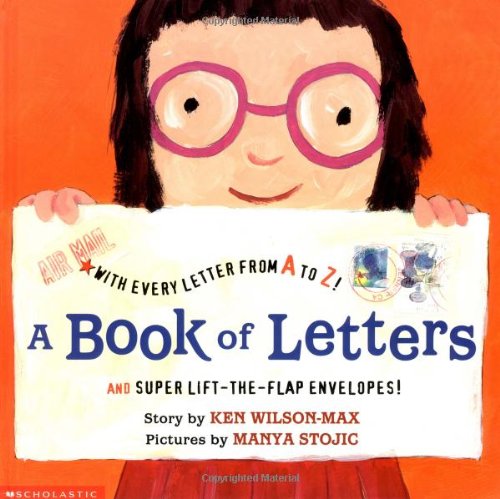
Here is the webpage for Ken Wilson-Max. Decades ago I discovered this book and even though I do not own a copy (and sadly I am sure my previous library have probably disposed of it) A Book of Letters by Ken Wilson-Max remains a favourite book of mine.


Tuesday, May 27, 2025

Margot and the Moon Landing by AC Fitzpatrick illustrated by Erika Medina


Margot loves everything about space travel and the moon. She reads every book she can find on this topic and then she just has to SHARE everything she knows with EVERYONE. The problem is her mother has stopped listening and her teacher just seems to be quite frustrated and even angry with Margot.


Eventually, having no one listening to her, drives Margot herself crazy and she grabs her marker pens and writes furiously all over her bedroom walls. Sharing this book with your child this could be the page to stop. How will mum react? Turn the page and you will be surprised. Mum stops and takes the time to read what Margot has written. 

"Margot waited for something to happen but instead mum got very quiet. She read all the words and then read them again."

Margot tries to rub out the words, but mum stops her. She grabs a pot of paint and together they fill the wall with images of space travel and stars and then even better mum attaches two enormous sheets of paper to the walls and shows Margot that these are the places she can write anything she likes. 

Publisher blurb: Margot loves space. Astronauts, the stars, and especially the moon landing. So she can’t understand why all of her attempts to communicate her passion fall on disinterested ears. Her mom is patient but distracted; her classmates would rather play kickball; and her teacher just wants her to focus and pay attention in class. Even so, Margot wishes she never had to talk about anything but space ever again. When she wakes up one morning and discovers she can only recite Neil Armstrong’s famous speech from the moon landing, Margot realizes she has an even bigger problem. How can Margot get everyone to pay attention and—more importantly—to hear what she’s really trying to say? This powerful picture book debut plays with themes of listening and communication to highlight the importance of a space of one’s own, no matter what your passion may be. 

A charming picture book about both a child and her obsessions and frustration, anger, and repair. Kirkus

There are several valuable themes in this book, including listening, communication and forgiveness. The book’s contents cover Margot’s learning to express herself effectively and constructively, and there’s also the lesson for adults in children’s lives – to listen and allow kids to be heard and to meet where they’re at. Canadian Review of Materials (Read this review if you are concerned about the way Margot expresses her anger using strong language). 

You can probably guess why I bought this book. If you are talking about space or the moon landing or want to affirm those quirky kids in your class who obsess (in a good way) over a specific topic, then this book could be fun to share. It reminded me of the way the little girl in Agatha May and the Angler Fish by Nora Morrison knew everything about her own favourite fish. 

Here is the teacher's guide from Canadian publisher Annick Press. Erika Rodriguez Medina is originally from Mexico. She now lives in Canada. You can see some of her books here

If you have an older child aged 9+ who, like Margot, is fascinated by the Moon Landing they might enjoy this Australian middle grade novel. 


In the illustration I shared you can see Margot reading a book about Laika. Take a look at my blog post about this famous dog who was sent to space (warning very young children may be distressed to discover Laika did not make it back to earth). You should also visit or revisit this award-winning Picture book from Australia:


Monday, May 26, 2025

Flying Through Water by Mamle Wolo


We all grabbed bailing vessels. Thunder cracked, and lightning streaked across the sky like a celestial tree revealing its branches for a split second. I felt as though I were caught in a different dimension where death was as present as life, and everything was elemental and terrifying.

I thought about this world and the things we humans struggled for, and all the ways in which we imprisoned ourselves, and each other. It seemed to me that greed was just as much of a prison as poverty, only worse. Here I was alone on this island in the middle of nowhere, stripped of whatever meager possessions I had ever owned. And yet in nature’s heart I felt liberated and endowed with a splendor beyond anything humans could ever purchase. 
What greater wealth was there in this world than freedom?

This story is told in three parts. Sena describes his life in Ghana and his special relationship with is grandfather who tells him stories of his village life before the artificial creation of Volta Lake and the Akosombo Dam. Sena lives with his mother, sister and baby brother. They are very poor but he has been able to go to school. His education is not perfect and the teachers are often absent and they do beat the students but if he can sit the final exam there is the promise of further education and hopefully a better life for his family. But there is a young man who visits their village with promises to the young boys of work and money and perhaps even adventures. Sena is suspicious of this flashy man who they call 'Jack of Diamonds' and he has heard stories of boys sent to work with cattle - boys who are given little or no food and forced to work in dreadful conditions. Sena is determined not to follow this path but then his grandfather dies, his mother is gravely ill with malaria and his best friend declares he is heading away to work because he is sure the promises from 'Jack of Diamonds' are true. 

Sena loves his family and he really wants to help them so after his final exam he leaves a letter under his sister's pillow and he heads off - what he does not know is that this will be a journey into hell. So begins part two. Sena is taken to work as a slave for a cruel master catching fish and diving deep into treatrous waters to untangle the fishing nets. He is given virtually no food, he is beaten and the group of about ten boys are forbidden to talk to each other except about their tasks. Yes this is illegal human trafficking. Can Sena escape? Where will he go? What will happen if he is caught? He does befriend one of the boys and then that boy is killed - possibly murdered by their master - so now Sena must leave. He arrived at this place terrified of water and unable to swim. After several months of this cruel work he can now swim but he is still terrified of the dark water and the waves and he has not learned how to float. Part 3 is all about survival because he does find his way to a small deserted island with only monkeys for company but of course he must also find a way to get back to his family. He also carries huge guilt about the boys he left behind and he has made a new wonderful discovery of a special and rare underwater animal - the lake Manatee. The book ends with a sense of hope for the future for Sena himself but also for other trafficked boys and hopefully also for this very special wild creature who is also trapped in the waters of this lake.

Here are a few text quotes from this book:

Treatment by teachers: The humiliation hurt almost more than the lashes, but I hardened myself to it even though it upset me that the teachers beat us when they knew how hard our lives were. They knew we weren’t late out of laziness or what they called I-don’t-care-ism. But I got used to that too—the callousness of powerful people and the way they didn’t care what was fair.

Kekeli - a description: She had a round face, and when she smiled it was as if the distance between her lips and chin had been measured with a protractor and traced with a compass, their curves were so perfectly parallel. Her laughter was like that of a baby discovering funniness for the first time and too little to contain it. She could spark off the whole class.

Grandfather the storyteller: He said stories took us where our legs couldn’t go and showed us what our eyes couldn’t see, and that the best thing about books was that they were still there when storytellers were gone. I could see what he meant when I thought that one day, he wouldn’t be here to tell us stories anymore—a prospect I quickly banished. I loved his stories more than any I’d read in books.

Jack of Diamonds: Everyone was excited and following his every move, but something in me held back. I wondered if I was the only one to whom his mannerisms seemed somehow familiar, as if he’d studied them on someone else, like Shatta Wale or Burna Boy. Perhaps I was just being silly, but it made me uneasy that we couldn’t see his eyes, because he never took off his sunglasses. And it was amazing how he kept that black jacket on in this heat.

Publisher blurb: Sena treasures his life in rural Ghana-playing soccer, working the family farm, striving to do his best at school-but he is increasingly aware of his family's precarious security in the face of poverty. When an alluring gentleman comes to town to befriend local teenagers, offering promises of a better future, it only takes one more unsettling turn of events to send Sena into the clutches of human traffickers. Sena's ordeal, escape, and remarkable survival makes for a page-turning adventure of self-discovery and empowerment.

Searing and eye-opening, readers will devour Sena’s story in a day. School Library Journal

Wolo skillfully sheds light on the horrific practice of the trafficking of children, and the grim situations many are forced to live and work in—but she also tells a story of hope and perseverance. The vividly described settings include imagery that paints the scenes for readers as the story unfolds. A powerful look at human suffering and the will to survive. Kirkus Star review

Jack of Diamonds turns out to be a pied piper for a human trafficking network and thus, Sena finds that he has been sold into indentured labour to a fisherman who employs a motley crew of children, some as young as three, in a bid to compete with foreign trawlers working the Volta Lake. Cold and brutish, Sena’s master is a formidable antagonist, the like of which populates Dickensian novels, but the real villain here is the systemic poverty that has left intergenerational scars and threatens the possibility of a future for its under aged victims, who are malnourished, overworked, and constantly exposed to the risk of drowning. The Lagos Review

Fans of Hatchet and A Long Walk to Water will find Flying Through water an engrossing book. Sadly I have no idea how I discovered this book - I must have seen it recommended somewhere.

Listen to an audio sample here. This book only in hardcover so far is too expensive here in Australia (AUS$32.50) but I read a copy on a Kindle.

I recommend this moving and atmospheric story for readers aged 12+ especially those with an interest in social justice. Your senior students could also investigate the work of our Australian organisation that assists victims of modern slavery - The Freedom Hub.

I recently read this book which also explores the topic of human trafficking:


Sunday, May 25, 2025

Barnaby Unboxed! by The Fan Brothers


Barnaby is half mouse, half elephant with a dash of flamingo. He has been living in a box on the shelf of a toy shop. His box says he is a perfect pet and fully trained. There are so many perfect pet boxes to choose from. It seems no one is noticing that he is perfect until one day a young girl arrives. Barnaby becomes her very special friend. They do everything together. Best of all they enjoy watching the television series 'Barnaby and Friends'. Sadly though, it is this show that leads to a devastating change. The Perfect Pet company release a new Rainbow Barnaby. 

"The next day, the little girl asked her father if she could have a Rainbow Barnaby."

"The answer was no. Barnaby felt a wave of relief wash over him. But after that, the girl no longer played with him quite as often as she used to ..."

Do you recognise this plot idea - I love you Blue Kangaroo; Ducky's Nest; Arnold, the Prickly Teddy; The Sea Saw; and Finding Monkey Moon.

The little girl no longer takes Barnaby for walks. And one day her father fails to notice that Barnaby is left behind. It is raining and dark and Barnaby is lost. Will he ever find his way back home? And after weeks outside in the rain and dirt will the little girl even recognise him? Is there someone who can help him? 

I have read this book many, many times and the warm happy ending still makes me so emotional. 

Joy, despair, reunion, community—delightfully, all here. Kirkus

Barnaby Unboxed is a simple story, with universal themes, and it is told beautifully. The possibility of interesting and important conversations about exploitation would be a bonus. Just Imagine

There are some valuable themes of found family, what home means, self-worth and finding (and appreciating) what we have. It's a profound little book, and told in age appropriate language, all accompanied by luminous impressionist inspired artwork throughout. Nonstop Reader

It will be exciting to show this book to a group of Teacher-Librarians at a conference next month. The case reveal (pulling off the dust jacket to reveal the image underneath) is a spectacular surprise. And then I can show the brilliant end papers. (You can see these parts of this book here). School libraries here in Australia have very limited budgets but these two books should be added to every collection - yes they are that special! See inside Barnaby Unboxed here. Check out all the books by The Fan Brothers - I have talked about nearly all of them here on this blog. Here is a generous interview between The Fan Brothers and Betsy Bird. 

I previously talked about The Barnabas Project which is the companion volume to Barnaby Unboxed. 


Barnaby Unboxed might make you think of Toy Story. Older readers should look for this middle grade series:


And this powerful book too:


Saturday, May 24, 2025

Just under the clouds by Melissa Sarno


"Then I brush my notebook off and stuff everything in, fishing around for my Tree Book. But it's not there. The worn leather, with its little ribbon tail is missing. I check the front pocket. I check the sleeve inside. I sit down on the wet ground and throw my backpack to it, opening it wide. I take all the withered papers out and stack them. I take each covered textbook and each notebook out. Purple, red, green, blue. I check the front pocket - a jumble of pens and pencils and paperclips, an eraser that feels like it's coated in sand and crumbs. I check the empty sleeve, I fan the colours, in a pinwheel, looking for the soft brown leather. Its gone."

This notebook is everything to Cora. It is her link to her father who died several years ago. Her father was Irish and mum has Mexican heritage. Cora's little sister lost oxygen to her brain during birth and so she has a fairly profound disability. Money is very tight and so the family of three keep having to move. As the story opens, they are living in a homeless shelter, but it is a very dangerous environment. After they are robbed, they move in with mum's friend. Willa seems to have a perfect life and a perfect home and so mum just needs to move again. Cora would love to stay because it is the first place in a long time that she feels safe, but they do move this time into assisted housing. Now school is even further away. 

One thing that connect Cora to her father is the drawing in his notebook of a tree he called The Heaven Tree. Cora finds the tree down by the canal. She is determined to climb it but there are no low branches. The only way seems to be through the window of a disused factory. This will be very dangerous. 

Little Adare loves cats. There is a stray cat that hangs around near the tree and near the canal. On the day Cora loses her dad's tree notebook, little Adare goes missing. Can Cora put all these puzzle pieces back together and find her little sister in time?

This is a debut novel for Melissa Sarno. Kirkus say ages 10-14 so I have listed this as a senior primary novel. Just Under the Clouds was published in 2019 but it is still available. This book will appeal to thoughtful readers who have good reading stamina and who enjoy quiet books about family relationships and children living in complex situations. 

Troubling, affecting, and ultimately uplifting, from a promising debut novelist. Kirkus

There is a delicate balance of things my readers like in a sad book. They like lots of descriptions of what life is like, but they are not as fond of the character's introspection about their situation, if that makes sense. (I spend a large part of my day involved in the nuances of what students want in a book!) This is a little slower than my students usually want, but I will probably purchase it, and this is certainly a great book to look at for most collections. Ms Yingling

Companion books - pop these titles into my sidebar:


And here are some picture books on the topic of homelessness.


This book might be in a library or available as an ebook - it also deals with the heartbreak of a disabled sister.


And this new Australian book has a World War II setting and the story centers on saving the disabled sister from capture.


Friday, May 23, 2025

Our Sister, again by Sophie Cameron


"Welcome to Project Homecoming and exclusive trial by Second Chances Ltd.
You are part of one of the most ambitious and pioneering projects ever carried out in the field of Artificial Intelligence. 
One that, if successful will change how we think about 
and experience life and death forever."

Life is a mystery and so is death but we do know that when someone dies we cannot see them again. In books there is an unwritten rule that death is never reversed or so it seems to me. In this book a young girl is 'brought' back and this has huge implications. This book will most certainly make readers think deeply about grief, death, what it means to be human and also the implications of technology in our lives.

Isla's sister has died. Mum is wrapped up in grief and so when she reads about a way to bring Flora back to 'life' she readily agrees. What does this mean? What are the implications for the family of agreeing to the Second Chances Homecoming Project. What are the implications for the community who have all signed confidentially agreements? And what about the other teenagers who were friends with Flora? They have grieved and attended her funeral and now she is back. But they are older because three years have passed. If this version of Flora is frozen in time and only has the memories. possibly unreliable memories, collected by Second Chances, is she a real person? Mum does not want to see the truth and dad is sure this is totally wrong, so he has left the family and moved away from their island home. Now that Flora is back should she go back to school? Is there any point in sitting exams? And of course, the kids in her class from before have left the school and are at college.

Is Flora person or a robot? "As Flora turns towards the harbour steps her hair falls to the side and shows the back of her pale neck. ... Carved into her skin, only just visible above her jacket, is a small square."

Is this Flora, really Flora? "The returnee has been created using vast amounts of data, in addition to photos, videos and extensive interviews with your loved one's friends and family."

"Our returnees look entirely human ... We are confident that this new arrival will be an extremely close match to the person you remember. However, please be aware that there are some differences. Returnees do not need to sleep, they cannot be fully submerged in water, (they do not need to eat), and they don't fall sick with human illnesses."

The food part about the returnee made my stomach squirm. In the first few days Flora does eat with the family but the food goes into a food compartment in her body and she has to regularly empty it. Eventually she just gives up this charade of eating. 

"Losing Flora so young made me realise that growing old is a gift not everyone gets."

Dad "doesn't think she's human ... He says you can't rebuild a soul and you can't be a human without a soul."

Exploring a number of ethical questions, Our Sister, Again is simultaneously an intriguing mystery and a moving story of grief, family bonds, and what it means to be human.  Book Trust

It's an emotional story, and heartwarming too. The Book Bag (read this full review - it is very thoughtful)

This is an incredibly powerful, compelling and absorbing read that raises issues around personhood, ethics and social media.  ... And, that ending – it brought tears and smiles – and was exquisite! Book Craic