Sunday, June 28, 2020

Ten Seeds by Ruth Brown


What do we have here?  A simple counting book? Counting down from ten to one, yes. A book about nature? Yes, and a book that shows the circle of life. BUT this simple board book is SO MUCH more.  I was talking with a colleague about children's book preferences. These seem to have changed in recent years perhaps because of the rise of screens and digital images. It seems to me, though, that we can show kids the most glorious art through picture books and in this way, hopefully, influence their "taste" or develop their "eye" for a beautifully created image.

Ruth Brown is, in my view, a truly fine artist. In Ten Seeds (first published in 2001) the viewer is taken in close to see the seeds in a cross section of soil.  We see the seeds and plants in the same way that the pigeon, mouse, mole, cat, puppy, ball and greenfly see them. The title is presented on a seed packet and the wriggly worms move across each page.


And look at the glorious language your child will hear in this book: shoots, seedlings, small plants, big plants and buds. Here is a video of the whole book. I am also happy to report his book is still available.

Here are some other books by Ruth Brown:


The UK edition of this book is called Ladybird Ladybird


I was pleased to see the cover of the French edition:


Thursday, June 25, 2020

Mustafa by Marie-Louise Gay


Tuesday Treasure

"Mama," asks Mustafa, "am I invisible?"

Beginning on the first page - the title page - we see a group of people walking through an empty landscape carrying parcels and suitcases. Even the youngest member of the group has a load to carry. Turn the page and a small boat, possibly overloaded, is battling a wild storm and huge waves. Next page the boat has arrived on a beach and the walking group are now heading towards a city.

"Mustafa and his family traveled a very, very long way to get to their new country."

The new country is strange and Mustafa's dreams are filled with memories of smoke, fire and loud noises. When he wakes, distressed, in the middle of the night his mother shows him the moon and the star.

"Is that the same moon as in our country?' asks Mustafa. 
'Yes,' answers his mama, ' the very same moon."

His old country was grey and dry. In this new place Mustafa sees colourful birds, small bushy tailed animals and lots of green trees. In the park he sees beautiful flowers and the "air smells green and cool."  He does recognise the ants - they look the same as in his old country. He fills his pockets with tiny treasures to show his mother.

On his next visit to the park, Mustafa sees a girl with a cat. The cat is tied to a ribbon. This seems very strange to Mustafa and he runs home when the girl says some words because he doesn't understand.  The next day Mustafa visits the park again. This time he uses a stick to draw scenes from his former life - his house, clouds of smoke and fire, broken trees. The-girl-with-the-cat comes past. She points to the drawings and says something but again Mustafa runs away. The girl picks up another stick and she draws over his pictures - images of flowers, butterflies, stars and her cat. When she finishes the smoke and fire have disappeared.

Over time Mustafa watches the park changing. The trees turn orange and red and he sees a lady feeding the birds and kids heading off for Halloween. One day he hears some music. It is music from his old country. Mustafa stands nearby listening and quietly humming along but no one notices him. That's when he asks his mother the question I posed at the beginning of this post.

The next day, Mustafa see the-girl-with-the-cat again. This time she signals to him to follow. The pair head over to a pond filled with goldfish. Their funny faces make the children laugh. The girl then leads him to the swings.

"Together, they almost reach the treetops.
Together, they almost touch the clouds."

The girl points to herself and says "Ma-ri-a" - "It sounds like music. Happy music."
Mustafa doesn't feel invisible any more.


I read this book in 2019 in a library in Austin Texas and I fell in love with this beautiful story. This book is still in print it was published in 2018 BUT here in Australia it is very expensive. I hope the publisher might consider a paperback reprint - this is a book that SHOULD be in every Primary school library. It is simply perfect.  Here is a very comprehensive set of teachers notes from the publisher Groundwood Books. Here is an interview by the Canadian Children's Book Council with Marie-Louise Gay about Mustafa. In this video the mayor of Edmonton reads Mustafa but he sadly misses out the first important pages.


A beautiful, sweet story about the immigrant experience through the eyes of a young child trying to process all the difficult things that have happened to him. Janet Dawson Kids Book a Day

If you are not familiar with the art of Marie-Louise Gay here are some examples of her work.


Her work reminds me of the Australian illustrator Stephen Michael King. You might also like to consider purchasing the Houndsley and Catina series for your library.

I would pair Mustafa with The Colour of Home.


Wednesday, June 24, 2020

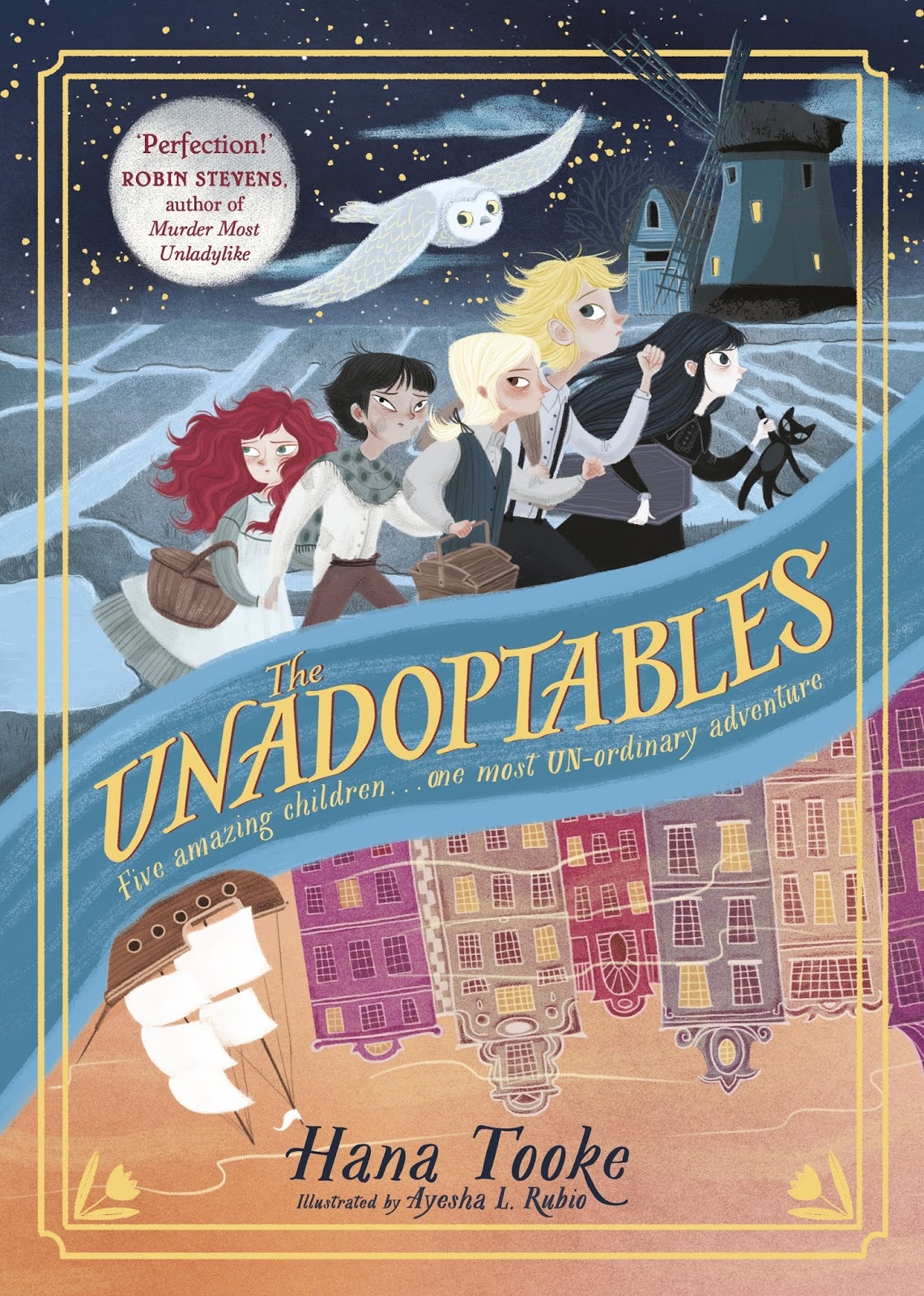
The Unadoptables by Hana Tooke


Over the course of a year five babies arrive at the Little Tulip Orphanage in Amsterdam. The Little Tulip doesn't that sound delightful - of course it is not!  Each arrival breaks one or more of the three rules set my matron Elinora Gassbeek. Wait a minute. Look at that name. Grassbeek. Sounds bad?  Yes she is!  Now back to those rules:

RULE ONE: The baby should be wrapped in a cotton blanket.
RULE TWO: The baby should be placed in a wicker basket.
RULE THREE: The baby should be deposited on the topmost step.

So what about our five babies.
Lotta arrives in a toolbox which has been wrapped in an emerald green ribbon
"a baby with coca-bean eyes and blonde fuzz on its head."
Egg (Egbert) arrives in a coal bucket wrapped in a soot-stained shawl
"A raven-haired infant... "
Fenna is found in the matrons picnic basket along with the sandwiches and almond cake
"It had a shock of curly red hair and was babbling incessantly."
Sem comes in a bucket wearing a wheat sack
"She looked at the baby's wonky ears, its gangly limbs and the wheat-coloured hair that stuck out from its head at the unruliest of angles."
Milou is found on the roof inside a coffin-shaped basket along with a cat puppet
"It had hair as dark as midnight and eyes that were almost black."

Are you wondering about those names.  I won't go into the details here but they are all the invention of Matron serving to emphasise the nastiness of her character. What you do need to know is that each of these children is blessed with a special talent such as mathematics, engineering, knot tying, sewing, map making, cooking and an affinity with animals. Milou has a fragment of information about her own family and she is desperate to find her parents who she is sure are out there somewhere looking for her.

When the group of kids escape from the orphanage they use this scrap of information having fled the matron and an evil man called Meneer Rotman who says he wants to adopt all of them but who is clearly planning something truly awful. Milou has over-heard the matron and Rotman talking:

"Then we have a deal, Matron. In return of a steady supply of orphans each year, I will provide you with coin and rid this place of vermin: both the rodent variety and the urchins you can't shift."

So now the kids are on the run. Where they go, who they meet and the way each of their talents are needed is thrilling. This story is a wild roller coaster ride. I am certain you will not anticipate the ending. When and if you need further reason to read this book pick it up and read chapters 28 to 30.

I especially loved the wonderful character descriptions:

Here is Matron Gassbeek - so many delicious words here:

Her "boots emerged a moment before the rest of her: twin points of polished, blood-red leather, with low, pointed heels, that were just as sharp as the expression on the matron's face ... (she had) the brutal sneer of a gargoyle, the soulless eyes of a werewolf, the skin itching screech of a banshee ... her vileness had transformed her features into something monstrous."

Meneer Rotman Have you noticed the name - Rotman (yes he is rotten!).:
"His face was half covered by a huge mustachio, which erupted from under his nose in two long curls and spread out towards his mutton chop whiskers. There were rings on almost every finger and a long tobacco pipe hung from his mouth." His smile was a parody "all teeth and no soul." His laugh "like a seagull cawing."

A little shiver ran up my spine this morning when I saw an announcement that it is only eight days until The Unadoptables hits the shops! SO grab your order form, email your local bookseller, lobby your local and school library NOW because you are really going to ENJOY this wonderful new book.


The story is set in nineteenth century Amsterdam, and Tooke, who is half Dutch, brilliantly evokes both the city itself with its narrow streets and tall, crowded-together townhouses, and also the countryside with its patchwork quilt of fields, canals and windmills. The Nerd Daily

Here is a web site for Hana Tooke with a terrific book trailer. I am also including the cover of the Advanced Reader copy which Beachside Bookshop kindly supplied earlier this year. You might be interested to see how covers evolve. My copy of this book only had draft illustrations. You can see the art here by Ayesha Rubio.


Aspects of this book reminded me of A series of Unfortunate Events. I would also link The Unadoptables with these books:

For a younger audience take a look at The Dunderheads:


Monday, June 22, 2020

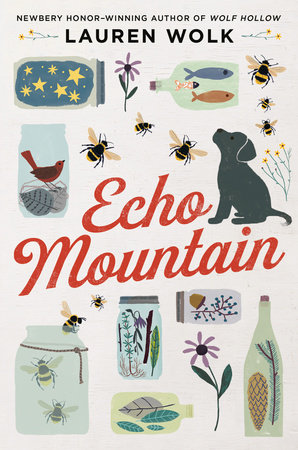
Echo Mountain by Lauren Wolk


"Life is a matter of moments, strung together like rain. To try to touch just one drop at a time, to try to count them or order them or reckon their worth - each by each - was impossible. To stand in the rain was the thing. To be in it. Which I would do. Which I would do to make my father well ... "


Ellie's family have moved Echo Mountain following the stock market crash we know as The Great Depression. Father was a tailor but mother explains "people who have no money don't pay a tailor to make their clothes, and they don't buy new ones when the ones they have will do."  Mother had been a music teacher but with less children at school, less teachers were needed.  The shop is closed, the house is sold and the family move to a remote forest location near Echo Mountain. Life is hard for the whole family but they work together to build a cabin and find ways to trade with neighbors. Then comes the terrible accident. Father is badly hurt and lies in a coma. Mother, older sister Esther, little brother Samuel and Ellie try to keep going. Tending to their own needs and keeping father comfortable and quiet. But it is this quiet that is frustrating Ellie. She is sure her father needs noise, action and discomfort - anything that might make him wake up. Ellie, herself, carries a huge personal burden. She is sure the horrific accident is her fault and it seems her sister thinks so too.

There are tiny moments of happiness for Ellie in spite of all this sadness and guilt. Their dog Maisie has pups. One pup appears "dead" but Ellie does not bury the pup as her mother has instructed, instead she plunges him deep into a bucket of cold water and brings him "back to life". It is the first time, as a reader, we see Ellie has a gift of healing. An instinct or inner voice that will become so important over the coming weeks. Ellie loves her pup and she decides to name him Quiet.  "I like that (said Samuel) ... It's a heartbeat name."

Other moments of happiness for Ellie come in the form of tiny wooden carvings which appear as precious gifts hidden in places around the forest, their home and even in her jacket pocket.

The mystery of these little treasures is connected with an old woman who lives on the top of the mountain. People call her the "hag" but Ellie needs to learn the truth about this old woman. Making the journey up the mountain, meeting the carver, a young boy called Larkin, with his own sadness, and finding the old woman along with the discovery of her own talents, will have consequences which almost feel miraculous.

I adore Ellie. She has a deep emotional intelligence and a love of nature and her mountain. "I myself was two opposite things at the same time. One: I was now an excellent woods-girl who could hunt and trap and fish and harvest as if I'd been born to it. Two: I was an echo-girl. When I clubbed a fish to death, my own head ached and shuddered. when I snared a rabbit, I knew what it meant to be trapped. And when I pulled a carrot from the earth, I, too, missed the darkness."

Every word in this book is liquid gold. I read huge numbers of books each year and mostly I can read a novel quite quickly especially if the story is good. With Echo Mountain I did not want to read quickly. I did not want to miss any of the exquisite words. I did not want this story to end. I did not want to miss any story fragments. As I read Echo Mountain I filled the pages with little book tab stickers so I could go back and savour each precious passage. There is a beautiful truth and raw honesty to the writing of Lauren Wolk which at times left me breathless.

Here are a few text quotes to give you a flavour of this writing:

"Those gifts had been meant for me. I was sure of it. Which meant that whoever was making them knew me and understood that I was the kind of girl who would love finding them tucked in the corners of my world, all of them carved from good hardwood, all just short of alive."

"Being a middle child made me good at turning the other cheek, But being good at something didn't make it easy."

"Then I left the shed and walked up the path and, after a bit, into the woods, through the hemlock grove so full of shadows that almost nothing grew between the trunks of the old trees, the deep layer of dead needles underfoot like the soft coat of a great, sprawling animal that didn't mind the weight of me."

"... the little cabin was filled with other things as well. On one wall: shelves of books in all colors and sizes, like the keys of a new instrument I badly wanted to play."

"She was right - it wasn't much of a spring. But when I pushed the jar flat in the moss where the water bubbled out of the rock, a pool rose and flowed into its mouth as if the jar were the thirsty one. The water was cold and clear and, as I sampled it, delicious. Like poured winter. Fresh, Perfect."

"We have done our best ... But I fear that Esther and I are not meant for this kind of life.' She met my eye. 'Not like you seem to be.' Which was both praise and accusation. Enough bitterness to spoil the sweet."

"I turned back to my father. I hated the way his skin pulled hard across the bones of his face, as if someone were making him into a drum. As if he were hollow. As if someone was supposed to hit him to make any music at all."

I also need to mention the bees in this story. I so appreciated that Lauren Wolk did not alter their natural responses. There are no magic moments with these bees. Ellie does need their honey but taking the honey means she is stung and stung badly. I felt every hurt and every sting.

Now take a look at the two covers. Which do you like? The top one is from the UK edition and the lower one is from the US. I much prefer the US cover because it hints at all the story elements - bees, stars, bottles of healing plants and the little pup called Quiet.


There’s a loneliness to the kind of life Ellie leads, but the trade off is that she feels truly free. Hand this to the kid that yearns for that freedom. For wide-open spaces and mysterious figures hiding in the shadows and snot nosed brothers and lots and lots of puppies.Hand it to someone who needs their own mountain. Even if it’s just a literary one. Elizabeth Bird School Library Journal

I hope you can find Echo Mountain in a library or bookshop. This is a book to treasure. The Wall Street Journal said this is a book for our uncertain times that will soothe young readers like a healing balm. Here are some other wonderful books by Lauren Wolk which I have mentioned previously:


I would follow Echo Mountain with Black-Eyed Susan by Jennifer Armstrong; Shiloh by Phyllis  Reynolds Naylor; and Shine Mountain by Julie Hunt.


Sunday, June 21, 2020

The One and Only Bob by Katherine Applegate


You may remember Bob from The One and Only Ivan. Ivan, a shopping centre gorilla had two main friends in the first installment - Bob, a small dog, and Stella, an elephant. Later another small elephant comes to join them - Ruby.  Ivan, Stella and Ruby are held captive in this shopping mall and used for the 'entertainment' of visiting shoppers. Bob, on the other hand, is free. Early in his life Bob was abandoned so he has huge trust issues and opinions about humans.

"Name's Bob.
I'm a mutt of uncertain heritage. Definitely some Chihuahua, with a smidgen of papillon on my father's side. 
You're probably thinking I'm some wimpy lap dog. ... But size ain't everything.
It's swagger. Attitude. You gotta have the moves."

At the end of The One and Only Ivan, Ivan and Ruby and the other shopping mall animal circus performers are taken to a zoo. The zoo is a place of safety and companionship. Bob goes to live with their friend Julia.

"Me I lucked out. My girl, Julia, whose dad had worked at the mall, decided her family needed a dog. Who was I to argue? Two square meals, my own bed, all the belly rubs I could beg for. What dog in his right mind would say no to that?"

Bob lives near the zoo and Julia is happy to take him to visit Ivan and Ruby. Life seems goodexcept Bob longs to find his big sister Boss. Then a hurricane threatens everything.

If you need more plot details read this review by Ms Yingling - she plans to purchase two copies of The One and Only Bob for her library!  I suggest you should do this too.

I read The One and Only Ivan in 2012 and it affected me deeply. Kirkus used the perfect word to describe this book - bittersweet. Later another book about Ivan was published which covered the true life story of Ivan (see below).  Now we have The One and Only Bob. These books are a perfect pair but I am glad I took the time to re-read The One and Only Ivan (take a look at this publisher trailer) in conjunction with this new title.

Listen to an audio sample from page 8 onwards.


Look for this book in the Non Fiction section of your library [599.884]


I adore the writing of Katherine Applegate. I have mentioned before I think EVERY LIBRARY (School and Public) should have a copy of Wishtree. I also think every library needs these two books - The One and Only Ivan and The One and Only Bob. Katherine Applegate is also the author of the Endling series which I also adored.


Saturday, June 20, 2020

A Field Guide to Getting Lost by Joy McCullough


Sutton is worried. Her dad has a new 'girl friend'. Does this mean he plans to marry Elizabeth? Does this mean two people will move into their small apartment? Or will Sutton and her dad have to move to the suburbs of Seattle? Elizabeth has a son called Luis. Luis is so very different from Sutton. How can they ever be friends? And then there is the issue of Sutton's mother who is working in Antarctica. Sutton is sad that her parents are divorced but at least mum does live in the same building except these days she is never home because she is studying emperor penguins and with climate change her study time is unpredictable. Mum's return will be delayed and she won't arrive home in time for Sutton's tenth birthday.  Life seems way too hard for Sutton right now and her bot programming is not working out either.

Sutton loves science. She is working on a program for her bot (small robot). Dad is keen for Sutton to like Elizabeth and to make friends with Luis but the outings he organises seem doomed to fail. They go to the Museum of Popular Culture. Luis loves Star Wars and Harry Potter but these references are a mystery to Sutton. In a way these two kids are polar opposites - science brain versus imagination. The next outing is a hike at Discovery Park which has 12 miles of trails. The biggest complication here is Luis and his allergies. He is allergic to bees, peanuts and dairy. His mum is naturally very protective but on the hike Sutton and Luis are separated from the adults and things do go terribly wrong. These kids, though, are resilient and together they can survive.

A field guide to getting lost is an easy novel to read, I did care about the characters, and I enjoy books with alternating voices. The sense of community in the final scene made me smile. It reminded me of the final scene in The View from the 32nd Floor and the community of Hazel Green (Odo Hirsch). There are a lot of "issues" in this middle grade story but they are handled with a light touch. If you know a middle grade reader who has allergies to various foods and bees this book could be somewhat reassuring showing there are ways to cope when things get tough especially when you have the support of a good friend (and a mum who truly cares about you).


You can read the first chapter on the Simon and Schuster web pages. Here is an interview with Joy McCullough. Thanks to Beachside Bookshop for my advance reader copy of A field guide to getting lost which was published in April.

I would follow A field guide to getting lost with:


Friday, June 19, 2020

The Faraway Truth by Janae Marks


I know this seems really crazy but this is the same book!  In US this book, by Janae Marks, is called From the Desk of Zoe Washington published by Katherine Tegan Books an imprint of Harper Collins. In UK the title and cover image have been changed and for that market this same book is called The Faraway Truth published by Chicken House. I don't know why. Which cover/title do you like? In Australia I imagine the UK cover may have more appeal?

What do the titles mean or relate to?
From the desk of Zoe Washington
Zoe Washington, who has just turned twelve, finds a letter in the mail which has been sent by her father - Marcus. Marcus is in jail for murder. Zoe knows very little about all of this because it happened before she was born. These days she lives with her mum and step dad. Finding this letter puts her known world into a spin. Zoe knows there are secrets here which need to be revealed. She is sure her mother will not talk about Marcus so Zoe decides to write back and ask her own questions. Her grandmother gave Zoe some stationery for her eleventh birthday. It's fancy white paper with a decorative border and a heading which says "From the desk of Zoe Washington."  Over the coming month Zoe and Marcus exchange letters. Perhaps Marcus is innocent. Can Zoe work out a way to prove this?

The Faraway Truth
Marcus is indeed faraway. He is in jail and Zoe is not supposed to be in contact with him. Luckily her Grandmother does agree to help her communicate with Marcus firstly by letter and later by phone. Finding the truth becomes a mission for Zoe but she only has fragments of information relating to an alibi who may remember Marcus from something that happened twelve years ago. Luckily her good friend Trevor, the kid next door, is willing to join her in the hunt once they have re-established their friendship. The pair of friends do indeed travel slightly faraway catching trains to distant parts of their city rushing so their parents don't find out what they have been up to.

What else is happening in Zoe's life?  Zoe wants to be a baker. She loves to make cakes. Her parents suggest she should spend time over the summer working in a local baker. Zoe assumes this means she will mix, bake and decorate cakes to her heart's content but in fact it mainly involves routine tasks such as folding cake boxes. Zoe does, however, learn how new cupcake flavours and recipes are developed and she uses this information to experiment at home with her own cupcake creation - a fruit loops cereal flavoured cup cake!  I am personally crazy about cake but this sounds little too sickly sweet for my taste.

Another thread in this story is music. I loved the way Marcus shares all his favourite tunes with Zoe. Marcus calls Zoe, Little Tomato, from this song by Pink Martini.
"It wasn't until the song repeated for the third time that I realised the words 'little tomato' weren't even in the lyrics. Why name the song that then? I thought about it and figured that Little Tomato must be who the song was for - the person the singer is singing the to."  In my own research I  discovered the title is actually connected with an advertisement for tomato catsup.

Image Source: WorthPoint

You can read pages 1-5 on the Chicken House web site. Here is a brief set of teaching notes.

BONUS - I am so excited to see Janae Marks has included samples of the music Zoe and Marcus enjoy; a recipe for fruit loop cupcakes; and three teaching guides. 


These are the things that inspired Janae to write this book. These web sites are for adults reading this book:


I read The Faraway Truth (From the desk of Zoe Washington) in one sitting.  YES it is that good. Zoe is a determined young girl, she is observant of her community, and I really appreciated meeting her patient and wise father Marcus.

Click these review quotes for more plot details including issues of social justice which are handled beautifully in this story.