Showing posts with label Japan. Show all posts

Friday, September 26, 2025

Kamishibai Man by Allen Say


One of the best shelves in many Primary school libraries are set aside for picture books for older readers. I spied this book in the library where I am volunteering. I have previously loved many books by Allen Say (see bottom of this post). You could use this book with a group of younger students who are exploring the topic - Life in the Past. And you will also want to explore the stories told by the old man - The Peach Boy and Little One Inch.

Here is the Kirkus description: Kamishibai means “paper theater” in Japanese, and when Caldecott artist Say was a boy in Japan in the 1940s, a “kamishibai man” on a bicycle used to sell sweets and tell serial tales of heroes and heroines, using picture cards and a wooden stage. This nostalgic story begins when Grandpa, once a kamishibai man, gets a hankering to resurrect his show. Unfortunately, it’s been so long he finds himself in an unrecognizable city with tall buildings and rude drivers. Dismayed, he parks his bike in a vacant lot and begins to recount not the beloved “Peach Boy,” but his own story of how his show was eventually replaced by television (initially referred to as denki, or electric kamishibai!). Soon enough, Grandpa’s surrounded by a crowd of adults who remember him from their childhood, and, ironically, he ends up on the evening news. Say effectively incorporates two illustration styles here—lovely soft watercolors and a more cartoonish style for flashbacks to the heyday of kamishibai. A fascinating window on a bygone art form.


Bookseller blurb: The Kamishibai man used to ride his bicycle into town where he would tell stories to the children and sell them candy, but gradually, fewer and fewer children came running at the sound of his clappers. They were all watching their new televisions instead. Finally, only one boy remained, and he had no money for candy. Years later, the Kamishibai man and his wife made another batch of candy, and he pedaled into town to tell one more story--his own. When he comes out of the reverie of his memories, he looks around to see he is surrounded by familiar faces--the children he used to entertain have returned, all grown up and more eager than ever to listen to his delightful tales. Using two very different yet remarkable styles of art, Allen Say tells a tale within a tale, transporting readers seamlessly to the Japan of his memories.


Monday, June 2, 2025

In a Flash by Donna Jo Napoli


“Stay alert. Always. Pay attention to everything and everyone. Pay attention to how things are done in your new country. Be kind. Be grateful. Smile a lot. Take care of each other.” ...
“Forza e coraggio—that will be your motto.” 
Forza e coraggio. Strength and courage. I close my eyes and still my heart. We can do this."

In a Flash is a gripping story and a page turner. I kept hoping I was going to be totally wrong about the ending - and then it happened - have you guessed what the title means? This book is set out in chronological chapters beginning on 24th July 1940. 

Simona and Carolina have lost their mother. Their father is a chef and he accepts an invitation to work at the Italian embassy in Tokyo. That should be an interesting experience for the young girls aged eight and five but the year is 1940. Students of history know there are three important and dreadful events associated with this time. World War II has begun. Italy has sided with Germany and Hitler but this will change. Japan will be drawn into the war after the bombing of Pearl Harbour and yes, we are heading for the dropping of the atomic bomb on Hiroshima and later Nagasaki. It is war time so there is also rationing to contend with and remember Papa is a chef and the Italian Ambassador and his wife demand Italian food. As very young children both girls learn the new language of Japanese fairly easily and Simona especially picks up lots of cultural nuances which help her greatly as the navigate their new lives. 

When the allegiances change Italy becomes the enemy. Papa is taken to a internment camp and the girls are taken to a house with other foreigners. The did have a suitcase each at the beginning of their journey but Simona's suitcase is lost - this is such a heart-breaking scene. eventually the girls escape their 'imprisonment' and so begins a journey across Japan always hoping they can be reunited with their father. Their journey ends in Hiroshima. They arrive on 27th May 1945. In a few weeks time an unimaginable event will happen. Simona is nearly fourteen and her sister is nearly eleven. The final chapter of this book is dated 6th August 1965. 

A blinding light invades the room. Then a roar louder than any train, and we’re thrown to the ground. I climb on top of Karo-chan to protect her as things crash down on all sides. I cradle my head in my arms and wait. After a few minutes things stop flying through the air. Everything is quiet. And dark as night.

Her are some text quotes from In a Flash:

He sat me down and explained that because of the Pact of Steel, Germany’s enemies were Italy’s enemies; Germany was at war with France and Great Britain, so Italy was, too.

So that’s what this cloth is called. I untie the furoshiki, and there’s a rice ball, cucumber strips, and carrot chunks sitting in the middle. I know rice balls from home. I take a bite, but it’s nothing like in Italy—no cheese inside, no tomato, no peas. I take a nibble. Sweet. I nibble till it’s all gone. Then I eat the vegetables, which turn out to be pickled.

A couple of months ago, at the end of September, Italy and Japan and Germany signed a big agreement—the Tripartite Pact—and the next week the ambassador went to a huge party at some palace.

“When America declares war on Japan, Italy will declare war on America,” Papà says. “Remember the Tripartite Pact, Simona? Germany, Italy, and Japan fight together. The enemy of one is the enemy of all three.”

“A big, responsible Italian girl who knows Japanese as well as anyone.” He leans over a little. “My interpreter might not tell me things he doesn’t want me to know. I get the feeling sometimes, when he’s translating newspapers, that he skips things.

No one expects to see Western children here—so no one does. As long as we talk right and behave right, people think we are who we pretend to be. Language matters more than the shape of eyes. But if anyone looks too hard, we’ll get caught.

Staying alive is a game of wits. People often tell me that I’m clever, but right now I feel stupid. Staying alive is also a game of luck. So much depends on luck. Three women in a cabin in the woods. A blind washerwoman. But luck can run out.

We’ll go to Kyoto. They bombed Kobe and Osaka, but they won’t bomb Kyoto. Not beautiful Kyoto. They’ll want to preserve it so they can visit it as tourists in the future. That’s how Americans think.

This is good. I know where they can go. There’s a Catholic mission in Hiroshima where priests go after their own missions are bombed out. They only do this with priests who are friends of Japan. German priests.

In a Flash is a long book with 400 pages. I read my copy on a Kindle so I was able to read this book over just two days but for readers aged 11+ they will need some reading stamina. In a Flash was published in 2021 and so far, it is only available in hardcover so here in Australia it is priced at over AUS$30. Here is the website for Donna Jo Napoli.

It took me a little while to get into the rhythm of the first person narration but once I did I was hooked. The dates at the start of each chapter really drove the plot for me. I loved the kindness shown to the girls by strangers especially by the blind washerwoman. I also really appreciated the deep intelligence of Simona as she navigates her new culture. This book will give readers such an interesting insight into a different aspect of World War II and a very different perspective about life in Japan during those years especially the control of the media and the use of propaganda and indoctrination. 

Through the voice of Simona, this novel offers an unusual perspective on the World War II years in Japan. The girls’ journey is constantly challenging, as they often face sudden, unexpected risks. Because the story spans multiple years, there is a lot of information about Japan’s home front experience during the 1940s, including patriotism, propaganda, underground anti-war efforts, depletion of resources, and bombings. Topics of xenophobia, identity, assimilation, loss, friendship, and family are intertwined through the perspective of a young person navigating tumultuous events. Kirkus

Companion books:


Saturday, September 28, 2024

I am Tama, Lucky Cat: A Japanese Legend by Wendy Henrichs illustrated by Yoshiko Jaeggi


Bookseller blurb: Under the shadow of the white-capped mountains of Japan, a kind and gentle monk takes in a white cat with unusual markings and names him Tama, Lucky Cat. Tama watches as his new master teaches Buddha's ways to poor farmers, caring for their welfare while ignoring his own empty stomach. Tama truly earns his nickname -- "Lucky Cat," when during a powerful thunderstorm, he sees a towering warlord on a white horse. The cat beckons the warrior forward just as a large branch crashes to the ground and lands right where the warlord had previously stood. In gratitude to Tama, the warlord lavishes gifts on the monk's poor temple.


Here is the website for Yoshiko Jaeggi. You can see inside I am Tama, Lucky Cat here


You see these little waving cats in Asian restaurants and shops but I never thought to wonder about the story connection. Many years ago our school welcomed a delegation of educators from China. I immediately thought of the waving cat and I involved the children in making or colouring them for our library foyer notice board BUT just days before the visit I discovered the waving cat is a from Japan. I quickly had to pull down the display and make some sweet little purple origami pandas.  The visit went well (no one was offended by my error) although this visit was strange. It was all part of a proposal from the school Principal to partner with a school in China - this idea never eventuated.

Wikipedia tells me: Because of its popularity in Chinese communities (including Chinatowns) the maneki-neko is frequently mistaken for being Chinese in origin rather than Japanese, and is therefore sometimes referred to as a "Chinese lucky cat" or jīnmāo ("golden cat"). ... The figurines are often displayed in shops, restaurants, pachinko parlors, dry cleaners, laundromats, bars, casinos, hotels, nightclubs, and other businesses, generally near the entrance,[1] as well as households.[2] Some maneki-neko are equipped with a mechanical paw which slowly moves back and forth.

I found a couple of other books that explore this story - there are four different versions of the folktale from Japan (check the Wikipedia link above).


Thursday, July 25, 2024

The boy who drew cats by Arthur A Levine illustrated by Frederic Clement


Avoid large places at night - keep to small

"Now it happened that there was a large and wealthy temple high at the top of a nearby mountain, where for months not a soul had entered or left. Villagers whispered that a terrible Goblin Rat, possessed of a magical sword and a fearsome tail, had claimed the temple as his own."

Kenji is the youngest son of a poor farming family. He is sent to train with the local priests but the oldest monk casts him out because Kenji spends his time drawing and day dreaming. In the next village Kenji walks up to the temple - he has no idea about the Goblin Rat. While he waits for the priests to arrive, he paints a set of huge white screens with cats in honour of his old friend the monk named Takada.

"he painted powerful cats with broad majestic shoulders. Sleek cats with sharp claws and quivering whiskers. Alert cats with twitching tails and watchful eyes."


Have you made a connection here. Kenj has painted cats and the evil goblin is a rat! Kenji grows tired and so he climbs into a small cupboard to sleep. Remember those words "keep to small".  In the morning the scene has completely changed. The screens he painted are shattered, the cats are all gone and best of all the Goblin Rat is dead. 

You can read the full story plot here. I would love to find this audio version read by William Hurt. I you have a class studying Japan this book would be perfect. It would also be a terrific addition to your folklore collection and a perfect book to share with any budding artists. 

I picked up this book from a recent charity book sale for just $2. It is an American book but it looks very Japanese. The illustrator is from France. It was published in 1993 and my copy is in mint condition. 

"According to Japanese legend, the famed fifteenth -century artist Sesshu Toyo created in drawing of animals that were so vivid they could come alive."

The text originally came from: Hearn, Lafcadio, translator. Japanese Fairy Tales: The Boy Who Drew Cats. Tokyo: T. Hasegawa, 1898.

Here are some other editions of the same Japanese folktale:


Thursday, May 5, 2022

My May reading pile


While I wait for the first batch of CBCA Picture Books from 2022 to judge for the 2023 book awards my pile of Middle Grade books has exploded.

Advance Reader Copies (thanks to Beachside Bookshop)


The Lost Ryu by Emi Watanabe Cohen (Allen and Unwin) due for release 15 June, 2022

Blurb: Kohei Fujiwara has never seen a giant dragon in real life. The big ryu all disappeared from Japan after World War II, and twenty years later, they've become the stuff of legend. Their smaller cousins, who can fit in your palm, are all that remain. And Kohei loves his ryu, Yuharu, but he has a memory of the big ryu. He knows that's impossible. In his mind, he can see his grandpa - Ojiisan - gazing up at the big ryu with what looks like total and absolute wonder. When Kohei was little, he dreamed he'd go on a grand quest to bring the big ryu back, to get Ojiisan to smile again. But now, Ojiisan is really, really sick. And Kohei is running out of time. Kohei needs to find the big ryu now, before it's too late. With the help of Isolde, his new half-Jewish, half-Japanese neighbour, and Isolde's Yiddish-speaking dragon, Cheshire, he thinks he can do it. Maybe.

I have read about fifty pages of this one and so far it is good but I think the suggested age of 8+ is way too low.  I'm suggesting at least 10+.


Solomon Macaroni and the Cousin Catastrophe by Ashleigh Barton (UQP) due 5th July, 2022

Blurb: You’ve never met a vampire like Solomon Macaroni before – he’s friendly, polite and makes a mean tofu Bolognese. Understandably, when his parents go on a one-hundred-year cruise without him, Solomon is not impressed. Especially because it means having to stay in creepy Transylvania with his six cousins, who are the rudest and naughtiest vampires in existence. (Well, apart from Lucy. He likes her.) Not even his uncle, Count Dracula, the oldest vampire in the world, can stop their pranks. Solomon wishes he could spend the next hundred years alone at his own house with his spider friend, Fred, instead. But when his cousins venture into the spooky Wildwood on a dangerous mission, Solomon – against his better judgement – agrees to help Lucy rescue them. At least, that's what he thinks he's doing. In the forest, Solomon must draw on all he knows – about old magic, wet wipes and the importance of a well-timed entrance – to save his catastrophic cousins and possibly the world.


Onyeka and the Academy of the Sun by Tola Okogwu (Simon and Schuster) due June 2022

Burb: Onyeka has a lot of hair – the kind that makes strangers stop in the street. She’s always felt insecure about her vibrant curls, until she makes an important discovery: she can control her hair with her mind! Her mother quickly whisks her off to the Academy of the Sun, a school in Nigeria where Solari – children with superpowers – are trained. But Onyeka and her new friends at the Academy soon have to put their powers to the test as they find themselves caught up in an epic battle . . . one that puts the future of all Solari at risk.


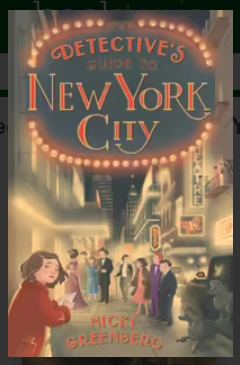
The Detectives Guide to New York City by Nicki Greenberg (Affirm Press) due July 2022

I loved The Detectives Guide to Ocean Travel and I was thrilled to see it listed as a CBCA 2022 short listed book

Blurb (Booktopia): Pepper Stark could not be more thrilled to return to New York City with her father, the Captain. Not only will she be back in the place where her late mother once lived but also she'll reunite with her friends Norah and Sol. But Pepper's excitement for her trip fades when the Captain invites along his new friend Emmaline and her son, Elliott. Still, Pepper is determined to make the most of her time with her friends in the Big Apple, revelling in the energy of the city that never sleeps.
But when dinner at the swanky restaurant where Sol is working ends in the suspicious illness of notorious food critic Anthony 'the Shark' Sharkey, Pepper finds herself entangled in yet another crime.
With only a week before she has to return home, Pepper, Sol, Norah and a reluctantly recruited Elliott are facing an even bigger challenge than the Saffron Diamond mystery, and the stakes have never been so high. If they don't find the culprit, Sol's chef career could be over ... or worse. And New York City might become the place where all of their dreams turn to dust. From the bright lights of Broadway to back-alley speakeasies, Nicki Greenberg has brought 1920s New York City to life in this delightfully thrilling mystery set in the same world as The Detective's Guide to Ocean Travel.

I'm excited to read this new instalment - I do like the cover!

Books I picked up at the Lifeline Book fair:


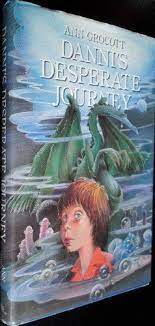
Danni's Desperate Journey by Ann Grocott first published in 1987 (and of course out of print)

Ann Grocott is the author of one of my top five best Middle Grade books of all time - Duck for Danger. I read Danni's Desperate Journey in 1987 but I am excited to revisit this book.

Blurb: Nobody in her right mind would touch a Mold Flizzard's egg. Unfortunately, Danni doesn't know this when she kicks and breaks the large, smelly object near the duckpond. She soon finds out, though. Slime from the egg touches her foot. A greeny-grey mould grows from the spot, spreading fast and there's nothing she can do to stop it! ... With the help of a couple of extraordinary aliens she meets along the way, she flees through the universe to escape the loving, scaly clutches of the Mold Flizzard and to find a cure for the mould before it is too late.


Heroes of the Secret Underground by Susanne Gervay (published in 2020 so not out of print)

Publisher blurb: Louie lives with her brothers, Bert and Teddy, in a hotel run by their grandparents. It is one of Sydney's grand old buildings, rich in history ... and in secrets. When a rose-gold locket, once thought lost, is uncovered, it sends Louie and her brothers spinning back in time. Back to a world at war: Budapest in the winter of 1944, where their grandparents are hiding secrets of their own ...


Sky Song by Abi Elphinstone published in 2018

Publisher blurb: In the snowy kingdom of Erkenwald, whales glide between icebergs, wolves hunt on the tundra and polar bears roam the glaciers. But the people of this land aren’t so easy to find - because Erkenwald is ruled by an evil Ice Queen and the tribes must stay hidden or risk becoming her prisoners at Winterfang Palace. Join Eska, a girl who breaks free from a cursed music box, and Flint, a boy whose inventions could change the fate of Erkenwald forever, as they journey to the Never Cliffs and beyond in search of an ancient, almost forgotten, song with the power to force the Ice Queen back. This is a story about an eagle huntress, an inventor and an organ made of icicles. But it is also a story about belonging, even at the very edges of our world . . .


Books I purchased recently:


One Half from the East by Nadia Hashimi 

Publisher blurb: Nadia Hashimi’s first novel for young readers is a coming-of-age journey set in modern-day Afghanistan that explores life as a bacha posh—a preteen girl dressed as a boy. Obayda’s family is in need of some good fortune, and her aunt has an idea to bring the family luck—dress Obayda, the youngest of four sisters, as a boy, a bacha posh. Life in this in-between place is confusing, but once Obayda meets another bacha posh, everything changes. Their transformation won’t last forever, though—unless the two best friends can figure out a way to make it stick and make their newfound freedoms endure.


When the Sky Falls by Phil Earle 

Publisher blurb1941. War is raging. And one angry boy has been sent to the city, where bombers rule the skies. There, Joseph will live with Mrs F, a gruff woman with no fondness for children. Her only loves are the rundown zoo she owns and its mighty silverback gorilla, Adonis. As the weeks pass, bonds deepen and secrets are revealed, but if the bombers set Adonis rampaging free, will either of them be able to end the life of the one thing they truly love?

The blurb from this reminded me of  An Elephant in the Garden by Michael Morpurgo. 


The Ogress and the Orphans by Kelly Barnhill

Publisher blurb: Stone-in-the-Glen, once a lovely town, has fallen on hard times. Fires, floods, and other calamities have caused the townsfolk to lose their library, their school, their park, and all sense of what it means to be generous, and kind. The people put their faith in the Mayor, a dazzling fellow who promises he alone can help. After all, he is a famous dragon slayer. (At least, no one has seen a dragon in his presence.) Only the clever orphans of the Orphan House and the kindly Ogress at the edge of town can see how dire the town's problems are. When one of the orphans goes missing from the Orphan House, all eyes turn to the Ogress. The orphans, though, know this can't be: the Ogress, along with a flock of excellent crows, secretly delivers gifts to the people of Stone-in-the-Glen. But how can the orphans tell the story of the Ogress's goodness to people who refuse to listen? And how can they make their deluded neighbours see the real villain in their midst? The orphans have heard a whisper that they will 'save the day', but just how, they will have to find out ...

I am a huge fan of Kelly Barnhill. I loved these:


Friday, January 8, 2021

Golden Threads by Suzanne del Rizzo illustrated by Miki Sato


Emi has a beautiful, handmade, toy fox. The pair are best friends. Fox is our narrator and he explains how one day there is a huge storm. Fox is tossed into the river.

"I churned and lurched, a blur of ragged fur and froth."

On the other side of the river Fox is found by a man, the grandfather of a young girl called Kiko. She carefully washes and repairs the damaged fox. 


In his pocket she finds the yellow ginkgo leaf Emi had placed there only hours ago. Kiko takes good care of Fox and many seasons pass. Then one day the river is littered with ginkgo leaves. Kiko knows it is time to look for her friend's home. Rowing back across the river she takes Fox back to Emi.

"Beneath our golden ginkgo, we sipped warm kukicha tea. And one by one we pieced together fragments of my journey. My stitched chest was like a seedpod filled full to the brim. Grateful. Restored. Loved."

A beautiful story of healing and strength. Kirkus

The fox’s transformative adventure invites discussion about empathy, how to overcome difficulties, and the idea that one doesn’t need to be perfect to be loved. School Library Journal

Words you need to know from this book:

kintsugi - a method used to repair rather than discard. "The art of repairing cracked pottery, joining broken pieces with gold."   金継ぎ

ginkgo Tree - a beautiful, deciduous tree with fan shaped yellow leaves appearing in Autumn. This tree is a symbol of longevity.  銀杏

obaasan - Grandmother  オバサン

ojiisan - Grandfather  おじいさん

kukicha tea - Green tea   茎茶

Wabi-sabi - finding beauty in things that are imperfect or incomplete.  わびさび 

Here is the web site for Japanese Canadian illustrator Miki Sato. Her collage art is stunning. Suzanne del Rizzo lives in Ontario, Canada. I especially love her book book My Beautiful Birds. Here is an interview with Suzanne about her book. Take a look here to see some pages from this book.


Golden Threads reminded me of The Little Boat by Kathy Henderson illustrated by Patrick Benson and also The Dress and the Girl by Camille Andros illustrated by Julie Morstad. There are so many children's books about lost toys and the joys of finding them again. Often the toy goes on an adventure. There is probably some deep psychological reason for this but I am not going to try to analyse myself - I just know I do enjoy books with this theme and emotional arc.

Here are some examples


And here is one of my all time most favourite picture books explores the opposite idea where the boy is lost and the precious toy finds him! Along the way Felix is damaged but Alexander makes some careful repairs.