Monday, November 4, 2024

The Fairy Tale Fan Club by Richard Ayoade illustrated by David Roberts


Fairy tales tell of adventure, adversity, courage, and love. But once the tale is told, all we know of our heroes and heroines is that they lived Happily Ever After. But surely there must be more to it than that? Ever After is a long time to be Merely Happy. What are our heroes and heroines doing now? How do they feel about the fantastic events that they encountered? What lessons have they learned? And if they could go back in time, would they do the same things again? Does life seem boring now in comparison, or are they relieved they no longer have to keep their eyes peeled for poisonous apples, fearsome dragons, uncomfortable peas, etc.? For the past few years, the curious among you have been asking these questions and sending them to me, C.C. Cecily, the Senior Secretary of the Fairy Tale Fan Club. I then pass on these communications to the Fairy Folk concerned and await their replies, which I then forward back to the relevant parties. If necessary, I add my own comments and clarifications. - from the introduction by C.C Cecily.

The fairy tales featured in this book are: Little Red Riding Hood; The Emperor's New Clothes; The Princess and the Pea; The Frog Prince; Rapunzel; Rumpelstiltskin; The Little Mermaid; Cinderella; Hansel and Gretel; Jack the Beanstalk; and The elves and the Shoemaker. And there are stories/letters to characters that are not from fairy tales -  Humpty Dumpty (it's a nursery rhyme) and Pinocchio.

Older readers who dip into The Fairy Tale Fan club will probably need to revisit some of the fairy tales especially The Little Mermaid. And they may find some of the vocabulary quite challenging: esteem, solemnizes, sham, gist, propulsive, prowess, and perplexed.

Why did I buy this book? Well, it was bound to happen sometime - I accidentally bought a 'celebrity' book! In fairness to myself this guy is a UK celebrity (not Australian) and there is no indication of his celeb status in the bio notes at the back of this book. Also, in fairness to myself, this book has had some very positive reviews which is how it came to my attention. 

Actor/comedian Ayoade presents a tongue-in-cheek collection of purported letters to and from well-known fairy-tale characters from Western tradition. ... Happily ever after, mortal reader!  Kirkus Star review

At the heart of The Fairy Tale Fan Club is a delightful exploration of friendship and community. As the characters come together to celebrate their love for fairy tales, the story highlights the importance of finding your tribe and sharing passions with others. It’s a heart-warming reminder that connection and collaboration can lead to the most magical adventures! Better Reading

And finally, I do like illustrations by David Roberts such as The Dunderheads and this series by Andrea Beaty.  Oh, and this book was a little cheaper at Gleebooks who generously offered participants at a recent event a 20% discount. 


You will notice I have not given this book any stars. I found it hugely disappointing. I love the idea of what happened after the 'they all lived happily ever after' ending of all classic fairy tales and I also love books that are fractured fairy tales or that innovate on well-known fairy tale stories. Here is my Pinterest. But this book feels as though it is trying too hard and somehow it just didn't work for me.  All this means I won't add this book to my own bookshelves instead I will add it to my book gift box of titles I am taking to a local teacher-librarian network meeting. 

I heartily agree with the comments from this Good Reads reviewerMy main struggle with this book was that I found the intended audience really confusing. The letters are witty - dry wit, oftentimes - as you’d expect from an accomplished comedian like this and much better suited to adult readers (still accessible to a more mature older child perhaps). However, there are also parts which reference a parent might be reading this book to their child, i.e. a much younger child, and the illustrations are certainly geared towards a younger reader too. Equally the very short length and large illustrative component is suggestive of younger readers, so I’m a bit lost as to who this book might be best intended for. 

I had a long discussion recently with a colleague in the Book Bunker library at Westmead children's hospital about celebrity books and about the way so many of them seem to have to mention farts or farting. I think we found over twenty in our small library collection. AND so yes, I am sad to report that The Fairy Tale Fan Club meets these criteria too. At times the humour in this book feels too adult to be included in a children's book. You can read a text extract here. Read this review from Red Reading Hub which begins This is essentially a satirical collection of letters supposedly written to or from well-known fairy tale characters, each with an introduction by the supposed narrator—C.C. Cecily, the Senior Secretary of the Fairy Tale Fan Club. That word SATIRICAL feels like an adult label to me. 

There are two covers above. I prefer the top one but copies of this book here in Australia have the second cover. 

Other (better) fairy tale continuation stories for younger readers:


Who is Richard Ayoade. His photo might seem familiar. You can hear him (and others) reading an audio sample of his book here:

Everything you ever wanted to know about the Tooth Fairy by Briony Stewart


The full title of this book is:

Everything you need to know about the tooth fairy 
(and somethings you didn't)

Begin with the cover. Briony Stewart is a master of movement. Go back and look at her book Gymnastica Fantastica. I love the way the magic is swirling around on this cover and you can almost hear those little sparkles. Now turn to the tooth filled end papers - these really set up the early statistics quoted by Briony:

"Every single minute of every single day, a child somewhere loses a baby tooth. In fact if you put all the children of the world together, they are losing more than 200 teeth a minute - that's 300,000 teeth every day!"

Each page in this book poses and answers an important tooth fairy question such as these (but there are more):

  • What's a tooth fairy?
  • What do they do with the teeth?
  • Why do tooth fairies like children's teeth?
  • How do they take your tooth?
  • Where do tooth fairies live?
  • What happens if I want to keep my tooth?
  • Why does the tooth fairy leave different amounts of money? (or sometimes forget to come!)
  • How do tooth fairies know when you've lost a tooth?
I am sure we will see this book listed as a 2025 CBCA Notable but will it be in Picture Book or Early Childhood or perhaps even Non Fiction? This book would be a terrific gift and I would also add it to a class mini unit about the tooth fairy. 

Here are some splendid teachers notes written by Dr Robyn Sheahan-Bright and she has included a very extensive reading list with lots of picture books I certainly need to find and read.

Here are my own favourite tooth fairy books. All of these would be great to read alongside or after this new book by Briony Steward:


this is long out of print but it is also one of my most favourite books to read aloud


The Tooth Fairy - this is wonderful wordless book


Sunday, November 3, 2024

The Grown-up's Guide to Picture Books by Lara Cain Gray illustrated by Timothy Ide and Lorena Carrington


I am going to begin with a couple of quotes:

"Storybooks are our first social mirrors, helping us figure out who we are and where we fit into the world around us. They are also enticing windows through which we begin to discover diverse and imaginary spaces. To put it simply, picture books are really important."

"When you come to the end of a great picture book, you should feel satisfied by its conclusion. You will have found it entertaining or informative. ... You might even want to read the book again or jump back to the best bits. ... If you're sharing the book with a young reader, take plenty of time to talk about it. ... Whatever you do, never, ever, ever stop enjoying picture books, even when you are a grown-up."

I think this next statement may give you an idea about the intended purpose of The Grown-ups guide to Picture Books:

"as grown-ups we tend to think of picture books as simplistic stories, from which our readers should eventually move on towards lengthier, more worthy reading experiences. But did you know that picture book writing requires a range of specialised literary strategies to tell big stories (with the constraint of a limited number of words)."

Lara Cain Gray makes a very important point in her introduction, and it is one I desperately wish she had elaborated on:

"But like all art forms, not all picture books are great picture books."  

Actually, this could also be written as 'not all picture books are great books'. This is a topic I would love to see expanded. 

Before reading The Grown-up's guide to Picture Books, I decided to write my own A to Z about picture books. My list includes topics mentioned by Lara Cain Gray and some she does not discuss. I have more than one word for some letters. If I was refining this to try to fit the model used by Lara Cain Gray I would need to think more carefully about audience.  Lots of reviewers and Lara Cain Gray herself envisage The Grown-up's guide to Picture Books as aimed at teachers and perhaps Teacher-Librarians and of course parents but perhaps this is too broad? And here is another question - so who are the 'grown-ups' from the title?

Here is my list:

A     audience; age; appeal; awards
B     blurb; back cover; (page) breaks
C     connections; celebrity writers; characters; conversations; colour choice
D    design; dust jackets
E    English; endorsements; extending the text; emotion
F    font; family; familiarity; favourites; front cover
G    gutter; go beyond
H    home; half title page
I    imprint information; interactive; interpretation
J    judging
K    kids books in shops
L    lists; libraries; love
M    meaning; mood
N    narrative; nuance
O    open ended; older readers
P    page turns; pace; poetry; plot
Q    quality
R    rhythm and rhyme; read aloud; re-read; revist
S    subtitles; subtext; series; slow down; spot varnish; stickers
T    title; text
U    universal themes
V    vocabulary; visual literacy; value added
W    white space; wordless books
X    extra features
Y    your library
    zzz bedtime


Last week I went to an event hosted by Gleebooks where Lara Cain Gray and Lorena Carrington were the guest speakers. Then I spent a couple of sessions reading The Grown-up's guide to Picture Books. It was good to see a few of my topics above did feature in this book but not necessarily under my alphabet suggestion. Using a format like A to Z has both benefits and losses. The benefit is that this is a book you can easily dip into either by flipping the pages or skimming the contents list. The loss is that only 26 topics can be covered. Lara Cain Gray said she made this choice because it is a playful nod to children's books.

Each page in this book reads like an essay or persuasive piece on the topic listed and on many pages I did find myself nodding over the 'wisdom'  she expressed and her colloquial style of writing in this book makes it easy to read and understand. I did, however, find the font size challenging. 

But who is the audience? I am still unsure about this. I would hope that most Teacher-Librarians and public library staff know 'most of this stuff'. If the audience are teachers, rather than presenting them with this book straight away, I would begin with these excellent notes from the publisher (Midnight Sun). These could/should be used for staff professional development. 

There are talking points on every page of The Grown-up's guide to Picture Books - I wonder if anyone has considered producing these as a one-page document for easy access. Again, these could be very useful for classroom teachers. I do worry that some parents (if they are the intended audience) might think reading a picture book has to turn into a comprehension lesson. It is certainly okay to chat about a book and think about your shared experience and hopefully make connection between the story and your life or between the story about other books you have read but it is not the role of a parent to 'teach' a picture book.

What's missing? I really wanted a further reading list and a reference list but perhaps that because I take a more 'academic' approach to a book like this. An example where I wanted to know more was on page 48 where Lara Cain Gray references Michael Hyatt and his PINC method for creating a book title. I did a little digging and found this article

Lara Cain Gray and others claim this book is unique as guide for parents. I cannot dispute that but I am fairly sure there are other books that explain the wonders of picture books to parents. I do like these:


Along with talking points each page there are invitations for the reader to look more closely at the illustrations.  Some of these were quite thought provoking but I found a few were a little obscure such as page 20 - "Why is the tortoise eating grapes and what does this choice of food and body language tell you about (his) personality?"  Sadly, I did not find the illustrations in this book very appealing and I did wonder why so many seemed to reference Alice in Wonderland, Peter Pan, and Treasure Island? I am also struggling to 'see' the silverfish on the end papers - sorry.

Going back to my own list of A to Z compared with the one used by Lara Cain Gray. I do wish she had made W for Wordless books. She mentions them several times on other pages but they are so wonderful I wish they had been showcased on a full page. W for white space is interesting but this could be covered on I is for illustrations or S is for spread perhaps. Having said this, I do sadly dispute this statement:

"wordless books are often included amongst the most popular picture books for young readers" page 50

I wish this was true, but I am fairly sure lots of parents have no understanding of the way to read a wordless book or the of the powerful and rewarding stories they contain. Take a look at this blog post. If you are looking for wordless (or as IBBY call them Silent Books) here is my Pinterest.

Some pages contain ideas or an argument that could apply to any children's book not just picture books. It is a totally understandable decision not to include specific examples of children's books. Obviously, they date a book, and how do you choose which books to suggest for example only Australian (I hope not because we can read the BEST books in English from USA, UK, Canada, and New Zealand). But I did want Lara's arguments to come back more often to her topic - Picture Books. T is for title could be about any great book as could U is for underlying and C is for covers.

The pages I thought would give teachers, and perhaps parents, the best understandings about picture books were A is for animals; E is for endpapers; I is for illustrations; L is for language; and R is for repetition. Take a look at this article from ABC Kids about picture books

As I mentioned I attended an event about this book last week. Lara Cain Gray is an advocate for Picture Book Activism. This was a new term to me, but I gathered it means seeing picture books in all contexts of a reading diet and not merely a steppingstone to harder, longer books. NCACL was mentioned and so I do hope Lara Cain Gray has dipped into their Picture Books for Older Readers database. (I was one contributor). Lara works for Library for All. I need to discover more about this organisation. Take a look at this article from 2021 about libraries for children. 

Lara Cain Gray penned an impressive article for The Griffith Review. Here are a few quotes:

Picture books are not just for children. When we’re young, they inspire and facilitate our literacy journey, teaching us how words work and what we might expect from a narrative.

The illustrations in a high-quality picture book are constructed with the same melange of creativity, pedagogy and compressed storytelling as the words. Far from being merely decorative or attention-grabbing, they foster visual literacy. Each double-page spread is constructed to evoke a mood. The reader is manipulated by artistic devices such as the use of a specific colour palette or the careful placement of objects within white space. Like a frame of a film or a gallery painting, the pages of a picture book can be read without words and interpreted in different ways by different viewers. When read with the words, the illustrations expand the story, often providing additional information or even a counter-narrative in more playful examples.  

Lara Cain Gray also talked about the way reading a picture book can be a good exercise in mindfulness and that the writing in a picture book is a perfect model of succinct writing of the kind we use when writing grant applications and even Instagram captions. 

You can read more about The Grown-up's guide to Picture Books by following these links:

The Mia Macrossan interview for StoryLinks.

Good Reading - includes author and illustrator details

Reading Time

The Bottom Shelf

The Book Muse

Paperbark words (you can see inside The Grown-up's guide to Picture books here).

Finally I would like to talk about the marketing of this book and the endorsements. Lara Cain Gray and her publisher sent The Grown-up's guide to Picture Books to a number of authors. Their comments (Sophie Mason, Andrea Rowe, Ann James, Jules Faber, Matt Shanks, Peter Carnavas) do set a tone for reading this book but they also conflict (to me) with the idea that this is a book for parents and other adults because these 'big' names will surely mean so much more to Teacher-Librarians but as I already said I desperately hope Teacher-Librarians 'know the stuff' presented in this book. 

So back to my early question - who is the audience for this book? It is of course terrific to open up the conversation about children's books of all kinds. I do hope all 'grown-ups' discover or better yet already know the joy of reading picture books to children of all ages. 

Here is one of Lara's own favourite picture books:

To round off this post here are the A to Z headings from The Grown-up's guide to Picture Books:

A  Animals
B  Baddies
C  Covers
D  Dialogue
E  Endpapers
F Food
G Genre
H  Heroes
I  Illustrations
J Joy
K Kindness
L  Language
M Magic
N  Narrative structure
O  Opening lines
P  Parents
Q Queens (and Kings)
R Repetition
S Spread
T Title
V Versions
W White space
X Xenophobia (and difference and diversity)
Y Yucky stuff
Z Zeitgeist


2024 Speech Therapy Book Awards


The Book of the Year Awards are judged by a panel of Certified Practising Speech Pathologists with specific knowledge and skill in children’s language and literacy development. Each nominated book is judged on its appeal to children, interactive quality and ability to assist speech pathologists and parents in facilitating the development of communication and literacy in children.


I previously talked about One Little Duck and Ruby's Repair Cafe.
The 2024 winner is Almost a Fish.


I previously talked about Grace and Mr Milligan and Leo and Ralph.
The 2024 winner is Harriet Hound.


I previously talked about Silver Linings; Being Jimmy BaxterAugust and Jones.
The 2024 winner is Being Jimmy Baxter.

Highlighting some past winners. Find each title using my search bar. All of these are sure to be in your local or school library.


Saturday, November 2, 2024

Summer of Shipwrecks by Shivaun Plozza


Do you have a best friend? Is this friendship so important to you that you would try to change yourself to keep this friend? Is it possible to think of someone as your best friend when you only meet once a year for two weeks when your families visit a seaside campground? It is this last point that I found a little unlikely and yet this was the main driver of the plot - with Sid desperate to win the approval of Lou. 

Sid regards Lou as her best friend and so when Lou brings Hailey along this year it is clear things will be different. You have read this plot line before I am sure - once there were two friends and now there are three girls - is there a way they can all be friend. The annual holiday location is called Shipwreck Coast and Sid is totally caught up in the story of a shipwreck from years ago. 

"Since forever I've spent the last two weeks of summer holidays camping at Penlee Point, so I know about every shipwreck that's ever happened her. ... The Penlee set off form London ... March, 1879; there were fifty -four people on board; ... the Penlee hit a reef off Desperation Point and only took ten minutes to sink; the ship was carrying nineteen million dollars worth of treasure; ... only one person survived: Katherine Natpier."

Last summer Sid and Lou found a coin which surely must come from the ship's treasures. Sid has huge plans for her time with Lou but this year everything is different. Hailey just wants to sit on the beach. Hailey is 'cool' and she wears a bikini and she has her period. Hailey seems to know about boys - how to flirt with them and get their attention. None of this interest Sid but she feels she needs to change so she and Lou can go back to the way things were.

It has taken me a while to read this book mainly because instead of settling down and reading long sections I tended to read only 3-5 pages at a time. I was a little invested in the main character Sid but most of the time she really exasperated me. I just wanted to say 'please stop trying to please Lou because she is no longer noticing you'. 'Please be brave enough to be yourself'. 'Please stop making promises and telling lies so you can get back with Lou'. Lou is giving all her attention to Hailey and Lou in turn is letting Hailey manipulate her activities, taste, reactions to boys and especially her relationship with Sid. Growing up should not be this hard. Poor Sid. 

The suggested age for this book is 10+ but I think it might better suit 11+. Other reviewers really enjoyed this book:

Summer of Shipwrecks is a tender and poignant story of best friends growing apart, and the grief that accompanies this change. It’s also an exciting mystery of long-ago shipwrecks and lost treasure, and how life continues – even after incredible suffering. For me, a highlight is the relationship which slowly develops between Sid and her almost-stepsister, which vividly relates all the awkwardness, pain, and surprising moments of joy which can occur as two families become one. Readers ... who like contemporary, character-driven fiction will wholeheartedly enjoy this story. StoryLinks

ReadPlus review. Reading Opens Doors.

Here is an interview with the author and Joy Lawn for Paperbark Words. There is a link to a set of teachers notes for Summer of Shipwrecks on the UQP page but in my view this is not a book I would use for class study - it feels more like a book to be read privately by a girl who is either at the end of Primary School (Grade 6) or just beginning High School. 

If your readers enjoy this book, I would recommend these companion books especially Junonia which follows very similar themes of change and growing up and summer holidays and altered expectations. 


Shouting at the rain (5 stars from me)


Junonia (5 stars from me)


You could also look for a couple of older books - Half a Chance by Cynthia Lord (2014); and Takers and Returners by Carol Beach York (1974).

Just before I left for the IBBY Congress in Trieste a parcel arrived from UQP (University of Queensland Press).  I simply didn't have time to read the two books which were released 3rd September - Summer of Shipwrecks The Lost History by Melanie La'Brooy. The Lost History is a sequel to The Wintrish Girl but with over 430 pages I won't be ready to talk about this one for a week or two. 

I previously read this book by Shivaun Plozza:


The Wise Doll by Hiawyn Oram illustrated by Ruth Brown


In this story there are three sisters. Two are horrid and very horrid and the third is named "Too Nice". Little Too-Nice is lonely, but her horrible sisters reject her and then, to get rid of her, they set a challenge that she must visit Baba Yaga and bring back a Toad in a jewelled jacket with a diamond collar. Too-Nice has a little doll that her mother gave her before she died. She asks the little doll for advice.

"put me in your pocket, listen to my advice whenever I have any and let's set out."

Too-Nice knocks on the door of Baba Yaga. The witch invites her in and tells her to wash the mountain of dishes by morning. If she fails, she will be cooked in the cauldron. Too-Nice works hard but there is no way she can complete all of this by morning. Her Doll tells her to rest and magically in the morning all the dishes are clean and stacked in neat piles. 

BUT as you would expect with any traditional tale there are more tasks ahead - three in total. Next the witch tells Too-Nice to sift through the dirt in the garden to find all the poppy seeds. This is another impossible task which her Doll is able to complete. The third challenge is to lay out the food and answer the important question.

"Now answer me correctly, or you will be my first course. What was it you came here for?"

How should she answer this question and will her answer mean she can take that toad home to her awful sisters and if she does give them the toad what on earth might happen next? Is there a way for this story to have that all important happy ending?

I read a few things about Baba Yaga:

  • Baba Yaga is a witch or ogress from Slavic folklore who lives in a magical hut in the forest and either helps, imprisons, or eats people (usually children).
  • Although she is usually the villain of any piece she appears in, she can also offer assistance and is understood as more of a trickster character who encourages transformation than the stock figure of an evil witch.
  • Baba Yaga is probably best known from the story Vasilissa the Beautiful in which she inadvertently frees the heroine from the tyranny of her stepmother and stepsisters
  • Baba Yaga is depicted as an enormous, ugly old woman who lives in a hut built on four tall chicken legs that can turn about or relocate on command. She is often seen draped over her stove or reclining in the hut across the entire expanse, with her large nose touching the ceiling. 
  • There are a number of tales in which she acts as an agent of transformation, helping the heroine or hero toward self-actualization and the completion of a quest.

And a few things about Vasilissa the Beautiful:

  • Vasilissa lives happily with her mother and father until she is eight years old when her mother falls ill and calls her to her deathbed, giving her a magical doll to help her through life. 
  • She must always keep the doll with her, a secret from everyone else, and offer it food and drink whenever she faces some challenge in order to receive help.
  • After her mother’s death, her father marries a woman with two daughters who is envious of Vasilissa’s beauty and abuses her, giving her harsh tasks, which her father can do nothing about since he is away on business trips. Vasilissa is only able to accomplish these tasks through the help of her doll.
  • In hopes of getting rid of Vasilissa, her stepmother keeps sending her into the woods on errands: finally, Vasilissa is sent directly to Baba Yaga’s hut to ask for fire.
  • Baba Yaga demands to know why the girl is there and agrees to give her fire in return for work. She assigns Vasilissa impossible tasks, which she is able to accomplish with her doll’s help.
  • Baba Yaga sends her home with a skull containing the fire she was sent to fetch, and once it is brought into the house, it burns the evil stepmother and stepsisters to ashes.
  • Baba Yaga acts as the catalyst for transformation. The doll performs all the impossible tasks given to Vasilissa, but it is Baba Yaga who assigns them, who warns the girl against asking too many questions (and so saves her from probing too far into dangerous territory), and who provides her with the skull that sets her free from her stepmother’s cruel tyranny.
Nearly all of these plot points are included in The Wise Doll. I am also sure you can easily make connections between this story and fairy tales like Cinderella. 

Good Reads blurb: A memorable Russian fairy tale to entrance and enchant. Ruth Brown's stunning illustrations accompany an extraordinary fairy tale about a little girl who, with the advice of her wise doll, escapes a truly terrifying witch and her slimy, child-gobbling toads. When Too Nice's evil sisters, Horrid and Very Horrid, force her to kidnap the witch Baba Yaga's jeweled toad, Baba Yaga devises a series of impossible tests for the little girl. If Too Nice passes them, she gets the toad, but if she doesn't -- the toad gets her Too Nice's only companion through the ordeal is the wise doll in her pocket, a gift from her mother, whose help leads to the miraculous completion of the tasks.

Superb artwork enhances this offbeat, minimalist retelling of the old Russian folktale in which Baba Yaga the witch is outwitted by an innocent little girl, with the help of a magic doll bequeathed to her by her now-dead mother. ... excellent witchy stuff. Kirkus

My friend from Kinderbookswitheverything asked me to read The Wise Doll. She had it on her Halloween book display for over 3 weeks but sadly no child selected it for borrowing - should she keep this book in her library? Her copy is the first cover shown above.

Case for YES

  • This is such a satisfying story which shows the rewards of hard work, bravery and trust.
  • I love books about dolls and the idea that this doll has magical power bestowed by her late mother adds a beautiful emotional layer.
  • The ending and final words are perfect.
  • This book has the most OUTSTANDING illustrations. I cannot think of a book with a better or more scary witch illustration. 
  • I think the first cover above is appealing - much better than the second cover from a more recent (out of print) edition. 


Here is a review: ‘Oram has a gift for pithy turns of phrase, compressing description into action and dialogue.  She has retold this story in eminently oral language. ... this is folklore justice as its finest.  Looking for stories with strong female protagonists?  Tell this one.’ Janice del Negro, editor The Bulletin for the Center of Children’s Books USA.

The Wise Doll reminded me of this book (which is one I adore to read aloud):


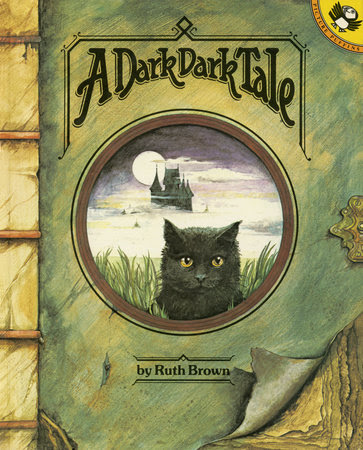
I have been a huge fan of Ruth Brown's illustrations from the time I discovered A Dark Dark Tale (1981) which I read to hundreds of young children in my school library (1984-2017). 


And I also love so many books by Hiawyn Oram especially In the Attic illustrated by Satoshi Kitamura. I also highly recommend her little junior book series 'Animal heroes' also sadly long out of print. 


Friday, November 1, 2024

Beware Beware by Susan Hill illustrated by Angela Barrett

Kitchen's warm.
Smells of spice.
Kettle sings.
Fire bright.
But what's out there?
Beware, beware.


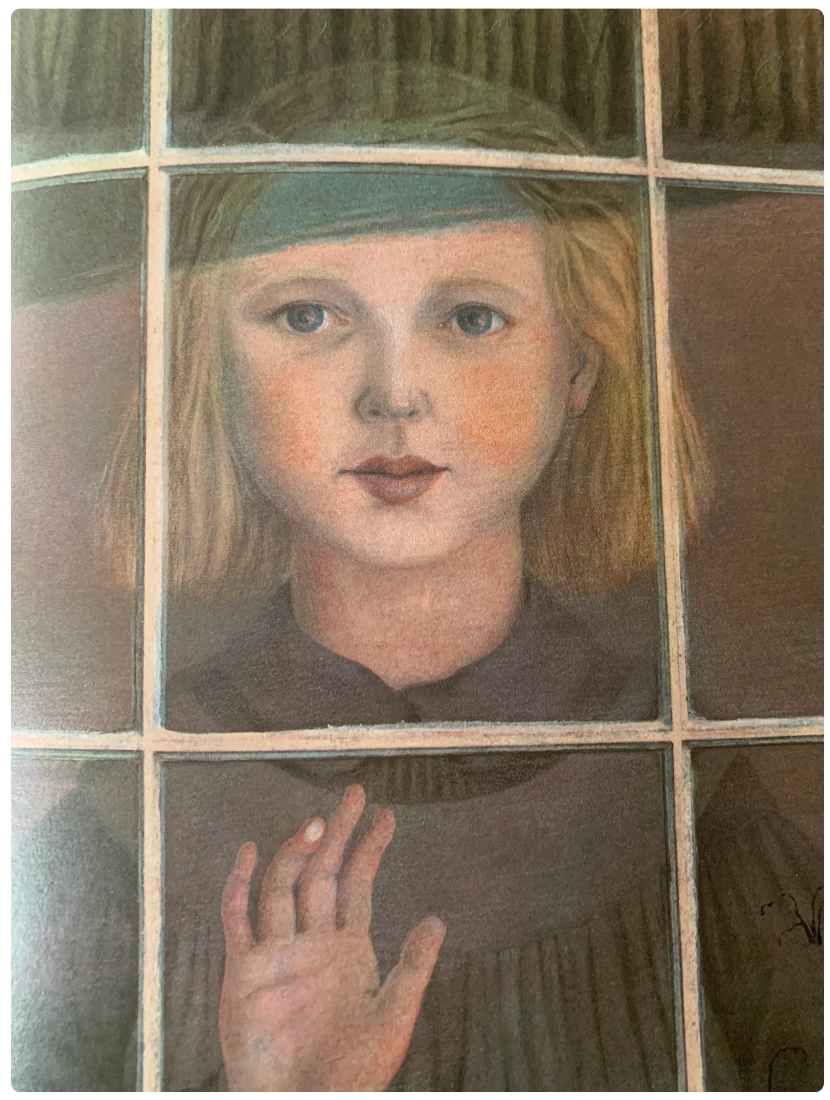
The little girl keeps looking out the window. While her mother is distracted over the cooking pot, she slips outside. 

In long shadows lies the wood.
I knew I could!
I'm here, out there.
Beware, beware!
I will take care.

It is cold and the sound of every footstep echoes against the bare branches of the trees. Who is there? Turn the half page.

Trolls Goblins
Elves Sprites
Mysterious lights
Fingers beckon
Eyes stare
Wolf 
Bear
Dragon's lair
Beware! Beware!

The tension builds and builds until we see the mother come outside to look for her daughter. She finds her thank goodness and brings her back into the safety and warmth of their home but ... The ending is open - it seems this little girl will one day once again venture outside.


If you share this book with a group of older students there is a whole lesson hiding here about the use of repetition and more importantly the use of exclamation marks.

Look at these lines and think about how they might impact the way you read this book aloud.

Beware, beware.
Beware, beware!
Beware! Beware!
Beware! Beware!

Book seller blurb: An atmospheric prose-poem, shortlisted for the Kate Greenaway Medal, about a child wandering out into the dark. A little girl looks out at the cold snowy night, while her mother is busy at the kitchen stove. "What's out there?" she wonders. "Don't go!" a voice inside her warns. But curiosity prevails over fear, and she steps out into the snow towards the dark wood. Who knows what scary things await her there? 

It seems impossible to read every book in a school library but my friend from Kinderbookswitheverything actually does this! AND she has an encyclopedic knowledge of the books in her library and also their creators - authors and illustrators. This week, as she packed up her Halloween book display, she passed me Beware, Beware. I will confess I did have this book in my previous school library and while I might have flipped it open at some stage I had not sat down and read this wonderful book until this morning.

Very young children aged 5 and 6 often used to ask me for scary stories. I would give them a Dark, Dark Tale or The Flat Man but given this same opportunity now I would also give them Beware, Beware. Another book illustrated by Angela Barrett - The Hidden House - is one of my most favourite picture books. Angela Barrett has been shortlisted three times for the Kurt Maschler Award and has won the 1989 Smarties Book Prize 6-8 Category for "Can It Be True?", and the 1991 W.H.Smith Illustration Award for "The Hidden House". Her other titles include "The Snow Queen" and "The Walker Book of Ghost Stories". "Beware Beware" was shortlisted for the Kate Greenaway Medal. She also illustrated another wonderful book which is fantastic to read aloud - The Night Fairy.


Of course, you know I am going to say Beware Beware (1993) is now out of print. IF you have a mint condition new copy it is worth more than AUS$200. I did find a copy from an Australian online seller for just AUS$4 so I have made an enquiry about the postage cost. I think I do need to own this very special book!

Versatile full-spread illustrations, delicate and haunting, reflect and enhance the text. The movement from the poetic calm of the salmon pink sky to the frenzy within the wood is graceful and realistic. Split pages in two spreads allow Hill and Barrett to intensify still further the suspense of their wintry drama.  Publisher's Weekly