Showing posts with label China. Show all posts

Tuesday, April 21, 2026

Watercress by Andrea Wang illustrated by Jason Chin


The big mystery of this Caldecott winning book is that it was not distributed here in Australia and yet this is a story that could easily translate to our context. AND this book won the 2022 Caldecott Medal. You can still buy this book but the hardcover edition of this book costs between AUS$35 and AUS$47 and so will be beyond the budget of most school libraries. Trove only list ten public and university libraries with this book. Luckily, I was able to re-read Watercress in a public library a couple of weeks ago - Green Square Library. I discovered it there a couple of years ago. You can see the whole book on this video. Here is an interview with Andrea Wang and Jason Chin.

Here is the synopsis from WikipediaA young girl is in the car with her brother and parents when they come across wild watercress growing on the side of the road. Her parents excitedly pull over and instruct the children to help them gather the watercress. The girl feels embarrassed to be seen by passing cars and disgusted by the mud and snails that are on the plants. The watercress is prepared for dinner that night, but the girl initially refuses to eat it because she is ashamed of their "dinner from a ditch". Her mother brings out a picture from her childhood and, for the first time, talks about the famine that her family suffered. Feeling guilty, the girl takes a bite of the watercress. She discovers that she likes the taste and reflects on the new memory she and her family have created.

My former school had a unit of study with the Grade 6 classes about our multicultural country here in Australia - Watercress is a book I would have loved to share as a part of this class topic alongside other books about The Refugee Experience Through Picture Books

You should also look for this book which is based on the years in China of the great famine.


Author note from Andrea Wang: This story is about the power of memory. Not just the beautiful memories, like the ones my mother and father had about eating watercress in China, but also the difficult ones, the memories that are sometimes too painful to share. It starts with my own distressing memory of being made to pick watercress that was growing wild by the side of the road. As the child of Chinese immigrants, growing up in a small, mostly white town in Ohio, I was very aware of how different my family and I were from everyone else. It's hard to feel like you don't belong, and collecting food from a muddy roadside ditch just made that bad feeling more intense for me -- something my very practical parents didn't understand. When I was young, my parents didn't talk about their memories of China, of growing up poor, losing siblings, and surviving war. I don't blame them -- these are difficult topics to discuss with children. But it's important, too, for children to understand their family history. Perhaps if I had known about the hardships they had faced, I would have been more compassionate as a child. Maybe I would have felt more empathy and less anger. More pride in my heritage and less shame. Memories have the power to inform, to inspire, and to heal. This story is both an apology and a love letter to my parents. It's also an encouragement to all children who feel different and to families with difficult pasts -- share your memories. Tell your stories.

Prizes for Watercress:

  • Caldecott Medal Winner
  • Newbery Honor Award
  • Asian/Pacific American Award for Literature
  • Chinese American Librarians Association Best Book Award 2022
  • New England Book Award Winner
  • 2021 Boston Globe – Horn Book Honor Book
  • 2021 Cybils Award 

I previously talked about these books by Andrea Wang and Jason Chin:


Thursday, February 20, 2025

Lotus and Feather by Ji-Li Jiang illustrated by Julie Downing


Lotus has been unwell, and her illness has taken her voice away. The other children no longer invite her to play. She lives with her kind, wise and compassionate grandfather beside a lake that used to be filled with lotus flowers, birds and fish. 

"One morning, Lotus went to collect reeds for her Grandpa. She stopped in awe when she saw a big bird, as white as fresh snow, standing in the marsh grass. Its wide wings edged with black feathers, like lace on a dress. Above the long, curved neck, its head was crowned with a red top like a dazzling ruby."

As Lotus stands looking at this exquisite creature a gunshot startles her. Her bird has been shot. She carefully carries him back to her grandfather. Over the coming weeks and months Feather gradually heals and eventually he stands up and even seems to dance. This entrances the other children. Then one evening Feather begins to crow loudly. He has sensed an earthquake. Lotus and her grandfather rush to alert the villagers because their lake is about to flood. 

Bookseller blurb: A winter illness left Lotus, a little girl, without a voice and without friends. A hunter's bullet left Feather, a crane, injured and unable to fly. As Lotus nurses Feather back to health, their bond grows. Soon Feather is following Lotus everywhere, even to school! The bird dances to the girl's reed whistle, much to the delight of the other children. One day, when the village floods, Feather helps raise the alarm as Lotus and her grandfather urge their neighbors to get to high ground. Feather is a true friend to Lotus, but the time comes when Lotus must be a true friend to him--by encouraging him to migrate with the rest of the cranes. The next spring, Feather miraculously returns, and that's not all . . . he has brought new life to the nearby lake. Inspired by the true story of a crane that rescued a Chinese village, and graced with sensitive watercolor illustrations, this lovely book about respecting nature offers deep emotion and delightful surprises.


Elegant storytelling and arresting compositions combine for a deeply satisfying emotional and aesthetic experience. Best shared one-on-one or in a small group so that children can pore over the lively and engaging artwork. School Library Journal

Downing’s finely crafted illustrations perfectly complement this reassuring story. Done with watercolor, pencil, and paint and digitally collated, they have the look of Chinese paintings, with misty backgrounds and gently bending reeds. The rosy-cheeked children wear red scarves, alluding to the author’s own childhood during the Cultural Revolution. Kirkus

My friend at Kinderbookswitheverything set up an extensive display of books for Chinese New Year and among them I found Lotus and Feather. This is a book to read and treasure and it has wonderful illustrations. It was published in 2017 but I think it is still available although sadly, as with all US Picture books now, it is very expensive at over AUS$40. I have not found a paperback edition. 

Here is the webpage of the illustrator Julie Downing. Read more about Ji-Li Jiang here. You can watch a video of the book at Storyline Online

Friday, November 17, 2023

Ties that Bind, Ties that Break by Lensey Namioka


Ailin lives in China. The year is 1911. She is part of a large extended family who still follow old customs. At a very young age she is betrothed to a boy in her neighborhood. She is just four years old and the boy is eight. The other tradition is foot binding. Hanwie's family (her betrothed) cannot accept Ailin if her feet are not bound but Ailin's father is progressive in his thinking, and he agrees her feet do not need to suffer this hideously painful process. He also agrees that his daughter can go to school even though girls do not usually receive education beyond the family. 

Her lack of footbinding means Hanwie is no longer engaged to Ailin but attending school means she is able to learn English. When her father sadly dies her bully uncle takes over control of the family. He has dreadul plans for Ailin so it is time for her to leave. She goes to work for a missionary family taking care of their two young children. By doing this she can no longer visit her family. After three years with the Warners she then travels to America so now her family ties are completely broken.  Go back to the title - ties that bind - foot binding and the binding to traditional customs. Ties that break - her cruel uncle and the way she is no longer fit for marriage with her big feet means she has to break away from her family and their traditional customs. Spoiler alert - there is a very happy ending to the story.

Wikipedia have a very detailed plot summary. 

The metaphor of things bound and unbound is a ribbon winding through this vivid narrative; the story moves swiftly, while Ailin is a brave and engaging heroine whose difficult choices reflect her time and her gender. Kirkus

Namioka weaves in just enough political history to help readers understand the turbulent climate, and her writing is so atmospheric and closely informed that it appears to offer an insider's perspective on a vanished way of life. Narrated by Ailin in flashback, this colorful novel has the force and intensity of a memoir. Publisher's Weekly

I picked this slim book up on a sale table in a large city bookstore. I love to look at price stickers on books like this because you can see how long a particular book has languished on the shop shelves. This book has been waiting since June 2017 for a new owner. Why? The cover is appealing to my eye. I think perhaps this book was placed in the wrong section. First off it has the feel of a biography and secondly, even though it only has 150 pages this book is not suitable for younger children. I would place it in the Young Adult section and recommend it for readers aged 13+. Please note there is a mention of suicide in the narrative. This book was published in 2003 but it is still available. 

Listen to an audio sample

Here is an alternate cover:


Companion book:

Friday, October 27, 2023

The Red Piano by André Leblanc illustrated by Barroux translated by Justine Werner


"In the hut, the cramped rooms reek of warm sweat, the foul smell of extinguished coal fires and packed earth. Crammed together, the comrades are already sleeping on the bare ground. Taking small careful steps, the young girl leaves the communal house."

"The music rises, free yet encased by the thick walls. Tonight marks the end of her fifth year in exile. ... pianos are criminal. Pianists are criminals. Schools are closed down. The Communist party is re-educating everyone."

How did they manage to bring a piano to this desolate place? How can this little girl practice each evening? Where will she get her music? And - most awful of all - what will happen when she is discovered?

Discover the answers in The Red Piano but be prepared to have your heart broken. 

The Cultural Revolution was started by Chinese leader Mao Tstung in 1966 to make China's people follow his idea of the way they should live. ... Young people left school and became Red Guards, roaming the country to search for and destroy the 'four olds' - old customs, old culture, old habits and old ideas. People, like the little girl in this book, were sent to the countryside to work with the peasants. (from the preamble)

"For seven years now, educated young people have been going to re-education camps, occasionally with enthusiasm but more often under duress. Their mission: to eradicate elitism through manual labour alongside poor farmers and by studying Chairman Mao's political works."

There are several things I miss now that I no longer work in my school library. I desperately miss reading aloud to groups of students. I miss sharing books with individual readers. And I miss creating lessons to unpack complex books like this one which I read to groups of our Grade Six students as a part of their work on Asian studies. Read this review for more plot details

This extraordinary (I don't use that word lightly) story was inspired by the true story of girl who grew up during the Chinese Cultural Revolution. Her name is/was Zhu Xiao-Mei. I first read this book several decades ago but the story has lingered with me. I highly recommend this for readers aged 11+ and for all high school libraries. 

Dazzling collage, pencil and paint illustrations from Barroux create a beautiful chiaroscuro of tension and release. Kirkus


Bookseller blurb: Stirring and inspiring, this picture book relates the story of a gifted young girl's passion for the piano in a time of historic turmoil. During China's Cultural Revolution a young girl is taken from her family and sent to a far-off labor camp. Forbidden to play the piano, she nevertheless finds a way of smuggling handwritten music into the camp and sneaking away at night to practice a piano in a secret location—until, one night, she is caught. Inspired by the amazing true story of international concert pianist Zhu Xiao-Mei, this acclaimed picture book poetically relates an astonishing story of perseverance set against a cataclysmic period of history.

I thought about this book all over again when I recently read Alias Anna because Anna is a musician and while music saves her it continually also threatens to expose her as a Jewish child. I also thought of Mao and the Cultural Revolution when I read Two Sparrowhawk's in a Lonely Sky by Rebecca Lim. And I thought of the similarities of the historical context from The Red Piano when I read My Brigadista Year by Katherine Paterson.

The Red Piano was published in 2008 so yes, it is out of print, but this book is sure to be in many school and public libraries. I picked up my copy at a recent charity book sale.

Wednesday, October 18, 2023

Lon Po Po: A Red-Riding Hood story from China by Ed Young


"Once, long ago, there was a woman who lived alone in the country with her three children, Shang, Tao, and Paotze. On the day of their grandmother's birthday, the good mother set off to see her, leaving the three children at home."

So what will the children do when a wolf, disguised as an old woman, knocks on their door. She claims to be their Po Po or grandmother and using very persuasive language and the children open the door and let her in. She immediately blows out the candle. In the darkness the children gradually realise this is all a trick.

"Po Po your foot has a bush on it." - it is hemp strings to weave you a basket.

"Po Po your hand has thorns on it."  it is an awl to make shoes for you.

Luckily these three children are very clever. They tell Po Po about some delicious ginko nuts in a high tree outside. Make sure you also think about the pattern of three in the story.


Lon Po Po won the Caldecott Medal in 1990. This ensures that it stay in print and here in Australia the paperback version is available for a lower price. This week I am talking about books written and illustrated by Ed Young because he sadly died very recently. 

Listen to this Fuse8n'Kate podcast where Betsy Bird and her sister talk in depth about Lon Po Po. 

My friend from Kinderbookswitheverything has a huge list of other Red Riding Hood stories. Look for these:


This one is a wordless book that I am very keen to read.

Saturday, October 14, 2023

Two Sparrowhawk's in a Lonely Sky by Rebecca Lim


"Yun thought how physically strong Fu was, how practical and dependable, steady as an ox. 
Pei was fast, meanwhile, and asked inconvenient questions ... She was a small, angry, 
quick-thinking girl in a village that valued none of those things."

"Life was hard. And so unfair. For those without money or consequence, it was a game of chance, not of skill. But the children already knew that, even if they had no words for that knowledge."

"I don't want to be angry, if being angry is a bad thing ... but if I'm not angry, nothing changes. I don't want to be one of those people ... that things are done to. Life seems like a test people like us can never pass because we never know what the rules are, and there are always rules. 
I want to know the rules. I want to write the rules."

This story is told in three parts. We meet Pei, Fu and their mother living in a village in China 1951-1958. The family are poor and under the rule of the local landowner but they are happy. Pei and Fu's mother and father are well educated people - different from others in their village. Then two life changing events occur - their father disappears and the feudal system is overturned by communism. Now neighbor is pitted against neighbor, the state demand more and more of their produce and they take away their farm animals and tools. Everyone suffers but they are all powerless. 

In part two, after their mother finally succumbs to starvation, the two children set off on a journey to find their father. They have a tiny collection of documents, letters, a menu and one very precious photo. They also have treasures sewn into their worn jackets. Their mother has told them never to part with their jackets and to only use the precious hidden things in an extreme circumstance. These land-based kids have never seen the sea let alone traveled across the vast ocean to an unknown destination in search of one man who they have been told can help them. Hong Kong is huge, confusing and loud and it seems completely impossible that Pei and Fu could ever meet the man who once knew their father and who they have been told can help them reach Australia. 

Finally in part three, the two bedraggled children have been able to secure passage on a ship traveling to the land at the bottom of the world and again, luckily, Pei makes a friend. This time it is a wise, kind young Jewish woman. It is a special moment in the story when Miss Ewa offers to teach Pei English.

The cover (by Hana Kinoshita Thomson) and title of this book are such interesting choices. This book is set in China in the 1950s but the cover (to my eye) does not have an Asian or even an historical feel. But I am most curious about the title. I've done a very tiny amount of reading about the Chinese Sparrowhawk bird. Their migration route does not take them to Hong Kong or Australia which are the destinations of Pei and Fu. The lonely sky makes more sense when you think about their long journey first in the sampan and later in the ship across the ocean under an enormous and lonely sky. Also, the way language barriers, loss and separation from loved ones means the children are desperately lonely. On page 74 of the novel their mother says:

‘My two sparrowhawks, my two fierce, bright young birds, carrying a piece of us with you wherever you go.’ 


Post update! I asked a question about the title on Instagram and Rebecca Lim replied. I was so excited to read her reply. And if I can boast she also thanked me for my 'absorbing and heartfelt' review!!!:

"I have just done an interview with ABC Nightlife where I talk about the title. Chinese Sparrowhawks are native to Southern China and they are common, tough and hardy. I wanted to set something tiny and local to a specific area against the fearsomeness and vastness of the wider world/sky - would such a creature survive."

There is nothing like a well-written, emotionally engaging historical novel to give young readers an understanding about life in a previous time and place. This wonderful story exposes the reality of life under Mao Tse-Tung’s Great Leap Forward, which resulted in the deaths of millions of Chinese, and the institutional racism of the White Australia Policy during the 1950s. Reading Time

The depth of research, emotion and strong characterization (especially of Pei) comes from the personal nature of this story - Rebecca Lim says "I'm trying to set the record a little straighter for my kids, their friends and the people we know, bringing all of us, not just the usual suspects, into the canon of stories that are worthy of telling."

Publisher blurb: Thirteen-year-old Fu, his younger sister, Pei, and their mother live in a small rural community in Southern China that is already enduring harsh conditions when it is collectivised as part of Mao Zedong's Great Leap Forward campaign that ultimately led to economic disaster, widespread famine and millions of deaths. After tragedy strikes, and threatened with separation, Fu and Pei set out on a perilous journey across countries and oceans to find their father, who left for Australia almost a decade ago. With nothing to guide them but a photograph and some documents in a language they cannot read, they must draw on all their courage and tenacity just to survive - and perhaps forge a better life for themselves. An unforgettable story of family, resilience and the complex Asian-Australian experience from the esteemed author of Tiger Daughter, winner of the CBCA Book of the year for Older Readers.

Here are some text quotes which will give you a flavour of this absorbing book. I didn't lift my head over the last couple of days because I needed to make sure Pei and Fu were safe. I was very tempted to skip to the end just to reassure myself but I resisted. There were so many times when I worried that truly terrible things would happen to these young children. Thank goodness for the kindness of strangers. 

I also enjoyed the way Rebecca Lim wove the history of The Great Leap Forward (1958–1961) in China and the philosophy of Mao; Refugee and Immigration Policies in China and Australia (The White Australia policy); and early in the story the feudal system in Chinese villages contrasted with the 'new' collective regime. She also touches on child marriage and the powerlessness of women. 

"Should we take it all back, good peasants? ... Should we start the agrarian revolution in your own feudal pocket of Southern China?" "Will you apologise to the proletariat who have suffered under your reign like beasts of burden?"

"It was a great tragedy, they all agreed, that the chieftain had to forgo his life for the greater good. But things like class struggle and socialist transformation and revolution had nothing to do with them .... no one will ever go hungry again. But that was not really true."

"All private land holdings, draught animals and tools within this village are now contributed to a single co-operative, for the common good. ... The State now owns all means of production and all means of livelihood."

"The Liang family had no draught animals, so Yun always transported the remains of their harvest divided into two baskets hanging from each end of a long guava-wood pole, balanced across her thin shoulders, staggering under the weight. It was a one-hour trip each way. ... Cutting the hard rice and sorghum stalks in the pelting rain had grazed Pei's fingers and palms, and they stung now with a myriad of tiny cuts, and the cold."

"The people of Long Jing Cun had never seen a female cadre with a rifle in the village before ... Pei's eyes widened. It suddenly occurred to her that this woman was not a famer. Pei had never seen a woman who was not a farmer but rather something else - could you even be something else?"

Descriptions: "Then one day, Ru went out to teach - wearing his old navy officer's cap and threadbare, loose-fitting navy suit, all trace of his former officer status stripped from the shoulders and collar, and his cracked leather shoes that let the water in on rainy days ... And he never came home again."

Notice some of the words used here - threadbare, loose-fitting, cracked leather.

"Yun covered Pei's eyes so quickly that her work hardened hands - nails cracked with dirt and clay - scratched the soft skin of her daughter's face like claws."

Notice the words here too - work-hardened, cracked, soft skin, claws.

"Like her children, she was slender to the point of emaciation, and her eyes were ringed with dark circles. She looked much older than her years."

In this interview for ABC Radio National Rebecca talks about her book. I do wish the interview had asked about the title!  Here is a link to the teachers notes written by Rebecca Lim available on the publisher site (Allen and Unwin) and also via Pegi Williams. Here is a review with plot details from The Book Muse

This exciting and immediately engaging story is rich in memorable characters, full of tension, moments of tenderness and high emotion, with a deep, challenging core questioning our beliefs and prejudices. StoryLinks

I am going to predict we will see this book listed as a Children's Book Council of Australia (CBCA) Notable title and short-listed book for 2024 - possibly in Younger Readers but I think Older Readers might be a better fit. I would highly recommend this book for mature readers aged 11+ - I won't spoil the end but even though many things are resolved for Pei and Fu the ending is also open for readers to imagine a new future for these two children arriving in a new land.

The very best books to pair with this would be these two picture books but there are lots of other suggestions in the teacher notes.


Link this to the line in the book - "He is a leech. 
He is a pestilence far worse than sparrows, than locusts." Page 25 Two Sparrowhawk's in a Lonely Sky

"All mosquitoes, rats, flies and sparrows are to be exterminated. Sparrows and rats eat grain! Flies and mosquitoes cause pestilence. ... Take your pots and pans into the fields and clash them loudly 
while the sun shines. Drive the pests away." Page 84 wo Sparrowhawk's in a Lonely Sky


Make sure you also read Tiger Daughter


Saturday, August 19, 2023

Under the Broken Sky by Mariko Nagai


"In 1931, the Japanese government overtook the northern part of China and declared it an independent state called Manchukuo with the last emperor of China - Puyi - as the Kangde Emperor of Manchuria. The government of the newly founded Manchuria created a slogan 'Five Races Under One Union.' ... However, in reality, Manchukuo was a puppet state controlled by the Japanese government."

"As a state policy, Japan encouraged its citizens - especially impoverished villages and second and third sons of farmer - to relocate to Manchuria ... to provide much needed natural resources for the mainland. With the promise of a better life ... over three million Japanese civilians ... lived outside of Japan."

In 1945 Soviet Armed Forces broke into the Manchurian border. The Japanese Imperial Army had retreated and so the people had to flee, walking because trains were not running and they had no access to cars. Many died before and on the journey and also when they arrived in cities from malnutrition. Some people felt forced to give away their children to Chinese families in the hope they would survive. 

This book, which is told in the form of a verse novel, is the story of twelve-year-old Natsu and her little sister who with a neighbour they call Auntie are forced to fee their home and endure the most harrowing of journeys in the hope of finding safety and also their father who has been conscripted. 

This is not a book for young readers. I would say it is for ages 13+. 

Literary and historically insightful, this is one of the great untold stories of WWII. Much like the Newbery Honor book Inside Out and Back Again by Thanhha Lai, Mariko Nagai's Under the Broken Sky is powerful, poignant, and ultimately hopeful. A book and a hug


Here are two text quotes to give you a flavour of the writing in Under the Broken Sky. As with all of the best verse novels this book is filled with emotion. When Natsu was cold I felt cold. When she was starving I felt her aching hunger. Her pain and fear and despair will linger with me for a long time.

Running

We don't lock the door.
We don't release the chickens

from the hen house.
We don't board up the windows.

Holding Asa's hand,
I run out of the homestead ...
Run if anything happens.
And something is happening.

The Rest

We sit as one.
No one has anything
left to eat,

even our stomachs
have forgotten about us.
We've been carrying empty

canteens for so many days,
and we've been swallowing
spit in our mouths.

We don't know if we are
hungry or thirsty or tired.
We just lie there,

in damp clothes,
hoping that a train 
will come this way ...


Friday, December 11, 2020

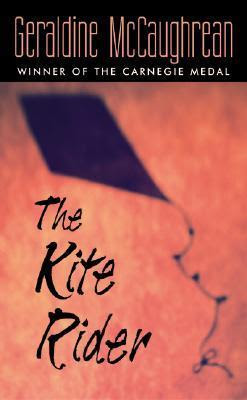
The Kite Rider by Geraldine McCaughrean


Friday Old Favourite


In ancient China superstitions are part of every day life. The gods might be watching you and so it is important to be careful. For example Haoyou wears a "brass collar his mother had put round his neck (it) was supposed to fool the gods into thinking he was a dog not worth picking on."

Haoyou lives on the coast. Traders fill their ships with goods to sell across the sea. It is important to know a voyage will go well so they use kites to test the wind but these are not ordinary kites. Haoyou sees his own father tethered to the kite.

"With a noisy rattle, the wind-tester shed gravity and rose into the air on a gust of wind, tautening the rope. ... his father plunged towards him face-first, eyeballs straining their lids, arms spread wide, head and shoulders buckled outwards from the hurdle."  "Somewhere during the flight, his heart, over crammed with fear, had burst like a sack of grain and his spirit had been spilled into the path of the prevailing easterly winds."

Why has this happened? The evil Di Chou wants to marry Haoyou's beloved and beautiful mother. Di Chou truly is the murderer but no one will believe a young boy such as Haoyou. He is determined to keep his mother safe and his cousin, the wise Mipeng, agrees to help. What follows is a wild romp involving a kidnapping, a circus, a meeting with the great Kublai Khan and numerous thrilling, dangerous and heart-stopping flights for Haoyou himself.

Fast-paced and densely plotted, absorbing, and at times even hilarious. Kirkus Star review

I first read The Kite Rider in 2001 and the images in this story lingered with me so strongly that I longed to read it again. I even purchased a brand new copy because I wanted to add this book to my own ever expanding shelves. Listen to an audio sample here from Chapter One. Take a look here to see the vast number of children's books by Geraldine McCaughrean. I have a plan to re-read another of her past titles - Pack of Lies.

Here are some past cover designs.  If you used this book with a senior primary class it would be great to talk about the power of covers, to discuss the decisions made by book designers, and to think about how much to reveal through a cover. I do like the newest cover above designed by Melissa Castrillion. You can see some of her work in the book Kind. She also did the cover for A pinch of Magic.


You might like to follow this book with these:


Tuesday, September 8, 2020

Ling Li's Lantern by Steve Heron illustrated by Benjamin Johnston


“Darkness cannot drive out darkness, only light can do that.” 

Martin Luther King Jr quoted by Steve Heron interview with Just Kid Lit

The wise man of the village has three children. He wants them to be good, kind and honest "but above all he wanted them to obtain wisdom."  Da Zhi sets his children a challenge. He takes them to the three pagodas and gives them each a small sum of money:

"With these coins, your task is to fill the emptiness of one of these pagodas with anything. You only have one day. Spend wisely."

The first son, Jingming, invests in huge quantities of bamboo. He pays workers to fill the pagoda right to the top with sticks and leaves. His father is pleased declaring this is a sound investment. The second son, Miao, buys feathers and down from a village duck farm. He fills the pagoda with sacks of feathers. His father is pleased with Miao's hard work.

The third child is Ling Li. She walks into the village where she sees a young boy sobbing because the eggs he was taking home have been dropped and all of them are broken. Ling Li takes his hand and back in the market she buys another basket of eggs for the boy. She continues to wander through the market where she sees a little girl who is lost and hungry. Ling Li buys the little girl some bamboo rice and then helps the child to find her mother. Next Ling Li sees a magician performing for the crowd. No one gives him any money - his bowl is empty so Ling Li gives him a few coins to thank him for his entertainment. Then Ling Li sees an old lady selling necklaces. After talking Ling Li with her discovers the lady has not sold any of her work today. 

"Ling Li placed a coin in her hand. ... Ling Li had bought a smile to everyone she met that day."

But what of the task set by her father? Ling Li only has two coins left and night is falling. She sees a lantern seller. Since it is the end of the day he agrees to sell her a lantern for her last two coins. She arrives home feeling that she has disappointed her father:

"Without a word, Da Zhi put his arm around Ling Li and led her inside. As they walked into the pagoda, Da Zhi held up the lantern. ... 'Not only have you filled the pagoda with the light from the lantern, you have also filled the village with the light from your heart. This is special wisdom."

When I start a post about a book I like to research the author and illustrator. I had not heard of Steve Heron or Benjamin Johnston but here are some things I discovered:

Steve Heron

  • lives in Western Australia
  • awarded an OAM for his contribution to the social and emotion well being of children
  • he has published a middle grade novel in 2018 called Maximus

Benjamin Johnston

  • is the illustrator of My Grandad marches on ANZAC Day
  • he lives in Melbourne
  • he is an architect

Take a look here to see some of the illustrations from Ling Li's Lantern. Look for a link to an extensive and thoughtful set of teaching notes for Ling Li's Lantern and a book trailer. I highly recommend Ling Li's Lantern as an essential purchase for a school library. I predict Ling Li's Lantern will be included in the CBCA 2021 Notable titles.

While the theme of this story may be familiar, it’s refreshing to read this modern interpretation which demonstrates that some values are timeless and universal. The Bottom Shelf

This beautiful story, reading like a fable telling us of the true nature of wisdom, the things learnt from the tale reflect Ling Li's traits; compassion, sharing, empathy, and these outshine those of her brothers only interested in making a sound investment. Read Plus

Like many of the best picture books, this is a deceptively simple tale, with a timely message of kindness. Charming Language

I found this extensive list of Chinese folktales many of which you are sure to find in a library. I would link Ling Li's Lantern with these books:


Friday, November 17, 2017

Smoke by Cao Wenxuan illustrated by Yu Rong


I really enjoy reading powerful picture books to older students especially those that focus on conflict resolution.  Smoke would be an excellent book to use with any Primary class.

Mr Shou and Mr Pang live in nearly identical houses on different sides of the river.  An argument on a bridge sets off their feud.  Each father returns home :

"From now on, you aren't to go over to the west of the river to play with Beanpole! That whole family are so ugly, thin as rakes, all of them."
"From now on, you aren't to go over to the east of the river to play with Butterball! That whole family is so ugly, fat as pigs, all of them."

The two fathers also ban the dogs from playing so Pointy Ears and Floppy Ears are forced sit on each side of the river desperate to have fun.  Eventually the dogs just need to play and so they jump in and frolic before returning to sit under the apple trees.  Time passes until one day both families are cooking near the river. One uses wet firewood and so the smoke is black and the other uses dry firewood and so the smoke is white.  As the smoke drifts into the air it intermingles.

"they hugged like two friends meeting. They twirled happily in the sky ... like two ribbons of silk, one black, one white."

The dogs chase the smoke, the boys then jump into the river and climb into a boat to chase the plumes of smoke. Finally everything settles down, the smoke disappears out of sight and the boys return to their respective sides of the river.  Now comes the important turning point. Mr Pang compliments Mr Shou about his apples and Mr Shou compliments Mr Pang. Apples fly from one side to the other.

This is the third Cao Wenxuan book that I have featured here.  Bronze and Sunflower is a novel and Smoke and Summer are picture books but all have philosophical undertones reflective of the authors own passion for this subject.  Smoke actually feels like an ancient folk tale filled with wisdom. It would be good to link this with books by Demi.

Take look at the illustrator's technique - the video is in Chinese but you can see her skillful papercuts and the music track is especially haunting.  You can read more about Yu Rong and see her work here.


Wednesday, October 4, 2017

Bronze and Sunflower by Cao Wenxuan

Sunflower knew in her heart that this boy would rescue her.  She hadn't called out to him.  She hadn't made any gestures asking for help.  She had just stood on the boat, watching him.  
The look in her eyes was enough.


Life in rural China in the early 1970s was hard.  The cultural revolution bought so much change.  Peasant farmers endure a daily struggle against weather and plague.  Reading Bronze and Sunflower felt, at times, like riding roller coaster.  The are moments of happiness and joy and then things seem to change in an instant for example just as their crops are almost ready to harvest disaster strikes :

"Soon the shouts and screams woke the whole village. People leapt out of bed, ran outside and looked up at the sky. But there was no sky, just a seething mass of screeching locusts blocking out the early morning light.  ... Down they poured, like rain from a rain cloud."

Intellectuals are sent to be re-educated in the country.  Sunflower and her father are sent to Cadre School which is set up across the river from Damaidi. Her father loves her but he is forced to work long hours and attend meetings each evening so often they only see each other for a few precious minutes late at night.  Sadly her father dies.  Sunflower is taken across the river and sits in a rock in the village waiting for a new family to take her.  Bronze and his family are so poor but they are drawn to this little girl.  These scenes are so tense.  Another cruel father and his equally cruel son are also considering claiming this girl.

Bronze is the only son of one of the poorest families in Damaidi.  An accident as a young child has left him mute and so he has become isolated from the other village children. He spends his days assisting with growing and finding food for his family - mother, father and grandmother - Nainai - the Chinese word for Grandmother.  In one chapter you will read how the whole family work to make shoes from reeds and how this brave boy goes to the larger town to sell one hundred pairs.

Sunflower does go to live with Bronze and his family.  They sacrifice everything to send her to school and the two children become inseparable finding a special way to communicate then one day a message arrives that city officials are coming to take Sunflower away.

When you pick up Bronze and Sunflower be prepared to slow yourself right down.  The pace of this story feels like the plodding of the buffalo you see on the cover.  It may take you a chapter or two to 'get into the rhythm' of this writing but be patient - you will be richly rewarded with a beautifully crafted story.  Click on some of the review quotes below to read more.

Next month I am lucky to be attending the 12th Regional USBBY Conference.  The conference is entitled Radical Change Beyond Borders - The transforming power of Children's Literature in a Digital Age.  Bronze and Sunflower is one of the books on their reading list.

Thank goodness Walker Books saw value in having this Chinese book translated so that, yes, while it can be enjoyed by millions of Chinese children, now it can also travel across the world to be enjoyed by children in Australia, USA, UK along with France, Italy and Germany (see covers below).

Listen to an audio sample hereCao Wenxuan was awarded the Hans Christian Andersen medal at the IBBY congress in Auckland in 2016.  I was in the audience at this ceremony and Cao Wenxuan made an inspirational speech.  There are some interesting teaching ideas here.


The landscape Cao describes is beautiful — reed marshes stretching as far as the eye can see, a meandering river, a pretty village on the opposite bank — but Sunflower is alone and lonely, “like a solitary bird in a vast blue sky with nothing for company but the sound of its own beating wings.”  New York Times

It’s bold and unfamiliar. Touching and terrifying. Historical but somehow also timeless. It’s one of the best dang novels I’ve read for kids in a long time. Do you truly want your kids to be citizens of the world? Then hand that world to them. Give them this book.  Elizabeth Bird School Library Journal

Although not without times of grief and real hardship, Bronze and Sunflower’s lives are full of so much loveliness, happiness and kindness that this book, this story came as a welcome breath of fresh air, full of hope and a reminder that warmth and generosity can make for powerful storytelling just as much as angst and dystopia.   Zoe Playing by the Book

Readers of all ages should be prepared to laugh, cry, and sigh with satisfaction Kirkus


“That’s what I’m interested in, the continuity,” he added. “It doesn’t matter what the setting is; universal values and humanity always show through.”  Cao Wenxuan

Sunday, May 21, 2017

Ruby's Wish by Shirin Yim Bridges illustrated by Sophie Blackall

I mentioned in a previous post that we have been exploring picture books with an Asian focus with our senior classes.  One of the first books we looked at was Ruby's Wish and it certainly generated some deep discussions.


Ruby is living in China in the early nineteenth century.  Her grandfather has made his fortune on the Gold Fields or "Gold Mountain.   That was what the Chinese called California when many men left to join the Gold Rush there."  As was the custom of the time, Grandfather has many wives and many sons who also have many wives and they all live together in a magnificent home.  "So at one time, the house was filled with the shrieks and laughter of over one hundred children."

Life is good for Ruby. She like to wear red but this is traditionally meant for celebrations.  This does not deter Ruby who adds a red ribbon to her jet black hair when her mother insists she must wear somber colours.  Grandfather is generous and so all the children are provided with lessons.  In spite of this, though, things are not always equal for boys and girls.  Ruby observes that girls are expected to learn cooking, keeping house and embroidery while the boys are free to play after class.

Ruby is careful with her calligraphy and is noticed by her grandfather.  One day she uses her calligraphy skills to write a heart-felt poem.

Alas bad luck to be born a girl; and worse lucky to be born 
into this house where only boys are cared for.

Her grandfather is given the poem and Ruby is summoned to his office. This is where the real skills of Ruby shine.  Her grandfather asks for examples of this inequality.  Her first example is small and unimportant. The boys get better cakes, Her second is also fairly minor. The boys have splendid lanterns in the shape of goldfish and dragons while the girl's are plain. Finally she makes her most important point :

"the boys will get to go to university, but the girls will be married."

How will her grandfather react?

Here are a set of teaching notes, Kirkus review and illustrator web site.  A note at the end of the book explains that this story was inspired by the author's mother - the real Ruby who did indeed attend university as one of the first female students.  You can see the whole book here.