Showing posts with label boxes. Show all posts

Friday, February 16, 2024

Mannie and the Long Brave Day by Martine Murray illustrated by Sally Rippin

"Wait a minute! What's in the box?"

Mannie is going on an adventure. She's taking her favourite elephant Lilliput and her doll Strawberry Luca. And she hasn't forgotten her special box of secret things, just in case the adventure gets adventurous.

There are some lovely ideas in this gentle story which celebrates imagination, play and the relationship of a young child with their special toys. Mannie wears her ladybug dress. Her doll, named Strawberry Lane, has no clothes so Mannie wraps her in a tea towel. Mannie has a box filled with special things. She likes to pull the noses of 'people' she loves such as her friend Lilliput the elephant.


They skip down the rocky road; creep, peep through the forest; splish splash through the wild winding river; stomp stomp up the lonely hill until they reach their picnic destination. At every turn the contents of the box fit the situation perfectly but then the sky grows dark because a storm in coming. Wait a minute - what's in the box? It is a ladder. That might be an extra surprise because you can see an umbrella on the book cover. At the top of the ladder Mannie and Lilliput push away the clouds. Then it is time to return home. 

There is a bonus glitter page surprise on the final page turn.

I missed this book back in 2009. I saw the cover this week when I was researching my blog post about our new Australian Children's Laureate - Sally Rippin. Hopefully many preschools still have this book on their shelves. It was published in hardcover (2009) and paperback (2019) and tonight I did find (and purchase) a brand new copy from eBay. This book is also listed for the NSW Premier's Reading Challenge (K-2 #28985).

This is a story about childhood, imagination and friendship. It’s a magical adventure that will delight children in a very special way because it perfectly captures the essence of what it means to be a kid. With beautiful repetitive phrases throughout and exquisite illustrations to explore, the story is a joy to read to an audience and super engaging for kids. One Child Smart

The delightful soft focus illustrations and alliterative, repetitive phrases encouraging readers' participation capture the inconsequential importance to small people of their favourite possessions, and special toys. Dangers are faced and resolution comfortingly offered. A magical story that celebrates friendship, courage and the wonder of a child's imagination. BookTrust

With beautiful repetitive phrases throughout and exquisite illustrations to explore, the story is a joy to read to an audience and super engaging for kids. Mannie and the Long Brave Day will make you smile. It will make you remember your childhood. It’s like a big warm hug. Kids' Book Review

You could pair this book with this famous title - both books are about a journey of imagination, both take place over one day and both end with everyone safe and sound back in bed:

Tuesday, August 29, 2023

Boxes are fun


I have talked about boxes and books that feature boxes used for imaginative play in previous posts. This week I borrowed a terrific book from a school library - Box by Min Flyte illustrated by Rosalind Beardshaw Nosy Crow (2015) - sorry to say, though, this book is now out of print. 

Bookseller blurb: When four toddlers find some toys in cardboard boxes, they play with them for a while. But, before long, the friends' interest in the toys wanes and their attention turns to the boxes themselves. What could they do with SO many boxes, they wonder?

Thomas has a box. A lovely little box. What do you think is inside his box? 
(lift the flap) It's a drum. Can you guess what he'll do with his drum?

My friend has a tiny new nephew living in London - I do wish I could send the family Box which I thought of after watching a fun family video where this little boy climbs in and out of a box giggling every time he 'surprises' the attentive adults. 


Further evidence that, for young children at least, boxes are gifts that keep on giving. Kirkus

If you work in a preschool boxes and books about boxes could provide weeks of fun for every child. I do hope you might explore this idea. My friend from Kinderbookswitheverything has an enormous collection of books about cardboard boxes. Check out her Pinterest

Friday, October 19, 2018

Mabel and Sam at Home by Linda Urban illustrated by Hadley Hooper

Tomorrow said Mabel, we will all explore and be bold. 
Tomorrow we will be even bolder than we are today.


This book combines some of my favourite story elements - imaginative play, cardboard boxes, sibling relationships and perfect illustrations.  This is a book I would love to see in all school libraries.

The children have moved into a new house. This is perfectly described by Linda Urban:

"There were chairs where chairs did not go and sofas where sofas could not stay."

In the midst of the chaos Mabel and her brother Sam find safety inside a large cardboard packing box which instantly becomes a ship sailing on a sea of blue carpet. Mabel patiently explains the ways of the sea to Sam.

"Ahoy!,' said Captain Mabel. 'Welcome aboard the Handle with Care. I am the captain.' 'And I am Ahoy,' said Ahoy. 'You're not Ahoy. Ahoy means hello. You are First Mate Sam."

The pair get to work swabbing the deck, hoisting the sails, riding wild waves and fishing for halibut. In the distance they see an island but Captain Mabel is sure the distant land is full of dangers. They sail on and things slow down, even the fish stop biting, until they see another land. The inhabitants are eating pizza so Captain Mabel agrees they can go ashore.

There are three 'chapters' in this longer format picture book. Each features a different set of colours. In the second section Mabel realises Sam needs a tour of the new home rather like visitors to the museum. She explains about the need for quiet, the importance of artifacts and the rule of no touching. The best thing they find at the museum is a frosted pitty-pat which Sam quietly licks.

I think the frosted pitty-pat is a lovely idea and perhaps they look like this. You could make some after your visit to the museum with Mabel and Sam.


As night falls the pair become astronauts. When things become really dark their mum plugs in the moon. I love the way the parents join the imaginative play at this point, becoming astronaut parents and even allowing Mr Woofie (the dog) to snuggle under the stars. Have you worked out why the boat is named 'Handle with Care'?

I would pair this book with Clancy and Millie and the very fine house by Libby Gleeson, Miss Mae's Saturday and On Sudden Hill.  If you want to explore another book series about brothers and sisters take a look at Annie and Simon.  Here is a conversation with the author. Linda Urban lives in Vermont and Hadley Hooper lives in Denver.

Each chapter is built around a color (navy, yellow, and gray-green, respectively) and mixes fully rendered characters with impressionistic settings and dappled textures, resulting in pages that brim with reassuring humor and lovely graphic nuances. Publisher's Weekly

Hooper’s retro, textured illustrations, rendered via printmaking techniques, expertly capture the joyous dynamics of imaginative sibling play in this lengthy story. (I love this longer text in a day where minimalist picture book texts dominate.) Mabel and Sam are so endearing; maybe we readers will be lucky enough to see them in a sequel. Julie Danielson Book Page 

It is a perfect balance between imaginary and real, bringing you along in their made-up worlds, while somehow giving enough verbal clues to keep you grounded at the same time. It’s not confusing and has excellent bits of comical kid terminology and conversation to make you laugh. Mabel and Sam are believable, adorable, precocious, and charming characters. Three Books a Night


Friday, July 27, 2018

Sixes and Sevens by John Yeoman and Quentin Blake

The serendipity of book discovery can be such fun.  I am currently reading Bookworm - a memoir of childhood reading by Lucy Mangan.  In this book Lucy traces her reading journey from her earliest memories and in chapter 2 "To the Library" she mentions Quentin Blake and his connection with John Yeoman : "he asked a friend of his, John Yeoman, if he would write a book that Blake could illustrate."  It was called A Drink of Water.

Lucy Mangan goes on to say: "His drawings' sense of movement, the energy alone, makes them compelling."  This book is certainly filled with that energy.

I picked up several books by John Yeoman including this one - Sixes and Sevens which was first published in 1971. Here is a page with all of their collaborations.


This is a counting book but it is so much more. It is about problem solving and community.  It is a book filled with the crazy fun and mayhem that is sure to happen if you fill a raft with ever increasing numbers of animals and people. Kirkus use the perfect term "chaos".

Rafting down the river Barnaby stops at each village in Limber Lea to see if there is anything to transport. His mother says "and remember to look in your big box if you have any difficulties."  The river looks idyllic on this opening scene but the first hint of trouble is not far away. Barnaby takes a kitten on board but how will she cope with the next two passengers - mice!

Here is the final passenger list
1 kitten
2 mice
3 school mistresses
4 school boys
5 monkeys
6 parrots
7 dogs
8 snakes
9 frogs
and 10 grasshoppers

Perhaps you can guess some the difficulties and disruptions from this mixed bunch which grows bigger with each page. It would be fun to fill your own raft with different animals and humans and then design something to put inside the big box to help keep the peace.

Read this review from The Bookbag. When you first look at this book it would be good to have investigation of the term "sixes and sevens" and then discuss why this is an utterly perfect title. There should be a place in all classrooms, from Kindergarten up to Grade 3, for this joyous book.


Image from Quentin Blake https://www.quentinblake.com/gallery/waving-standers


I plan to read lots more books by this team.  I have time on on my list which might be a good companion book to Sixes and Sevens.


Tuesday, March 27, 2018

Wolfie & Fly by Cary Fagan illustrated by Zoe Si

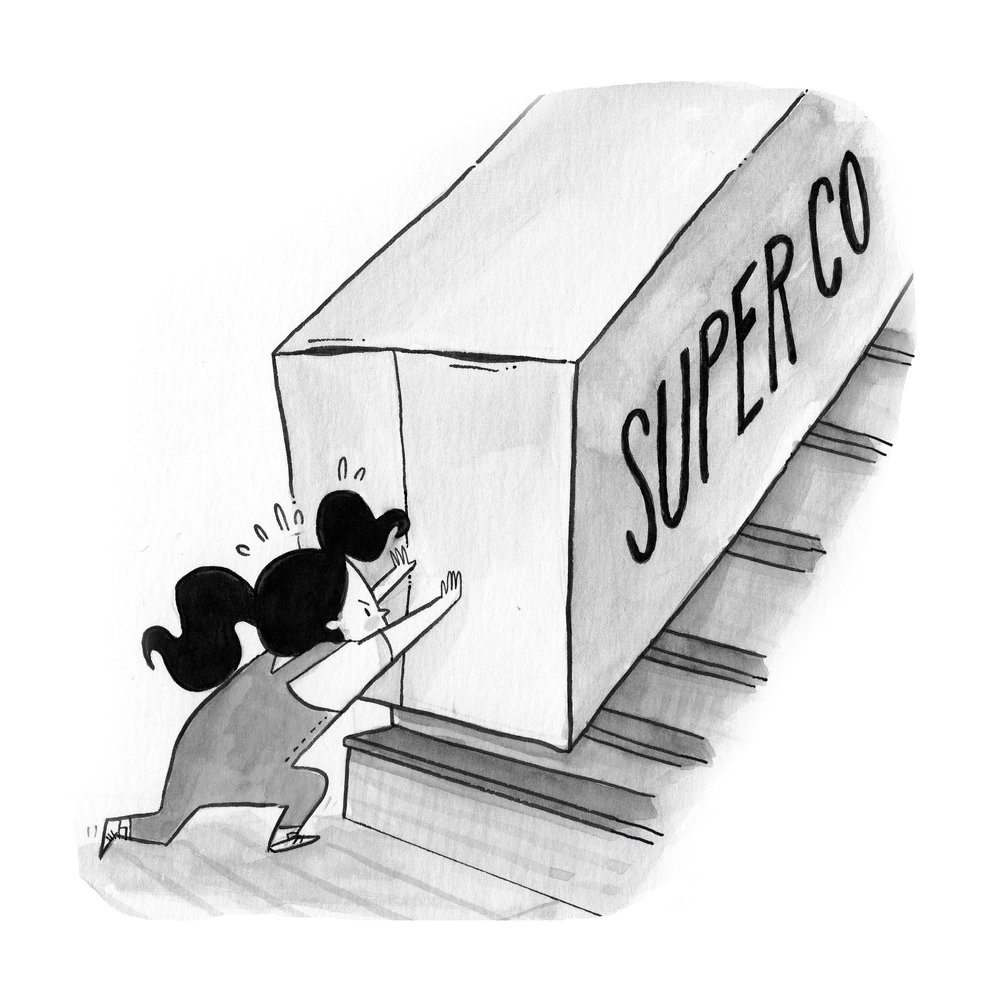
The box was in the basement. ... On the side was the name of the refrigerator brand, Super Cool. ... She lay down beside the box. Lying down was also good for helping her think.
I know! she thought. A submarine!


I have talked about this on other occasions. We are so lucky here in Australia to have access to books from around the world and because we speak English we can find books from UK, USA, NZ and in this case from Canada.  The real trick is in discovering books from far away.

This little gem Wolfie and Fly has just 85 pages and so there is no excuse - you need to pick this up and read it now. I timed myself and it only took 15 minutes to read the whole book. There are lots of illustrations and a larger print size making this is a perfect little beginning novel.

Wolfie (real name Renata) is so named because she is a lone wolf.

"Renata didn't have any friends.
Not even one.
Did this bother her? No it did not.
Renata didn't want any friends. She thought other kids were annoying. Other kids whined or talked too much or told stupid jokes or wanted to play boring games. Other kids weren't interested in the same things as Renata. They just got in the way."

I guess you know how this is going to end.  Renata clearly needs a special friend. Luckily the boy next door is perfect. He is unstoppable, energetic, imaginative and also in need of a friend.  Livingston Flott is known as Fly.

"Because I buzz around and annoy people. But I look at it in a positive way. I mean, a fly is persistent. A fly is a survivor. You can call me Fly if you say it in a nice way."

Together these unlikely friends make a submarine and set off on an underwater adventure complete with a lost baseball, funny songs, clown fish, home made scuba gear and a real pirate. You can read a more plot details in this review.

I would compare this book with the Frog and Toad series, Mouse and Mole series and Bonny Becker's bear series.  You could also use The Tunnel by Anthony Brown for a discussion about the importance of using your imagination.

This delightful story is a wonderful celebration of the power of the imagination. It turns out that having, and using, ones imagination can make all kinds of wonderful things happen. It turns out that having an adventure in a big cardboard box submarine can even make a lone wolf decide that being alone isn’t always a good thing. Through the looking Glass Review

Here is book two from this new series:


Saturday, December 30, 2017

Miss Mae's Saturday by Justine Flynn illustrated by J Yi


In one of the first school libraries where I worked there was a wonderful book about imaginative play with cardboard boxes and ever since I have loved stories which incorporate this idea. 

Mae enjoys Saturday's because her grandmother comes to visit and they spend their days together at the zoo, ballet or having a picnic but on this Saturday it is raining. Mae is dismayed but grandma has a large cardboard box and says "we will have our adventure right here at home with this."

And what an adventure they have travelling to Africa to see lions, Korea to watch a tea ceremony and finally up into space!  You can see the cherry blossoms from Korea on the cover.

Here is a set of teachers notes from the publisher for Miss Mae's Saturday.  I would link this book with On Sudden Hill, The terrible suitcase, A box can be many things, Harry's Box, The man who loved boxes, The gift and Not a box.  I would also read Grandma's Surprise - a very special book about imaginative play with a loved grandmother.  Take a look at this Pinterest of other books on the theme of boxes complied by my friend at Kinderbookswitheverything.

The illustrator of this book is J Li or Anne Li as she is sometimes known.  She is also the illustrator of the Alice-Miranda series and Clementine series.


Sunday, May 29, 2016

On Sudden Hill by Linda Sarah illustrated by Benji Davies


I love the idea of imaginative play using something simple like a cardboard box.  This is what happens in the book On Sudden Hill but this book is about so much more.  Young children often experience difficulties with friendships.  Can you be 'best friends' with two or more children?  What is the best way to handle feelings of rejection or jealousy?  On Sudden Hill explores these complex emotions and presents a very satisfying resolution all in the context of a simple picture book aimed at our youngest students.  Please look for this book.  It is one to treasure.

Here is the blurb:

Birt and Etho are best friends.
They spend hours together playing on Sudden Hill.
Then one day a new boy arrives.  He wants to join them.
Can two become three?

Don't rush.  Start on the title page.  There is so much to talk about here.  Where do these boys live?  Do they look rich or poor? Does this matter? Where are they going?  How is the weather?  What might they plan to do with these boxes?  Can you see a mountain beyond the fence?  Do you think it is really called Sudden Hill?  What might the next scene after the title page show?

There are so many examples of exquisite use of language in this book. "Birt loves their two-by-two rhythm."  and "one Monday (it's cramping cold)" when Shu "finally found a big enough box and courage to ask if he can play too."

You can read an interview with the author and illustrator and see some more art from this book here.

Here are some other books I really like about using cardboard boxes for play.


After reading On Sudden Hill make sure you look for my other most favourite book about friendship - A friend like Ed. Take a look at my review of The Storm Whale also by Benji Davies.


Tuesday, April 16, 2013

Too many elephants in this house by Ursula Dubosarsky illustrated by Andrew Joyner


One of the things I especially love in a picture book is when the illustrator or book designers decide to use different end papers - one image at the beginning of the book and a different one at the end. In Too Many elephants in this House Andrew Joyner has squished at least fifteen plump and happy elephants onto the first end paper.  One is holding a small bunch of flowers.  It is a tiny splash of colour in the midst of mass of grey bodies. Flipping to the final end paper we see the same squash of elephants but this time a small boy is happily wedged over an elephant bottom and all the elephant eyes are looking at him.

This is a story about problem solving.  There are too many elephants and the aptly named Eric needs to find a solution. The zoo already has a full quota of elephants, transport to Africa is out of the question and if he just lets them out into the street that is bound to cause mayhem.

You can see many of the exuberant illustrations from this book on the illustrators web site.  I have not met Andrew Joyner but he must be a very happy man - his picture books beam with smiles.  We all enjoyed The Terrible Plop when it was short listed a few years ago and it was fun to show Andrew's little video about how to draw a bear to our students.

After reading this book to my students we will also look at The boy who was followed home by Margaret Mahy.  It has a similar theme of creatures that take over the house.  We will also look at The Great Escape from city zoo by Tohby Riddle. The twenty elephant restaurant by Russell Hoban and Where do you hide two elephants? by Emily Rodda.  I used to have an old book called But No elephants.   I found a video copy which we can use instead.  We will also explore a mini theme about boxes. You can see a terrific pinterest collection of box books here made by my friend at Kinderbookswitheverything.  I do not think this book will win the CBCA awards but I am sure it will be a winner with my youngest students. Look for this book in your library today - it is sure to make you smile too.