Sunday, October 14, 2018

The Wild Robot Escapes by Peter Brown

Cows grazed in the pasture.
Wind rustled through the tall grass.
Clouds drifted over the fields.
Farm machines rumbled and buzzed.
Milk flowed into bottles.
Bottles were packed into boxes.
Boxes were loaded onto the milk truck.
The truck drove away full and returned empty.
Children romped with their dog.
A man sat at his desk.
A robot dreamed of escape.


Many weeks ago I read (or better, actually devoured) The Wild Robot by Peter Brown. It was first published in 2016 and I have been waiting for the sequel to arrive. Every time I enter a bookshop I have searched for - The Wild Robot Escapes. Two weeks ago I found it. I held my breath as I opened the cover. Sometimes sequels are disappointing but not this one. It is just as exciting and intriguing as the first installment.

Read my review of the first book or better I would suggest you need to read the first book. At the end of The Wild robot you will remember Roz was captured after a fierce battle. Now she has been repaired and refurbished and is delivered to Hilltop Farm.

"Mr Shareef pulled a small computer from his pocket. He tapped the screen and bought up a map of Hilltop Farm. 'There you are Roz,' he said as the robot's electronic signal appeared on the map. 'You'll be working all over this farm. And now that you're in the system I can always see right where you are."

Read these lines and then take another look at the title of the book - The Wild Robot Escapes. How will Roz (Rozzum unit 7134) ever escape if her every movement can be tracked?

Roz is desperate to return to her idyllic island and to her son Brightbill. Luckily the two children on the farm love stories and since the loss of their mother they are desperate for a companion. Roz tells stories of an island and about the hatching of an egg. The children love these stories.

"You are correct, children, those robot stories are about me,' admitted Roz, with a hit of sadness in her voice. 'There were so many times that I wanted to tell you the truth about my past ... This is my son. His name is Brightbill.' Reader, there's another important quality that children possess. In addition to being sneaky and smart, they're also compassionate. Children care about others, and about the world, and as Jaya and Jad gazed at Roz and Brightbill, their little hearts were full of compassion."

Take a look at Peter Brown's web page where be describes his plot outlines and research for this book. This is an excellent resource to share with children because Peter Brown shares his editing and re-writing process in such an honest way. Writing this book was a true labour of love. Here is a set of questions to use with this text. You can listen to Chapter 26 here.  This sequel is a ten out of ten book but I highly recommend reading The Wild Robot first.


Science fiction meets fantasy in this delightful sequel that gives readers a unique look into what technology could someday have in store. A must-buy for any middle grade collection. School Library Journal

I don't usually read sequels but I had to read this book. ... Following Roz's journey was magical ... an amazing book, a wild adventure ...  Colby Sharp

Using short, direct sentences (he’s not one to engage in flowery figurative language), short chapters, and a measured pace, he invites readers into Roz’s thoughts. He also returns to the chummy voice of the first book, affectionately addressing readers directly and bringing them into the fold by describing Roz as “our robot.” Roz’s paradoxical self is for all of us. We’re in this together. Chapter 16 Blog


Friday, October 5, 2018

The train to impossible places : A cursed delivery by P.G. Bell

"For the first time, she realised how impulsive and unplanned this all was, and began to feel scared. She was clinging to the outside of a train - a magic train, if such a thing were possible - hurtling through a tunnel that shouldn't exist, on its way to who knew where? Her parents couldn't help her. She was alone, and already in danger."


Here are two covers for the same book. The top one is from UK and the bottom from US. As usual I ask the obvious question -  which one appeals to you?  I was given an advanced reader copy of The Train to Impossible Places - A Cursed Delivery so I am also seeing these covers for the first time. The cover from my copy appears at the end of this post.

I have just lifted my head from reading this truly inventive rollicking adventure - the first in a new series. I don't often make this comment but this book would make a brilliant movie. The writing is so cinematic.

"Two long silver strips winked up at her from the carpet. They lay side by side, a metre or so apart, and seemed to come into the house from underneath the front door. ... They were train tracks."

"A mighty old steam locomotive towered over her, hissing and shuddering, and belching yellowish stream from its chimney. It was bigger than any locomotive Suzy had seen before - at least, bits of it were. To her eyes it looked like a large train had smashed into several smaller ones ... none of the drive wheels quite matched, and the cylindrical belly of its boiler was too fat at the front and too narrow at the back."

Suzy has a huge surprise one evening when a train smashes in to her house and yes it is running on train tracks which are running through the lounge room and right into the kitchen. Her mum and dad seem to be asleep on the couch. Suzy is a student of physics and so her mind races with all the impossible elements of this scene but there is no time for questions. The train is already late and it is leaving. Curiosity over-rides her fear and Suzy jumps aboard. This is a mail train delivering letters and parcels all over the Union.

On board the train Suzy meets the trolls Fletch - engineer,  JF Stonker - driver, Wilmot - postmaster and Ursel - a huge bear who is also the stoker. The engine runs on fusion bananas. Crazy!

The postmaster has an important delivery to make. A parcel for Lady Crepuscula. And yes she seems to be as evil and creepy as her name suggests. She lives in the Obsidian Tower which is guarded by hundreds of life-like statues reminiscent of the statues surrounding the home of the White Witch in Narnia. Suzy takes the oath:

"Do you solemnly swear to uphold the ideals of the Impossible Postal Express, risking life, limb and sanity in the execution of your duty?"

It all sounds daunting but Suzy agrees to take on the role of postal assistant. Her first delivery should be straightforward but Suzy forgets she needs a signature on her delivery form. Crepuscula opens her parcel and it contains a snow globe with a small frog inside. When Crepuscula walks away to get a pen the frog calls out to Suzy and tells her his tale of imprisonment, royal connections and the impending danger facing the Union. Suzy grabs the snow globe and flees the tower and so the chase is on.

There are some really funny moments in this story (trolls live under bridges) and terrific inventive ideas but the part that appealed to me the most was the underlying political context and the commentary on our own modern society. The ether web has taken over giving instant communication. "It's changed everything." The Impossible Postal service used to deliver ten million messages each day and used almost two hundred trains. Now "we're lucky to get a thousand messages a day."  And there is only one train riding the rails and just one Postmaster - Wilmot.

If you pick up this book and need to be sure it is right for you I suggest you read Chapter 18 The Vault of Secrets.  There is a delightful scene in this chapter where Suzy is initiated as a true postie using the very first troll stamp ever printed.

For teachers there are fabulous descriptions in this book.

Crepuscula : "was a little old lady ... she leaned on a cane for support. She wore a dress of heavy black lace that fell all the way to her feet, with a knitted black shawl pulled tight around her shoulders. Suzy caught the discreet glint of a pearl necklace beneath it. Her hair was silver, and her skin so pale it almost glowed, like the desert sands far below. She studied Suzy with piercing lilac eyes."

The Lunar Guard at the Ivory Tower : "They were all young women, wearing matching silver jumpsuits beneath plate armour and heavy utility belts. They all wore their hair in a pageboy cut, each dyed a different colour - she saw acid green, fire-engine red and neon blue ... Each of them carried a chunky silver plasma rifle, and Suzy got the distinct impression they knew how to use them."

Readers do need to be prepared to put in some time with this story. It is 340 pages and moves along at the same pace as the train gaining momentum as the story reaches the final adrenaline filled scenes. The UK edition of this book is hardcover with a special image under the dust jacket. You can read a text extract here.  You can read an interview with the author. Your next book could be The Boundless by Kenneth Oppel.  If you enjoy books with invented worlds, wild rides on crazy forms of transport and truly heroic characters you should also read Nevermoor - The trials of Morrigan Crow.

All aboard for an adventure like no other—readers will be delighted to learn it’s just the first.  Kirkus

It's a beautiful engineered story full of whimsical characters and industrious landscapes that would not be out of place on the set of a magical film. Mr Ripleys Enchanted Books


Wednesday, October 3, 2018

Max Champion and the great Race Car Robbery by Alexander McCall Smith illustrated by Kate Hindley

Written in his wonderfully measured style of words, Alexander McCall Smith has created a gentle story about courage, goodness and honesty which will delight the hearts of younger readers. Blue Wolf Reviews


Here we have a brilliant junior novel. It contains all the right ingredients - cars, racing cars and running races, fair play and justice, goodies and baddies and a very, very happy ending. This is a book to enjoy in a family and it should be in every library collection too.

Max's grandfather repairs old cars but in his younger years he built cars and he branded them with the name Champion. Years ago Grandfather Gus took one of his cars, named Arabella, in a car rally from England to India. Until right near the end Arabella was winning the race but they had a serious rival named Adolphus Grabber.  Grandfather Gus still has no proof but he is fairly sure the engine failure close to the end of the race was sabotage and that Adolphus Grabber, who won the race, was to blame.

The Grabber family now live near Max, his mother and grandfather. As fate would have it Max finds himself in a running race up against Pablo Grabber. It is a relay race. Max is just about to take off on the final leg. "He didn't see Pablo - nobody saw him, because cheats are often very careful to make sure that nobody seems them cheating."

Everything finally comes to a head when Max and his mother are working at the Grabber mansion. His mother has been employed to make 2000 sandwiches. Max walks away to take a little rest from the sandwiches and stumbles into a room filled with stolen goods and now the chase is really on and it is time for the truth to be revealed.

Begin here and read a chapter sample and here is an audio sample which begins from page 7. The illustrations are just perfect by Kate Hindley.  Take a look at my review of Oliver and Patch.

I would follow Max Champion and the Great Race Car Robbery with The No.1 Car spotter series by Atinuke.  Take a look at Alexander McCall Smith's web site for a list of all his adult and children's titles. In our school Mike's Magic Seeds is still one of our most popular books and a real treat to read aloud.

Monday, October 1, 2018

Neville by Norton Juster illustrated by G Brian Karas

"Yeah, sure, he mumbled, like you can make new friends by just walking down the block."
Book Trailer by Julie O'Brien source: https://www.youtube.com/watch?v=a5M4Rzo88YU

Neville is new in town. He is worried about the new school and he is worried about having no friends. He comes up with an ingenious plan. He stands in the street and calls out a name Neville. Another boy comes along and offers to help. Gradually more and more kids turn up and everyone joins the hunt for Neville.

"I hope we find Neville.
Even if we don't, I like his new friend a lot.
Maybe BETTER!
Hey, what was his name?
Oh, we'll have to ask him tomorrow."

I first read about Neville when I was exploring books to read alongside our CBCA short listed titles for 2018.  Neville was mentioned to read with Florette by Anna Walker which also explores the theme of finding friends in a new city. Of course Neville is also by the wonderful Norton Juster.  Neville was published in 2011 but it is still available and I think it would be a very good addition to any school library collection. Take a look here to see the illustrator talking about the creation of this book.

The ending has the perfect mix of predictability and surprise – kids will feel like they’re in on the secret, which can be a strong hook. 100 Scope Notes


One aspect writing this blog that I find surprising and so rewarding is the discovery of authors and illustrators and their works.  G Brian Karas is the illustrator of a large number of books and I was surprised to discover some I already new such as the High-Rise Private Eye series, Throw your tooth on the Roof, Muncha! Muncha! Muncha! and Ivan the remarkable story of a shopping Mall Gorilla.


"The big gray van pulled away from the curb, moved slowly down the street, and disappeared around the corner. Now it was quiet, and there he was, where he really didn't want to be."

Neville was the 2013 winner of an award I have never heard of. It started in 1985 and seems to have ended in 2015. I did find this list of past winners.  It was good to see some familiar titles which we do have in our school library.  Here is a description of the Please Touch Museum Book Award :

Established in 1985, the Please Touch Museum’s Book Awards have been unique in highlighting some of the best examples of storytelling for young children that help foster a life-long love of reading. All book selections are distinguished in text, illustration and ability to explore and clarify an idea or concept for young children 7 and under.

Sunday, September 30, 2018

Honey and Bear by Ursula Dubosarsky illustrated by Ron Brooks


If you have followed this blog for a while you will know I adore our Australian illustrator Ron Brooks. A few years ago I visited the Book Illustrated site and purchased a limited edition print from this book - Honey and Bear. Recently I talked about Ursula Dubosarsky I thought I would revisit this old favourite.

Honey and Bear was published in 1998 - so I need to say Happy 20th Birthday Honey and Bear! And there was a sequel Special Days with Honey and Bear (2002). In 2010 the publisher combined these two books. You might be amazed to discover a second hand copy now costs over $300!


Honey and Bear are good friends.  In the first book there are five short stories.

Good Idea, Bad Idea
Bear decides to clean up his kitchen. Once it is all spic and span he then decides it is time to make a cake! He knows Honey would love some seedy cake. When Honey arrives home all she can see is the mess.  "Honey looked at the table. It was covered with eggshells. She looked in the sink. It was full of dirty dishes. She looked at the floor. There was flour all over it."  Luckily the cake is just out of the oven and so the friends sit down to enjoy a fresh slice. Bear comments "I did not have a good idea and a bad idea. I had two good ideas. I just had them in the wrong order."

Bear's secret
Bear, like all small children, does something 'naughty'. He puts a some marbles down the plug hole in the sink. He feels guilty but does not confess his crime to Honey. Luckily Honey has a long neck and she just reaches into the sink and solves the problem.  "Bear never told Honey that he was the one who dropped the marbles down the plug hole. Bear never told anyone at all."

Counting Leaves
Bear is sleeping. Honey is bored. She begins to count the falling leaves. It proves to be an excellent way to pass the time.

The Visit
Bear and Honey set off to visit Bear's mother. They pack a picnic of chocolate spread sandwiches, orange juice and two bananas. Their route takes them around a lake and when they reach half-way they stop and eat half their lunch. They walk on and a little later share the rest of the lunch. When they finally arrive there is a sign on the door. Bear's mother has gone visiting and won't be home again for three weeks. This is a story filled with optimism.  "We had a lovely picnic ... And maybe next time we visit, my mother will be at home!"  Honey also shows great kindness towards her friend Bear. The walk and spilled food mean bear looks quite messy but she is never tempted to comment on his appearance. This is a story which could give you some great ideas for a class discussion.

Honey is Cross
Everyone has a day when a bad mood strikes. Honey just needs some time alone to sort herself out. She flies away and meets an eagle. He shows her a different view of the world and Honey comes to appreciate all the wonderful things she has at home including delicious peas.

Another reason to celebrate the collaboration of Ursula Dubosarsky and Ron Books - they have a new book which is about to be published. Midnight at the library is coming in November.


I would pair Honey and Bear with Houndsley and Catina,  Frog and Toad, Mouse and Mole, Joe and Sparky, Bear and Chook, and Rabbit and Bear.


Here is the Spanish edition of Honey and Bear.


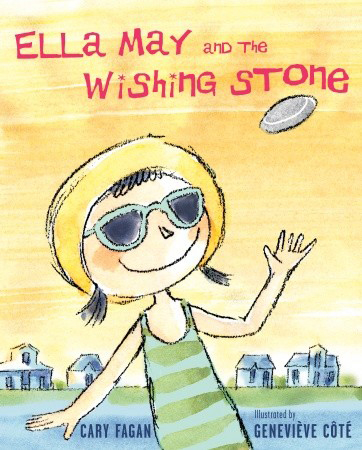
Ella May and the Wishing Stone by Cary Fagan illustrated by Genevieve Cote


Ella May comes home from the beach with a stone. It seems special because it has a line going all the way around.  She sings a little song:

Wish, wish, I'm making a wish
On my wishing stone.
And it will come true, oh yes it will,
Because I bought you home.

While Ella May is sitting on her porch her best friend Manuel comes past. He invites Ella May to play a game of hopscotch but she says no. Other friends arrive but Ella May will not share her stone so the children go looking for their own. Ella May declares their stone are no good.

"Nope and double nope ... none of your stones has a line going all-all-all the way around it."

Manuel is not defeated. He goes home and returns with a cart and for just one penny he offers to make wishing stones for everyone. The children are so pleased to have their own wishing stones. They make their wishes for a pony and a walk on the moon. Ella May is very put out. She wants her stone to be the only wishing stone. Then it starts to rain and something happens to those stones.

"Once again Ella May was the only one with a wishing stone, but she didn't feel as happy as she thought she would."

Now we have a beautiful plot twist.  Ella May is not defeated. She goes inside her house and comes out with a crate of assorted objects such as a broom which can be transformed into a pony and empty egg cartons which feel just like the lunar surface. Can you guess how the children might now use their stones?

This book is such a discovery for me.  I want to rush out and share Ella May and the Wishing Stone with a group of young children and buy some copies to pop into the library collections of my friends. You can see a video of the whole book here.

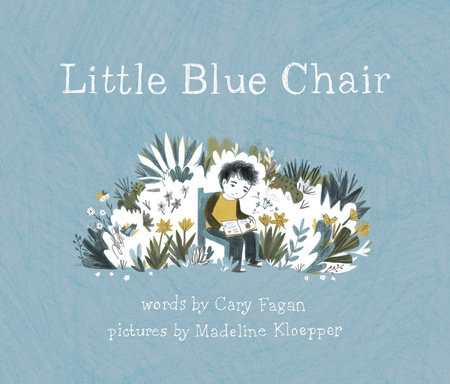
One more thing -  as I sat down now to talk about Ella May and the Wishing stone, the cover of Little Blue Chair also by Cary Fagan appeared on the Canadian Children's Book Centre Facebook page. Cary Fagan has written a number of picture books and novels. I previously talked about Wolfie and Fly. I now need to hunt out some more books by Cary Fagan there are sure to be some others just as splendid as Ella May and the Wishing Stone.


Refreshingly, these lessons are not delivered in a didactic or moralistic tone but emerge serendipitously, rather like appearance of the stone, itself. University of Manitoba

The net result is an original and imaginative treatment of one of the hardest lessons of early childhood – sharing – in a colourful package that’s likely to charm kids and adults alike. Quill and Quire

Fagan believably captures the delicate balance of friendship in the very young and lets the story pay out with welcome complexity. Kirkus


The Witch's Tears by Jenny Nimmo

"As Theo passed the clock he glanced up at its lifeless hands. 'What's happening?' he asked in a hushed voice. The clock gazed out helplessly, as if to say, 'Someone has stolen my breath."


It is a wild and stormy night. Theo Blossom's dad mends clocks. He has set off to help with a grandfather clock leaving Mrs Blossom, Dodie and Theo to cope alone. It is cosy inside and the ticking of all their clocks is comforting but as the children are heading home from school a neighbour warns them :

"Witches always arrive in rough weather. They lose their broomsticks and they lose their cats. So they come snooping around, trying to steal ours. ... Their clothes may be darker, and their skin more wrinkled from travelling in the wind. And there's always the hat, folded secretly into a pocket, when they don't want to be recognised."

These warnings work like a list for Theo and so when the mysterious Mrs Scarum arrives Theo starts ticking things off and soon concludes she must be a witch. Her clothes are dark and the fabric is strange, she has possibly fallen off her broomstick, she is searching for her lost black cat, but worse, all the clocks in the house seem to be out of sync.

"Just for a second they lost their rhythm. Tick-creak-tock went the wooden clock. Tick-wheeze-tock called the china shepherd. Tick-swish-tock mumbled the ormolu."

Here is an ormolu - this was a new word for me!


Adding to the tension their father has not telephoned tonight something he does every evening at precisely 5pm. Mrs Scarum seems to want to move in. She makes a large decorated cake, demands a meal of sausages and keeps watching the family cat Flora. Theo is terrified that she means to take his precious cat away and he is so worried about his dad who might be caught in the blizzard or worse. His comfortable family seems to be falling apart but only Theo can see the truth.  Or can he?

A friend who is a teacher-librarian has asked me to read a few of her older titles this week to assess if they might still be popular and so worth keeping in her library.  The Witch's Tears is a fabulous story which has stood the test of time. It was first published in 1996 and so is now listed as a modern classic. My verdict is keep this book and buy a new copy. The old cover does look a little dated.


All through The Witch's Tears I kept thinking about an old picture book by Margaret Mahy called The Witch in the Cherry Tree. Both contain a witch, cakes, a warm house, a hospitable mother, a storm and a boy who suspects the witch and her motives. I was excited to read Jenny Nimmo loves the writing of Margaret Mahy.


I first encountered Jenny Nimmo through The Snow Spider trilogy. You should also look at my review of The Stone Mouse which would be an excellent book to pair with The Witch's Tears. A picture book which you could also read along side The Witch's Tears is The Tear Thief by Carol Ann Duffy. The idea of tears turning into crystals delights me.

Here are some reviews with more plot details - Bookbag and Books for Keeps. A close look at the three covers I have included with this post might be useful for discussion with children especially after reading The Witch's Tears.  Which cover do you like? I think The Witch's tears might make a good read aloud book for a Grade 2 or 3 class.