Sunday, March 2, 2025

Laughter is the Best Ending by Maryam Master illustrated by Astred Hicks


"They had sent me to a kids' camp so that I would find kid friends but I came out the other side, proudly announcing that I was now besties with an 80-year-old potential villain who was about to kick the bucket." 

Zee, short for Ziba, has a worried mother. Mum thinks Zee has no friends (this could be true) so she decides Zee needs to go to a holiday camp. This is a camp called Youth Fusion and their brochure promises the kids who attend will make new friends.

On the first night of the camp the kids are told they will play a game of 'Murder in the Dark'. They are told to form themselves into teams of four. Zee has been sitting beside a girl called Tifanee (with two ees). She is a bold confident and funny character and Zee is sure it would be good to link up with her over the five days of this camp. (By the way Zee absolutely does not want to be here). On the other side of the camp fire the girls see a couple of boys - perhaps they will join their team of four.

Then the camp authorities announce one of the kids has gone missing and so the focus shifts and Zee, Tifanee, along with twins Moses and Jonah, decide they need to find this kid. That involves searching an old run-down mansion that is rumored to house a woman who murders children and perhaps even eats them! (Yes I agree this plot line sounds okay for Primary school readers but I will explain my thoughts in a moment). 

Here are some teachers notes from the publisher. Listen to a sample of the audio.

You might like to read a few reviews:

I will begin with the things I liked about this book. The cover is terrific. Use of Fluro orange is very eye catching and the title written on a pile of books links well with some aspects of this story especially the ending. The title is also perfect and enticing. And it is true Zee does laugh at the funeral (but to find out why you have to read the whole book). If you flip inside this book you can see the book design is quirky, interesting and appealing, with changes of font and you will see the way conversations are presented as play scripts. Zee makes lots of lists which appear in frames and at times these are very funny.

Now for the aspects of this story that I liked but which I think make it a better fit for a reader aged 12+.

Zee is crazy about Oscar Wilde (I am fairly sure no Primary school aged reader will have read or have any interest in him). In fact the title of this book is adaptation of a quote from The Picture of Dorian Gray "Laughter is not at all a bad beginning for a friendship and it is the best ending for one."

Zee talks about liking old language such as the writing of Jane Austen. And she recognises the camp chaos is closely like the plot from Lord of the Flies (not a book I would share in a Primary school library - I am still traumatised). 

Zee goes to high school and much of commentary about peer group relationships relates to her experiences there: "School is a cesspool of people checking each other out. Judging each other. Rating each other. And it's 99 percent based on looks .... I hate a lot of things about it, but the grotesque catwalk of who's hot and who's not bothers me most."

I really liked Zee but her tone is totally teenage: "whenever I'm dreading something, like really, truly, genuinely dreading something, whether it be the first day at a new school for zombies or root canal with a demon dentist, I get super sleepy."

Here's an example from Tifanee "I'm Tifanee by the way. Spelt with two ee's cause my parents are idiots. Any idea how we can break free from this touchy-feely hellhole?" Tifanee is an Instagram influencer.

Zee mentions her favourite poets - Kahil Gilbran; Rumi; and Maya Angelou. 

Zee and Dame Viv (she's the 80-year-old I mentioned in my opening quote) visit a state library to view a rare folio of Shakespeare's work and then they watch the Alfred Hitchcock movie The Birds. 

Companion books:


Laughter is the Best Ending has been listed as a 2025 CBCA Notable title BUT in my view it is in the wrong category - it is listed as a Younger Readers title but all of the content I have explained above surely shows this is a Young Adult title and it should perhaps have been entered and judged as an Older Readers book. I really did enjoy Laughter is the Best Ending but it think it better suits a High School library and High School readers. Here are the criteria for you to compare.

From the CBCA awards:

8.1 Judging criteria for CBCA Book of the Year: Older Readers 

Entries in this category are books for young people aged between 13 and 18 years (secondary school 
level). Readers require a degree of maturity to appreciate the themes and scope of emotional 
involvement. Books in this category may be fiction, drama, illustrated text, poetry or graphic novels. 

Age appropriateness: The story is written in a way that would engage 13–18-year-olds (or a sub-age group within). Mature topics are explored and give the readers the opportunity to be challenged with alternative points of view or perspectives. The writing extends the reader’s experience and may help the reader understand more about themselves and the world. 


8.2 Judging criteria for CBCA Book of the Year: Younger Readers 

Entries in this category are books published for children in the age range from 7 to 12 years (lower to 
upper primary school level). Books in the category may be fiction, drama, graphic novels, illustrated 
text or poetry. 

Age appropriateness: The story is written in a way that would engage 7–12-year-olds. (or a sub-age group within) Light introduction of mature topics might be explored and may give the readers the opportunity to be challenged. The writing is engaging, stimulating and extends the reader’s 
experience and/or imagination. It also may help the reader understand more about themselves and the world. 

I previously read and enjoyed these books by Maryam Master:


(I also list this as a YA title)


One more thing to think about. I recently talked about endorsements on books (these are not blurbs). On the back cover of Laughter is the Best Ending it has this praise by Anna Fienberg - no problem she is a fantastic writer - but why say she is the author of the Tashi series - those books are for very young readers and have no relationship with this book by Maryam Master. I'm puzzled. 

'I found it so energising! Zee plays with words like a gymnast. We click with her from the very start - she's funny, frank, fair and feisty! This story will be a hit with young readers.' Anna Fienberg, author of the Tashi series

Violet and Jobie in the Wild by Lynne Rae Perkins


Violet and Jobie are enjoying a good life as house mice. They are not pets. They live in a human home and enjoy delicious food treats and television viewing from their bookshelf seat. They especially love to watch nature programs. One day they see some delicious cheese and peanut butter, a double treat, has been left in a box. There is something holding the cheese and the peanut butter. Violet and Jobie use this to play a game - the snapping game. Using a pole (you can see in the illustration that this is a pencil) they jump on their pole and snap! Now they can feast on the treats, but little do they know the humans are about to find them. Yes, this is a mouse trap. The humans are surprised to find the mice are alive in the box. Luckily for Violet and Jobie the mother and son decide to take this pair back to the wild. Violet and Jobie know nothing about living in the wild. It is fairly easy to find food but what about all the danger - predators seem to be everywhere. Oh, and they will need somewhere safe to live.

This is a perfect story for readers aged 8+. It contains small black and white illustrations and has 33 short chapters with a large print size. My paperback copy cost AUS$20. One very interesting part of this story comes right at the end. Yes, it is a happy ending, but it is a very different one as Violet and Jobie will now move on and live separate lives.  Here are some brief discussion ideas if you read this book to a class.

The fast-paced plot keeps this gentle survival story moving. Horn Book

Populated with enough mice to give most grownups nightmares, Violet and Jobie in the Wild is a sweet and engaging coming-of-age tale for middle graders. I love how Jobie observes and appreciates the character of Iris, a kind and patient girl mouse he happens to meet, making him want to connect with her. Through Violet, the reader experiences the way that a trusted mentor can open up new joys and share wisdom. A Book and a Hug

When I saw the name Lynne Rae Perkins, I immediately thought of this book which I previously read and loved:


Companion book:


Saturday, March 1, 2025

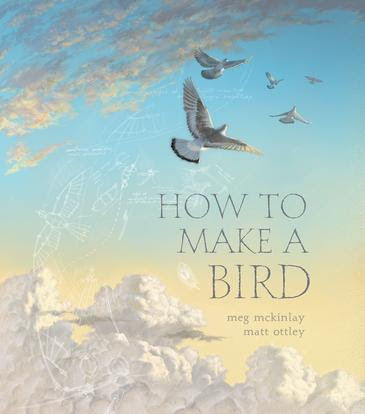
Stickboy by Rebecca Young illustrated by Matt Ottley


"Stickboy lived in wind and dust, where ancient rock loomed like waves waiting to break. Dust storms raged, pummeling the earth and stone while warm bodies huddled under cover willing the roar to fade."

This is one of those books where I would be tempted to share the spare text with no reference to the illustrations on a first reading with a group in a library. Then I would just let the children sit quietly giving them time to let their imaginations fly. Finally, I would share the book with the illustrations by Matt Ottley. This is one of those picture books (we do them very well here in Australia) that will work best with older students aged 10+. And do take time to linger over the end papers - different front and back. 

Stickboy has been selected as a 2025 CBCA Picture Book Notable title. I imagine it has a good chance to make the final short list of six titles announced at the end of March. 

Here are two Teacher-Librarians discussing how this book might fit into the curriculum (12 minutes). Here are the Scholastic Teachers Notes (shared by Pegi Williams). 

... the potential for exploring parts of storytelling like visual features, figurative language, perspective and allegory is immense. On each page amidst the dry rock formations, for example, there is a nod to water elements – clouds like seafoam, a rock face like the bow of a ship. There is a discussion to be had about listening to the Earth and who might be positioned as a truth teller when it comes to environmental awareness. Story Links

The last spreads are wordless and say so much more than any words ever could. They are hauntingly beautiful. The colour palette reflects the bare and barren place perfectly. The reader’s eye is immediately drawn to certain images on each spread that enhance the storytelling. For example, Sometimes the earth creaked and shifted... and swallowed memories, whole. On the double spread Ottley has a huge metal ship that sits on a dry parched land and Stickboy and a wolf are small. The text gives Ottley room to shine his masterful visual storytelling. The images are allowed to speak and are not crowded by text. This picture book allows both the words and images to speak on so many levels to the reader as they seamlessly work together. Ottley’s use of light and shade dramatizes the story and the moments that are poignant. Buzz Words

Matt Ottley is a multi-modal artist working across visual arts, music and literature. He is an award-winning picture book writer and illustrator with over 25 picture books published.  Ottley has written music for this book that will be recorded in Prague and this work will become the eleventh in his Sound of Picture series. It will be performed in Australia in 2025.Matt Ottley was our IBBY Australia Hans Christian Andersen Award Nominee illustrator for 2024. You should also share this book alongside other books illustrated by Matt Ottley:


You can see other books by Rebecca Young here. 

Companion book:


Apart, Together by Linda Booth Sweeney and Ariel Rutland

The subtitle of this book is "A book about transformations".

The cover of this book really caught my eye but then I turned to the end papers and WOW! On the front end paper there are balls of wool and a set of knitting needles. Think about the title - apart then together. YES the back end paper shows the almost completed scarf. I love the complex pattern of checks in shades of pink and yellow and two shades of blue. I almost wish the author or illustrator had included the knitting pattern at the back of the book!

The title page has some additional information: "This book also introduces the concept of emergence, a scientific concept described by the adage - 'The whole is greater than the sum of its parts'."

So what do you see inside this book. 

Apart, blue is blue and yellow is yellow, but ... 
TOGETHER, they make green!

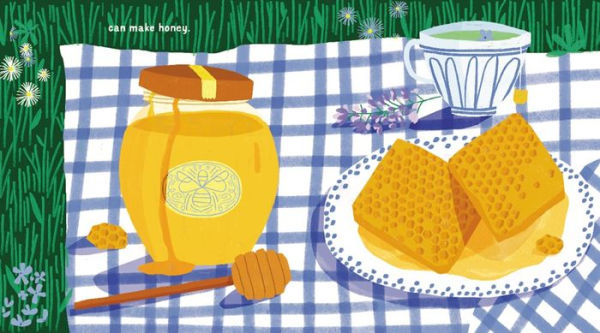
We seem to be off to a good start. Next a little girl plants some seeds, and she adds water and sunshine. Together they make ... beans. Moving deeper into the garden bees and flowers make ... honey. This illustration is scrumptious - a plate filled with honey crumpets or perhaps it is honeycomb. And there is a sprig of lavender on the page too. 


You can easily guess the things that go together to make a cake but what about a rocket like the one on the cover. Look closely - it is made from Lego. 

Notes from the author webpage: Apart, Together is a rhyming concept book (ages 2-6) about the magic that happens when 1 +1 doesn’t equal 2, but something entirely new! Parents, teachers and librarians will delight in how this book uses familiar object to support abstract thinking in 2-6 year olds (and older). Bold and playful, Apart/Together introduces important concepts such as cause-and-effect, prediction and transformation. Throughout, preschoolers are encouraged to imagine the interconnections that produce change, a building block of early childhood development as well as systems thinking.

Someone recently asked, on a Facebook forum, for suggestions of preschool non fiction books - this one is perfect!

Apart, Together (published 2024) is a debut book for illustrator Ariel Utland. Linda Booth Sweeney is a US author. She has written nine books including The Noisy Puddle: A Vernal Pool Through the Seasons which is a Finalist for the 2024 Elizabeth Mrazik-Cleaver Canadian Picture Book Award.

Here is an interview with Linda Booth Sweeney and Ariel Rutland where they discuss creating Apart, Together. Linda says of Ariel's art: She’s like a jazz musician except she’s riffing on the color wheel. Her drawings, her fabric, her art is clean, graphic, child-friendly, whimsical, and in many cases, inspired by nature.

A sweet read-aloud for younger readers to help them learn how the individual is part of a greater community; a standout for conveying complex concepts in an accessible format. School Library Journal

Companion book:


Friday, February 28, 2025

The Other Shadow by Tania Ingram


Thomas is only ten at the start of this book, but his life is so complex. His dad has died and mum is not coping. There is no food at home and she often stays in bed all day. Thomas needs food for himself and his little sister, who is only two years old, so he is forced to beg and steal. Then one evening mum goes out and she does not come home. 

Thomas and Tilly are taken to their first foster home. The parents in that home are kind but after just two weeks Thomas and Tilly find themselves back with mum. A social worker is assigned to visit but this will only happen once a week, then once every two weeks and then the social worker goes away and no one comes for six weeks. Mum becomes very ill again and so Thomas and Tilly are taken to a different foster carer. This place is not a kind home. The older son from this family is cruel and violent. Eventually Thomas and Tilly are taken to another foster home and this one is good. The children get their lives back and there is love and food and clean clothes and a new school for Thomas which means he can and does make a fresh start. But ... then they have to go back to mum and it is clear things will again spiral out of control. 

Reading this book is a roller coaster ride. I started my reading late at night and then had to put the book down after one especially violent incident. I resumed my reading this morning desperately hoping no other truly bad things would happen to these kids. 

Terrible things do sadly happen to these children but then someone steps into help. That's the roller coaster. I cried and then I sighed. I gasped and then I felt some relief. Chapter 13 is one turning point where Thomas feels able to talk to an adult and the loss of his dad and the moods of his mum. In Chapter 20 he talks to Em his foster sister about the Other Shadow. I am a little confused about the role of the shadow - at times it feels connected with Dad because it offers some wisdom (which Thomas doesn't always follow) then at other times the shadow is a distraction. The shadow is a tall thin man with a mop of curly hair - no one else can see him and Thomas worries that seeing this shadow might be sign that he also has bipolar like his mum. 

Here's how The Book Muse explains the shadow: Throughout the novel, Thomas has an invisible friend, I guess you could call it, that he refers to as the Other Shadow who turns up at various stages throughout the book. The Other Shadow is a protector of sorts and makes Thomas feel safe at times, but at other times, he wants it to go away so he can settle and be calm again, be able to move on with his life. ... It is almost a manifestation of his worries at times, the thing that he is unsure of, and unsure of how to deal with, but there is also a sense of hope as Thomas starts to feel like he can talk to people about it 

I have read quite a few middle grade books about parents (often mothers) who have a serious mental illness. I have also read other middle grade books about the experience of living in foster care. Tania Ingram does not spare her readers in this, at times harrowing, story of Thomas and his little sister who have to navigate their complex life circumstance following the death of their dad. It seems especially hard that Mrs Douglas, the social worker, cannot offer more help but I guess that is actually the reality of our Mental Health system. I did celebrate the ending of this book but I am not going to spoil this. 

In the interest of disclosure - all of life experiences do influence us - I had a very strong reaction to this book. As a teenager I did experience very similar confusions to Thomas - I won't go into any details here, but my own family relationships made this book, at times, very hard to read. 

The reviewer at Just So Stories loved this book and she goes into a lot more plot detail: This is a book that will go straight to the heart and will remain with the reader for a very long time. I believe it is a book that will speak to those children who are in the most fraught of circumstances and will give others an insight into the tragedy of some families. ... I cannot urge you strongly enough to get hold of it – I know the cover is not one that jumps up and grabs you – but this is the time for discerning readers to look past that and walk a mile in another kid’s shoes.

I do agree it is an important book and it is sensitively told but this is a book that I would only share with very mature readers aged 11+ or better yet 12+.

Just a word of warning. The Scholastic teachers notes for this book make NO concession for class groups where a student or even more than one student has had an experience like Thomas. I was so shocked to read their suggested activities. As the child of a parent with mental health issues I would have found these tasks very confronting:

Thomas’s mother has bipolar disorder, which, while it can be well-treated with medication these days, as we see in the novel, a severe case like Thomas’s mother can also be difficult to treat because people often dislike how the medication makes them feel. How common is bipolar disorder, and how does it affect people? In pairs or small groups, research more about how it manifests, how it can be treated, and how it affects the person who has it, as well as their family, when it is untreated. What are some other mental health conditions that you have heard of? As a class, name as many of them as you can, and then write down next to each one what you know of it. In pairs or small groups, choose one mental health disorder that you have named, and research it further.

In my view these two activities are highly inappropriate for a Grade 6 Primary school class. 

Tania Ingram is an internationally published author of children’s picture books, novels and poetry. She has a master’s degree in clinical psychology and prior to becoming an author, worked as a child psychologist.

This book has been added to the CBCA 2025 Younger Readers Notables list, but I think it better suits the Older Readers category. If you are considering this book for your school library or if you received it as a part of a Standing Order package, I strongly suggest you read it yourself before recommending it to a student and I also strongly caution against using this book as a class read aloud. 

This book might make you think of the mother in Goodnight Mister Tom and also The Illustrated Mum by Jacqueline Wilson. Other companion books:


This book explores the experiences of foster care


Fish and Crab by Marianna Coppo


You could begin with the dedication by Marianna Coppo - "To all insomniacs, for one reason or another." - or better yet share this after reading this book with a group of older children and then talk about what this means.

Fish and Crab are tucked up in their aquarium beds. Crab turns out the light. Then Fish hears a noise and his fears bubble to the surface. Could it be an owl? Do owls eat fish? Could it be a mouse? Crab explains there are no owls and no mice in their aquarium also there are "no lions, in case you were wondering." Clearly it is going to be a long night so Crab gets out of bed to make a cup of herbal tea.

"then I want you to tell me ALL your worries. ALL OF THEM, all at once. And when you're done, we will both finally go to sleep."

Fish has a wild imagination involving capture by aliens, black holes, and even the possibility of catching chickenpox. And then he has the most terrifying thought of all:

"WHAT IF WE ARE CHARACTERS IN A BOOK?"

After all this sharing Fish now feels able to fall asleep but what about Crab. His brain is now filled with all of these crazy ideas - will he be able to go to sleep? That final question is an especially disturbing one!

Take a look at the labels I have assigned this book. These might give you ideas about ways to share this book - you could use it as a stimulus for a writing activity involving dialogue. Or with older students there is a whole topic of 'breaking the fourth wall'. And of course, this book is also about the way our worries can take over our thoughts and the importance of sharing.

Now for the bad news. This book [9781797204437] was published in 2023 so it is still in print but here in Australia the price ranges from AUS$32 up to AUS$47.

Silly what-if questions arranged into a light but visually appealing bedtime story. Kirkus 

Parents and children alike will relate to the two best friends, reassuring readers that it is always best to share any worries with those closest to us, to help the fears go away. Coppo’s effective illustrations have a wonderful attention to detail and perfectly capture the conversations and bursts of Fish’s imagination, with clever use of black and white images too. This fun picture book will be one to share and enjoy for many bedtimes to come. Books for Keeps

I previously talked about Petra by Marianna Coppo. Marianna Coppo is an author-illustrator from Italy. She studied editorial illustration at MiMaster in Milan, and now focuses on freelance illustration in Rome.


Here is another (slightly more serious) book featuring an aquarium:


Thursday, February 27, 2025

We do not Welcome our Ten-Year-Old Overlord


Kim's sister Eila finds a strange globe in the lake. It looks a little like a basketball but it also has terrifying powers. Eila is a smart girl but she is only ten years old. She names the globe Aster and becomes quite possessive and secretive about her new 'friend'. Early on in the story as readers we realise Aster is 'using' Eila but young Eila thinks she is helping Aster learn about life on earth. Kim finds a dead kangaroo - well he finds the empty skin. Yes that is creepy. Then the pet guinea pigs of the two girls are found dead. 

Madir worries her parents are always fighting, always busy and give their children no time. Then very strangely their behaviour changes. Equally Kim and Eila live in a home where the children are expected to assist their scientist parents with chores in the greenhouses. The family have no radio or television. The children are not allowed to read fiction books but Kim has smuggled a copy of A Wizard of Earthsea into his wardrobe. Returning home one day, not long after Aster arrives, Kim is totally shocked when he discovers there is a television in their house. The Basalt family also like to assist their neighbour. Mrs Benison is elderly and unwell but then she seems to miraculously recover and even gain energy and vitality.

Surely there is something sinister and dangerous about Aster. What is this thing they found in the lake? Kim enlists the help of his three friends. Their plan is to throw Aster back into water but then Eila realises things are spinning out of control. The only way to destroy Aster she tells the group is to hold her in direct sunlight. The race to do this make the scenes in the final five chapters of this reading journey, worthwhile. 

The setting for this book is Canberra and the year is 1975. None of that really matters and readers who are unfamiliar with Canberra won't make this connection. Kim and Bennie and their two friends also like to play Dungeons and Dragons. Garth Nix explains this is a game he played too, as an older teenager. I know nothing about this game but if readers are familiar with the way it is played that might add to the story enjoyment. Garth Nix also explains, in the acknowledgements section at the back of the book, that he and his friends did find a strange object in the shallow water on the edge of the lake - but it turned out to be a head shaped rock covered in flowing weeds. This image of this and his curiosity about this object lingered with him and now years later we have this book. 

The names in this book are very inventive but I also found them a little distracting - Chimera “Kim” Basalt and Benjamina “Bennie” Chance are twelve-year-old best friends and they play, as I said, Dungeons and Dragons with two other friends every week. Kim of course has to keep this a secret from his parents. Their sisters are Eileithyia “Eila” Indigofera Basalt and Madir Sofitela Chance. Kim and Eila live on an alternate farm. Mum and Dad have given themselves new names. Mum is Marie Basalt named after Marie Curie and Dad is Darwin Basalt named after Charles Darwin.

I did rush my reading of this book because it was due back at the library. The scene on pages 228-229 needs careful attention because this is where everything is 'sort of' explained. I read the last few chapters on a train and found I totally forgot where I was - that's always a terrific thing that happens when you enjoy a book.

When I read about the strange cloud that hovers over the city it reminded me of this Science Fiction book from many years ago:


Last night We do not Welcome our Ten-Year-Old Overlord was announced as a 2025 CBCA Younger Readers Notable. 

Here are some reviews of We do not Welcome our Ten-Year-Old Overlord:

An entertainingly offbeat science-fiction romp. Kirkus

You know as soon as you hold a new Garth Nix book that you are in for a treat. Usually a creepy, oft-bizarre and freakish treat, but a treat none-the-less. Your readers who are into such vibes as Stranger Things, The X-Files, Wednesday, Strange Objects, The Water Tower… and indeed, anything that smacks of other-worldly with a hefty dose of scare-the-bejeezus-out-of-you, are going to go mad for this. Just so Stories

Everything in this novel, down to Kim’s Dungeons & Dragons game is carefully thought out, and delivered at the right time. It means that we get to hit all the beats effectively, and find out what we need to know at crucial points throughout the novel.  The Book Muse

If you are unfamiliar with The Watertower try to find it -this is one of the best picture books you will ever read to a group of children in a school library aged 10+ and it would be a good companion read:


Bookseller blurb: All Kim wants to do is play Dungeons & Dragons with his friends and ride his bike around the local lake. But he has always lived in the shadow of his younger sister. Eila is a prodigy, and everyone talks about how smart she is, though in Kim's eyes, she has no common sense. So when Eila finds an enigmatic, otherworldly globe which gives her astonishing powers, Kim not only has to save his sister from herself, he might also have to save the world from his sister!

The title of this book intrigued me. Oddly after reading this book I wondered if the title might make more sense (to me at least) if it was called We do not welcome the Ten-Year-Old Overlord.  Anyway, putting that tiny thought aside it was interesting to read a new Science Fiction book. There do not seem to have been quite so many books in this genre published for ages 10+ here in Australia in recent years - at least I couldn't think of any.

It seems important to define Science Fiction at this point. Here are a few quotes:

  • Science fiction, popularly shortened as sci-fi, is a genre of fiction that creatively depicts real or imaginary science and technology as part of its plot, setting, or theme.
  • The word science refers to the fact that the story in some way involves science or technology that—no matter how advanced—is depicted as being based on real scientific principles, as opposed to involving magic or the supernatural.
  • Regardless of the specific technologies or scientific advances being depicted, sci-fi often speculates about their effects on or consequences for the reality of the world being described. In other words, sci-fi stories often ponder how science and technology can go wrong for individual people or society (often as a metaphor for how they can go or have gone wrong in our own reality).

Back in 2021 I talked about Science Fiction and shared some examples of children's books because this genre linked perfectly with the CBCA Book Week Slogan that year - Old Worlds, New Worlds, Other Worlds. 

Decades ago, I did read a few books by Garth Nix - well before I started this blog - such as The Keys to the Kingdom. The set in my former library did had a different set of covers.  Lord Sunday was nominated for Carnegie Medal in Literature. Mister Monday was a CBCA 2004 Older Readers Honour title. Garth Nix has over 200 titles listed in GoodReads. 


We also had this set but I have no memory of reading any of these: