Showing posts with label Older people. Show all posts

Monday, May 25, 2026

Ruby Lost and Found by Christina Li

When we did come across May’s, we’d do the exact same thing. We’d stop and exchange a look. Ye-Ye would raise an eyebrow. “Egg tarts or coconut bread?” 
And every time, I said, “Both?”

“I’m going to help save the bakery.” “What?” “The bakery,” I said, my voice steadying. “It can’t go. I’m going to figure out a way to help May Wong save it.” There. I said it. Now there was no going back.

It might be good to grab a map of San Francisco or look for some photographs of the city - especially if, like me, you don't live in the US or you are unfamiliar with this city.

I did read this book quite quickly. There were many plot points that felt familiar or similar to other books so while I did enjoy some parts of this story it didn't completely grab me. I have put some similar books at the end of this post.

Plot points:

  • A young girl (Ruby Chu) is sent to spend the summer with her grandmother - Nai-Nai. This is partly a punishment because Ruby has been caught leaving her school at lunch time
  • Ruby is carrying the burdens of grief and guilt. She is sure it is her fault that her grandfather Ye-Ye died about a year ago.
  • Ruby was once best friends with her sister Viv but now that her sister is older and about to head away to college their connection seems to be gone. 
  • Adding to this Ruby's best friend Mia has moved across the country and Naomi, her other friend, seems to have moved on to a different group. Ruby feels isolated and alone.
  • Mum and Dad are absent from Monday to Friday because they are frantically busy with their work commitments and Ruby cannot talk to them over dinner at the weekend because they are always rushing to answer important phone calls.
  • Ruby spends her weekdays with Nai-Nai and each day they go to the Seniors Centre. Ruby does make a friend but at first, she is sure she does not like Liam at all. Over time she finds out he has had some deep sadness in his life and with teamwork they bond over their shared goal of saving the bakery.
Maybe it was because after Liam and I had talked, things had changed. We now worked on stuff together and told each other all kinds of things about our families. I would never ignore him in a hallway again or tease him in my mind.
  • Ruby knows she is 'grounded' but she breaks this rule by going a sleepover with Naomi. If she talks to her parents about her grandmother, they will discover this and the sleepover is a disaster.
I needed to tell Dad about Nai-Nai getting lost. And Mom. When would I mention it? I would bring it up at dinner, maybe, tonight when Dad picked me up and drove me home. But then I tried to imagine how the conversation would go. They would ask me what had happened. I would have to tell them about Naomi’s sleepover. They would get mad, I realized. My heart sank. Of course they would. They’d get angry at me and at Nai-Nai for letting me go. I didn’t know what would happen next. Would they yell at Nai-Nai? It wasn’t her fault. But would they stop letting me stay at Nai-Nai’s place? Would that leave Nai-Nai by herself again? I couldn’t leave her alone. If she was left alone maybe she’d forget more things and no one would be around to help her remember. Maybe I wouldn’t tell them, for now. I would tell them eventually. For now, I’d just keep watching Nai-Nai.
  • Her grandmother is showing early signs of memory loss and later Ruby learns the words dementia and Alzheimer's.
  • Mum and Dad decide Nai-Nai needs to go to an aged care facility and when Nai-Nai runs away but Ruby is able to 'rescue' her and things in her family are finally out in the open and able to be resolved.
  • So by now you probably agree with me that the title is perfect - Ruby is lost and then she is found or she discovers things about herself and begins to accept the changes in her life.


Publisher blurb: Thanks to her Ye-Ye’s epic scavenger hunts, thirteen-year-old Ruby Chu knows San Francisco like the back of her hand. But after his death, she feels lost, and it seems like everyone—from her best friends to her older sister—is abandoning her. After Ruby gets in major trouble at school, her parents decide she has to spend the summer at a local senior center with her grandmother, Nai-Nai, and Nai-Nai’s friends for company. When a new boy from Ruby’s grade, Liam Yeung, starts showing up too, Ruby’s humiliation is complete. But Nai-Nai, her friends, and Liam all surprise Ruby. She finds herself working with Liam, who might not be as annoying as he seems, to help save a historic Chinatown bakery that’s being priced out of the neighborhood. And alongside Nai-Nai, who is keeping a secret that threatens to change everything, Ruby retraces Ye-Ye’s scavenger hunt maps in an attempt to find a way out of her grief—and maybe even find herself. 


I did enjoy the descriptions of Chinatown and also the relationships between the older ladies at the senior centre where Ruby goes each day with her grandmother. This book also explores the complexities of junior high friendships and peer group relationships. Here are some text quotes to give you a flavour of this story by Christina Li.

I took a bite and savored the sweet, creamy egg custard, pressing down the inkling of worry in my chest. The crust was soft and flaky and melted on my tongue. “Thank you,” I said, muffled, my mouth half-full. It was just like how I remembered it in May’s Bakery on a busy Saturday morning or on a quiet Sunday afternoon, leaning over the counter to peer at the egg tarts and sponge cakes through the glass. I took a sip of the tea and leaned back and felt warm and full.

They passed out bingo cards and chips. And right before it started, Auntie Lin leaned back to speak to May Wong. She kept her voice low, but I was just close enough to hear her say, in Mandarin, “Another kid to babysit? What are we, a day care?" ... Also: another kid? Some other grandchild was being brought here against their will? Five hours to go. The clock was literally slowing before my eyes.

Nai-Nai also didn’t do much after the days at the senior center. She used to always go on small trips and errands. Back when she was really into making clothes, she’d take me with her to the fabric store. We’d hang out for hours while she draped lengths of fabric over herself, so it looked like she had a rainbow cape. Or during her paint phase, she’d grab watercolors and have Ye-Ye and me paint with her. But now, like clockwork, we headed straight back to the apartment in the late afternoon. She wore gray sweater-vests and different varieties of handmade baggy pants. And her only hobby these days seemed to be watching TV.

Ye-Ye made me a scavenger hunt every August, the weekend before school started. There were colored-pencil marks over all of this map, a different color for every year. Dark green was last year. Gold was the year before, then red. The last time that Viv joined us for the scavenger hunts was recorded in a beautiful sky blue, looping near the ocean. Viv always liked to charge ahead with each clue, as if it was a race to finish as fast as possible. I liked to wander. And then the next year she stopped coming.

The other day, she left the package of tofu out on the counter after cooking noodles. When Nai-Nai came for breakfast, she stared at the tofu package and asked me why I’d taken it out for breakfast. Nai-Nai was always a bit scatterbrained. She often left mail and receipts out on the coffee table and left books she was reading open and facedown. But she never really misplaced things in the kitchen.

You might want to grab a copy of this book after reading Ruby lost and found:


And you want to eat a custard tart or some coconut bread and visit a Japanese stationery store to buy some of those fun animal erasers (chapter 7).

Companion books:


Friday, March 27, 2026

The Prime Minister Problem by Brenton Cullen


Wren doesn't have friends at school and in fact he is badly bullied, but he does have a truly special relationship with his grandmother. Sadly, she has a stroke, and his mum has to make the heartbreaking decision to place her in an aged care home which is 300km away. Wren is a worrier. He worries his grandmother will be lonely, he worries that they won't be able to visit very often, he worries that she might even forget him. Wren pleads with his mum to let Gran stay in their town of Fairley but there are no facilities in this small town. 

At school his grade five class are studying Australian government, and the teacher sets several assignments including writing a letter to the Prime Minister. At first, Wren decides to ask the PM to help animals that are hurt in our frequent bushfires, but when then the crisis with his grandmother takes over his family life, he starts a series of letters and emails begging the Prime Minster, whose name is Elsie Jones, to help by building a care facility in his town and he also suggests she should consider offering financial support to families caring for their elderly relatives. He does not get a reply even though he writes several times and even tries to phone the PM, but Wren is a problem solver. He cannot prevent his own grandmother from going into care but he can perhaps do something for other elderly and lonely people in his town and even better he finds a way to persuade other kids at school  to help too. Wren has found his voice!

The first half of this book is very sad - especially the parts where we read about how Wren badly is treated at school. The second half of the story, though, is emotional and uplifting. I did shed a tear or two even though the final scene felt a little 'too good to be true'. 

It is easy to identify many of the influences on Brenton in this book. One that came to my mind early in The Prime Minister Problem is the book Two Weeks with the Queen by Morris Gleitzman. In fact, in his acknowledgement, he specifically thanks a whole bunch of authors including Gleitzman so I am sure he must have read Two Weeks with the Queen. Not related, but I noted that Wren also read Ranger's Apprentice by John Flanagan (2004) which I think would have appeared in Brenton's school library when he was in Grade 3 or 4. In more recent years Brenton has connected with many of his favourite Australian authors - especially those he loved as a child. You can read their endorsements of The Prime Minster Problem on Brenton Cullen's Instagram page. 

Peter Carnavas said: The Prime Minster Problem "has so much heart, really beautiful writing and some of my favourite themes: grandparent-grandchild relationships, kindness, birds, dogs, quiet kids. It’s an incredible debut from Brenton and I can sense in his writing the enormous amount of children’s literature he’s absorbed over the years."

I thought The Prime Minister Problem felt autobiographical as I was reading. Then I read this interview with Sally Odgers where he says "it isn't autobiographical - none of the things in the book actually happened to me! But the feelings and emotion and inner dialogue of my main character Wren is definitely very similar to what I felt and thought as a ten-year-old. Like Wren, I have always been a big reader; Like Wren, I hold a lot of worries and curiosities about the world. And like Wren, my grandmother was a very special influence on my love of stories." 

Here are the links I made between Brenton and his character Wren:

  • Brenton also grew up in a small town in Queensland - Kingaroy population around 10,000 - so it makes sense that his first book, is also set in a small town. And being in a small town is the crux of Wren's problem because when his grandmother needs care there are no aged care facilities.
  • Wren is a lonely boy who finds school very hard - sadly he is bullied by his classmates. With his love of reading and different outlook on life I expect Brenton had some similar experiences perhaps feeling like an outsider.
  • On his webpage FAQ Brenton lists the Fairy Wren (bird) as one of his own favourite animals. Fairy Wrens appear in this book - you can see them on the book cover. I did wonder though, why it took Wren until age ten to ask about why his mother gave him this name - a name which has not been an easy one for a boy to navigate with his peers and I imagine also with other adults.
  • I did laugh when his main character, Wren, picked up his favourite book which was Thunderwith (1999) by Libby Hathorn because Brenton lists this as one his own favourite childhood books.

It is interesting that Brenton Cullen includes a female Australian Prime Minster in his book. We have only had one woman PM - Julia Gillard was our Prime Minster from 2010 to 2013 - Brenton would have been aged around 17 and just coming of age to vote when she was in office. I think this inclusion might also relate to the way Brenton often talks on social media about the influence of three women in his life - his mother and two grandmothers and in fact their names are included in his dedication for this, his first book.

One of the most powerful scenes in this book that resonated with me was when Wren and his mother visit his Gran in the aged care home. I have talked before about visiting my own little grandmother in a nursing home when I was very young and then, very sadly, when my own mother moved to an aged care (not that there was much care) hostel. In chapter 23 Wren visits his grandmother who has had two strokes and is now in a nursing home 300km from their town.

"The lady in the bed is skinny and lost. Her eyes are blank. There's no colour in her cheeks. She lies flat, her mouth open, a spool of dribble on her chin. ... Wren's eyes move across to the milky cup of tea beside her. Grandma doesn't have milk in her tea. Beside it sites a wilting piece of toast, absolutely smothered in vegemite. She only likes a thin layer."

I am not sure that I would use The Prime Minister Problem as a whole class text but here is a link to the teachers notes. Thanks to Riveted Press for sending a review copy of The Prime Minister Problem. It will be published in late April 2026. 

This book has gentle messages about family relationships, kindness, community and the importance of knowing one person can make a difference - it just takes one step of bravery and a belief in your ideas. 

Brenton has achieved a really fine balance with his characterisations here. While characters have flaws as real people do, they are neatly balanced with their strengths and the voice is very authentic. I have no doubt that middle-grade readers will respond and connect to both the plot and the people very positively. With strong themes of empathy, friendship, loneliness, creative thinking and rising above difficulties it offers many beneficial talking points. It is a superb choice for a shared read especially if you are undertaking units around community, governance and taking action. Just so Stories

Publisher blurb: When a lonely boy’s mission to save his grandmother goes viral, it sparks a movement that reshapes his country town — and everyone in it. Ten-year-old Wren has always felt invisible. Mum is busy working two jobs, his brother has his own life, and at school, Wren hides in the library with the books his grandmother taught him to love. Grandma is the only person who truly sees him — until she has a stroke and is forced to move away to a nursing home in the city. Lonelier than ever, Wren writes to the Prime Minister for help. When no reply comes, his small act of hope takes on a life of its own — and Wren discovers he isn’t the only one who feels forgotten. As his town rallies around him, Wren learns that real solutions don’t come from politicians, but from the people who call the town home. A moving story about isolation, connection, and how one quiet voice can make a difference

Companion books:


I think the class teacher in this story - Miss Peg might benefit from reading these books and then using them with her students. At times her class assignments seemed to need some serious scaffolding. I read the poster scene early in the story and was slightly horrified at the work produced by the class.


Friday, June 13, 2025

Tree Table Book by Lois Lowry


"I'm going to tell you three words. I'm choosing them at random. Listen carefully. This will be important.
House.
Umbrella.
Apple.
Remember those. I'll explain later."

Sophia (known as Sophie) is aged eleven and her best friend is Sophie Gershowitz. Sophie is eighty-eight years old and she lives next door to Sophia. Sophia wants to tell us the story of Sophie. Sophia once received some advice about writing: "Begin on the day that is different."

Ralph is a kid in her neighborhood. Ralph's dad is a pediatrician and so he owns a copy of The Merck Manual which is a reference book for doctors. And there is Oliver who is seven and on the autism spectrum. So, Sophia has three friends - Sophie her Friend of the Heart; Ralphie her same age friend; and Oliver.

Sophia loves check the Merck. Sophia needs the Merck because she has overheard a conversation about her best friend Sophie's health. Sophia is also a medical hypochondriac and her medical dilemmas are sure to make you laugh.

"There is something about a book; the feel of it, the weight of it in your hands, the way the pages turn (pages in the Merck are very thin and extremely serious-seeming, the cover is leather, and there are built-in index tabs."

Aaron, Sophie's son, is coming from Akron. Sophia's parents tell her Sophie will take a test to check her memory or we would say cognition. This gives Sophia  a brilliant idea. She can help Sophie pass this test - all it will take is some training. Sophia is sure Sophie has good eyesight and good hearing but sometimes she seems to miss smells and often Sophie finds very stinky things in her fridge. She also sometimes forgets to turn off her kettle. 

If you have an elderly parent or grandparent you might be familiar with the tests for dementia - one of the questions involves remembering three objects - hence the title of this book - the short-term memory test. Over several days, as Sophia asks the test questions, we gain an insight into Sophie and her life in Poland, her husband, and the holocaust. Sophia uses the three-word test as a way for Sophie to recall her childhood and Sophie tells three stories - the tree with the berries picked too soon by the children; the table at the baker shop that Sophie was not allowed to visit; and the book of fairy tales that her mother returned to the rich owner - the house where Sophie was hidden over the war years.

Lowry is famous for dealing with difficult subjects in her work, which has occasionally been banned, and as young Sophie encourages older Sophie to delve into her long-term memories, it becomes clear that this is also a novel about surviving the Holocaust. Three brilliantly told stories from Sophie’s Polish childhood form the climax of the novel, contrasting very effectively with young Sophie’s charming, insouciant 21st-century kid voice (captured to perfection by the 87-year-old Lowry). The Historical novel society

When the test prep unlocks memories of Sophie G.’s childhood in Poland during World War II, Lowry conveys with sensitivity and realism Sophie W.’s sorrow upon realizing that things she’s only learned about in school have had a painful, lifelong impact on her beloved friend. Book Page

Read more plot details here.

Readers aged 10+ who enjoy personal stories and stories about kindness are sure to enjoy Tree Table Book. Sophia has such a determined attitude and voice. You should also look for these in your local or school library:


Monday, May 5, 2025

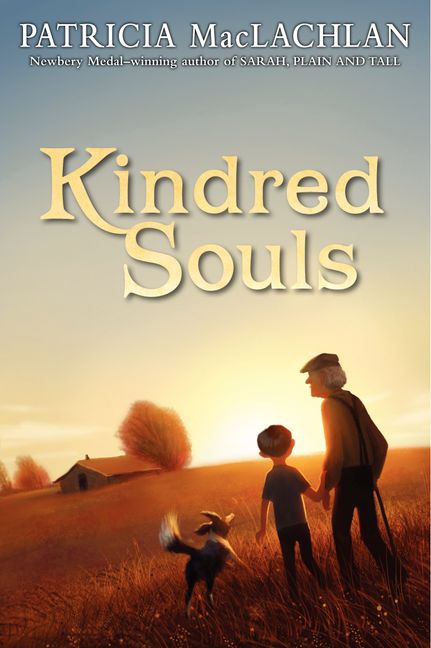
Kindred Souls Patricia MacLachlan


"Billy is eight-eight years old, and I don't worry about him dying. He will live forever. I know that."


This first sentence is near the beginning of Kindred Souls. An astute reader is sure to realise Patricia MacLachlan is giving you a hint about the possible ending to this family story. 

Billy lives with his extended family on a farm near where he was born. His grandchildren are Lida, Jesse and Jake. Jake is named after a plow horse that Billy used to use on his farm and Jake is our narrator.

"I look at Billy's large gnarled hands and his wrinkled face and his bush of white hair. I believe him when he says he talked to the first bird of time. He lives in a sunny room that looks up to the slough that is empty in the summer and filled with water and ducks in the fall. It is a small piece of his old life, like the big prairie that spreads out around is a big piece of his old life."

The word slough is mentioned a few times in this story - it is an important word and one that was new to me. I read Kindred Souls on a Kindle and so I was able to use the online dictionary:

Slough: A swamp, a muddy side channel or inlet.

It is the summer holidays. Jake and Billy take a daily walk around the farm. Billy speaks gently to the cows and he feeds carrots to the horses. 

"And then we go where we always end our walk. We go to the place where Billy was born on this farm. Up the rise and higher up the hill to the edge of the slough ... (and) When Billy pushes the branches of one bush aside, there it is. A small wall of prairie grass and mud three feet high."

This is all that remains of the old sod house. Billy misses it so much.

"I'll tell you everything. ... And then you can build me a sod house ... 
Because we're kindred souls, you and I."

And this, my blog reading friend, is another hint about what is to come. Have you guessed?

After their walk on this day a dog arrives at the house. A small black and white dog. Billy seems to know this dog. He even knows her name is Lucy. It seems Lucy has come to stay, and she is here for Billy.

Back to the sod house. Billy is sure Jake can build this, and the family still have a very old book of instructions. Warning - this book will make you cry. When a new calf is born Billy insists he will also be called Billy - "That means there will be a Billy around here for a long time." Then Billy is unwell and the doctor (who Billy likes to flirt with) says Billy needs to go to hospital. Now Jake just HAS to build that sod house. But will Billy be able to come home and will the house be finished in time and most important of all will Billy like the little sod house.

Here are a few text quotes - they show how beautifully Patricia MacLachlan composes her sentences:

"He tells me the hummingbirds outside speak to him in short, brisk sentences when they fly quickly up and down and around the hanging feeders of sugar water."

"We are quiet. I love the feel of his hand. Outside the hummingbirds flash silently in the sunlight."

"My mama sang lullabies to me in the sod house ... She sat in that old rocking chair in my room and sang lullabies."  [Hello again blog reader - this this sound familiar - an echo of a scene in Sarah, Plain and Tall perhaps].

Publisher blurb: Jake’s grandfather, Billy, hears the talk of birds, is eighty-eight years old, and is going to live forever. Even when Billy gets sick, Jake knows that everything will go on as always. But there’s one thing Billy wants: to rebuild the sod house where he grew up. Can Jake give him this one special thing.

Whenever I finish one of her books, I sit and wonder what it is she does so well... try to define it. It won't take you more than 35 minutes to read through this book but it will stay with you for a long, long time. It's one of those. She reaches to your soul... A Book and a Hug

It's rare to find a children's book that deals so well with death as part of life, offering kids an effective approach to coping with sadness that incorporates humor, love and joy. Kirkus Star review

This small book looks at the role of grandparents in the lives of children in a quiet yet powerful way.  Billy is the center of the book, since he is the center of Jake’s world.  The book, told in the first person by Jake, also explores connections between generations that are strong and true.  The sense of kindred spirits is strong but never overplayed.  This entire book exudes a quiet strength that makes for a compelling read. Waking Brain Cells

If you click on the label I've given this post you can find all of the Patricia MacLachlan books I have talked about here on this blog. 

If you are interested in the idea of the sod house or life on the prairie, try to find this gentle story:


And this verse novel:


Friday, April 18, 2025

Mr George Baker by Amy Hest illustrated by Jon J Muth


"See this man? This one here, sitting on the porch?
That's Mr George Baker, and he's a hundred years old, no kidding."

Harry sits with Mr George Baker - it is clear this is a daily routine.

"See his pants, all baggy, baggy, baggy? What holds them up - suspenders!"

Mr George Baker is good a tying shoelaces but strangely he also has a book bag (a school bag) just like the one young Harry is carrying. There is a book inside his bag, but Mr George Baker cannot read. He is indeed a hundred years old, but he never learned how to read. Now we know where these friends are going. 

Finally, the yellow school bus arrives. There are twenty-two kids on the bus, but George always sits with Harry. Learning to read is hard but there is a gentle assurance at the end of this book that both of them will conquer this important skill with patience and perseverance. You might also like to listen to some gentle jazz tracks after reading this book - Mr George was once a fine jazz drummer and there is a lovely scene in this book where we see him dancing with his wife. 


Publisher blurb: George Baker and Harry don’t seem the likeliest of friends. Yet, sitting side by side on George’s porch, waiting for the school bus to come, the two have plenty in common, this hundred-year-old musician with the crookedy fingers going tappidy on his knees and the young schoolboy whose shoelaces always need tying. They’re both learning to read, which is hard — but what’s easy is the warm friendship they share. In an inspired pairing, a best-selling author and illustrator pay tribute to the power of language and intergenerational bonds.

I have been SO privileged to visit one of the best school libraries in an independent school here in Sydney over the last 8 years (minus those covid years) and every week I have been able to borrow new books, Australian books, picture books, translated picture books, books from Canada, books from USA, books from UK, books I will always cherish. Along the way this reading journey has led me to discover hundreds of new authors and even better hundreds of fantastic illustrators from all corners of the world. Sadly, my days of visiting this treasure trove may now be ending. Finding Mr George Baker is a great example of the books I have found in this library, and it is also a reminder that there were SO many more books I didn't discover. And it shows the joy that comes from discovering a wonderful book. Oh and yes this confirms why libraries are SO important as places that hold all kinds of books - old and new - because I am sure you have guessed Mr George Baker is long out of print. It was published in 2004 with a paperback edition in 2007. Here is the Kirkus review.

The Teacher-Librarian was curating a 'bulk loan' for the four Grade One classes in this school. A 'bulk loan' is the loan of piles of books on a theme or class topic. In this case their focus was/is a topic I call 'Life in the Olden days' with particular reference to changes to our homes, way of life, toys and clothing. As a library volunteer, I used the library catalogue (which is another excellent resource in this library) to hunt out and fill boxes with books on this topic. Along the way the Teacher-Librarian and I were talking about these two books which I had seen previously and then she mentioned Mr George Baker. 


I often cry over books and television advertisements and when little children sing at a school assembly but it is rare for me to cry over a picture book - Mr George Baker made me cry. It is a book to love and to read slowly and a book with the most beautiful illustrations. Amy Hest also made me cry over these middle grade books: