Showing posts with label Danny Snell. Show all posts

Tuesday, September 23, 2025

The Little Bookroom Melbourne


The Little Bookroom opened its doors to the public on Friday the 13th October, 1960. Albert Ullin OAM, after studying literature and languages and working extensively in the booktrade in Australia and internationally, decided to focus his love for contemporary children’s literature and illustration into an Australian first: he would open a bookshop devoted solely to children’s books. Albert named his shop for a collection of whimsical short stories by Eleanor Farjeon who wrote on the occasion of the shop’s opening: “I am proud and happy to know you’ve chosen the title of my book for the title of your Bookshop in the City my Father first set foot in the 1850s when he emigrated to Australia as a boy of 16. The stories he told me of his arrival in Melbourne have always made it seem to be one of ‘my’ cities. Thankyou for giving me a home in it".  (Source)


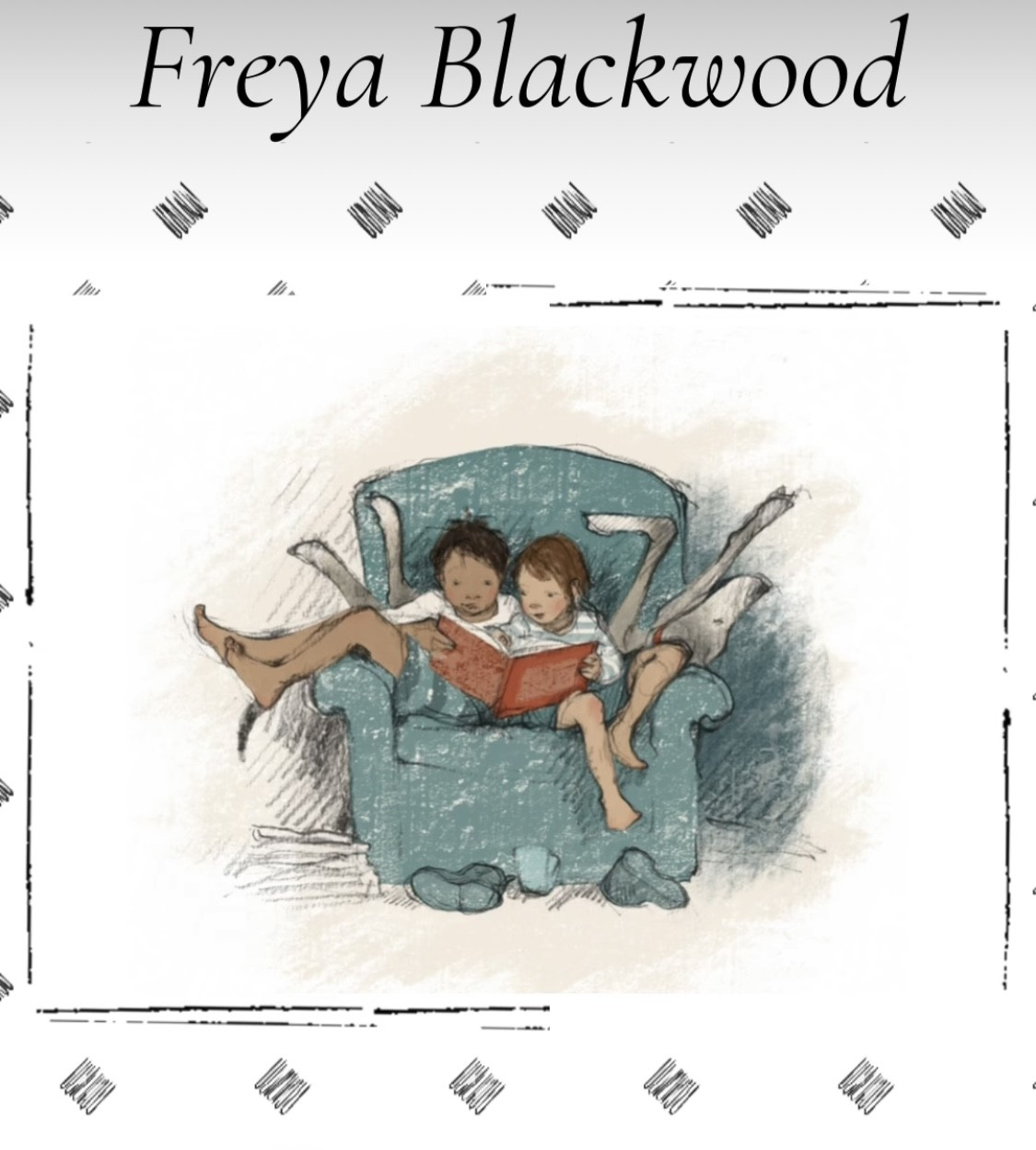
On my last visit to Melbourne, I saw a social media post that books from the famous children's bookstore The Little Bookroom were heavily discounted. I couldn't take advantage of that because I had to catch my plane. Then I read that the store had closed but a new owner had been found. After some wonderful crowd funding the store is set to reopen soon. The new owner Michael Earp has asked some very famous Australian illustrators to reimagine the famous shop logo. Over twenty responded. I am sharing a selection here. The real logo will not change but I love this idea as a way to promote the store. People who have supported the crowd funding initiative will be sent one of these limited-edition cards - it is not too late.

Here is the new address: 

Little Bookroom
Woi-wurrung Country
8 Village Avenue, Brunswick East, VIC 3057


BIG NEWS

IBBY Australia are running their second Mini Masterpiece art auction later this year to raise funds so we can pay our IBBY.org international membership. 
Several of the wonderful illustrators you can see in this post who contributed to the project for The Little Bookroom have accepted our invitation too.  
You can read about our 2023 auction here
Our 2025 auction will run from 14 November to 28 November. 


I am so lucky to own two pieces of art by Ann James - one from
It's Miroocool and the other from Bird and Bear


Take a look at this post to see more books by Anna Walker
Her new book is titled Between


Check out my post about The Truck Cat


IBBY Australian selected a book by Freya Blackwood for the
prestigious IBBY International Honour Book list in 2016 - Banjo and Ruby Red
and her fabulous book The Boy and the Elephant is now part of the 
very important Silent book collection which are books that are shared with
refugee children on the island of Lampedusa. 
Her book Afloat was a CBCA Picture Book of the Year 2025 Honour title.


Check out my post about South with the Seabirds which has links to 
other fabulous books illustrated by Jess McGeachin


Here is my 2022 Meet the Illustrator post featuring Tohby Riddle
He has a fun new book called Cynthia is a wild dog.
My favourite book is Nobody Owns the Moon


Here is my Meet the Illustrator post for Jess Racklyeft


Be Careful, Xiao Xin! by Sher Rill Ng was the winner of the  IBBY Ena Noel Award


Sara Acton is the illustrator who created the fabulous cover for the award winning book Runt.
I was lucky enough to submit the winning bid for the picture of Runt at our 2023 IBBY Mini Masterpiece
art auction. Here is my previous post Meet the Illustrator Sara Acton


Robert Ingpen won the prestigious Hans Christian Andersen award in 1986.
You can use the label 'Robert Ingpen' to see the books I have shared here on this blog. 
The most recent one is Who is the World for?


You can see books illustrated by Matt Shanks here.


Read more about Gabrielle Wang here.


A new and important book by Andrew Joyner written with Beth Ferry is


Meet the Illustrator Gabriel Evans
His newest book is Scotty and the Scotties
 

Illustrators who contributed to the Little Bookroom project: (Instagram link)

Allison Colpoys
Andrew Joyner @andypjoyner
Ann James @annjamesillustrator
Anna McGregor @annamcgregorau
Anna Walker @_annawalker_
Ben Wood @benwoodillustrator
Briony Stewart @briony_stewart
Daniel Gray-Barnett @dgraybarnett
Danny Snell @dannydsnell
Evie Barrow @evie_barrow
Freya Blackwood @freyablackwood
Gabriel Evans @gabrielevansart
Gabrielle Wang @gabriellewangbooks
Graeme Base @graemebase
Jess McGeachin @jessmcgeachin
Jess Racklyeft @jessesmess
Lucinda Gifford @lucindagifford
Matt Shanks @matt_shanks
Renée Treml @reneetreml
Robert Ingpen
Sara Acton @saraacton_illustration
Sher Rill Ng @sherrill.ng
Sophie Beer @sophiebeerdraws
Tohby Riddle @tohbyriddle


Wednesday, October 30, 2024

The Truck Cat by Deborah Frenkel illustrated by Danny Snell


Yacoub lives in his truck. He drives huge distances carrying many different things. English is not his first language, and he sometimes finds it difficult to talk to the other truck drivers he meets along the way but luckily Yacoub has his little cat named Tinka. Tinka keeps Yacoub company on long journeys and under the stars at night. But then one day Tinka is distracted by a fluttering butterfly, and he accidentally leaves Yacoub behind. Luckily Tinka is rescued by a kind young woman named Mari. Tinka is happy living in htis new place and he enjoys her bakery and the fresh fish she feeds him but he is also worried about his friend. Will Tinka and Yacoub ever be reunited?

Here is the web site for Deborah Frenkel. I previously talked about this book:


Here is an interview with Justkidslit where Deborah Frenkel talks about The Truck Cat.

Here is the web site for Danny Snell

Blurb from the teachers notes (via Pegi Williams): Tinka is a truck cat, travelling the open roads of Australia with Yacoub in his truck. Yacoub doesn’t know many other people, but he and Tinka always have each other. Until one day, Tinka gets distracted chasing a white butterfly and ends up on a busy main road, with cars and trucks separating him from Yacoub. Luckily, Tinka is saved by a kind-hearted baker, Mari, who takes him into her home and her life and feeds him. But Tinka always worries about Yacoub, out there in the silence. Yacoub worries about Tinka too, missing the companionship of his friend … until one day, a smell draws him to the window of a bakery, where a familiar face waits for him.

By chance I borrowed The Truck Cat from the library this week and then today I saw it was announced as the 2025 National Simultaneous Storytime book which is on May 22nd, 2025 at 12:00pm AEST

About National Simultaneous Storytime: by facilitating NSS we aim to: 

  • promote the value of reading and literacy, 
  • promote the value and fun of books,
  • promote an Australian writer and publisher, 
  • celebrate and promote storytime activities in public libraries, school libraries, classrooms and communities around the country,
  • and provide opportunities to involve parents, caregivers, the media, and others to participate in and enjoy the occasion.

What do we look for in the National Simultaneous Storytime book?

Each year interested publishers send in possible titles. From a practical perspective, the publisher has to be able and willing to provide copyright release for use of the illustrations, book projection, translation into other languages and performance. The publisher also needs to commit to a special print run of several thousand copies. This narrows down the options. The criteria for choosing from the remaining books include: 

  • a positive storyline
  • appeal to a modern and diverse audience
  • suitability for read-aloud (language and length)
  • how well the book lends itself to craft and other activities
I was very interested to read the criteria because I had (wrongly) assumed that since (in the past) Scholastic Australia were sponsors of this event the book had to be a Scholastic Australia publication. I am pleased to see I was wrong. The book this year comes from Bright Light which an imprint of Hardie Grant Children's Publishing.


Things to talk about and discuss after reading The Truck Cat:

How do you know the setting for this story is in Australia?

Do you think Yacoub has always been a truck driver? What does it mean 'to make a living'? 

How do you know Yacoub has not always lived in Australia? 

Why is Yacoub thinking about 'the old country'? What does this phrase mean?

Think about the sentence "Until cool hands lifted him from the road, held him gently, and carried him to a car." How does the meaning of this change if you alter the words 'cool' and 'gently'. What emotions do you feel when Mari rescues Tinka.

Tinka cannot tell Mari that he is worried about Yacoub but what might he say if he could talk?

When do we get the first hint that there might be a cultural connection between Mari and Yacoub?

How does Deborah Frenkel give her story a perfect sense of completion? 

The final pages show changes to the lives of Mari and Yacoub - what has happened? Talk about the way Danny Snell has extended the text well beyond the words of the story. How has 'home' now changed for Yacoub?

Discuss the vocab from the book - interloper, mewing, lunged, daintiest, depots, tri-axle, rafters

Older students - read the end notes from the author and research refugees from WWII who settled in Australia. Find other picture books about the modern refugee experience. Here is my Pinterest with some books that are sure to be in your school library

Research Polish cakes and biscuits. Check if your family have favourite recipes from other cultures.

Yacoub calls his grandmother Nena. What do you call your grandparents?

Book design - note the changes to the end papers; the consistent colour palette used in the water colour illustrations; the use of framing as a way to sequence the plot.

How does Danny Snell show movement of Tinka and also of the traffic in his illustrations?

A similar thing happens on the page where the truck is carrying eggs - how do we know the truck is moving slowly so the eggs don't get scrambled?

Narrative devices - repeated structures - some cats are house cats, some are apartment cats, some cats live on farms, some live this the city. AND at the end sometimes he's a bakery cat, sometimes a sofa cat; sometimes he's a picnic cat and sometimes a train cat.

What device is Deborah Frenkel using with these phrases - brick motels with beetles in the bathtub; rest-stop huts with rats in the rafters; depots dancing with dragonflies; lorikeets landed in the lemon tree; pigeons pecked in the petunias.

You could make a library display of past NSS titles and even have a mini readathon in your classroom exploring all of these terrific Australian Picture Books.


If you can't read all of these try to find Arthur by Amanda Graham; Edward the Emu by Sheena Knowles; The Wrong book by Nick Bland; Too many elephants in this house by Ursula Dubosarsky; and Mrs Wilkinson's Chooks by Leona Peguero. 


Sunday, March 14, 2021

The Fire Wombat by Jackie French and Danny Snell


Every word in this book is liquid gold and every page turn carefully paced. Here are a few lines from the text:

"Everything they'd known was grey - A crumbling ash and smoke-smudged day."

"But now the weeping sky gave rain, sweeping off black fire's stain."

As the story opens the bushfire has started and it is moving quickly. The animals awake to the sound and smell of smoke and flame. Larger and more agile animals flee - kangaroos and cockatoos. Others borrow deep into the dirt - echidnas or seek shelter in underground tunnels - wombats. Once the fire storm has passed we see the small animals emerging from their safe place. The trees are all destroyed and the earth is scorching hot. With burnt paws we see the wombat stumbling on searching for water and food. The creek bed is dry and the wombat collapses but overnight there is a miracle. Humans have dropped food for the animals, including carrots, a favourite of all wombats along with precious water. 

When you see the name Jackie French on the cover of a book you know you are in the safe hands of a master storyteller. And of course we all know how much Jackie loves wombats.


After reading Death of a Wombat (a book for much older students) many years ago I am somewhat sensitive to books about bushfires and their impact on our Australian wildlife especially on small slower moving creatures like wombats. Luckily you can see from the cover that the wombat in this book (thanks Danny Snell) is smiling and that the bushfire has passed - notice the black tree stump and the black tree trunks in the background. The other important thing to notice is the regrowth. That is an amazing feature of our native flora - the way it quite quickly recovers after horrendous fires. Within days, it seems, new shoots appear.

The Fire Wombat is a CBCA 2021 Notable book. I am certain it will make the short list of six picture books which will be announced on 30th March. 

I have talked about Bushfires in a previous post.

Here are some teachers notes for The Fire Wombat

I would pair this book with these:


Tuesday, September 1, 2015

Seagull by Danny Snell

There are three things that came to mind when I read this book today.  Actually it only arrived today.  My school is located beside the sea and seagulls are a common sight for the children I see each week. Books with a repeated refrain have a special kind of read-aloud magic and while Seagull does have an important environmental message but it does not feel too didactic.

The seagull is caught in some discarded fishing line.  The more she struggles the worse she becomes tangled.  Seagull enlists the help of others - a mullet, a pelican and a crab.  Each tries but can only loosen it a little.  Then comes the important turning point :

"Soon Seagull was too exhausted to move any further.  She nestled in among some tall grass at the edge of the dunes and closed her eyes. The setting sun looked on. Through the half light Seagull heard footsteps."

Aside from the gentle story and lyrical language I really loved the illustrations in Seagull especially the full page which shows the pelican.

If you are exploring an environmental theme with a class of younger students make sure you add Seagull to your book collection.

Here is a set of teachers notes. You might also enjoy Samantha Seagulls Sandals by Gordon Winch and Peter's Place by Sally Grindley.