Showing posts with label Andrew Joyner. Show all posts

Tuesday, September 23, 2025

The Little Bookroom Melbourne


The Little Bookroom opened its doors to the public on Friday the 13th October, 1960. Albert Ullin OAM, after studying literature and languages and working extensively in the booktrade in Australia and internationally, decided to focus his love for contemporary children’s literature and illustration into an Australian first: he would open a bookshop devoted solely to children’s books. Albert named his shop for a collection of whimsical short stories by Eleanor Farjeon who wrote on the occasion of the shop’s opening: “I am proud and happy to know you’ve chosen the title of my book for the title of your Bookshop in the City my Father first set foot in the 1850s when he emigrated to Australia as a boy of 16. The stories he told me of his arrival in Melbourne have always made it seem to be one of ‘my’ cities. Thankyou for giving me a home in it".  (Source)


On my last visit to Melbourne, I saw a social media post that books from the famous children's bookstore The Little Bookroom were heavily discounted. I couldn't take advantage of that because I had to catch my plane. Then I read that the store had closed but a new owner had been found. After some wonderful crowd funding the store is set to reopen soon. The new owner Michael Earp has asked some very famous Australian illustrators to reimagine the famous shop logo. Over twenty responded. I am sharing a selection here. The real logo will not change but I love this idea as a way to promote the store. People who have supported the crowd funding initiative will be sent one of these limited-edition cards - it is not too late.

Here is the new address: 

Little Bookroom
Woi-wurrung Country
8 Village Avenue, Brunswick East, VIC 3057


BIG NEWS

IBBY Australia are running their second Mini Masterpiece art auction later this year to raise funds so we can pay our IBBY.org international membership. 
Several of the wonderful illustrators you can see in this post who contributed to the project for The Little Bookroom have accepted our invitation too.  
You can read about our 2023 auction here
Our 2025 auction will run from 14 November to 28 November. 


I am so lucky to own two pieces of art by Ann James - one from
It's Miroocool and the other from Bird and Bear


Take a look at this post to see more books by Anna Walker
Her new book is titled Between


Check out my post about The Truck Cat


IBBY Australian selected a book by Freya Blackwood for the
prestigious IBBY International Honour Book list in 2016 - Banjo and Ruby Red
and her fabulous book The Boy and the Elephant is now part of the 
very important Silent book collection which are books that are shared with
refugee children on the island of Lampedusa. 
Her book Afloat was a CBCA Picture Book of the Year 2025 Honour title.


Check out my post about South with the Seabirds which has links to 
other fabulous books illustrated by Jess McGeachin


Here is my 2022 Meet the Illustrator post featuring Tohby Riddle
He has a fun new book called Cynthia is a wild dog.
My favourite book is Nobody Owns the Moon


Here is my Meet the Illustrator post for Jess Racklyeft


Be Careful, Xiao Xin! by Sher Rill Ng was the winner of the  IBBY Ena Noel Award


Sara Acton is the illustrator who created the fabulous cover for the award winning book Runt.
I was lucky enough to submit the winning bid for the picture of Runt at our 2023 IBBY Mini Masterpiece
art auction. Here is my previous post Meet the Illustrator Sara Acton


Robert Ingpen won the prestigious Hans Christian Andersen award in 1986.
You can use the label 'Robert Ingpen' to see the books I have shared here on this blog. 
The most recent one is Who is the World for?


You can see books illustrated by Matt Shanks here.


Read more about Gabrielle Wang here.


A new and important book by Andrew Joyner written with Beth Ferry is


Meet the Illustrator Gabriel Evans
His newest book is Scotty and the Scotties
 

Illustrators who contributed to the Little Bookroom project: (Instagram link)

Allison Colpoys
Andrew Joyner @andypjoyner
Ann James @annjamesillustrator
Anna McGregor @annamcgregorau
Anna Walker @_annawalker_
Ben Wood @benwoodillustrator
Briony Stewart @briony_stewart
Daniel Gray-Barnett @dgraybarnett
Danny Snell @dannydsnell
Evie Barrow @evie_barrow
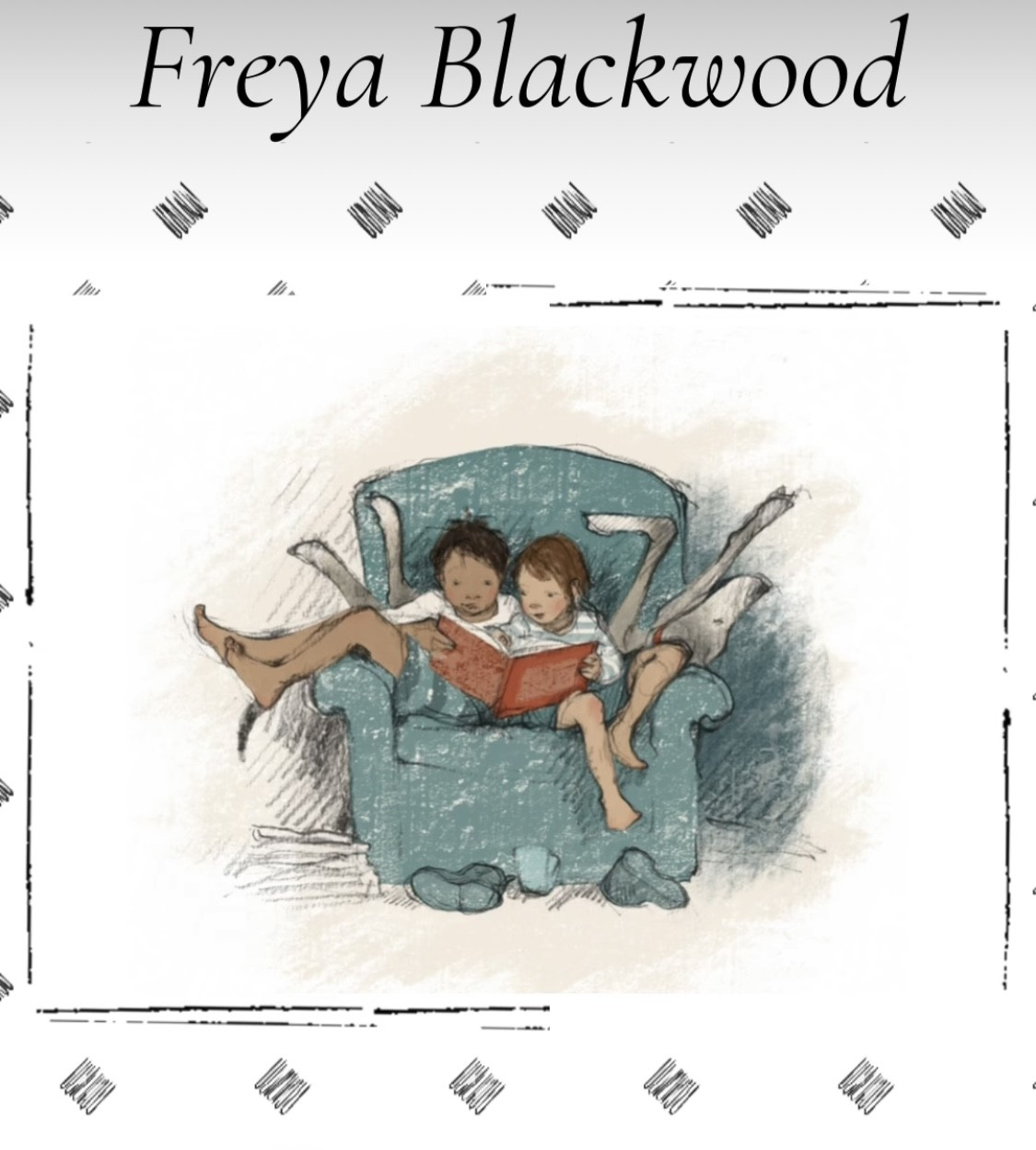
Freya Blackwood @freyablackwood
Gabriel Evans @gabrielevansart
Gabrielle Wang @gabriellewangbooks
Graeme Base @graemebase
Jess McGeachin @jessmcgeachin
Jess Racklyeft @jessesmess
Lucinda Gifford @lucindagifford
Matt Shanks @matt_shanks
Renée Treml @reneetreml
Robert Ingpen
Sara Acton @saraacton_illustration
Sher Rill Ng @sherrill.ng
Sophie Beer @sophiebeerdraws
Tohby Riddle @tohbyriddle


Wednesday, April 16, 2025

Roar for Reading by Beth Ferry illustrated by Andrew Joyner


"Libraries are like the best free buffets, offering endless choices 
so everyone can pick and choose what they like. 
If there comes a day when you hear that some books have been pulled from your library, it might be time to ROAR."

Libraries were once guarded by lions. They became known as librarians! They had the joyous job of story times, reading and recommending books to children, and adding wonderful books to their libraries. Then came the day Ms Millicent receives a letter. Ms Millicent headed straight to the office of the Mayor. He used words like controversial, inappropriate, and conservative. Ms Millicent replied with words like banning, censorship and accessibility. Ms Millicent did not win this battle of words and so on the next page we see the head librarian, Ms Millicent, pulling bundles and bundles of books off her library shelves. 

Lions from earlier times knew how to roar if things were amiss in the library. Young Julius has been watching his mum pulling out his own favourite books. 

"Julius got a funny feeling. He ran to the shelf where he kept his favourite books. He felt a rush of relief when he saw them, these stories that he loved so much. The one he had read thirty-three times. The one he was saving for the first day of summer. The special one he read with his grandmother."

What would happen if he couldn't read these books? Julius feels a rumble and the rumble turns into a ROAR! His mum feels the roar too and the roar spreads to book lovers everywhere.

At the end of this book the protesters win, and Julius and the other library patrons can read any book they like BUT as you probably know very sadly this is not actually the case in the US. The final pages of Roar for Reading have a set of four stepts - R Recognise book bans and censorship; O Organise and talk to other who see this as wrong A Act write letters, attend meetings and R respect everyone's right to read what interest them. 


This timely book effectively simplifies the current book-banning movement into easily digestible terms. Kirkus

This book caught my eye because I saw the Australian illustrator Andrew Joyner. You may remember his books - The Swap, Flocked, The Terrible Plop or Too Many elephants in this House. I read all of these to hundreds of children in my former school library.

Beth Ferry is a famous author in the US - I wonder how Andrew Joyner came to illustrate her book. Andrew lives in South Australia.  Beth Ferry is the author of Scarecrow illustrated by The Fan Brothers has been on my to buy/read list for many years - sadly though it is very expensive here in Australia. See her books here

These are a very small sample of the picture books and middle grade books that have been banned in the US. These are all books I loved and continue to recommend:


Tuesday, May 30, 2023

Flocked by Chren Byng illustrated by Andrew Joyner


No one ever leaves the flock

"Welcome to the flock. In the flock, everything is good. In the flock, everything is warm. In the flock, everything is safe. .. Do not question the flock. The flock is all you need. The flock is all you know. You are the flock and the flock is you. You are happy in the flock."

There’s sure to be a correct literary term for this plot but I call it a “grass is greener story” and I have read lots of them. Daisy by Brian Wildsmith; Wendy by Gus Gordon; Once upon a Small Rhinoceros by Meg McKinlay; and the famous Iranian allegory The Little Black Fish by Samad Behrangi. 

The point of difference here is the tone of indoctrination which is a theme you could explore with older students. The flock do not question their lot in life and everyone is expected to conform. The page where all the sheep are smiling is especially chilling. Is the head sheep a dictator? 

The pages set under the sea and in the busy city street offer a stark contrast to the ‘sameness’ of the flock in the field.

The final pages ask the reader to ‘fill in the gaps’. We see that the young sheep has survived and indeed thrived in the outside world so perhaps after reading the post card, others in the flock might take a step out into the wider world? The expression “pulling the wool over our eyes” comes to mind when I look at the woolly end papers. I think this is more than a story about bravery and stepping out of your comfort zone and it is interesting that the youngest community member is the one who is curious about the world and it is the youngest sheep who is willing to take a risk and defy convention.

You could also view this as an allegory about group think. It plays on the notion that people are like sheep - who follow one another around without thinking. If you look at the labels I have added to this post I think you can see there are terrific possibilities for using this book with a group of older students to explore "bigger" themes such as propaganda; conformity; independence; misuse of power; risk taking; and adventures. This is a book that repays rereading and older children will love being able to predict where the story is going and even what happens next.

The character of the little sheep himself is especially appealing. We see his personality and interests start to develop – with the sideways glances away from the flock and towards the little red flower. You can see more books illustrated by Andrew Joyner here

Companion books:


Friday, March 8, 2019

Brindabella by Ursula Dubosarsky illustrated by Andrew Joyner

"If Pender and his father had looked back, they would have seen that Brindabella was now standing at the open door. This was her time! She sniffed the air. She heard the rustling leaves high up on the hill. Hurry, Brindabella! Hurry! .. Out, out, away, away she went, far away and up the hill into the deep freedom of the bush."


The fierce love of the boy, Pender, is central in this story. He finds a joey kangaroo in the  pouch of her dead mother.  Finding a baby animal which has survived like this is sure to appeal to all young readers. Pender is living in a remote part of Australia. His father is loving but reclusive spending his daylight hours in his studio painting. Pender relies on farm routines and the companionship of his dog Billy-Bob.  Finding the joey gives Pender a new focus. He needs to make sure she is feed and keep her safe and he loves to draw sketches of her but he does know one day she must return to the wild.

It is easy to understand Pender's feelings and love towards Brindabella but Ursula Dubosarsky  also allows us to 'hear' Brindabella herself and she is quite a fiesty, confident and opinionated young girl.

"She knew that Pender cared for her, held her close, kept her safe, and fed her. But she didn't belong to him. She belonged to no-one but herself. 
'Why should he love me?' she asked, shrugging her shoulders. 'I don't love anybody.'
She thumped her tail in the dust, which rose in a puff. That was what she loved - her strong, beautiful tail."

This is a book in three acts - rather like a play:

Act One Pender - finding and raising Brindabella and happy times on the farm.
Act Two Brindabella -  the escape and new life in the bush learning to keep safe and make new friends.
Act Three Meeting again - There are hunters in the bush, Pender and his faithful dog Billy-Bob need to make sure Brindabella is safe.

The relationship between Pender and his father is a complex one. Their communication is limited and we are not told why his father becomes ill but an astute reader will recognise it is connected with grief.

Here are a set of detailed and very useful teachers notes written by Joy Lawn. Brindabella has been included in the CBCA Notables (Younger Readers) for 2019. On 26th March the six short listed titles will be announced. I hope Brindabella makes the cut. You can see some of the art by Andrew Joyner from the book here. I would recommend this book for children aged 8+ because there is a very tragic moment toward the end which may shock a younger child.

If you want to explore the idea of raising a young animal like Brindabella take a look at Sebastian lives in a Hat. Also below you can see the Polish edition of Brindabella. How exciting to see this book about the Australian bush reaching an international audience.


Friday, October 9, 2015

Australian kids through the years by Tania McCartney illustrated by Andrew Joyner


If you have been reading this blog you will know I very rarely discuss non fiction.   Today, though,  I simply have to talk about Australian Kids though the Years.

As a part of my job in a school library I read many, many books but if you were to look at percentages I read around 90% fiction.  With non fiction there are obvious features which make one text better than another.  We look for the usual library devices such as index, contents, captions, large photographs, accuracy, and information presented in a variety of ways especially visual.  We have thousands of non fiction books in our school library but only a handful really stand out in my opinion.

Australian Kids through the Years is a standout book!  It does not have an index or contents but this is not important. This is a book which can be used right across a Primary school. The youngest children can look at their parents and grandparents clothes, toys and hair.  Middle primary students could make timelines showing each theme and the oldest students could use the final illustrations list at the back of the book as part of a discussion about copyright. Older students could also compare the way information is presented in this book with more conventional timeline series such as Australia in the Twentieth century.  I would also pair this book up with My Place by Nadia Wheatley which is one of the very best books ever written about Australian history from the point of view of a child.


The design of Australian Kids through the years is chronological.  Beginning with First Children and then moving through time - 1800-1840s, 1850s, 1900-1909, 1910-1940s, 1950s, 1960s and so on up to 2000-today.

I love the way Tania McCartney resisted the need to present the dates in a pattern. Instead these dates match major events in Australian history such as the Gold Rush of 1850.

For each time period in this book we meet two children - a boy and a girl. On the next page we see all the "things in their world" such as clothes, food, hairstyles and my favourite part - the books they read.  This book has obviously been very carefully researched but all these facts are presented in such an appealing way.

The books are such a 'blast from the past' for me.  Here are a few (I have my own old copies of these books) :

1910-1940 Blinky Bill and Winnie the Pooh
1950s Charlotte's web and The cat in the hat
197s0 The Lion, the Witch and the Wardrobe
1980s Possum Magic


Here are the web sites for the author and illustrator.  I am once again going to predict that this book will be short listed for our CBCA awards 2016.  You might like to read this review.

I am including one page from the book and the photo page which appears at the end.  This is a book which should be part of every school library collection and every home library too.


Saturday, April 19, 2014

The Swap by Jan Ormerod illustrated by Andrew Joyner


Caroline Crocodile is jealous of her new baby brother.  He seems to get all the attention she craves from Mama Crocodile.  What can Caroline do?  On a shopping trip to return a newly purchased hat Caroline sees a solution to her problem.  There is a baby shop in the street.  Why not swap this brother for a different one?

"This baby brother is not exactly what I want,' she said. 'It's smelly and it dribbles, it's no fun, and it takes up all the room on my mama's lap.  I want to swap it for one that is just right."

While The Swap is not a new story and perhaps not even a very surprising one it is told with such joy and the illustrations are so much fun.  I do hope this book wins an award from the CBCA for 2014.

Make sure you go back and look at all the little extras such as number plates, the photos in the house, the sale sign outside the bookshop, the mouse and his motorcycle and the way mama's new hat exactly matches Caroline's pretty yellow dress.

After reading The Swap you might also enjoy some other books about new babies, siblings and jealousy such as  The very worst Monster by Pat Hutchins, Another Brother by Mathew Cordell, Noisy Nora by Rosemary Wells, Rosie and Tortoise by Margaret Wild or Julius the Baby of the world by Kevin Henkes.

You might like to read this review by Louise Pfanner or this one from The Bottom Shelf.


Tuesday, April 16, 2013

Too many elephants in this house by Ursula Dubosarsky illustrated by Andrew Joyner


One of the things I especially love in a picture book is when the illustrator or book designers decide to use different end papers - one image at the beginning of the book and a different one at the end. In Too Many elephants in this House Andrew Joyner has squished at least fifteen plump and happy elephants onto the first end paper.  One is holding a small bunch of flowers.  It is a tiny splash of colour in the midst of mass of grey bodies. Flipping to the final end paper we see the same squash of elephants but this time a small boy is happily wedged over an elephant bottom and all the elephant eyes are looking at him.

This is a story about problem solving.  There are too many elephants and the aptly named Eric needs to find a solution. The zoo already has a full quota of elephants, transport to Africa is out of the question and if he just lets them out into the street that is bound to cause mayhem.

You can see many of the exuberant illustrations from this book on the illustrators web site.  I have not met Andrew Joyner but he must be a very happy man - his picture books beam with smiles.  We all enjoyed The Terrible Plop when it was short listed a few years ago and it was fun to show Andrew's little video about how to draw a bear to our students.

After reading this book to my students we will also look at The boy who was followed home by Margaret Mahy.  It has a similar theme of creatures that take over the house.  We will also look at The Great Escape from city zoo by Tohby Riddle. The twenty elephant restaurant by Russell Hoban and Where do you hide two elephants? by Emily Rodda.  I used to have an old book called But No elephants.   I found a video copy which we can use instead.  We will also explore a mini theme about boxes. You can see a terrific pinterest collection of box books here made by my friend at Kinderbookswitheverything.  I do not think this book will win the CBCA awards but I am sure it will be a winner with my youngest students. Look for this book in your library today - it is sure to make you smile too.

Saturday, May 14, 2011

Norman does Nothing by Jen Storer illustrated by Andrew Joyner

I have set myself a challenge to read all of the Aussie Bites and Aussie Nibbles in our school library over the next month. This is partly because so many new titles from these two terrific series have arrived, partly because one Nibble - The Deep End, has been short listed for the CBCA awards and partly because I want to expand my repertoire (meaning the titles I read to classes and the ones I regularly recommend to readers) past Poor Fish, Hot Stuff, Green Fingers, The Horrible Holiday, One Night at Lottie's House, The Bugalugs bum thief, Moving House, The Princess who hated it and the Too tight Tutu.


Tonight I read Norman Does Nothing and even now, hours later, I am still smiling. This book is just charming. Norman is a gnome who lives patiently in the garden of Mr Goodfellow. Everything Norman knows about the world comes from Mr Goodfellow, listening to his radio, his television, talking books and his lovely piano playing. Then one day Mr Goodfellow is driven away in a fancy car with not one but two suitcases! "The driver swung the suitcases into the boot and slammed it shut... Norman waited for Mr Goodfellow to wave goodbye. But he didn't. He waited for Mr Goodfellow to look back. But he didn't".


Norman's life is about to descend into chaos. A young girl - Norman calls her Darling - and her mother arrive at the house. His lovely regulated environment is totally disrupted. Darling rides her roller skates down the front path, she plays with a hoop and worst of all she uses a skipping rope like a lasso. "He feared for his life ... was this to be his fate? Lassoed and strangled by a rope wielding squatter cowgirl?"


Then comes the biggest shock of all. Darling picks Norman up and she takes him for a ride in her doll pram. Their first adventure is 'out the back' where he endures a humiliating tea party with the dolls. Next stop is the kitchen where Darling gives him a range of accessories including a Rasta hat and finally Norman is put into a bike basket and he rides to the park with Darling at 500km per hour. This is party exhilarating and partly terrifying. Disaster strikes, though, when Darling has a bad fall from her bike and Norman himself sails through the air landing far away.


As with all the Aussie Bites there are only 85 pages in this little chapter book and yet Jen Storer manages to give her readers a taut and hilarious story. It is also exciting to have a book in which the briefest reference is all that is needed to piece together so many aspects of the story for example the relationship between Darling, her mother and Mr Goodfellow. The illustrations deserve a special mention. They are by Andrew Joyner - my students loved The Terrible Plop from the CBCA awards in 2010.


I now also see that Jen Storer is the author of Tensy Farlow which I also reviewed on this blog and by coincidence a student in Year 4 was just talking to me about Tensy Farlow yesterday and explaining why this is the first book that has totally hooked her in as a reader - she loved the cliff hanger chapters and the sinister elements. Tensy Farlow is a far more sophisticated novel and it is impressive to see that Jen Storer is such a versatile writer.