Showing posts with label Observation. Show all posts

Friday, October 2, 2026

We Go Slow by Mariahadessa Ekere Tallie illustrated by Aaron Becker


It's a story about presence, connection, and love. 
The kind that grows stronger with every step we take together. 


We go slow opens with a hectic morning scene. The young boy heading to his soccer game is in such a hurry his image is almost a blur and so is mum as she heads out the door to work. How does this link with the title? Turn the page and the pace immediately slows right down.

"Mornings are soft laughter, fresh bread, nutmeg & coffee smells. Mornings are stories, cool crackling records & trying to remember last night's dream".

Crackling records? Where is this child? Who are they with? It is their grandfather. Go back to that hectic (wordless) first story spread. The child of this story is calmly eating breakfast in a side room and the grandfather is preparing his coffee. Neither have the rushed look, that we see in the illustrations, of the other family members. 

The child and their grandfather head out onto the sun dappled street. 


Image source: Simon and Schuster

"Outside we go slow, learn a yellow bird's song & a new neighbors name."

Even the sunflower seems to unfold slowly - oh and make sure you look under the dust jacket - you will see this same sunflower. 

My favourite page is when the child looks up at the power pole and says I "wonder if sneakers like their new view from up high." Have you seen the way people throw shoes and sneakers over electrical wires - I have always wondered why.


Image source: Simon and Schuster

This is another one of those books where I would have loved to be inside the mind of the illustrator when he received the text for this book which I imagine was just one typed page. What image do you think of to go with these words for example:

"We go slow, make a wish & watch someone try."

The opening spread in this book is wordless and so are the final three pages. The colours have changed from yellows and sunshine to muted purples and orange as the sun is setting. The passing of time is not explicitly mentioned but it is beautifully shown by the changes in colour and light. The setting is New York city but really we could be in any urban environment - any busy city. 

Publisher blurb: A child and her grandfather step out of their brownstone and take a walk around their lively city. Together, they practice looking closely. They delight in the world that they see, taste, touch, feel, and hear. Whether learning a yellow bird’s song, tasting a street vendor’s mango slices, or listening to the thumping music from passing cars, they find small wonders in every moment they share—and together, always, they go slow.

It’s rather dreamlike and yet still vibrant and urban. Waking Brain Cells

Awards

  • ALA Notable Children's Books
  • The Golden Kite Award for Picture Book Illustration
  • CBC Best Children's Books of the Year
  • NCTE Charlotte Huck Outstanding Fiction Recommended Title
  • Massachusetts Book Award
  • NYPL Best Books

Via spare, poetic language as well as watercolor and pencil illustrations that take hazy, desaturated hues, Tallie and Becker celebrate the time shared between a child and caretaker as they together meander through a metropolitan neighborhood. ... Whether viewed as a depiction of mindfulness in practice or the quiet joys of together time, this tender story is a reminder of the importance of being in the world with unhurried attention and open hearts.” Publisher's Weekly

Here is a rich and insightful interview with Aaron and Mariahadessa - you can listen or read the transcript. Here is a quote from the introduction:

Their new picture book We Go Slow, is a quiet contemplative walk through a bustling city neighborhood where a girl and her grandfather take time to notice the world around them. They listen to bird song, taste mango slices from a street vendor, and feel the rhythm of passing cars, finding small wonders in every moment they share Mariahadessa’s lyrical text.

About the illustrator: Caldecott Honor winner Aaron Becker is the New York Times bestselling author of the Journey trilogy and other award-winning books for children young and old, including The Last Zookeeper, The Tree and the River, and A Stone for Sascha.

About the author: Ezra Jack Keats Honor winner Mariahadessa Ekere Tallie is an interdisciplinary artist and PhD candidate at Brown University. In addition to her award-winning picture book Layla’s Happiness, she has authored several collections of poetry and has performed poetry and taught in the United States, Namibia, the Netherlands, Belgium, and England. She was born and raised in Queens, New York, and her journeys across the borough inspired the writing of her picture book We Go Slow.

I am so happy to say that this book is one you might be able to afford for your school library at slightly less than AUS$30. And this is another picture book that would be perfect to share with an art teacher in both Primary and High Schools. Or if you find this book in your local or school library just slow right down and read this book with your young reading companion beside you sharing a very special moment that comes from reading a very special book with a lyrical text and art that will make you gasp!

I previously talked about this book by Mariahadessa Ekere Tallie:


Companion books:


Tuesday, September 8, 2026

Still Sal by Kevin Henkes


Sal is excited. She is about to begin Grade One. Sal has all her special supplies ready:

At the moment, the school supplies were the things in Sal’s life that made her most happy; the things that gave her a little joyful lift just by thinking about them. The box held brightly colored pencils with glittery stars on them, an eraser shaped like a cupcake for the top of a pencil, and two folders and two notebooks with photographs of baby animals on them—piglets, kittens, puppies, lambs.

Her outfit is ready too:

Sal got dressed in the outfit she’d been planning for days. Pink-and-blue plaid tights. Pale-green corduroy pants that came just below her knees. A shirt patterned with yellow and orange suns. Red sneakers. ... Sal had picked out a cloth headband—her most comfortable one. It was white with purple stripes. She was avoiding her hard plastic ones with teeth. She pushed the headband on and patted it into position. “Ready.”

Then a letter arrives and it seems Sal and her best friend in the whole world Griff (Griffen Babcock) will be in different classes. Griff will have a teacher with such a wonderful name - Ms. Flowers. Surely there is a way Sal can change classes and not be in Ms. McCormick's class.

Ms. Flowers’s hair was dark and curly like Sal’s, but cut very short and accessorized with an ABC barrette. She was wearing red sneakers, also like Sal’s, and jeans that were frayed and fringy at the bottom. Her belt appeared to be a tape measure. She looked like a fun babysitter. She smelled like strawberry jam. Sal’s heart leaped.

This is a year of change for Sal. Her baby sister Poppy has moved into her room and Sal is not happy. Griff seems to be making new friends. AND everything, just everything that can go wrong at school, goes wrong. For example my heart broke for Sal when she saw her name label was wrong (this happens me too):


She was looking at her name tag with narrow eyes. There was a new problem. Although Ms. McCormick had cut off the second L and the Y, she’d made her cut so close to the first L that if you didn’t look carefully, you might think Sal’s name was Sa. Also, there’d been a nice border around each name on the name tags, and now the border on Sal’s was gone on the right side. And, the cut edge was crooked. Sal’s name tag didn’t look professional anymore, and it was different from everyone else’s. Stinging tears came to Sal’s eyes. She knew she shouldn’t ask Ms. McCormick to fix her name tag again, but, still, she found the whole thing upsetting.

Kids in Australia are sure to enjoy all the clothes Sal wears - here children wear school uniforms. Sal's choices each day reminded me of Goonie Bird Greene. 

I love the way Sal tries to convince her parents that two-year-old Poppy should not move in:

“I just don’t think she’ll be a good resident of this room,” Sal had told her parents, trying to be as serious as possible, narrowing her eyes, tilting her head, and pitching her voice to sound important. “I just don’t think she’s responsible enough to be here.”

I also love Sal's dad - he is a parent with quiet wisdom and he can make delicious pancakes.

With a group of older kids in Grade 3 perhaps, you could use this book to talk about the way teachers are different - not to criticise just to explore different ways teachers might cover a topic or relate to their class. You could also talk about the way Sal observes the kids in her class. Oh and I cheered when Sal does speak up - she certainly is not a shy child but she does have an understanding of some adult rules such as not using the teacher's first name even though she is so delighted when she makes this discovery.

I think my hairdresser would enjoy reading chapter 19:

The hair salon was called Hair We Go and it smelled important. Like the smells of a doctor’s office and a flower shop mixed together. Brooke was the name of the woman who was to cut Sal’s hair. Brooke’s thin, straight hair was shoulder length and streaked with pink and green. Sal couldn’t take her eyes off it. She wondered how old you had to be to get pink and green hair, although she wasn’t sure if she’d actually want to have it.

As an adult reader I adored this fourth book about the Miller family - I hope young readers aged 7+ will also enjoy this book but they might find the tone used by Sal a little too mature? I need to think about this a little more. The Kirkus reviewer says: Fairly sophisticated language and observations stretch the target audience to include third and fourth graders for whom first grade may be a distant memory. I was delighted to see Kirkus gave Still Sal a Star review:

Henkes’ graceful, easy prose, sharp insights, and impressive ability to convey the way children think shine here. He invites readers to empathize with Sal, feeling her disappointment and annoyance with a world that doesn’t always understand her as well as the satisfaction with small victories that bring her back to herself: getting used to a major haircut and learning to connect with Ms. McCormick. ...  A delightful, understated triumph.

Blurb from Kevin Henkes web page: Sal has been looking forward to first grade for a long time. But her excitement quickly turns to disappointment when she learns that her best friend, Griff, is in the other first-grade classroom and has the most popular teacher. Then Sal’s name is spelled wrong on her name tag, she trips in front of the cool fifth graders, and her self-portrait doesn’t turn out the way she wanted it to. In fact, everything about school is an absolute disaster. Poor Sal! Luckily for Sal, she has understanding parents, a terrific new teacher, and empathetic friends who remind her that it takes time to adjust to change. And sure enough, after a few days, Sal feels like herself again.

Still Sal highlights themes of family, friendship, social and emotional growth, resilience, and adapting to change. The fourth stand-alone book in the Miller Family sequence includes black-and-white illustrations by Caldecott Medal winner Kevin Henkes on almost every page and is an excellent choice for early elementary grades, for readers ready for a short novel, and for family and classroom read-alouds.

AND there will be another book in this series later this year - Poppy.


If I worked in a bookshop I would love to make a window display of this series. Here are the four titles from the series so far and I also think all Primary school libraries should own every one of them - you can read more from the links below. All four of these have Kirkus Star reviews:


Click on the Kevin Henkes label on this post to read about more of his books - for all ages!

Monday, February 9, 2026

The World from Here by Cassy Polimeni illustrated by Mel Armstrong


Blurb: Milo lies in the grass watching cottony cumulus clouds transform into animals. Maya looks out a plane window and marvels at the sky outside and the shapes countries make below. Through their different perspectives, Milo and Maya remind us that there are countless ways to experience the world.

Here is a new word for today - Nephology - the study of clouds.

This book combines a narrative interspersed with facts about clouds. There is a glossary and a fact page to extend your child's understanding of weather, cloud names, thunderstorms, and the ways weather can affect us.

Thanks to CSIRO Publishing for sending a review copy of The World from Here. Check out the teachers notes here. 

  • Explores the sciences that help us understand our world, and the wonders that make living here on Earth so rewarding.
  • Presents scientific facts on weather, geometry, astronomy and patterns in nature in an accessible and engaging way.
There are also terrific opportunities of further things to explore after reading this book such as mushrooms, frogs, Pangea, clouds on Mars, the constellations, and shapes in nature such as fractals, tessellations and spirals. This book could also open up a discussion about ways to cope if a child is afraid during a thunderstorm. 


Things look different from up here, with Earth spread out below like a giant quilt.

My friend at Kinderbookswitheverything talks about Cloud Appreciation Day but you could celebrate clouds any time. I think this topic might be covered in our school syllabus documents but with your preschool group or younger grade you could easily enjoy exploring clouds and books about clouds as a part of a mini unit. Here are a few of my favourite books about clouds:


This is very very old - Clouds by Peggy Blakeley


Lizzy and the Cloud (this is a must-read book for every child)


Cassy Polimeni is a children’s author and freelance editor whose stories celebrate our connection with nature and the environment, and the relationship between science and wonder.

Here are some of her books:


Mel Armstrong is an illustrator from New Zealand. Here are some of her previous books:


Saturday, August 9, 2025

Thoughts from a Quiet Bench by Kes Gray illustrated by Nila Aye


Publisher blurb: The Quiet Bench in the playground is the perfect place to sit and watch the world go by. It's a place to listen, think, and ask yourself questions such as . . .

What are thoughts made of?
Where does the air stop being invisible and turn into blue sky?
Can the wind blow in two different directions at once?

So next time you see someone sitting quietly, why not join them? Because there's always room for one more friend on the Quiet Bench.

This is a book you will want to add to your school library BUT I recommend shopping around because the price here in Australia seems to vary between AUS$22 up to over AUS$32. 

Kes Gray is an author of more than fifty books for children of all ages, including the acclaimed Daisy series illustrated by Nick Sharratt and Garry Parsons. As well as winning the Red House Children's Book Award for Eat Your Peas, Billy Bucket and Daisy and the Trouble With Zoos, Kes was noted by The Independent as one of the top ten children's authors in the UK only a year after publishing his first book. He is also the author of Zippo the Super Hippo illustrated by Nikki Dyson and the bestselling Oi Frog! illustrated by Jim Field. Kes lives in Essex with his wife, children and an assortment of animals.

I spied this book in a city bookshop. I picked it up. Read it. And sighed with happiness.  Aren't we lucky that children's authors and illustrators keep producing amazing books for our children. I don't usually give stars to picture books but as you can see I have given this five stars! Just look at this page - 


There are, of course, some poignant moments in this book when we see the child sitting on the bench and later a child playing alone but this is beautifully balanced with some laugh out loud moments and a beautiful story ending. One of the things I treasured in my former school library were the quiet loner (not necessarily lonely) younger children who came to my library at lunch time. I tried hard to put aside the endless lunch time task of book shelving and just sit with these kids to play a simple card or board game and then inviting other kids to join in. 

Kes Gray is the author a book I love to read aloud:


Here are some other books by Kes Gray - surely you already have many of these in your school library!


Nila Aye was born in Rangoon, Myanmar, arriving in the UK at the age of three and spent most of her childhood dreaming and drawing pictures. Nila studied graphic design at Central St Martins in London, graduating in 1995. Nila is an award-winning illustrator, collaborating on many well-loved children's books including Nature Trail, People Need People, Story Soup and the Little Bugs Big Feelings series. Her love of visual storytelling and collaboration with authors continues to energise Nila in her mission to bring beautifully illustrated books to a new generation of young readers around the world.

Here is the Instagram page for Nila Aye - she has a few small videos about Thoughts from a quiet bench.

Companion book:


Sunday, December 22, 2024

The Girl Who Noticed Everything by Jane Porter illustrated by Maisie Paradise Shearring


There are a couple of moments in this book which made me feel very sad. Stella does notice 'everything' and at times this is lucky for her dad for example when he misplaces his hat. She is a naturally curious girl but dad sometimes feels uncomfortable when she points out differences:

"They passed a man wearing a furry hat with big ear flaps. Stella turned to look. 'Is he wearing a cat on his head?' she asked loudly. 'Shhhh! He might be embarrassed if he hears you say that,' said Dad ... "

Stella can sense she has done the wrong thing so she becomes very quiet. She stops telling dad about all the amazing things she can see on their way to the park. When they arrive she sees a lady in wearing all the colours of the rainbow but dad says:

"Let's play at NOT noticing things for a while, shall we?"

Luckily Stella does still notice things, but she keeps her thoughts to herself. That lady in the rainbow had been calling sadly 'Frankie! Frankie!'. Stella finds a beautiful blue feather and then she sees a bright flash of feathers in a tall tree. Yes - it is Frankie. She takes her dad's hand, and they find the rainbow lady then Stella leads them both back to the tree and the rainbow lady is reunited with her special companion.

Luckily all of this means dad changes his mind and indeed he begins to notice the tiny and beautiful things on their walk home.

Here is a video of the author Jane Porter talking about her book with the illustrator Maisie Paradise Shearring. This book is available in paperback (published January 2023) - a perfect addition to your library. 

The combination of dad being loving yet slightly distracted is highly relatable and Stella feels totally real to me. The adult learning from the child is a nice touch which is subtly done ... Letterbox Library

The Girl Who Noticed Everything addresses relevant (and potentially quite challenging) issues by drawing its audience in and delighting rather than instructing them. Its focus on the visual and imaginative joys of connecting and observing are particularly welcome, and embedded within the story and images are prompts for learning and discussion. Jane Porter’s cheerful text has a natural, real-world feel, and Maisie Paradise Shearring’s characters also burst with life. Plenty of location-specific spreads anchor the action in familiar settings (a rumpled sitting room, an urban street, a sandpit…) but good use is made of white backgrounds to focus attention on Stella’s internal world. Books for Keeps

Publisher blurb: Stella is a great detective. She can’t help noticing everything around her – clouds shaped like horses, wheelie bins with faces, a lonely glove on a fence, people that look like their dogs and even a man with a furry hat that looks like a cat on his head. Stella tells Dad about everything she’s seen but Dad is worried that she’s going to hurt people’s feelings. But when Stella spots a sad lady in the park she knows that speaking up is just the right thing to do.

This is a companion book to The Boy who loved Everyone.


Here are some other books illustrated by Maisie Paradise Shearring:


Wednesday, May 22, 2024

Everywhere, Wonder by Matthew Swanson illustrated by Bobbi Behr


"I have a story to share. It is a little gift from me to you. You might not know it, but you have a story, too. You'll find it in the things you stop to notice."

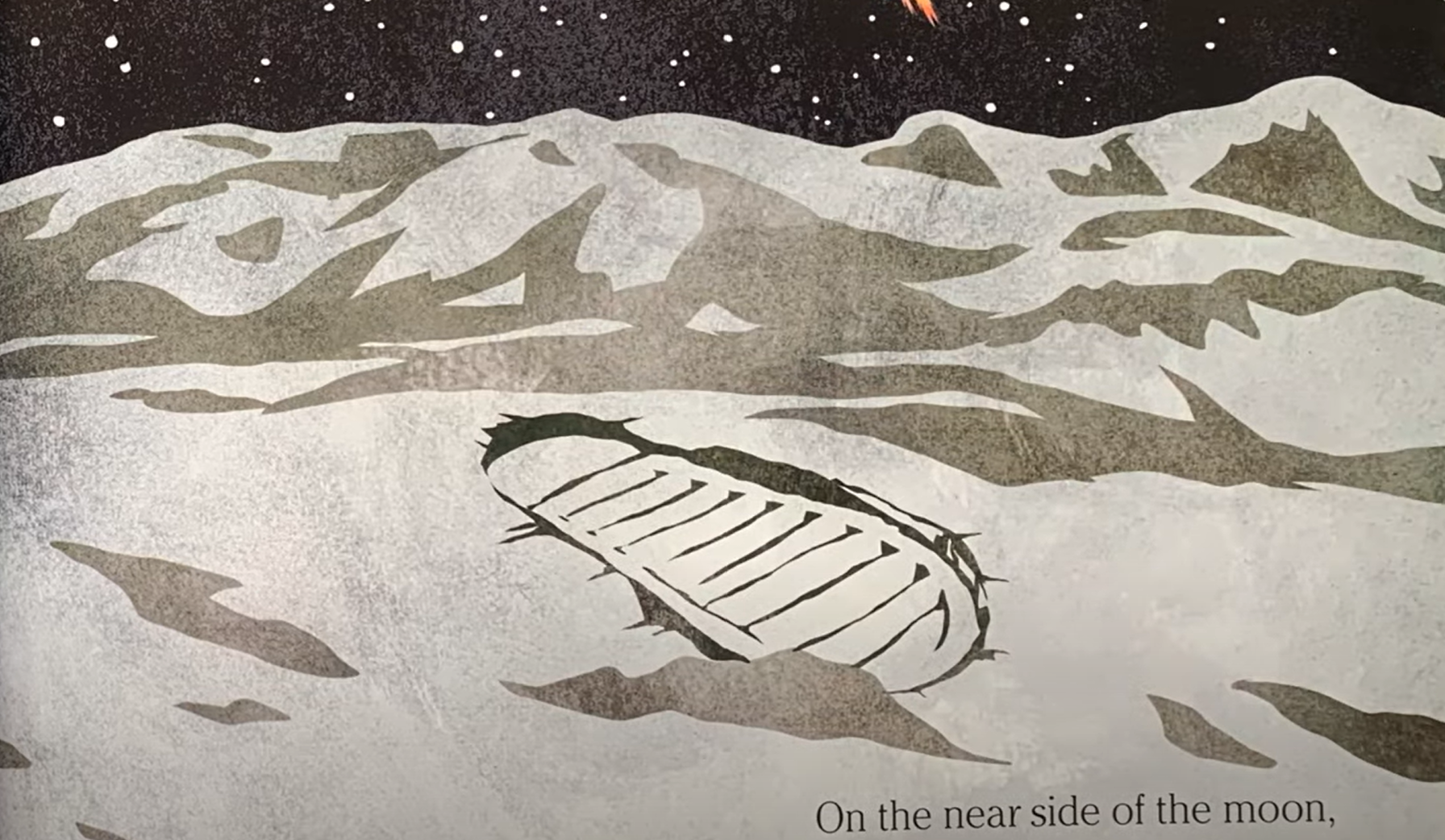
The child in this book, is reading a book. We see the page open on an illustration of the pyramids. Turn the page and voila you are there. Then on you go to Arizona, Brazil, mountains in Japan, Kenya, see salmon swimming in Alaska and you could even see that solitary footprint on the surface of the moon. 

All of these things (and many more) are now part of your story.

The polar bear "walked off this page and into your head. Now he is part of your story."


So, there are wonders in books from places around the world that you can only imagine or see in a book but also there are wonders to see all around you - close to home. Even in a bowl of soup. 

The strongest illustrations are those that play with negative space, as when a polar bear wanders off the ice and into the child’s white-walled room, the one blending seamlessly with the other. A journey of the imagination, the book could be of use as a teaching tool to encourage budding writers and creators to notice and imagine stories based on both what they know and what they dream of. Kirkus

You could perhaps use the first part of this book to explore the 2024 CBCA slogan - Reading is Magic. This book was published in 2017 and it is still available but sadly I think it may be way too expensive for a school library here in Australia. You can see inside this book here. Here is the web page for husband and wife team - Matthew Swanson and Robbi Behr. They have made 84 books together - 70 self published. You can see them here talking in a video (19 minutes) and reading Everywhere, wonder with tiny animated moments.

Sunday, April 21, 2024

Wings, Waves and Webs: Patterns in Nature by Robin Mitchell Cranfield


Teachers of the preschool groups who visit the library I visit each week often ask for books about patterns. I am guessing this topic must be part of their curriculum. 

My friend from kinderbookswitheverything has a fabulous collection of books about patterns. This one is very special. 

What is a pattern? "Anything repeated in a regular way can form a pattern. A circular shape repeated again and again becomes a dotty pattern we call spots. .... This book is about patterns we can see in nature; some are big, some wild, some beautiful, in rivers and snowflakes and eggshells and clouds."

Publisher blurb: From the dots on a ladybug to the spiral on a snail, patterns in nature can be found anywhere. This simple and playful concept book introduces the littlest of readers to both math and nature while engaging their creative potential. By the end, kids will be able to identify:

  • Spots and stripes
  • Spirals and symmetry
  • Waves and honeycombs
  • And more


On the author page you will find a link to teachers notes plus other examples of pages from this book. 

Here is part of the end paper image:


I would pair this book with:


Wednesday, February 21, 2024

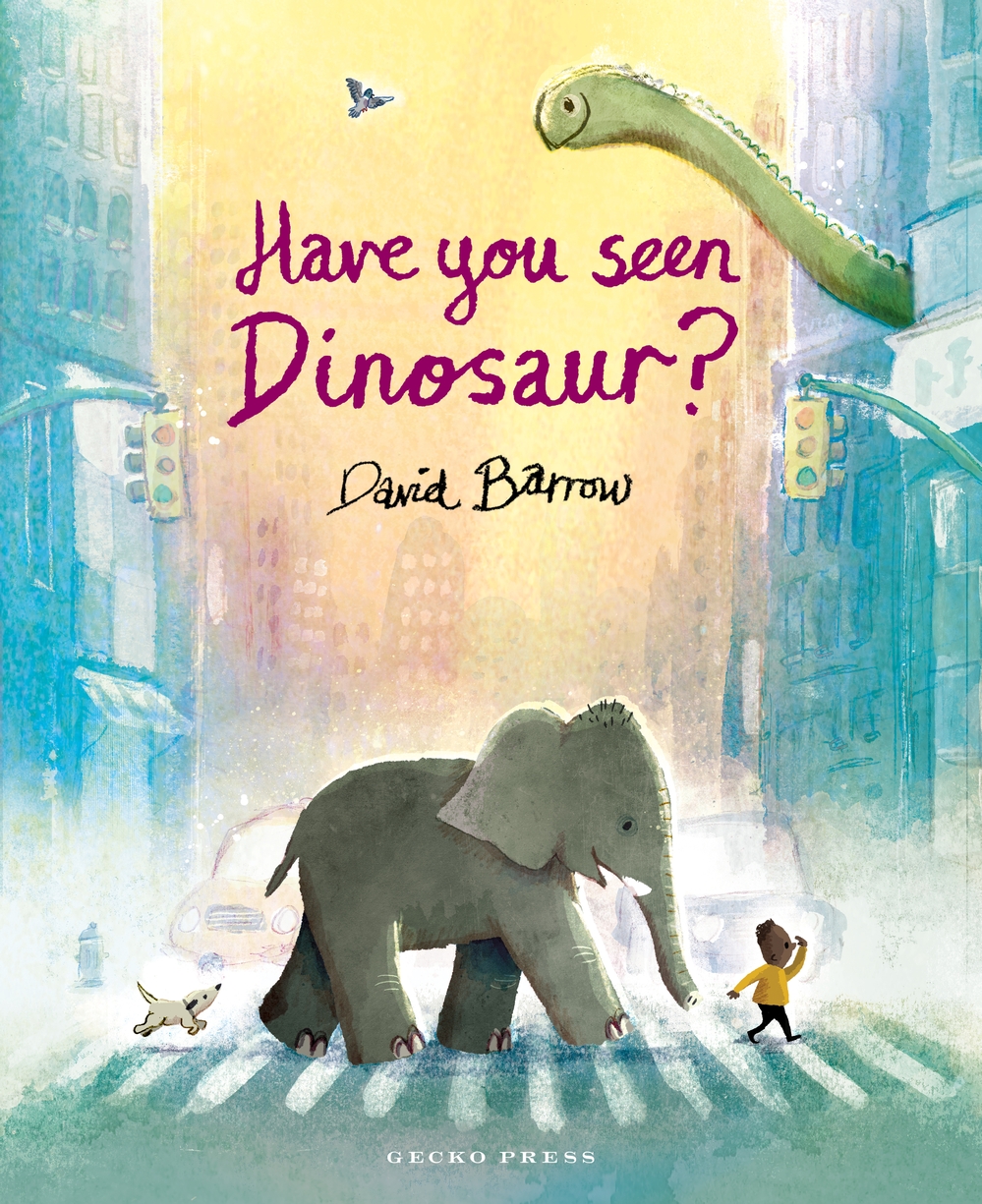
Have you seen Dinosaur? by David Barrow


This is one of those terrific books where your young reading companion (aged 2+) will know way more than the main character.  Yes, there are plenty of dinosaurs but the little boy keeps missing them. You will even see one on the end papers.


I counted seven dinosaurs on the final page. Why not head to your library now and go to the non fiction shelf [567.9] and grab a few dinosaur books and then try to identify the dinosaurs in this book. There are other visual jokes too - such as the pigeon and the dog on each page. Watch out - the pigeon is riding a skateboard. I also love all the characters on the train especially the punk girl with her spiked hair and nose ring. This is a book you could also share with a slightly older group who might identify all the environmental print - street signs, newspapers, even number plates!

This is also a lovely story about friendship, and Barrow’s artwork is dreamy, painterly and stunning as well as being totally perfect for young readers. A fabulous read for any time of day, which will definitely get plenty of repeat reads. Book Trust

Here is an interview with David Barrow. He lists his own favourite illustrators as:  Brian Wildsmith, Alice and Martin Provensen, Evaline Ness, and David McKee. I’m also drawn to modern artists with a unique visual language, such as Isabelle Arsenault, Marta Altés and Birgitta Sif.

Have you seen Dinosaur is the sequel to this: