Showing posts with label Russia. Show all posts

Sunday, October 4, 2026

Amazing Astro Animals by James Foley


"Humans decided to send small animals in their rockets until they were sure they could make it safe enough to send themselves. Because of this, the early history of animals in space includes many sad stories." [sorry I know this is a spoiler]

Astro - this means SPACE! Astro Animals! This means animals sent into space! Amazing ones yes because even though you might know about a few such as Laika the dog sent in 1957 and maybe a monkey or chimp and if you really are a space boffin you might have heard that a tardigrade travelled into space in 2007 but I guarantee you will have no idea about the other sixty animals that James Foley describes in his newest book. If you don't believe me what about the Mummichog Fish?

Image source: James Foley

I was not sure how to start this blog post about Amazing Astro Animals. I think I would like to fill my page with the word WOW written hundreds of times all over this post - yes this is a WOW book! The title is so right - the animals in this book are amazing and James Foley, your book is amazing too!

The Space Race really was a race mainly between the USA and the Soviet Union although other countries did get involved too but before humans went up into the cosmos a huge variety of animals blasted off in the interest of science. Was this ethical?

The first couple of pages in this book are used to explain the term animals because, as you know, there are so many different kinds of animals. Your young reading companion or class (me too) really need this overview of the animal kingdom that James Foley presents over a double page spread. There are seven pages in total that explore animal classifications and then a further spread which identifies all the dangers of space such as no air, lack of gravity, isolation, and extreme temperatures. 

Each section of Amazing Astro Animals is colour coded to match the chapter headings: Fantastic Firsts; Mammal-nauts; Slimy-nauts, Scaly-nauts and Feathery-nauts; Aqua-nauts; and Teeny-tiny-nauts. Plus, like all the best nonfiction books there is an extensive glossary and a full index.

James Foley has created true alchemy with this new book. It is factual and clearly involved thousands of hours of painstaking research, but this book is also funny, clever, poignant and a visual delight. Congratulations to Fremantle Press on giving James Foley the scope to make such a huge book (150 pages) in hardcover and for a very affordable price. EVERY school and public library needs to add this book to their collection. In fact, you might like to buy two copies because this book will be in high demand. I feel very lucky to have been sent a review copy of this glorious volume. 

It would take me days to list all of my discoveries from this book (and really all YOU need to do is read the whole book for yourself) but I will mention a couple that made me gasp:

  • Neil Armstrong is famous but he was not the first human to go to space and of course he was not the first Earthling either. The first Earthlings in space were fruit flies. The first human was the Russian cosmonaut Turi Gagarin. His flight lasted just under two hours. 
  • Laika was not the first dog sent into space but she was the first Earthling to orbit the Earth. 
  • The first woman in space was Valentina Tereshkova from Russia. I read about her mission orbiting the earth 48 times over three days and I cheered when I read she became a Major General and even a politician BUT then I discovered "she voted in favour of the invasion of Ukraine in 2022" and so my opinion of this space pioneer plummeted.  
  • As of 2026 only 15% of humans who have travelled to space have been women. 
  • The first Earthlings to travel around (not land) on the moon were tortoises and mealworms (1968).
  • Many of the animals sent into space were given sweet names - Miss Able and Miss Baker (squirrel monkeys from USA); Belka meaning Squirrel and Stelka meaning arrow (white lab rats from USSR 1960); and Yerosha and Drema (rhesus macaques 1987).
  • In 1984 3,400 honeybees travelled on the Space Shuttle Discovery and they were able to make honey in space!
  • Some of the animals sent into space were suggested by High School students who entered competitions.

This book just resonates with research and please stop and think about that because researching material from USSR and Russia in a language you don't speak and from organisations that, even now, years later are sure to be shrouded in secrecy must have been so challenging. I imagine James Foley learned a lot too about animal biology, space missions, and rocket designs not to mention diplomacy.

Here are the teachers notes for Amazing Astro Animals. See some pages here. 

Do you remember Stella? We met her in 2021. Her book, like this one, had fabulous end papers filled with astronauts - animal astronauts. Amazing Astro Animals is a companion volume to the wonderful Stellarphant which was a CBCA Picture Book of the Year Honour book (and I am proud to say I was one of the three judges that year!). Dr Stella Phant has written the foreword and afterword to Amazing Astro Animals, and you will love discovering her 'joke' on the back cover.


Readers of all ages are captivated by space, and this animal astronaut showcase has broad appeal. James Foley has drawn from his picture book and graphic novel talents to create a uniquely entertaining and genuinely fascinating nonfiction book. There are fun comic strips and visual gags throughout, and fans of Foley’s wonderful picture book Stellarphant will be delighted to recognise a familiar face in the opening pages. Reading Melbourne


Image source: James Foley

My interest in animals that were sent into space goes back to this very old book but now that I have read this new volume by James Foley I have discovered so many more animals along with their true stories:


I recently read this book about Laika the famous Russian dog sent into space:


Further Reading:

Fifty Animals that have been to Space by Jennifer A Read and John Read (2020)
(This book tells the stories of 50 trips into space, and the animals and the scientists involved).


Animals in Space timeline National Geographic (this is brilliant)


Dogs in Space: The Amazing True Story of Belka and Strelka by Vix Southgate, illustrated by Iris Deppe

Grace in Space by Stacy Shaneyfelt illus Marina Maslova


Grace In Space: A Kids’ Picture Book About the History of 10 Animal Astronaut Heroes
Included: Laika; Marfusha; and Felicette


Sunday, July 19, 2026

Dog Star by Megan Shepherd


"If we can't stop the rocket, maybe we can get Laika out. We can't let her go on a mission with no chance of return. She isn't like the equipment you have in that capsule. 
She's a living creature."

Nina is old to enough to begin to question her life in the Soviet Union. Her best friend, along with her friend's parents, have recently defected to the US. Nina herself is being trained to be a good Soviet citizen. Her father works for the Institute of Space Medicine. The space race is in full swing. The Russians are desperate to be first. The Americans are planning to use monkeys and mice but in Russia a small stray dog is selected and trained. 

Meanwhile we meet a street dog, later to be named Laika. She longs to become a warm dog but when she is captured, she is taken to a strange place and put into a cage. Sharing this space are two other dogs. One has already been sent into space so she explains the three tests that Laika will undergo and how, if she can pass these tests, and travel into space the reward will be a real home with children to love her.

Bookseller blurb: Based on an incredible true story, Carnegie Medal nominee and New York Times-bestselling author Megan Shepherd crafts a harrowing, propulsive girl-and-her-dog tale that will linger in your heart long after the last page. Laika is a Cold Dog, a stray pup fighting for her life on the streets of Moscow. Then, one winter night, she is plucked from her alley to become a Starflyer, a dog trained to travel into space. Distrustful of people, Laika tries to do everything she can to escape. That is, until she meets Nina. Nina is a Cold Girl, lonely and full of questions. Her best friend has moved to America in a rush, leaving Nina to face the school bullies all by herself. Plus, her father's work as a scientist in the Soviet Space Program grows more secretive by the day. When the two meet in her father's laboratory, their growing bond slowly warms the chill that has settled in each other's hearts. As the Space Race between the United States and the Soviet Union grows fierce, Laika and Nina uncover shocking secrets and hard truths that will test their friendship. How will they find the courage to chase their dreams all the way to the stars?

Have you ever thought about the idea of warm dogs and cold dogs. Warm dogs live with a family. They are fed, allowed to be inside and even perhaps sit on a couch and most of all they are loved, especially by children. A cold dog is a street dog. A dog that lives by scavenging and a dog that works hard to survive extremes of heat and cold. And it sure is cold on the streets of Moscow. Laika was a cold dog until the day she was captured for use in the space program.

The title comes from the third voice in we hear in this story - we hear Laika beginning when she is just surviving on the streets of Moscow; we hear Nina who is so upset about the loss of her friend and we read about her struggles to cope with the Young Pioneers; and the third voice is the actual dog star - a voice of encouragement and wisdom that only Laika can hear. 

The ending of this book is inevitably very sad - perhaps if you are recommending this book to a reader in your library you might decide to explain this. Laika was a real dog. She was sent into space from the USSR in 1957. An enormous amount of work went into preparing her for the journey, but it seems almost no plans were made for her return. No one knows when or how but Laika did perish on the voyage.

There is a strange but fascinating inclusion in this book - the book is from a US author but she has included an article dated November 27th, 1957, from our Australian Women's Weekly magazine.

Here are a couple of text quotes:

"Nina felt a rush of confidence now. She sat up straighter. 'Yes dogs. I can help my father with the dogs who will be sent into space! ... Through this, um, I can make the Motherland proud."

"In a few days Laika will travel to the cosmodrome. I wanted to do something nice for her first. One night to have a home away from the Institute. To just be a dog; to bark and play.' He knelt down, scratching Laika behind the ears. 'Can you do that for her, lapochka?"

"So many questions buzzed in her head. Their teachers taught them to respect even street dogs but didn't respect the students enough to tell them the truth. Maybe Ludmilla's family had left because they didn't feel safe in a country where information was so often kept secret. Now, like Ludmilla, would Laika disappear forever too?"

You can hear Megan Shepherd talking about her book here. Dog Star was published in 2023 but I picked up my copy in a bookshop earlier this year. 

The narrative alternates between Nina’s and Laika’s points of view; Laika’s perspective is anthropomorphized with inner monologue as well as dialogue between dogs, and this works to the story’s advantage in arousing sympathy for the small animal who was sacrificed for science. A poignant story that accessibly illuminates a milestone in space exploration history. Kirkus

Read more about animal astronauts here. Companion books:


I previously read Secret Horses of Briar Hill by Megan Shepherd:


Monday, January 17, 2022

The Raven's Children by Yulia Yakovleva translated by Ruth Ahmedzoi Kemp


Maybe this was all the work of ordinary people. They allowed these horrid things to happen because they didn't speak out to stop it. People didn't dare to help their neighbours, they rushed to turn away and ignore them when they were in need ... and that hung over the people like a poisonous cloud, a permanently dull grey sky. 

Publisher blurb: Russia in 1938 is a place of great terror. Joseph Stalin is in charge. His Secret Police are everywhere, searching for anyone who might be his enemy. People have no idea who they can trust. Seven-year-old Shura doesn't know about any of this. He's happy in his little home in Leningrad going to school in the mornings, playing with his best friend in the afternoon, fighting with his big sister, spending time with his Mama, Papa and baby brother Bobka. Until one day everything changes. Mama and Papa and Bobka disappear without a trace. The whispers of their neighbours are that Mama and Papa were spies, enemies of Stalin and so they have now been taken by something mysterious called The Raven. Desperate to reunite his family, Shura decides to hunt down The Raven, finding help in the most unexpected places but facing more danger than he has ever known . . .

Here are some text quotes to give you a flavour of this writing:

"Shura sighed bitterly. What a waste of seven years! There was so much he hadn't done; he'd never even owned a dog. And now this pointless end. All because he wanted to try the new Eskimo (icecream) before the rest of the kids in their year. How stupid."

"And where's Papa? ' 'He's gone away ... Not for long. He had to go on an urgent business trip. They sent a telegram and asked him to come. So he had to go away for a bit. But he'll be back soon. Definitely. They'll sort it all out and he'll be back soon."

"He knew it wasn't good to be petit bourgeois. Shura had heard Mama and Papa say so, although he wasn't really sure what it meant."

"The floor was scattered with photograph albums, the one's Mama had been tearing pictures out of and feeding to the fire yesterday. They lay open with empty pages sticking up in the air helplessly. Things were strewn about as if someone had picked the whole room up, turned it upside down, shaken everything out and then dropped it back down."

"Now, like the building where Tanya and Shura lived, it was inhabited by new tenants who had never experienced luxury, who lived with one family in each room. Because in the Soviet Union everyone was equal."

"Soon after the first frosts, the shop windows were decorated with portraits of Stalin. Mostly, the portraits showed a large beaky nose and a black moustache; some had something distinctly raven-like about them."

"How could Shura make him understand that everyone who arrived at the Grey House ended up broken? That everyone fell under their control. It made not difference whether you were brave, kind, cheeky, strong-willed, shy, smart or quick witted. Everyone was reduced to identical grey shadows. They walked in formation, They obeyed every command and worked their fingers to the bone."

This book is very different - perhaps because it comes from Russia. It is based around a period of history that is sure to be unfamiliar to Australian readers (aged 11+). This book will appeal to readers who are curious about history especially Russian history, readers who enjoy books with a political layer and readers who enjoy books with touches of magical realism (talking birds). 

Here are some reviews with more plot details:

Eurolit Network

ReadPlus

Here are some other books which explore history through the eyes of a young child:


The Blackbird Girls (for mature readers)


Thursday, September 30, 2021

Rabbit, Soldier, Angel, Thief by Katrina Nannestad


The title of this book is so important. Little Sasha is living through WWII. He is a very young boy and his mother calls him Little Rabbit.  Sasha lives in a small village in Russia. When the German soldiers march in they brutally destroy his beautiful village. This very young boy is possibly the only survivor because he has been able to run away from, as he describes them, the 'handsome monster princes'. Sasha finds himself lost in the forest but he eventually stumbles on a camp of Red Army soldiers. This group, led by Major Fyodor Gagarin, are on the move desperate to rid their beloved homeland of the scourge of the German army. Sasha is welcomed into the group, given a tiny uniform and some important, non combative duties. And so Little Rabbit begins his march across the land to Stalingrad.

So now you have some idea about the title words Rabbit and Soldier. You will need to read this gripping account to understand Angel and Thief.  

Sasha tells his story, from his hospital bed, as a series of recounted incidents. We are left in suspense as to how he arrived in the hospital and how he survived the horrors of the war. Using objects he 'collects' from his hospital ward, Sasha gradually shares the memories of his journey over the previous three years and, even more importantly, we meet the men and women who kept him safe. Katrina Nannestad has created such real people in her characters. especially Major Fyodor Gagarin who Sasha fondly calls Papa Scruff. 

There is a very appealing structure to this book which has the dual effect of making it easy to read; helping to move the story forward; and working as a device that creates anticipation for the reader as we wait to find out why each object is so important as a memory trigger for Sasha.

One of the aspects of the writing in this book that I really appreciated was the way Katrina Nannestad creates powerful contrasts. For example in the early scenes we read about all the pretty flowers in the village - sunflowers, sun kissed strawberries, larkspur, daffodils and cherry trees covered in blossoms. Then we read about the arrival of the German soldiers and there are words such as hard boots, kicking doors, and stomp, stomp stomp. Then, later, near the end of the book we read about tanks rolling into the city with flowers in their cannons. Such a joyous scene. Another truly special aspect of this book is comes from the way Katrina Nannestad imbues Sasha with deep tenderness and an emotional intelligence well beyond his tender years. I have to say his tiny heart certainly touched mine. 

Katrina explains in her author notes that this while this book is entirely fiction is was inspired by a real boy called Sergi Aleshkov who joined the Red Army when he was between six and eight years of age.

This book will hit the shelves of your favourite bookstore on the 27th October.  I strongly suggest you order your copy now so you can get your hands on this book the day it arrives. If you subscribe to a standing order service this book is sure to be in your October selection for the school library. Huge thanks goes to Beachside Books for my advance copy of Rabbit, Solider, Angel, Thief.

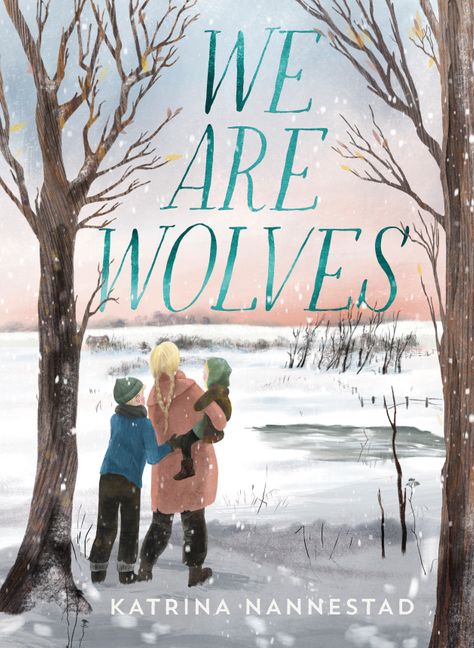
You know I am slightly obsessed with covers - how perfect is this one.  Congratulations to Martina Heiduczek on her beautiful design. Martina also did the cover for We are Wolves which means these two books will look splendid when placed together on your shelves and the published edition will be in hardcover for a really great price. 

Naturally you will want to read We are Wolves by Katrina Nannestad which also explores the experiences of children during a war. I am going to predict we will see Rabbit, Soldier, Angel, Thief short listed for many Australian book awards. Here are some other Katrina Nannestad books I have also read and enjoyed:


Friday, May 7, 2021

Seeker of the Crown by Ruth Lauren


This book is about power. Princess Anastasia wants power and so does her cousin Inessa and they will stop at nothing to rule the two kingdoms. Younger sister Valor, daughter of the adviser to the Queen, saved her sister Sacha in the first instalment and she restored the valuable music box to Lady Olegevna which means peace should be restored between Demidova and Magadansky.  Then Valor overhears a conversation. Prince Anatol, who helped Valor and Sasha escape from the prison called Tyur'ma, is to be banished. Valor knows this is a terrible injustice and she knows who is orchestrating this - it is the evil Princess Anastasia. Queen Ana asks Valor to help. Sasha know she has to rescue Anatol and she will need help from her two best friends - Katia and Feliks. Then Queen Ana is kidnapped and the race is on to rescue the Queen and to save Demidova from certain war. 

Here is the bookseller blurb: One month has passed since Valor broke her twin sister Sasha out of the notorious prison Tyur'ma, but the girl who put her there to begin with--Princess Anastasia--has gone missing. The queen, desperate to find her daughter, asks Valor to track Anastasia down and bring her home. But just as Valor reunites with her loyal band of friends from Tyur'ma to begin the mission, the queen also disappears. If Valor can't restore order to the kingdom, it could mean that her new friends will be sent back to Tyur'ma . . . and her family torn apart. Once again, she will need to rely on people she can't quite trust, as well as her own instincts, to protect the people she holds dear. This thrilling sequel to the buzzy Prisoner of Ice and Snow is just as unputdownable as its predecessor, sweeping readers back into the vivid world of unforgettable protagonist Valor and her home of Demidova.

I loved Prisoner of Ice and Snow by Ruth Lauren - the first instalment in this series so I was excited to return to the world of Valor and her sister Sasha and the icy land of Demidova. Ruth Lauren does take care to recap events from the first book but I think you will enjoy this second instalment more if you take the time to read The Prisoner of Ice and Snow first. I think this series of two books will be thoroughly enjoyed by mature readers aged 10+. I enjoyed the first book more than the second but the world building, political intrigue, heroism, intelligence of Valor and 'girl power' in this kingdom made this a very enjoyable sequel.  Kirkus gave this second book a star review. 

Sunday, November 8, 2020

Blackbird Girls by Anne Blankman


Valentina is a young  Jewish girl living in Pripyat. Even though her family do not follow the traditions of their religion Valentina has experienced terrible bullying at school especially from one girl in her class who also, by chance, lives in the same building. Oksana has been told every day of her life not to trust Jews. Her father who works at the Chernobyl power plant blames Valentina's father for a missed promotion. Neither girl could possibly anticipate that today April 26th, 1986 would be the day of the worst nuclear accident in history.

Here are some text quotes to give you a flavour of this book:

"Outside the air tasted of metal, not the wild roses and cut grass Valentina was used to. No fire should smell like this she thought."

"Every child in Pripyat knew about radiation poisoning. It was a sickness you could catch from working with nuclear power. Thankfully, it was easily cured. All you had to do was drink milk or mineral water and eat plenty of cucumbers, and you'd be well in a day or two."

When I read this I gasped. Oksana's mother has been working on the rooftop garden on the day of the disaster and she has been exposed to the nuclear fall out. Later Oksaya learns her father is now dead. Valentina's father is desperately ill in hospital.  Valentina and her mother manage to visit her him but in doing so her mother is also exposed to dangerous levels of radiation. When they return from the hospital:

"She and mother had each taken a shower, and then Mama had thrown the clothes they had been wearing into the corridor as well. Now she dropped two tablets each into a glass of water. They quickly dissolved. Valentina knew what they were: Papa had bought iodine tables when he's begun working at the power station. Just in case ... "

It is now vital to get the two girls out of the city. The authorities have told everyone to evacuate immediately. But train ticket sales are limited and only two can be bought. Valentina's mother says she will stay behind Valentina and Oksaka must travel to Lenningrad.

The story of Valentina, Oksana and Rita are told through alternating voices. It is 1986 for Valentina and Oksana and 1941 for Rita. Readers need to discover Rita's story from the past because her story set during the war links in unexpected ways with the experiences of the two young girls who now in her care.

Listen to this audio sample from Chapter One.

I didn’t know what to expect from The Blackbird Girls, but Anne Blankman wrote a stunning middle grade novel that brings readers through a whirlwind of emotion. Literary Lizard

Blankman spins a stunningly complex tale out of simple words. Kirkus Star review

Written from multiple perspectives, this book dives into a friendship that evolves over time. One of the reasons that I loved this book so much is that it dealt with themes that are important and valuable. Youth Services book reviews

This story shows that hatred, intolerance, and oppression are no match for the power of true friendship. A Might Girl

Blackbird Girls has been on my "to read" list for a long time. I was waiting for the release of a paperback copy but in the end I decided I just couldn't wait.  When I spied this in a city bookstore with a discounted price I knew it was time to buy this book. Here in Australia the hardcover edition of this book is nearly $30. I do remember the Chernobyl nuclear disaster but beyond some basic facts I guess I had not given much thought to the lives of the Ukrainian people living in the nearby towns such as Pripyat. This book also gave me some idea about life in communist Russia and the constant fear experienced by the people at this time. The final pages of this book also give readers background information about this time in history and also details of Anne Blankman's connection with a Chernobyl child survivor.

I highly recommend The Blackbird Girls BUT I do need to give a warning. This book contains violent episodes of child abuse and so I would say it is suitable for mature readers aged 12 or 13+.

You might also like to look for Letters from Rifka.


I also read this one many years ago:

Tuesday, March 3, 2020

The Republic of Birds by Jessica Miller


Olga feels inferior to her talented sister. Olga knows she is supposed to love the refinements of society including dance but her true preference is for maps and cartography. Her favourite book is Great Names in Tsarish Cartography.  Olga is living in Russia but it is a very different Russia from the one you may know. The country has just come through a long war fighting against the birds. The land is now divided with the birds living in the Republic.

"Before the War in the Skies, before the map of Tsaretsvo was sliced in two and divided into the human Tsardom and the Republic of Birds, birds and humans lived in peace."

The human world is ruled by Tsarina Yekaterina and she has ordered Olga's father to take his family, second wife actress Anastasia, and daughters Olga and Mira to a remote outer region. Her father has instructions to find the famed firebird's egg which has been hidden by a coven of yagas.  Whoever has this egg - human or bird - will have power over the land and the skies.  The yagas are considered extremely dangerous have been banished from Tsaretsvo. Three of them now live in this remote place. These are the yagas who have hidden the egg.

Anastasia is determined that Olga will continue her dance training. She decides to hold a ball as a dress rehearsal for the real event which will be held when the family finally return to Tsaretsvo. It is an outdoor event and as Olga struggles with her dance steps a huge number of birds swoop down and carry her sister, Mira, away.

Olga has a secret - she is a yaga - this means she will be banished but she must save her sister. Her love of maps is not just a coincidence - it is her yaga skill. Olga can feel, see and even travel to places on a map. She knows her sister is being held in the Republic of Birds. To get there she must make this journey alone, on foot, across the uncharted parts of the map called The Unmappable Blank. She carries with her a special memory bag, a feather and a map. Along the way she also has some very welcome help including a house with chicken legs!

Exciting news!  This book became available today! I hope Jessica Miller is smiling a huge smile because this wonderful adventure is sure to be very popular with readers aged 10+. Huge thanks to Beachside Bookshop who gave me an advance copy of this splendid book. Be warned from chapter 11 on wards the action really heats up. I suggest you set aside enough time to read through to the final chapter - 25 in one sitting. I'm sure you will be holding your breath as Olga races through the icy landscape desperate to free her sister and hold on to her own magic skill.

There are some wonderful names in this book which I have mentioned and some truly delicious words especially in the scene where Olga meets two feather traders.


  • infiltrator
  • creepsome
  • preposterousity
  • discombobulated
  • perspicacious


One more thing.  There is an underlying political tone to this story which I really enjoyed.  Olga has to find the firebird's egg but is this wise?

"Even if I could find the firebird's egg, what would happen if I bought it to Ptashka (ruler of the birds)? With a firebird on her side, would she start another war? And then, I'm aware of a creeping voice at the back of my head: with the firebird on their side, would my father and the Tsarina do any different?"

I would pair this book with The Wolf Wilder by Katherine Rundell and Prisoner of Ice and Snow by Ruth Lauren and if you enjoy stories involving maps, journeys and survival I also highly recommend The Mapmakers' Race by Eirlys Hunter.


Sunday, January 5, 2020

The Dogs of Winter by Bobbie Pyron


"After the fall of the Soviet Union in 1991, the social and economic fabric of Russia was left in tatters. Gone were the government controlled systems such as health care, rent control and pensions that had provided a safety net of families, children, the elderly and those living on the edge of economic stability." Authors Notes page 304

Ivan has a happy life with his mother and grandmother but after his beloved Babushka Ina dies everything changes. His mother gets involved with a violent man and little Mishka, as his mother calls him, is banished, starved and bashed. Mishka's mother disappears and the bad man takes him to the city and abandons him.

Life on the streets is utterly dreadful. The violence, the hunger, the filth. The writing in this book is so vivid I felt every pang of hunger, every bruise and every angry word. I also felt great relief when Mishka experiences a little kindness and when he is given clothes and shoes. Finally Mishka finds a small pack of dogs. He notices the dogs share the food they find in the trash. He earns their trust and by working together Mishka and his band of dogs survive for 2 years through bitter winter cold, rain and constant danger. His relationship with this pack of dogs is truly special.

The Dogs of Winter is based on a true story. At times this is a harrowing story and so I would suggest it is for ages 11+. In this video Bobbie Pyron talks about her book.

You can read more about the background to this story in this article from The Adelaide Advertiser. Eva Hornung has also written about Ivan in her book Dog Boy.


This morning I thought I would just dip into this book which I borrowed from a school library. I lifted my head and realised I had devoured 85 pages. Late today I finished the whole book!

You can read a generous extract at Booktopia. The Dogs of Winter was published in 2012 by Scholastic. It is still in print. The second cover above is from the UK edition published by Andersen Press.

Read some reviews for more plot details:

The Bookbag
Kirkus Star Review
Ms Yingling Reads - I am so happy Karen loved this book too! She says: "I felt cold and could practically feel my scalp itch when Mishka had a lice infested hat! Without ever lapsing in to oversentimentality, Pyron describes the privations of life on the streets and the love that the dogs and Mishka feel for each other."

Further reading for children interested in this topic - this book is out of print but it might be in a school library.


Tuesday, November 8, 2016

The Wolf Wilder by Katherine Rundell illustrated by Gelrev Ongbico

Feo shook her head: she couldn't speak.  The moments in which the world turns suddenly kind 
can feel like a punctured lung.  She stood in the marble hall and cried ...


We can take our fear back.  And I don't know if we'll win but we have the right to try.  
The adults, they want us to be quiet and careful, 
but we have a right to fight for the world we want to live in, 
and nobody has the right to tell use to be safe and sensible. I say, today, we fight!


The Wolf Wilder is one of those absolutely delicious books that is a true a feast for the reader.  This is also one of those books that I read late into the night, picked up over breakfast and raced home to finish.  This is a ten out of ten book.  You should rush out and grab a copy today.

This is the third book I have read by Katherine Rundell and I am now a confirmed fan of her work. Her writing gives a strong sense of place and you will fall in love with her central characters especially Feo or Feodora in this book.

Wolf Wilder is set in Russia.  A cruel General called Rakov is the commander of the Tsar's Imperial Army. He set to claim money for an elk owned by the Tsar and recently killed by wolves.

At this time in Russia wolves are taken as pets for the aristocrats.

"The captured wolves wear golden chains and are taught to sit still while people around them laugh and drink ... But a wolf cannot be tamed in the way a dog can be tamed, and it cannot be kept indoors."

Fedora and her mother are wilders.  It is their job to take rejected wolves, 'untame' them, teach them to survive in the wild. Feo has spent her whole life surrounded by wolves living with her mother in a remote cottage. Rakov arrives and he destroys everything.  Marina is taken to a prison in St Petersburg.  Feo is now on the run with three of her special wolves and a wolf pup.  It is cold and dangerous but she does enlist some loyal companions and you can be sure good will triumph over evil.

"We don't give them human names ... Wolves have their own names. They don't need ours.  So we call them by a colour, or description - like Tenderfoot."


The illustrations are a special feature of this book.  You can read more about their creation here.  You can hear Katherine Rundell reading from the beginning of her book.  You should also read this interview with Katherine about the inspiration for this book.  Here is the Kirkus review.


Here are some of the other covers.  Which one do you like?


I also love these descriptions of cold  :

"There were, in Feo's experience, five kids of cold.  There was wind cold, which Feo barely felt. ...There was snow cold, which plucked at your arms and chapped your lips ... it was Feo's favourite weather and good for making snow wolves. There was ice cold, which might take the skin off your palm ... Then there was hard cold. ... Hard cold could be cruel ... And there was blind cold. Blind cold smelt of metal and granite.  It took all the senses out of your brain ... "