Saturday, March 8, 2025

Celebrating Two Million pageviews


Yesterday was World Book Day - a celebration in the UK and on that day my little blog, which began in 2008, tipped over to 2 million pageviews! To celebrate I visited a bookshop and picked up even more books for my huge 'to read' pile. I imagine you are not surprised that I went book shopping!


March Reading pile:

Bravepaw and the Clawstone of Rotwood Mire by L.M. Wilkinson

I gave the first installment of this series five stars and I was absolutely certain Bravepaw would be a CBCA Notable Younger Readers title for 2025 but alas that didn't happen.

Publisher blurb for book two: Titch and Huckleberry are on an epic quest. They have followed their hearts ... right into the path of a terrifying swamp monster, and a village full of brainwashed squirrels! Maybe their hearts aren't to be trusted? Maybe Titch is just an ordinary little mouse and not Bravepaw after all ...? But Bravepaw or not, Titch is not about to give up. Can she defeat the greedy turtle controlling the squirrels, and discover what his glowing green gem has to do with the legend of Bravepaw and her quest to save Alluria?


Small Acts by Kate Gordon and Kate Foster

This book has been listed as a CBCA Younger Readers Notable title for 2025. I have had it on my shopping list for a while. I really like the cover. Kate Gordon won our IBBY Ena Noel award for new writers in 2016. Her book The Letterbox Tree has just been selected for the USBBY Outstanding International Books list.

Publisher blurb: Josh wants a friend but he doesn’t know how to find somewhere to belong … Ollie wants to express herself but doesn’t want to be noticed … Small Acts introduces two kids with great hearts who know that helping others can start with one small act of kindness. Josh has a plan to start with just that. So does Ollie. What Josh and Ollie don’t know yet is that they need each other to make their plans work.


Oscar's Lion by Adam Brown illustrated by Benji Davies

I am a huge fan of illustrator Benji Davies which is why I picked this book up in a bookstore last week. 

Publisher blurb: Oscar is a little terrified to find that a lion is going to be looking after him for the weekend. But when the lion lets him eat as many biscuits as he wants, and reads him his favourite story ten times, Oscar realises he might be on to something good. Soon, Oscar discovers that the lion can change into different animals and the pair find themselves having all kinds of adventures! But before the lion has to go, might he have one more amazing transformation up his sleeve?

Dragonkeeper by Carole Wilkinson

I won the movie tie-in of this book. I did previously read Dragonkeeper when it was first published.

Blurb from author page: Ancient China, Han Dynasty. A slave girl saves the life of an ageing dragon and escapes her brutal master. Pursued by a ruthless dragon hunter, the girl and the dragon make an epic journey across China carrying a mysterious stone that must be protected. This is the story of a young slave girl who believes she is not worthy of a name but finds within herself the strength and courage to make this perilous journey — and do what must be done.


Jed Greenleaf by Kieran Larwood illustrated by David Wyatt

Thanks to a local bookseller - Three Sparrows - for alerting me to this new book by Kieran Larwood. I am a huge fan of his Podkin One-ear series.

Publisher blurb: Albion city is governed by a puppet queen, secretly controlled by Lord Cromwell, and strange magic is afoot as six Guilds all compete to rule it. Although the Leaf Guild is the weakest, no one has reckoned with newcomer Jed Greenleaf’s extraordinary ability to transform into a half-tree, covered over with bark . . . he just needs to learn how to harness that power. Could he be the hero that the Guild needs to win at the Punchbowl tournament? It just might be that this year Jed can turn over a new leaf in the history books, and bring glory to the decaying Guild and peace to Albion . . .


How to sail to Somewhere by Ashleigh Barton

Ashleigh Barton talked about her newest book at the NSW CBCA Night of the Notables. Ashleigh read the first chapter of her book and the large audience were captivated.  I previously read several of her books - pop her name in my side bar.

Here is the blurb: Beatrice Glass - Bea - lives in a tiny fishing village that's sleepy all year until the summertime, when the tourists flock in and most of the locals leave. But summer is also when Bea's favourite person in the entire world, her fun and hilarious uncle, Byron, comes to stay. On their last day together the previous summer, Byron had given Bea an intriguing antique book containing a map of Somewhere, a mysterious island off the coast, and promised that next summer they'd sail to Somewhere together for their best adventure yet. That was last year. Now summer has arrived, but Byron hasn't. And now it looks like he never will.

Something like Home by Andrea Beatriz Arango

I've had this verse novel on my shopping list for a while. I adore verse novels and this book has several star reviews.

Author blurb: Laura Rodríguez Colón has a plan: no matter what the grown-ups say, she will live with her parents again. Can you blame her? It’s tough to make friends as the new kid at school. And while staying at her aunt’s house is okay, it just isn’t the same as being in her own space. So when Laura finds a puppy, it seems like fate. If she can train the puppy to become a therapy dog, then maybe she’ll be allowed to visit her parents. Maybe the dog will help them get better and things will finally go back to the way they should be. After all, how do you explain to others that you’re technically a foster kid, even though you live with your aunt? And most importantly . . . how do you explain that you’re not where you belong, and you just want to go home?


Just under the clouds by Melissa Sarno

I am collecting books to share at a library conference later this year. I need titles that bridge upper primary grades through to lower high school.

Blurb: To climb a tree, always think in threes and you'll never fall. "Two feet, one hand. Two hands, one foot," Cora's father told her when she was a little girl. Now Cora is in middle school, her father is gone, her family is homeless, and Cora has to look after her younger sister, Adare, who needs a lot of looking after. When their room at the shelter is ransacked, Cora's mother brings them to an old friend's apartment, and Cora hopes this will be a place she can finally call home. When doubt seeps in, Cora makes an escape of her own and discovers something that will change how she sees her family and her place within it.


Our Sister Again by Sophie Cameron

As I mentioned I am collecting books for a presentation to a group of Teacher-Librarians. Part of my focus will be on books from other countries where they speak English - we are so lucky to be able to read the best books from Canada, UK, USA and New Zealand. This book comes from the UK.

Bookseller blurb: On a small island off the Scottish coast, Isla and her family are grieving the loss of her older sister Flora, who died three years ago. Then they're offered the chance to be part of a top-secret trial, which revives loved ones as fully lifelike AI robots using their digital footprint. Isla has her doubts about Second Chances, but they evaporate the moment the 'new' Flora arrives. This girl is not some uncanny close likeness; she is Flora - a perfect replica. But not everyone on their island feels the same. And as the threats to Flora mount, she grows distant and more secretive. Will Isla be able to protect the new Flora and bring the community back together?

Giraffe Island by Sofia Chanfreau and Amanda Chanfreau translated by Julia Marshall

I am always on the hunt for books that have been translated into English and Gecko Press always deliver fabulous titles. This is a book from Finland. I picked this up at Three Sparrows. 

Gecko Press blurb: Far away in the middle of the sea there is an island shaped like a giraffe. Nine-year-old Vega lives there with her father and grandfather—a gardener and former ringmaster. Their shed—the Paraphenalium—is filled with every possible thing you didn’t know you needed. Vega’s bathroom is home to a gray bear with shampoo-lathered fur, and every day she talks with the asphalt beaver and crosswalk zebra on the way to school. Her best friend is Nelson, who observes things others don’t notice and keeps a notebook of mysteries and facts. Vega and Nelson set out to save Vega’s father and find her mother in a search that leads them to a unique circus and unexpected answers.
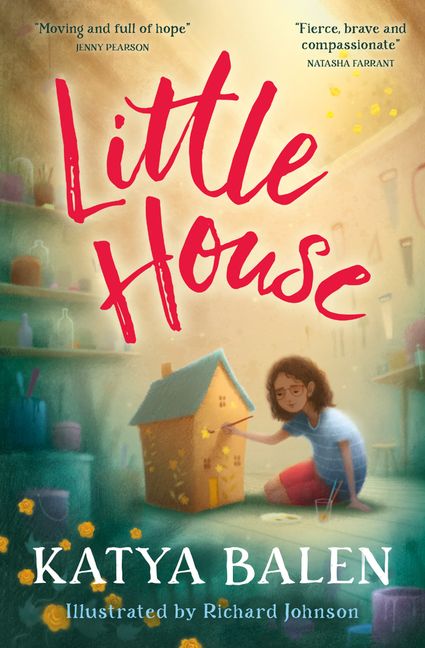


Stitched up by Steve Cole and Little House by Katya Balen

These are both from the Barrington Stoke book series. They have titles for very young readers right up to books like these for readers aged 10+ (Little House) and 12+ (Stitched up).

Stitched up blurb: When twelve-year-old Hanh is offered a job as a shop assistant in Hanoi, she sees it as a chance to earn money to send back to her family living in poverty in rural Vietnam. But on her arrival in the city, she soon learns that the job offer was a lie and finds herself working in virtual slavery in an illegal garment factory. Life in this sweatshop is a daily hell of long hours, little rest, poor food and regular violence. Hanh is desperate to escape, but when an opportunity arises will she be able to find the courage to take a dangerous chance?

Little House blurb: Juno’s furious about being sent to stay with her grandfather for the summer. She’ll miss all the fun she and her friends had planned for the holidays. She’ll also miss her mum, but it’s her mum’s fault for leaving anyway. Then Juno discovers a long-forgotten little family in her grandfather’s attic. As she works to carefully craft a new home for them, can she learn to forgive her mum and understand her reasons for going away?


A House in the Woods by Inga Moore


Two little pigs build their houses in the woods. Sadly, after a day of exploring, they return to find Bear has moved into one house and it is wrecked and Moose has moved into the other house and that one is wrecked too. This all means the two pigs and Bear and Moose have nowhere to live. Then Moose suggests they could work together and build one big and perfect house for all of them. Well yes they could attempt this project but really they need some experts 

"so Moose called the Beavers on the telephone ... "

The Beavers are happy to help but in exchange they want peanut butter sandwiches. This is agreed and so the construction begins. 

"and by tea time the roof was on. (The lunch and tea times were on different days of course. Beavers are fast, but not that fast.)"

The sweet happy ending and those six plates of peanut butter sandwiches make this a perfect book to read aloud to your preschool or Kindergarten group.

Betsy Bird says: Now I have read A House in the Woods by Inga Moore and I can already tell you that twenty or thirty or forty years from now a man or woman will be asked what their favorite picture book was as a child and they will describe the images here. Maybe they won’t remember the exact title. Maybe they’ll blank on the author’s name. But what they won’t forget is the feeling of perfect contentment and peace brought about through Moore’s combination of image and text. This is the picture book equivalent of a warm, soothing bubble bath.

When you open this book make sure you take time to linger over the end papers. And if uou read the review by Betsy Bird you will be alerted to look for some other tiny details. 

A House in the Woods is an old book and of course it is sadly now out of print but you might be lucky and find a copy in a library. A House in the Woods is a NSW Premier's Reading Challenge book K-2 [24439].

Companion books:


Decades ago I saw my first book illustrated by Inga Moore and I fell in love with her art style.


In my former libraries I had copies of Aktil's Big Swim and Aktil's Bicycle Ride. Other books illustrated by Inga Moore are:


Here is a full list of books illustrated and written by Inga Moore:

  • Aktil's Big Swim (Oxford University Press, 1980)
  • Aktil's Rescue (Oxford University Press, 1982)
  • The Vegetable Thieves (Andersen Press Ltd, 1983; Viking Press, 1984, ISBN 9780670743803)
  • A Big Day for Little Jack (1984)
  • The Truffle Hunter (Andersen Press Ltd, 1985)
  • Fifty Red Night-caps (Walker, 1988, ISBN 9780744517835)
  • Rose and the Nightingale (London: Andersen Press, 1988)
  • The Sorcerer’s Apprentice (Prentice Hall, 1989)
  • Six-Dinner Sid (Simon & Schuster, 1990, ISBN 9780750003049)
  • Oh, Little Jack (1992)
  • The Little Apple Tree (1994)
  • Six Dinner Sid: A Highland Adventure (2010)
  • A House in the Woods (Candlewick Press, 2011)
  • Captain Cat (Walker Books, 2012, ISBN 9781406337303)
  • Moose's Book Bus (Candlewick Press, 2021)

You might also look for her editions of Wind in the Willows; The Secret Garden; Anne of Green Gables and The Reluctant Dragon. For a short time Inga Moore lived in Australia but she now lives in the UK. 

Friday, March 7, 2025

It's my Rubber Band by Shinsuke Yoshitake


A young child finds a rubber band (or as we call it here in Australia an elastic band). 

"Yay! I have a rubber band. This is MY rubber band! ... And I can do anything I want with it. Isn't that great? This rubber band is just for ME and not for anyone else!"


The little girl imagines all the fun she can have with this special object - it might be a useful fashion accessory; or it could secure all the love letters she receives; or it could catch all the bad people; defend earth from aliens; it can be used as a sling for a broken arm; or for exercise; and it might even be useful as a way travel far away and then play with all the animals of the world. But do rubber bands last forever?


Bookseller blurb: Have you ever wanted something that was just yours? Not someone else's hand-me-down... Not something that you had to share... Not something that you could only borrow for a little while... Something that was yours and yours alone to play with, to dream about, and more... It's My Rubber Band explores how a cherished everyday object can become a catalyst for curiosity, play and a profound sense of connection. With a special object of one's very own, the possibilities are as limitless as the imagination!

A message to savor, delivered with a light touch and contagious glee. Kirkus Star review

I smiled through every page of this book and then laughed at loud with the terrific twist on the final page. The retail price of this book is AUS$30 but I found an online seller here in Australia with a better price. When I first read this book, I thought it might be fun to give each child in the library an elastic band but then I thought about the safety issues if the young children decided to try using the band as a catapult or to flick around the library so I guess this might not be a good idea. Putting these concerns aside, I do think this book would be a good addition to your school library because it is such a joyous celebration of imagination and finding delight in small things. 

In the US this book has a slightly different title.


Check out my previous post about Shinsuke Yoshitake.


Thursday, March 6, 2025

Worms are our Friends by Toni D'Allia illustrated by Mimi Purnell


Worms are our friends contains a 'jolly' (mostly successful) rhyming text and delightful, flower-filled illustrations. The final lines of the book echo the opening words and round the text off in a satisfying way.

Down in the garden
just under the ground
a small wriggly worm
is crawling around.

The small wriggly worm
eats old garden waste.
It chomps on dead leaves
it just loves the taste!

Worms are our Friends is a CBCA 2025 Notable in the Early Childhood category which is for readers aged 0-6. This is most certainly a preschool book and so it fits right into that category but it could also have been listed in the Eve Pownall Non-Fiction section too. The library where I borrowed this book have shelved it in non-fiction. I agree with this decision because the final page is a summary worm facts. So, if you go into a library take a look at [592.3] this is where you will find other books about worms.  I often talk about mini themes and worms would be such a fun topic for your preschool group.


My friend from Kinderbookswitheverything has several blog posts about worms: 15th October Worm Day; 21st October World Earthworm Day and here is her Pinterest collection with books about worms.

With a group of older students I would also look at this utterly exquisite book:


Worms are our Friends is the companion volume to:


Marilyn Baillie Canadian Picture Book Award


Spork 2011 finalist; The Man with the Violin 2014 finalist; Footpath Flowers 2016 finalist;
In a Cloud of Dust 2016 finalist; My Beautiful birds 2018 finalist.

I am sure you recognise some or perhaps all of these.

The Marilyn Baillie Picture Book Award, established in 2006, honours excellence in the illustrated picture book format. The prize is awarded annually and in 2008, the cash prize was increased from $10,000 to $20,000. To be eligible, the book must be an original work in English, aimed at children ages three to eight, written and illustrated by Canadians. Eligible genres include fiction, non-fiction and poetry.

Scroll down through this page to see past winners. I recently talked about Our Pool. 


Wednesday, March 5, 2025

Moonboy by Anna Ciddor


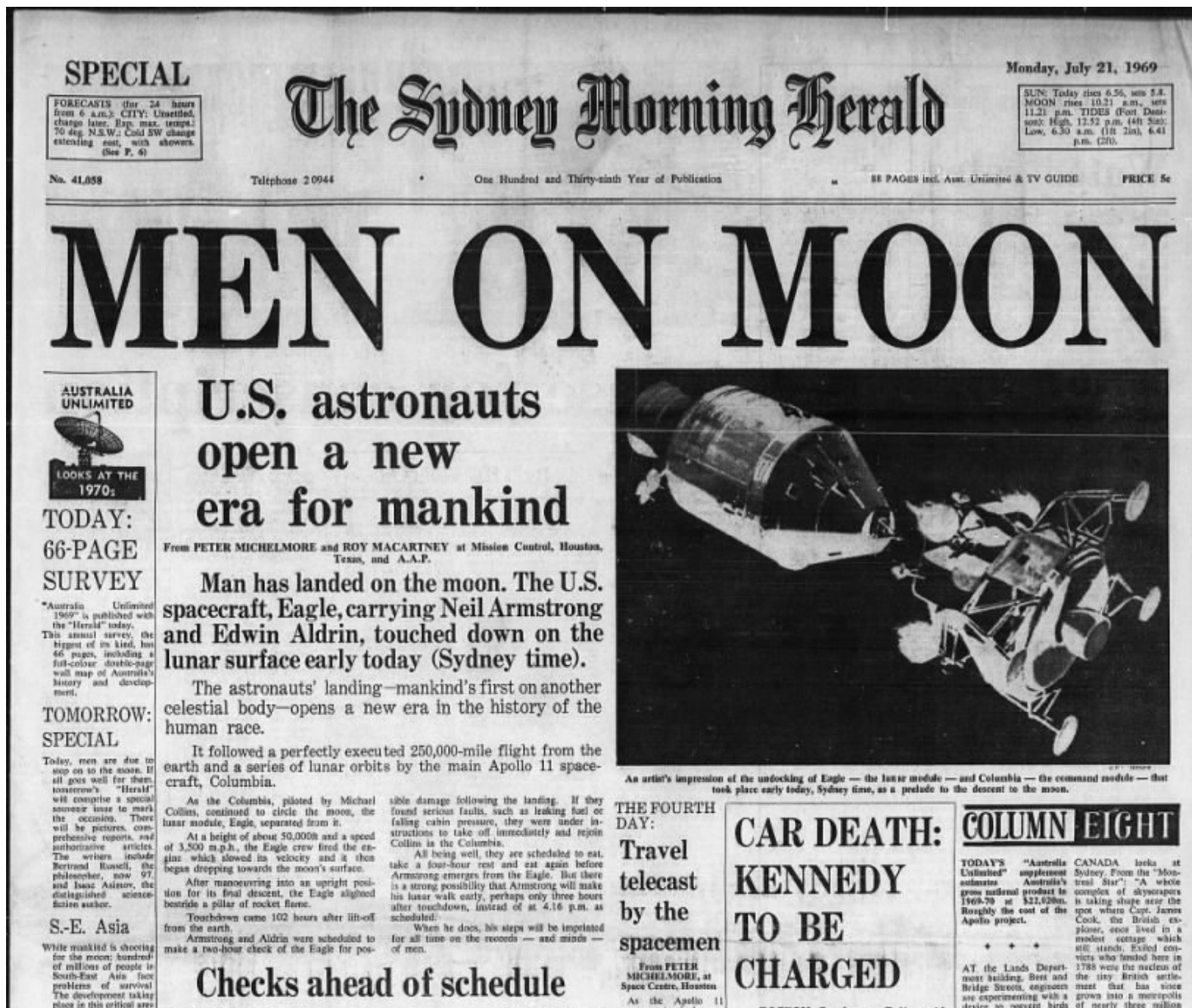
“That’s one small step for man, one giant leap for mankind.”

I was almost the same age as the boy in this story, Keith Arthur Watson, who is living in Australia in 1969. What happened in 1969? The moon landing. I well remember there were all sorts of newspaper booklets to collect and I also vividly remember sitting in a crowded classroom and peering at a small television screen to watch those steps on the moon.

Moonboy is a timeslip story. Charlotte is staying with her grandmother. Her dad tells her to look inside a box in her room. When she opens the box she finds newspaper clippings from 1969 all about the Apollo moon landing and also some other things that belonged to Keith, her grandfather, when he was a boy. A big of marbles, some footy swap cards and an old footy sweater. This sweater is very significant because it is the conduit that takes Charlotte from 2025 back to 1969 and straight into ten-year-old Keith's bedroom and life. 

Sadly, in 2025, Keith (Charlotte's grandfather) is suffering from dementia. He seems to be unable to speak or recognise his wife or granddaughter. But then Charlotte takes some of the newspaper clippings to his aged care home and for a moment or two he seems to 'come back to life'. 

This book covers time from about 9th July to 25th July 1969 and 2025. Keith and Charlotte will both have a birthday on 23rd July. Gran wants it to be special but she also wants to hold it in the Aged Care Home. At first Charlotte finds the state of many of the elderly people quite confronting and upsetting but over the two weeks of her daily visits she comes to see each person as an individual and so her eventual 'moon landing themed' birthday party in the lounge room of Diamond House is, to her surprise, a very happy event. 

Here is a video of the television broadcast watched by Keith in 1969 and again by Charlotte in the aged care home with her grandfather in 2025. 


My only tiny quibble with this story comes from the way Charlotte knows nothing about the moon landing - that's okay - but I kept wondering why she didn't try to research these events either in her school library or on Google. She is filled with worries about every tiny aspect of this momentous event - will they reach the moon; will the astronauts actually walk there; will they get home safely; and worst of all what if Keith's sister Gwen wrecks everything because she has gone to help her aunt at uncle at Honeysuckle Creek. This true aspect of the Australian connection to the moon landing is explained at the back of the book. It's quite a fascinating side story. I was also a little concerned with the way Charlotte was able to change history. She stops Keith setting off some dangerous fireworks and so his fingers are not damaged and yet the grandfather she has always known did have missing fingers and now his hands are fine.

I did enjoy Keith's colloquial sayings: crikey; how the blazes; are you a few crumbs short of a sandwich; strike a light; ridgy didge; holy moly; fair dinkum; and stone the crows.

When Charlotte travels back to Keith's Grade six classroom she writes a terrific poem about the moon landing. Sadly the teacher rejects it because it doesn't rhyme - even in 1969 I hope this would not be the reaction of a teacher. I really like her poem:

I can't believe it!
We've landed on the moon!
Through the window
I can see grey dust
And craters
I can't belive it!
My fee
Will be the first
To ever touch the moon!
Open the door,
I'm ready
Here I come!

This book could be a jumping off point for kids to research more about the moon landing and especially the involvement of Australia. Behind the News could be a good starting point. If you are using this book with a class you could investigate a KidsNews free subscription. The BBC also have some good resources. 

Sensitive readers may find Charlotte's reactions to the elderly people in the aged care home a little confronting. I related to this because my precious little Nan was in an aged care home when I was about the same age as Charlotte. More recently I watched young children visiting elderly relatives in a care home where my mother sadly spent her final years. I suggest you could look for Newpaper Hats which is a picture book by Phil Cummings as a way to talk about the effects of dementia and memory loss. 

Here is a video review from Kid Lit Joy. Anna Ciddor has some background photos that link with this story on her webpage. You could make use of these in a book talk with your library group. Read the blurb and review page from Lamont Books.

Anna Ciddor’s story explores history and family in delicate and emotional ways in this book, getting to the heart of Letty’s relationship with her grandfather, what he means to her and what knowing her in the past meant to him as well. The Book Muse

Thank you to Allen and Unwin for sending me a review copy. Moonboy was released yesterday. 

Companion book:


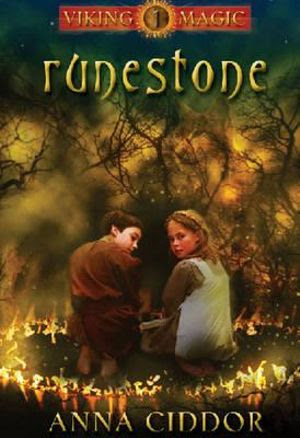
Here are some other books by Anna Ciddor. I especially loved one of her very early book - Runestone.


Children's Book Council of Australia (CBCA) 2025 Notables part two


Image used with thanks from Telarah Public School Library


I have already talked about the picture book notables (PB and EC). Now I will turn my attention to the Younger Readers Notables.

8.2 Judging criteria for CBCA Book of the Year: Younger Readers 
Entries in this category are books published for children in the age range from 7 to 12 years (lower to 
upper primary school level). Books in the category may be fiction, drama, graphic novels, illustrated text or poetry. 

As with my previous post here are the books that did not 'make the cut'. I am so disappointed about all of these - in fact several I am sharing here I had predicted (click this link to find my posts about all of these) would be short listed. 


I was hoping to see all of these as Notable and even on the short list for Younger Readers. I especially hoped to see the two junior novels - Bravepaw (the sequel has just been released) and Leo and Ralph. In my view A small collection of Happiness had a good chance of being an honour book. I am still shaking my head that these seven truly special books were all overlooked. And of course I am sure everyone was very surprised that All the Beautiful things was not included. 

Take a look at the main judging criteria:

The Judges assess entries primarily for: 
1. Literary merit – i.e. aesthetic qualities of language, language appropriate to the style of the work, plausible character development (where appropriate), etc. 
2. Content and cohesiveness – plot, language, theme, style, etc. 
3. Appeal to the implied readership 
4. Quality – illustrations, format, production, editing 
5. Craft and originality in the treatment of literary elements

Think about this CBCA definition from their awards document glossary:
LITERARY MERIT A term that describes the literary value in relation to the quality of writing 
and its suitability for the age of the intended readership. 

Here are the expanded criteria.  When I was a judge (2021-23 PB) I put these into a table so I could 'grade' each book.

Literary elements 
• Language: The aesthetic qualities of the language are appropriate and evocative of place, character and mood. The language exhibits breadth and variety of vocabulary and precision. Sentence construction is used in a natural and creative manner to reveal purpose and attitude. Where rhythm and rhyme are used it is accomplished and effective. 
• Illustration: Where relevant, design, graphics or illustrations should be integrated and support and extend the narrative or topic. The medium should be appropriate to the subject and style of the work. There is a consistent quality of graphic elements that can provide a stimulating and satisfying visual experience. 
• Characterisation: There are strong main and minor characters, who interact with each other convincingly. The author creates authentic and engaging characters who advance the narrative through appropriate dialogue and/or action.   
• Setting: The setting effectively contributes to the storyline. The sense of place and time is very strong and maintained throughout the story. Where appropriate there is a synergy between text and visual elements in the creation of setting. 
• Plot: The plot is well constructed. The main events are presented effectively and are consistent with the story. The resolution is credible. 
• Theme: Ideas and messages within the narrative are skilfully presented and crafted. The reader can recognise the themes or develop a fresh perspective 
• Mood: The writer and/or illustrator have created an atmosphere/mood that enhances the narrative.   
• Source Material: Where applicable, if source material used, these are accurate to the 
current state of knowledge and are appropriate in their use of cultural material. 

Design elements: The elements of design are cohesive and add to the overall sense of quality and age appropriateness in regard to: 
• Font/text 
• Colour palette 
• Paper stock 
• Format  
• Consistency of internal design  
• Cover design is appealing and relevant to the story   

Age appropriateness: The story is written in a way that would engage 7–12-year-olds. (or a sub-age 
group within) Light introduction of mature topics might be explored and may give the readers the 
opportunity to be challenged. The writing is engaging, stimulating and extends the reader’s 
experience and/or imagination. It also may help the reader understand more about themselves and 
the world. 

Production Values: 
• Editing: The editing is professional, with conventions of spelling and grammar upheld. Typography is integral and not intrusive. If included, tables, diagrams and graphs are clear.

Twenty-five books are on the Younger Readers Notable list, but this number is just the maximum according to the CBCA rules - the judges could easily have listed fewer.

The 2025 CBCA Book of the Year Awards Younger Readers Notables are…

Aggie Flea Steals the Show by Tania Ingram, illustrated by Anne Yi (Scholastic Australia)
Countdown to Yesterday by Shirley Marr (Penguin Random House Australia)
Ella and the Amazing Frog Orchestra by Cassy Polimeni, illustrated by Hykie Breeze (UWA Publishing)
Fluff: Mess Up! by Matt Stanton, illustrated by Matt Stanton (ABC Books)
Hello Twigs, Look Who’s Grumpy by Andrew McDonald, illustrated by Ben Wood (Hardie Grant)
Jy Goes for Gold by Carl Merrison & Hakea Hustler Samantha Campbell (HarperCollins AU)
Landovel by Emily Rodda (A&U Books for Children and Young Adults)
Ming and Ada Spark the Digital Age by Jackie French (HarperCollins AU)
Oscar vs the Grand Old Dude Named York by Ross Curnow (Walker Books Australia)
Real Pigeons Power Up by Andrew McDonald, illustrated by Ben Wood (Hardie Grant)
Saskia Spark-Lee:by Rebecka Sharpe Shelberg, illustrated by Sofya Karmazina (Walker Books Aus)
Shower Land 1: Break the Curse by Nat Amoore, illustrated by James Hart (Penguin Random House)
Small Acts by Kate Gordon & Kate Foster (Walker Books Australia)
Tigg and the Bandicoot Bushranger by Jackie French (HarperCollins AU)
To and Fro by Anton Clifford-Motopi (A&U Books for Children and Young Adults) My comments
Twinning BFF’s (NOT) by Alexa Moses, illustrated by Sofya Karmazina (Scholastic Australia)
Worst Week Ever Saturday by Eva Amores, illustrated by Matt Cosgrove (Scholastic Australia)

I still plan to read over the coming weeks, when I can find them in a library, Small Acts by Kate Gordon and Kate Foster and Countdown to Yesterday by Shirley Marr. I also hope to find Tigg and the Bandicoot Bushranger - Jackie French is very skilled with Historical fiction and I do enjoy Bushranger stories. 


Taking a close look at the Younger Readers Notables I think they can be divided into several groups and I am going to argue here that one of these groups has titles that do not fit the CBCA criteria when you view this as a National Award for literary excellence. Here the titles that I call 'pop' titles and to my eye I cannot see how they are exemplars of literary merit. All of these are sure to be popular in school libraries and I would be very happy to see them being read and enjoyed but I struggle to see how they fit into our CBCA National Award. I am very happy to be proved wrong. 


This page lists all the reviews in the CBCA Journal Reading Time. Here are some other reviews of titles from Younger Readers - I am going to run out of time to read these so I might have to settle with reading a review, for now anyway:


Landovel by Emily Rodda Just So Stories Also here is the review from Readings Melbourne. (944 pages - three book set)