Showing posts sorted by relevance for query soyeon kim. Sort by date Show all posts

Sunday, February 21, 2021

Wild ideas: Let nature inspire your thinking by Elin Kelsey illustrated by Soyeon Kim


... pure magic Quill and Quire

This is a work that will be read and examined again and again, with something new to be discovered at every turn.  Profound and entirely wonderful. Kirkus Star review


Animals, like humans, are ingenious problem solvers. Orangutans weave safe places to rest; Chimpanzees fold leaves to spoon "cool drinks of water"; Humpback whales blow bubbles to "trap tasty fish"; and Ravens use gestures to offer ideas.  I said humans are problem solvers but after reading this book I am certain we all need to observe the natural world more closely because there are important things we need to learn. Take a look here to discover some of the creative ways animals solve problems. There are a wealth of things to explore from this link.

The paperback edition of Wild Ideas has a different cover (I wonder why) but at least, as a paperback, it has a lower cost so if your school library has a limited budget you will be able to add this important title to your collection. I strongly recommend you consider doing this. Here is a detailed lesson plan to use with this book.


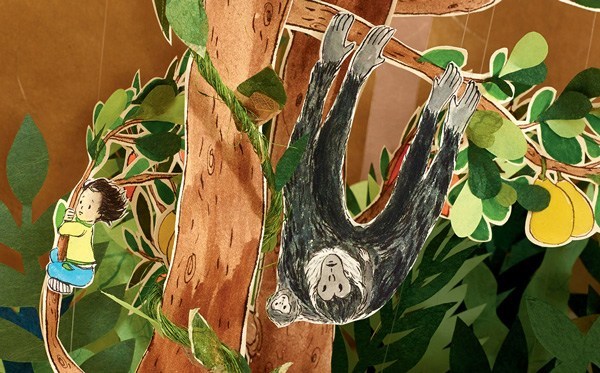
My friend from Kinderbookswitheverything has just introduced me to the art of Soyeon Kim. It is utterly wonderful. Soyeon Kim was born in Korea and now lives in Toronto, Canada. I have said this many times but Canadian publishers really do produce some wonderful books. You probably know how much I adore Shelter by Celine Claire illustrated by Qin Leng. Take a look here to see in very fine detail exactly how Soyeon Kim creates her dioramas inside boxes. 

Next month this book will be published it might be a good comparison text to use with Wild Ideas:


Elin Kelsey says:  Soyeon’s dioramas are filled with artistry, feelings, an imagination. She captures the excitement and beauty of what it feels like to have a great idea.  I have added some other books illustrated by Soyeon Kim to my to read list:


Here is another book by science educator Elin Kelsey. In this podcast she talks about her work.

Thursday, April 1, 2021

A Last Goodbye by Elin Kelsey illustrated by Soyeon Kim

 "After you die, friends and family will gather. Some will travel long distances and stay for many hours. Others will place wreaths or drape you in a blanket of forest green."


The Last Goodbye is one book in a series by elin Kelsey illustrated by Soyeon Kim. The library I visit each week has all of these books and all of them should be added to your school library. In a previous post I talked about Wild Ideas. 

A Last Goodbye is, as the title implies, a book about the end of life. In this case the end of life for various animals such as the elephant, killer whale and chimpanzee.  As we saw with Fox: A circle of life story, A Last Goodbye is a cycle of life story. 

Blurb: "From the treetops of Madagascar to the vast waters of the Pacific Ocean, species all over the planet express grief and care for each other at the end of life. For some, the last goodbye is loud and communal. For others, death is marked by small offers and quiet observation."

Take a look at this web site from the Canadian publisher Owl Kids. You can see the art processes used by Soyeon Kim, read about the topic of death and grief and how to approach this with a child and also find some teacher notes for A Last Goodbye. I am not sure I would use this book with a whole class but used quietly in a family this book could help open up some important conversations. This is not a book to read immediately after the death of a loved one but rather it is book you might read alongside other books about animals hopefully months or even years before your young reading companion has to face the sadness of death in their own family or wider circle. This book is about a tough topic but it is handled with care and a light but truthful touch. Please take the time to watch this four minute video about the importance of talking to children about grief well before they need to process these difficult emotions. This is a very special book. Kirkus (see above) said "staggering".

The discussion topics in this guide are written to allow for broad conversation of loss and grief with all students. Loss can refer to the death of a loved one, as depicted in the book; yet we all experience many different kinds of change and loss throughout life. Examples of loss can include moving to a new home, leaving your classroom at the end of the year or a friend moving away. The discussions in this book are meant to foster social-emotional learning, including skills such as identifying emotions, coping with emotions, and empathy. From the teacher notes.

I was please to see the name Mary Beth Leatherdale associated with this book. I met Mary Beth in the US a couple of years ago at the USBBY conference in Austin Texas. We were both invited to speak at the Texas Book Festival about publishing trends in our respective countries.

Monday, June 19, 2023

You are Never Alone by Elin Kelsey illustrated by Soyeon Kim


"Your imagination smiles when you climb a tree."

"Every moment this beautiful planet showers you with gifts. Clouds contain fresh water to quench your thirst. Your lungs swell with oxygen that plants create. Earthworms, ground beetles, and ants plow the soil where your vegetables grow. Nature touches every bite you eat."

Every page in this book could be used for a science or writing lesson (the word choices and deeper meanings conveyed through deceptively simple sentences would make a wonderful study topic with an older group of students). There are so many ideas in the text quote above and that is just the text from the first four pages of this book. Think about the water cycle, life cycles, plant respiration, soil micro-organisms, bees, whales, bacteria, weather patterns, sunlight and shade, digestion, simbiotic relationships such as bacteria on our skin and so much more. It is not surprising that Elin Kelsey has a science PhD. 


There are two videos and teachers notes on the publisher (Owl Kids) web page.

Publisher blurb: Drawing examples from the clouds and the cosmos, the seafloor and the surface of our skin, it explores how we are always surrounded and supported by nature. Whether it’s gravity holding us tight; our lungs breathing oxygen synthesised by plants; the countless microorganisms that build our immunity; or the whales whose waste fertilises the plankton that feed the fish we eat: nature touches every aspect of how we live. Using lyrical text grounded in current science alongside detailed diorama art, this informational picture book presents the idea that we thrive through connections to the land and sea and sky, and togetherness is key to nature. It encourages inquiry-based learning, inviting readers to wonder, ask questions, observe the natural world, and engage with big ideas.

In her author notes Elin Kelsey says:

"Too often, in our well-intentioned efforts to raise awareness of environmental problems, we leave kids with the idea that the Earth is wrecked and it is up to them to fix it. Environmental issues are real, and many of them are urgent, but all that gloom and doom simply leaves kids feeling worried and hopeless. And it ignores the extraordinary power and resilience of ecosystems all over the planet."

Soyeon Kim creates her work using dioramas - there is a whole art lesson in this too. This is the fourth book illustrated by Soyeon Kim that I have really enjoyed. If you live in Toronto you can see an exhibition of her work (June 2023).


Wednesday, March 31, 2021

Is this Panama? by Jan Thornhill illustrated by Soyeon Kim


Sammy, the young Wilson's warbler, knows it is time to make his first migration to Panama. The problem is he does not know the way and the other birds seem to have already left. In the style of "Are you my mother" Sammy asks everyone he meets if they can help him. He talks with a ptarmigan;a caribou; a flock of sandhill cranes; a garter snake; some green darner dragonflies; and luckily some other warblers.  Did you know there are many kinds of warblers. They are all shown on the end papers. You will see the Black-Throated Warbler; the Bay-Breasted Warbler; the Hooded Warbler; the Magnolia Warbler; and our hero the Wilson's Warbler.


Sammy finds the other warblers but he is only half way to Panama. His new friends explain the way they follow the stars at night but in cities lights on buildings can be a dangerous hazard. Sammy crashes but after a rest he carries on with his journey but once again he is alone. Luckily he meets some beautiful Monarch butterflies.  Next he meets a godwit.  This is the bird which features in Circle by Jeannie Baker. The godwits fly fast and do not take beaks. Sammy falls from the sky on to a migrating humpback whale. He is able to finally hitch a ride to Mexico and eventually he makes it all the way to Panama.


This book is a combination of narrative and science non fiction. I have mentioned Canadian illustrator Soyeon Kim in a previous post. It is clear she has done extensive research to create the scrumptious illustrations in this very special book.On the final pages Jan Thornhill gives readers extra information about each of the animals found in her book along with a map facts about the ways animals migrate. Take a look at this review in Quill and Quire. Read this post about Narrative Non Fiction by Melissa Stewart.

In a previous post I talked about The Sea Swallow and the Humpback Whale and Wild is the Wind. I picked these up in my favourite school library and the timing was perfect. A colleague in a local school asked me for text ideas to pair with Circle by Jeannie Baker.


You may already have these books about bird migration - now here is another to add to your library shelves. The exquisitely illustrated - Is this Panama? A paperback version is now available (ISBN 9781771474474 ).

As I finish off this post I will mention one of my all time favourite books which by chance also mentions Panama.  I know I use the phrase "one of my all time favourite books" quite often but after 35 years of reading children's books I have certainly gathered some wonderful treasures. The Trip to Panama by Janosch is not a migration story but it does involve a journey.  You could use this book as part of a mapping unit with young children. Both mapping the journey in the story and finding Panama on the world map.

Friday, July 18, 2025

Thinking about picture book forms


This week I have been so privileged to read the Master's Thesis of a friend entitled "Shapes and forms: Some recent uses of techniques in picture books". This thesis was written in 1990 but it is thrilling to see how many of her selected titles have really stood the test of time and I hope that nearly all of them are still available in your school library.  The thesis explores twenty forms - I won't list all of her choices here, but I have added a couple more of my own so I have a total of fourteen forms you could explore. The more I dip into this topic the more possibilities I have found such as stamping or using stamps (Jarrett and Jarome Pumphrey); dual functioning books (such as The Ribbon Le Ruban a book I long to own); clay sculpture illustrations such as Barbara Reid; photographic illustrations; narrative and illustrated nonfiction; and diorama constructions - try to find books illustrated by Soyeon Kim to see this form.


I have listed the thesis picture book example first and then examples of my own. This thesis was originally given the title 'innovations in the picture book' but many of the forms/shapes listed are actually very old for example the popup book and the leporello. The book at the top of this post is a leporello! I do love that word (and form). So the thesis author changed her heading to Shapes and Forms.

I also need to think about where to place one of my most shared and most treasured but very obscure books:


1. Wordless

Up and Up by Shirley Hughes

Check out my Pinterest of Wordless Books (IBBY call them Silent books)

I have tons of favourites but I first thought of one special favourite, because it was the first wordless book I ever read, Sunshine by Jan Omerod. Thinking about more recent ones I would list Stormy by GuoJing and The Midnight Fair by Gideon Sterer illustrated by Mariachiara Di Giorgio. If you haven't discovered Peter Collington try to find his books in a library. My own favourite is The Tooth Fairy.


2. Paper engineering (pop up and die-cut or laser cut)

Haunted House Jan Pienkowski

The die cutting process is a way to create unique shapes in material. It’s often used artistically on covers to cut windows into a book or on interior pages to create flaps, pop-up structures or interesting shapes.

The master of the popup is Robert Sabuda. His paper engineering will amaze you. An older book I marvel over with amazing die cut pages is The Story of Snowflake and Raindrop. This book also fits into the category of a flip over book. More recent examples of die cut pages are found in books by Britta Teckentrup for example her book A Happy Place. You might also look for books by Aaron Becker and Su Blackwell. I recently spied this edition based on Mary Poppins with die cut or laser cut illustrations.


3. Lift the flap

Where's Spot? by Eric Hill

I stumbled on Mouse's Wood by Alice Melvin a couple of years ago and now I see there are sequels. I also love the bird books by Bridget Farmer which have the sturdiest flaps and incredible art. Searching for Treasure by Johanna Bell illustrated by Emma Long made me gasp and you do need to add Who Lives here by Julia Donaldson illustrated by Rebecca Cobb to your collection. All of these books show that flaps are not just for our tiny reading companions but of course every little child does need to see and touch lots of books about Spot.


4. Flip over book (reversable)

Round Trip by Ann Jonas

I cannot cite many examples of these but I do love them. I always think of an old book - And then it Rained by Crescent Dragonwagon. Another example could be Mirror by Jeannie Baker. You don't flip this one over but readers see the action side by side in two different locations simultaneously.  An Australian example is Room on our Rock by Kate and Jol Temple. 


5. Stitching (using textiles)

The Shoemaker and the Elves stitching by C & W Birrer

I find books with illustrations made from embroidery or stitching or fabric patchwork very appealing. One UK illustrator to look for is Rachel Griffin. You could also look for The Whispering Cloth: a refugee's story by Pegi Deitz Shea and illustrated by Anita Riggio. I love the work by US textile artist Salley Mavor. I would love to own her book called My Bed. 


6. Letters in envelopes

The Jolly Postman by Allan Ahlberg (and sequels)

I have so many book forms that I adore but I think the value-added of real letters inside envelopes is one I find the most delightful. AND I thank publishers who are willing to invest money into the production of these. Santa Post by Emma Yarlett; Maisy's Christmas Letters by Lucy Cousins; Letters from Felix: A Little Rabbit on a World Tour by Annette Langen; Meerkat Mail Emily Gravett; and of course The Jolly Christmas postman by Allan Ahlberg.


7. Collage

Where the forest meets the sea by Jeannie Baker

This is an enormous topic. My friend has a terrific Pinterest on this topic and I have one too of illustrators who use collage. Apart from our wonderful Australian illustrator Jeannie Baker,I love the work of Eric Carle; Ed Young; Robin Page; David Wisniewski and Susan L Roth. You may already have a new Australian picture book called Hope is the Thing. And there are so many other names such as Rachel Isadora; Melissa Sweet; Leo Lionni; Ezra Jack Keats; Lois Ehlert; Ellen Stoll Walsh. Another favourite Australian illustrator of mine is Patricia Mullins. I was also delighted to discover this book made with illustrations made from pebbles:


8. Reality (illustrations) versus fantasy (text) or illustrations show a fantasy which contrasts with reality.

Drac and the Gremlin by Allan Baillie illustrated by Jane Tanner

Another older example is Kirsty Knows Best illustrated by Anthony Browne. I also thought of Magic Beach by Alison Lester; A House for Wombats by Jane Burrell; Suri's wall by Lucy Estela illustrated by Matt Ottley and When You're Older by Sofie Laguna illustrated by Judy Watson. I recently discovered this old book: Two Little Trains by Margaret Wise Brown illustrated by Leo and Diane Dillon. There are sure to be lots more for this category. 


9. Page turner (anticipation and a guessing game)

I went walking by Sue Machin illustrated by Julie Vivas

Eyes in the Dark by Kim Dale; An animal guessing game by Steve Jenkins and Robin Page; Who's Next? Guess Who! by Anton Poitier illustrated by Sophia Touliatou; Animalphabet by Julia Donaldson illustrated by Sharon King-Chai; and for older readers a title from many years ago - Guess What? by Mem Fox illustrated by Vivienne Goodman. I also need to mention What's Inside: The alphabet book by Satoshi Kitamura and Brown Bear Brown bear by Bill Martin Jr illustrated by Eric Carle.


10. Participatory story 

We're going on a bear hunt by Michael Rosen illustrated by Helen Oxenbury

Participation was always the focus of my early weeks with a new Kindergarten group. We read lots of books with a repeated refrain including We're going on a bear hunt; My Brown Bear Barney by Dorothy Butler illustrated by Elizabeth Fuller; There's a Hippopotamus on our Roof eating cake by Hazel Edwards illustrated by Deborah Niland; Caps for Sale by Esphyr Slobodkina; Peace at last by Jill Murphy; Owl Babies by Martin Waddell illustrated by Patrick Benson; and The Elephant and the bad baby by Elfrida Vipont illustrated by Raymond Briggs.


11. Leporello

I added this one to the list but I know the author of the thesis enjoys discovering these. You could add tunnel book to this category too. There is one of these inside The Jolly Christmas Postman by Allan Ahlberg. I also have a book based on Can't you sleep little bear by Martin Waddell which you fold out and join into a circle or a carousel. 

Books that have accordion-style, or zig-zagged, pages are called leporellos (or concertinas). These books can be experienced in a few ways: readers can keep the book folded and turn the "pages," flipping the book at the end to experience the other side of the book; or they can completely unfold and expand the book to create one giant, linear narrative. Some leporellos are printed on the front and back, while others are one-sided. Let's Talk about Picture books (you can see examples)


Pages of Look by Gavin Bishop Gecko Press

12. Breaking the fourth wall and the off-stage narrator

This one is also my headings and I talk about this with lots of examples here. Look for Hide me, Kipper! by Mick Inkpen; Let’s Play! by Hervé Tullet; A Squiggly Line by Robert Vescio illustrated by Kathy Creamer; Fish and Crab by Marianna Coppo; Bear Hunt by Anthony Browne; The Dictionary Story by Oliver Jeffers and Sam Winston; Press Here Herve Tullet; and Escargot by Dashka Slater illustrated by Sydney Hanson. Another very curious example is Zoom by Istvan Banyai.


13. A catalogue book

Imagine by Alison Lester

I love this term catalogue book as used by the writer of this thesis. It is a perfect label for so many picture books that have no narrative but are filled with things to talk about. The big question by Leen van den Berg and illustrated by Kaatje Vermeire; Things to Look Forward to by Sophie Blackall; What to say when you don't know what to say by Davina Bell illustrated by Hilary Jean Tapper (and sequels); The Important Book by Margaret Wise Brown; Pablo Neruda Book of Questions illustrated by Paloma Valdivia translated by Sara Lissa Paulson; If I had a little dream by Nina Laden illustrated by Melissa Castrillon; and the most obvious example The Baby's Catalogue by Allan Ahlberg.


I need to mention two more titles for this catalogue book category:


14. Poetry with pictures

Read more here. 


Here is a quote from the final sentence of the thesis which inspired this post (I hope you have found it interesting and useful).

The book features explored in this thesis "support the proposition that the contemporary picture book is a subtle and skillful artform. Artists, authors, publishers and most importantly readers are increasingly aware of this fact. There can be no turning back."

Saturday, July 1, 2023

Missuk's Snow Geese by Anne Renaud illustrated by Geneviève Côté


Litte Missuk lives in the far north of Canada. Her father carves soap stone pieces into animals and Missuk longs to learn how to do this but for now she will have to wait because her father needs to set off hunting for caribou. Missuk fills in her day sewing new mittens with her mother and then trying a little carving project but she is so restless. Outside the air is warm but the land is covered in snow. The sky is vast and lying on her back in the snow she sees a flock of migrating snow geese. Missuk makes up a game of lying in the snow and leaving bird-shaped imprints along the trail taken by her father that morning.

Late in the day and into the evening her father does not return. Missuk goes to bed and while she does sleep her dreams become nightmares as her imagination wonders if her father has had an accident or if the husky dogs are trapped in broken ice. Eventually her father does return. He is cold and very tired but once he recovers he explains how he did become lost in a snow storm but close to home he found something special.

"I would have been lost had I not come upon a trail of goose shapes stamped into the snow. Those birds led me across the tundra and up to a hilltop from where I saw our igloo. This is how I found my way home."

Missuk's Snow Goose was published in 2008 so sadly it is out of print but I was pleased to see it was featured in our NSW School magazine in 2019. I picked up this book because I like the illustrations by Geneviève Côté. Here is an interview with Seven impossible Things.


Côté’s watercolor-wash and charcoal pictures warmly illuminate the family’s emotional connection against a harshly beautiful landscape that teems with wildlife. Kirkus

I previously talked about Ella May and the Wishing Stone by Cary Fagan illustrated by Genevieve Cote.

This week IBBY Canada released a wonderful list of Indigenous Picture Books. We are so lucky here in Australia that we speak English and so we can enjoy books from Canada.

Take a look at the three lists - 2018, 2021 and 2023. If you are in Australia you might like to hunt out books illustrated by Julie Flett, Qin Leng, and Soyeon Kim.


When I worked in Canada in 1994 one of my projects was to collect one picture book from each province. I almost completed this task. Here are some of the books I bought home. I have given a few away over the years so there are a few titles I have forgotten (sadly):

If You're Not from the Prairie by David Bouchard illustrated by Henry Ripplinger

Mary of Mile 18 by Ann Blades

Belle's Journey by Marilyn Reynolds illustrated by Stephen McCallum

Last Leaf First Snowflake to fall by Leo Yerza

Oh, Canada by Ted Harrison

Baseball bats for Christmas by Michael Kusugak illustrated by Vladyana Krykorka

A horse called Farmer by Peter Cumming illustrated by P. John Burden

The Mummers Song by Bud Davidge illustrated by Ian Wallace

A Prairie Alphabet by Jo Bannatyne-Cugnet illustrated by Yvette Moore Montréal


Saturday, August 28, 2021

If you were Night by Mượn Thị Văn illustrated by Kelly Pousette


This book could be used as an exemplar to demonstrate the very best of picture books. The text is lyrical and reads like a poem and the illustrations invite you to linger and explore.

Each page begins with the words "if you were the night." 

Here is my favourite:

"If you were the night 

and you saw a spider scuttle and pull,

would you sweep aside the trap?

Or would you roll up your sleeves

and stitch by starlight, too?"

I love those delicious words - stitch by starlight. As you can see in this example, the provides two propositions for each question. Kelly Pousette creates her illustrations with layers of cut and folded paper. This reminded me of the art Soyeon Kim. 


A marvel of a nighttime book that is perfect for bedtime or camping outside. Waking Brain Cells

Publisher blurb from Kids Can Press: A poetic and evocative exploration of the natural world at night illustrated in illuminating paper-cut dioramas. This dreamlike picture book asks the question: if you were night, what would you do? If you saw the moon tiptoe past your window, would you nestle under the covers? Or would you step outside to follow it? What if you felt a tail brush your ankle, would you freeze? Or skitter away? And if you saw an owl swoop from a branch, would you hide? Or join the hunt? All the while, the child pictured in the book chooses adventure, and thrillingly experiences a night like no other. From the award-winning and acclaimed author Mượn Thị Văn comes a lyrical and evocative exploration of the natural world at night. The poetic language of the text engages all the senses as it gently poses questions that pull readers' imaginations outdoors, where night creatures roam and everything seems different. Kelly Pousette's intricate paper-cut dioramas, intriguingly presented with shadows and darkness falling around them, are packed with charming details for children to investigate. This unique and thought-provoking book is sure to encourage observation and spark curiosity --- and many conversations. A wonderful read-aloud or bedtime story. 

Here is an interview with Kelly Pousette from Canada. You can see other books by Muron Thi Van and also books illustrated by Kelly Pousette: