Showing posts with label Animal Human connection. Show all posts

Thursday, June 4, 2026

The Elephant and the Piano by Colette Hiller illustrated by Habila Adani


"As the music floated up into the air, Bonti shifted and swayed. 
He made delicate shapes with his trunk and circles on the group with his foot."

Bookseller blurb: Some stories are true. Others are make-believe. And some true stories are so amazing that it seems they must be make-believe even when they are not... This is one of those stories. In a sanctuary in Thailand lived an elephant called Bonti. Short-tempered and destructive, Bonti was alone - the other elephants (and humans) knew to keep their distance. But when a musician came to play the piano for Bonti, something incredible happened... The Elephant and the Piano tells the spectacular true story of Paul Barton and the elephants who loved to hear him play.


Here is the website for the author where you can read more about this book. The illustrator Nabila Adani lives in Jakarta Indonesia. I previously talked about her book Noah's New Home.

This story is based on the true story of Paul Barton who took a piano into the jungle in Thailand. Watch this video (it runs for 20 minutes and could be useful for teachers and it does have advertising sorry).

In 2011 Paul visited a sanctuary called Elephant's World. There he met an older elephant who seemed sad and withdrawn. Paul wondered if music might help him feel better. And it turns out, it did! ... Since then Paul has played piano for many elephants. If you have time the true story of this book was made into a documentary called 'Music for Elephants'.  Here is the trailer.

The Elephant and the Piano is a picture book that you might just read once and perhaps not think about too deeply but then you will reach the final pages with back notes about this true story and that is sure to pique the interest of your class or young reading companion. There is so much more to this book than just a simple story of a man playing a piano for an elephant. This is a book that warrants deeper exploration of the true story and with older students it will raise issues of animal welfare, exploitation, and even cruelty. 

Which piano pieces would you play to an elephant?  This could be a terrific discussion to have with your class or music group. I can imagine sharing five or six choices and then asking your students to pick the one they think an elephant would respond to and perhaps even enjoy. In this video he plays Elgar and Beethoven (6 minutes you could show part of this to your class); and in this video he plays Chopin, Bach and Schubert.  You could so easily link this book and the music with our 2026 CBCA slogan "Symphony of Stories". Why not listen to Sans Saens: The Elephant from Carnival of the Animals - this video has visuals for younger students (Cello and Piano).

Further reading:

ABC Classic

Green Matters

Animalko

Sometimes stories are make-believe, other times they are true. This is one of the latter even though it might well appear to be imagined. Books for Keeps

Hiller’s text strikes an ideal balance, providing enough detail to ground the story while maintaining a gentle, accessible pace for young readers. The backmatter enriches the narrative with information about the real Paul Barton, whose ongoing work playing piano for rescue elephants continues today. This inspiring account demonstrates how one person’s compassion and creativity can profoundly impact even the most angst-ridden soul. Kirkus

Something else you could think about in relation to this book if you work in a school library. Where will you put this book? It is a based on a true story so I agree with the library where I found this book because they have put it with other stories about elephants and not into their huge fiction/picture book collection. People talk about abandoning Dewey as a way to organise books in a school library but personally I feel Dewey is a good system especially if you use it with numbers after the decimal point and you of course make it work for your collection and your students. [636.96] is the Dewey number for zoo animals and elephants and the addition of one more number correctly puts this book with other books about the care of elephants (animal husbandry) [636.967]. At this same number and so on the same shelf you will find these three books (and probably others):


Tuesday, May 12, 2026

Answers to Dog by Pete Hautman


"He went back to the gate and shoved his paw through the chain link and batted at the latch handle. It moved a little, but the gate remained locked. He got up on his hind feet and pushed both front paws through and clawed at the latch. It moved in a new way. The dog remembered how the metal bolt had slid to one side. He nudged it over with one paw. It was not enough. He pulled his paw out and pushed it back through, one space over, and nudged the bolt again, until it would go no further. He pulled his paw free and butted the gate with his forehead. It swung open."


Evan sees a dog outside his house. He knows his mother (and probably his father too) will never allow him to have a dog but right from the beginning he seems to have a special connection with this white Border Collie dog. Meanwhile 'Dog' as he is called has run away from an intensely cruel situation. On the edge of town there is a dog breeder - he breeds Border Collie dogs and perhaps in the past he was kind but now he is drunk most of the time and the dogs are starving and horribly neglected.

Evan tracks down the dog kennels ironically named Happy Dog. He finds the stray and their friendship strengthens but Peter Grey, the owner, demands $5000 for this dog. There is no way Evan could ever find that much money.

In a book like this you just know early on that this cruel man is destined to be 'punished' in some way and so I cheered when he was hurt falling off a ladder. I cheered when Dog ran to Evan's house and then  made the boy run the 7 miles back to the kennels and I cheered (well no I won't tell you this part but this story does have a truly wonderful and happy ending). 

My biggest question at the end of this splendid book is about Evan's mother. I wanted to know more about her life and about her withdrawal from the world and about her previous dog. Mum cooks fantastic meals even though each recipe is different the meals follow a set pattern of stew, chicken, roast, soup and sandwiches, and a vegetarian meal. Her care with the food and of her garden and later of Evan when is feet are badly hurt gave me tiny glimpses into this important character. Evan's father is also a complex character but he does connect with his son and the scenes where they share meals together are very special. 

There are other minor characters in this story who are also interesting: Calder has alopecia; Kellen is very small for his age with huge ears and so is a victim of relentless bullying; and Hana has just had complex surgery to repair her leg and so she has limited mobility. Hana is an important character because she loves dogs and she is able to help Evan and answer his questions about the dreadful practice of puppy farms. 

If you are talking with your class about foreshadowing, you could use this passage:

"The driveway was rutted, uneven and dotted with clumps of yellowing weeds. It curved through a stand of trees then opened onto a large weedy lawn that hadn't been mowed for a long time (and there was) an old two-story farmhouse badly in need of paint."

I started to read Answers to Dog this morning and lifted my head early in the afternoon - this story engulfed me. I love the meaning of the title - the dog answers to the name Dog - although we do discover his real name is Samarkand (Sam for short).  In an interesting twist Evan's dad is named Sam and mum's previous dog that died aged 17 was called Evan. I guess also Evan finds some answers about his family and friends through his friendship with Sam and more importantly he makes some discoveries about himself. 

"Dad told me you named me after your dog,' Evan said. 'Not exactly,' she said. 'Ever since I was a little girl, I wanted a son named Evan, so really the dog was named after you, even though you weren't born yet.' 'What if I'd been born a girl?' 'I would have named you Evangeline."

How did I find this book? I am the sort of person who always has to spend time in bookshops. We have several shops in the CBD of the city. When I go into a bookshop - yes you are right - I have to buy a book. But which book to buy? I picked this one up because it is about dogs, it is about a boy and his love of one special dog (more of these at the end of this post) and it was published by Candlewick (Walker Books) and they consistently produce terrific books for kids. I do need to say I had never heard of Pete Hautman and I did not read the endorsement on the cover of the book until much later.

As always Ms Yingling gives an in depth review here

Whether it’s a dog in a kennel or a boy trapped within his solitary parents’ routines, themes of neglect and isolation dominate the story, although the author’s careful approach ensures that this heaviness is balanced by the presence of uplifting supporting characters, such as Hana Ganz, who’s a dog enthusiast despite her allergies, and track coach Mr. Raley, who displays subtle kindness. The balance of the third-person limited narration between the perspectives of Evan and the dog makes this an enjoyable gateway book for readers who typically prefer stories featuring talking animals. Kirkus

Publisher blurb: Evan doesn’t seem to fit in at school or at home. He goes out of his way to avoid attention. He sits at the back of the bus, keeps his head down in class, and keeps to himself. But when a burr-covered border collie—a survivor with a gut instinct about the Boy—starts following him around and joining him on his runs, Evan’s simple duck-and-dodge existence becomes a lot more complicated . . . a lot more like life. Evolving from wary companions to steadfast friends, Evan and the dog run fast and far together, thwart an abusive dog breeder and the school bully, and find the courage to stand up for themselves and to open up to those who matter most. Narrated in alternating viewpoints, this relatable contemporary novel with classic coming-of-age themes has all the hope, pathos, and emotional complexity that mark Pete Hautman’s books for middle-grade readers—and is a deeply satisfying read for animal lovers.

Pete Hautman says as a boy he loved dog stories by Jim Kjelgaard. 


Companion books for dog lovers:


You could also look for this very old book which might be in your school library (content warning this one is very violent):


Out of print - published in 1991.

Companion book for kids who love running:


Here are some other books by Pete Hautman:


Saturday, September 14, 2024

I Love Vincent by Laura Ljungkvist


"My name is Scout. I am a good dog! 
My best friend is Vincent. 
Vincent can't see so I am his guide
and we go everywhere together."

This book had the potential to move me to tears for two reasons. I just watched a moving little Instagram film of a very young boy exploring the uniform of a firefighter with his hands. And many years ago we had a boy in my school who had lost both his eyes as a baby.

Scout is a guide dog and Vincent is his best friend. We follow their journey in this book from their meeting in guide dog school through to Scout learning how to navigate Vincent's home and neighborhood. They visit the park and ride the subway and enjoy lunch at a cafe. At night Scout can relax without his harness and the friends enjoy listening to music together. 


My friend picked this book up for her library from a bargain bookseller but sadly it is out of print because it was published in 2021. If you can find it, this book would be a terrific addition to your school or preschool library. 

You might like to watch this television series "Pick of the Litter." Here are some other books about guide dogs from my friend at Kinderbookswitheverything.

Laura Ljungkvist is originally from Sweden. She moved to the US in 1993. You can see inside her books here

I previously talked about this book by Laura Ljungkvist:


And these might be in your local or school library:


Monday, July 1, 2024

I am Rebel by Ross Montgomery


"I feel fear like a pair of paws pressed against my chest, pushing me back. I've never been through the front gate before. Everything I've ever needed has always been right here, right where I belong. 
Top Field, Bottom Field, the farmyard, the house, Tom's bed ..."

"But I started this journey to bring Tom home, no matter what. 
And if I have to brave the wilderness to do that, then so be it. 
I'm his dog, and he's my boy. I know he'd do the same for me."

Rebel has a perfect life on the farm with Tom and his parents. Every day is filled with delicious bacon and time spent with Tom up in the high fields as they watch the sheep. Tom loves to draw, and Rebel enjoys seeing himself in these pictures - especially pictures of a distant castle showing Tom and Rebel standing high on the battlements with a different flag - a flag of the Reds or the rebels! The setting or time for this book is Feudal England and the King is collecting unfair taxes from his subjects who are poor farmers and villagers. These taxes keep getting higher and higher, people are desperately struggling. The King has armed and dangerous guardsmen who brutally enforce his rules. Rebel observes them at work:

"I sense right away that they're dangerous. ... They both smell mean, and wrong, and bad. I know what guns to do. ... I can smell the menace thrumming form him like hot iron. I'm terrified but I have to be brave. I have to protect Tom!"

Tom is only twelve but he looks older. He is desperate to join the rebellion. And then late one evening he meets a man named Rider. Tom lies about his age and he accepts an invitation to join the Reds. BUT he tells Rebel to stay home. No, no, no. Rebel loves his Tom. He has to follow and keep him safe and so the journey begins. There is danger, new friends, heroism, wild weather, injury, danger, betrayal, and a long journey but it will all be worthwhile IF Rebel can find Tom and hopefully bring him back to the farm where he belongs. By the way have you worked out Rebel is a dog and he is telling this story.

There are some terrific and memorable animal characters in this story - Jaxon the wild dog, Felix the mouse, Pearl the old donkey and Seamus the pig. The relationship between Jaxon and Rebel is especially interesting as these two very different dogs learn to understand and trust each other. 

Your heart race will no doubt increase at some particular moments (some water and clifftop moments are particularly hairy!) and have some tissues close by but I’m sure you’ll love I Am Rebel just as much as me. Like Ross’ other stories, it’s a perfect class read aloud and so much to discuss with your pupils (e.g. that recognition that the world is changing and it’s important to find your purpose). Definitely one of my favourite books of 2024! Check 'em out Books

The vivid and believable animal and human characters keep the reader really invested in their survival through some narrow escapes and genuine peril. Rebel can teach us all about resilience and bravery and the power of love and loyalty in this really satisfying and enjoyable read. Love Reading 4Kids

The publisher (Walker Books UK) sent this book to various 'famous' authors and here are their comments:

  • “A fantastic quest novel that sits between Charlotte’s Web and War Horse. Rebel’s voice is true and clear: he is the best of dogs and this is the best of books.” Phil Earle
  • “An instant classic. Outstanding writing and a richly adventurous story – Montgomery has reached a whole new level.” Katya Balen
  • “A terrific tail! A tail-thumping, tongue-lolling treat full of adventure, humour and heart.” Ross Welford
  • “A beautiful, heartfelt adventure.” Sophie Anderson
  • “I Am Rebel both broke my heart and made it sing. This book is as close to perfect as it’s possible to get.” Natasha Farrant
  • “The goodest story about the goodest boy. I love Rebel like my own dog.” Carlie Sorosiak

I do enjoy stories about dogs and their love of their human friend. I think this goes back to my reading, aged about 10, of The Incredible Journey. I also enjoy these books when they are told from the point of view of a dog. I highly recommend I am Rebel for readers aged 10+. 

Have you seen those posters that say "if you enjoyed this ... then try this"?  Here is one I have made to go with Rebel. You can read about all of these by popping the title into my search bar (except Fire Bed and Bone published in 1997 which is the book that most closely matches I am Rebel).


The cover for this book is perfect and very striking - it is by Keith Robinson

I previously talked about this book by Ross Montgomery:


Friday, June 28, 2024

Feathers Together by Caron Levis and Charles Santoso


Storks Klepetan and Malena plan their migration every year leaving behind the cold winter in Europe and spending summer in South Africa. They make this huge journey year after year

"But then Malena got hurt. ... After much resting and healing Malena's wing did not hurt but it wouldn't flap, so she couldn't fly up to their nest."

Luckily a kind local man saw this dilemma and so he constructed a series of ramps to assist Malena. But what will happen when Winter arrives. Sadly, Klepetan has to leave without his mate.   

"... missing each other was like having an itch in a place neither could reach to scratch. Missing made new food taste icky and old foods taste blah. It made sleeping too loud and waking up too quiet."

Spoiler alert - our beautiful pair of storks are reunited.


"This book is inspired by the true story of Malena and Klepetan; two white storks who spent a season of each year living over eight thousand miles apart. They reunited every spring for nineteen years in the village of Brodski Varos, Croatia, until Malena died of old age in 2021. The pair birthed and raised sixty-six fledglings with the support of their human caretaker, Stjepan Vokic (a school caretaker)."

The Australian distributor for this book is Thames and Hudson. It is priced just under AUS$30. Hopefully there will be a paperback edition because purchasing this book might be beyond most school library budgets. 

  • Storks are large, long-legged, long-necked wading birds with long, stout bills.
  • They live on all continents except Antarctica and are most common in tropical regions.
  • Many species prefer to be in or near wetlands, though some occur in drier areas.
  • There are 19 species of stork.
  • Storks have remarkable eyesight, allowing them to spot small prey from great distances.
  • They use their keen vision to locate fish, amphibians, reptiles, and insects, which make up a significant portion of their diet.
  • Storks are highly social birds and are often seen in large flocks, especially during migration.
  • Storks belong to the family called Ciconiidae and make up the order Ciconiiformes.
  • The lifespan of storks is about 30 years and sometimes up to 40 years.

Migration: The average journey south takes 49 days and almost 20,000 km. This stork species sets out from Europe and moves over the Strait of Gibraltar into the Sahara desert, following the heavy thermal systems that allow it to efficiently soar to its destination (and even conserve energy in the process!). These flocks, some with almost 11,000 individuals, then follow the Nile River south to eventually settle in various African countries, including Kenya, Sudan, and South Africa.

Storks are classified into these six categories - the storks from this story are Ciconia Ciconia.
  • Genus Mycteria: Known for the Painted Stork and the familiar White Stork.
  • Genus Anastomus: Home to the Openbill Storks.
  • Genus Ciconia: Includes the Woolly-necked Stork and the Black Stork.
  • Genus Ephippiorhynchus: The Saddle-billed Stork falls under this category.
  • Genus Jabiru: The Jabiru is the only member, native to the Americas.
  • Genus Leptoptilos: Notable for the massive Marabou Stork and the Lesser Adjutant.

The author draws out the tension in the most delicious way, readers rushing to the end so that the birds can be reunited, and likely there will be no dry eyes in the house when the duo are finally once again nestled next to one another, feathers together. The digital illustrations give marvelous personality to each stork, their every emotion evident and so relatable for readers. Kirkus Star review

Here is a 16 minute video where you can see Caron Levis and Charles Santoso. Look for these other books by Caron Levis:


Check out this interview with Charles Santoso and Caron Levis. Charles Santoso (he lives in Singapore) is the illustrator of Happy Hippo (2021), Feeling Grateful by Kobi Yamada (2022), Wombat Underground: A Wildfire Survival Story by Sarah L. Thomson (2022), Finding Muchness by Kobi Yamada (2021), The Bookstore Cat by Cylin Busby (2020),  Dandy by Ame Dyckman (2019), Watch Out for Wolf! by Anica Mrose Rissi (2019), Peanut Butter & Santa Claus by Joe McGee (2019), Dragons Get Colds Too by Rebecca Roan (2019), Penguin & Tiny Shrimp Don’t Do Bedtime by Cate Berry (2018), No Boring Stories! by Julie Falatko (2018), The Snurtch by Sean Ferrell (2016), Peanut Butter & Aliens by Joe McGee (2017), I Don’t Like Koala by Sean Ferrell (2015), Peanut Butter & Brains by Joe McGee (2015). He’s also illustrated a number of middle grade novels, including Odder by Katherine Applegate, (2022) Willodeen by Katherine Applegate (2021), A Boy Called Bat series by Elana K Arnold (2018), and Wishtree by Katherine Applegate (2017) - a New York Times bestseller.

Their latest collaboration is this one - Mighty Muddy us:


Thursday, January 4, 2024

Hat Cat by Troy Wilson illustrated by Eve Coy


An old man lives alone. His only companions are the local squirrels. Each day he puts peanuts on his hat and then he sits still on his back verandah waiting for the squirrels to come. One day, as he lifts up his hat, he finds a young cat. He names the cat Hat, and he takes the cat inside his house. Hat becomes a new member of the family. He is fed and cuddled but he is never allowed outside because the old man is concerned that Hat might eat the squirrels. Then one day the man disappears. Some other people eventually arrive and they feed Hat but he is still trapped inside until the day when the youngest child leaves the door open.

This is a gentle story based on the author's own Grandfather and the way he fed the local squirrels after his retirement. It is also a slightly puzzling story which might lead to an interesting discussion with your young reading companion (aged 6+). Why did the old man leave? What did you think might happen when the door was left open? Can you explain the dilemma Hat faces when he does manage to go outside? How and why does the point of view change on the second last page? Who are the people who come to feed Hat?

Here is an interview with the illustrator Eve Coy. She says: I love adding in the background story through the pictures. For example the empty second chair in the sitting room shows the old man didn’t always live alone and it gently hints at an accepted loneliness without being too upsetting.

A sweet peek at the bond between a man and his cat. Kirkus

Wilson doesn’t need many words to tell the story, not only because he cleverly says a lot by saying a little, but mainly because the illustrations by Eve Coy express so much. The illustrator’s beautiful watercolour images give off a sense of tranquility all while bringing to life the love between and old man and his animal friends—this tale of patience, family, and kindness is the perfect bedtime story... DC Canada Education

This book reminded me of these:


Troy Wilson says he was inspired by this book - Waiting for the Whales.


Tuesday, October 3, 2023

Subbie and his Mate by Corinne Fenton illustrated by Mark Wilson


The most famous horse race in Australia is The Melbourne Cup. It is always run on the first Tuesday in November. in 1992. After his racing career ended Graham Salisbury adopted him.

"Subbie and Graham went to schools, then hospitals and aged-care homes. They visited sick children and lonely old people, those who were fearful or sad or shy. Subbie bought happiness and laughter to them all."

"After the Black Saturday bushfires, Graham and Subbie toured the scorched and blackened countryside, bringing smiles to tired, frightened faces."

Horse lovers will adore this true story about an amazing horse and an even more amazing man. It could also be a book to share with groups of children on Melbourne Cup Day – I had a teacher in my former school who was always looking for books to share with her class on Melbourne Cup Day. 

The story of Subbie touched my heart especially when, as an older retired horse, he visited hospitals, schools and aged-care homes and even assisted people emotionally after the Black Saturday bushfires. He was so much more than a winning racehorse. Reading this book made me want to know more about Graham and Subbie. If you have time, there are a few YouTube videos about Graham and Subzero – they made me cry – so very special. Here is a very short one. And one that is around 3 minutes long

The end papers are perfect, but I do wish a different image had been selected for the cover. To me, that is the only weak part of this book. I think the image on the page 'For a handshake and a dollar Graham Salisbury bought the famous thoroughbred' would have been a better choice – it is a powerful, emotional illustration that perfectly matches the tone and themes of this book. Here are a set of teachers notes from the publisher with questions and activities and a further reading list. Take a look at this review from Kids' Book Review.  In this interview with EQ Life Magazine, Corinne Felton talks about making this book with Mark Wilson. You can see other books by Corinne Fenton here. And books by Mark Wilson here

Here are some notes about the illustrations by Mark Wilson: I use a lot of photos of Subbie for each illustration, of which there are many, including Corinne’s own photos of Subbie at his home. I watched films of Subbie to study how he walked, bowed and galloped, particularly how Subbie and Graham interacted. I sketched from these photos and films, finding different angles, never directly copying, but using them to make sure that all the detail in the illustrations is as realistic as possible – for instance, Subbie’s long thin nose. I draw different angles. Sometimes it’s a long shot, then perhaps a view from above, a ground-level angle, then a close-up, then a long shot - so Subbie is small in the overall picture. Many people do this when making documentaries or movies, for variety, to keep the viewer engaged. I approach picture books the same way.

Here are a couple of other (much less serious) books to share with your students about horse racing:


I'm not especially keen on these next two books but they might be in your school library - they are both very silly but they might give your young students a smile.


Friday, June 30, 2023

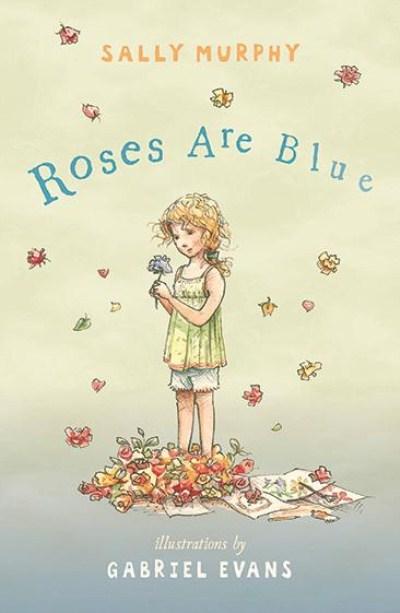
Queen Narelle by Sally Murphy illustrated by Simon O'Carrigan


I am Narelle.

Narelle is me.

I am the Queen of this place.

Ruler of the domain.

Keeper of the kingdom.

You would do well to know it

and pay me due respect.

Queen Narelle is the family cat and she knows she is truly the Queen of this Kingdom. Her servants (mum, dad, Maddie and even baby Will) mostly understand Narelle and her daily needs - food, hugs, time outside in her run, and of course someone to attend to her toilet box. 

In alternating voices, after meeting Narelle with her pompous entitled tone, we then meet young Maddie. Things are going badly at school. She has had a falling out with her two, supposed best, friends and now they won't talk to her and worse they seem to be spreading rumours about her with the rest of the class. Her family seem too busy to listen but at least Narelle can see something is badly wrong. Maddie suffers so much at school each day and at night she cries in her room. For all her superior ways, Narelle realises mum needs to talk to Maddie, so instead of running to her food dish in the kitchen she waits with Maddie until mum comes looking for her and this gives Maddie and Mum, finally, a chance to talk about school. The answer to the bullying is not simple but mum gives Maddie some strategies and mum also goes to school to privately talk with the teacher. 

The end of the story is hopeful but not unrealistic. Maddie will need to reach out to others and be brave enough to take new steps to find different friends.

This is a junior verse novel for readers aged 8+. I loved the distinct voices of Narelle and Maddie. As with all good verse novels, Sally Murphy tugs at our emotions. This beautifully balanced against the antics of little Will who calls Narelle 'Relle. He just wants to chase her.


The smallest, noisy one

adores me loudly,

following me for hours,

calling my name and wanting to carry me.


The verses are upbeat at times, but also have a heaviness at times that give a sense of what so many of us go through at all stages in our lives, and how hard it is to lose friends and to have friendships end – sometimes over silly little things, sometimes because we just grow apart. The Book Muse

Here are a couple more text quotes to give you a flavour of this book:


And they do not see

the midnight dreams that disturb

My Maddie,

making her toss

and turn

in her bed.

But I see it all.

...

My Maddie is not asleep.

She is very much awake,

crying silent tears

into her pillow.

I think she needs some love.


Her are some other verse novels by Sally Murphy:


Monday, June 19, 2023

You are Never Alone by Elin Kelsey illustrated by Soyeon Kim


"Your imagination smiles when you climb a tree."

"Every moment this beautiful planet showers you with gifts. Clouds contain fresh water to quench your thirst. Your lungs swell with oxygen that plants create. Earthworms, ground beetles, and ants plow the soil where your vegetables grow. Nature touches every bite you eat."

Every page in this book could be used for a science or writing lesson (the word choices and deeper meanings conveyed through deceptively simple sentences would make a wonderful study topic with an older group of students). There are so many ideas in the text quote above and that is just the text from the first four pages of this book. Think about the water cycle, life cycles, plant respiration, soil micro-organisms, bees, whales, bacteria, weather patterns, sunlight and shade, digestion, simbiotic relationships such as bacteria on our skin and so much more. It is not surprising that Elin Kelsey has a science PhD. 


There are two videos and teachers notes on the publisher (Owl Kids) web page.

Publisher blurb: Drawing examples from the clouds and the cosmos, the seafloor and the surface of our skin, it explores how we are always surrounded and supported by nature. Whether it’s gravity holding us tight; our lungs breathing oxygen synthesised by plants; the countless microorganisms that build our immunity; or the whales whose waste fertilises the plankton that feed the fish we eat: nature touches every aspect of how we live. Using lyrical text grounded in current science alongside detailed diorama art, this informational picture book presents the idea that we thrive through connections to the land and sea and sky, and togetherness is key to nature. It encourages inquiry-based learning, inviting readers to wonder, ask questions, observe the natural world, and engage with big ideas.

In her author notes Elin Kelsey says:

"Too often, in our well-intentioned efforts to raise awareness of environmental problems, we leave kids with the idea that the Earth is wrecked and it is up to them to fix it. Environmental issues are real, and many of them are urgent, but all that gloom and doom simply leaves kids feeling worried and hopeless. And it ignores the extraordinary power and resilience of ecosystems all over the planet."

Soyeon Kim creates her work using dioramas - there is a whole art lesson in this too. This is the fourth book illustrated by Soyeon Kim that I have really enjoyed. If you live in Toronto you can see an exhibition of her work (June 2023).