Showing posts with label The Great Depression. Show all posts

Sunday, May 3, 2026

I Survived the Dust Bowl, 1935 by Lauren Tarshis


Ray and his best friend Dolly live in Texas in the area called the Panhandle. 


As the cover says the year is 1935 which means America (and other places in the world) are in the grip of the Great Depression. In this small town, businesses are closing and Ray's mum and dad are struggling on their farm with money issues and with a long running drought. In this area and other parts of the US the soil survived over the centuries because there were huge areas of native grasses which kept it locked down but with the arrival of farms and the growing of wheat the grasses are now all gone setting up the perfect conditions for huge and destructive dust storms. 

This story is told by dates and it begins April 14th 1935 then switches back to March 30th. You will feel as though you are living through each dust storm because the descriptions are so intense:

"The wind wacked him down. Ray gasped as dirt and dust rushed into his nose and mouth, clawed his eyes. He flipped over, curling himself into a tight ball. But it did no good. Powerful waves of dirt and dust crashed into him. He couldn't see. He couldn't breathe. He was drowning ... in dust."

"It raged through the morning - brutal winds, whirling dust and dirt, and darkness. As usual Ma and Pa and Ray did their best to seal up the house with sheets and rags. But dust still filled the air and poured down on their heads with every gust of wind."

It was another whole day before the wind died down and the dust stopped swirling. ... A knee-high pile of dust blocked the doorway. ... Their truck was buried up to the windshield. It was going to be a long day of cleaning up."

Plot summary: It is 1935, and Ray and Dolly, best friends, live in a small farming town in the Texas Panhandle. Things had been fine until a drought began. Now, people are losing farms and small businesses to the bank. Many people leave town. Matthew, a nice older boy at school, rides the rails to California to get work. The dust storms are more frequent and severe, and they damage property and people’s health as well. Dolly’s little brother, Skippy, ends up in the hospital with dust pneumonia. The doctors say he can’t stay in Texas any longer, so Dolly’s family is moving away. Ray finds out his parents owe money to the bank, and they might lose the farm. Ray feels like his world is falling apart.

Late last year I read The Higher Power of Lucky by Susan Patron Illustrated by Matt Phelan which is set during the depression and on the Texas Panhandle. That's where I read about these horrible and life-threatening dust storms that ravaged parts of the US in the 1930s. When I saw this book from the I survived series in the library where I volunteer I knew it would be a terrific follow-up. 


The "I survived series" are short historical novels and they are  a perfect way to introduce young readers aged 9+ to major events in history BUT my big advice is don't read the end notes before you read the fictionalised version. I didn't know much about the dust bowl of 1935 so I read the notes first. Sadly this meant as I read this Lauren Tarshis story I found myself ticking off a mental checklist of all the things she had mentioned in her notes. The story really held my attention but I think I would have found it more gripping and perhaps it might have felt less simplified if I did not have the 'facts' rolling around in my head. I will read of the I survived books and next time I won't read the historical information until the end. 

Kirkus explains this in their review of the Titanic book from this series: The plot involves too many convenient coincidences, but the fast pace and intrinsically fascinating disaster story will keep readers turning the pages ...

Having said wait to read the back notes I was very impressed to read the depth of research by Lauren Tarshis and the way, in the case of this book, she took the time to visit a small town in Texas, to talk to the librarian, the historical society and one resident who lived through these times. 

The story of Ray and Dolly is one that young readers will relate to and sympathize with. It is a great way for kids to learn about the history of the Great Depression and the Dust Bowl. Like all the I Survived books, this one is short, well-written, and compelling. Chicago Book Review 5 Stars

The best part of the I Survived books are the historical back matter, which includes period photos and much discussion of a variety of topics. I would have avidly saved my allowance to purchase these titles in elementary school! Ms Yingling (she has a good plot summary too)

I am very very late coming to the series "I survived" and I also now need to read the graphic novels from this series too.  There are over 28 titles published so far all by Lauren Tarshis. The series began in 2010 with I Survived the Shark Attacks of 1916 and I Survived the Sinking of the Titanic, 1912. I Survived the Dust Bowl, 1935 is a new title published in 2025. I plan to find I Survived the Black Death, 1348 to read next. 


About the series:

The I Survived series by Lauren Tarshis presents historical fiction stories focused on children placed in life-threatening events. Each book centers on a different disaster, such as the Titanic sinking, Hurricane Katrina, or the American Revolution. The main conflict involves survival under extreme conditions, often blending factual events with fictional characters. The structure emphasizes action, resilience, and decision-making in crisis situations.

The I Survived series books in order are not required, as each story is fully self-contained with its own beginning, conflict, and resolution. There is no overarching storyline or shared character development across the books. Each installment introduces a new protagonist and historical setting without relying on previous entries. Reading out of order does not affect understanding or enjoyment.

The tone is fast-paced and suspenseful, designed to engage younger readers while presenting serious events. Themes include survival, courage, resilience, and the impact of historical events on ordinary people. Many stories highlight quick thinking and emotional strength in dangerous situations. The writing balances tension with accessibility.

Here are some of the Graphic Novels from this series. I watched The Contoured librarian today and she said the readers in her library rate these very highly. Colby Sharp often mentions these books too. 


Saturday, February 21, 2026

The Mighty Miss Malone by Christopher Paul Curtis


In summation and conclusion, the Malone family has four members who are very bright, very good-looking and uniquely talented, just not all in one person at the same time. We are the only family in the world, in my ken, that has a motto of our own! That motto is “We are a family on a journey to a place called Wonderful.” I can’t wait until we get there!

Hoping is such hard work. It tires you out and you never seem to get any kind of reward. Hoping feels like you’re a balloon that has a pinhole that slowly leaks air.

Meet Deza - "I am neither very intelligent nor very tall. I also have not been blessed with a beautiful singing voice. I have a pleasingly even disposition unless it’s one of those times that I become very angry or scared and have embarrassing wishes to hurt someone real bad." "My most annoying trait is that some of the time I might talk a little too much, I can be very verbose. I also exaggerate but that is because I come from a family of great storytellers which is not the same as great liars."

And her mother - "My mother, Mrs. Margaret “Peggy” Sutphen Malone, was born here in Gary, Indiana. She is willowy and radiant and spell-blindingly beautiful. She is also very intelligent. She has a great job cleaning for the Carsdale family. Yes, that Carsdale family! The family whose patriarch is the president of the Gary Citizens’ Bank. Her most endearing trait is that she is the glue holding this family together."

My father who uses alliteration every chance he has - "He always calls me his Darling Daughter Deza, and I’m supposed to answer that he is my Dearest Delightful Daddy. He calls Jimmie the Genuine, Gentle Jumpin’ Giant, and Jimmie’s supposed to call him his Fine Friendly Father Figure. Father also calls Mother the Marvelous Mammalian Matriarch ... "

And Deza's brother is Jimmy - "The oldest child in our family, Mr. James Edward Malone, is fifteen years old and has been blessed with the singing voice of a angel. Jimmie’s most annoying trait is that he has what Mother says is a napoleon complex. That means Jimmie is not as tall or robust as most boys his age and tries to make up for it by being as loud and full of braggadocio as he can. He also gets in lots of fights. Jimmie’s most endearing trait is that he loves me more than any big brother has loved a little sister since time immoral."

The year is 1936 - the years of The Great Depression. The Malone family are poor. The have to rely on community food handouts. Deza desperately needs to see a dentist and her brother is bullied and taunted for being small and 'slow'. 

“And I know you, Peg. I know you’re going through the same thing, we both know that that little brown-skinned angel is something beyond special. You know if there’s any chance in the future, it’s riding on her narrow shoulders. So you tell me, you tell me how can I come home empty-handed knowing that that sassy, smart, beautiful, charming little girl…my Mighty Miss Malone…is slowly rotting away on the inside and we can’t afford to have her teeth looked after, we can’t even get them pulled?"

Her father is badly hurt on a fishing trip. Her mother loses her cleaning job. Then Deza's Daddy heads away to find work in Flint. Mother, Deza and Jimmy try to follow him but one night Jimmy heads off. He has a dream to be a singer but is he just being conned? These are dangerous times for the mother and daughter who find themselves living in a camp or shanty town with other displaced people. Their dream, though, is to try to find a place called Wonderful with a house of their own and everyone reunited. 

Deza is a top student and her teacher recognises her abilities and also her poverty. In a beautiful scene near the beginning of the book Mrs Needham gifts Deza some shoes and clothes. 

Inside the bag there was a beautiful pair of new patent leather shoes and some folded-up clothes. Mother says it’s rude to set shoes on anything but the floor so that’s where I put them. “Do you wear a size five?” “I’m not sure.” “Try them on.” I picked up the first shoe. There were some socks rolled up in it. “Should I put on the socks too?” “Yes.” I was glad I was behind her desk and she couldn’t see my shoes and socks. My shoes are quite tired and my socks have been darned a million times. Jimmie says our socks and clothes are very religious because they are so holey. My hands were shaking, but I pulled the new socks on and slipped my feet into the shoes. I knew just how Cinderella felt! They were a little big, but maybe that was because mine were so tight. I sat on my socks so Mrs. Needham wouldn’t see them. She said, “My niece from Cleveland spent the summer with me a while ago and left a few things. I thought they might fit you.” Did Mrs. Needham really mean these shoes were for me?

I've included this long quote above because I was utterly devastated later in the story when Deza accidentally leaves her precious clothes behind. 

To get to Flint they jump a train. They are given some really important advice about ways to stay safe in the camp - these were called Hooverville during the Depression.

"You gonna have to be extra careful when you get to camp, that’s unsafe too, if you don’t know what you’re doing.” “What do you mean?” “It’s just like anything else, there’s just enough bad folks in camp to make it so you got to keep your guard up at all times. It’s especially hard on women, and even worst for little girls.” She looked at me and a shiver went through my heart. “You just gotta keep your wits about you and don’t let no one in on your business. Keep it to yourself why you’re on the road alone.” ... “Always let folks think your husband or your brother is with you, always tell ’em that he’s gonna be back later tonight. There’s strength in numbers so let folks think there’s a lot of y’all. You’re a good-looking woman, you gonna have to be careful not to draw a lot of attention you don’t want.” Mother’s jaws tightened. “And don’t let no one get too familiar either, man or woman. Don’t let ’em know where y’all are really from. They’ll start prying and before you know it they’re looking to help you out in some way that ain’t no kind of help at all. Just keep your head low. Don’t look weak or scared.”

Spoiler alert - there were moments I cheered in this story: When Deza and her mother move into a room in a real house; when Deza has an address so she can get a library card; when Deza finally gets good dental help; and when the series of letters arrive with money and news about her father. AND there were moments of despair: When Deza lost her clothing gift; when she couldn't go to the special extra lessons with Mrs Needham; and in her new school when 'black' students are always given low grades no matter how well they perform. 

Bookseller blurb: Deza is the smartest girl in her class, singled out by teachers for a special path in life. But the Great Depression hit Gary, Indiana hard, and there are no jobs for Black men. When her beloved father leaves to find work, Deza, Mother, and her older brother Jimmie go in search of him, and end up in a Hooverville outside Flint, Michigan. While Jimmie's beautiful voice inspires him to leave the camp to be a performer, Deza and Mother continue on, clinging to the hope that they will find Father. The twists and turns of the Malone's journey reveal not only the devastation of the Depression but also the enduring strength of family bonds and the mighty heart of young Deza Malone.

Listen to an audio sample here. The Might Miss Malone was published in 2012 but because it won the Coretta Scott King Award it is still in print and available in paperback. 

Each of these reviews has more plot details:

Vivid picture of what it was like to live through the Great Depression, as well as what it was like to live with every day prejudice. Deza is a strong character, and her family tries their best to survive and prosper during a difficult time. Ms Yingling

The Mighty Miss Malone is a Superlative Stupendous Story and a Totally Awesome Book. The Book Smugglers

The fluidity of the writing, the strong sense of place and time combined with well-drawn characters will captivate and delight. Kirkus Star review

We talk now about the importance of representation in books for children. Here is a wonderful quote from The Mighty Miss Malone which epitomises this:

"When I was in Gary and would read novels I used to put myself right in the middle of the story. I knew it was a great book when it felt like the author was writing about me. Some of the time I’d get snapped out of the book when I read things that I couldn’t pretend were about me, even if I had the imagination of Mr. William Shakespeare. Words like “her pale, luminescent skin” or “her flowing mane of golden hair” or “her lovely, cornflower-blue eyes” or “the maiden fair.” I would stop and think, No, Deza, none of these books are about you."

Deza is a character from a previous book by Christopher Paul Curtis:


Tuesday, August 19, 2025

The Silken Thread by Gabrielle Wang


Gabrielle Wang has woven together an intriguing story in her book The Silken Thread. I use the word woven because there are several story threads and yes there is also an important reference to silk and silk threads from silkworm cocoons but really the strength of this book comes from both the way she weaves in and out of the past and present lives of these two children who live thousands of kilometers apart and the way she weaves in and gives us an insight into their complex family lives.  

I am not usually a fan of timeslip stories or ghost stories. In this case, though, The Silken Thread is not quite a timeslip in the usual way because Moonie, living in Melbourne, meets Little Dipper from China so it is not a different time just a different place. 

Little Dipper lives in poverty in a small village in China. He is a clever boy and the local school principal has identified him as a student who should go to school even though he is needed at home to help with the raising of silkworms and even though the family have little or no money. Little Dipper has two, much older, brothers but more importantly he did have a precious sister. Sadly Little Tian died in an accident. Little Dipper carries a great sadness about this, but Little Tian is never far away - he is still able to talk to her. Is she a ghost? His family are very superstitious, so he keeps her visits a secret.  When he travels to his lessons with his English tutor he has a set of instructions about how to deal with two spirits - the Slurp Slap Ghost and the even more terrifying Will O' the Wisp. His grandmother gives him special food packets and his brother tells him how to avoid the danger of the marshland. You could read Chapter 20 as a way to book talk The Silken Thread - this is when Little Dipper is trapped by the Will O' the Wisp.

Moonie lives with her older sister and two younger brothers in inner city Melbourne. Her grandmother lives with them too. Her father DeDi works at the local food market selling vegetables. The year is 1932 so Australia is in the grip of the depression. Moonie's mother MaMi has become very ill and has been sent away. Moonie and her siblings do not know where she is or when she will return. Things become even harder when a strange woman moves into their house. She seems to have bewitched DeDi and she is horribly cruel to Moonie's brother Floppy (Philip).

Moonie's Melbourne house is very old and Moonie has always been able to see ghosts of the former residents so she is not too shocked when a young boy appears in her room - is he a ghost too? 

Why has Little Dipper come to visit Moonie? Is there a way these two kids can help each other? 

I expect we will see The Silken Thread on the CBCA 2026 Younger Readers Notable list. Listen to an audio sample here

Publisher blurb: Moonie lives in Melbourne and dreams of designing dresses for movie stars. Eight thousand kilometres away, on Chongming Island in China, peasant boy Little Dipper cares for the silkworms on his family’s farm and hopes to learn English. On the day Moonie’s beloved Ma Mi goes away, Little Dipper appears in her house. Before they can speak, he is whisked back home. Aided by a magical silk cocoon, Little Dipper’s visits become a regular event and although neither knows how or why they are connected their bond grows each time. Will the silken threads of friendship be enough to help Moonie bring Ma Mi home, or to save Little Dipper from the troublesome ghosts who stand between him and his dream of learning English?

Things I enjoyed about this book:

  • The references to food especially towards the end of the story.
  • The pattern of three which is how many times Little Dipper has to journey to Teacher Sun before he can finally enter her house.
  • The beautiful old water buffalo named Long Ma who takes care of Little Dipper
  • The descriptions of each family especially Little Dipper's family and the way they care for one another.
  • The alternating voices and stories of the two main characters.
  • The scene (spoiler alert) when Little Dipper defeats the 'evil' Miss Yip.
  • I am intrigued by the idea of 'rural school' in Melbourne in 1932.
  • There are some great little history snippets in this story about life during the Great Depression.
Here is a quote to give you an idea about life during these times:

"One of my chores is to wash the potties in the morning. Another is to cut up squares of newspaper and thread them on a string to use as toilet paper. If there is a photo of a person though, I throw that page away. I wouldn't like it if my photo was in the newspaper and someone wiped their bottom on my face. MaMi taught us to scrunch the paper up first to make it softer. Rich people, who have telephones in their houses ... use pages from old telephone books as toilet paper ... it is so luxurious ..."


‘The Silken Thread is a beautifully evocative sunshine burst of magical realism, illuminating the harsh and joyous realities of life in China and Australia during the Great Depression, while celebrating the hidden lives of Chinese Australians. Rich in detail, complex in theme yet delicately drawn, the novel celebrates the strange ties that bind us across cultures, time and language, highlighting the importance of learning, friendship, family and community. An enchanting pocket treasure to lose yourself in.’ – Rebecca Lim

Read this review from Storylinks which gives more plot details.

Gabrielle Wang was the 2022-2023 Australian Children's Laureate. I talk more about this here. Companion books:


Sunday, July 6, 2025

The Wonder Horse by Mark Greenwood


Even if you have heard of Phar Lap, the famous race winning horse, you are sure to discover even more when you read this book. Readers who love history and mysteries will thoroughly enjoy this intriguing story and it is also one to share with horse lovers. I especially loved the descriptions when Phar Lap (also known as Bobby) was taken into a field to enjoy sweet grass and clover. I did find the descriptions of adding heavy weights to make racing harder for Phar Lap, who kept winning, very distressing. I guess I should disclose I am not a fan of horse racing but I was fascinated to read about this special horse/hero.

Discover the answers to these and many other questions in this book:

  • Do you know how Phar Lap go this name?
  • Where did Phar Lap run his final race?
  • Did Phar Lap look like a champion when he was a young colt?
  • Did this famous horse win every single race he ever entered?
  • Is Phar Lap from Australia?
  • What is the sweet treat his trainer always gave him?
  • How many races did Phar Lap win?
  • What happened on the day of the Melbourne Cup in 1930 before the race?
  • Why did the owner and trainer need to protect Phar Lap?
  • How do you feel about horse racing after reading this book? 

Here are some other books about Phar Lap that might be in your school library:


Last week I talked about another book from this splendid, thoroughly researched, series. These books are perfect for young curious readers in your library. They are easy to read with short chapters, big print, and page turning stories from history. Huge thanks to Freemantle Press for sending me copies of these two books from the History Hunter series. The Wonder Horse was published early in June 2025. Here are the teachers notes and these are well worth exploring because they contain extra web links and a vocabulary list. Read more details about The Wonder Horse in this blog post from The Bottom Shelf.

Who needs a time machine when you’ve got the History Hunter? He’s your fearless guide, taking you back through time to investigate mysteries that have puzzled the world for generations. From royal treasure rooms to racetracks, you’ll follow the clues, ask the tough questions and maybe even crack the case. These books are a history adventure double-pack that’s cooler than any video game! Better Reading


I previously talked about these horse racing picture books:


Tuesday, November 19, 2024

Three Strike Summer by Skyler Schrempp


"First the rain stopped falling. Then the wheat stopped growing. Then the dust storms started coming. Then the tractor stopped working, and the jars in the cellar started dwindling, and Pa stopped joking and joshing like the words dried right up in his mouth."

Times are so hard. The have to leave the farm. This is the place where the young child Little Si is buried. Gloria is in such a rage. Everything is so unfair. She picks up a rock and hurls into the window of the bank manager's car!

"Gloria. Mae. Willard. ... I ain't ever been as mad with one of kids as I was today. Never. But I never raised a hand to you, and I'm not about to start. ... I raised you better than to be smashing things up and cussing at your sister and paying no mind whatsoever to your ma, so you knock it right off, hear?"

Gloria is the wild child of the family. She is not afraid to speak up especially about an injustice. One of the biggest of these in her life is that the boys will not take her seriously when she says she wants to play baseball. Gloria knows she is a fine pitcher but those boys won't even give her a chance. 

"She'd been sneaking off whenever they practiced and hanging around the baseball diamond, waiting and hoping they'd give me a chance."

And now they have to leave their farm and Gloria will have to find a new team and start all over again to try to convince these new kids that she sure is a real fine player. What will happen on this new farm in California? The family, and all farm workers, are treated so badly by the farm manager. Picking peaches is hard, hard work. And there are so many rules. Things were bad before but now they seem way worse. At every turn the family debits are rising. But for Gloria there is one glimpse of happiness - she manages to talk her way in the boy's gang and their baseball team and there is a big game lined up with kids on the next farm. Surely, with Gloria on their team, her gang will win. And somehow this will also make things fairer for her folks and for the other workers. All of this will mean breaking the rules and keeping secrets from the adults but Gloria is so determined to win and also to expose the corruption she has witnessed among the farm bosses. 

"When you don't fight for what you deserve, the world just digs its heel into you little bit more. If you don't speak up for yourself, probably no one else will ... "

Three Strike Summer is a punchy, inspiring historical middle grade book about family, baseball, and life on farms during the Great Depression. Featuring a spunky female protagonist who won’t take no for an answer, this book explores a wide range of themes from gender inequality to poor worker compensation and dealing with death and grief. Reading Middle Grade

This is one of those books that I just 'gobbled up'. I read it as an ebook during my recent trip. I love the way Skyler Schrempp describes the door knocking pattern - "a shave and a haircut, two bits". This book will also give readers a wonderful insight into life during the Great Depression and the beginnings of workers unions, worker saftey and workers rights. Listen to an audio sample read by the author. Here is the web page for Skyler Schrempp

I cheered when I read the review by Betsy Bird:

Three Strike Summer? The pun in the name is the name of the game. This here’s a baseball book, loud and proud. You’re fairly sure of the fact when, in Chapter One, Glo uses her golden pitching arm to nail a rock through that car window of the bank man repossessing their house. ... I don’t know it for a fact, but suspect a person wholly unaware of the rules of the game would still get swept up in Schrempp’s storytelling. ... For me, one of the best parts of the book was an almost off-handed comment from Glo’s ma late in the story. At the beginning of the book Glo is furious and baffled by her mother’s willingness to just pick up and leave the family farm without so much as a blink. When at last Glo is able to ask her about it, almost at the end of the book, her ma says honestly, “Aw, Gloria… You couldn’t have paid me a million dollars to keep on living in a house that my baby died in.” Glo’s little brother died, probably because of the Dust Bowl, in that home. It’s so simple and so human and so understandable. Plus, I love children’s books where kids get this sudden clarifying instant where they can see everything adults have to go through and try to hide.

Narrated by Gloria in a conversational tone that brings the setting to life, readers feel her grief, outrage, and gritty determination. Descriptions of the Dust Bowl years and hardscrabble life in the camps are searing, and Gloria matures as she learns about others’ struggles. While she organizes a ballgame, Pa organizes the peach orchard workers to strike for better conditions only to be betrayed. Pa is in danger of being clobbered by police until Gloria and her teammates intervene, illustrating the importance of hope, honor, and team spirit in combating hardship. An informative author’s note explains the historical context, including the reasons behind the all-White communities Gloria inhabits. Kirkus Star review

Here are some text quotes to give you a flavour of this writing:

"I knew that bank man was coming. I knew what he was there for. And I knew what would happen when he was done with us."

"He had taken the bank man outside so we didn't have to hear him beg."

"I wanted to belong somewhere, even if it wasn't Oklahoma. I wanted to be someone people listened to, even if I was loud sometimes and maybe said the wrong thing once in a while. ... And I wanted to play ball for real, not just by myself, knocking old apples out of a tree with a creek tone, or watching everyone else play. I wanted to be on a team."

"I missed her biscuits. I missed her breads. I missed her green beans ... I missed smoky bacon and golden, runny egg yolks. I missed her blackberry jams, dark and sweet enough to keep a smile on your face all night. And fritters fried."

"Anyone congregating in groups at any time of day will be personally escorted off the property. We employ good, decent folks here, not lazy sons of guns, not rabble-rousers, not Reds."

"Meanness is funny like that. The bigger you get the smaller, they have to make you feel."

"I just wat there trying not to see Davey falling again and again. Kicking myself for telling him to go up that ladder in the first place. Downright dumb. Downright selfish."

Companion books:


Wednesday, September 15, 2021

Bud, not Buddy by Christopher Paul Curtis


Bud not Buddy sat beside his precious mother and he watched her die. He now finds himself in an orphanage and as the story opens he is sent, yet again to a foster home. As in the past the foster parents are truly awful and the kid who already lives in the house, their son, is horrendous - cruel, mean and a liar.

After a nasty incident on the first day Bud runs away. He has a small suitcase containing a few possessions which were precious to his mother. He has no idea but the significance of most of suitcase contents but he is sure the concert flyers for a band featuring Herman C Calloway.  Bud is certain Herman must be his absent father. The brochures are his only clue but Bud sets out to travel from Flint Michigan to Grand Falls. Along the way Bud encounters great kindness and he meets an amazing group of musicians never suspecting the truth of his heritage until the final scene. 

You can read the full plot here.

.... the journey of Bud's hopeful heart that will stay with me for a very long time. Kids Book Review (Australia)

I actually thought I had already read this book and in a crazy moment of regret I also thought I had accidentally ordered the wrong book. Luckily both these premises are wrong. I have read The Watson's go to Birmingham also by Christopher Paul Curtis and we did have Bud not Buddy in my former school library but reading this book last week I am sure I had not previously read it so my purchase had a great purpose - allowing me to enjoy this very famous US book which won the Newbery Award and also a Coretta Scott King Award along with a host of state awards. Listen to a delicious audio book sound track here.

Here are some other covers. You probably already know I am bit obsessed with covers:


Monday, June 22, 2020

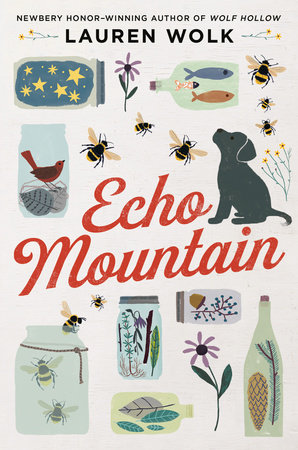
Echo Mountain by Lauren Wolk


"Life is a matter of moments, strung together like rain. To try to touch just one drop at a time, to try to count them or order them or reckon their worth - each by each - was impossible. To stand in the rain was the thing. To be in it. Which I would do. Which I would do to make my father well ... "


Ellie's family have moved Echo Mountain following the stock market crash we know as The Great Depression. Father was a tailor but mother explains "people who have no money don't pay a tailor to make their clothes, and they don't buy new ones when the ones they have will do."  Mother had been a music teacher but with less children at school, less teachers were needed.  The shop is closed, the house is sold and the family move to a remote forest location near Echo Mountain. Life is hard for the whole family but they work together to build a cabin and find ways to trade with neighbors. Then comes the terrible accident. Father is badly hurt and lies in a coma. Mother, older sister Esther, little brother Samuel and Ellie try to keep going. Tending to their own needs and keeping father comfortable and quiet. But it is this quiet that is frustrating Ellie. She is sure her father needs noise, action and discomfort - anything that might make him wake up. Ellie, herself, carries a huge personal burden. She is sure the horrific accident is her fault and it seems her sister thinks so too.

There are tiny moments of happiness for Ellie in spite of all this sadness and guilt. Their dog Maisie has pups. One pup appears "dead" but Ellie does not bury the pup as her mother has instructed, instead she plunges him deep into a bucket of cold water and brings him "back to life". It is the first time, as a reader, we see Ellie has a gift of healing. An instinct or inner voice that will become so important over the coming weeks. Ellie loves her pup and she decides to name him Quiet.  "I like that (said Samuel) ... It's a heartbeat name."

Other moments of happiness for Ellie come in the form of tiny wooden carvings which appear as precious gifts hidden in places around the forest, their home and even in her jacket pocket.

The mystery of these little treasures is connected with an old woman who lives on the top of the mountain. People call her the "hag" but Ellie needs to learn the truth about this old woman. Making the journey up the mountain, meeting the carver, a young boy called Larkin, with his own sadness, and finding the old woman along with the discovery of her own talents, will have consequences which almost feel miraculous.

I adore Ellie. She has a deep emotional intelligence and a love of nature and her mountain. "I myself was two opposite things at the same time. One: I was now an excellent woods-girl who could hunt and trap and fish and harvest as if I'd been born to it. Two: I was an echo-girl. When I clubbed a fish to death, my own head ached and shuddered. when I snared a rabbit, I knew what it meant to be trapped. And when I pulled a carrot from the earth, I, too, missed the darkness."

Every word in this book is liquid gold. I read huge numbers of books each year and mostly I can read a novel quite quickly especially if the story is good. With Echo Mountain I did not want to read quickly. I did not want to miss any of the exquisite words. I did not want this story to end. I did not want to miss any story fragments. As I read Echo Mountain I filled the pages with little book tab stickers so I could go back and savour each precious passage. There is a beautiful truth and raw honesty to the writing of Lauren Wolk which at times left me breathless.

Here are a few text quotes to give you a flavour of this writing:

"Those gifts had been meant for me. I was sure of it. Which meant that whoever was making them knew me and understood that I was the kind of girl who would love finding them tucked in the corners of my world, all of them carved from good hardwood, all just short of alive."

"Being a middle child made me good at turning the other cheek, But being good at something didn't make it easy."

"Then I left the shed and walked up the path and, after a bit, into the woods, through the hemlock grove so full of shadows that almost nothing grew between the trunks of the old trees, the deep layer of dead needles underfoot like the soft coat of a great, sprawling animal that didn't mind the weight of me."

"... the little cabin was filled with other things as well. On one wall: shelves of books in all colors and sizes, like the keys of a new instrument I badly wanted to play."

"She was right - it wasn't much of a spring. But when I pushed the jar flat in the moss where the water bubbled out of the rock, a pool rose and flowed into its mouth as if the jar were the thirsty one. The water was cold and clear and, as I sampled it, delicious. Like poured winter. Fresh, Perfect."

"We have done our best ... But I fear that Esther and I are not meant for this kind of life.' She met my eye. 'Not like you seem to be.' Which was both praise and accusation. Enough bitterness to spoil the sweet."

"I turned back to my father. I hated the way his skin pulled hard across the bones of his face, as if someone were making him into a drum. As if he were hollow. As if someone was supposed to hit him to make any music at all."

I also need to mention the bees in this story. I so appreciated that Lauren Wolk did not alter their natural responses. There are no magic moments with these bees. Ellie does need their honey but taking the honey means she is stung and stung badly. I felt every hurt and every sting.

Now take a look at the two covers. Which do you like? The top one is from the UK edition and the lower one is from the US. I much prefer the US cover because it hints at all the story elements - bees, stars, bottles of healing plants and the little pup called Quiet.


There’s a loneliness to the kind of life Ellie leads, but the trade off is that she feels truly free. Hand this to the kid that yearns for that freedom. For wide-open spaces and mysterious figures hiding in the shadows and snot nosed brothers and lots and lots of puppies.Hand it to someone who needs their own mountain. Even if it’s just a literary one. Elizabeth Bird School Library Journal

I hope you can find Echo Mountain in a library or bookshop. This is a book to treasure. The Wall Street Journal said this is a book for our uncertain times that will soothe young readers like a healing balm. Here are some other wonderful books by Lauren Wolk which I have mentioned previously:


I would follow Echo Mountain with Black-Eyed Susan by Jennifer Armstrong; Shiloh by Phyllis  Reynolds Naylor; and Shine Mountain by Julie Hunt.


Friday, March 13, 2020

The Gardener by Sarah Stewart illustrated by David Small


It just goes to show there is nothing new under the sun as they say. I was talking to a fellow children's literature enthusiast about The Secret Sky Garden - a new book I loved reading and she mentioned The Gardener.  The Gardener was published in 1997 and it follows the same theme.  The Gardener won a Caldecott Honor in 1998 and YES it is still in print.

Times are hard. It is 1935 and Papa has no work, Mama has no work and so young Lydia Grace Finch is sent to live for a short time with Uncle Jim in the city. She will work in his bakery. Through a series of letters Lydia 'talks' firstly to Uncle Jim and then over the following months to her family. Lydia is a keen gardener but in the city everything looks dull and grey. Lydia is an observant girl. She spies some empty window boxes.

Lydia starts small and plants out the window boxes. Gradually we see flowers appearing in the Bakery. Then Lydia finds a secret place and she is able to extend her planting using cracked tea cups and old cake tins as flower pots.  She is desperate to make Uncle Jim smile and she hopes her surprise will work.  As the seasons change so does the neighborhood. Flowers appear on balconies and in shops. Finally the big day arrives. June 4th is a holiday. Lydia makes a path for Uncle Jim to follow up to her secret place which is on the roof on the building.  I'm not sure Uncle Jim smiles, even though he should, but he does show his happiness and appreciation by baking a splendid cake! In the farewell scene it is clear he truly does care for little Lydia.


You can see the illustrations from this book on the publisher Macmillan web site. Here is a review by Elizabeth Bird in the School Library Journal and here is a detailed review with more story details.  I found two videos of this book - with an older group of students it would be interesting to compare the narrators. 1. Kathleen Pelley  2. Bob Franklin


Here is another famous book by Sarah Stewart The Library.


Tuesday, January 14, 2020

The Ghost of Howlers Beach by Jackie French


Butter lives in a Very Small Castle built by his grandfather who made his fortune from jam. Also living in the Very Small Castle are his dad, three aunts and some servants. The aunts seem to have very odd names but really they are left over nick names from the childhood. Aunt Elephant (Ellen), Aunt Cake (Kate) and Aunt Peculiar (Petunia). I really enjoyed meeting these strong and forthright women. Butter is a nickname too because he is known for always saying 'but'. We never do find out his real name. The year is 1932 - The Depression. Living near Butter are people on welfare who have set up a make shift camp. It is called a susso camp because the people are living on government handouts or 'the susso'.

One day Butter sees three young children playing cricket on the beach. He asks to join in their game but then they somehow disappear. Could they be ghosts? It turns out they are not ghosts but they are living hidden lives. Butter needs to find out why and he needs to help these kids who are frightened, alone and very hungry.

Jackie French has penned a really good Australian yarn.  I have had this book on my too read pile for a month or more but I kept putting it to one side because, sorry Jackie, but I really don't like the cover illustration. Of course the old adage applies "don't judge a book by its cover" - The Ghost of Howlers Beach is an easy read and a warm-hearted story that gives the young reader good insight into life in 1930s Australia. You may love the cover or it may not appeal to you but either way I recommend this book for readers aged 9+.

Warning don't read this book when you are hungry. There is so much delicious food in this story.  Luckily there are some recipes at the back of the book.  Here are some of the treats:

"Chicken soup, bubbling rich with vegetables
buttered toast with a dish of plum jam
egg and lettuce sandwiches
a big plate of lamingtons"

"Chicken and salad sandwiches.
And some Neenish tarts, an apple, an orange, a banana, some dates
and iced cocoa and lemon barley water."

"Sunday lunch was always a big saddle of lamb that Cookie put onto roast slowly by itself in its nest of potatoes and carrots and pumpkin ... (with) beans or peas or buttered cabbage."

Neenish Tarts

There must be plans for more books about Butter and his family of aunts because the cover of this book says: "The Butter O'Bryan Mysteries" and the publisher web site includes #1 in the title. Put this book on your 'to read' list but you will need to wait a couple of months. The Ghost of Howlers Beach will be published in March 2020. Huge thanks to Beachside Bookshop for my Advanced copy.

You can read more about the 1930s in Australia in Sweet Adversity; and the Our Australian Girl series featuring Ruby.