Showing posts with label Piano playing. Show all posts

Wednesday, July 1, 2026

The Paper Piano by Rachel Ip illustrated by Natelle Quek


Publisher blurb: When Noah hears beautiful piano music sweeping through the train station, he longs to play. Without a piano of his own, he carefully crafts one out of paper, and the notes fill his head night and day. Until finally, with the help of a neighbour, his musical dream comes true . . . An inspirational picture book about the power of perseverance and music, celebrating the joy that railway station pianos can bring to all.

Take a look at the labels I have assigned to this post - Piano (yes Noah hears a piano and then really wants to learn how to play. Other suggested instruments just won't satisfy him); Determination (his mum says he has to wait until he is older but Noah does not want to wait so he makes a paper piano); Kindness (thank goodness for the neighbour who has a piano and even better she agrees to help Noah learn); and finally Practice (Noah loves playing, but playing well is not an instant process. He is happy to practice and then one day he is also able to perform just like the person he originally saw at the railway station). 


Image source: Natelle Quek

I have the 'idea' of buying a piano on my own wish list. I did have one as a child. This sweet picture book makes me think I should act on this and stop dreaming. If you are gathering books to share with your library group as a way to explore the 2026 Book Week slogan - Symphony of Stories - make sure you add this book to your collection. It will be a perfect one to share with your younger students and then I would find some beautiful piano music to share as a way to think about the music that Noah hears, loves and then performs. You could also perhaps share some a short extract or two from the recent ABC and BBC television programs about playing pianos in public spaces.

Make sure you stop and notice the end papers - it's the handmade piano keyboard made by Noah. I found that image very poignant.

Here is some music for piano that I love that you might use with this book. Just play snippets to give your library group a soundscape to enjoy with this story:

Clair de Lune – Claude Debussy (video)
Gymnopédie No. 1 – Erik Satie (video)
Chopin – Nocturne in E flat major (Op. 9, No. 2) (video)

There are lots more you could share here.


Rachel Ip is an award-winning picture book author and author ambassador for Bring Me a Book Hong Kong, the leading family literacy charity in Hong Kong. Rachel was born in the UK and also lived in France and Belgium before moving to Hong Kong 15 years ago. The Forgettery won the 2022 English Association Picture Book Awards and The Last Garden was longlisted for the 2021 Klaus Flugge Prize and won the Crystal Kite Award for Middle East, India, and Asia.


Natelle Quek is a Malaysian-born illustrator who grew up in New Zealand and now lives in leafy Southeast England with her husband, an apathetic cat, and a loud-snoring dog. Natelle currently focuses on children's illustration, in particular picture books, young fiction, and non-fiction. She loves to use bold colours and cinematic perspectives to draw audiences into her worlds. Here is her Instagram account.


I am keen to see this book too


Sunday, May 5, 2024

Ferris by Kate DiCamillo


"Every story is a love story. Every good story is a love story."

Ferris (real name Emma Phineas Wilkey) was born under the amusement park Ferris Wheel ten years ago. Her grandmother was there to witness the event and Ferris is sure she can remember the moment her grandmother, Charisse, caught her. 

I guess if you think about it every family is a little bit eccentric, but Ferris sure does have an interesting cast of characters in her life. 

Charisse, her grandmother, is a central figure in Ferris's life. They share a very tender bond. Charisse lives upstairs in the family home. Her son is Ferris's dad and her other son - Uncle Ted - has moved into the basement. One of the sweetest parts of this story comes near the end when we meet the owner of the hardware store Allen Buoy - he has secretly been in love with Charisse for decades. Charisse calls Ferris Emmaphineas. "Ferris figured she had spent more than half of her time on earth in Charisse's room - talking to her grandmother, listening to her, playing gin rummy with her, and reading to her from the Bible and also from a battered paperback copy of Walt Whitman's Leaves of Grass."

Dad is the quiet member of the family. He an architect by day and a reader of the encyclopedia in his spare time. He also loves to repeat a cryptic saying at every turn - "The dogs bark but the caravan passes by."  Ferris explains this by saying "you can bark about what you want or shout about it, but that the world doesn't care that much really; it just keeps on doing what it's doing."

Mum is pragmatic. She is a high school maths teacher. I love her life commentary: "I'm not hosting a dinner party, Charisse. ... If Ted wants to get out of bathrobe and come up the stairs and sit down at the table and sit down with us, he is perfectly welcome to do that. But did I extend him a gilded invitation? No, I did not."; "It's always something around here, itsn't it?"; "I do not want this to turn into some incident that we will read about in the paper the next morning as we sit in the smoldering ruins of our house."

Pinky, is her sister. She totally bounces to her own beat moving from one obsession to another. One day she wants to be famous and runs about in a black cloak with an imaginary sword, then she decides she needs to have her name on a wanted poster for being a bank robber, then she discovers Houdini and his famous escapes. Her real name is Eleanor Rose but NO ONE is allowed to use that name. The tooth incident will make you shudder.

"Boomer was the dog. He was part sheepdog and part German shepherd, and also, according to Ferris's father, part woolly mammoth."

"Aunt Shirley was blonde and pink. She looked like someone who had been spun out of sugar and placed on top of a celebratory cake."

Uncle Ted has a PhD in Philosophy, he is a sign painter, but he has left his job now he is working on a mural in the Wilkey basement. 

There are lots of music references in this book but the most important one is the piece Billy Jackson keeps playing - The Mysterious Barricades. Hear it here at a slower tempo. I also like the guitar version. I really wish I had taken the time to listen to this before reading this book - it sure does set an additional beautiful tone to the story as Billy Jackson sits in the Wakely house playing this tune in the background to all family happenings. And I had no idea Billy Jackson was such a piano virtuoso. 

Les Barricades Mystérieuses (The Mysterious Barricades) is a piece of music that François Couperin composed for harpsichord in 1717. 

Here are a set of questions to use with a group reading Ferris. Oddly these notes do not list all the wonderful Mielk words from the book. Here are a few: ludicrous; gilded, intimation, ignoble, bereft, insouciant (a new word for me meaning unconcerned or indifferent), and unrepentant.

There is a poem on page 165 - I wonder if it is by Kate DiCamillo or some famous poet? Perhaps it is inspired by Walt Whitman?

I started to read Ferris when I was away for a weekend wedding event but the hustle and bustle of that distracted me. When I arrived home, I started Ferris all over again and read the whole book in one delicious afternoon. I did plan to talk about Ferris here on my blog straight away but then I decided - no - I needed to read it all over again. I so rarely re-read books but with Kate DiCamillo I make an important exception. I have read Because of Winn Dixie three times, The Tale of Despereaux twice, The Tiger Rising twice and The Magician's Elephant twice. 


Use the label Kate DiCamillo from this post to find the books that I have talked about on this blog. 

I hope someone somewhere has based their PhD on the writing of Kate DiCamillo. Here are a few of my observations:

  • Kate DiCamillo writes with a unique voice and this lingers with the reader long after the book is finished. 
  • Kate DiCamillo creates quirky, individual characters that we care very deeply about. Boomer is described as having “a gentle soul”; Charisse is described as a romantic; Ferris’s mom is described as practical and pragmatic; -Pinky is described as monomaniacal; -Ferris’s dad is described as mild-mannered; and Shirley is described as formidable.
  • Her writing is always emotional but she adds tiny moments of humour - I actually laughed out loud twice in this book on the third reading.
  • No words are wasted. Readers are easily able to fill in complex back stories for her characters.
  • Words are important - they are more than tools to tell a story. In this book there are 'big' words invested with enormous meaning and emotion. I mentioned some in this post. They work as a scaffold to help readers. Mrs Meilk, bless her, has inspired Ferris and her friend Billy Jackson to do more than learn new words - they embrace them.
  • Every book by Kate DiCamillo is unique and yet there are links between them. Ferris brings her community together for example, just as we saw with our favourite little girl Opal in Because of Winn Dixie. And of course, again we have a very special dog in Ferris - his name is Boomer.

I just re-read Betsy Bird's review of Raymie Nightingale and, to me, so many of her wise words also apply to Ferris. 

  • I like the wordplay, the characters, and the setting. I like what the book has to say about friendship and being honest with yourself and others. ... 
  • And in a book like this, you find that the characters are what stay with you the longest.
  • DiCamillo excels in the most peculiar of details.
  • Sadness is important to DiCamillo. As an author, she’s best able to draw out her characters and their wants if there’s something lost inside of them that needs to be found.
I will leave it to your own reading to discover the sadness in this book Ferris. Besty also mentions peculiar details here are a couple I enjoyed in Ferris:
  • "Twilla had sat down and picked up a copy of Good Housekeeping that had a picture of a Jell-O mold on the cover."
  • "Ferris gave her hand to Billy Jackson ... Billy's hand was sweating. His glasses were attached to his head with a strap, and Ferris knew almost immediately, from that very first moment, that she didn't want to ever lose hold of Billy Jackson."
  • Ferris describes Big Billy's Steakhouse - "Ferris walked across the red carpet (everything in the steakhouse was red: the glass candle holders and the Naugahyde* booths and the tablecloths, even the window were made of a pebbled red glass)."   * a vinyl covering used for furniture.
  • Mrs Mielk wears oversized fuzzy pink bedroom slippers. 
I would add another theme in Ferris to the list above - light - sunlight and candlelight and the colour yellow. Can I also say this is NOT a ghost story but it does contain a ghost - this will make sense when you read Ferris. Add this book to your library and home collection TODAY. Here is the US cover:


Here are some reviews with more plot details:


Publisher blurb Walker Books AustraliaIt’s the summer before fifth grade, and for Ferris Wilkey, it is a summer of sheer pandemonium. Her little sister, Pinky, has vowed to become an outlaw. Uncle Ted has left Aunt Shirley and, to Ferris’s mother’s chagrin, is holed up in the Wilkey basement to paint a history of the world. And Charisse, Ferris’s grandmother, has started seeing a ghost in the doorway to her room – which seems like an alarming omen given that she is feeling unwell. But the ghost is not there to usher Charisse to the Great Beyond. Rather, she has other plans – wild, impractical, illuminating plans. How can Ferris satisfy a spectre with Pinky terrorizing the town, Uncle Ted sending Ferris to spy on her aunt, and her father battling an invasion of raccoons?

Friday, October 27, 2023

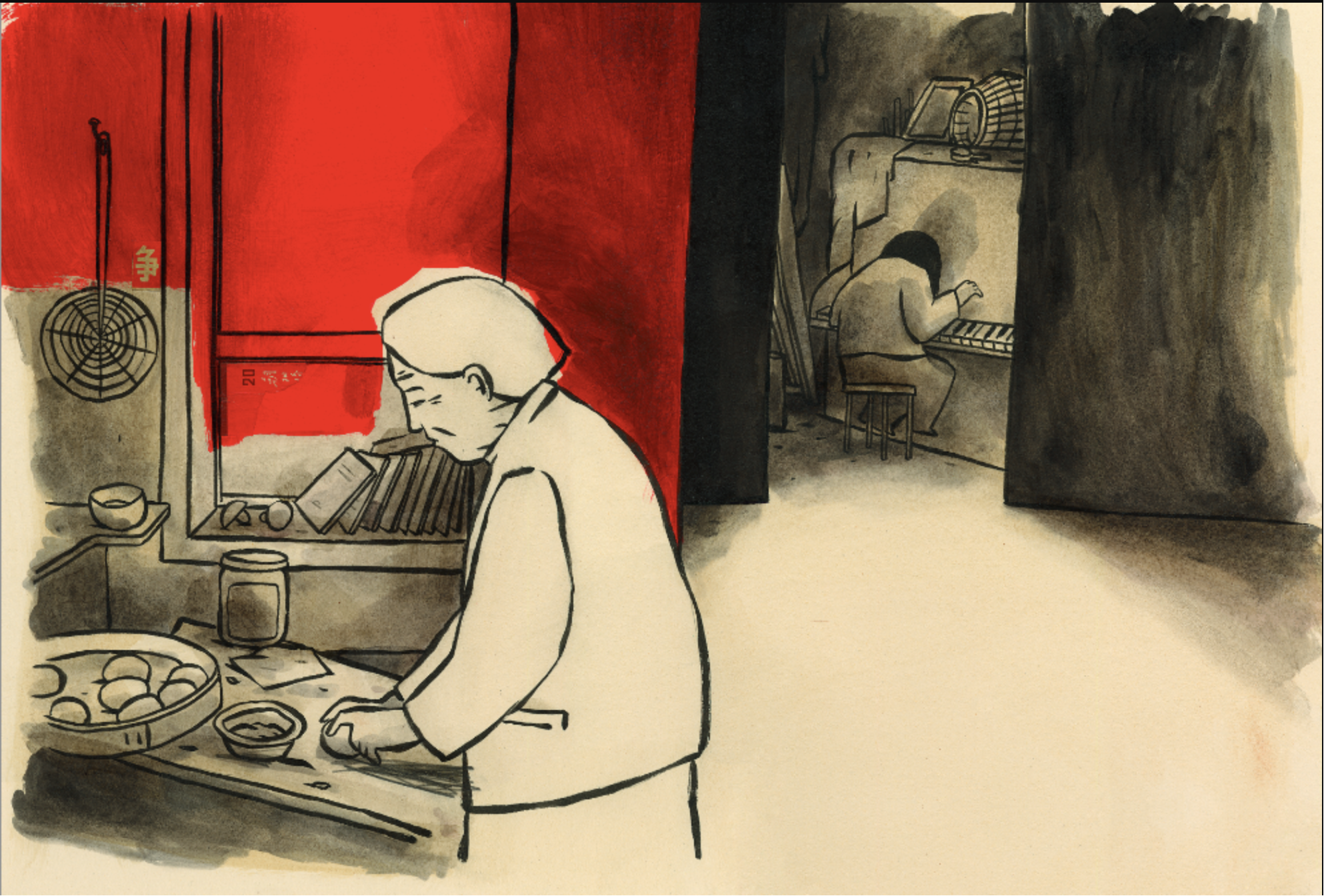
The Red Piano by André Leblanc illustrated by Barroux translated by Justine Werner


"In the hut, the cramped rooms reek of warm sweat, the foul smell of extinguished coal fires and packed earth. Crammed together, the comrades are already sleeping on the bare ground. Taking small careful steps, the young girl leaves the communal house."

"The music rises, free yet encased by the thick walls. Tonight marks the end of her fifth year in exile. ... pianos are criminal. Pianists are criminals. Schools are closed down. The Communist party is re-educating everyone."

How did they manage to bring a piano to this desolate place? How can this little girl practice each evening? Where will she get her music? And - most awful of all - what will happen when she is discovered?

Discover the answers in The Red Piano but be prepared to have your heart broken. 

The Cultural Revolution was started by Chinese leader Mao Tstung in 1966 to make China's people follow his idea of the way they should live. ... Young people left school and became Red Guards, roaming the country to search for and destroy the 'four olds' - old customs, old culture, old habits and old ideas. People, like the little girl in this book, were sent to the countryside to work with the peasants. (from the preamble)

"For seven years now, educated young people have been going to re-education camps, occasionally with enthusiasm but more often under duress. Their mission: to eradicate elitism through manual labour alongside poor farmers and by studying Chairman Mao's political works."

There are several things I miss now that I no longer work in my school library. I desperately miss reading aloud to groups of students. I miss sharing books with individual readers. And I miss creating lessons to unpack complex books like this one which I read to groups of our Grade Six students as a part of their work on Asian studies. Read this review for more plot details

This extraordinary (I don't use that word lightly) story was inspired by the true story of girl who grew up during the Chinese Cultural Revolution. Her name is/was Zhu Xiao-Mei. I first read this book several decades ago but the story has lingered with me. I highly recommend this for readers aged 11+ and for all high school libraries. 

Dazzling collage, pencil and paint illustrations from Barroux create a beautiful chiaroscuro of tension and release. Kirkus


Bookseller blurb: Stirring and inspiring, this picture book relates the story of a gifted young girl's passion for the piano in a time of historic turmoil. During China's Cultural Revolution a young girl is taken from her family and sent to a far-off labor camp. Forbidden to play the piano, she nevertheless finds a way of smuggling handwritten music into the camp and sneaking away at night to practice a piano in a secret location—until, one night, she is caught. Inspired by the amazing true story of international concert pianist Zhu Xiao-Mei, this acclaimed picture book poetically relates an astonishing story of perseverance set against a cataclysmic period of history.

I thought about this book all over again when I recently read Alias Anna because Anna is a musician and while music saves her it continually also threatens to expose her as a Jewish child. I also thought of Mao and the Cultural Revolution when I read Two Sparrowhawk's in a Lonely Sky by Rebecca Lim. And I thought of the similarities of the historical context from The Red Piano when I read My Brigadista Year by Katherine Paterson.

The Red Piano was published in 2008 so yes, it is out of print, but this book is sure to be in many school and public libraries. I picked up my copy at a recent charity book sale.

Monday, October 23, 2023

Alias Anna by Susan Hood and Greg Dawson

Alias anna: A true story of outwitting the Nazis

“I don’t care what you do,” her father told her. “Just live.”


Zhanna and her baby sister Frina have a happy life in the small resort town of Berdyansk, Ukraine. Papa plays the violin and the family have a true love of music so it is natural that Zhanna and later her sister are sent to music lessons. The family are not wealthy but they do manage to buy a small piano and it is very clear, early on, that Zhanna is a gifted musician. She receives scholarships and begins to play at concerts. Then everything changes:

Happy times
for Zhanna and her family
were swallowed up
when a power-hungry dictator
named Josef Vissarionovich Dzhugashvili
started to devour their country in the early 1930s.
He was better known as Joseph Stalin,
an alias he assumed meaning 'Man of Steel.'
Stalin had a plan for ridding the country
of the old ways and looking to the future. 

By 1935 the family are forced to flee their home and move to Kharkov a city of nearly one million people. "The Arshansky's home was not a house, but one room in a run-down apartment."

Luckily they still have their piano and both girls are accepted for scholarships which provide enough money so the family don't starve. In 1939 Stalin made a deal with Hitler that their countries "would not attack each other for the next ten years" but just two years later Hitler invaded Ukraine and for Zhanna, her sister, parents and grandparents, as Jews, we watch as their nightmare begins. 

Publisher blurb: The moving true story of how young Ukrainian Jewish piano prodigies Zhanna (alias “Anna”) and her sister Frina outplayed their pursuers while hiding in plain sight during the Holocaust. A middle grade nonfiction novel-in-verse by award-winning author Susan Hood with Greg Dawson (Zhanna’s son). She wouldn’t be Zhanna. She’d use an alias. A for Anna. A for alive. When the Germans invade Ukraine, Zhanna, a young Jewish girl, must leave behind her friends, her freedom, and her promising musical future at the world’s top conservatory. With no time to say goodbye, Zhanna, her sister Frina, and their entire family are removed from their home by the Nazis and forced on a long, cold, death march. When a guard turns a blind eye, Zhanna flees with nothing more than her musical talent, her beloved sheet music, and her father’s final plea: “I don’t care what you do. Just live.” 


Awards:
  • 2023 Winner of the Christopher Award
  • 2023 Sydney Taylor Notable Book
  • Finalist for the 2023 National Jewish Book Awards
  • The 2022 Nerdies: Poetry and Novels in Verse
  • The New York Public Library Best Books of 2022
  • The Chicago Public Library Best Books of 2022

The verse format and harrowing narrative make this a quick read for reluctant and striving readers. VERDICT This powerful work of persistence and hope is highly recommended.   School Library Journal

Here is the web page for Susan Hood who wrote this book with Greg Dawson - son of Zhanna. Kisten to an audio sample from the beginning of this verse novel. Susan Hood is the author of Ada's Violin

This is a powerful true story told as a verse novel suitable for readers aged 13+. I am certain this story will linger with me for years to come partly because it is a true story but mainly because, even though things are utterly dreadful for these two sisters there is that all important (important in read life too) happy ending. I also loved all the refences to the music they played and the way Zhanna saved one precious piece of sheet music reminded me of another powerful story The Red Piano by Andre Leblanc illustrated by Barroux.


This book also contains a map, authors’ note, photographs, letters, afterword, list of music, historical note, poetry notes, sources and an extensive bibliography. In this interview we hear Greg Dawson and his mother Zhanna. Zhana died early in 2023 aged 95.


The piece of music that sustained Zhanna was Fantaisie-Impromptu in C-sharp Minor op.66 by Chopin. There is a full list of all the music mentioned in Alias Anna at the back of the book.

The five sheets of music of Chopin’s “Fantasy Impromptu” that she tucked under her clothes and survived with her. “How she preserved five sheets of music is beyond me,” Greg Dawson says. “You know how perishable paper is.” The sheet music was Zhanna Arshanskaya Dawson’s treasure; it kept her going all those years when there was so little hope for survival. It is safely locked away now in a bank safety deposit box, something for newer generations of her family to look at – and remember a survivor.

I would read Alias Anna alongside these:


Sunday, September 18, 2022

Blended by Sharon M Draper


"When I play the piano, I rock! It would be nice if the rest of my life came together like some kind of magical musical symphony. But, nah, not usually."

"Daddy ... Do you think people think I'm Black or white when they see me? Am I Black? Or white?"

Eleven year old Izzy/Isabella has a lot to cope with in her daily life. Dad is Black, mum is white. Mum and Dad are now divorced. The judge at the court, a man who has never met Izzy, says she must live one week with Dad and one week with Mum. This means Izzy constantly has to juggle her possessions, bedrooms, rules, relationships and even her identity. Dad now lives with Anastasia and her son Darren. Mum now lives with John Mark.  Izzy gets on well with Anastasia and especially well with Darren and she really likes John Mark but Mum and Dad cannot stop fighting especially on change-over day which happens every week.

Her one consolation is music. Isabella has real talent and passion. She is preparing for a big concert and when she practices the problems of every day life disappear. At school, though, the students are faced with some difficult conversations about race and injustice. Izzy experiences aspects of this in her daily life because she is mixed.  

This book packs a wallop right at the end - do not jump ahead but be prepared to stay for the whole ride because even though you might guess something dramatic might happen I guarantee you will not, in a million years, guess this ending.

I loved the honesty of Isabella as she navigates her complex life. I want to thank Darren for the kindness and love he gives to Izzy. And I would love a set of Mum's t-shirts - they sure are fun. If you look at the labels I have assigned this post you will see the way this Middle Grade novel (I would say for ages 10+) explores so many important issues. I do love the cover but don't be fooled into thinking this is a gentle story. 

Most people have probably already seen Blended especially in the US but I had to wait for the paperback copy to arrive here in Australia.  Hardcover US novels are way too expensive ($41!). 

You can hear Sharon M Draper reading a few pages of her book from Chapter One here. Here is the piece Izzy has been preparing for her big concert - Sonatina in C Major, op. 36, no. 1 by Clementi. When Izzy's dad proposes to Anastasia a man in the restaurant comes across with a violin to play this piece by Mendelssohn. Read this review by Ms Yingling for more plot details. Here is an interview with Sharon M Draper about her book. Colby Sharp talks about Blended

What begins as the story of a lively young piano player caught between two new families inexorably becomes a piercing interrogation of everyday racism that culminates in a terrifying, all-too-believable confrontation ... Kirkus Star review

I am a huge fan of Sharon M Draper.  Take a look at these books:


After reading Blended you might look for The Watson's go to Birmingham by Christopher Paul Curtis or One Crazy Summer. 


Tuesday, November 17, 2020

The Piano Recital by Akiko Mitakoshi


When I picked up this book at Gleebooks as a title to include in a talk I am giving for IBBY Australia next week I knew this was a title (of the twenty I am showcasing) that I just HAD to include. Why? Because the little girl, the main character, is named Momo!

It is the day of Momo's first piano recital. She is naturally very nervous. As she stands watching the other children playing on the huge stage, a small mouseling echoes her words "I'll be okay, I'll be okay." The mouseling is part of her own recital. She invites Momo to come and watch.


The tiny mouse leads Momo to a secret space under the theatre. There she sees an audience of mice watching acrobats, magicians, a mouse orchestra, a huge mouse choir, and a beautiful mouse ballerina. 

Finally the mouseling takes to the stage herself. "You'll be okay,' Momo reassures her. 'I'll go with you onstage.' The mouseling's face lights up. Momo's own racing heart and worries are long forgotten."

Momo plays the tiny mouse sized piano while Momo sings. The audience love the performance and they all jump up and begin to dance. As the page turns the scene changes. We see Momo herself on the human stage. She is taking a bow. She isn't at the mouse recital. She has just played her own piece perfectly and the "sound of applause fills the room."

I especially love the page where we see the mouse audience. The mice are eating sweets, reviewing the program, chatting, holding hands, sleeping, and one is even looking through a small pair of binoculars. This scene reminded me of the audience in the Jan Ormerod book The Story of Chicken Licken.

This is a Japanese picture book which was first published in 2012 with the title Piano Happyoukai. 

ピアノはっぴょうかい

The imaginative narrative is woven around the common childhood experience of anxiety, felt by performers but also by every child who faces a new life challenge. Momo serves as a wonderful example to children, using the power of her imagination to understand and work through her feelings. The Ladybug Reads

... the beauty of the mice and their environment is a feast for the eyes. Kirkus

The English language edition was published in 2019 by Kids Can Press. Akiko Matakoshi received a Special mention at the Bologna in 2016. Here are some of her other books:


Tuesday, September 10, 2019

The Tooth Fairy by Peter Collington


Tuesday Treasure


Wordless, textless or silent books often contain very complex stories and if you take your time and quietly sit and 'read' them you are sure to enjoy the experience. The Tooth Fairy by Peter Collington is one of my favourites.

A young girl has lost her tooth. She places it in a tooth box beside her pillow. Outside the house we see a tiny fairy leaving her tree trunk home carrying a small, brightly glowing, lantern. The fairy lands on the forest floor where she lifts a huge stone door. The door reveals a long winding staircase heading down into an underground cavern.  In the cavern there is a trolley car on a track. It is filled with a pick-axe and spade. The tiny girl pushes the cart over to the walls of the cave and she begins to chip away at the rock. She places the rock fragments into her cart and heads back to the large equipment we saw earlier which turns out to be a smelter or furnace. The rock fragments are silver and, wearing protective gloves, the fairy melts the silver which she then pours into a mould in the shape of a coin.


The fairy retraces her steps back to the forest above. She flies across to the window in a human home. The fairy retrieves the tooth from the tooth box that we saw on the opening page and places the silver coin in the box. The fairy is so quiet the girl does not even stir in her sleep.

Now our tooth fairy has the tooth but what does she plan to do with it? We can see the fairy enter her tree trunk home. She places the tooth in a vice and she carefully cuts out an intricate shape. spoiler alert (this book is out of print) so I am going to tell you why she needed that tooth. Our beautiful fairy in her gossamer white dress has made a new key for her piano. The close up picture of the keyboard shows this is the final key and now she can sit down and play beautiful music.

Another book by Peter Collington that I adore is The Angel and the Solider Boy.  Take a look at this video with music by Clannad and narration by Tom Conti. Take a look here to see the full range of books by Peter Collington.  Here are some other wordless/textless books you could explore:


Thursday, May 26, 2016

Playing from the heart by Peter Reynolds


There is something quite mysterious about the power of music.  I have a friend who is such a talented musician.  As children she could play the most complex music but not in a mechanical way - her music making was filled with a very sophisticated emotional understanding.  I used to have a piano and had lessons as a child.  I will never been skilled at this instrument but that is not important.  For me music touches my soul.  I think this is why I loved this book.  The Kirkus reviewer sees this as a book with more appeal to adults and perhaps that is true but I would still love to share this book with a sensitive child.


Here is a fabulous interview with Peter Reynolds.  It is quite long but well worth your time.

Friday, December 23, 2011

Black-eyed Susan by Jennifer Armstrong


Here is another old book which we have had to take out of our library due to wear and tear. Black-eyed Susan is a mix of Little House on the Prairie and Sarah Plain and Tall. I need to hunt for a replacement copy (1997).

Susie lives on the plains of Dakota. Even though I am not at all familiar with this landscape, Armstrong is such a lyrical writer I have a vivid picture in my mind from her words. 

There wasn’t a tree within twenty miles of us, just some twisty box elders and cottonwoods along the creek … we shared the view again seeing how the land lay about us and fell in swells and rises, the movement of the wind visible in the movement of the grass.”

Susie lives in a sod house made from the earth with her mother and father but while Susie celebrates life every day by standing on the roof, arms outstretched to welcome the sun, her mother is living in the fog a deep depression. She can no longer leave the house and seems unable to smile or enjoy the simple pleasures of life.

Susie and her father travel to town. Susie sees a piano for the first time and has fun interacting with the owners of the local general store. On the way home they meet up with a family of eight from Iceland who are moving west to start a new life. Susie and her father invite them to stay the night and this encounter becomes a turning point for Susie’s mother. She can now move on with her life and she might even bake a pie!

The title comes from the flowers her father plants each year on the roof of their sod house. 

Every spring he planted them thick on the roof .. and when they bloomed in summer you could see our house standing out from the green prairie from just miles away.”

I probably should not have reviewed this book since it is no longer in our school library but perhaps you will be lucky and find one somewhere. If not you must read Sarah Plain and Tall and you might also enjoy Hill Hawke Hattie by Clara Gillow Clark. There is also a sod house in the Laura Ingalls Wilder book On the Banks of Plum Creek. You can see some photos of actual sod houses here