Showing posts with label Community activism. Show all posts

Tuesday, April 8, 2025

The Garden of Broken Things by Freya Blackwood


There are a lot of layers to this story. This will be a book that you do need to think about. I first read this book in May last year and after several re-readings I am still pondering some aspects of this elusive story. I do like the final images where everyone has come together to enjoy the garden. This is reminiscent of another wonderful book about a garden - Rose Meets Mr Wintergarten by Bob Graham.


When you open The Garden of Broken Things you will see a small orange cat on the front and back end papers. He or she is looking back toward the reader beckoning you to come on in. The early pages before the story begins are very important - take your time with them. On the half title page people are enjoying and restoring the garden. These are scenes from the garden in the past. On the title page there is a hint that the owner of the garden has grown older. We see her with her husband and then sitting alone.  Turning to the first page readers can see the garden in the context of the street. It is indeed overgrown and broken. The little house is falling down and it is almost engulfed by the trees that surround it. 

"Number 9 Ardent Street was a lonely place, with windows like sad eyes."

The children explore the garden but it is Sadie follows the cat and who finds the old woman.

" ... the cat found a lap. It belonged to an old woman, bent with time and weariness."

Sadie doesn't ask questions. She just sits beside the woman and talks about her day and her school and she even reads her home reader "with lots of expression". Sadie stays late into the evening sitting beside the lady and as night falls the lady seems to "come back to life"

"The woman's hand was warm, and her skin felt like paper."

Sadie is reunited with her parents who presumably have been searching for her. Then we have a stark white page. Is this meant to signify heaven? We see the woman with her head lifted up in her pale coat and then on the next page she is gone. Did the touch of kindness shown by Sadie allow the woman to move on? Was she waiting for this small human connection or perhaps waiting for permission to leave?

I haven’t made it clear what happens to the woman. Stories without a clear ending, that leave you thinking, always appeal to me. So there are plenty of gaps in the illustrations and text where readers can make assumptions. I’ve had quite a few adults ask me if there’s been a printing error on the page where the old woman is looking upwards and surrounded by white. It was planned that way! Freya Blackwood

Take a look at the annotation by our National Centre for Australian Children's Literature. Here is a quote: "Led by the cat, Sadie goes deeper into the garden and finds a little old lady, still in her dressing gown, asleep on a bench. Unperturbed by her silence, Sadie chats away about her day and the things that are important to her and then reads a book to the old lady. As darkness descends, Sadie falls asleep, and it is only then that the woman stirs. The other children have already gone home, so the old lady, her mind full of fond memories, takes Sadie home to her worried parents. Her job done; she realises that she is ready to let go. But, before she does, she leaves her fabulous garden to the children of Ardent Street."

Here are the teachers notes from the publisher. I was shocked to see they say this book is for ages 3+. In my view it is a book to share and talk about with a child aged 7+. Read more here. And I have a 'meet the illustrator' post where you can see other books by Freya Blackwood. Freya discusses her book in more detail here

The book description tells us The Garden of Broken Things celebrates curiosity and the joy of listening. But I think this rich, layered story is about so much more – grief and loss; perception and reality; belonging; memories and honouring the past; nature; resilience; growth and transformation; and ageing. Reading Time

The transformation from the sad and lonely to the wild and joyful is a direct result of the children’s interest in, and enjoyment of, all the forgotten garden can offer. It is a subtle examination of the sometimes ignoring of the elderly and old (or broken) things, and a sound message that simply because something or someone has grown old, it does not mean that these things have become superfluous or disposable. Just so Stories

The CBCA judges in their Notables report said: The Garden of Broken Things is a poignant story about open-mindedness, curiosity and the importance of listening. Curious and open-minded, young Sadie follows a cat into a backyard and discovers an old lady seated on a bench. Through Sadie’s kindness and the power of connection, the old lady is awoken from her statue-like state. The use of figurative language coupled with the highly expressive water colour, pencil and pastel illustrations provide the reader with insights into the full range of human emotions, both light and dark. This tender story beautifully represents the power of human connection across generations and is suitable for a very broad audience from small children to adults.

Here is an interview of Freya Blackwood about her book with Joy Lawn and you can also see inside this book. 

It is interesting to ponder the name of the street chosen by Freya Blackwood. Ardent means "showing strong feelings or passionate."  

This book has been shortlisted for our CBCA (Children's Book Council of Australia) 2025 Awards


Here in this blog I have already talked about


Monday, February 3, 2025

The Falling Boy by David Almond


"There were battered faded signs. KEEP OUT. NO ENTRY. 
BEWARE DANGER OF DEATH. One had a silhouette of a falling boy on it."

"Beyond it was the wasteland - shrubs and scrawny trees and brambles and rubble and dusty ground. And old tombstones, lopsided, broken, lots of them topped to the earth. Then the chapel itself. Ancient, crumbling. The roof was shattered and the spire was nearly gone. Most of the windows were bricked up, the huge front door had bars and boards across it."

It is the summer holidays. Obviously these warning signs mean nothing to the local kids. In fact they have meant nothing for several generations as the graffiti inside attests. The kids call this place the Chapel of Doom. There had been plans to use it for a restaurant or a club or a community centre or a museum or even restore it as a church but nothing had happened for decades.

Joff does have a lot going on in his life - high school starts soon and worse dad is very ill. 

"I wanted this stupid rotten time to be over. I wanted to feel happy and strong like I used to feel. I wanted to be the proper Joff Johnson again."

David Almond explains he was going through his own cancer journey when he wrote this book which is dedicated to a hospital where he lives in Newcastle-on-Tyne. 

I did keep thinking something dreadful was going to happen (you need to read this book to see if I was right). David Almond gave me some serious story hints such as crows flapping out through the shattered roof as Joff enters the building. Then we read that his dad told him there used to be a golden angel on the spire but it had flown away years ago. And then these words which gave me a jolt:

"There were painted scenes high on the walls from when the church was in use. ... You could just about see the saints with bits of their halos, and angels with bits of their wings, and fragments of Heaven though God disappeared long ago."

There is also the mystery of Dawn's deceased brother. 

David Almond writes books that, while not too difficult to read, contain very deep themes that are sure to give readers plenty to think about long after the book is finished. No wonder he won the prestigious Hans Christian Andersen Medal. I was left with some unanswered questions in this book - but that is a good thing - readers do not need to have all the answers. I also felt a lot of internal tension reading this book - expecting a dreadful outcome - maybe I was wrong to feel this?

I wanted to compare The Falling Boy with Skellig.


I read Skellig decades ago. It was published in 1998 and so I am sure my memories are fragmented and incomplete but I did keep thinking there are links between this newest book by David Almond - The Falling Boy and Skellig (winner of the Carnegie Medal and the Whitbread Children’s Book of the Year Award). 

  • Both stories feature a lonely boy - Michael in Skellig and Joff in The Falling Boy
  • A loved family member has a serious illness - Michael's sister in Skellig and Dad in The Falling Boy
  • The boy makes friends with a girl - Mina in Skellig, Dawn in The Falling Boy
  • The girl has a role in healing the boy or helping him navigate difficult times
  • There are issues of bullying
  • The setting in both books include an old disused building - in the Falling Boy it is an old church
  • The ending of both books leave readers with a sense of hope and renewal
The Falling Boy blurb from the author page: Nothing is the same for Joff this summer. His dad is ill, his mam is working, there’s a new kid in town. He can’t wait to escape each day and explore with his dog Jet. But there’s one place he’s not allowed to explore. Above the town sits the Chapel of Doom, ancient and crumbling, with its warning signs and the legend of the Falling Boy. And when Joff’s adventures take him beyond the boundaries he discovers something unexpected, something truly magical …


Here are some books I previously mentioned for readers to explore after Skellig:


Monday, June 3, 2024

The Boy who Grew a Tree by Polly Ho-Yen illustrated by Sojung Kim-McCarthy


A little girl and her grandfather visit the library each week. They read books together and then the little girl asks her Babu to tell her a true story. A story about the tree. Now we flash back in time and meet a little boy named Timi. Timi's mum is having a new baby and so Timi is sent to after school care and then later to stay with an aunt and her family. Timi is a quiet boy who loves nature and the wonder of growing plants. He has a collection of plants on his windowsill - all grown from seeds. 

He is unsure how to interact with the group of children at the after-school centre but he does follow them to the old library building. One of the boys knows the code to get into the building which is due for demolition. They open the door and Timi, even though he is very frightened, elects to go inside first. At that moment some adults arrive, the kids all run away, and the door slams shut. I held my breath. Inside Timi discovers a very small plant pushing up through the floorboards. Timi knows all about plants - they need water and sunlight. Luckily there is a tap in the building and a small container. He is able to pull back the old curtains to let in the sunshine. He is not locked into the library but when he sees the kids the next day, he decides this discovery needs to be his secret. Whenever he can he heads back to the library to see the little plant only it is no longer little. Each day it grows bigger and bigger at a very surprising rate.

"He heard it almost as soon as he opened the door, as a breeze swept down the corridor and rustled the leaves. It was now no longer a seedling, no longer a plant, it was a tree."

Meanwhile his sister is born but now mum is even more distracted, and the baby is not very well and so Timi is sent away to another relative. It becomes harder to visit his tree but somehow, he is able to get there. Then one day the other kids discover his secret. 

Have you guessed the connection between this tree and the library where the story began? The cover might help you. 

This little book perfectly demonstrates the power of a story to touch your heart and it only has 117 illustrated pages. I am sure any reader aged 8+ will enjoy this story and the themes of perseverance, teamwork, and community. 

I am just so pleased to read a short novel of this quality and thoughtfulness aimed at the younger junior age-range. It's such a beautiful thing to see a writer and illustrator coming together to create a gift like this, treating their young readers with a respect and intelligence they very much deserve.  A Few to Read Blog

Knights Of are a publisher who never disappoint, and it is very especially satisfying to read something from them which is aimed at a younger readership. This is exactly the kind of high-quality book that should be on offer to children in the infant years. More please! Just Imagine

The Boy who Grew a Tree is a 2023 Empathy Lab title. In this three minute video Polly Ho-Yen reads an extract from her book. 

The publisher of this book is Knights of Media. Here is their set of junior novels:


Thursday, May 2, 2024

Big Truck Little Island by Chris van Dusen

"Out on the ocean, one bright summer day,
bound for an island, still five miles away,
a tugboat was towing a truck on a barge-
a truck that was hauling a load, extra large."

Told in verse, the narrative, which seems at first to simply be about a truck’s glacial journey to its destination, turns out to be an excellent lesson in kindness and problem-solving. Kirkus Star review

A huge truck (we might call this a B Double here in Australia) arrives on a small island. We cannot see the load because it is covered in a tarp. The roads on the island are narrow and wind around below a small chain of hills. This truck really is way too long to maneuver, and it is not too long before it becomes well and truly stuck. This is the main road on the island - into and out of town. Meg has a swimming lesson, Barry is already late for his ballet class, Pete is working on a school science project with his friend, and Sue really needs to get her dog to the dog wash- he just encountered a skunk! The parents are just frustrated and beginning to grow angry, but the kids can see the solution. Everyone can walk around the side of the truck and swap cars! Oh, great idea - and when the truck is unstuck can we finally discover what it was carrying - yes - but I am not going to spoil this wonderful surprise.

Reading a picture book is such an easy way to introduce new words to your young reading companion or library group. This book has such rich vocabulary - barge, bound, load, hauling, wraps, treacherous, trundled, chugged, oversize load, transected, isle, switchback, payload, battlement frappe, frustration, convened, solution, departed, summoned, revealed, and delight. The other aspect of this if you read through this list, you are sure to see many words that are unlikely to be part of your daily conversation and yet by reading this book look at all the words your child will hear. And this is a story that warrants re-reading so they will hear these words more than once and hopefully some will become part of their own word repertoire. I do love the word switchback! This book will be enjoyed by children aged 6+ especially those who are fascinated by large trucks. And the page with the island landscape is certainly one to linger over. Oh and what a wonderful celebration of community life and the trust we should have in others. 

Van Dusen is in full command of his rhyming text, using rhythm and sound to set the pace and convey mood. His expressive characters add humor to the situation. Horn Book

A perfect little slice of life with a unique take on kindness and compromise. Kirkus Star review

This book is based on a real incident on Vinalhaven island off the coast of Maine. That truck was carrying a wind turbine - there is a photo at the back of the book - you can see it was a very long load. People did swap cars just as they do in this story.

I talked about another Chris van Dusen book recently. This one is also based on a curious true story:


Friday, April 19, 2024

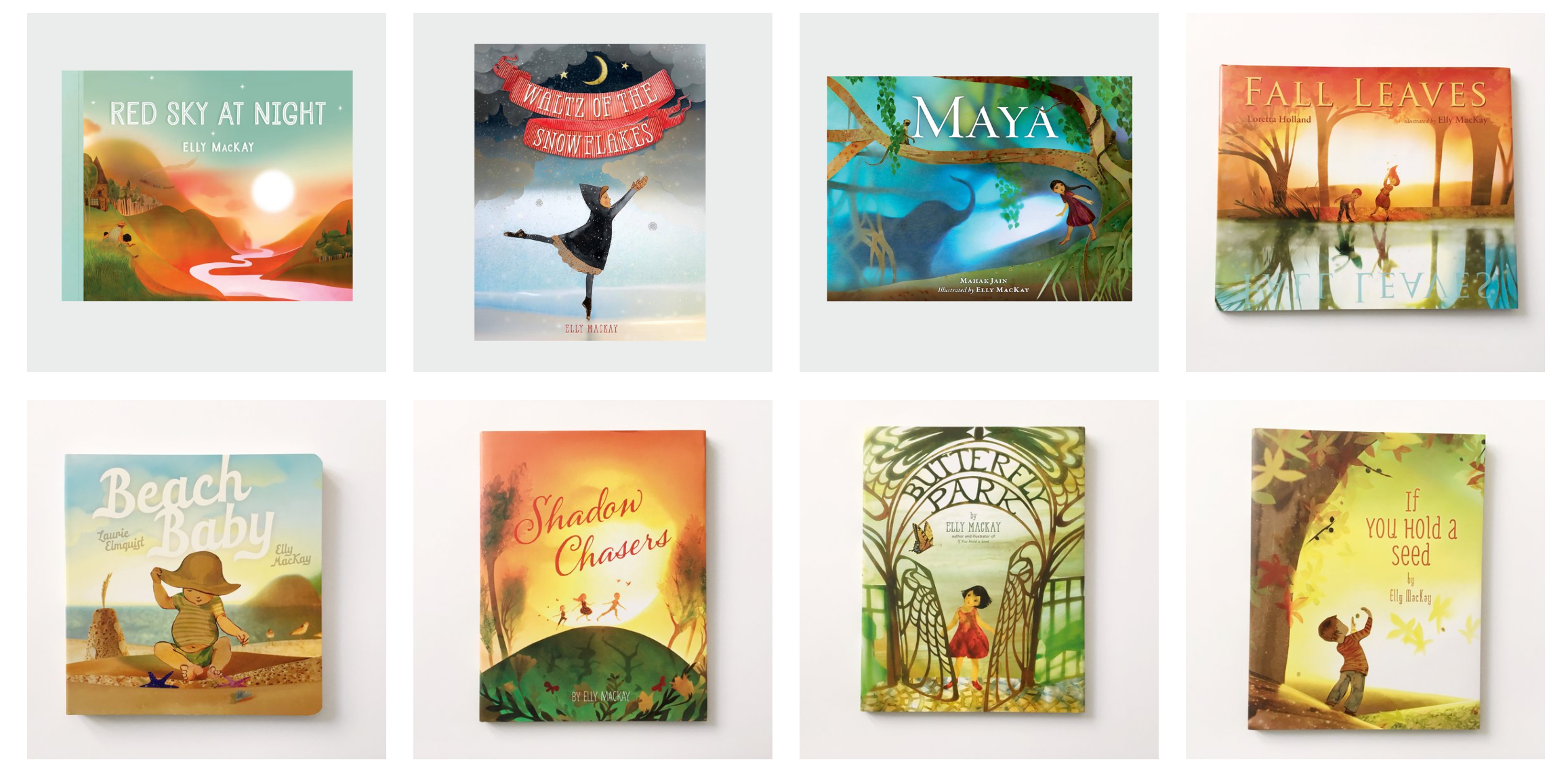
Butterfly Park by Elly Mackay


Moving to her new house in an area that seems drab and grey a little girl notices a sign - Butterfly Park - but sadly there are no butterflies. I love that she takes a gift when she makes her first visit - "for it was always smart to make a good first impression."

There are butterflies in the town but when a young boy helps her catch one and then release it in the Butterfly Park it just flutters away. What is missing? Have you guessed? YES butterflies need flowers for their nectar. But how can this one girl bring flowers to the park - the answer is she cannot do this alone - this is the time for community action. The results are wonderful and Elly Mackay celebrates the renewal of the park with a double spread fold out page showing all the flowers, butterflies and happy children.  Make sure you look at the perfect end papers too. And if you can find this book I have read that under the dust jacket there is a surprise. You can see inside this book here

I live in Australia and yes, I do talk about our books, but I also love to share books from around the world. I was thrilled to discover this book, which comes from Canada. It was published in 2015 but it is still available and for a good price. I suggest adding this book to your shopping list today - I'm not sure it will be available much longer?

Book seller blurb: When a little girl moves to a new town, she finds a place called Butterfly Park. But when she opens the gate, there are no butterflies. Determined to lure the butterflies in, the girl inspires her entire town to help her. And with their combined efforts, soon the butterflies, and the girl, feel right at home. Elly MacKay's luminous paper-cut illustrations and enchanting story encourage community, friendship, and wonderment in the beauty of everyday life. 

The feel-good messages of enjoying nature, rehabilitating under-used green space, and community-building are presented organically in the story, which moves at a pleasantly even pace. But the real treat here is the art. MacKay in in top form, and readers will delight in the mix of colours, textures, and perspectives she employs in creating the visual elements of this lovely book. Quill and Quire

Elly MacKay is an award winning picture book maker living in Owen Sound, Ontario, Canada with her family. She is the author and illustrator of several books such as Butterfly Park, Red Sky at Night and If You Hold a Seed. She attended the Nova Scotia College of Art and Design as well as The University of Canterbury with a focus on printmaking and illustration. She also has a Bachelor of Education from Nipissing University. Elly taught both in schools and as an educator at galleries before pursuing a career in picture books. You can follow her work on Instagram.

I would pair Butterfly Park with this one:


In an interview with NPR Elly Mackay to talk about her illustrations in The Enchanted Symphony (by Julie Andrews and Emma Walton Hamilton) explained her art process: She starts by building miniature sets, complete with the scenery and characters. Then she lights and photographs them, giving the images a more three-dimensional quality. You can read more about this here

This illustrated style reminded me of Soyeon Kim and her use of dioramas. I also thought of The Secret Sky Garden which is one of my favourite books. 

Here are other books illustrated by Elly Mackay:


Wednesday, March 13, 2024

Adoette by Lydia Monks

Stop - do not open this book - you need to linger over the cover. I failed to do this and assumed (completely wrongly or perhaps that was the author's intention?) that Adoette was the little girl - no no no - this is the name of the tree!

On the opening spread - which I assume is the end paper of the hardcover edition of this book - there is a sepia scene indicating this is long long ago. The woman is wearing a long old-fashioned dress and there are several horses with carts. A young boy, also wearing old fashioned clothes, is pointing to a tree. Spring is coming and the small tree has the tiny beginnings of new leaves. Meanwhile new buildings are being constructed and the brick layers are hard at work. 

Here is the next page:

"Do you remember when I first told you about Adoette? She lived on this street all of her life, until she was 100 years old. Just imagine all the changes she saw!"

"When Adoette was little this street was brand new. All the houses had just been built. There was no electricity and no cars. Lots of families moved in, and the street was full of children."

We watch the course of history as the pages turn - personal events like a wedding and major event such as the bombing of the city in World War II. Unfortunately, urbanization means people begin to complain about this tree which has grown quite large over time. There are parking issues, and issues with bird poo. It is time for community action. Some people protest to keep the tree others want it cut down. Sadly, the tree is cut down - on this page all we can see are a few remaining twigs and the huge tree stump.

"After Adoette had gone, the street seemed a much sadder place. ... The name Adoette means 'big tree', but Adoette hadn't always been big ... we wanted to do something to remember her by."

Perhaps you can guess the outcome.

Lydia Monks witnessed the destruction of trees in her town.

The seed for this ultimately uplifting book grew out of the author’s participation in a campaign to prevent the unnecessary felling of 10, 000 street trees in her hometown of Sheffield. Much of the story is shown in the immediately recognisable, detailed illustrations of street life through the ages. BooksforKeeps

Lydia Monks’s beautiful illustrations celebrate the importance of caring for nature and for each other by making time to look out for one another.  Love Reading4Kids

Here is a set of very detailed teachers notes. These teachers notes use the technique of reading the book without showing the cover - so the idea that Adoette is a tree will come as a surprise to your group.

Companion books (this could be a terrific mini theme for your library or classroom)


Friday, March 1, 2024

To Change a Planet by Christina Soontornvat illustrated by Rahele Jomepour Bell


This book has a powerful text but it is the illustrations that really bring this important message to life.

Here is part of the text:

"Our planet. Big, tough, dependable. Our planet has spun through eons of time. Mere moments ago, we arrived. One person. Small, quiet, insignificant. But when one person, and one person and one person become many, they can change a planet."

From the author web page: Spare, poetic text and breathtaking pictures invite readers on a stirring journey that gently illuminates the causes of climate change as well as how our individual and collective actions can make the world better. Meticulously researched and brimming with beauty, hope, and hands-on solutions that will edify and empower even the youngest readers, this loving ode to our planet is vital for every child and family.


The final two pages have answers to five key questions:

  • What is climate change?
  • What is causing climate change?
  • How will rising temperatures affect life on earth?
  • How do we know all this?
  • What can we do to take action?


"In short, elegant lines of lyrical prose, Soontornvat explores the history of humanity's relationship to Earth and confronts the modern threat of extreme weather events and environmental destruction. While these passages offer a sober warning, the book's overall tone is hopeful, centered around the conviction that, just as we can exacerbate the effects of climate change, so too can we forestall and reverse them."  School Library Journal


Unfortunately, this book published in 2022 is VERY expensive here in Australia at nearly AUS$40 so sadly it will be well beyond the budget of most school libraries. 

I am very keen to find other books illustrated by Rahele Jomepour Bell. She is originally from Iran and now lives in the US.


I read a Middle Grade book by Christina Soontornvat:


Sunday, February 25, 2024

The Circus Ship by Chris van Dusen


"Five miles off the coast of Maine and sightly overdue, a circus ship was steaming south in fog as thick as stew."

You could use this opening sentence as a way to begin your exploration of this book. If you are reading this in Australia, you will need a map to locate Maine. Then talk about what 'slightly overdue' might mean and the ramifications of this phrase. The fog is thick - how will that make an impact. What should the captain of the ship do? OH, and wait a minute what is a circus ship? Who or what might be onboard?

The next page helps a little. On board there are fifteen animals, and the ship is heading to perform in Boston. Over the page and yes, the captain - Mr Carrington - does think the ship should wait for things to clear but the aptly named Mr Paine, the circus boss, disagrees and so the ship continues on its journey but of course disaster strikes. The ship hits a reef and everyone, animals too, is thrown overboard. Luckily all of the animals can swim and so they make it safely to shore landing in a small village.

"They pulled themselves up on the shore - bedraggled, cold and beat - then staggered to the village on weary, wobbly feet."

The village people are amazed to find all of these exotic animals surrounding their houses. That night a building catches on fire. The circus tiger has been trained to jump through fire. He dives in and bravely rescues little Emma Rose. 

"The tiger's risky rescue changed everybody's mind - the animals weren't bothersome; the animals were kind."

That could be the end of this story BUT the circus owner is coming. He wants his animals back. The people of the village hatch a cunning plan. You will need to look very closely at this double page scene. Can you spot the fifteen animals? Luckily Mr Paine is not at all observant. 

This book is based on a true story. In 1836 a ship named The Royal Tar was sailing from St. John New Brunswick to Portland Maine. There were 103 passengers and the circus - a elephant, two lions, a tiger, a leopard, six horses, two camels, a gnu, two pelicans, snakes, birds and a full band. There was a disaster. The boiler overheated and the ship went up in flames. Many people and most of the animals perished but there is evidence that the elephant did end up on a nearby island and exotic snakes were also seen on a different island many years after the wreck.  I found this podcast (15 minutes) which recounts these events.

The Circus Ship was published in 2009 but the paperback version [9780763655921] is still available. Here is the webpage for Chris van Dusen. Read more about how he creates his art. If you haven't discovered his work, I highly recommend all of these:


With an older group of students aged 10+ The Circus Ship could be a terrific way to introduce this Australian middle grade book:


When you pick up this book make sure you share the title page with your class or young reading companion. It's a terrific example of why fonts are important. 


Children will pore over panoramic spreads that invite them to find each of the 15 animals and celebrate a denouement that serves up Mr. Paine’s just deserts. Splendid! Kirkus Star review

Sunday, January 28, 2024

Ode to a Nobody by Caroline Brooks DuBois


If Forest was the glue
binding the family 
then I am the heat
weakening the bond.

If Forest was the duct tape,
the button, the magnet, the bungee
holding us together,
then I am the resistance
the yank, the pull.

Quinnie, Quinn, Quinn(ie) 

Mom's ultrasound and intuition
convinced her
I was born to be a boy.
So my parents chose a name
and for nine long months
called me Quinn.

When I turned out a girl,
Mom still liked Quinn.
'It's gender-neutral,'
she insisted.

Dad disagreed
and has always called me
Quinnie. So it's Quinn on paper,
but out loud mostly Quinnie
and sometimes Quinn,
depending on 
who's speaking.

Quinnie's brother is the star of the family, at least according to his sister. Mum and dad keep fighting. Quinnie is sure that is all her fault. And then the tornado hits.

It's been a week
since the tornado struck.
I swear time has crawled.
It could be lack of electricity
in our busted home, or moving to Ivy-
days of doing things I've never done,
and all the time spent offline.
Maybe it's just me,
or maybe it's the truce
between Mom and Dad.
But I've changed a lot in the span
of this 'week-year'.

In class Ms Koval sets an assignment of poetry writing for the whole month. They study famous poems and learn techniques. Reading the poems by Quinnie we gain insights into her family issues, friendship issues, her worries, and the way Quinnie learns how to stands up to her old friends who want her to do dangerous things. 

In one incident Jack and Jade spray paint damaged houses but when the spray tins are left in Quinnie's pack she has a wonderful idea. She writes poems of hope on neighborhood walls as she watches all the people who suffered from the tornado begin to rebuild their lives. 

Stay strong.
We survived!
Hold that vibe.
Hear the song.
Of lives resuming
And hope blooming.

After a month of writing Quinn reads her best poem to the class. Jack kept saying this poetry writing project was a waste of his time but then he slips his poem into her pocket. It has been a year of change but there will be good times to come. You are sure to shed a few tears when you read the final scenes. 

Take a close look at the cover of this book. The town is hit by a tornado - hence the flying objects; Quinn and her mum shelter in the basement but she forgets to rescue her hamster named Pumpkin; Jack was Quinn's best friend and they liked to skate and game but now Jade has arrived and this precious friendship has shifted.


Straight ater I read Ode to Nobody I read Right as Rain (not a verse novel) - these books have very similar themes (parents on the brink of divorce; poetry writing; school life; friendship) so I have found myself mixing up the plot points. I will talk about this book over the coming days.


Saturday, January 27, 2024

Singing with Elephants by Margarita Engle


Brilliant, joyful, and deeply moving. Kirkus Star review


Publisher blurb: Cuban-born eleven-year-old Oriol lives in Santa Barbara, California, where she struggles to belong. But most of the time that’s okay, because she enjoys helping her parents care for the many injured animals at their veterinary clinic. Then Gabriela Mistral, the first Latin American winner of a Nobel Prize in Literature moves to town, and aspiring writer Oriol finds herself opening up. And when she discovers that someone is threatening the life of a baby elephant at her parents’ clinic, Oriol is determined to take action. As she begins to create a world of words for herself, Oriol learns it will take courage and strength to do what she thinks is right—even if it means keeping secrets from those she loves.

The baby elephant mentioned in this blurb is a twin. An unscrupulous actor who seeks fame at any cost takes one of the two-week-old baby elephants away from its mother. Oriol is determined to find the baby. She feels the grief of the mother and remaining twin very deeply. Once she finds little Song (his sister is Dance) Oriol then needs to spring into action. She organises a petition and with the help of Gabriela Mistral letters are written to other famous actors and to the Humane society. There must be a way to save this tiny elephant and stop the cruel intentions which would force her to perform in unnatural ways. 

Here are a few text quotes to give you a flavour of this verse novel:

My bird name
musical and sweet,
is one I chose 
for myself, long ago, in Cuba
when I knew who I was
and how 
to speak.

ELEPHANT ANATOMY

Standing in front of Chandra
I'm stunned into silence.
Tree-root feet.
Half-moon toenails.
Map-of-India ears.
Paintbrush tail.
A snake-shaped nose
with forty-thousand
muscles.
Her fifty pound heart pulses with love
for her soon-to-be newborn.
She's been pregnant for twenty-two months,
due any day.
She needs to eat three hundred pounds of hay
every twenty-four houses.
When she moves
she's as graceful
as a swaying
ocean wave.

MY FUTURE IS BLURRY (extract)

Gabriela Mistral is right-
I cannot predict the future,
but I can imagine a time
when wild animals
are no longer held captive
My words and actions
have shown me what
is possible.
Maybe the will change
the whole world
someday.


Add this book to your list of verse novels to share with young readers aged 10+ up to age 13. 


I met Margarita Engle at a USBBY conference a few years ago so when I saw this verse novel in The Little Bookroom (Melbourne bookstore) I grabbed it.

Have you heard of Gabriela Mistral (1889-1957) - the first Latin winner of a Nobel Prize for Literature? I had not heard of her but there are details at the back of Singing with elephants along with one of her poems.

"I wanted to imagine how she might have influenced a child ... so I invented a Cuban immigrant girl who loves animals and nature as much as Mistral."

"She believed children deserved kindness, and her reforms of rural education became a model for all Latin America. At the same time she became a world-famous poet, and served as a diplomat, representing the government of Chile while living in various countries. .... (She) was an influential peace activist (and one) of the founders of the League of Nationals and later UNICEF."

Awards:

  • Rhode Island 2024 Children's Book Award Nominee
  • Bank Street 2023 Best Children's Books
  • New York Times Best Children’s Books of 2022
  • Kirkus Best Middle Grade Books 2022
  • School Library Journal-26 MG Books for Latinx Heritage Month 2022
  • Nerdies Award, 2022
  • Cybils Award Finalist
  • School Library Journal Mock Newbery Suggestions
  • Kirkus Starred Review
  • Junior Library Guild Selection
  • New York Times review
  • NPR Morning Edition interview
  • Publishers Weekly starred review
Margarita Engle is the author of these (Summer Birds is a firm favourite of mine).


Wednesday, May 31, 2023

Bailey Finch takes a stand by Ingrid Laguna


Bailey has a special friend - her dog Sheba. She takes Sheba for a run down at the creek near their home nearly every day. Bailey loves to climb trees and this bush retreat is her happy place but one day Sheba is badly hurt when she swallows some glass. Sheba is rushed to the vet but this incident means Bailey now looks more carefully at the creek. She sees all the dreadful litter and degradation of the natural environment. 

"Bailey found chocolate wrappers, old tennis balls, bits of foam, coffee cups, beer cans, a Coke bottle, rubber bands, string, plastic packaging and tinfoil."

A few days later when she visits the creek Bailey means a boy called Israel. He is a natural history walking encyclopedia. He talks about the birds and the frogs and even shows Bailey a photo of a platypus - but we do learn is a very long time since any platypus were seen in this area.

Bailey is a girl of action. Things are hard at home because her mum has died and her father has retreated into his grief. Bailey wants to reconnect with her dad and she hopes if she can inspire the community to assist with cleaning up the creek then he might notice her and move on from his deep sadness. Meanwhile she is also desperately worried about her precious dog because he seems to be getting worse not better. Every visit to the vet is so upsetting. 

Bailey and Israel visit the council office but they won't help them because they are too young so she and Israel decide to clean up the creek anyway. They make some posters and flyers and they invite the community to come on Saturday. It is a wonderful affirming scene when lots of people turn up and heaps of hessian bags are filled with debris and even better every one is keen to make this a regular Saturday event. 

I picked up this 2021 book because it was a Environment Award for Children's Literature, Fiction, 2022 winner.

Bailey’s desire for change stems from sentiment: the creek where she’d spend time with her parents, and her dog’s sickness from that same creek. If we all started to initiate the change needed in the places we regularly interact with, we can collectively make a difference – and Israel and Bailey’s friendship is a testament to this. Better Reading

This book is an easy read with that all important happy ending. I had one tiny quibble. Early in the story Bailey mentions giving her dog Sheba some chocolate cake - this is very dangerous. Dogs should not be fed any chocolate. I wonder why how the book editor missed this? I do like the cover. If you are studying local government with your class you could use Chapter 17 as a way to discuss the role of councils and local community activism. Here is an interview with Ingrid Laguna where she talks about this book. 

Thursday, December 29, 2022

A Sea of Stories by Sylvia Bishop illustrated by Paddy Donnelly


Roo goes to stay with grandpa for a few days. He lives in a small cottage by the sea with a wonderful view of the beach and a nearby lighthouse. In his younger days Grandpa was a fisherman and over time he has collected all sorts of interesting objects which now fill his house. Near Grandpa's house there is a small cove. It is a place Roo loves to visit but sadly Grandpa can no longer manage to clamber down the rough path.

Roo and her Grandpa do enjoy their day - playing hide and seek. In the late afternoon they settle down inside and Grandpa begins to tell Roo the most marvellous stories, true stories, using the curious objects in his collection. He begins with a gold dubloon which could be pirate treasure. 

Over the following days Grandpa shares lots of stories but Roo keeps thinking about the Cove. Grandpa loved visiting the cove and so many of his stories are set there, plus it was his favourite place to view the sun setting. Roo is a problem solver and a kind girl. When her parents return she explains the problem and her proposed solution. 

"They parked the car in the Market Square, and went to ask for help. Before long a great crew of people had assembled, carrying spades and buckets and wood and rope and tools of all sorts and sizes."

I will leave you to imagine the next scene and also to imagine the happy ending to this story. You will need to take time on the last page because there is something important and very poignant in the illustration. 

This poignant tale about a girl’s touching relationship with her grandfather is ideal for children who are moving on from picture books. Perfect to explore the concept of the past, it beautifully celebrates the value of sharing stories and memories. The vibrant, full-page illustrations have a dynamic, painterly quality and successfully evoke the wildness and beauty of the coast, bringing the text to life.  Book Trust

The illustrations are delightful, airy and with a frothy texture evoking the soft wildness of the sea in their special cove, and the scenes with the garden and the sea are just so evocative you can smell the salt and green leaves. Little Fae

This book is from a series published by Little Tiger either called Stripes of Colour Fiction. I talked about Little Rabbit's Big Surprise earlier. I really do highly recommend this series for independent reading and also as books to read aloud in a family. A Sea of Stories is aimed at a slightly older audience of 6+. The colour illustrations are especially fabulous. Paddy Donnelly is a children's picture book illustrator and author, originally from Ireland and now based in Belgium. His art reminds me of Salvatore Rubbino and especially the book Ride the Wind


And here are some of his books: