Showing posts with label Creativity. Show all posts

Sunday, August 16, 2026

Book Week challenges 2026


Image source: CBCA merchandise


This is controversial but I am not a fan of Book Week dress up days or parades.  I think Book Week should be a celebration of books, reading, libraries and creative thinking, so in my school, as an alternate activity, I used to set four Book Week challenges. Sometimes kids worked on these during breaks and sometimes teachers allowed their class to complete a challenge in class time. 

My rules are simple but of course you can set your own:

  • the challenge must be completed during the school day (not at home)
  • the deadline for entries is 3.25pm each day
  • label your work with your name and class
  • up to ten winners will be announced each morning and they will each received a small prize bag there are also certificates for highly commended and commended entries
  • you can visit a showcase of entries in the library during Book Week and beyond

Here are ten challenges I have created for 2026 around the slogan 'Symphony of Stories'.  Please feel free to use, adapt, adopt etc.  I suggest selecting four challenges that appeal to and you could set one each day over four days of Book Week. It takes a long time (at night) to sift through the hundreds of entries but it is also fun. I think it is important to maintain the excitement by announcing winners each day and then displaying them in your library.

Here are my 2026 ideas:


Your library needs an advertising jingle – write a song using a well-known nursery rhyme tune that encourages the youngest children to read a book or borrow a book or share a book

Books can be other shapes – not just rectangles. Make a three-page book in the shape of a musical instrument – it will need a title, cover, title page, one story page and a back cover with a blurb or for bonus points make a pop-up book that looks like an instrument

Puzzle me a puzzle – use the letters of the 2026 CBCA book week slogan 'Symphony of Stories' to design a puzzle such as a find-a-word, cross word, or a code to solve

Using music staves as your lines write the first line of your story – make it large enough to fill a whole page ready to display in the library

The members of the orchestra have heaps of spare time – make a list of instruments and suggest a great book for each player to read and present your work as a poster to display in their rehearsal room


Write a short story (one page only) that features music or musical instruments (perhaps a musical instrument could be the main character)

Illustrate the book cover for a new book which features a musical instrument or a song and add the title, plus the author and illustrator names (be inventive with these names if you like).

Design a game that includes some of the 2026 short listed picture books – it might be snakes and ladders, or a simple version of monopoly, or a card game perhaps

Choose a book that can be made into a movie – write a proposal in the form of a letter to a famous movie director suggesting which book could be a movie and which music they should use for the movie soundtrack. Did you know the movie Babe uses music by a famous composer Camille Saint-SaĆ«ns and his Symphony number 3 and Star Wars uses music from Carmina Burana by Carl Orff and Bluey also has classical music in the episode called Sleepytime from a piece called The Planets. The book you choose for this challenge could be a personal favourite or even one of the 2026 CBCA shortlisted titles.


I penned a post linking classical music and children's books a few months ago. And this post about an elephant and a piano in Thailand might also give you some inspiration. 


Happy Book Week


Thursday, July 16, 2026

Island Born by Junot Diaz illustrated by Leo Espinosa


"Mai was from a city so big that it was like its own country. India and Camila were from a stony village at the tippy top of the world. Matteo had lived in a desert so hot even the cactus fainted. Nu was born in a jungle famous for its tigers and poets. And Lola was from the Island."


Lola, who immigrated when she was six years old, does not remember the Dominican Republic, and sets out to fill in her missing memories by talking to members of her family and community. 

I especially love the vibrant illustrations in this book. I can imagine using this book with a class as a jumping off point to talk about family and heritage and also here in Australia to talk about our multicultural community. You could also talk about displacement, refugees, immigrants, sharing memories, adult child relationships and why people move from one country to another.


Publisher blurb: Every kid in Lola’s school was from somewhere else. Hers was a school of faraway places. When Lola’s teacher asks the students to draw a picture of where their families immigrated from, all the kids are excited. Except Lola. She can’t remember The Island—she left when she was just a baby. But with the help of her family and friends, and their memories—joyous, fantastical, heartbreaking, and frightening—Lola’s imagination takes her on an extraordinary journey back to The Island. As she draws closer to the heart of her family’s story, Lola comes to understand the truth of her abuela’s words: “Just because you don’t remember a place doesn’t mean it’s not in you.”

I picked up this book at a recent charity book sale - it is in mint condition with a dust jacket. This book was published in 2018 and I suspect it has been sitting quietly on a family bookshelf for many years. Take a look at this review

I have a Pinterest entitled "She looks like me" - this book will be a perfect addition to that collection. 

Awards: 2019 Pura Belpre Illustrator Honor.

Companion book for an older reader:


Thursday, March 12, 2026

The Making of Martha Mayfield by Jo Dabrowski


"I make sets. At least that's what I call them. My sets aren't life-sized, of course. I make them in boxes. ... I've made loads of sets. One of nearly every room in our house. ... I've also made a set for every shop on Charlotte Street ... (and) I've made every classroom I've ever had up to Year Five. ... Oh yes, I made paper people too. ... I use my sets to practice first days of school, excursions and sports days. I've practiced tricky conversations and playdates too. When something is coming up that makes me nervous I do a 'dress rehearsal' with my sets."

Grade five is a time of change for Martha. Mum loses her job. Iris, her sister gets yet another boyfriend, it is the time at school with elections for School Captain, and all of Grade five have to prepare things to sell at a Market Day. Martha is so shy she cannot talk at school, at all. At home she wants to tell her mum about school but she holds back because mum seems so distracted and sad. 

Could Martha run for School Captain? She makes a list from the application form and then she puts the words into two origami boxes - green and red. She has these covered - cares, listens, organised. She needs to find a way to achieve these - contributes, voices ideas, good at teamwork, and confident public speaker. 

About halfway through The Making of Martha Mayfield I stopped to think about the title. Martha does indeed do some making but then a couple of hours after I finished this book, which is a 2026 CBCA Younger Readers Notable title, I realised of course this book is about the 'making' of Martha herself. Martha moves from a very shy and quiet girl who rarely if ever speaks to a girl who finds her voice and a way to express all those terrific ideas she has had bubbling away in her brain and even a way to try out for School Captain.

This book was published in August last year but I overlooked it in many bookshops. The cover didn't really appeal to me but you can see I should not have let this guide me as I have given this book four stars.

The Making of Martha Mayfield is a long book with close to 300 pages of fairly small print so keen readers aged 10+ will need some reading stamina but I did read the final half of this book in one sitting because I become quite invested in Martha hoping she would be able to overcome her shyness and succeed with both the Grade 5 Market Day Project and the bigger challenge of the School Captain elections. In fact as a shy kid with a shy mother some parts of this story really did touch my heart. 

Jo Dabrowski creates four distinct characters:

Martha - "I know why Mum says being quiet is a good thing, and why she goes on about me noticing stuff. She does it to make me feel better about myself. So I feel quiet and interesting, not quiet and boring, which is what the kids in my class think I am. If they think of me at all, that is. I might be good at noticing but I'm even better at going unnoticed."

Iris her sister has no emotional intelligence. The new boyfriend is awful but Iris is so set on having a boy friend she will do anything to please him including taking on a whole new 'goth' style and of course ignoring or dismissing her little sister. There is an awful scene in this book in the chapter entitled 'Sticky Notes' that broke my heart - it is so cruel.

Mum is shy and still grieving the loss of her husband. She finds social situations especially difficult. I imagine she was herself, badly bullied at school. "I picture Mum staying behind, sitting at her machine, too shy to join in." Mum is also a bit overwhelmed by Stella, her husband's mother, who is never short on advice. 

Stella, the grandmother - the girls have to call her Stella not grandma. She's obsessed with Michelle Obama and with looking young and stylish. Stella's character is so well described to the point where I actually did not like her at all. This is so different from most books where the grandmother character is usually compassionate and wise. Stella is so egotistical that she turns every conversation back into a boast about herself. Here is a quote from Stella:

"Stella talks about Dad all the time, without anyone asking. She doesn't tell stories so much as facts. They start out being about Dad but end up being about her. Like, she'll say he was a wonderful son ('He absolutely adored me.'); he could turn the most ordinary event into a funny story ('He got his sense of humour from me, you know.'); people were drawn to him ('He got that from me too,') ... "

I did love creativity of Martha. As you read in the quote at the beginning of this post, she makes models of her home, classroom, and even the shops in her street. These projects are given detailed descriptions in the story - you can almost see her work. And her idea for the market day is brilliant.

Publisher blurb: Martha Mayfield has always been the quiet kid. Martha is, after all, her mother's daughter. The shy child of an even shyer mum. And she likes it this way. That is, until Martha's mum loses her job. And Martha's teacher overlooks her at school. And soon, Martha realises something has to give. Can she really go through life being so quiet that nobody takes her seriously? Should she really keep all her good ideas to herself forever? Putting yourself out there is every quiet kid's worst nightmare, but Martha is determined to make the most of it. And perhaps to make something of herself along the way ...

Click these review comments for more plot details:

The pace is perfect, leading to a dramatic climax that is surprising and very satisfying to read. Kids' Book Review

Whether you’re an anxious fifth grader or not, The Making of Martha Mayfield is an endearing and highly relatable read, with multifaceted characters that you’ll fall in love with. Story Links

Here are the CBCA Judges comments from the Notables booklet:


Jo Dabrowski is the author of two other Notables - Dear Broccoli a 2026 CBCA Notable (Picture Book) and The Thing about Christmas (Early Childhood).


Wednesday, October 8, 2025

Anna May's Blue Cloak by Christiane Cicioli illustrated by Susan Pearson


When she was a young girl Anna May's Grandmother made her a beautiful blue cloak. The fabric on the cover makes it look so tactile - perhaps it is velvet. Anna May is young and so for now the cloak is a perfect fit over her dress. But over time Anna May grows.

"Soon the cloak, still beautiful, was too small. Her mother carefully folded it up and put it away in her wooden chest."

Years later Anna May became a mum to a baby girl. Anna May remembered the beautiful cloak. Now is the time for the cloak to be used for another garment. You can see her here using her grandmother's sewing machine - my own little Nan had one just like this.


Anna May uses the cloak fabric to make a dress for her daughter, but she also carefully puts the left-over pieces back into the wooden chest. Anna May's daughter loves her dress but over time it becomes too small. Many years later Anna May's daughter had a baby - a son. Luckily there was enough fabric left from the cloak to make him a handsome blue jacket. 

Have you worked out the pattern here. YES - and then Anna May's son becomes a father.

"Anna May wanted him to stay warm ... she remembered her blue cloak ... she took out the fabric that was left after making the dress and the jacket."

I wonder what she made? And what about the tiny fragments of fabric that are still left over?

I have a friend who is volunteering at one of our local charity shops. She mentioned the idea of following the journey of a piece of clothing could be a great idea for a picture book - she needs to see this book.

You could also use this book to talk about family relationships and the way we can show this using a family tree. If I was sharing this book with a class, I would bring in a collection of things made by my grandmother Amy - a set of beautiful doll clothes including silk pyjamas, casual shorts with a matching top, a lace dressing gown and brown corduroy trousers. 

Anna May's Cloak is a Canadian picture book. It was published in 2013 but it is still available. If you are reading this close to the time, I have penned this post I found one copy available from an online Australian book seller for a great price - but they only have one copy. 

Christiane Cicioli, born in Quebec, has lived both in Canada and the United States. One of the most enjoyable activities she has shared with her family and three now grown children has been to hear and recount the tales and customs of grandparents, great-grandparents, and other relatives of previous generations. Those inspirational moments have become the source of her writing. After working with children in elementary schools for many years, she is now a freelance writer and translator. Susan Pearson lives in Vancouver, BC, with her husband Ed. She creates images for children's books and teaches watercolor painting classes.

Companion books:


Sunday, March 16, 2025

Searching for Treasure by Johanna Bell illustrated by Emma Long


I have read hundreds or even thousands of books, especially picture books, but every now and then a new book comes along that surprises and completely delights me. The first double spread took my breath away. 

Image source: Larrikin House

Think about all the conversations you could have over this one page - where are they going? who can you see? how do they feel? how do you know this? what do you know about the weather and the season? can you see some things on the edge of the sand near the water? what might they find?

When you walk along a beach you do have to look closely to see all the treasures. This book shows you the treasures in real life sizes, but you are invited to look really closely to discover an interesting science fact about each of these wondrous things. I am so excited to see fingernail shells - I well remember finding these on a beach when I was a very young child. 

So, this could just be a science book about the seashore - but it is so much more. I am not going to spoil the final fold out page but it is sure to delight your young reader and perhaps entice you to take a walk along a nearby beach.

Bookseller blurb: Searching for treasure on the high tide line. One step, two steps, what can you find? A walk on the beach becomes a joyous, creative adventure. What has the sea washed up? Can you find its hidden treasures? Find sea urchins and shark's eggs, ghost crabs and cuttlefish, limpets and barnacles and so much more.

There is an important note on the imprint page - "With thanks to Dr Catherine Cavallo for her marine species expertise." So, you can be assured of the authority of the science facts.

You can share this book with a very young child because the text contains a repeated pattern but an older child is sure to be fascinated by all the tiny details written in tiny italic text beside each treasure.

One step, two steps, what can you find? Searching for treasure on the high tide line. Three steps, four steps, what can you find?

Here are a few 'fun facts':

  • The best time to look for shells is after a storm
  • Baby sharks are called pups!
  • Sponges are animals not plants
  • Periwinkles can't swim

Huge congratulations to Allen and Unwin on the book design used for Searching for Treasure. This book has a fold out which I already mentioned but there are also sculptured half pages somewhat like a lift-the-flap. The tide is out on the front end paper and the tide is coming back in on the back end paper. This has huge implications for the final image - oh no!

It is a long way off, but I am going to predict Searching for Treasure will be a CBCA 2026 Notable. Here are some teachers notes

I loved that Searching for Treasure has two ways it can be read; large simple text is a prompt to look at the picture and point things out, plus there is small text between the treasures, educational facts winding between the illustrations. These were like hidden treasures in themselves. Little Squirrel's Bookshelf (click this link to see more illustrations inside this book)

The final gatefold is masterful!  The Bottom Shelf

Johanna Bell lives in Tasmania where she writes fiction and runs a community arts business called StoryProjects. Johanna is the author of The Colour Catchers, illustrated by Laura Stitzel and Hope is the Thing, illustrated by Erica Wagner.  


Emma Long is an accomplished artist, exhibiting regularly in group and solo exhibitions across the Northern Territory. Emma lives in Darwin with their husband and four children and continues to work as an illustrator and an art educator. Other books they have illustrated include Diane Lucas and Ben Tyler's Walking in Gagudju Country and Walking the Rock Country in Kakadu.


Tuesday, June 18, 2024

Fox and Sons Tailers by Paddy Donnelly


This idea seems so original to me. Tailers who make tails! You are sure, also, to enjoy all the tiny details in the illustrations. 

In the street scene you will see a shop called Harecuts and a stork delivery service. Among the myriad of city dweller animals I saw a koala, walrus, zebra, flamingo and several elephants. This reminded me of books illustrated by Australian illustrators - Andrew Joyner (The Swap), James Foley (Stellaphant), Gus Gordon (Herman and Rosie) and Tohby Riddle.

On the shelves of the tailer's workshop the book titles are so funny - The big book of tiny animal tails; Fairy Tails; Folk Tails; and The art of Tailering. Rory comes from a family with generations of tailers. Rory is learning the trade. Tails are needed for all sort of occasions - parties, weddings, starting school and so on. Rory, though, has become a little tired of the way every day is the same and the way his dad follows such strict tail making rules. Surely there is room for a little creativity. Rory sketches his ideas and then late at night he makes tails that are sure to be way more fun for the customers. 

One day an important customer arrives. He sees one of the tails created by Rory and in a lovely moment of affirmation his dad accepts that Rory does have wild and wonderful ideas. So, they set to work and make the customer the most amazing feather tail and the family business is saved and once again popular with all the people (animals) of the town. 

You can see inside this book here. I highly recommend adding this book to your school library. It is funny, yes and clever, yes, but it is also heartwarming to see dad accept Rory has really good, creative ideas - so further generations will enjoy their working years at Fox and Sons (and maybe even daughters) will join the family firm. 

Bookseller blurb: Rory's dad, Fox, is a tailer. The BEST in the business! Animals come from all over to have their tails made by him. Rory helps his dad in the shop and one of his jobs is measuring the customers for the tails - which isn't always easy! But Rory is bored of making the same old tails. He has his own amazing ideas ...

This is an absolutely beautiful, heart-warming book about the power of creativity and the special father-son relationship. It also reminds adults and children that we should never forget to try thinking outside the box every now and again. Paddy Donnelly’s illustrations are full of adorable detail, from lovely background touches to a cast of sweet, characterful animal characters. Book Trust

Paddy Donnelly is an Irish illustrator now living in Belgium. He has over 15 years' experience as an illustrator and designer, and especially loves working with a textured, painterly approach. With a fondness for illustrating the sea and animals, Paddy tries to inject a touch of humour to his work wherever he can. Coming from a graphic design background, Paddy is comfortable working in different illustration styles depending on the needs of the project.

Awards for Fox and Sons Tailers: 

  • LAI Children's Book Awards: age 0-5 - 2023
  • Literature Association of Ireland - Winner
  • IBA2022-Shortlist-Kids-Junior
  • Children's Book of the Year (Junior) - 2022
  • Irish Book Awards - Short-listed
  • Children's Picture Book Awards
  • The English Association - Short-listed
  • ULKA Book Awards: 3-6+
  • UK Literacy Association - Short-listed
Here is an interview with the author. I was pleased to see he mentions our Shaun Tan and his book The Rules of Summer. 

Here are some other books by Paddy Donnelly:


Saturday, September 30, 2023

A Squiggly Line by Robert Vescio illustrated by Kathy Creamer


Is this book meant to convey some really deep meaning or life message? The words of the text do seem slightly philosophical, but it just doesn’t quite work for me at that deeper level perhaps because the illustrations, while fun and creative, seem to be aimed at a very young audience. 

There are other books about pencils and drawing which break the fourth wall like this one – Bear Hunt by Anthony Browne and the classic book Harold and the Purple crayon. 


This book actually seems a little derivative of those earlier and famous titles. 

Some of my questions when I read this book:

  • Where did the sailor hat come from? 
  • What is the role of the dog – a bystander? He seems quite threatening at times.
  • Why did the mouse draw a boat? Is he preparing for an adventure?
  • Where did the red ball come from? The size seems out of proportion with the mouse but if it is smaller than the mouse then it might be swallowed by the dog (if indeed it is his plaything?).
  • If the mouse is offering advice to the dog, then the final illustration does not make sense because the dog looks worried about what he is seeing and for some strange reason his eyes have red vein lines? 

I also found the blue fluffy coat worn by the dog a little odd. 

Book design: I wish the designer had not included all of those full stops.   
I found the final page quite confusing.  The mouse says "ta-daa!" because he has successfully drawn his boat and is now able to sail away from the dog? Oh, and notice his pencil keeps changing from blue to brown to red back to blue and finally green. I guess this is hinted at in the pencil shavings on the front end paper.

Publisher blurb: A Squiggly Line is a story about the pursuit of one’s dream to create a masterpiece, similar to the rules of taming the life we live. The boy in the story starts with a blank page…he doesn’t know much about what he’s about to draw, but he knows he has a grasp on how to make it happen. During the process, even though his drawing may seem squiggly and messy at first, he soon discovers surprises along the way–surprises that he never thought existed. And from that moment, his creation comes to play.

But having said all of that I think it would be good to add this book to a preschool or infants school library and I like the pencil itself, I really like the end papers which, as I said, are littered with pencil shavings, and the stark white pages work well. Here are some teachers notes with very detailed art ideas. 


You could pair The Squiggly Line with this book by Anthony Browne:


You can tell that this book confuses me - which is strange because it is surely a simple idea. I read the comments of one commentator who really liked this book. She said it could be aimed at unlocking emerging (and reluctant) writers? I confess this idea is a little to obscure or intellectual for me.

Here is a comment by another reviewer: The lines the mouse creates shows that when things are in your way, go high. Or when things are tough pause and be clever. Robert Vescio shows us that imagination is a good thing and staying the course, going with the flow, and sometimes changing directions will eventually get you where you need to be. Cannonball Read (Raising funds for the American Cancer Society).

And the US bookseller Barnes and Noble said: Told in a unique way full of play and creativity, the story will send a powerful message about the endless possibilities of having fun with one’s imagination. It will help children to explore how they can turn a simple squiggly line into a playful idea. A Squiggly Line is a fun and entertaining story about how life is very much the same as a squiggly line. Our squiggly line, our life, is shaped by the directions we take in our lives and how we can develop the confidence and ingenuity to overcome the problems that try to trip us up. A Squiggly Line is a story about embracing life’s journey and creating the life you want. It shares lessons for life. It offers great advice for anyone. It’s a simple message about life and what it entails to sail on a pursuit of one’s dreams. This story will appeal to children graduating, celebrating a milestone or mastering the first day of school. It’s a great inspirational story to motivate children. Like the brave little mouse in the story, we all have a life that yearns to be created!

Here is a previous Robert Vescio book that I really enjoyed:


Friday, September 8, 2023

There's no such book by Jessica Dettmann illustrated by Jake A Minton


This book offers a fresh perspective on the whole ‘book week’ costume dilemma and should encourage young readers to think about ‘what really makes a book, a book?’ This book will enjoyed in schools and homes in the lead up to book week and it might inspire weird and wonderful costumes. (Hopefully based on books and not Disney or other commercial characters). 

There is an explosion of imaginative ideas on the cover of this book. The optimism of mum contrasts beautifully with the doubtful face of Ellie. Mum and Ellie are shown to be so different – in appearance and personality - yet they have such a wonderful and gentle bond. Mum’s patience and creativity is to be commended. Mum is creative and eccentric with wild red hair and a colourful cardigan, while Ellie is more scholarly and tidier, with neat straight black hair and a crisp school uniform. Their home is a wild and creative space – full of books, plants, tea, lamps and candlelight.

Mum and Ellie also have such gorgeous expressive faces. I especially adore mum’s huge glasses and hand knitted rainbow cardigan and you can feel the love behind the squeeze when mum hugs Ellie after telling her there will a costume solution in the morning. 


This is a single parent family but that theme is just in the background. In a poignant moment we get a hint about dad from the photo which we see early in the morning as Ellie heads down the hallway. 

The end papers come from the kitchen tiles and it interesting that the tile pattern disappears when Ellie tells her mum book week is tomorrow!

The house lighting gives the pages in this book a lovely soft glow and it is easy to identify nighttime and morning light. Mum’s collection of pot plants are also very appealing. Jake Minton has given mum and Ellie big wide eyes, the expressive faces and beautiful body language. 

There is a quiet, gentle connection between the mother and daughter and I so appreciate the love the mother shows when she makes that special book for her little girl. That lounge on the front cover looks so comfy. When you look closely you can see Mum has worked so late into the night on the new book for Ellie she didn't have the energy to put on her own pyjamas and so she wore her jumper to bed! The shared ice cream at the end of the book adds to the happy mood and assures the reader that this costume will be the perfect one for this little girl. We know she will feel that she does fit in with everyone else at their book week event. 

There's no such book was short listed for our CBCA (Children's Book Council of Australia) New Illustrator award 2023

Here is the judges' report: Wide eyes and expressive faces and bodies stand out creating distinct characters with a gentle connection between the mother and daughter depicted. An engaging cover and endpapers gracefully anticipate aspects of the story, while the setting is an appealing space, and the lighting gives the pages a soft glow. The colours vary on each page creating shifts in mood from the earthy reality of home to the vibrancy of the imaginative worlds; also, the use of broken white outlines lends a sgraffito element artistically, which lifts the colours. Minton has an assured illustrative style with an authentic and individual use of Procreate; he understands point-of-view, layout, colour and design.

I am not a fan of book week parades and dress up days. I worked with children who came from very poor circumstances with no family support for events like this and many could only come in play clothes or even their school uniform. On the other hand, though this book does give a lovely message about improvising a costume and there is no sense of a competition which is what it became at one of my school where wealthy parents hired costumes from a theatre company in Sydney and this is even more shocking because this was the school where some little children had no lunch, no breakfast and one parent in jail so of course they didn’t have fancy costumes to flaunt at a parade. But this is a book that I would be happy to share with a group of children in a school library - ideally in the weeks leading up to Book Week if the school is planning a dressing up event. 

Tuesday, July 11, 2023

The Concrete Garden by Bob Graham


Amanda and her mum live on the fifteenth floor of an enormous apartment complex. Heaps of kids live in this building. Today is the day, after "a cold, hard winter", that the doors have been opened and so everyone jumps in the lift and travels down from their apartment homes to enjoy running and playing outside. It is true that their playground is just a large area of concrete but there is so much these kids can do there - ball games, bikes and scooters, and running and jumping with their dogs.

"Children spilled out like sweets from a box."

I love the image conjured by this phrase - happiness, surprises, colours, sweet times ahead.

Amanda is carrying a huge box. It is filled with chalks of every colour. She sets her box down on the ground and draws an interesting picture. If you share this image with a group of children I am sure they would have lots of ideas about Amanda's drawing and also creative ideas about how to add to this image to make it into something even more interesting or perhaps surprising. In fact that is exactly what Jack does. He picks up some green chalk and adds stem and instantly Amanda's picture is a dandelion.

Gradually the enormous picture grows. Every child has something to contribute. You can see some of the children's chalk ideas on the book cover. Bob Graham, as always, paces the page turns perfectly building up our anticipation until just past halfway when the full picture is revealed. 

"Someone drew butterflies, balloons, a caterpillar, and a bumblebee passing by. A beautiful exotic garden spread across the concrete."

From her balcony high up in the building Nasrin sees the wonderful picture. She snaps a picture on her mobile phone and sends it to her mother in Isfahan, Iran.

"With a tear in her eye, Nasrin's mother then sent it to everyone she knew."

The image travels across the world including to the apartments above the concrete plaza where the children have been drawing. The residents finally look out of their own windows, and everyone applauds - someone even throws down some flowers. The children have drawn the most amazing scene in the area below their huge, towering apartment building. It is a joyous moment. Days later though, (spoiler alert) it rains and the picture is washed away.  Once the rain stops, the children once again "burst from the building". Will the children draw another huge piece of art or are there other ways to play? 

Bob Graham gives the kids terrific names - Janet Fairly (it is so true some kids are always known by their full name); the Bradley twins; Lovejoy; Luke's dog Alfie; Indira; Cecilia; Arthur; Rosie and of course Amanda.

I really appreciate the way Bob Graham didn't give his story any hint of magical realism. Creating their chalk drawing has filled these kids with joy but Bob has not been tempted to recreate the famous scene from Mary Poppins and have the children jump into the picture to bring it to life. During Covid 19 lots of children drew games and pictures on sidewalks near their homes. You can see this idea on the cover a very old book by Bob Graham - Charlotte and Henry.


This sweet story - The Concrete Garden - celebrates simple things such as playing, having fun, cooperation and creativity. At no point does anyone ask Amanda if they can use her chalk - she has clearly bought it along to share. We are also left to guess how it is that mum had this huge box of chalk which is given to Amanda as she steps into the lift on the first day the children can all go outside to play. 

Take a look at other chalk books and a great idea for using this book with your classes from my friend at Kinderbookswitheverything.

Bob Graham is quite famous for his wonderful end papers but he has kept them quite minimal in his newest book (due for release August 2023). He does, however, begin the story on the page before the title page and then continues with a wordless story right across the double spread of the imprint page and title page. We see the kids all bursting out of the lift with so much excitement you can almost hear their laughter. Bob Graham pulls out all the illustration tricks as you would expect - full page spreads, small framed images, a birds-eye view (complete with a huge bird), and lots of glorious white space. And of course there are lots of tiny details that require close inspection and revisiting.

Walker Books: After a cold, dark winter, doors opened. Children spilled out like sweets from a box. Amanda was last one out of the tower block. She brought some chalk with her. On every inch of the concrete outside, the children drew pictures of everything they could think of, from flowers and snails, to spaceships and queens. Before long, a beautiful and exotic garden spread out across the concrete. From master storyteller Bob Graham comes a charming, and gently post-pandemic story about finding optimism after a dark spell, and the nurturing power of community friendships in an urban setting. The Concrete Garden will resonate with anyone who has been apart from their loved ones, and will encourage us all to find the brightness and colour within ourselves.

Bookseller blurb: Bob Graham’s heartwarming tale, The Concrete Garden follows Amanda and the other children as they burst from their tower block, armed with chalk and brimming with creativity. With pictures of everything from flowers to spaceships adorning the once drab concrete surroundings, a beautiful garden springs to life. This gently post-pandemic story celebrates the power of community and friendship to nurture optimism in dark times, and inspires readers to find their own inner brightness and colour. It’s a must-read for anyone who has experienced separation from loved ones.

In this book, The Concrete Garden, Bob Graham revisits the themes of A Bus called Heaven where, in a similar way, the small actions of a child lead to wonderful community connections. 


Other connections: The urban scenes in The Concrete Garden also echo the family travelling in the lift in Oscar's Half Birthday. Bob Graham also celebrates imaginative play in his book Libby, Oscar and Me and gardens in his books The Wild, Rose Meets Mr Wintergarten and Pearl's Place.

I was lucky to borrow this book from the library where I volunteer at Westmead Children's Hospital here in Sydney. I will now need to buy my own copy as I have a plan to own 'every' book by Bob Graham.

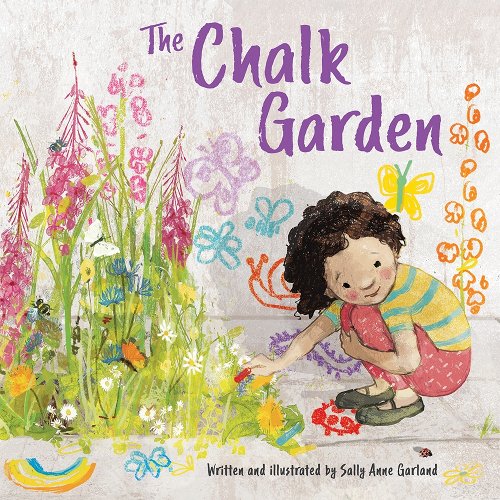
Here are some other picture books about drawing with chalk.


Sunday, May 14, 2023

Violin and Cello by Catherine Greer illustrated by Joanna Bartel


Expertise in music takes time. If you look closely at the illustrations in this book you can see the seasons changing as these two children practice their two instruments. They live in an apartment building next door to one another. The boy is learning violin while the girl practices her cello. Then one day the boy sends the girl a message via paper plane - it is a piece of music. I loved the way the full score appears in the book. The piece is called The Mystery Friends part I an allegro piece for violin and cello. The two children practice the new piece and then the cello girl writes her piece - The Mystery Friends part II Adagio. Finally, when the music is perfect they meet side by side on their balconies and begin to play. People in the street below stop to listen to their beautiful music. A beautiful moment of a community coming together.

And "that's how the mystery friends became real friends. Cello from a backpack. Violin from a case. The new friends made music all over the place."

Perhaps these ideas are not original – I am thinking of Herman and Rosie by Gus Gordon, but there is so much to like here. The inclusion of the music score (with a link to hear it) and the background details in many of the illustrations. There are some messages in this book but they just feel quite natural not preachy. Here are the extensive teachers notes.

It is the boy who plays the violin (I love the gentle message this conveys) and the boy is wearing glasses as many children do. Their music brings a diverse community together. This reminded me of a book I read recently - The Song for Everyone


On the page where the girl practices her cello, I really appreciated the way Joanna Bartel gave her different hair styles – such interesting way to show the passing of time and with her long hair of course it would be in different style each day. The repeated refrain of cello from a backpack, violin from a case also works well to give the text a pleasing rhythm.


If you look closely at their homes you can see the differences in the personalities of the two children. I do like the way one balcony is filled with pot plants and we also see the two families enjoying very different foods. 

The music included with this book is by Alexander Lau. You can see the full score here. And you can listen here

Sunday, April 23, 2023

The Vanderbeekers of 141st Street by Karina Yan Glaser


The Vanderbeeker family (Dad, Mum, twins Isa and Jessie aged 12, Oliver aged 9, Hyacinth aged 6, Laney aged 4 and their three pets) live in a brownstone on 141st Street Harlem. The family love their apartment home. On the floor above live Miss Josie and Mr Jeet an older couple who have formed a close relationship with the family. On the top floor lives the landlord - Mr Beiderman. He is a reclusive and angry man so the children have to work hard not to make too much noise in certain parts of the building. It is only five days until Christmas and this should be a very happy time of preparations and presents but instead everyone is sad and distressed because Mr Beiderman has told the family he will not renew their lease and they must leave their home by the end of December.

It is time for action. The children meet and make plans. They devise a series of different ways to make Mr Beiderman, or the Beetleman as little Laney calls him, change his mind. 

I loved the problem solving in this story and the team work and the strong sense of community. I also loved the way each of the children have very different personalities and different skills/strengths. Here are some text quotes to give you a flavour of this book:

"The Vanderbeeker kids glanced around at their home, a brownstone in Harlem, New York City. It consisted of the basement; a ground floor with a living room that flowed into an open kitchen, a bathroom, and a laundry room; and a first floor with three bedrooms, a walk-in-closet-turned-bedroom where Oliver lived, and another bathroom, all lined up in a row. ... 'We've lived here most of our lives ... It's the perfect home."

"The kids exhibited an eclectic mix of  physical characteristics and loved comparing which traits they got from what parent. Isa inherited her mother's stick-straight black hair, which Isa always wore in a sleek ponytail or an elegant French braid, while her twin Jessie had Papa's wild, untamable hair, which she never bothered to do anything with. Oliver had Papa's unruly hair but Mama's dark eyes. Hyacinth got Mama's nimble fingers but Papa's large feet. Laney was an exact blend of both of her parents ..."

"So I've been thinking ... that the key to winning the Beiderman over is to play to our strengths."

Hyacinth is crafty, Isa is a musician (violin), Jessie is a scientist, Oliver is a thinker and Laney gives fabulous hugs! Laney is my favourite character and I also want to eat some of the delicious cookies mentioned in the story and the bakery goods from Castleman's Bakery especially those cheese croissants. 

"The kids transferred the remains from the morning's coffeepot into the teapot; then Oliver dumped three generous spoonfuls of sugar into it and Isa added milk. After Jessie stirred it, Isa placed the teapot on the tray and Hyacinth artfully arranged the pastries from Laney's bag. To their knowledge, the Beiderman had never experienced the joy of breakfast in bed, and they were certain that Oliver's excellent idea would win him over."

This plan ends in a disaster - I just exclaimed out loud when the precious teapot tipped off the tray and shattered outside Mr Beiderman's closed door.

I do enjoy books that include maps:


I am very late coming to this book as it was published in 2017. I kept seeing this book mentioned in book lists and blog posts but I wondered if it was just too "New York" for an Australian reader. It is not - this is a fabulous book for ANY reader. I read the whole book, 293 pages, in one sitting. An Australian child will have no idea about a brownstone but you can see this architecture on the cover and there are terrific line drawings by the author inside the book too. Oddly Ms Yingling did not enjoy this book. You can read her plot summary and comments here

A heartwarming story about family and community that will appeal to readers who also enjoy an old-fashioned feel. Kirkus

This debut novel reads like a joyous, heartwarming Hallmark movie. The conclusion seems inevitable, but the journey will fill listeners' minds with unique pictures of a loving family. School Library Journal audio book review

Here is something fun - a character interview by Karina Yan Glaser with her character Oliver. Here is an audio sample.

Awards:

  • - A New York Times Notable Children's Book
  • - A Junior Library Guild Selection
  • - An American Bookseller's Association Kids' Indie Next List Title
  • - A Chicago Public Library Best of the Best Children's Fiction Book
  • - A Southern Living Best Children's Book
  • - A Nerdy Book Club Award Winner
  • - A Massachusetts Children’s Book Award Finalist
  • - A Georgia Children’s Book Award Finalist
  • - A Bank Street Children's Book of the Year Selection

The Vanderbeekers of 141st Street was a debut novel for Karina Yan Glaser. There are now six books in the series. The Vanderbeekers of 141st Street; The Vanderbeekers and the Hidden Garden; The Vanderbeekers to the Rescue; The Vanderbeekers Lost and Found; The Vanderbeekers Make a Wish; and The Vanderbeekers on the Road.

The Vanderbeekers reminded me of the Hazel Green book series by Odo Hirsch and also View from the 32nd Floor which is a book I often think about and wish with all my heart had a better cover!