Showing posts with label Indigenous perspective. Show all posts

Thursday, August 20, 2026

Belonging by Ambelin Kwaymullina


"When colonisers came here they brought with them a different kind of story
It was called terra nullius and it said that you could own a place
by claiming that the people who live there are less than you

The terra nullius story was used to dispossess First Nations peoples
and claim ownership of First Nations Countries"

The text of this book is one I would share with a group of older students (aged 10+) without reference to the illustrations which to my eye are misaligned with the serious issues of colonisation and the belonging of First Nations peoples. It is so important for our students to understand that Australia was not a 'terra nullius' back when western explorers arrived. Having shared the text I would then re-read this book and show each full page. The one that resonated most strongly with me is the one with the text I have quoted at the top of this post. 

Thanks to Magabala Books for my review copy of Belonging. Read this thoughtful and detailed review by The Bottom Shelf.

Publisher blurb: Belonging is a First Nations poetic reflection on Country and the everlasting ties that bind us. A lyrical narrative full of the eternal interconnectedness of our families: land, water, sky, earth, space, time, story and language. Belonging shows us how to ‘be here’, to listen, and to care for connections between people and place. Belonging shows we must respect what came before: from Creation to terra nullius, to now, a history and a way of being that shows us how to belong and how we belong.

Illustrated in Kwaymullina’s colourful, entrancing and joyful style, Belonging is the kind of book whose text and images you will return to for years to come, discovering details, nuance, and thought-provoking connections you didn’t notice before.  Readings Melbourne

Ambelin Kwaymullina belongs to the Palyku people of the eastern Pilbara region of Western Australia. She is a neurodivergent writer, illustrator and law academic who works across a range of genres including YA, science fiction, verse and non-fiction. 


Other books by Ambelin Kwaymullina:


Saturday, May 23, 2026

Spirit of the Crocodile by Aaron Fa'aoso, Michelle Scott Tucker and Lyn White


The crocodile’s eyes were yellow, slit by a vertical pupil. 
The creature remained perfectly still, but it throbbed with life. 
Ezra felt goosebumps in spite of the afternoon heat, 
and took a few steps back.
‘Is that thing looking at you?’ asked Mason.
‘Nah. How could it be?’

It took me many days to read this book but I am not the target audience. I did find myself wondering though, why Spirit of the Crocodile has been short listed by the CBCA even though I think it was a good choice for their Notables list and secondly, I wonder how many readers (target audience ages 10+) will have enough reading stamina to stick with this story right to the end. Spirit of the Crocodile has been short listed by the CBCA as I mentioned and by ABIA and for the Queensland Literary Awards and it was awarded Highly Commended in the Victorian Premier's Literary Awards. It clearly appeals to many adult judges of book competitions here in Australia. I have made some suggestions of extracts you could use to entice readers in your library to read this book later in this post because there are some moments of good tension which young readers will enjoy. 

Here are the CBCA judges comments:


Publisher blurb: Twelve-year old Ezra is an ordinary boy who lives on Saibai, an extraordinary Australian island. He loves a laugh, he loves his family, and - almost more than anything - he loves a dare. But when one of his dares goes wrong, Ezra realises he needs to make some decisions about helping out and measuring up. He learns that there's more than one way to look at, well, nearly everything. And as ever-increasing climate disasters threaten Saibai, Ezra and his best mate Mason must draw on their resilience and courage to help the community survive a massive out-of-season storm. Set in today's Torres Strait, Spirit of the Crocodile is a captivating novel that explores the importance of culture, community and place to a carefree kid on the cusp of growing up.

Strengths of this story/book:

  • An appealing cover
  • The decorations used to fill the cover title lettering and chapter headings (check out the link to the blog Paperbark Words to read more about this - see below)
  • The exploration of extended family relationships in indigenous communities
  • The family relationships, sibling relationships and friendships - I especially love Ezra's little sister Tarzie.
  • Descriptions of the island landscape and village

"Saibai's tiny village of maybe a hundred buildings perched on the northwest coast of the island. The village looked out to sea on one side and was hemmed in by bird-filled brackish lagoons on the other. Mason's home and the airport were at one end of Main Road. The other end of the road ran past the jetty and the council depot before finishing at the cemetery."

  • Details of indigenous cultural practices and beliefs

"Ezra looked at the evening star, knowing it was part of the Koedal constellation and thinking about how he himself belonged to that crocodile clan. He thought about what Mum had told him - that Koedal was fierce and fast moving, but patient and knowledgeable as well. When Ezra's male ancestors died they became part of the Koedal constellation. when Ezra's time came, he would too."

  • Ezra is so proud of his mum (and dad).

"Ezra's mum Zipporah, a teacher's aide, worked in the junior classes at the school on Saibai. Zippie was a tall, intelligent woman, full of enthusiasm and energy. With her beautiful green eyes, not a few of the littlies in her classroom were madly in love with her. She was studying part-time and online to become a fully qualified teacher."

Here are some very detailed teachers notes from the publisher (via Pegi Williams). 

Here is the author talking about his island. Further thoughts:

This quote could be a good discussion point with your class:

"the conversation sometimes veered off into a discussion about marine pollution; about which containers sank straight away and which ones kept floating for weeks; about how many and what a menace they were; about the impact of other discarded objects like fishing gear, and plastics, and household rubbish."

Ezra has a different experience of moving from Primary to High school - leaving Saibai and heading to Thursday Island. I imagine most readers of this book will have no idea about this and again this could be a good topic to discuss especially since this experience is not unique to Australia - I met a family on Fair Isle (Scotland) and their son was about to head away to his high school in Lerwick having just finished Grade 6.

It is vital to explore the topic of global change, and the dangers and evidence are a daily and terrifying reality for island communities such as this one on Saibai I did find this aspect of the story 

"He knew that the seawall, seemingly so solid and sturdy, was in fact a desperate attempt to keep the remaining community safe from the encroaching waters of the sea. Two years ago he'd seen a tide come up so high that the sea water sloshed right over the wall and inundated the gardens of many of the houses fronting Main Road. It was as if the wall wasn't even there."

"The whole world knew that islands like Saibai were in danger - that special tress like his were in danger, that houses like Mason's were in danger - and no one in charge was doing a thing to stop it. They said all the words, but they never did anything real. Nothing."

Here is another quote which you could use for a discussion with an older group of students:

"What it might give me is an easier way through to the whitefella world ... So I can learn how to use their stuff to help our people. Like Eddie Mabo did. Like the uncles achieved in the High Court. I want to learn how to use their rules, their laws, their knowledge."

The action in this story really does not 'heat up' until page 175+ of the 242 pages. This makes me wonder if readers aged 10+ will 'stick with' this book right to the end. There are a couple of terrific scenes earlier in the story though. If I was sharing this book with a group in the library here are a couple of the scenes you could use for a book talk: When Ezra dives under the truck pages 101-103 and the awful incident with the spear fishing 'gun' pages 155-157.

Joy Lawn from Paperbark Words talks to the creators of this book.

It is books like this about community and culture that truly showcase what a different culture is like, what they contribute and how they bring two worlds together to create lives filled with joy, family and everything they need to live. It acknowledges the conflicts and knowledge gaps, and shows that using what you have at hand can be the best way to work towards making a difference. The Book Muse (this review has a good plot summary).

Spirit of the Crocodile is, in many ways, an extremely relatable, age-old story exploring the pain and excitement of growing up. However, its evocative descriptions of island life, kinship systems, trilingual code-switching, cross-cultural negotiation, and community resilience also offer a generous and original insight into Torres Strait culture. Story Links

There is real tension which the authors bring to a head and then resolve beautifully. The Australian Legend

Here is a 12 minute ABC Pacific radio review.

Companion book to read after Spirit of the Crocodile:


Having now read all six of the CBCA 2026 Younger Readers shortlisted titles I cannot help but observe that the CBCA Younger Readers short list for 2026 does seem to be a little contrived because the choices by the judges seem to fit into very specific categories. One graphic novel - Inked; a junior chapter book for the youngest readers - Tim tie-your shoelaces; a verse novel - Little Bones; the action thriller Run by Sarah Armstrong; a realistic fiction title The Paperbark Tree Committee; and one indigenous title - Spirit of the Crocodile.


Tuesday, March 10, 2026

Ruby's Web by Ellen van Neerven


This is a heartfelt story which covers some very important and disturbing themes. The audience for this book is most certainly High School students although I do wonder if the cover will appeal to this audience.

At times, reading Ruby's Web I became a little overwhelmed by all the issues and extra plot details that the author included in a book of just 126 pages. The timing of this story is the 2023 Voice Referendum. Ruby lives with her mum. Her dad has sadly died. In Primary School Ruby had special friends including her confident and outspoken cousin Amber, but now, in Year Seven, Amber has told Ruby she no longer wants to 'hang out' with her.

There are other indigenous kids at this school but not many. For reasons that are not really explained one girl in Ruby's class - Zara - has decided to bully and ridicule Ruby and she does this via a school based social media platform called Quik. I sincerely hope this program does not really exist but of course there are plenty of other 'dangerous' forms of social media on the internet. You might ask why doesn't Ruby just decide not to interact with this platform but unfortunately (and for me slightly unbelievably) this is the place where students access their class assignments. Wait a minute doesn't the school have a duty of care and a social media policy? This book does paint a very bleak picture of the inaction of teachers and school authorities.

"When Ms Hall asked me if there was anything else she could help me out with, I thought about mentioning Zara and the others who were posting comments about me on Quik. How come Ms Hall hadn't mentioned their posts and online behaviour but she had bought me into her office to talk about the anonymous trolls, people I didn't know? Was it because Zara's comments weren't as bad? Or because Zara was a kid? Or she just hadn't seen them?"

Ruby decides to fight back with a social media post that identifies the web of bullies - think about the title. Meanwhile at home Nan is unwell and she has moved in with Ruby and her mother. Nan shares important cultural traditions and she helps Ruby understand the importance of the YES vote (the 2023 referendum sadly failed). 

By the end of this book Ruby does find her voice. A big piece of the puzzle in this story is a poem written by Ruby that has been entered into a competition. I really wanted to read this poem and expected to find it on the final pages of the book but alas no - we never get to read Ruby's winning poem. 

Here are some text quotes to give you a flavour of the writing in this book. It took me a while to settle into the style of the writing and in fact I ended up reading Ruby's Web twice (which is not something I usually do).

"The school became a Monopoly board at lunch. Where you could and couldn't sit was was revealed. The spaces were divided up and ranked. The popular group had access to the nice clean spaces, like the new wooden benches in the friendship garden. The cool sporty kids got access to the oval and the area around the basketball courts. The mid-tier kids sat on the benches outside the auditorium. And then there were kids like me."

Zara "was constantly posting stuff about me on Quik and controlling who could see the comments. She would write comments to my classmates about how messy my hair was and how many pimples I had. She took secret photos of my torn second-hand clothing and posted them ... "

"I knew what Zara had posted was about me being Indigenous and it wasn't right or funny. It wasn't fair, no matter if it was me or someone else who was the target."

"I had seen the comments last night. I was old enough to understand that they were attacking my identity. They used words I know were deeply offensive about Indigenous people, like 'Abo', and they even said they would 'kill me'."

Thanks to Magabala for my review copy. Here is the book blurb from their web page: And here are some very detailed teachers notes. My view is Ruby's Web is for readers aged 13+. There is a reference suicidal thoughts and actions by one boy, Jimmy, in Ruby's class although this is not mentioned in the teachers notes. Nan helps to find Jimmy and then she tells Ruby and her cousin Amber:

"No one is more or less Aboriginal or Torres Strait Islander. It's not a competition. We don't make someone feel bad for who they are or whether they have light or dark skin. That's what the colonisers did to us."

Blurb: Starting high school has been anything but smooth for Ruby. Not only has she become a social outcast for no apparent reason, but her cousin Amber has started pretending not to know her and she has no idea why. When Ruby becomes the subject of vicious racism and bullying on the school’s online platform, she longs more than ever to be invisible and left alone. But as events spiral out of control, online and off, she finds herself more and more in the spotlight…  'Ruby’s Web' is a powerful story about finding your voice, seeking help, and addressing cyberbullying and victimisation.

Ruby's English teacher gives her some interesting books to read: Robin Wall Kimmerer’s Braiding 
Sweetgrass
and in class they are reading books by Seamus Healey, Annie Dillard, Kirli Saunders and Ali Cobby Eckermann. 

If you share this book in a High School class you should talk about 14-year-old Dolly Everett.

I have a good friend who works for Djirra which was founded in 2002. "Djirra is a place where culture is shared and celebrated, and where practical support is available to all Aboriginal women and particularly to Aboriginal people who are currently experiencing family violence or have in the past."  I have a plan to send Ruby's Web to my friend because I would love to hear her thoughts about this Young Adult novel. I am also keen to share this book with the Teacher-Librarian at one of my local High Schools which hosts Indigenous students from remote regional areas in NSW. The students live in a nearby hostel. I wonder how they might react to this book - Ruby's Web.

Ellen van Neerven (they/them) is an author, editor and educator of Mununjali and Dutch heritage. Ellen‘s first book, Heat and Light (UQP, 2014, was the recipient of the David Unaipon Award, the Dobbie Literary Award and the NSW Premier’s Literary Awards Indigenous Writers Prize. Their first poetry collection Comfort Food (UQP, 2016) won the Tina Kane Emergent Award and was shortlisted for the NSW Premier’s Literary Awards Kenneth Slessor Prize. Throat (UQP, 2020) was the recipient of Book of the Year, the Kenneth Slessor Prize and the Multicultural Award at 2021 NSW Literary Awards and the inaugural Quentin Bryce Award. Personal Score: Sport, Culture, Identity (UQP, 2023), a book that weaves history, memoir, journalism and poetry, received the Victorian Premier’s Literary Award for Non Fiction and was released in North America in 2024 through Two Dollar Radio. They are the editor of three collections, including Flock: First Nations Storytelling Then and Now, Homeland Calling: Words from a New Generation of Aboriginal and Torres Strait Islander Voices and Unlimited Futures with Rafeif Ismail.


Friday, November 7, 2025

Bapa's Last Canoe by Maree McCarthy Yoelu illustrated by Samantha Campbell


"Bapa is a traditional canoe maker. 
He makes them out of kapok trees."

Today we are going for a long canoe ride to fish and visit family - we have done this before but this trip is special because it will be last one. 

The repeated refrain will make this book easy to share with your youngest students but it also (if read slowly) could help add that all important layer of poignancy and sadness for your older readers and lead to a discussion about loss of culture and loss of cultural traditions. 

On the way we sing, we tell stories, we fish, we listen, 
we look, we laugh! I love my country!

"We must leave our country ... I don't want to leave my home."

"Bapa lets the canoe go and it drifts away."


Baba's Last Canoe was published last month by Magaba Books - thanks for my review copy.

Publisher blurb: Bapa’s Last Canoe is a simple, heartfelt picture book about Bapa, the author’s grandfather, a traditional canoe maker, and the making of his last canoe. Bapa takes his three daughters (the author’s mother and aunties) away on a canoe ride to connect to family and Country for the last time before his daughters leave for school in the city. They set off on the long journey and along the way they camp out and meet family, fish, roast periwinkles and longbums on the fire, tell stories and laugh.

“I love my country so much. It’s going to be hard to say goodbye, but I know one day we’ll all return… and we’ll sing, tell stories, fish and laugh again like we used to in Bapa’s canoe.”


This book is based on the story of Liman (Harry Morgan) who was a respected Wadjigamy man born at Mandjimamany (Point Blaze) in the Northern Territory in 1916. He was a canoe maker, hunter, community mediator and family man, who lived off the land and travelled the seas. Lipman frequently travelled the coasts with his wife Kitty and their kids in their canoe visiting family and exploring country. The author's mother shared her memory of the last canoe journey. "I could see in my dad's face, that he was sad, he was sad."

Maree McCarthy Yeolu is also the author of Brother Moon. Read more about Samantha Campbell here.

I would pair Bapa's Last Canoe with this book:


Leaving home behind and sending children to a faraway (white) school reminded me of this book from Canada which explores lost culture (Content warning this book is for older and very mature readers). 


Monday, September 29, 2025

We are Water Protectors by Carole Lindstrom illustrated by Michaela Goade


"We fight for those
who cannot fight for themselves
The winged ones.
The crawling ones."

"In Ojibwe culture, women are protectors of the water and men are protectors of the fire."

This story deals with a specific threat to water by an oil pipeline but it also contains an important message about the care we all need to take of our precious environment. Here in Australia you could use this book for a unit about water, the environment, or with older students as a way to talk about other indigenous cultures. This book also links with the United Nations Sustainable Development Goal 6 - Clean water and sanitation. 


From the author web page: Water is the first medicine. It affects and connects us all… When a black snake threatens to destroy the Earth and poison her people’s water, one young water protector takes a stand to defend Earth’s most sacred resource. Inspired by the many indigenous-led movements across North America, this bold and lyrical picture book issues an urgent rallying cry to safeguard the Earth’s water from harm and corruption.

Water is the first medicine.
It affects and connects us all.
Water is sacred.

My people talk of a black snake that will destroy the land,
Spoil the water, wreck everything in its path.
They foretold that it wouldn't come for many, many years.

Now the black snake is here.

Here is a set of teachers notes. 

An inspiring call to action for all who care about our interconnected planet. Kirkus Star review

A young Sioux girl recalls the story her grandmother told, featuring the dire warning that a black snake would come, contaminating the water source, thus causing harm to all the animals and land. The young girl decides to take a stand in order to protect the water sources and provide safety for all living things. The “black snake” a.k.a. the pipeline. While this is a simple story, there is more to it than meets the summary. The black snake? It’s really an oil pipeline. Raising Real Readers

We are Water Protectors won the Caldecott Medal in 2021. The criteria for the Caldecott emphasise the importance of the illustrators and in We are Water Protectors the illustrators are truly special. 

About the Caldecott Medal:

  • The Medal shall be awarded annually to the artist of the most distinguished American picture book for children published by an American publisher in the United States in English during the preceding year. There are no limitations as to the character of the picture book except that the illustrations be original work.
  • A “picture book for children” as distinguished from other books with illustrations, is one that essentially provides the child with a visual experience. A picture book has a collective unity of story-line, theme, or concept, developed through the series of pictures of which the book is comprised.
  • A “picture book for children” is one for which children are an intended potential audience. The book displays respect for children’s understandings, abilities, and appreciations. Children are defined as persons of ages up to and including fourteen and picture books for this entire age range are to be considered.

Monday, September 22, 2025

Promises and Other Lies by Sue Whiting


"The fire razed much of the town, destroying seventy-plus homes, five businesses, the surf club, the CWA hall and much of the caravan park, and sadly caused the tragic death of volunteer firefighter Jack Robson ... "

Publisher blurb: One year on from a devastating bushfire, the small coastal town of Wangaroo Bay is still reeling. Fletch’s family lost their home, and his best friend Immie lost her beloved dad, a volunteer firefighter. Throughout it all, Fletch and Immie have had each other … Immie’s grandparents push for the Operation Bayfire investigation to be reopened, but Fletch’s mum, dad and elder brother Cooper want to put the past behind them. And when a local, one of their own, is charged with arson, emotions flare, sides are taken and promises – and secrets – are at stake.

We live in a time when everything is fast paced. The internet has made us slaves to the skim and scan of a text probably without even realising that's what we are doing. But I have to say that approach will not work with this book. Readers aged 11+ will need patience and reading stamina to reap the rewards of this 'who done it' mystery. Sue Whiting does NOT spell everything out for her readers, and I really appreciated this. She expects her readers to work hard. You have to put the pieces together - pieces about each character and about the events of the present and past. Who is telling the truth?

Having said that about the pieces, though, I did at times wish for two things - a character list and even better I wish there was a map of this small south coast town - I do know it is fictional.

Here is an example to explain what I mean about picking up fragments of information and waiting to discover what they are (although this example is not vital to the plot). I do not live near the scene of the dreadful bushfires we had here in Australia in recent years. The bushfire in this book, set on the south coast of NSW, wipes out nearly every house. Early in the story Sue Whiting refers to pods. I had no idea what these were, but I assumed they could be or must be temporary housing. By the end of the story my ideas were confirmed and as I said this isn't an important plot point but it is an example of the way Sue Whiting expects her readers to fill in the gaps for themselves. Another example is Brown's Cows Circus School run by Fetch's mum assisted by Marie - we really don't know much about this but when Immie feels able to join in at the final festival in her cow costume and on stilts we know she is well on the way to healing some of the pain she's been feeling since the loss of her dad. 

Here is a text quote to give you a flavour of the writing in this book:

"Immie's hot. She's tired. She's grumpy. And she's late. A local? She still can't believe it, can't stop thinking about it. Every time she closed her eyes last night, a long noisy freight train loaded with question after question rattled through her brain, one alarming question pulling the next one behind it. Could it really e someone in Wangaroo Bay who started the fire? ... And why come forward now?"

The collective trauma of the town reverberates off the page, and shows how trauma, tragedy, and a desire for justice can impact a community and individuals. It also explores the lengths one person will go to so they can frame someone just to get what they want. To make sure they’re not caught. Everyone in this novel has secrets, makes promises, and lies for different reasons. They all want to protect family and friends, and slowly, things will come out. Things will explode and come to a head as the novel moves along, where the past and present start to collide through the different perspectives used in the novel to build the tension and deliver the clues to the mystery at the heart of the novel. The Book Muse

It so easily could be true which makes it even more gripping. And with the emphasis on truth-telling, relationships, community, and grief it will have a wide appeal. I particularly also enjoyed the references to climate change, and the fire prevention practices of our First Nations people. Although suggested for 10 years upwards, I would suggest it is most suitable for your more mature readers who will be better equipped to absorb the themes and concepts. Just so Stories

When you recommend this book or talk to a group of students tell them to be patient (I already mentioned this) because the action doesn't really 'heat up' (pardon the pun) until chapter 31 and page 242 but please know this is not a weakness it just means the rewards of reading this gripping story come thick and fast in the final five chapters. 

Spoiler alert: I wish I had taken more notice of this description of Marie: "with spiky purple hair, floral tattoos ... and thick bands of purple and green woven bracelets at her wrists."

I wonder if Sue Whiting ever wrote for television - this book just feels so cinematic - my brain kept flashing back to the television series Fires (2021) and YES this book is just as gripping as that was.


Character list:

  • Immie Robson - it is her dad Jack who died in the fires and her mum died in a car accident many years ago. She has a special relationship with Bertie (the camel)
  • Fletch - best friend to Immie
  • Mary Feng and Frank Khoo - grandparents to Immie and Jack's in-laws. Immie calls them Ama and Akong.
  • Aunty Bree - sister of Jack now living in a caravan behind Ama and Akong's house. Her son is crazy about dinosaurs and his name is Coby and he is five years old
  • Marie Holden - new in town but a hero because she saved several houses during the fire and now she runs a podcast where she interviews the local residents
  • Cooper Jones - older brother to Fletch 
  • Gilmore and Penny O'Carolan parents of Fletch. Gilmore is a member of the local volunteer fire brigade. 
  • Old Gus owner of Bertie the camel
  • Jason Jones - father of Copper and currently in jail 
Here is a Q and A with Sue whiting about her book. I am sure Promises and Other Lies will be a 2026 CBCA notable title.

Things I enjoyed about this book:

  • The alternating viewpoints between Fletch and Immie
  • The flashback scenes where we read about the impact of the fire as it is happening
  • The surfing scenes - Sue Whiting must be a surfer - these sure do feel very real
  • The tension waiting to find the anonymous person and informer and also waiting to discover the secret Fletch has been holding onto for a whole year
  • The portrayal of the people in the town - the kind ones, the suspicious ones, the angry ones and that sweet little man who owns the camel named Bertie
  • The way Bertie kept escaping (this reminded me of Too Small to Fail by Morris Gleitzman)
  • The tag line of Fletch and Immie "Holy moly poly. Who would have thunk it?"
I have listed some picture books in this blog post about bushfires and I have a Pinterest collection on this topic.

I previously talked about these books by Sue Whiting:


Thursday, April 25, 2024

Three Dresses by Wanda Gibson


I was so proud of my three dresses. I took care of them so I'd always have 
one to wash, one to wear and one spare. 

This is a book that should be shared with children all over Australia (and beyond). For many children this story will be so thought provoking. Imagine if your Christmas present was a new dress - I am sure most little girls would be excited. And what if you were given three dresses - now that is sure to make you extra happy. But what if the three dresses were not new? These are second-hand dresses given to you by the Lutheran church. Have your emotions just been through a roller coaster? Now think about how you feel if these are your only dresses - your best dresses - your special dresses. 

"You should have seen the joy on our faces when we put on those second-hand dresses. We were so happy."

Wanda and her family live at Hope Vale Mission. This is her story. She was born in 1946. 

"When I was a kid, I went to school and had to work on the farm. After school, I did domestic duties for the Mission staff."

Now let's continue the story. The next thing to think about as you read this book is holidays. How long do your family have for a holiday? Where do you go and how do you get there? What do you do on your holiday?  Wanda and her family have just two weeks each year. Wanda packs her three dresses, one to wear, one to wash and one spare. 

"We didn't have bags, so we'd lay our dresses on the ground and roll them up like a little swag to carry on our backs. Mum and Dad would take tools, blankets, and mayie to eat. We all had to carry so much."

Compare this with your class discussion. The family will walk to their holiday destination, they have no suitcases and on the next page we read the journey takes two days. 

So now think about where they might be going? What will they do there? Where will they stay and what will they eat?

The group arrive at the beach. They set up a camp and catch fish, gather bush tucker and tell stories. Of course, eventually the holiday ends but the little girls in the family still have their precious dresses. And for Wanda, recalling her childhood, this is a very special memory. 

Blurb UQP: When Wanda Gibson was a little girl, her mum would tell her this as they packed to go on holidays. Wanda grew up on Hope Vale Mission in Far North Queensland, and her family were allowed only one short break away from work each year. At their special spot at the beach, they camped in the sandhills, cooked fresh fish on the fire and swam in the ocean. Beautifully illustrated with Wanda’s paintings, this heart-warming true story celebrates family time, connection to place and finding joy in the simple things, like your favourite three dresses.

Thank you to UQP for sending the advance copy of Three Dresses which will be published on 30th April, 2024. Make sure you add this to your library collection - Primary and High School. Here are the teachers notes. And take a look at this excellent review from The Bottom Shelf. 

Wanda Gibson is a Nukgal Wurra woman of the Guugu Yimithirr people (on her mum’s side) and lives in Hope Vale on the Cape York Peninsula, Queensland. Her dad is a Yuuethawarra man and his country is around Cape Melville. Both of Wanda’s parents were Stolen Generation and were brought to Cape Bedford Mission when they were ten or twelve. Wanda is a master weaver – she weaves baskets, birds and fish from dried grass. She is also a painter and completed a Diploma of Visual Arts at Cairns TAFE in 2014. Wanda has five kids, eleven grandkids and five great-grandkids.

Companion books:


Wednesday, October 11, 2023

We are Australians by Duncan Smith and Nicole Godwin illustrated by Jandamarra Cadd


The vivid cover illustration of a young face invites the reader to look closely at this book, to read it carefully and to think about the words WE are Australians. This book does not contain a message of “them and us” it is about our shared responsibilities and the importance of cultural understanding and harmony. The straightforward and at times spare text, is powerful, poetic, resoundingly positive and so poignant. The page turns are carefully paced. Many of the images and words will lead to deeper discussions with students. The text celebrates the rich heritage of First Nations people, and it also celebrates many newer citizens who have chosen to come to Australia. This book could be shared with many ages of students from younger children right up to high school. We are Australians should be added to every school library collection.

Some of the images in this book just made me gasp! The plastic trinkets shown on palms takes the words “we have responsibilities” to a whole new level. The photo realistic illustration of the boy being painted is invested with enormous emotion. This comes from the way the boy’s eyes are looking up towards the man. 


The cover is so appealing and the way the eyes look directly at the reader is both challenging and inviting. The white text on black adds to the gravitas of the message and the sans serif font and font size were a very good choices. Another standout page is the one filled with legs and feet showing different skin shades. 

This could be the 'right' book to share this week with any of your family or friends are undecided about The Voice Referendum - voting will take place this week on Saturday 14th October, 2023. 

Publisher blurb: For those born in Australia, it’s easy to take citizenship and its responsibilities for granted. But there is much more to being an Australian citizen than having a passport and the right to vote. We Are Australians encourages reflection and for readers to look further into the topics of citizenship and the role of Australia’s First Nations people. The poetic writing style creates a rich and respectful text, and the bright colours add a joyfulness and a sense of celebration. The use of traditional First Nations techniques reinforces the longevity and importance of a culture that has lived on Australian land for over 65,000 years.

From cover to cover, I was inspired by both word and imagery to reflect, to be more thoughtful, committed, and compassionate as an Australian citizen and think about my responsibilities to other Australians and to the land itself. Reading Time

The publisher Wild Dog have prepared some teaching notes. We are Australians was short listed for the 2023 Children's Book Council of Australia New Illustrator award. 

Here is the trailer:


Jandamarra Cadd is an Aboriginal (Yorta Yorta) man who was introduced to the paintbrush at age 15 after a troubled childhood growing up as an outsider in his own land. Painting became an outlet to transform his pain and trauma, and a visual voice for the oppressed. Twenty-seven years later he is a pioneer in portraiture, with his unique blend of traditional Aboriginal art techniques and inventive, contemporary application. Art Gallery of NSW

Here is the newest book by this team:


Listen encourages the reader to reflect on the importance of listening and truth-telling in response to Australia's complex history. The poetic writing style creates a rich and respectful text, and the bright colours inject a sense of joy into a text that explores what is often a painful history. The use of traditional First Nations techniques reinforces the longevity and importance of a culture that has lived on Australian land for over 65,000 years.


Tuesday, October 10, 2023

My Deadly Boots by Carl Merrison and Hakea Hustler illustrated by Samantha Campbell


A young boy has saved his coins and today his package has arrived - glorious shiny new boots:

"Spikes on the bottom boots, my favourite colour boots, making me too deadly."

The people in his community have differing reactions to these bright yellow boots. His sister says the boots make the boy think he is 'high class'.  His teacher says the books are not school shoes. His mate offers to swap. The policeman asks where did the boots come from? - he is suspicious. Notice the power imbalance in the powerful illustration on this page.

Coach says the boots are nothing special - just footy boots. 

"But they are my run faster than my cousin-brother boots, my kick the best torpedo boots, my healthy lifestyle boots, making me too deadly."

His uncle asks why he needs these boots.

"My walking in two worlds boots, my can't feel the sand in my toes boots, my better leave them in this tree boots, making me too deadly."

I gasped - leave them in a tree. Surely, they will be taken. Yes, when the boy returns to the tree his boots are gone. 

Now it is time to listen to the wisdom of his grandfather. The boy does not need the boots to make him a better person. HIs grandfather quietly explains this important life lesson to the young boy. 

Now what about those boots. Yes, there is that all important happy ending. And the boy can love his boots but also know he does belong in the world with or without the boots.

The word 'deadly' has a special meaning in this book. Deadly: An Aboriginal English word for ‘fantastic’, ‘great’ or ‘awesome’. It is used in a positive sense as opposed to something negative. This has important implications for Indigenous healthcare and treatment of chronic diseases where a medical practitioner may refer to something as ‘deadly’ meaning harmful. Awareness of this difference in meaning in the Indigenous context is important.

The Macquarie Dictionary says: The word deadly with its current meaning was originally coined in the 1900s. It was then adopted into Aboriginal English in the 1970s and from then into general use. Excellent, fantastic, cool: That movie was deadly! It is also used as an adverb, as in: he sang deadly.

On Saturday 14th October,2023, Australians will vote for or against The Voice Referendum. This is a book that will raise awareness of modern indigenous life especially for young children. It gently highlights some issues for our first peoples - discrimination by police, the importance of elders, differences in extended family structures, the role of education, and life in a remote community. 

Read more about the YES vote:

Reconciliation Australia

The Voice.gov.au

Behind the News part one

Behind the News part two

Q and A from the ABC

The cover of Deady Boots is so inviting. It is tactile, colourful and will allow readers to easily understand the meaning of the word ‘deadly’ even before reading the text. The end papers are appealing but I do wish the author/illustrator biographical information had been printed on the final page and not over the top of the end paper image. The back cover is fabulous with all of those contrasting forms of footwear and skin tones. The new boots, nestled in their packaging, is the perfect image for the title page. 


The use of colour text throughout the book is a useful reading guide inviting the reader to emphasise each phrase especially when the text, which is rather like a rap song, is read aloud. 

There is a strong emotional arc to this story firstly when the police ask about the boots and later when they are taken. I just gasped. The wisdom of the grandfather is the point in the story when all of the hustle and bustle slows down – it is time to pause and think, reflect and learn. Does he really need these boots to feel confident or can he draw on his own inner strength and sense of self? The way the boots are in shadow and look more “ordinary” on the final page is a powerful image.  

My Deadly Boots is a hopeful and empowering story about understanding where inner-confidence and self-belief truly comes from. Set in an Australian outback community, the story centres around a young indigenous protagonist who believes that the ‘deadly boots’ that he has saved so hard for make him a new person, a person who walks taller, jumps higher, runs faster, kicks betters. But are the deadly boots the source of all his positivity? A Word About Books

This is a story about finding confidence from within, and understanding that connections to family, friends and country are not something you can order in the mail. StoryLinks

You can request teachers notes here. These PETAA notes have suggestions for further read. Here are some teachers notes from the publisher.

Companion reads to explore an indigenous perspective:


Carl Merrison is a Jaru man from Halls Creek. Carl works with young Indigenous boys through the Clontarf Academy focusing in improving engagement with education and providing a positive role model. Carl was nominated for Australian of the Year in 2016.

Hakea Hustler was a high school English teacher at Halls Creek District High School. Hakea is committed to Indigenous education with a particular focus on school engagement, English language and story as learning, understanding and empowerment.

Samantha Campbell grew up in the Northern Territory and lives in Darwin. She is descended from the Dagoman people from Katherine and as a child lived in remote communities across the Top End. Her first book, Alfred's War, written by Rachel Bin Salleh, was short-listed for the Premier's Literary Awards and the Speech Pathology Awards. She is currently illustrating her fifth children's book.

Carl Merrison and Hakea Hustler previously worked together on this short novel:


Here are some books with a similar theme to Deadly boots - the theme of saving money for something a child desperately wants or needs.


Monday, April 11, 2022

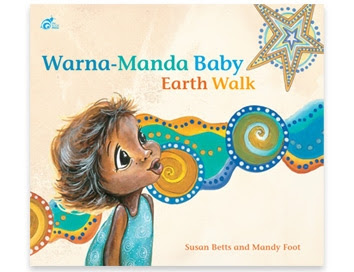
Warna-Manda Baby Earth Walk by Susan Betts and Mandy Foot


Warna means sea; Manda means earth

Susan Betts is a Wirangu woman from South Australia. She says this book is about "that connection to the earth and being able to share that connection ... It hope that it inspires everyone, especially children, because that's who I wrote it for, to feel and awaken that sense of connection to Mother Earth."

Listen to this 8 minute ABC 2013 interview with Susan Betts where she talks about her school program.

This book is a lullaby you could share with a very young child. The repeated patterns on each page are very appealing and the way parts of this pattern are also used in Warna-Manda’s dress gives the little girl a perfect connection with the wide world as she explores her world on each page. 


After some further research I did discover a little more about the illustrations. Susan’s paintings make up the backgrounds used on each page with the characters in the foreground created by illustrator Mandy Foot. South Australian author Katrina Germein assisted with adapting the original text.

If you know someone celebrating the arrival of a new baby this book would be a special gift.  Here is part of the text:

Warna-Manda Baby, it's time for you to sand. 

On this earth, walk your feet, gently on the sand.

Warna-Manda Baby, look around ... explore.

Beautiful eyes see the world. You'll never need no more.

You can see art from this book on Mandy Foot's web page. Raising Literacy Australia were part of this project.. This book came from a collaboration between Susan Betts, who comes from Streaky Bay in South Australia, the illustrator Mandy Foot and author Katrina Germein. I especially love Katrina's book Big Rain Coming.  The text of this book first appeared in It's Bedtime and Lullabies for babies. The original words can be sung to the tune of Incy Wincy Spider.