Showing posts with label Theft. Show all posts

Monday, December 1, 2025

Naeli and the Secret Song by Jasbinder Bilan


Blurb from Chicken House: Naeli longs to know her English father, who abandoned her when she was little. All she has is his name – and his precious violin. Her chance comes when a ticket to England arrives mysteriously. Leaving behind her beloved India, Naeli embarks on an adventure that will take her from the streets of Victorian London to the wilds of Northumberland to discover the truth of her musical inheritance.

This book contains plot details that act like perfect coincidences:
  • On the ship, Naeli meets a boy called Jack who is also travelling to England. On the long three month voyage he is able to teach her English.
  • Naeli is taken to work in a bakery when she arrives and her violin is stolen. Then, very mysteriously, she is taken to the house of a wealthy member of parliament - he is her Uncle Daniel and he has the violin. He seems friendly but only at first. But then he turns nasty and demands Naeli play every possible tune on the violin - but why?
  • Jack is also in London at a boarding school near Westminster and Uncle Daniel lives close by so when Naeli escapes, she is able to find the school and by chance she finds herself in a laundry room so she can disguise herself as a boy from the school and then in the huge dining hall she is able to find Jack.
  • Luckily Jack has money and so they set off by train to the remote country mansion, Swallowfield Hall, in Northumberland. The two servants seem like very shifty characters and clearly they are hiding something - then Naeli and Jack hear mysterious noises in the night and Naeli sees an extra breakfast tray in the kitchen. Who are they hiding? Is her father really dead? Can a tune from her violin help to reunite them? And how lucky to find a map of the estate in the Swallowfield Hall library - because also luckily Jack recognised the clue of 5,3 as a map coordinate. 

Adults reading this book might laugh over all the 'contrived' plot details but I am sure the story will intrigue young readers aged 10+ who have less experience with mystery stories and skullduggery by greedy family members who are desperate for money. 

This story does have overtones of The Secret Garden - there is a mystery; someone is lost; there needs to be healing by a young child; the story starts in India with the death of a parent; and best off all the kids find a key and a secret door!

Here is the scene with the key (spoiler alert the clues were in the pegs of the violin):

"The door was only small, like an opening to a cupboard. ... Naeli's throat was dry. She thought about how long the key had been hidden in the violin and how Uncle Daniel had been desperate to find it. If the key did fit this tiny lock, she was sure it would reveal something important ... "

Read a book extract here. Read more plot details in this post from the Historical Novel Society.

Jasbinder Bilan has created a wonderful fast-paced tale, a mix of adventure, mystery and historical fiction, as we leave behind the traditional Indian world and enter Victorian England, where women are treated very differently of course than they are today. Our heroine Naeli is strong and determined, facing a new life and the many obstacles in her path with determination and courage as the twists and turns of her story unfold. Books for Keeps

Here are four other books by Jasbinder Bilan:


Companion books:


Withering-by-Sea (and sequels)


Tuesday, September 30, 2025

Ghost by Jason Reynolds


"And that's when I saw him, my dad, staggering from the bedroom, his lips bloody, a pistol in his hand ... me and my mum kept rolling. The sound of the gun cocking. The sound of the door unlocking. As soon as she swung the door open, my dad fired a shot. He was shooting at us! My dad! ... One things is for sure, that was the night I learned how to run."

Ghost (real name Castle Cranshaw) thinks his true sport destiny is basketball - not that the other bigger kids will let him play but then he stumbles on the track and decides to join in a race and even though he is wearing the wrong shoes and the wrong clothes and he has had no training and has missed lunch he somehow wins the race. The coach can see this kid has potential and so he invites Ghost to train with his team. Ghost is not a kid who knows how to stick with things, but he does keep coming back to the track and he does try to master all the warmup drills and endurance races. He desperately wants to fit in and one way to do this would surely be wearing the right shoes but Ghost has no money and his mum is working hard and only just keeping them afloat.

"Where I live. Where I live. When anyone ever asks about where I live, I get weird because people always treat you funny when they find out you stay in a certain kind of neighborhood. But I was used to people treating me funny. When your clothes are two sizes too big, and you got no-name trainers, and your mother cuts your hair and it looks like your mother cuts your hair, you get used to people treating you funny."

The sport shop has so many fabulous shoes - surely it cannot hurt to just try them on. At this point in the story I actually called out a warning to Ghost but of course he didn't listen to me (after all I was only the reader, the  bystander, the observer).

Publisher blurb: Running. That’s all Ghost (real name Castle Cranshaw) has ever known. But Ghost has been running for the wrong reasons —until he meets Coach, an ex-Olympic Medalist who sees something in Ghost: crazy natural talent. If Ghost can stay on track, literally and figuratively, he could be the best sprinter in the city. Can Ghost harness his raw talent for speed, or will his past finally catch up to him?

Readers aged 10+ need to read this book especially those kids who ask for sport stories. Ghost is a quick book to read with only 200 pages and large print and a story that will keep you turning the pages. I read it in one sitting. Listen to a five-minute audio sample here. If you don't have this series in your school library please add all five books (see below) to your library wish list. I highly recommend Ghost - I wish I was still working in my school library because I would love to put this book into the hands of so many Grade 6 readers. 

An endearing protagonist runs the first, fast leg of Reynolds' promising relay. Kirkus Star review

Readers will quickly fall into step with Ghost’s slangy voice and will find themselves relating strongly to a character who’s just trying to get through each day with all the anger and hurt he feels about the cards life has sent his way. ... This story also interrogates our perception of wealth and poverty and the impact of poverty on kids. Finally, at its core, the story is about healing, moving forward from the need to escape oneself because of past trauma. Reading Middle Grade

Jason Reynolds is a #1 New York Times bestselling author a Newbery Award Honoree, a Printz Award Honoree, a UK Carnegie Medal winner, a two-time Walter Dean Myers Award winner, and the recipient of multiple Coretta Scott King honors, a Coretta Scott King Author Award, and the Margaret A. Edwards Award. He was also the 2020–2022 National Ambassador for Young People’s Literature. His debut picture book, There Was a Party for Langston, won a Caldecott Honor and a Coretta Scott King Illustrator Honor. He lives in Washington, DC. 

The most perfect book to read after Ghost is not about sport - it is about shoes!


I am very late in my discovery this fabulous book from 2018 but I am now totally hooked, and I can't wait to read the rest of the Track series (and that is fairly unusual for me as I don't always continue with a series). All of the books are currently available but might need to be ordered from your local independent bookstore. Colby Sharp shared the newest book from the series - Coach. You can see more books by Jason Reynolds here and notice how many have award stickers on their covers. 


Saturday, December 28, 2024

The What on Earth Institute of Wonder by Lisa Nicol


Sal's dad has left. Mum, in her grief, is now focused on the moon and not her family. Roy, the younger brother, is sure the end of the world is coming very soon and so he has been preparing his survival gear. Sal has one main friend but he is a bird - a Kakapo named Hector. He just arrived in her room one day and somehow Sal can understand and speak to him - it's a mysterious gift. Then added to all of this now an elephant has arrived. A real elephant. She is huge and totally out of place in this small town. 

"She was a she, and probably around sixteen years old. Surprisingly, though, other than that, the 'experts' had little to add. Her arrival in Larry had them all completely flummoxed. This was not the type of elephant found in circuses or zoos ... These elephants were only found in the most remote and inaccessible jungles of the Congo Basin in central Africa."

The kids really want to rescue the elephant. Roy knows there is one large space in town where they could 'hide' her. It belongs to the post office and it is where the postman named Mr Longbottom lives. There are problems with this idea. Mr Longbottom is a thief, and he hates children but all the adults in the town like and respect him. Also how do they keep the elephant calm? It turns out she likes the same music as Sal's friend Bartholomew. Music like Nina Simone and also all kinds of jazz and this is the music Bartholomew plays everywhere on his boombox. But then the people of the town discover the elephant and Larry is a town that has always been down on its luck. Everyone can see ways to make money out of the elephant but Sal and her friends know all of these ideas are cruel. The time has come to rescue the elephant and take her somewhere safe - but how do they do this? Where can they take her? And what if they get caught?

"Sal cursed herself, too. For breaking into the warehouse in the first place and dragging everyone into all of this. For letting Bartholomew drive without a license. And Roy ... So much for looking after her little brother. In the back of a police car, aged eight-and-a-half? It would be hard to classify that as good care in anyone's book. ... She had failed, all right."

"Bartholomew ... He was probably in the most trouble. After all, he was the one at the wheel. He was the oldest. He was meant to be responsible. While he might have been trying to save the elephant, in doing so he'd endangered all their lives. ... But spending time with the elephant, seeing her love of music. He didn't need a book to know she felt the same things in her heart that he did."

About three quarters of the way through this book I realised I had not discovered any references to the book title. I need to tell you - don't skip ahead - this discovery does not come until the final chapter. It is a neat way of tying up the threads of the story and adding to the happy ending. 

Click on these review comments for more plot details:

Sal doesn’t just rescue an elephant. She saves her family, her friends, and her town in the process and readers cannot help but be alerted to the precarious situation of many of the world’s wildlife. With adventure, family life, humour and drama a-plenty, I heartily recommend this for your readers from around Year 4 upwards. Kids' Book Review

Lisa Nicol’s whimsical way with words is becoming the stuff of legend. Her narratives are an intoxicating mix of wonderment, cheek and incredible heart; a strange combination but one that makes her middle grade novels fulfilling and memorable. The What on Earth Institute of Wonder perpetuates this premise while managing to incorporate an African forest elephant and a New Zealand Kakapo into the same sentence, never mind the same Kombi van! And yes! I knew I was in for something special once a Kombi was mentioned. Dimity Powell

If you are looking for a fast paced, action-packed adventure book, then this is not for you. If you want a gentle and genuine book about hope and the enormous spirit that both human and animal-kind have to offer, then this is the perfect book for you. Storylinks

This delightful book from Lisa Nicol traverses a magical, animal-filled landscape, that brings anxieties and fears to life in a gentle way, that allows readers from ages eight and older to see that it is okay to be worried, that not everything is perfect. It gives a voice to the kids that might not necessarily fit in. Sal and Roy do things a little differently to other kids, and that’s what makes them special – what gives them life. The Book Muse

I picked up The What on Earth Institue in a bookshop because I recognised the name Lisa Nicol. The What on Earth Institute of Wonder was published in 2021. I wonder how I missed it and I am surprised it did not make the 2022 CBCA Book of the Year Younger Readers Notables list.  I read this on the shelf talker label in Gleebooks:

I could not love this book any more! @lisanicolauthor has once again blown our minds with a story so fabulously bonkers and so beautifully written that I had to just lie in a dark room for a good while and appreciate what I had just read…. definitely in the running for one of my favourite books of the year! Rachel Robson Gleebooks

I loved her previous book:


Companion books:


Monday, December 9, 2024

The 113th Assistant Librarian by Stuart Wilson


"My name is Hieronymus Finch-Thackeray, and I think you are splendidly suited 
to become the 113th assistant librarian. What say you?"


You might like to begin here with my previous post about The 113th Assistant Librarian - which I wrote after hearing the author Stuart Wilson and before I read his book almost in one sitting!

"My dear boy, books are powerful ... They are more than simple bound pages. Books may record the past, predict the future, or hold the darkest of secrets. At their best they are societal equalisers. At their worst ... well! Words can teach the truth as easily as they can spin a lie. And that's not even considering that which lurks between the lines. The knife of interpretation is paper-thin, yet it cuts through minds with the slightest of pressure. Underestimate books at your peril."

Oliver Wormwood has found his calling. He will now work at the library but on his very first day the librarian dies. There is no one else who can run the library so Oliver must step into the role and learn how the run the library and keep the borrowers happy and keep himself safe from the very dangerous books and he must do this very quickly or he too might end up dead!

I have said this before but I marvel at the imagination of some writers. There are so many fabulous moments in The 113th Assistant Librarian - inventive plot twists that made me gasp and smile. 

This book has it all:

  • It is a page turner
  • It has some laugh out loud funny moments (wait till you encounter the hideous bookworms and that pesky firedrake owner)
  • It has a hero you will love along with his two friends Agatha and Ember and a series of cats some of whom are very helpful
  • It is set in a library - surely that is enough to tell you it will be interesting 
  • There are parts of this story that will resonate with all librarians - such as due date stamps, the power of bookmarks and the need for shelving and classification systems. This made me laugh "He'd been working in the library so long that his idea of a deadly weapon usually comprised a preface, an afterword, and a bunch of pages in between."
  • The titles of the various books are hilarious and so inventive - I wanted to create a list of them
  • There are moments of great drama and danger
  • And this book contains the most amazingly rich vocabulary

Oliver Wormwood is a splendid character. I love his emotional intelligence, his natural ability to understand and embrace how libraries work, his desire to keep the library organised and tidy, and surprisingly, his attention to his own cleanliness.

"He paused to wash the mud off his shirt in the Spellwater Fountain ..."

"He even got into a rhythm when it came to washing his clothes and bedding. Finding a spot in the otherwise overgrown garden that was lucky enough to receive sunlight for a few hours a day, he tied some string from one tree to another to form a washing line ... he did not like to have dirty clothes strewn all over the floor."

Vocabulary: demeanour, impartiality, codex, gauntlet, coffer (small chest), bandolier, imperative, cantankerous, decagonal, dodecagonal, glommed, trepidation, clerestory (a high section of wall that contains windows above eye-level), synchrony, chapodiphobia (fear of octopuses), poultice, exsanguinate, illustrious, ruminate, surreptitiously, filching, kettle helm, text block, Inncunabula, parley and parlay.

I do like the character names.  His sisters are called Heloise, Isolde, Willow, Elsbeth and Octavia. The town where Oliver lives is called Blackmoor-upon-Wyvern. A wyvern is a small dragon so this is most certainly a place filled with magic. If you plan to introduce this book to your students I suggest sharing some of the character descriptions:

"An old man dressed in a long magenta cloak stepped forward. He peered at Oliver over a pair of tiny reading glasses perched on the edge of his long nose."

"(he) came face to face with a tall woman with shoulder-length straight brown hair wearing a cloak of midnight blue. The bronze bracelets poking through her tattered cuffs signaled her power ... "

"An old man stood before Oliver. He had a slight hunch and grey wiry eyebrows so long they might have been about to take flight. ... He was dressed in a threadbare knee-length jacket and breeches and he had holes in his shoes. ... His skin was so pale it could have been made from porcelain."

"Dressed in a sodden cloak of midnight blue, the slim man was average height, with a narrow face and pointy nose. He had a long tuft of black hair growing from his chin that he had knotted into a braid. ... He had light brown eyes that were almost amber, an attribute that was hard to ignore because the man maintained eye contact for a fraction longer than was customary."

"The man was wearing a lurid green cravat which gave the effect of a frog perched on his collarbone."

There will be a second adventure for Oliver by Stuart Wilson- and it is sure to be just as good as this first one.  Listen to an audio sample from the first installment here. In this insightful interview Joy Lawn talks to Stuart Wilson about his book. 

I recommend The 113th Assistant Librarian for readers aged 10+.  It could also be a terrific class or family read aloud. There is an interesting political layer to this story that you could explore with older readers around the idea of censorship and corruption of the populace through knowledge. The 'Member for Upper-Lower Tumbledown Barrows tells Oliver to remove all books about yellow or golden apples - you need to read the book to find out why. I also loved the description on page 183 where Oliver's friend London Llewelyn describes his 'occupational and health' training as an apprentice lamplighter.

This story is such fun for anyone who knows even a little bit about how libraries are supposed to work. ... This is an exciting original fantasy written by a person who loves words, books and ideas. It has the usual middle grade themes of testing yourself, coping with high family expectations, and finding unexpected friendships, but it is also interlaced with some thought- provoking ideas about the nature and power of books, and the need for free access to knowledge. Story Links

I think the CBCA 2025 judges must be having a very hard time this year deciding on their Younger Readers notables, short list and winners. Here are two others I also loved.


The scene in chapter 18 of The 113th Assistant Librarian made me think of this wonderful picture book which is sure to be in most Australian school libraries:

Stuart Wilson says: I wanted to set a story in a library because they are such unique places. Anyone, old or young, can walk straight in, spend hours reading or watching or listening – without spending any money. And there are staff on hand to help you, should you need them – magical places indeed!

Other books set in libraries:


Companion books:


The Hatmakers (this story also explores Guilds)


Monday, October 21, 2024

Olivetti by Allie Millington


"Memories are like heartbeats. They keep things alive. They make us who we are."
"Typewriters are not allowed to tell the words that have been told to use. That is our typewriter code - to never let what has been typed into us back out. Communication with humans is strictly forbidden."


Olivetti lives with the Brindle family. I love the names of the children - Ezra, Adalyn, Ernest, Arlo. Dad is Felix and mum is Beatrice. It was Beatrice who found Olivetti many years ago. She uses him to write her most personal thoughts along with stories and poems. The family do own a computer but as Olivetti explains:

"I was not familiar with what files were, but I was certain I had more storage. In fact, I had unlimited storage. I held an endless amount of memories inside me. Decades worth of words. Not to mention I was much more low maintenance. I did not need to be constantly charged or connected to some higher power called the internet."

"Remembering is the very language we speak. I am a patchwork of pasts, stitched together with stories. A tapestry of tales."

These tiny extracts show you the unique and witty voice of Olivetti - yes he can 'speak'! 

Now look back at the list of children. Ernest is our story hero. He is a loner. His main companion is the Oxford dictionary. He has memorized hundreds of word definitions, and these are scattered throughout the book. Ernest is also silent. There is a hint early on in the story that something truly dreadful has happened and that this is why he has retreated into silence. I cannot explain this further - you need to read the whole book to make this discovery for yourself.

"My family didn't understand why I spent all my time reading (the dictionary). But there was a lot they didn't understand about me, so that wasn't exactly breaking news. Compared to them, I was different, defined as: not the same as another or each other; unlike in nature, form or quality."
"I wasn't big on meeting new people. Once you meet people, you might get close to them. And once you get close to them, you might lose them for good. You're less likely to get hurt, the farther you stay away."

Beatrice has disappeared and she has taken Olivetti to a pawn shop. Why? Where has she gone? 

The chapters in this book alternate between the voices of Olivetti and Ernest. By accident Ernest finds Olivetti. Mum has sold him for the strange amount of $126. Ernest will now need help from the pawn shop owner's granddaughter to solve this urgent mystery and find mum. Quinn is character you will love. She is a problem solver, she is patient, she is persistent and most of all she really likes Ernest even though he tries so hard to ignore her. 

After reading this book you will want to revisit the classic story - The Lion the Witch and the Wardrobe by CS Lewis. 

If you enjoy a good mystery especially one where two kids work together to gather clues not realising that through this process, they are forming a wonderful friendship, then this is a book you will really enjoy. Hopefully modern kids do know a little bit about typewriters but if they don't you (the adult reader) can easily answer any questions or find photos an actual Olivetti. I read this book in one sitting - the plot just races along. I highly recommend Olivetti for readers aged 10+. And I love the cover too! When I was in London last week I saw a couple of guys with typewriters sitting near Tate Modern offering to compose and type a poem for anyone passing by for a small fee. What an enchanting idea. 


Millington captures the essence of why typewriters are such extraordinary creations, and why everyone should have one: Olivetti takes no side, shakes no finger. (A typewriter simply reflects what you put into it.) And he cares. So when Ernest tracks down Olivetti, inexplicably pawned by Beatrice for $126 (remember that amount), and begins tearfully typing on him, desperate to communicate with her, Olivetti does the unthinkable: He types back. “Do not be alarmed. … I am Olivetti. … I can help you.” Tom Hanks New York Times (try to read this review it contains lots of plot details. I do wonder how this famous actor came to read and review Olivetti but I happy to have found his piece.)

The author winningly blends magic and realism, poignancy and mystery, as her characters close in on what’s happened to Beatrice, bonding through adversity along the way. Her lovely notion of a typewriter as a repository of secrets and dreams is finely rendered, and she imbues Olivetti’s heavy steel case and clackity keys with compassion and determination. This heartfelt tale movingly explores the beauty and importance of communication—whatever form it may come in—while encouraging readers to welcome the singular joy of finding kindred spirits in unexpected places. Bookpage

Monday, January 22, 2024

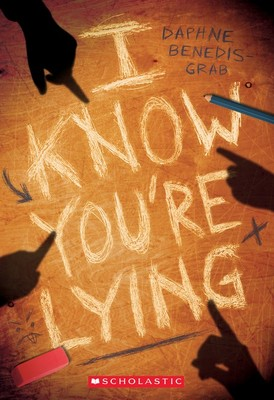
I Know you're lying by Daphne Benedis Grab


Sasha is blackmailing kids in middle school at Snow Valley Secondary School. Her backpack has been taken from her locker in the early hours of the morning and the school security camera shows four students who were in the school well before the time they should arrive. WHY? 

This book is sure to totally engross readers aged 10+. The four kids work so hard and in such a clever way to solve the school crime of a stolen backpack. Each of the four - Nora, Maddie, Jack and Henry have their own back story which is slowly revealed as they open up to one another.

I started this book last night and finished it early this morning - it really is a page turner!

Bookseller blurb: There's been a theft at the middle school! Sasha's bag has been stolen from her locker. The security cameras on the school's front entrance captured four students entering the building early. Present at the time of the crime, Maddie, Jack, Nora, and Henry become top suspects. Each of them has a reason to dislike Sasha. Each has something to hide. But which of them is responsible for the break-in? And can they figure out who the thief is before Sasha gets her revenge ... on all of them. Set during a single day of school, this is a gripping, twisty read about what happens when bullying goes too far, written by Daphne Benedis-Grab, author of I Know Your Secret.

Set after the Covid-19 lockdowns, the novel also addresses repercussions from the pandemic. Jack, who has a Vietnamese American father and White mother, experiences anti-Asian racism, and Henry’s father’s restaurant closed due to the pandemic, leaving the household financially insecure. The author links these diverging storylines in just the right places to drive the twists and turns, bolstering an underlying anti-bullying theme. Kirkus

Companion reads:


Thursday, June 15, 2023

Maggie and the Pirate by Ezra Jack Keats


There is an important layer to this story that is quietly implied. Take a look at these text quotes:

"Maggie and her parents lived in an old bus which they had made into a home."

"It was the cage ... I wanted it real bad ... I didn't mean for the cricket to die. My ol'man - he never makes any things for me. He doesn't ever talk to me."

In the illustrations we can see a shanty town and the children are wearing mismatched clothing and they have bare feet. So as an adult reader we know poverty is implied. It is important for our children to see other kids living in very different circumstances even if they don't have any understanding of poverty as depicted in this book. 

Maggie loves her little cricket. He lives in a small cage made by her grandfather. 


When her mother asks Maggie to go to the grocery store she hangs the cage on a tree but when she returns the cage and her little cricket friend Niki are gone. On the tree there is a hand written note that says : "The pirate was here."  Maggie is determined to find this "pirate".  Perhaps the title of this book is a little misleading. The "pirate" is just another kid - a lonely, poor and perhaps mistreated kid - who likes the look of the that cage. When Maggie finally tracks him down there is an accident. The boy is perched in a makeshift tree house. It crashes to the ground and the little cricket is killed. 

"They buried Niki. Maggie wrote his name on a piece of wood and put it over the small grave. Paco picked some flowers and brought them over. Then they sang sad songs."

The boy appears and he explains why he took the cricket and the cage - he is deeply sorry. He takes the cage from Maggie and puts a new cricket inside. 

I love the quite words of the ending. Again so much is left unsaid:

"They all sat down together. Nobody said anything. They listened to the new cricket singing. Crickets all around joined in."

Look at the power words here - together, they listened, joined - the promise of new friends!

I mentioned a few days ago that the library I visit each week have filled a tub with books that have not been borrowed for a long time. One of these is Maggie and the Pirate by Ezra Jack Keats. The books in this school library are generally in almost mint condition but this book is quite worn out which is strange because it has not been borrowed since 2001 and in total it has only been borrowed 14 times beginning in 1985. 

I learnt a new word today reading the Kirkus review of Maggie and the Pirate: 

Unlike Keats' city slums, this palm-treed, riverside shantytown has a ramshackle insouciance.

insouciance means: free from concern, worry, or anxiety; carefree; nonchalant

Now comes the difficult decision for the library. Ezra Jack Keats is a very famous US illustrator and his collage illustrations are wonderful and still fresh all these years later. Unfortunately Maggie and the Pirate is now out of print. There are lots of other Ezra Jack Keats books still available so perhaps the library should be content with these but I do know the Teacher-Librarian likes to hold the "body of work" of significant authors and illustrators. Another issue is the confusion that this book is not really about pirates and perhaps the cover is not very appealing to a modern child even though I do like it. Oh and the topic of actual pirates is a fraught one because real pirates do exist and if your school has refugee children this is a topic you should either avoid or treat very sensitively. 

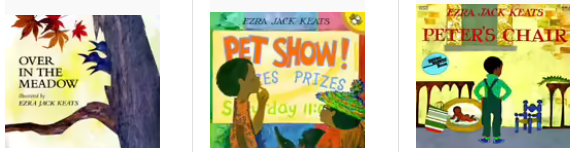
I have talked about two books by Ezra Jack Keats:


Here are other books by Ezra Jack Keats:


Tuesday, October 4, 2022

My Friend the Octopus by Lindsay Galvin illustrated by Gordy Wright


"I peered into the top of the hollow pearl. A glint so bright it was as if sunbeams had been captured and sealed inside."

Vinnie (Lavinia) Fyfe works with her mother in a London milliners shop. The year is 1893.  Vinnie is skilled with drawing and her mother uses/exploits this skill to design new hats which she sells to very wealthy customers. Vinnie is not unhappy but Rosamund Fyfe has very strict ideas about behaviour and class. Vinnie has no idea about the level of control her mother has always exerted over her until, just before dawn one day her mother whisks Vinnie away to Brighton leaving her with a distant cousin Aunt Bets. Aunt Bets runs a tea room above the Brighton aquarium. Vinnie is told Rosamund needs to go to Paris and so for the first time in her life Vinnie is left alone. 

"Being Mother’s constant companion meant that I was never really alone, and the thought of finding my own way to the aquarium filled me with new dismay, mainly at myself. I now realised I’d got to twelve years old utterly ill-equipped to deal with this adventure."

On the day of her arrival at the aquarium a new exhibit has arrived - a huge octopus. Vinnie is fascinated by this amazing creature. It takes some bravery but she discovers she has a talent for drawing more than hats. Her sketches of the octopus even appear in a local newspaper. 

This is a story set during Victorian times so of course there is a villan - Mr Jedders - a former employee of their Grosvenor Square shop. He is pursuing Rosamund but Vinnie has no idea why but his manner and violence are very frightening. Luckily Vinnie makes two new, clever, resourceful and wise friends - a young boy called Charlie who is the nephew of Mr Lee head of the aquarium and a young very well educated African girl called Temitayo. The group make a horrible discovery about the green colour used for fabric and ribbons used on the hats her mother makes.  Readers are given a glimpse into the terrible highly dangerous working conditions of children who labour to make this sort-after shade. 

I read this book in one sitting (256 pages). The plot just races along with perfect twists and a heroine who must succeed. The octopus itself is also an interesting character because every animal lover will desperately hope this wild creature can be released back into the ocean. Confinement in a small tank seems so cruel. 

Lindsay weaves mysteries together with ease while immersing us in some of the darker sides of Victorian society, one of which there are sadly all too real comparisons to make with modern day fast fashion – something which is bound to be a talking point beyond the book. Miss Cleveland is Reading

Here is an interview with the author which gives some very interesting insights into the research behind this book. I hope you love the book cover as much as I do. Well done Chicken House - this cover is perfect. Read this review by Lily and the Fae which has an in depth analysis of the plot and links to slavery, class and fashion. 

I loved the tea shop in this book and the scene where they eat Battenberg cake and at the back of the book there is a recipe for petit fours - yum. There are also a couple of terrific scenes in this book about bicycle riding in skirts and bloomers and sea bathing huts on wheels. And the back has extensive notes explaining the historical background used for this story. 

My Friend the Octopus is children’s historical fiction at its best. Lindsay Galvin brilliantly evokes the Victorian era, encompassing fashion, leisure activities, attitudes to women, and the disparity between rich and poor. Victorian Brighton comes alive with its bathing huts, the aquarium, and Italian ice cream served in shells. Get Kids into Books

I am keen to read another book by Lindsay Galvin: