Showing posts with label Mining. Show all posts

Thursday, July 3, 2025

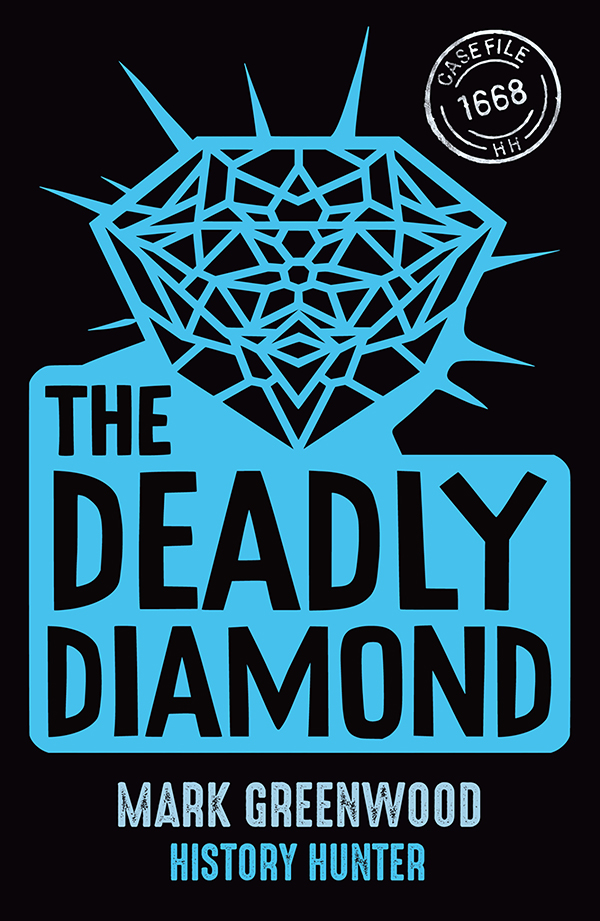
The Deadly Diamond by Mark Greenwood


"To this day the deadly diamond retains a spooky reputation as a stone with an ominous sparkle and the power to bring tragedy to anyone who touches it. But does its ownership bring death, dishonour, disgrace or financial ruin? Can the curse of the most famous jewel in the world be reconciled with reality when many of its owners have lived long and generally prosperous lives?"


Our story of this famous diamond - variously named the Blue Diamond, the French Blue, and the Hope Diamond - begins in India at a diamond mine in 1642. We are not told in detail, but it is very clear that conditions at this mine must have been utterly terrible. Mark Greenwood does mention snakes and overseers and the use of children in the mine. No one is exactly sure, but this diamond was part of a temple idol before it was stolen and then passed through the hands of thieves, con men, nobility, an extremely rich socialite, a famous jeweler and finally presented to the Smithsonian Museum of Natural History which is where you can see it today and from that link you can see many of the aspects and short videos of this story that are mentioned by The Deadly Diamond including the regular postal envelope that was used to send it to the museum - an amazing story. Take a look at these images. 

This is a slim book but such a page turner and readers are also supplied with a timeline, glossary and extra reading list so curious minds can explore this topic further. If I was sharing this book with a group of students (Grade 5 or 6) I think I would begin by showing the tiny diamond in a ring I wear every day using this as a way to talk about diamonds and their value and origins. You could share this ABC television series "Stuff the British stole" with a High school group. There is an episode about a diamond from South Africa and also one about the Koh I Noor diamond. Both are rated PG. I highly recommend The Deadly Diamond as a perfect addition to your school library or pop this title on your Christmas present list - it would be an especially great gift for a boy aged 10+. This book has big print and white pages and a few actual photographs/portraits of the famous people who were involved or who owned this diamond. 

Further reading:

Many of my reviewing colleagues receive advance copies of new Australian titles but up until this week I only received books from one Australian publisher. Now I can add two more to that list including the publisher of this book - Fremantle Press. I recently talked about their new verse novel Trapped by Julia Lawrinson.

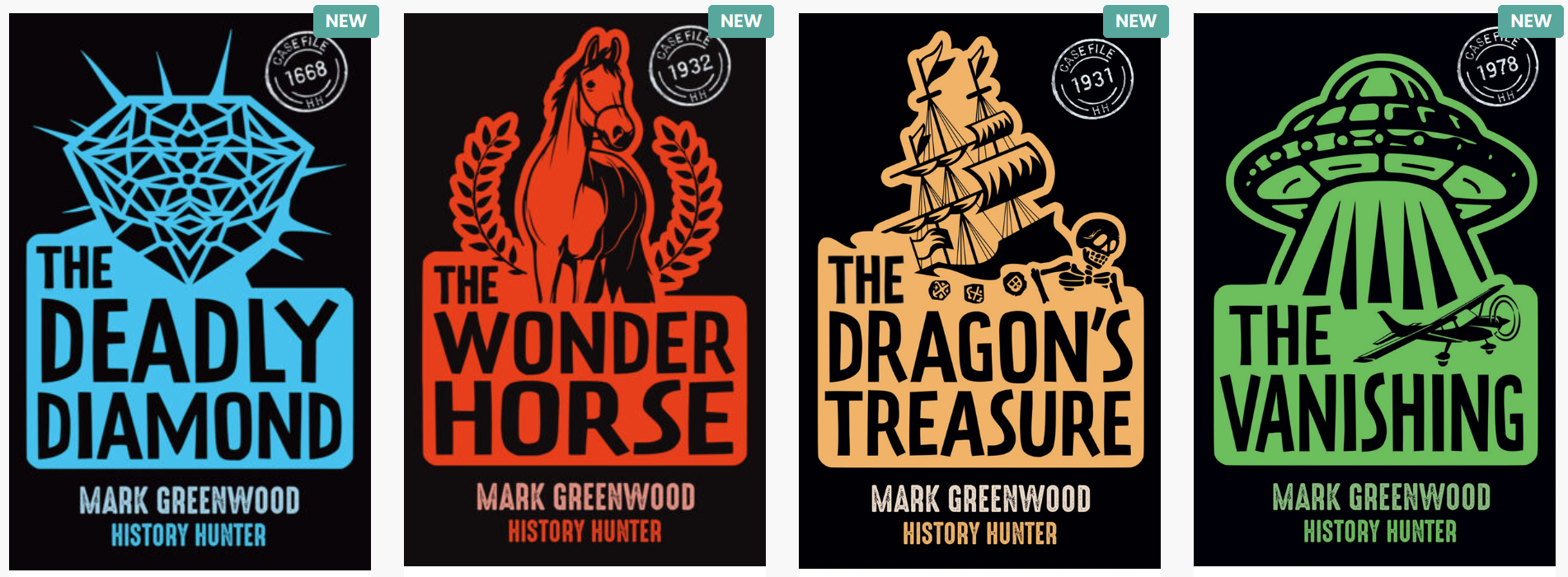
Mark Greenwood has done an enormous amount of research for this book The Deadly Diamond. I simply gobbled up the whole book in one sitting - readers aged 10+ are going to love this book and I am sure the rest of the series are fabulous too. I have another one - The Wooden Horse - ready to read next. Here is the full series called History Hunter:
On the publisher page you can read an extract from The Deadly Diamond and find very detailed and useful teachers notes. There is one word missing from the glossary which your students may need to check - loupe.

I was so interested to read all the ways this stone was cut and changed and reduced in size. I also had no idea about the colours of diamonds - white, yellow, red, dark grey, orange, red, apple green, pink and most desirable of all, the blue.

"The diamonds that came from the fabled mines of Golconda were highly valued. Local rulers jealously guarded the source and kept the largest diamonds for themselves. The radiance of these diamonds was legendary. Many believed they contained a supernatural force. Prized for colour, clarity, size and beauty some were as pure as a drop of dew."

Try to find these two books as companion reads:


This is not about diamonds, but it has the same narrative nonfiction style 
and the same assortment of 'shady' characters.  Highly recommended. 

This form of narrative non fiction is not new but I have not seen any other books in this form for many years. In my previous school library I had other books like this on a range of topics but they are all now long out of print. One series were called True stories published by Allen and Unwin: Stoked! Real Life, Real Surf; Bog Bodies: Mummies and Curious Corpses; Wrecked: Mysteries and Disasters at Sea; Kimberley Warrior: The Story Of Jandamarra; and Soccer: Great Moments, Great Players in World Football. And we also had the It's True series.


Your students who enjoy books that use this form of narrative to tell a true story might find the "I Survived" series in a school or local library. I also had a series called Mega Bites published by Dorling Kindersley in my previous school. 


Tuesday, June 17, 2025

Trapped by Julia Lawrinson


Joe (Giuseppe) Varischetti has come with his father from Italy to a remote part of Western Australia to work at a gold mine. Joe cannot help at the mine because he is too young. His father wants him to learn English, so Joe is forced to go to school where he encounters bullying and racism. The year is 1907.  This story is presented in a diary format from 19th March to 28th March with a few flashbacks to life in Italy, the trip to Australia, and Joe's early days at school.

Torrential rain hits the area and the deep mine is flooded. Every man gets out safely except for Joe's papa Charlie (Modesto) Varischetti.

This gripping and powerful verse novel is based on the true story of an Italian migrant worker known as Charlie - who spent over 200 hours or ten days trapped under ground. Rescuers had to wear deep diving gear so at least they were able to give papa some food, clothes and a lamp but he was wet and cold and surrounded by terrified mice. I held my breath through so many scenes. It just seemed so impossible that he could be rescued. 

I took this book on my train journey today and I read the whole book before I reached my destination. This true story is one that will completely absorb you. You can hear Julia Lawrinson talking about her book. Julia suggests ages 8-12 but I would think this book better suits a reader aged 10+. I also have a strong connection with this story because I once worked in a coal mining town and over my nine years of working in that community there were several terrible accidents - hearing sirens always put the people in the town on edge. Sadly, there was one terrible accident which took the lives of three miners. 

I am sure this book will feature in our 2026 CBCA Notable lists but will it be in Younger Readers or Older Readers or Eve Pownall? Here are the teachers notes from the publisher. 


Readings Melbourne list three reasons to read Trapped:

Three reasons to read it: 

1. All the miners escape except one, and it just so happens to be Joe’s dad. Can you imagine how scary and confusing that would be? Joe is stuck above ground, trying to figure out what happened. Why didn’t his dad come up with the others? Is he okay? And how on earth will they reach him in time? There’s a huge mystery to solve and a desperate rescue mission ahead, and you get to be part of it from the first page. You’ll be biting your nails (maybe literally!) and rooting for Joe and the rescuers every step of the way.

2. The story is inspired by something that really happened back in 1907 in a mining town called Bonnie Vale in Australia. That means the characters, the danger and the rescue are all based on real people who faced something incredibly scary. Lawrinson took this slice of Australian history and turned it into a gripping tale that makes the past feel totally alive. Reading this book isn’t just fun, it teaches you something amazing about bravery, survival and the strength of a small town during a big disaster.

3. Trapped moves fast. You can probably read it in a day or two, but the story and the feelings it gives you will stay with you long after you finish. It’s perfect for readers who like stories that grab you right away and never let go. And since it’s packed with vivid descriptions, cool historical details and an intense rescue mission, your imagination will be working overtime. When you turn the last page, you’ll be thinking about what happened long after you close the book, and maybe even looking up more about the real-life event.

Background reading:

On day nine, the divers gave the miner more food, shared cigarettes with him, tied a rope around his waist and started the arduous walk through waist-deep water and knee-deep sludge. At one stage, Varischetti’s mouth and nose only just cleared the water. He staggered to the surface on March 28, after 206 hours underground. He recovered to return to work underground but died of fibrosis at 57.


Tunneling to get him out or pumping out the water would have taken too long and Varischetti would have died before he could be reached. The mine inspector Joshua Crabbe had an inspired idea. He was familiar with pearl diving in the North West and made enquiries about getting divers to rescue the trapped man. Two divers (Curtis and Thomas Hearn) were found holidaying in Perth and as luck would have it they had their gear with them. A special train was organised to get them to the goldfields (taking 13 hours and 10 minutes to arrive) setting a new speed record which was to last for the next 50 years. By the time the divers had arrived Varischetti had been trapped for 3 days. The divers had no knowledge of the flooded mine and during the first attempt to reach Modesto, Curtis became entangled and was lucky to survive.

Companion book:


Town by Sea (Scroll through this post)

I previously read these books by Julia Lawrinson:


You might also have these books in your school library. I do wish the Aussie Bites, Aussie Nibbles and Aussie Chomps series books were still in print - I discovered so many book treasures in these three Australian series.


Here is another book (for a younger audience) that also tells a story from Australian history using the format of a verse novel:


Wednesday, February 7, 2024

The Wild Robot Protects by Peter Brown


Blurb from Bookwagon: The Wild Robot Protects concludes the wonderful series by Peter brown.  Roz the robot has made a welcome home for herself on an idyllic island dense with forests, animals and wildflowers.  She is at the centre of an island community with friendly animal inhabitants – including her own young son Brightbill the gosling. Life on the island however is under threat from the Poison Tide, first reported by a dying seal washed ashore.  He warns of dangerous, cloudy waters that are flowing towards the island, bringing new dangers for the animals.   Forced inland, the community will have no choice but to fight over scarce resources. Roz embarks on a perilous and incredible journey across the seas, aiming to protect her beloved island and all who live on it.  Along the way, she makes friends of a host of amazing sea creatures who provide inspiration but also vital information about the source of the poison tide….

Begin with this interview (20 minutes) with Peter Brown talking to Colby Sharp for The Yarn. In this 2023 interview Peter Brown talks with Books for Keeps. And Books for Keeps also talked to Peter after the publication of the first book - The Wild Robot. 

Hugely entertaining, timely, and triumphant. Kirkus star review

This might sound strange, but I am very sad that the NSW Department of School Education have 'stolen' this text and made it the focus of one of their English units. Reading the design of the unit of work it sounds to me that any love of this first book - The Wild Robot - will be utterly crushed. I would love young readers to just find and read all three books from this series - not as part of an enforced school unit with a series of micro tasks that, to my eye, destroy any love you could have for this truly heart-warming and inventive series. At their heart these books are about relationships, the expression of emotions, the importance of forming connections with others. There is also a layer of environmental care and as humans, how we find a balance between our own survival, exploitation of the planet and the vital need for conservation of places and creatures.

I read The Wild Robot in 2018 and as I read this latest installment I wondered if it might have been good to re-read the whole series before reading this new book. The Wild Robot Protects does stand alone but I think you will enjoy this book even more if you are familiar with Ros and her island family. 

The New York Times reviewer explores the reaction of his son when he read these books:

To my son, Brown’s books were the first he discovered on his own; the first that swept him up in a lengthy, can’t-put-it-down narrative; the first to wallop him with the mix of tragedy and joy that define great art and also real life. ... The life of a wild robot, in other words, is pretty similar to the life of a kid. That’s what makes Brown’s trilogy so powerful. Readers love Roz, but they also learn from her. Even better, they learn alongside her.


Monday, December 11, 2023

The Thief who Sang Storms by Sophie Anderson


"My family are alkonosts, which means we're descended from the ancient bird-people of our island. Most alkonosts look similar to humans, although we're smaller and lighter, and have feathers, while humans have hair. ... The biggest difference between alkonosts and humans (have the) ability to sing magic."

Until three years ago alkonosts and humans lived in harmony but on the day of the Unity celebration one of their ships - Joy - sinks in a wild storm and the leaders of Morovia are drowned. The new leader blames the singing magic and all alkonosts are banished to the swamp lands. A new army of bogatyrs take control but they need protection from the singing magic and this comes from iron. Bogatyrs and their leader Captain Ilya clad themselves in iron from head to toe. The iron is mined from the waste land behind the castle and so alkonosts are captured and forced to undertake back-breaking labour. 

Linnet, an alkonost, watches as her father is captured. She is a resourceful girl and so she gathers her friends - alkonost and human and they make a plan to rescue Nightingale and all of the others. As she works on her plan unlikely ally arrives. Her name is Hero. Linnet and Hero were best friends before the sinking of Joy but something changed and straight after the sinking Hero utterly rejected Linnet blaming her and all alkonosts for the tragedy. Hero arrives in the swamp lands just as Linnet and her friends are about to be arrested but can she be trusted?

This book contains the most amazing, invented world. The days of the week for example have creative names: Songsday, Nestday, Liftday, Flightday, Glidesday, Soarsday and Swoopday. And the alkonost character names are all based around birds - Linnet, Nightingale, Jay, Kestrel, Robin and Lark. You are sure to also warm to Linnet's special friends - you can see them on the cover - Lumpy a toad and Whiskers a swamp rat. 

Reading this book does take some stamina - it has just over 400 pages and every few chapters there is a flashback where Linnet tells the story of past events which are linked to their banishment. I expected to read this book over a day or two but it took me over a week. I am not sure why but someone the action didn't seem to hold my attention. The title also continues to puzzle me, but I will leave you to ponder this yourself. Here are some very detailed teachers notes from the author webpage. 

Publisher blurb: The Island of Morovia is shaped like a broken heart. The humans live on one side of the island, and the alkonosts - the bird-people - live on the other. But it wasn't always this way...Linnet wishes she could sing magic. But magic is forbidden and she has been banished with her father to the Mournful Swamp. She misses her old life, and dreams of reuniting with her friends. When her father is captured for taking a precious jewel, Linnet must set out on a treacherous journey. Travelling through alligator pools and sinking sands with new friends, she learns how to be brave, and discovers something even more powerful than singing magic. Something that could save her father, and heal the broken heart of her island once more... 

Anderson delivers convincing, inviting worldbuilding, wide in scope, lovely in its evocation of landscapes, and entrancing in descriptions of foods, crafts, clothing, and feathers. ... Impressively different and captivating. Kirkus

This beautifully written tale of a divided nation is loosely based on characters from a Russian folksong. It explores bereavement and persecution, but ultimately celebrates the power of friendship, trust and hope to reunify enemies and establish peace. BookTrust

With a cast of wonderful characters – including a toad named Lumpy and a smelly but ever-faithful swamp rat named Whiskers – and an action-filled plot, The Thief Who Sang Storms is as entertaining as it is moving, and would be a fantastic addition to the bookshelf for kids aged 9+. Readings

Sophie Anderson has won the Independent Bookshop Book of the Year Award and the Wales Book of the Year Award, and been shortlisted for the CILIP Carnegie Medal twice, the Waterstones Children’s Book Prize, the Blue Peter Book Award, the British Book Awards’ Children’s Fiction Book of the Year, the Andersen Prize, and the Branford Boase Award. Here are three other books by Sophie Anderson.

Here is the US cover - which do you prefer?


Companion book: 


Tuesday, August 30, 2022

The Map of Leaves by Yarrow Townsend


"Wherever there is sickness, there is rumour ... but I am here to tell you the scientific truth of the matter. This sickness is not brought about by witchcraft or sin. No. This sickness has come from a place of disease and pestilence. It has come from the wild. ... We must be rid of it. ... The plants, the weeds, the swamp, the forest, the wild gardens. Disease lurks among the plants and the wild things, breeding mosquitoes and poisons."

Orla lives alone outside the village of Thorn Creek. Orla feels like an outsider because her healer mother is now dead and the people of the village seem to treat her with hostility and suspicion. Orla does have one friend - her horse called Captain and she also has the constant company of the plants, flowers and herbs in her garden. Orla can hear the plants talking and they often give her wise advice.

Life is not perfect, it is hard, but as the story opens it is clear things are about to become much worse perhaps even life threatening. Orla notices black marks are appearing on the leaves of her plants. Then a young boy from the village asks Orla for help. Idris's brother Castor is desperately ill. When Orla lifts his sleeve she sees the same purple marks that appeared on her mothers arms. Orla was unable to save her precious Ma. She is sure she cannot help Castor. 

Thorn Creek is governed over by a wealthy ink-manufacturing family, whose head is Inishowen Atlas, Warden and resident of Hind House. He is often absent but on this dreadful day he arrives on his horse and declares a sickness is coming. With the voice of authority he tells the village that their plants are to blame. He orders everyone to destroy every plant in the village. Orla knows the plants are not the source of the sickness and she also knows the people will starve because there will be nothing left to eat.

Ma has left Orla her book of remedies. At the front of the book there is a very detailed map and on the map there is a tiny circle around a distant place called Fleetwater. Beside the circle in very faint writing Ma had written the word 'here'. Orla decides to stow away on a Hauler boat but she has no idea Idris and Ariana, the niece of the tyrant Atlas, are going to join her. Nor does she have any idea about the horrible scene that awaits her when she finally, after an utterly terrifying journey, reaches the place on her mother's map.

Each chapter in this book is prefaced with a herb, its scientific name and uses. I really enjoyed reading these. Some will be familiar while have such interesting names: Lady's Mantle (a sprig under the pillow aids sleep); Devil's Rope (very dangerous, fatal if it enters your blood); Viper's Bugloss (an infusion of the seeds can drive away melancholy).

I loved the world of this book, the strength of each character, the wisdom and warnings of the plants, the personal growth of Orla, and the powerful atmosphere created by debut author Yarrow Townsend. One other delightful discovery (it's a minor point but so heartwarming) comes from a discovery about character of Idris. He is very skilled with needle and thread. When Orla's sleeve is torn he says:

"Let me fix the tear in your coat sleeve while you and Ariana paddle ... it's annoying me like nobody's business'. He held out his hand and motioned for Orla to pass him the coat. ... 'Fine,' she said ... but mind you do it properly."

Here is a wonderful description of Orla:

"Twelve-year-old Orla had dark-brown hair, bramble scratched hands, and a determined frown. She wore a pair of boy's breeches that she never changed, an oilskin coat that smelled of beeswax, and a pair of thick leather boots."

Yarrow Townsend build a chilling, atmospheric world, highlighting the damage those with wealth and power cause in their search for more wealth and power. Miss Clevelands Reading

The Map of Leaves is exquisitely written and brilliantly original. The descriptions of the natural world and rich and immersive, and the book is underpinned by a real reverence for nature. Get Kids into Books

I have been in a slight reading slump lately. I am ploughing through a long fantasy book and I only seem able to read 3 or 4 pages at a time. With nearly 400 pages I seem to be taking way too long to finish the book. So last night I picked up a different book - this one. I read The Map of Leaves in one sitting. YES this book is fabulous. I found it at the Westmead Children's Hospital Book Bunker where I work as a volunteer. The Map of Leaves was published by Chicken House in 2022. I flew through all 300+ pages.  I do hope you can find this book - and that I have convinced you to read it!  Take a look at this review which has lots of text quotes. You can read sample pages from this book here. 

I read a review that suggested this book as a companion read. I have added this title to my enormous "to read" list:

Friday, May 14, 2021

Sydney Smith nominated for the Hans Christian Andersen by IBBY Canada


Sixty-two candidates from 33 countries have been nominated for the 2022 Hans Christian Andersen Award.

Here are all the name. You might recognise some:

Argentina: Author María Cristina Ramos; Illustrator Gusti

Australia: Author Margaret Wild; Illustrator Tohby Riddle

Austria: Author Heinz Janisch; Illustrator Linda Wolfsgruber

Belgium: Author Thomas Lavachery; Illustrator Carll Cneut

Brazil: Author Marina Colasanti; Illustrator Nelson Cruz

Canada: Author Angèle Delaunois; Illustrator Sydney Smith

China: Author Jin Bo; Illustrator Xiong Liang

Colombia and Venezuela: Illustrator Ivar Da Coll

Croatia: Illustrator Dubravka Kolanović

Cyprus: Author Anna Kouppanou; Illustrator Dora Oronti

Estonia: Author Andrus Kivirähk; Illustrator Piret Raud

France: Author Marie-Aude Murail; Illustrator Gilles Bachelet

Germany: Author Andreas Steinhöfel; Illustrator Nikolaus Heidelbach

Greece: Author Maria Papayanni; Illustrator Iris Samartzi

Hungary: Author András Dániel; Illustrator László Herbszt

Iran: Author Jamshid Khanian; Illustrator Pejman Rahimizadeh

Italy: Author Roberto Piumini; Illustrator Beatrice Alemagna

Japan: Author Joko Iwase; Illustrator Ryoji Arai

Republic of Korea: Author Yi Hyeon; Illustrator Suzy Lee

Latvia: Illustrator Aleksejs Naumovs

Lebanon: Author Fatima Sharafeddine; Illustrator Sinan Hallak

Lithuania: Illustrator Kestutis Kasparavičius

Netherlands: Author Tonke Dragt; Illustrator Sylvia Weve

Poland: Author Marcin Szczygielski; Illustrator Iwona Chmielewska

Russia: Author Sergey Makhotin; Illustrator Julja Gukova

Slovenia: Author Peter Svetina; Illustrator Damijan Stepančič

Spain: Author Jordi Sierra i Fabra; Illustrator Elena Odriozola

Sweden: Author Annika Thor; Illustrator Anna Bengtsson

Switzerland: Author Franz Hohler; Illustrator Catherine Louis

Turkey: Author Behiç Ak; Illustrator Mustafa Delioğlu

Ukraine: Author Halyna Malyk; Illustrator Kost' Lavro

United Kingdom: Author Marcus Sedgwick; Illustrator David McKee

USA: Author Linda Sue Park; Illustrator Kadir Nelson


In this post I plan to focus on Canadian illustrator Sydney Smith. In a previous post I talked about Footpath or Sidewalk Flowers.


Town is the Sea by Joanne Schwartz illustrated by Sydney Smith (2017) winner of the Kate Greenaway Medal in 2018.


Opening lines: From my house, I can see the sea. It goes like this - house, road, grassy cliff, sea. And town spreads out, this way and that. My father is a miner and he works under the sea, deep down in the coal mines.

Publisher Blurb: Stunning illustrations by Sydney Smith, the award-winning illustrator of Footpath Flowers, show the striking contrast between a sparkling seaside day and the darkness underground where the miners dig. This beautifully understated and haunting story brings a piece of mining history to life. The ever-present ocean and inevitable pattern of life in a mining town will enthral children and move adult readers, as a young boy wakes up to the sound of the sea, visits his grandfather's grave after lunch and comes home to a cosy dinner with his family, but all the while his mind strays to his father digging for coal deep down under the sea.

Reviews:

A quiet book that will stay with readers long after they have closed it. Kirkus Star review 

This is, in short, a magnificent book. The kind that every reader will interpret in a different way. Only the best books can do that. Only the best books are capable. SLJ Elizabeth Bird

The combination of small, private moments and sweeping landscapes complete with shimmering water show off the simple grandeur of the natural environment and the boy’s experiences. Quill and Quire

My thoughts: The art in this book is all about light and dark. I love the way the sunlight shimers on the surface of the sea and the contrast Sydney Smith creates when he shows  us, in four double spreads, the dark beneath the sea where the miners are working. I held my breath through this book. One of my early school libraries was in a coal mining town. It was utterly terrible when a coal mining accident in that town took a father away from two precious children and their beautiful mum. Above ground the light forms shadows, below ground light comes from miner lamps. Above ground the young boy is free to run and play and swing and walk to the shops. Below is danger. When the father arrives home it is a moment of great relief but there is also the thought of tomorrow when his father will work again and the thought of the future when the boy himself will have to enter those deep dark tunnels.

Here are a set of teaching notes from Amnesty International.  Here is an interview where Sydney and Joanne talk about their book.


I Talk like a River by Jordan Scott illustrated by Sydney Smith (2020)

Opening lines: I wake up each morning with the sounds of words all around me.

Publisher blurb: After a day of being unable to speak when asked, and of being stared at, a boy and his father go to the river for some quiet time. "It's just a bad speech day," says Dad. But the boy can't stop thinking about all the eyes watching his lips twisting and twirling. When his father points to the river bubbling, churning, whirling and crashing, the boy finds a way to think about how he speaks. Even the river stutters. Like him. "I talk like a river," he says. An incredibly moving picture book that offers understanding rather than a solution, and which will resonate with all readers, young and old.

Reviews:


My thoughts: When Elizabeth Bird said teachers and Teacher-Librarians should just read this book to a class with no agenda, no pointing out the message, and especially not mentioning this book is for a particular child - I cheered.  I have such a powerful memory of the day I read The Mouse with the too long Tail to a class. A young boy in the class had been born without fingers on one hand. I didn't connect this book with "Ben" I just read it aloud. At the end, he was sitting right in front of me, this young boy sighed. He had seen so much in this story - a celebration of difference. I hope this book is shared in families and in classes and that the sharing is done slowly. I am certain this book will touch the hearts of many children and adults. 

Listen to this podcast where Sydney and Jordan discuss their book. You can see the art here. Here are a set of teaching notes from the US Publisher.

Sydney Smith is a Canadian children's book illustrator. He lives in Halifax, Nova Scotia. You can follow Sydney on Instagram @sydneydraws.  Here is an interview with Sydney. In the interview Sydney mentions Felix Hoffman. You can see some illustrations by Felix Hoffman here. Take a look at some art here.