Showing posts with label Quality texts. Show all posts

Wednesday, March 16, 2022

Quality literature Recommendations Exploring the NSW DET document part 3


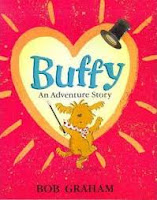
Bob Graham creates wonderful characters in his books. Character is the focus of this post. Think about the bravery of Rose when she visits Mr Wintergarten and her emotional intelligence which means she can see he is just desperately lonely.  Now think about little Dimity in the wonderful book Dimity Dumpty. She is shy and she is quiet but she is also a true hero.


I suggest if you are just discovering this set of blog posts you should begin with the official NSW Department of Education Quality Literature text recommendations lists. Then you might explore my two previous posts - Context; Narrative. 

My posts are simply intended to help Teacher-Librarians (especially those with limited budgets) to identify other books which are quality literature and which hopefully also meet the DET criteria. Book lists are only ever as good as the knowledge of the person compiling them and so mine are of course limited by my knowledge. There are sure to be hundreds of other books that could be included.  I do not feel constrained to only list books that are in print because my audience is Teacher-Librarians in schools and I am sure some of these books will be found your school libraries.  I am also not limiting my suggestions to Australian books.  We speak English here in Australia and so have access to wonderful books from Canada, USA, UK, New Zealand and South Africa.  

Concept - Character

Here is a quote from the Quality Literature Recommendations list: Character is a construct of verbal and visual statements about a fictional identity. Analysis of characters contribute to our own personal judgements about self, morals and values.

To identify texts with the concept of ‘character’, look for stories that:

• are imaginative texts

• depict characters visually, verbally and/or through aural representations

• describe characters with imagined thoughts, words and actions

• represent characters through different modes and media

• reflect lived experiences

• invite positive or negative responses.


Alexander and the Terrible, Horrible, No Good, Very Bad Day by Judith Viorst illustrated by Ray Cruz 

This book was first published in 1972. I am sure most people will be familiar with this story. There are four books in the series. If you are not familiar with the plot here is a Wikipedia entry.

Comparison books:


Enemy Pie by Derek Munson illustrated by Tara King 

You might be a little surprised to see a boomerang in this American book. The illustration is (to our Australian eyes) rather strange. Here are some questions and extension activities to use with Enemy Pie - Teach with Picture Books.

Comparison books:


Giraffes Can’t Dance by Giles Andreae illustrated by Guy Parker-Rees

Comparison books:


There are four books by Anthony Browne on the list under the concept Character:
Gorilla by Anthony Browne; Piggybook; Silly Billy; and Willy the Wimp.  I am sure every school library will own one or all of these so I won't list companion books. There are other books in the Willy series:Willy the Wimp; Willy the Champ;  Willy and Hugh;  Willy the Wizard; Willy the Dreamer; Willy's Pictures. 


Comparison books (Jennie's Hat is very old but it is a book I treasure):


Louisa May Pickett - two different covers for the same book.


Stellaluna by Janelle Cannon

Try to find a little Aussie Nibble book called Topsy Turvy by Justin D'Ath illustrated by Emma Quay. 

Comparison books:


Comparison book:


The Bad Seed by Jory John illustrated by Pete Oswald 

There are other books in this fun series - The Good Egg; The Cool Bean; The Couch Potato; The Smart Cookie.  


You might find a copy of an old book by John Burningham in your school library - Simp or Cannonball Simp which was the original title.

Comparison book:


Here are the other books that are mentioned in the Quality Literature Recommendations publication:

Here Comes Stinkbug! by Tohby Riddle

Parachute by Danny Parker illustrated by Matt Ottley

The Brothers Quibble by Aaron Blabey

(Please note this is not a picture book - it is from the Aussie Nibble series)


The Recess Queen by Alexis O’Neill illustrated by Laura Huliska-Beith

When Henry Caught Imaginitis by Nick Bland


With Early Stage One groups in addition to the recommendations of books like Koala Lou; Fearless; Edward the Emu I would read Elmer; Tacky and Frog (Max Velthuijs). 

Here is a tiny selection of other books for Stage One (Grades One and Two) with strong or special or memorable characters:


Maxine is the companion volume to Max


Bear and Chook by the sea (and) Bear and Chook


You could compare this with March of the Ants by Ursula Dubosarsky


Sunday, March 13, 2022

Quality literature Recommendations Exploring the NSW DET document part 2


The Quality Literature Recommendations document lists seven content groups: context, narrative, character, imagery, symbol and connotation, perspective and argument, and representation. Yesterday I talked about Context.

Now onto Narrative. This is an odd one to me because I cannot think of a story or picture book that does not contain a narrative but I guess narratives do come in different forms.

This is the definition used in this document: ‘Narrative is the communication of a sequence of related events into a story. A narrative is usually structured in such a way as to invite responder involvement. Narrative helps us make sense of our lives’.

(Teachers should) look for stories that are:

• imagined 

• about real life experiences 

• told through different modes and media 

• structured with a clear beginning, middle and end (but not necessarily sequential)

• inviting students to enter another world 

• constructed for a particular audience or purpose 

• clearly setting up expectations and allow predictions of actions and attitudes 

• provoking an emotional response

• told in multiple ways 

• presenting a view of the students’ world.

With my comparison book suggestions I am having to "read the minds" of the people who compiled the lists for this document trying to guess what aspect of the book possibly matches the allocated concept. I may not always be entirely successful. Blue links take you to my blog comments and other resources. Because I am writing this list and thinking of your school library some of these books will be out of print but I hope they might be in your library. 

Narrative

A Bag and a Bird by Pamela Allen

Comparison reads:


Flotsam by David Wiesner

Flotsam is a wordless book. I belong to IBBY Australia we call these "Silent Books".  You might like to check out others from my sidebar.  Read about the wonderful project on the island of Lampedusa where these books are shared with refugee children. Flotsam was included in the first collection made back in 2012. Here is an excellent document about sharing wordless books with children. Here is the Kirkus Star review. 

Comparison books (none of these are wordless):


I adore this book and even have a limited edition print in my home purchased from Books Illustrated. Here is a review from The Bottom Shelf. 

Comparison books (I am thinking of books where the characters demonstrated perseverance and problem solving):


Comparison books:


Last Tree in the City by Peter Carnavas 

Read more at Kids' Book Review. 

Comparison books:


Ollie and the Wind by Ronojoy Ghosh 
(This is similar to Kate who tamed the wind)  - see above

Otto the Book Bear by Kate Cleminson

Story Snug review with more plot details. Kirkus Star review. This book breaks the fourth wall when the bear steps out of the book - that is an interesting narrative idea to share with children. You could share Who's afraid of the Big Bad book by Lauren Child as another example. The Wall in the Middle of this Book contains this too. And Press Here Herve Tullet. 

I have a Pinterest with 80 pins of books under the topic Libraries in Picture Books. 

Comparison books:


Peggy by Anna Walker

Comparison books:


Penguin in Peril by Helen Hancocks

Kirkus Star Review. It was nominated for the Kate Greenaway Medal in 2014.

I had not seen this book before.  I watched a fairly poorly made video of the story. It does look like good fun and everyone is sure to learn a new word - peril. 

Comparison book (In this Tacky book he outwits the baddies):


Comparison book:


The Most Magnificent Thing by Ashley Spires

Here is a detailed and insightful review in the School Library Journal by Elizabeth Bird. Kirkus Star review. 

Comparison books:


If you read my post (blue link) you will find other books with similar themes. 


Tilly by Jane Godwin illustrated by Anna Walker

Here in an interview with Jane Godwin about her book Tilly. 


Where the Forest Meets the Sea by Jeannie Baker

I am sure most teachers and Teacher-Librarians are very familiar with this famous book so I won't search for further ideas.


Zen Shorts by Jon J Muth