Showing posts with label Internment camps. Show all posts

Wednesday, July 8, 2026

Shakespeare in the Orchard by Danielle Binks


"I suppose we'd like to feel human again' ... A small, mean part of him wanted to make fun and mock - a bunch of Germans wanting feel human in the middle of a war that their lot had started, by play-acting death and destruction, ... but then he heard the others murmuring their agreement with Georg's answer, and he swallowed the acid words he was thinking."

The real strength of this story (apart from learning about Internment camps here in Australia, in particular in Victoria) is the way, very gradually, Jack grows in his understanding of humanity. 

This quote comes near the end of the book:

"All those stories we tell and get told, it's to make them less human ... you know that, because you know them. It's not true, it's just easier to be cruel and look away from what we have in common ... It's harder to kill a man if you know him."

It is 1914 and World War I has just begun. At first Jack is swept up in the war propaganda of Germans as the enemy and of course he is so proud of his brother heading away to train as a soldier. Jack is also learning some army skills himself through his replacement teacher Mr Kempster who is a war fanatic and actually a very dangerous man but not as dangerous as one of the horrible soldiers, Lance Corporal Wright, who has been sent to guard the enemy aliens who are now imprisoned in the rural community of Langwarrin on the Mornington Peninsular. 

Jack has joined the cadets and at first he enjoys the training along with his good friend Walter. But then he witnesses several things in his town which cause him to question the idea of 'the enemy'. Meeting the German prisoners who are sent to help in the apple orchard allows Jack to move beyond that word 'enemy' and understand that these are real people who just happened to be born in a different country and who happened to be here in Australia when we decided people from 'over there' were our enemies.

"if he was honest, there was a lot he hadn't told his mother lately - like the conversations he'd found himself having with the prisoners and his odd curiosity about their lives before the war. Not to mention the Maberly's white feathers and his agreeing to pass Lotti's letters onto Georg (her father) ..."

Jack and his mum anxiously wait for letters from Jack's brother Matt. There is a moment of terrible tension in this story when one of the letters arrives but before Jack can read it to his mother (I am guessing she may had have dyslexia) the letter is lost (Chapter 32). The dreadful Lance Corporal Wright has attacked Lottie (daughter of one of the German prisoners) and he has violently bashed Jack's friend Walter. This horrific incident and my worry over that important letter kept me turning the pages hoping that letter would be found - but it wasn't. 

Blurb from the author page: The whole world is at war. In Langwarrin on the Mornington Peninsula, fourteen-year-old Jack Thorning is the best marksman in military cadet training. His brother, Matt, taught him everything he knew, after their father died. But now Matt has joined the war effort, and it’s up to Jack to hold down the home front and help his mother run the family orchard. When a group of ‘enemy aliens’ are sent to Langwarrin to be held prisoner at the Military base, tensions in the town run high. For Jack and his best friend, Walter, the war feels closer than ever. Like the rest of the town, Jack and Walter want nothing to do with the German prisoners. But as the war progresses, the inmates at the camp are put to work doing manual labour on the farms around Langwarrin, including Jack’s family orchard, and Jack begins to see that the prisoners are people, too. What could Jack possibly have in common with the people responsible for keeping his beloved brother at war? And can Shakespeare bring them all together?

Five years ago I talked about another book based on Internment camps here in Australia (Interned by Pamela Rushby) and in that post I used this article to talk about the features of a good historical novel. I am going to repeat them here because I am so happy to say Danielle Binks does all of these things and she does them brilliantly:

1. Have fun with the research but do your homework. 

This should go without saying, but I’ll say it anyway. Borrow some good reference books. Become comfortable with the time period. Try to understand both the larger scope of the period, while examining aspects of daily life. This will help create an authentic backdrop for your novel.

2. Let the characters engage with the historical details. 

This goes along with that “show don’t tell” truism writers are told all the time. Rather than just dumping a bunch of facts on the poor reader, let your characters interact with these details with all these senses. Let them smell the offal dumped onto the cobblestone streets. Let them squint in the fading light of the tallow candles. Let them feel the tingling sensation as the physician places a leech on their bare skin.

3. Allow your characters to question and explore their place in society. 

This will help reveal the larger political, social, cultural context of the time. What were the expectations for women? For sailors? For criminals? How did people from different parts of society interact with one another?


By coincidence as I finished Shakespeare in the Orchard I picked up our Sydney Morning Herald and saw an article by Danielle Binks under the heading Empathy.

“I am an author who writes sad kid’s books, and I maintain that children are a lot stronger than we give them credit for, and their inner universes so much more complex than we acknowledge. I never try to make my readers upset, I just hope they care enough to feel empathy for the characters I’m giving them.” Danielle Binks Sydney Morning Herald 27 June 2026

She goes on to say:

The book is set during World War I and is inspired by the true events of Australia’s home-front war that unfolded in my hometown of Langwarrin. In 1914, the Australian government suspended habeas corpus for the first (but not the last) time, and imprisoned “enemy aliens” of German and Austro-Hungarian descent. I chose to tell the story from the point of view of a 14-year-old boy named Jack, a military cadet whose brother has joined the war effort and who is being fed a jingoistic form of hyper-nationalism, right when the military reserve across the way from his family’s apple orchard opens its doors to German prisoners. It’s a true but shameful tale of Australia’s war history; a moment when our government arguably did the wrong thing, for the right reasons. The book also tells the true story of how those German prisoners staved off boredom and retained their humanity in the face of such adversity: with theatre. When Jack overhears the prisoners practicing Hamlet, he’s shocked and horrified by their humanity – and his curious response to it.

In this Instagram post you can hear Danielle Banks describing her book. Shakespeare in the Orchard was published yesterday - 7th July. Huge thanks to Gleebooks Kids for loaning me the advance reader copy. 

Daneille Binks suggests her book is for ages 10+ but I am going to say it will better appeal to readers aged 12+ firstly because it is long book (300+ pages) of very small print; secondly because the motivations of several of the Anti-German characters such as the teacher Mr Kempster and Lance Corporal Wright are distressing and complex; thirdly because I think readers will appreciate this book if they have some understanding of or have studied the Shakespeare play Hamlet; and finally because the main character, Jack, is aged 14. I did start this book three times but I kept putting it aside. Then I read a review on social media and the reviewer convinced me to start again and stick with this book - she was right. From about chapter 23 (of the 45 chapters) onwards I was able to read in a more sustained way.

It is a thoroughly heart-warming story demonstrating that prejudices and intolerance are so often created by pure ignorance and willful misunderstandings. A particularly resonant episode is the underlining of the most violent, dangerous and intolerant person in the plot – one of the soldiers reputedly safeguarding the community, not one of the prisoners who remain docile albeit dejected – a thoroughly nasty piece of work. Just so Stories

High School history teachers could make really good use of the letters from Matt that are included in this book especially if the topic is the lead up to the Gallipoli campaign. Here is some background reading about internment camps in Australia. And here are some stories/first-hand accounts. Here are more details in an article from The Conversation. 


Companion books:


Saturday, March 7, 2026

The Year we Escaped by Suzanne Leal


I picked up this book (purchased from Gleebooks Kids) to read yesterday and finished it this morning. The Year we Escaped is one of the 2026 CBCA Younger Readers Notable titles.

This story explores a different aspect of the Holocaust and World War II where over six thousand five hundred Jewish people from the German regions of Baden and Saapflaz were transported to the Gurs Internment Camp in the Free Zone of France.

The author of this book Suzanne Leal heard about a small French village called Le Chambon-sur-Ligon. During the war some communities like these gave refuge to Jewish children. Suzanne stayed "at a guesthouse called Chez Tante Soly, where twenty-two Jewish children had been hosted and protected throughout the Second World War. ... What a story, I thought as my mind kept turning to the lives of these children caught up in that dangerous time. Where had they come from, I wondered, and how had they found their way to this remote village?"

This is the basis of The Year we Escaped which covers the period November 1938 to September 1941. We meet children from two different families. Klara lives in Germany and you will watch with horror as she experiences first hand the persecution of the Jews - smashing of her parents shop windows (Kristallnacht), horrible treatment by people in her town and then her dismay as she has to change schools. Her experiences reminded me of Dancing on the Bridge of Avignon by Ida Vos. Klara's mother decides they urgently need to leave but mother and daughter do not reach safety, instead they are taken to the Gurs Internment Camp. It is an utterly horrible place. The descriptions of the latrines will 'turn your stomach'. (There are extensive notes at the back of the book about Gurs and other aspects of WWII).

Meanwhile Lucien and his brother Paul live in Paris. Their father is a doctor but he is left behind when they are also forced to leave with their mother. By chance there are now four kids - Klara, her friend Rachel, Lucien and his younger brother Paul - in this camp. They quickly become friends. Klara works out a way to leave the camp and she and Lucien enjoy picking the blackberries (they are on the back cover of the book) but the kids don't appear to think about escape. Then suddenly Klara and Rachel are 'rescued' and taken by train to Le Chambon-sur-Ligon. Lucien and Paul's mother decides her boys need to find a way to get there too but for the boys it means sneaking out of the camp and embarking on a 750km train journey. This journey takes up the second half of the book - Suzanne Leal creates some terrific tension on their train journey and at every turn I kept anticipating that terrible things would happen to the young brothers. 

Leal blends fact, fiction and feeling so beautifully, crafting a story that’s deeply emotional and brilliantly paced. It’s historical fiction done right: full of heart, action and unforgettable characters. Readings Melbourne

Suzanne builds her story gradually detailing the changes brought about by a war that affects everybody’s life. She has obviously thoroughly researched Kurs as it is brought vividly to life. Klara and Lucien are passionate relatable characters, perfect advocates for peace, tolerance and acceptance, the dominant themes in this carefully structured novel. Story Links

You can read a chapter sample and find teachers notes on the publisher web page.

Awards: Winner 2025 ARA Historical Novel Prize – Children & Young Adult Category

As an adult reader you know that the people left behind in the Gurs camp will be taken to places like Auschwitz but younger readers aged 10+ are sure to feel great relief knowing (spoiler alert) the four children will be safe right through the war years.  

Here is an interview with Suzanne Leal and Joy Lawn at Paperbark Words. 

Things are very hard for everyone in the Gurs camp but I kept expecting harsher descriptions of the starvation and inhumane conditions. Parts of the story were filled with tension for example when Klara is used to demonstrate the awful Nazi doctrine in class and when everyone is forced to leave their suitcases on the station platform but if you have a sensitive reader this book is nowhere near as harsh or confronting as other holocaust middle grade novels. Older students could compare the conditions in the Gurs camp with those described in Let the Celebrations Begin.


Companion books:


Wednesday, March 9, 2022

Love in the Library by Maggie Tokuda-Hall illustrated by Yas Imamura


With a title like Love in the Library you will have already guessed I just could not resist purchasing this book for my own too full bookshelves. This is a book you could share with readers aged 10+ especially on Library Lovers' Day. 

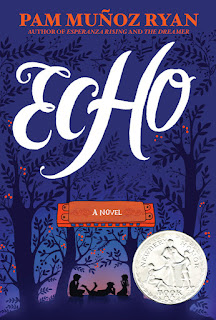
Ever since I read the book Echo by Pam Munoz Ryan I have been interested in the way Japanese citizens were placed in internment camps in the US.  It happened here too as I discovered in the book Red Day.


Now we have a picture book based on the real life experiences of the author's grandparents. 

Publisher blurb (Walker Books Australia): To fall in love is already a gift. But to fall in love in a place like Minidoka, a place built to make people feel like they weren’t human—that was miraculous. After the bombing of Pearl Harbor, Tama is sent to live in a War Relocation Center in the desert. All Japanese Americans from the West Coast—elderly people, children, babies—now live in prison camps like Minidoka. To be who she is has become a crime, it seems, and Tama doesn’t know when or if she will ever leave. Trying not to think of the life she once had, she works in the camp’s tiny library, taking solace in pages bursting with color and light, love and fairness. And she isn’t the only one. George waits each morning by the door, his arms piled with books checked out the day before. As their friendship grows, Tama wonders: Can anyone possibly read so much? Is she the reason George comes to the library every day? Beautifully illustrated and complete with an afterword, back matter, and a photo of the real Tama and George—the author’s grandparents—Maggie Tokuda-Hall’s elegant love story for readers of all ages sheds light on a shameful chapter of American history.

Love in the Library is an exquisite piece of historical fiction and a love story for the ages. Book Page

Read more about the illustrator Yas Imamura here and see inside her book. 


Take a look at this review of Do Something for Someone Else also illustrated by Yas Imamura.

Friday, December 31, 2021

Interned by Pamela Rushby


Authors of historical fiction set themselves a huge task. They need to be dedicated to their project in order to complete the hours of research needed so their book is accurate. At the same time the writer needs to weave together a story with an engaging narrative. In some books of historical fiction it feels as though the author has a pages of facts which they want to showcase or even shove into the plot.  That is not the case here with Interned.  It is very clear Pamela Rushby has done an enormous amount of research for her book but then, as I heard Jackie French once say, the author needs to throw all of that away and just let the flavour of the historical period naturally percolate through the story. 

Jackie says: Perhaps that’s what my books really are -- a whisper that becomes an obsession; years of research that suddenly crystallise into a story, and then the labour of turning the past into fiction, woven with facts.

In this article for Writers Digest I found these wise words about writing historical fiction. Pamela Rushby follows all of this advice:

1. Have fun with the research, but do your homework. 

This should go without saying, but I’ll say it anyway. Borrow some good reference books. Become comfortable with the time period. Try to understand both the larger scope of the period, while examining aspects of daily life. This will help create an authentic backdrop for your novel.

2. Let the characters engage with the historical details. 

This goes along with that “show don’t tell” truism writers are told all the time. Rather than just dumping a bunch of facts on the poor reader, let your characters interact with these details with all these senses. Let them smell the offal dumped onto the cobblestone streets. Let them squint in the fading light of the tallow candles. Let them feel the tingling sensation as the physician places a leech on their bare skin.

3. Allow your characters to question and explore their place in society. 

This will help reveal the larger political, social, cultural context of the time. What were the expectations for women? For sailors? For criminals? How did people from different parts of society interact with one another?

Interned is set in 1914. Gretta lives in Singapore and Tilly lives in Brisbane. 

"When war breaks out and both countries turn on their families for being German , the two girls find themselves taken from their homes, interned at a camp in rural New South Wales. Far away from everything they have ever know, Gretta and Tilly are forced to face prejudice, overcome adversity and to make their own community."

This story is told though the eyes of these two very different girls using alternating voices. Both girls demonstrate enormous courage and enormous care of their families. 

I knew about the internment camps which were set up here in Australia during WWII but I had no idea about the situation during WWI. Pamela Rushby gives her readers a strong sense of the place, the confusion, the harsh climate, the recurring heartbreak, and the strong bonds of family relationships. Pamela wrote this book because she discovered her own grandfather came to Australia from Germany as a tiny baby in 1880 and the family settled in Queensland. In 1900 the largest non-British immigrant group in Australia were people of German descent. Many lived in Queensland and South Australia. 

In the author notes Pamela writes about the beginning of World War I:

"Almost immediately after war was declared, a wave of anti-German propaganda swept the nation. ... German schools and clubs were forced to close. German music was banned. Communities with German names were renamed. ... Almost seven thousand people of German descent were detained... (including) German families that had been living and working in British colonies in New Guinea or south-east Asia."

I highly recommend this book for readers aged 10+ especially for those with an interest in history. Interned will be published in March 2022. Huge thanks to Beachside Bookshop for my advance copy. 

Companion reads (note these are all set during WWII):


Tuesday, January 7, 2020

Red Day by Sandy Fussell


Charlie lives in Cowra. Her High School link up with a school in Japan and they regularly host exchange students. Cowra has historic links with Japan because over 1000 prisoners of war were held there during World War II. In 1944 the prisoners staged a breakout. Over 200 prisoners died.  Today you can visit the Japanese war cemetery and the Japanese Garden.  Charlie is very familiar with these historic sites.  Charlie is not happy that her mother has agreed to host Kenichi, a Japanese exchange student. Charlie is a sensitive girl - she sees the world and people in colours. This is a condition called synaesthesia.

She has no intention of becoming friends with Ken but she begins to have day time flash backs which link to the breakout. Her family are also connected. The museum has a photo of a young man who sheltered at her grandparents farm. At first it seems Ken has no connection to this photo but he is oddly very curious about everything to do with Cowra and gradually the surprising links between this photo and his family are revealed.

If an author wants to tell a story from history they need to find a way to turn facts into a narrative. The whole story can be set during the actual historic event as was the case with a book I talked about recently - Pirate Boy of Sydney Town by Jackie French. Another technique is to take a character back in time often via a portal. A third device is via dreams or visions of the past and that is the device employed by Sandy Fussell in her story about the Cowra breakout. The setting is modern day Australia, but as these High School kids delve into the mystery of the man in the photo we are also given little insights into the actual night of the breakout.

This book will be published in March 2020. Thanks to Beachside Bookshop for my Advanced Reader copy. Read more at Walker Books.

I've been thinking about the audience for this book. When I talked with a fellow children's literature enthusiast she asked "Why would kids want to read about the Cowra breakout?" I have pondered this important question over the last few days. I think the answer is yes. Sandy Fussell says she had a personal fascination with this event in Australian history and this led to spending quite a lot of time exploring historic sites Cowra. Young readers might not be able to do this but I think reading Red Day might mean some readers will then want to discover more about the events of 5th August, 1944. It was the largest prison break during World War II. 

I remember when I read A Blinding Light by Julie Lawson. I had absolutely no idea about the terrible destruction in Halifax Harbor during World War I.  Red Day made me curious about Cowra and this part of Australian history. I think readers aged 10+ who enjoy mysteries, books about friendship and readers who are curious about history will enjoy this book. I found myself racing through the 237 pages keen to solve the mystery alongside Charlie and Ken.

Here is an interview with Sandy from 2011 where she talks about writing Historical fiction.


You can read more at the Cowra visitor site.  Adult readers who are curious about this topic might look for this book by Australian author Thomas Keneally. You can find a list of other titles in this article in The Conversation.